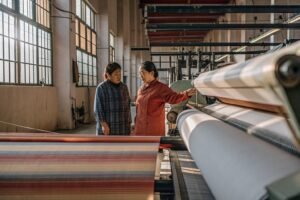
I’ve seen it happen too many times. A US brand owner opens a shipping container, slices through the polybag with a box cutter, pulls out their "Dusty Rose" hoodie, and freezes. It’s not Dusty Rose. It’s fluorescent bubblegum pink. The spec sheet said "PANTONE 15-1515 TPX." The lab dip was perfect. So why does the bulk shipment look like a crime scene? Because color is a chemical reaction, not a paint chip, and somewhere between the lab beaker and the 500-kilogram dyeing machine, someone lost control of the variables. You can’t return 3,000 yards of custom-dyed fabric. You just lost your entire season.
You avoid ugly colors when importing Fumao wholesale lots by locking down three specific control points before the dye bath even heats up: the substrate white base, the metamerism elimination pass, and the post-dyeing pH neutralization checkpoint. At Shanghai Fumao, we don’t just match your Pantone chip on a Thursday afternoon under one lightbulb. We run a "three-light-source approval"—Daylight D65, Store Light TL84, and Home Light A Incandescent—and we refuse to ship a single yard until the Delta E stays below 0.8 across all three. Ugly colors don’t happen by accident. They happen because suppliers skip the boring, expensive, invisible steps that keep chemistry honest.
Now, you might be wondering why some brands seem to nail their color every single season while others produce mud tones and neon disasters. It’s not luck. It’s a system of interlocking checks that start before the first drop of dye touches the fabric. I’ll take you through exactly how we prevent the five most common color disasters, from the "Greenish Beige" nightmare to the "Washed-Out Pastel After Three Cycles" tragedy. If you’ve ever stared at a color standard and thought "how hard can this be," buckle up.
Why Does "Matching the Lab Dip" Still Go Wrong in Bulk?
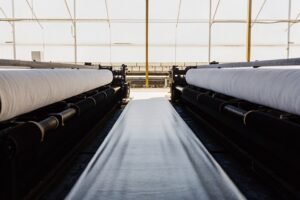
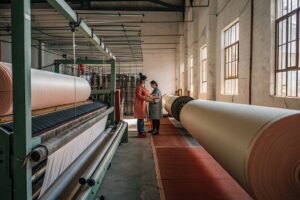
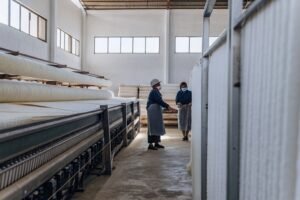
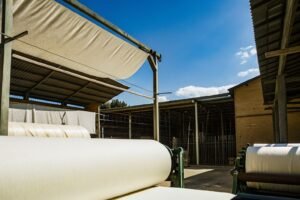
The lab dip is a lie. Well, not a lie exactly, but a miniature fantasy. When we dye a lab dip for you, we’re cooking in a tiny 50-gram beaker. The water-to-fabric ratio is huge. The agitation is gentle. The heating element responds instantly to adjustments. Then we take that exact same recipe and dump it into a 500-kilogram industrial jet-dyeing machine that spins fabric through a narrow tube at 300 meters per minute under high pressure. The physics are completely different. If your supplier doesn’t compensate for the "scale-up factor," your bulk color drifts into ugly territory.
The lab dip proves the color can be made. The bulk process proves the factory did make it correctly.
How Does Fabric Speed Inside the Machine Change the Color?
This is called "shear-induced shade change," and it’s a killer. In a high-speed jet dyeing machine, the fabric whips through the dye liquor at roughly 300 to 400 meters per minute. This extreme turbulence and pressure force dye molecules into the fiber core much faster than in a static lab beaker. The result? The fabric "drinks" the dye differently. A warm beige can turn into a cold taupe because the red component exhausted faster under pressure than the yellow component.
We solved this for a UK-based loungewear brand in January 2025. Their "Oatmeal" shade kept coming out with a greenish cast in bulk, even though the lab dip was perfect. The issue was the pressure differential. We adjusted the ramp-up time on our THIES dyeing machines, slowing the temperature rise by 2°C per minute during the critical exhaustion phase between 60°C and 80°C. This gave the yellow and red dye molecules equal time to bond with the cotton fibers rather than letting the faster-bonding red overtake the yellow. The green cast vanished. If you’re trying to diagnose your own supply chain problems, exploring resources on how to troubleshoot shade variation between lab dip and bulk production in reactive dyeing can give you a checklist to discuss with your supplier.
(Here’s something most mills won’t admit: they often "cheat" the lab dip to win your business. They use a higher grade of dye for the tiny sample, then switch to a cheaper, lower-purity dye for the bulk order to save money. The recipe looks identical on paper, but the impurity levels in the cheap dye shift the final shade. Always ask for a Certificate of Analysis for the actual dye lots.)
Can the Water Itself Ruin Your Color?
Absolutely. Keqiao’s tap water is not the same as the lab’s distilled water. Municipal water carries dissolved minerals—calcium, magnesium, iron—that react with dyestuffs. Iron is a notorious villain. If the water flowing into the dyeing machine contains even 0.5 parts per million of iron, it can react with beige and pastel dyes, creating a dull, dirty gray-brown undertone that makes the fabric look "dead."
We pre-treat every liter of water that enters our dyeing cooperatives. We run it through a reverse osmosis (RO) filtration system and then a chelating agent bath that binds up the metal ions and renders them chemically inactive. For sensitive neutrals like our "Fossil Gray" and "Raw Ecru," we add an extra gram of EDTA chelator per liter to guarantee zero metal interference. I once visited a cheaper dyeing house that skipped this step to save on the RO membrane replacement cost. Their "Cream" fabric looked like it had been dragged through a dusty road. You cannot fix bad water chemistry with a better dye recipe. You can only prevent it with expensive filtration. If you want to dive deeper into this hidden variable, search for how water hardness and metal content affect color consistency in textile dyeing and you’ll understand why the best dye houses treat their water before they treat their fabric.
Is Your "Dusty Rose" Just a Dirty White Base Fabric?
This is the number one reason pastels look "ugly." You pick a gorgeous soft "Lavender Haze" from the Pantone book. The mill starts with a cheap, yellow-ish greige cotton base—cotton that naturally leans toward a creamy, bone-yellow tone because it hasn’t been fully bleached or optically whitened. When they overlay the lavender dye, that yellow undertone doesn’t disappear. It mixes optically with the blue-red dye and creates a muddy, brownish lavender. It looks like a bruise, not a flower.
Think of it like makeup. You can’t put a sheer, bright pink lipstick over dark, pigmented lips and expect the true pink to show up. You need a clean, neutral base first. The fabric’s starting white point is the foundation for every pastel and light neutral you’ll ever develop.
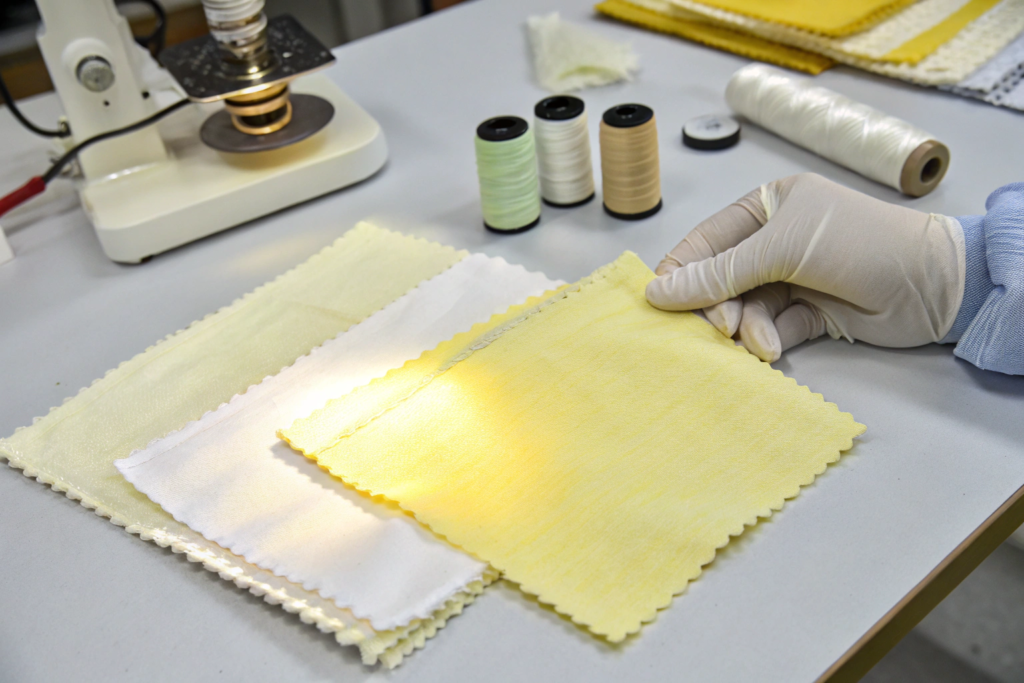
What Is "Base White Calibration" and Why Should You Demand It?
Base White Calibration means the mill measures the reflectance of the raw, bleached fabric before any dye touches it and adjusts the dye recipe based on that specific starting point. If the base fabric is slightly yellower today than it was last month (which happens because cotton is a natural crop with seasonal variations), the computer must add a touch more blue to the recipe to neutralize the yellow shift.
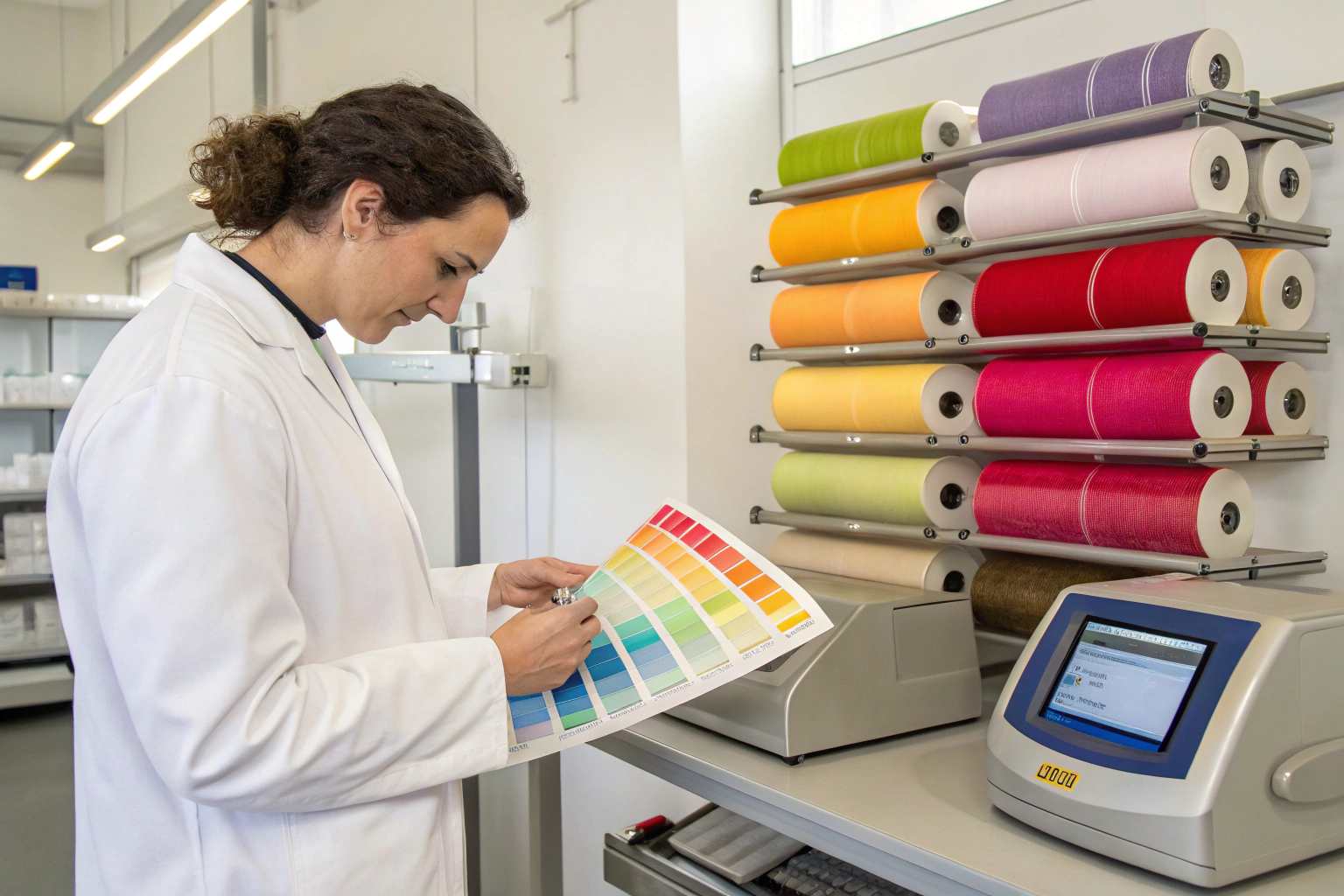
At Shanghai Fumao, we run every incoming greige lot through a DATACOLOR spectrophotometer. The machine generates a "Whiteness Index" value and a "Tint Value." Our target for pastel bases is a CIE Whiteness Index above 145 and a Tint Value between -0.5 and +0.5 (centered perfectly on neutral, not leaning green or red). If the lot fails, we run it through an intensive three-stage bleaching sequence: oxygen bleach (hydrogen peroxide) to strip natural pigments, then a fluorescent optical brightening agent (OBA) pass, then a reductive bleach to remove any remaining yellow cast.
In March 2024, a baby clothing brand from Canada ordered "Buttercream" rib knit. The first batch came out looking like mustard. The problem? The cotton lot had an abnormally high wax content from the Xinjiang harvest, which resisted the standard bleach cycle. We extended the scouring time by 20 minutes and increased the caustic soda concentration by 1%. The second batch hit the exact buttery pastel shade. The difference was invisible to the naked eye on the raw fabric, but the spectrophotometer caught it, and the final color proved the value. For more insights into pre-dyeing preparation, reading about how optical brightening agents affect pastel shade accuracy in cotton knit fabrics can help you specify the right base white for your brand.
Why Do "Recycled" Fibers Need Different Color Math?
Recycled polyester and recycled cotton are not white canvases. They are a patchwork of whatever colors they used to be. Recycled polyester made from post-consumer water bottles often carries a faint bluish or greenish tint because the bottle flakes are never perfectly clear. Recycled cotton, made from shredded garment waste, often dries to a dingy gray because the original dyes leave micro-residues.
If you spec a "Powder Pink" on 100% virgin cotton, and then your supplier switches to a 30% recycled cotton blend without telling you, the color will shift toward grayish mauve. The recycled content acts like a gray undercoat. To hit the same pastel vibrancy, the dye recipe needs an extra 10-15% dye concentration and a slight hue adjustment. We build "Recipes by Substrate" in our color lab. We don’t have one "Powder Pink" formula; we have a virgin cotton version, a recycled blend version, and a modal version. In 2025, we developed a specific "Eco-Clear" process for recycled polyester that uses a low-temperature ozone bleaching chamber to strip the recycled fiber of its residual color memory before dyeing. This step adds cost, but it’s the only way to achieve true, clean neutrals on sustainable fibers. You can learn more about this emerging technology by searching how to achieve vibrant pastel shades on recycled polyester for sustainable fashion.
How Does the Factory Light Lie to Your Eyes?
Your eyes are unreliable witnesses. In 2016, a dress famously broke the internet—some people saw blue and black, others saw white and gold. That’s metamerism in action, and it’s not just a parlor trick. It’s a commercial catastrophe. A jacket that perfectly matches the pants under your office’s warm halogen track lights suddenly looks completely mismatched under the cool fluorescent lights of a shopping mall. The color didn’t change. The light illuminating it did.
If a supplier approves a color under a single, cheap ceiling fixture, they are not selling you fabric. They are selling you a future return. The customer will open the box in her bedroom, hold the garment up under her LED vanity mirror, and see a color you never intended to sell.
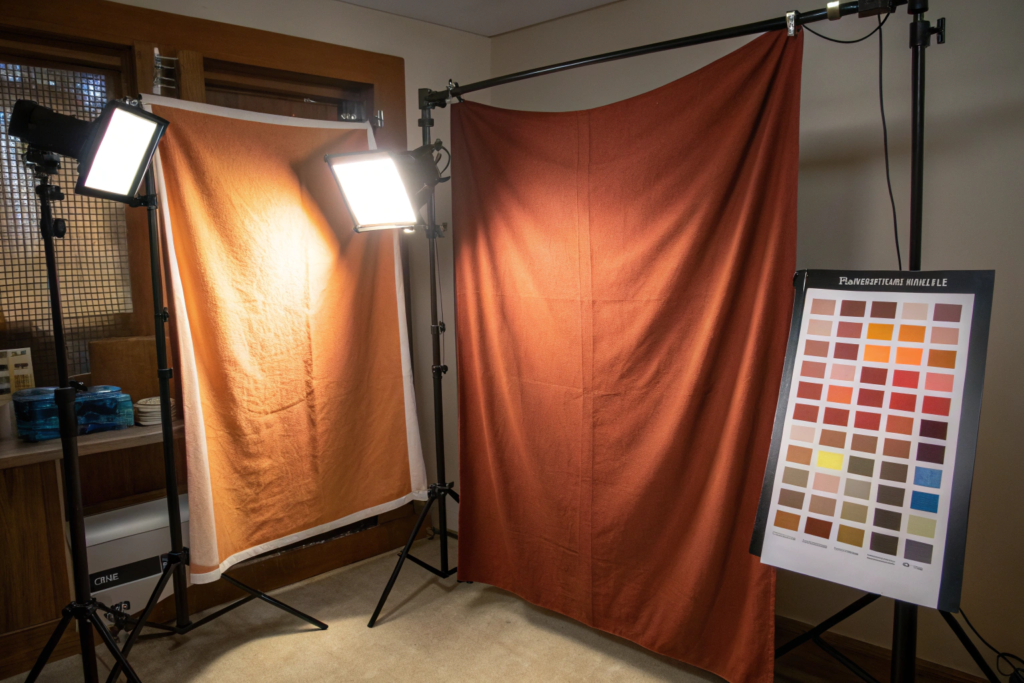
What Is a "Three-Light Match" and Why Does It Cost More?
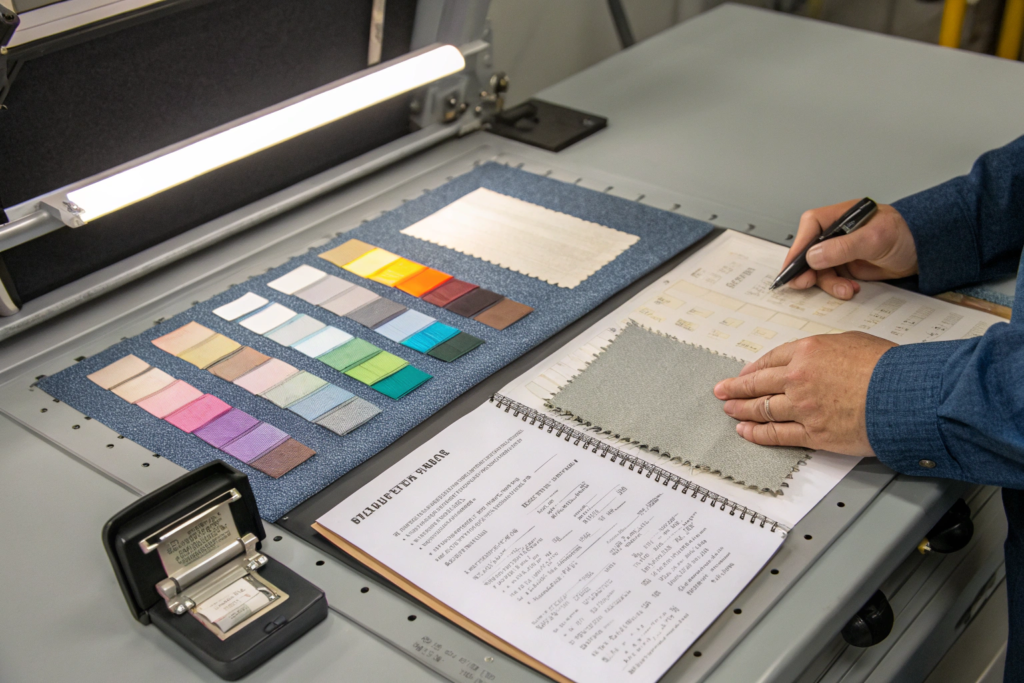
A Three-Light Match means we test and approve the lab dip, and later the bulk sample, under three standardized illuminants: D65 (simulated noon daylight), TL84 (typical fluorescent store lighting), and A (simulated home incandescent bulb). If the color matches your standard under D65 but shifts toward green under TL84, we don’t ship it. We reformulate.
The extra cost comes from the reformulation complexity. Fixing a metamerism problem usually means swapping one dyestuff for another from a different chemical class. For example, a beige matched with a low-cost direct dye might fail horribly under TL84. We might need to switch to a high-grades reactive dye that bonds covalently to the fiber, producing a flatter, more stable spectral curve across all light sources. That reactive dye might cost five times more per kilogram.
I remember a specific project in September 2024 for a US corporate uniform brand. They needed a precise "Navy Blazer" that matched their logo embroidery. Our first lab dip matched perfectly in our D65 lightbox, but under TL84 (their office lighting), the navy shifted noticeably toward purple. The client would have rejected the entire 10,000-piece order. We replaced 15% of the black dye component with a dark green dye to neutralize the purple spike in the spectral curve. The final fabric looked identical to the standard under both lights. The client never knew there was a crisis. For a more detailed explanation of this critical concept, you can search how to check for metamerism in fabric color matching for apparel brands, which will show you why demanding a multi-source lightbox photo during approval is non-negotiable.
Can the "Time of Day" in China Affect Your Approval?
Yes, and it sounds crazy until it happens to you. If your supplier sends you a color approval photo taken on a smartphone next to a window at 9 AM on a cloudy morning in Keqiao, that photo is color garbage. Morning light is cool and bluish. Late afternoon light is warm and golden. The photo white balance setting on a smartphone camera automatically "corrects" colors in unpredictable ways.
We never send digital photos as color approvals. We send a physical "Hanging Swatch" via express courier, sealed in a black UV-blocking bag, with a spectral reflectance printout from our DATACOLOR machine. The printout shows the exact Delta E values against the standard. If a client insists on a digital preview, we photograph the swatch inside a GretagMacbeth Judge II lightbox with a calibrated DSLR camera locked to a fixed white balance of 6500K, with a standard gray card in the frame for reference. Even then, we attach a disclaimer: "For texture reference only. Trust the physical swatch." In November 2023, a client approved a "Sage Green" based on an iPhone photo that made the fabric look fresh and vibrant. The physical bulk, when it arrived, was a dull, muted gray-green. The photo lied because the camera’s AI "enhanced" the green channel. That was an expensive lesson for them, and it’s why you should always search for best practices for remote color approval in textile manufacturing between China and US brands before committing to a bulk dye lot.
How Do You Stop a Beautiful Dye Job From Fading Ugly?
A color that looks stunning on Day One but turns into a faded, blotchy mess by Wash Ten is uglier than a boring color that lasts. Colorfastness isn’t just about the initial dye bond; it’s about how that bond survives hot water, aggressive detergent, and the violent mechanical beating of a home washing machine. A lot of factories in the rush to hit a low price will apply a "cationic fixative" that glues the loose dye molecules to the surface. It passes the initial wash test with flying colors, but the fixative degrades over time, and the color slowly bleeds away like a bad tattoo.
At Shanghai Fumao, we treat colorfastness as a long-term promise, not a shipping checkpoint. We simulate 20 home launderings before we ship, not just the standard three.
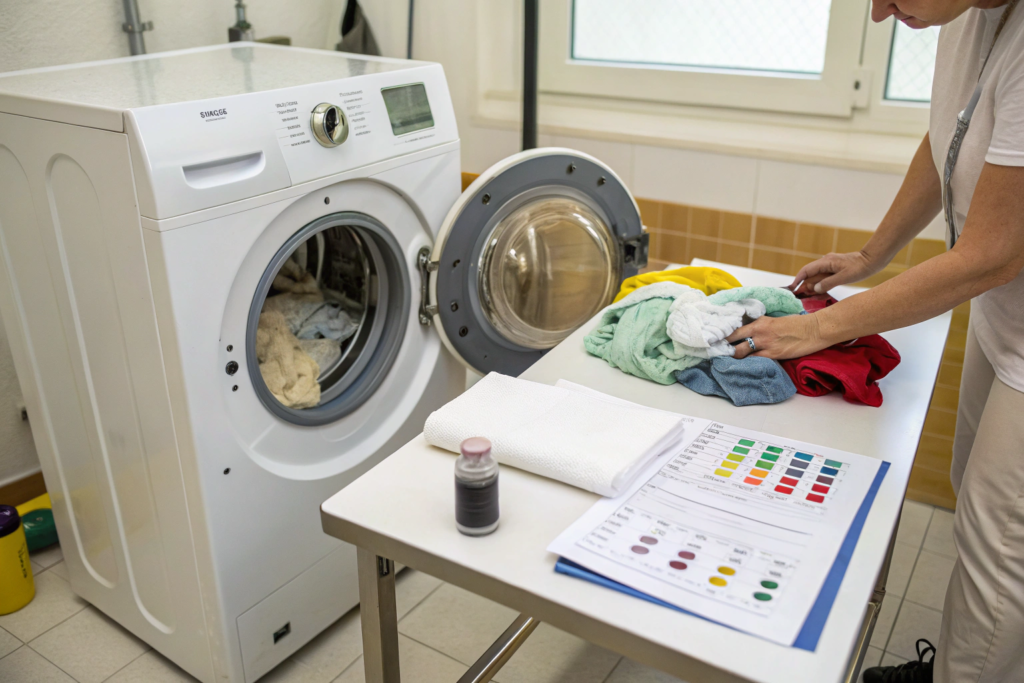
Why Does "Post-Dyeing Soaping" Determine Your Long-Term Color?
Soaping sounds gentle, but it’s actually the most aggressive cleansing you can give a dyed fabric. After the dye bonds with the fiber, roughly 5% to 15% of the dye molecules just sit there loosely, stuck to the surface by static electricity, not chemically bonded. If you don’t remove these "unfixed" molecules, they will bleed onto your customer’s white sofa, her other clothes, and her skin the first time she sweats.
A proper soaping process runs the fabric through a series of hot water baths at 90°C to 95°C with a specialized detergent that breaks the dye’s surface adhesion without stripping the bonded color. We run two soaping cycles, not one. Then we run a cold water rinse. Then we check the "bleeding number" on an AATCC Gray Scale. Cheap factories skip the second soaping cycle to save time and energy. The fabric looks bright and unfaded when it leaves the factory, but the loose dye is a ticking time bomb. In April 2024, a client tested a competitor’s "Burgundy" fleece that passed the initial cold water rub test. After a warm wash, it stained the entire laundry load pink. We ran the same fabric through our double-soaping sequence, removed 3 grams of excess dye per kilogram of fabric, and the bleeding stopped. If you want to specify this process to your supplier, reading about how proper reduction clearing and soaping affect wash fastness in polyester and cotton dyeing will give you the technical vocabulary to demand higher standards.
What Causes "Ugly Pink Spots" on a Neutral Beige Tee?
This is a specific nightmare called "tailing" or "ending," and it happens when the dye machine has a contaminated pipe or a dead spot in the circulation pump. A tiny pocket of concentrated red dye gets trapped in a valve during the previous batch, and when the new clean beige liquor flows through, that red slug releases into the fabric. Your neutral oatmeal tee now has a random, faint pink blotch in the middle of the front panel. It’s ruined.
We prevent this with a "boil-out" protocol between every batch. After every dye lot, we flush the entire machine—pipes, heat exchanger, drain valves, everything—with a 130°C caustic soda and hydrose solution that dissolves any residual dye crystals. We also conduct a "blank dyeing test" once a week. We run a pure white fabric through the machine with no dye added, just water and chemicals. If the white fabric comes out with any tinting or spotting, the machine fails the test, and we scrub it again. In July 2024, we caught a microscopic crack in a PTFE heat exchanger gasket during a blank test. Dye from a previous navy batch had seeped into the crack and was slowly leaching into the water. Without that blank test, we would have ruined 2,000 yards of a client’s "Cream" french terry with phantom blue spots. You can’t see a dirty heat exchanger from the outside. For those curious about how top mills maintain color purity, learning how textile dyeing factories clean dyeing machinery to prevent cross contamination and shade spotting reveals the level of discipline required.
Conclusion
Ugly colors don’t appear by magic. They happen because somewhere in the chain, someone decided to save time, cut costs, or skip a boring step that nobody was watching. We’ve traced the problem from the raw water chemistry and the base fabric whiteness to the lies told by a smartphone camera and the hidden cracks in a heat exchanger gasket. Good color is not a single decision. It’s a thousand tiny disciplined decisions stacked on top of each other: slowing down the dye ramp to let the red and yellow molecules bond evenly, flushing the pipes between batches to kill phantom red spots, running a second soap cycle to strip loose dye before it bleeds onto a white couch. At Shanghai Fumao, we don’t just approve a lab dip under one light and hope for the best. We check the Three-Light Match, we calibrate the base white for every incoming cotton lot, and we run a blank dyeing test every single week to catch contamination before it catches your brand.
If you’re ready to import wholesale fabric that arrives looking exactly like the vision in your head—not a muddy, faded, or mismatched version of it—let’s talk. We’ll build a color library for your brand, lock in your standards with spectral data, and ship you a physical Hanging Swatch that tells the truth before a single yard of bulk is dyed. Reach out to our Business Director, Elaine, at elaine@fumaoclothing.com. Tell her what color keeps you up at night, and she’ll show you how we make it right, and keep it right, batch after batch.