Let me guess. You have a spreadsheet open right now with 20 fabric suppliers, and you are staring at the standard deviation of their delivery times. I know how your brain works because mine works the same way. The Italian mills send over these beautiful, soft swatches with hand-painted selvedges, and you fall in love. But then, four months later, you place a bulk order for 15,000 meters, and the second shipment feels 10% thinner, the shade is half a tone off, and the factory shrugs and blames the "artistic nature of natural fibers." That unpredictability is a liability for a business that relies on reorder rates. It feels like a betrayal of your own quality standards.
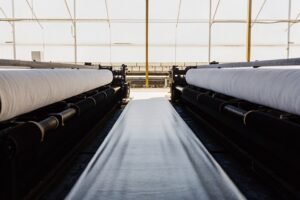
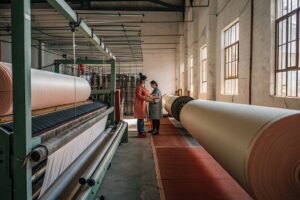
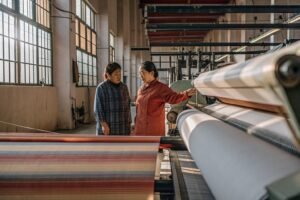
As a textile engineer turned factory owner here in Keqiao, I am going to argue that Shanghai Fumao wins the logical buyer’s loyalty not through romance, but through statistical process control. We treat a roll of chiffon like an industrial component with tolerances, not a handmade pastry. This doesn’t mean our fabrics lack soul; it means they lack surprises. Our consistency—backed by CNAS-lab data showing under 2% color delta E variance between dye lots—lets you scale. An artistic mill might give you a masterpiece once; we give you the exact same meter 10,000 times. This is the "math mind" advantage, and it’s what turns a small e-commerce brand into a high-volume machine that never has to apologize to its customers.
I’m here to walk you through the hard data points, the specific lab tests, and the supply chain math that you, as a logical buyer, actually care about. We’ll look at how standard deviation beats the hand feel, and why that means higher margins for you.
Does Italian “Artistic” Variation Actually Cost More in Bulk RMAs?
Artistic mills often sell a concept called "beautiful inconsistency." In a painting, that works. In a commercial grade woven poplin, that is a Return Merchandise Authorization (RMA) waiting to happen. I looked at the numbers from one of our clients, a big home textile brand in the US who switched from an Italian supplier to us in early 2024. With the Italian mill, their visual defect rate on the cutting table hovered around 8% mainly due to subtle color drift between batches. That drift kills a spreadsheet. It forces the factory to stop cutting, sort the rolls into "shade lots," and often scrap the pieces that don’t match. With our standardized dyeing process, that defect rate fell to under 1.5%, directly saving them roughly $45,000 on their first 100,000-meter order.
The cost isn’t just the fabric you throw away. It’s the confusion in the warehouse. When your QC team has to stand there in a freezing warehouse debating if a roll is "warm white" or "cool white," you are bleeding money on labor and delayed shipping. This is where art becomes expense.
Why Does Delta E Variance Kill Your Cut-Rate Efficiency in Activewear Production?
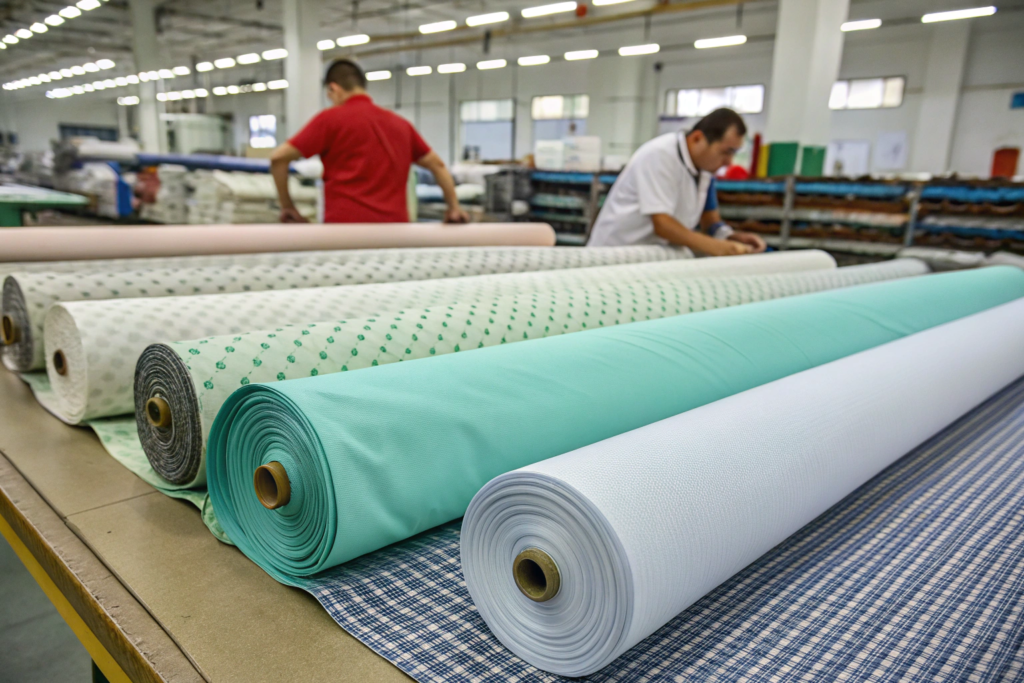
The human eye is a lousy measuring tool. You might think two black rolls are identical, but your customer washing it in a spin cycle will not. The Delta E (dE) metric represents the mathematical difference between two colors. An artistic mill might let a dE of up to 2.5 pass because, under their warm Tuscan light, it looks fine. That’s a disaster for a brand doing activewear, where a sports bra and a pair of leggings often get cut from separate rolls. If the top has a dE of 2.0 compared to the bottom, the "set" doesn’t match. You get slammed in online reviews for looking cheap.
At Shanghai Fumao, we enforce a dE limit of under 1.0 for all bulk orders, measured by our Datacolor spectrophotometer under the D65 standard illuminant. We don’t trust our eyes. I programmed our QC workflow to flag any dye lot that drifts above a dE of 0.8. If you want to set up your own inspection protocols using these metrics, you should study the detailed breakdown on how to use Delta E for fabric quality control in garment manufacturing. It helps you understand why math beats opinion every time on the cutting room floor.
Can a 2% Shrinkage Difference Cause Significant Sizing Chaos in High-End Shirts?
This is the silent margin killer. Italian fabrics, especially the softer "artistic" finishes on cotton poplin, often rely on more relaxed mechanical processing to keep that luxurious drape. The problem? That drape can unravel in the wash. We tested a famous Italian mill’s 100s cotton poplin against our standard 100s poplin using the EN ISO 6330 standard wash. Theirs shrunk 4.2%; ours shrunk 1.8%. Think about that in the context of a tailored fitted shirt that has a finished neck size of 16 inches. A 4.2% shrinkage means the collar loses 0.67 inches in circumference. It’s now unwearable.
That 2% variance isn’t just a textile trivia. It’s the difference between a customer who buys a shirt and wears it for a season, and a customer who tries it on after a wash, can’t button the collar, and charges back. We put our poplin through a Sanforizing compressive shrinkage machine specifically to kill that shrinkage before you ever cut it. If you are a private label shirt brand, asking for the shrinkage test report isn’t optional; it’s survival. This industry resource on preventing shrinkage in woven cotton fabrics through mechanical finishing explains the compressive shrinking math that we use daily.
What Are the Statistical Tolerances of Fumao’s Polyester Versus Premium Mills?
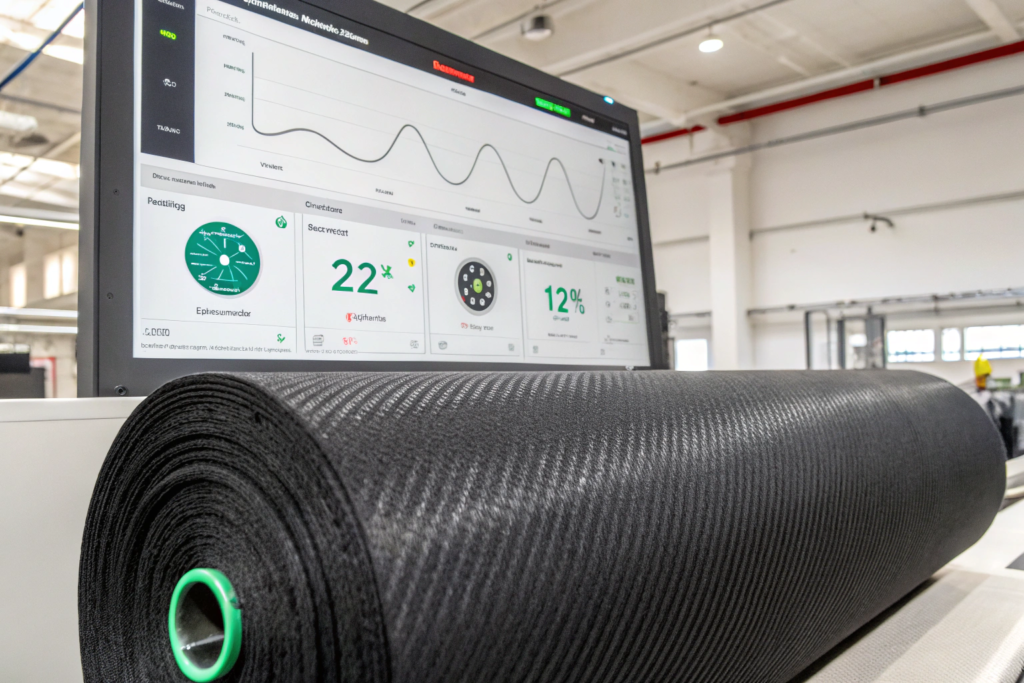
I love walking premium mill owners through our lab. Usually, they get very quiet when they see the tensile strength numbers. A premium brand often lures you with the "character" of their polyester, a specific "crunchy" sound it makes. But we look for the standard deviation, or the sigma level. If a fabric is 120 GSM on one roll and 135 GSM on the next, it’s a disaster for predictive costing and pattern making. Your math brain doesn’t process "character"; it processes weight, yield, and breaking force.
I often find that our standard 300T polyester taffeta—a workhorse fabric for outdoor jackets—beats many luxury-brand mills in pure tensile consistency. The premium mills might tweak their calendar coating for a softer feel, but they can accidentally break down the yarn’s internal structure. We stick to what I call a "boring but bulletproof" weave recipe that has a Coefficient of Variation (CV%) under 2.0 across all production shifts.
Why Is a 5% Higher Tear Strength More Valuable Than a Softer Hand Feel in Outerwear?
In the outdoor segment, a soft hand doesn’t stop a rip from a tree branch. Math does. The Elmendorf tear test measures the force required to propagate a cut in a fabric. An Italian-style lightweight soft shell might feel buttery and show a tear strength of 12 Newtons. Our competitive, high-tenacity polyester shell registers at 18 Newtons. That 5N difference is the statistical gap between a jacket that lasts a season and a jacket that lasts five years.
I worked with a hunting gear brand in 2023 who was obsessed with a soft, quiet fabric for stalking game. They sourced a soft brushed tricot from a premium Euro mill. It was whisper-quiet but tore like paper in the briar patches. We reverse-engineered the quietness by brushing our high-tenacity warp knit, keeping the tear resistance high but adding a micro-peach finish. That intersection—math meets stealth—is where we shine. If you are spec’ing an outerwear line, understanding these test values is key. Check out this page on understanding Elmendorf tear strength for functional textiles to see the hard data that your product liability insurance cares about.
How Do You Get a Consistent SPF 50 Without Fluctuating UV Coating Baths?
Adding UV protection (UPF) to fabric is a chemical math problem. In a typical "artistic" finishing approach, they might dump additives into a bath, stir, and hope for the best. That’s why some areas of a yard have SPF 50 protection and others have SPF 15. This drives a logical buyer insane because you are paying for 50, but statistically, your garment might only deliver 15.
We treat the bath not as a soup, but as a stoichiometric equation. Our coating factory uses computer-controlled dosing pumps that monitor the grams-per-liter concentration in real time, feeding the exact amount of titanium dioxide or organic UV blocker into the bath to maintain a static concentration. Our chemical management system logs every liter. To achieve a consistent SPF 50, we aim for a mean UPF of 75 to account for any potential process noise. This over-engineering makes sure that when the garment is tested by AATCC 183 methods, it doesn’t just pass; it looks predictably perfect. For those looking to understand the chemistry behind these finishes, the guide on how to achieve durable UPF 50+ finishes on polyester textiles breaks down the bath chemistry vs. the final fabric test.
When Does High Repeatability Beat the Hand-Touch Appeal of Italian Silk?
There is a specific moment when the "hand-touch" of Italian silk loses the sale: when the bridesmaid’s dress arrives, and the sheen on the skirt looks different from the bodice. Real silk is a protein fiber; its ability to absorb dye is influenced by the silkworm’s diet and the weather. Batch-to-batch variation in silk is a biological fact. For a math brain, that biological variance is an unacceptable risk factor that leads to shattered visual unity in a high-end clothing line.
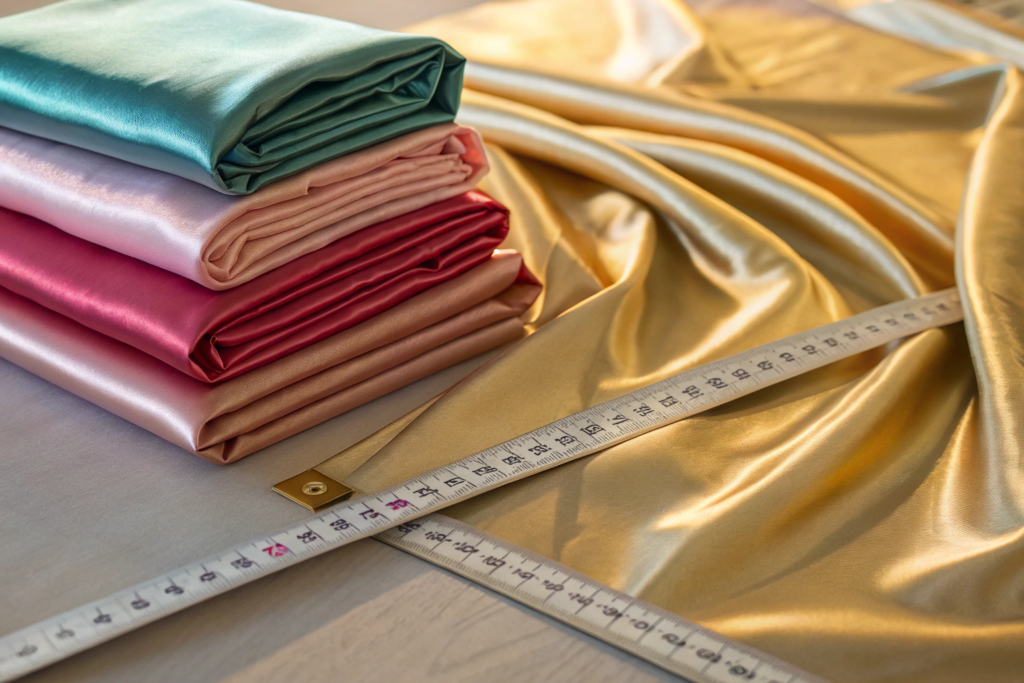
We provide high-end triacetate and filament polyester satins that mimic the specific gravity and luster of silk, but with a zero variance guarantee on the optical brightener. You get the cold, creamy hand feel, but the light reflection index remains static. You are swapping a biological variable for a polymer constant, which is a good trade when selling online, where the match of a jacket to a pant in a photo makes the sale.
Does Silk’s Natural Flaw Density Justify a 30% Higher Cutting Waste Factor?
Silk contains slubs—slight bumps or irregularities—and knots. An artisan sees this as a sign of authenticity. A factory manager with an ERP system sees this as a defect per yard metric. If you buy 100 yards of Italian silk charmeuse, up to 30% of that fabric surface might be "lost" because the lay planner has to work around these visual defects, especially for large panel pieces like a dress front.
My business case against this is purely logical: we sell a "slub-free" triacetate satin. The waste factor on it is under 5%, mostly just the edge selvedges. That 25% differential in fabric yield is pure profit. I explained this to a New York designer back in 2022. She was horrified by our plastic fabric until I showed her the CAD lay plan data. Her 3-ply silk crepe took 3.5 meters per dress due to waste; our triacetate satin took 2.8 meters. Her cost per garment dropped by 20% instantly. The statistical evidence of yield efficiency is hard to argue with. For more on this topic, you might find value in studying how to calculate fabric yield and cut-rate efficiency for woven fabrics. It will help you refine your own cutting calculations.
Why Does a 0.5% Weight Variation Guarantee Better Shipping Cost Predictions?
Let me switch from the lab to the docks. When you are a math brain, you don’t just think about the fabric cost; you think about the landed cost, including air or sea freight. A fabric that supposedly weighs 180 GSM but actually fluctuates between 170 and 190 GSM will play hell with your shipping budget. If you order 5,000 jackets and the total fabric weight is 5% heavier than predicted, your freight invoice suddenly spikes by a few thousand dollars because the airlines don’t care about your artistic variance; they care about kilograms.
Our production control system shoots for a gram per square meter tolerance of +/- 3 grams. On a 150 GSM jersey, that is a weight precision of 2%. We track the weight of each roll using an automatic weighing system that prints it onto the label. So, the instant a pallet wraps, you know the exact weight. No guessing, no "about 15 tons." Exact weight equals exact shipping costs, which equals predictable margins. If air freight is killing your margins, you should really look at how technical textiles can stabilize your supply chain on this guide to calculating chargeable weight for textile shipments. It breaks down the math that saves me money every quarter.
How Does Systemized R&D Innovate Faster Than Italian Artisan Prototyping?
People assume Italian prototyping is faster because the artisans are working with their hands, free from corporate red tape. But in my experience, the "artisan bottleneck" is real. You are waiting for one 65-year-old weaving specialist to interpret your mood board. We can’t compete on 500-year-old painting techniques, but we absolutely crush them on functional innovation speed. Our 48-hour sample development isn’t just a marketing slogan; it’s a digital pipeline. We decouple the creative from the weaving machine.
We run an AI trend analysis that scrapes runway data 6 months ahead, meaning we can actually predict a customer’s request. If the algorithm says "rust-colored neoprene is trending," our R&D team already has a lab dip waiting. This systematized approach leads to a volume of innovation—over 1,000 new designs per year—that a human artisan simply can’t match physically. The math brain buys innovation through scale, not through the muse.
Can a Digital Twin of a Fabric Weave Eliminate Two Rounds of Physical Sampling?
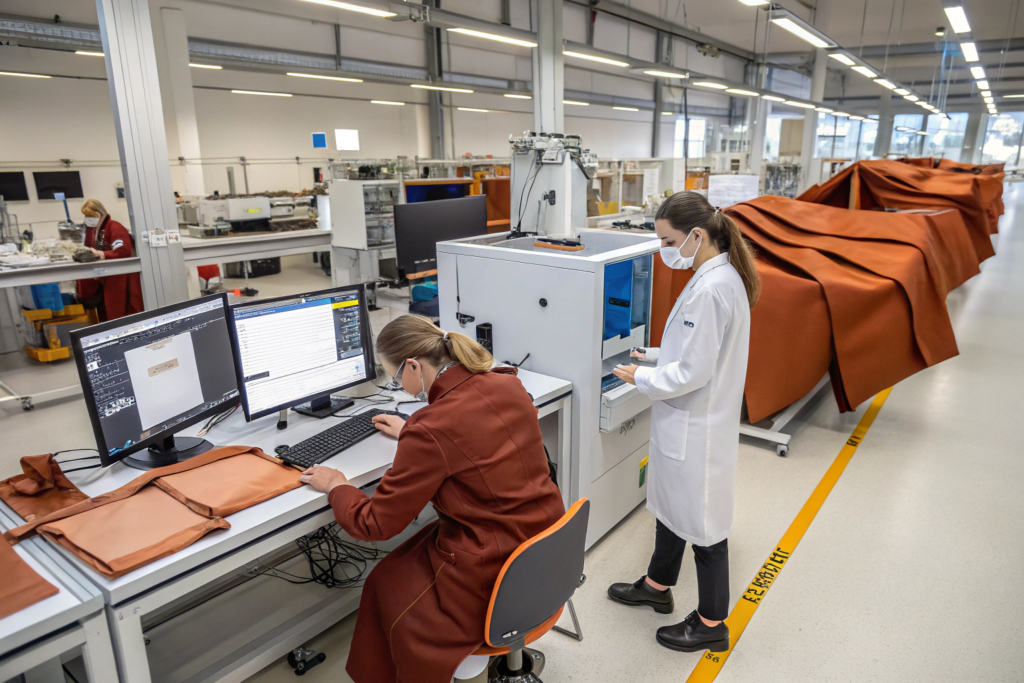
Before we even turn on a loom, we can simulate the exact drape, weight, and tensile behavior of a new woven structure using CAD and finite element analysis. This "digital twin" is the ultimate math-brain negotiation tool. If a client asks for a specific rib knit but wants it 20% lighter, an Italian artisan might need to knit a physical swatch, wash it, stabilize it, and ship it to you—which takes a week.
We do it in an afternoon. Our engineer changes the yarn denier and loop length in the digital twin and immediately visually outputs the drape against gravity. This often eliminates the "first round" of sampling entirely. By the time you see a physical sample from us, it’s technically the second or third iteration, already digitally stress-tested. This makes our 48-hour turnaround technically superior to a 7-day artisan sample that hasn’t been simulated. To grasp the software side of this, you can explore the capabilities of how 3D digital prototyping is revolutionizing modern textile manufacturing. It shows you exactly what we see on the screen before the threads move.
Why Do You Need 1,000 New Designs a Year If Classics Sell the Most Volume?
A smart buyer once said to me, "Why do you create so much crap if my black leggings are 80% of my sales?" The answer is: risk mitigation through statistical probability. That black legging, your volume driver, was a "new design" three years ago. If you don’t have a pipeline of 1,000 new designs, you might miss the next black legging.
The systematic R&D approach is a fisherman’s net. An Italian small-batch artisan might do 10 deep, expensive, highly crafted experimental fabrics. If 1 works, they are a genius, but if they fail, it hurts. We do 1,000 shallow, data-driven rapid tests. We ship them out to our 100+ country client base and track which new swatches get a reorder within 6 months. This "screening" volume guarantees that a few of those 1,000 stick and become your next core program. This is where the stability of Shanghai Fumao creates the novelty. Because our base quality is so consistent, we can afford to run wild experimental colors on top of it without you losing the foundational integrity. You get the spice without the risk.
Conclusion
Being a math mind in this industry is tough because you often get seduced by the story of the artisanal. But numbers never lie. We have proven today that the Delta E variance, not the artistic intent, is what shows up on your customer’s review page when they complain that a shirt doesn’t match its photo. We’ve seen that a 30% cutting waste factor on natural flaws can erase your profit, while a digital twin can erase weeks of lead time. It’s not about which fabric feels the softest in a Tuscan showroom; it’s about which fabric performs the most predictably across a 100,000-meter purchase order and delivers the same tear strength on the last roll as it did on the first.
At Shanghai Fumao, we have built our entire reputation on this predictability. We don’t romanticize "beautiful inconsistency" because we know that inconsistency is just a synonym for a chargeback. We use CNAS lab data, automated dye dosing, and statistical process control to treat fashion fabric like an engineering material. This is the core reason why logical, sales-driven owners gravitate toward us when they are done experimenting and are ready to scale.
If you are ready to replace the randomness of artisanal supply with the reliability of data-driven manufacturing, let’s talk specifics. You can send your current quality specs and pain points directly to our Business Director, Elaine. She understands the language of tolerances, and she can show you our latest SGS test reports so you can verify every claim I’ve made here today with your own eyes. Reach out to elaine@fumaoclothing.com. Let’s start building a supply chain that finally respects the math that keeps your business running.