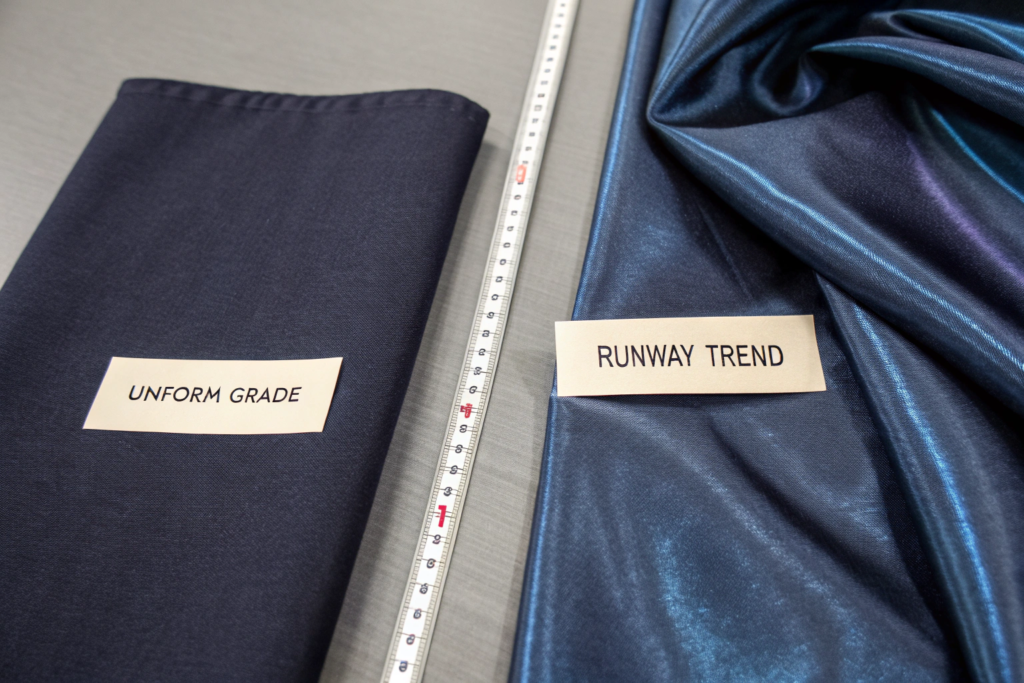
I once watched a hotel general manager run his fingers over a blazer sleeve and scowl. The fabric had a subtle metallic sheen—beautiful on a runway, disastrous on a front-desk clerk. The supplier had sold him a "premium suiting" that looked like it belonged in a nightclub, not a lobby. The manager had 200 staff uniforms that made his employees look like they were cosplaying as fashion editors. He had to eat the cost and reorder from scratch. The problem wasn’t the fabric quality. It was a fundamental mismatch between fashion-forward aesthetic language and the functional, timeless demands of uniform design. When a fabric is too trendy, it dates the uniform within a season. When it’s too shiny, it catches light unflatteringly under institutional fluorescent ceiling panels. When it’s too delicate, it shreds under industrial laundry processing.
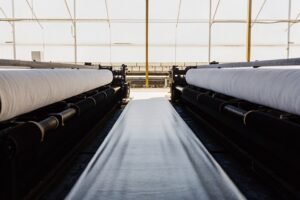
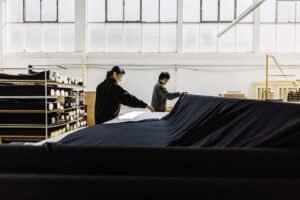
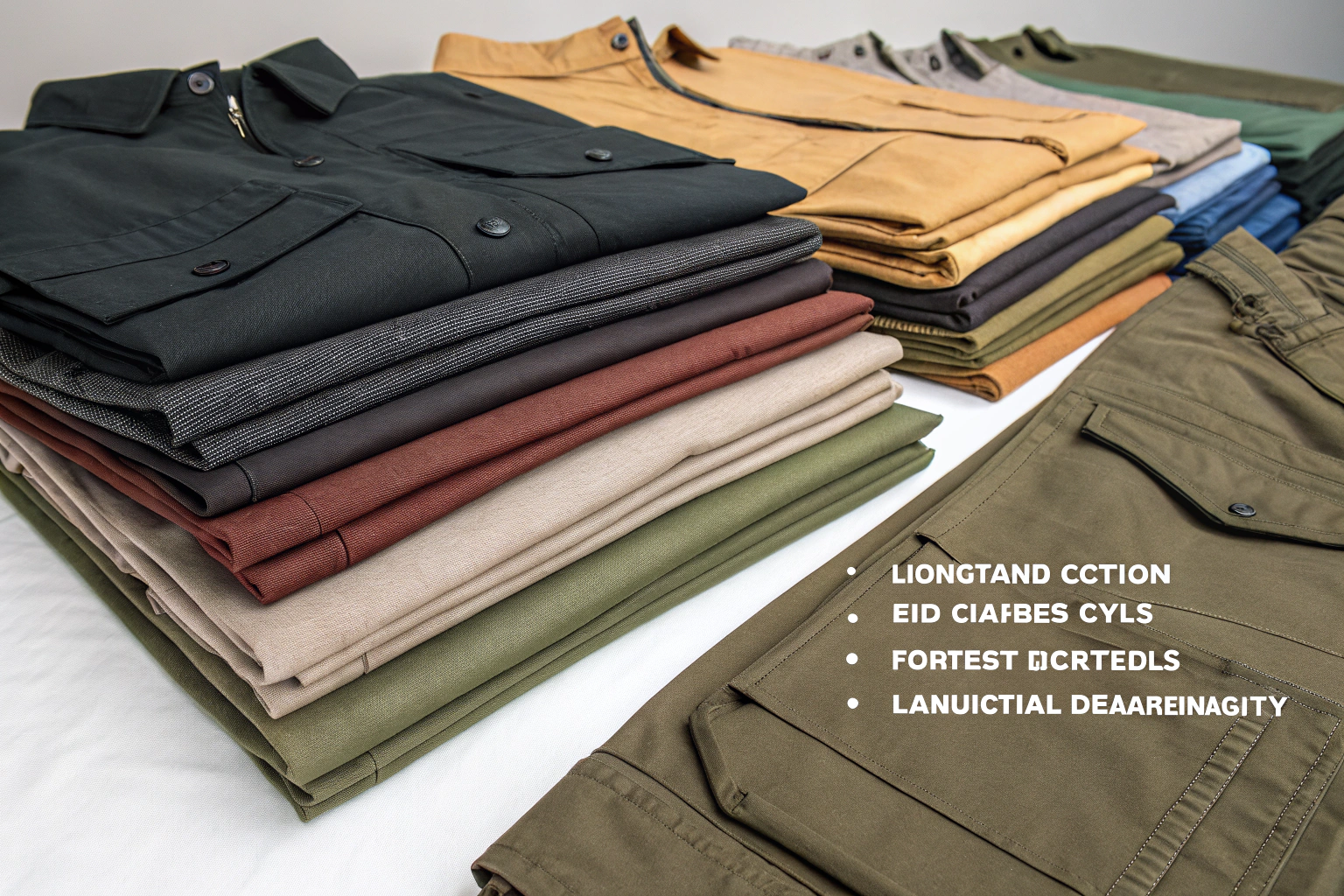
Shanghai Fumao has a dedicated Uniform & Workwear Fabric Program that is engineered specifically to avoid these traps. We don’t push fashion trends into our uniform textiles. We push durability, color consistency, and what I call "neutral elegance"—fabrics that look authoritative and professional without drawing attention to themselves. Our uniform-specific base cloths are built on a foundation of high-tensile polyester-cotton and polyester-viscose blends, tested to withstand 50+ industrial laundry cycles at 75°C without losing crease retention or pilling into fuzz. We hold a core palette of 45 "Uniform Standards"—navies, charcoals, blacks, burgundies, forest greens, and tans—that are dye-lot guaranteed for reorder consistency across a minimum of three years. That means if you need to reorder the exact same navy blazer fabric in 2028, the shade will match the 2025 batch within a Delta E of 0.6. This is the opposite of fashion. This is textile engineering as infrastructure.
If you’re sourcing for corporate uniforms, hospitality, healthcare, or institutional workwear, I’ll explain exactly how we balance performance with understated aesthetics, why our colorfastness protocols matter more than trend forecasting, and how we prevent your staff from looking like they’re wearing a disposable fashion knockoff. Let’s talk uniform fabric that respects the job, not the runway.
What Makes a Fabric "Uniform-Appropriate" Instead of Fashion-Forward?
The fashion industry rewards novelty. A new texture, an unusual sheen, a dramatic drape—these signal "new season" and justify a higher retail markup. The uniform industry punishes novelty. A uniform must look consistent across hundreds of employees, survive industrial abuse, and project a stable, trustworthy image for years without looking dated. The moment a uniform fabric has a "trendy" feature—a high-twist crepe texture, a metallic foil finish, an exaggerated slub—it stops functioning as a neutral professional skin and starts making a fashion statement that may clash with the brand’s identity or, worse, become embarrassing when the trend dies six months later.
Our uniform fabric design philosophy follows a "Neutral Anchor" principle. The fabric should be visually quiet. A 65% polyester 35% cotton twill in a matte navy finish doesn’t scream for attention. It recedes. It lets the employee’s competence, not their lapel sheen, communicate with the customer. The hand feel should be "dry" and "crisp," not "slick" or "buttery." A dry hand hides dust and lint—critical for a receptionist who sits under a vent all day. A buttery, soft hand picks up every speck of white cat hair within a 10-foot radius. The drape should be structured but not stiff. A uniform blazer needs enough body to hold its shape over a 12-hour shift without collapsing into wrinkles, but enough give that a security guard can raise their arms without the shoulder seam popping. This balance of visual neutrality, practical hand feel, and structured drape is the opposite of everything fashion fabric tries to achieve, and it requires a completely different engineering approach. To understand the fundamentals, a guide to the performance characteristics and design principles of contract-grade uniform textiles versus fashion apparel fabrics lays out why "boring" is a technical achievement in this sector.
Why Is "Crease Retention" More Important Than "Drape" for Uniform Pants?
A fashion trouser can look artfully wrinkled. Linen suiting is sold on the promise of "relaxed creasing." A uniform trouser cannot. A police officer standing in court, a hotel concierge greeting VIPs, a flight attendant serving first class—they all need a sharp, razor-front crease after sitting for hours. A collapsed crease looks sloppy, tired, and unprofessional.
Crease retention is a function of the thermoplastic fiber content and the heat-setting process. Polyester is thermoplastic; it melts and re-forms when heated. Our uniform suiting uses a 65% polyester 35% viscose blend where the polyester fibers are thermally set into a permanent crease memory during finishing. We pass the fabric through a high-pressure hot-head press at 180°C for 45 seconds. The polyester filaments in the crease zone partially melt and re-crystallize in a folded configuration. This is not a surface coating; it’s a physical change in the polymer morphology. We test crease retention using the AATCC 88C method. The pants are washed five times, tumble-dried, and visually rated against 3D reference standards. Our uniform suiting hits a Grade 4.5 out of 5. A standard fashion suiting hits Grade 2.5. That gap—the difference between "needs pressing daily" and "hang it and it’s ready"—is the practical reality your staff lives with every shift. The technology behind permanent crease setting is detailed in a technical explanation of thermal crease-setting processes and the role of thermoplastic polyester fibers in achieving durable press performance in uniform trousers.
Can a Uniform Fabric Be Both Breathable and Structurally Substantial?
This is the central paradox of uniform design. A heavy, 280GSM twill holds structure beautifully but feels like a sauna in a busy kitchen. A lightweight 150GSM poplin breathes but collapses into a wrinkled mess by lunchtime. The cheap solution is to pick one extreme. The engineered solution is a "dual-structure yarn" that does both.
Our hospitality uniform fabric uses a core-sheath polyester filament. The core is a high-tenacity, high-modulus polyester that provides structural rigidity and crease memory. The sheath is a moisture-wicking, channeled polyester variant that pulls sweat off the skin and spreads it across the fabric surface for rapid evaporation. This yarn is woven into a 220GSM twill with a slightly open sett—fewer warp yarns per inch than a dense suiting—which creates micro-ventilation channels. The fabric weighs enough to drape cleanly but breathes like a lighter weight. We measure breathability via the ASTM E96 Water Vapor Transmission test. Our core-sheath uniform fabric transmits 800 grams of water vapor per square meter per 24 hours. A standard 100% polyester uniform suiting of the same weight transmits about 550. That’s a 45% improvement in breathability without sacrificing an ounce of structural weight. The science of moisture management in thermoplastic workwear fibers is explored in how engineered bicomponent polyester yarns with moisture-wicking sheaths improve thermal comfort in corporate uniform fabrics without reducing durability.
How Do We Ensure Color Consistency Across Uniform Reorders Spanning Years?
Nothing screams "amateur hour" louder than a hotel staff walking through the lobby wearing three different shades of navy. The front desk agent’s jacket is a warm, purple-tinged navy. The bellman’s jacket is a cool, green-tinged navy. The manager’s jacket, from the original order three years ago, has faded to a greyish blue. The brand looks cheap, disorganized, and careless. The guest may not consciously register the color variance, but their gut tells them something is off about the property. Color inconsistency across uniform reorders is a silent brand killer.
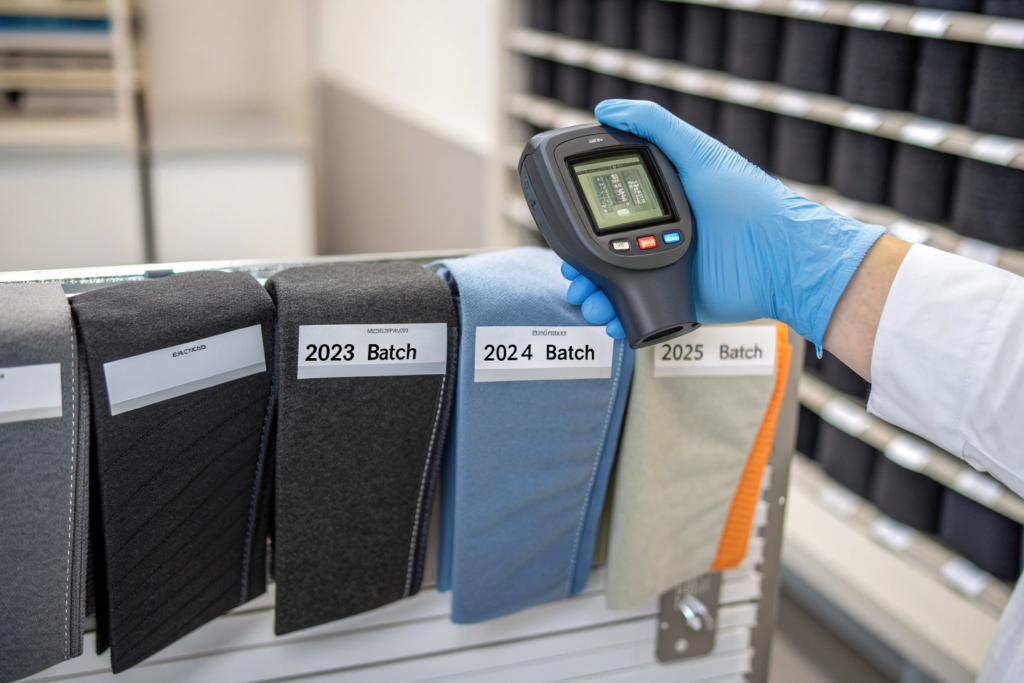
We solve this with a "Spectral Archival" system. When a client’s first bulk uniform order is dyed and approved, we don’t just ship the fabric and close the file. We archive the exact spectral reflectance curve of that approved shade as a permanent digital master. We also retain a physical "Master Standard Swatch" in a light-proof, climate-controlled vault at 21°C and 45% relative humidity, sealed in a nitrogen-flushed foil pouch to prevent oxidation. When the client reorders in 2026 or 2028, we pull the digital master from the archive. The dye recipe is recalculated to account for any slight natural variation in the incoming greige cotton base (which shifts slightly depending on the harvest origin and season). The new dye lot is measured against the archived spectral curve using the same spectrophotometer model, under the same D65 illuminant, at the same 10-degree observer angle. The target is a Delta E CMC (2:1) of under 0.8. Our internal standard for uniform clients with a reorder guarantee is even tighter: under 0.6. This means the human eye, under any light source, cannot perceive a difference between the 2025 jacket and the 2028 jacket. The technology we rely on is described in a technical white paper on long-term color consistency management in contract textiles using spectrophotometric archival standards and climate-controlled physical master retention.
What Happens If the Dye Stuff Manufacturer Discontinues a Pigment We Rely On?
This is a nightmare scenario for any uniform program. The dye manufacturer reformulates their product line, discontinues "Navy 8B," and suddenly the exact chemical pathway to your brand’s signature shade evaporates. Many uniform suppliers simply shrug and send a "close match" that is visibly wrong.
We maintain a "Dye Obsolescence Buffer." For every uniform client color we archive, we identify the specific dye stuffs used to achieve it. We then pre-qualify a secondary dye stuff from a different manufacturer that produces a spectral match within a Delta E of 0.3. This secondary formulation is tested and validated at the time of the initial order, not when the primary dye is discontinued. The secondary recipe sits in the digital archive as a contingency. If the primary dye is discontinued, we switch to the secondary immediately. The client is notified, but they don’t see a color shift because we already proved the match years prior. We also maintain a physical stock of critical pigment concentrates for our top 20 uniform accounts, stored in sealed, temperature-stable containers, with a 24-month shelf life. This buffer buys us time to manufacture the replacement while the client continues to receive uninterrupted dye lots. This proactive approach to supply chain vulnerability is a strategy discussed in how industrial textile dye houses manage chemical supply chain risks and maintain color continuity for long-term contract uniform programs.
Can Pantone Codes Alone Guarantee Uniform Color Consistency Over Time?
No. And buyers who rely solely on Pantone references are setting themselves up for failure. A Pantone code specifies a color under a single illuminant (usually D50 or D65) on a specific paper substrate. It does not account for the metamerism inherent in textile dyeing. Metamerism is the phenomenon where two colors match under one light source but diverge dramatically under another.
A navy dyed on polyester with disperse dyes and a navy dyed on cotton with reactive dyes can both match a Pantone chip under D65 daylight. But under the warm 3000K fluorescent tubes of a hotel lobby, the polyester navy might shift reddish-purple while the cotton navy shifts greenish-grey. The employee wearing the polyester blazer and the employee wearing the cotton trousers will look like they’re wearing two different uniforms, even though both fabrics individually matched the Pantone chip in the lab. This is why we never accept a Pantone code as the sole color specification for a multi-fiber uniform program. We always develop a physical, fabric-specific master standard on the actual production base cloth, and we measure spectral reflectance across a range of illuminants (D65, TL84, A/Incandescent) to ensure the color holds stable under all real-world lighting conditions. The Pantone code is a starting reference. The physical fabric standard, approved by the client under multiple light sources, is the binding contract. The science of metamerism in uniform programs is essential reading in an explanation of illuminant metamerism failure and why physical fabric standards are necessary for multi-component corporate uniform color management.
Which Fabric Weights and Compositions Survive Industrial Laundry Processing?
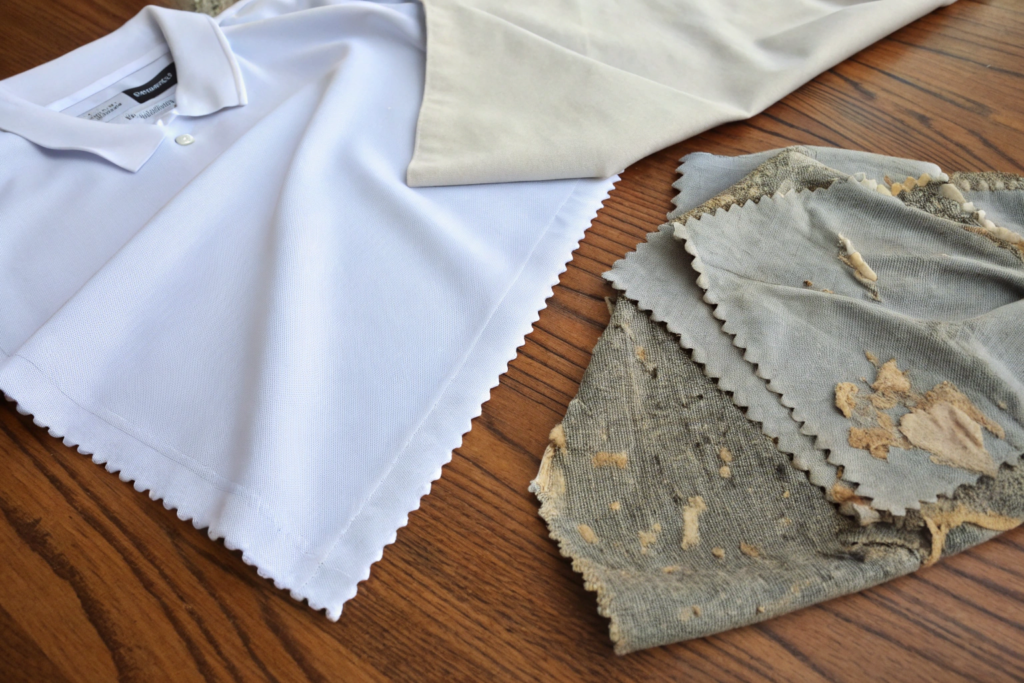
A uniform fabric that looks pristine on day one but disintegrates after six months of industrial washing is not a bargain. It’s a liability. Hospitality and healthcare laundries do not use the gentle cycle. They use continuous batch washer tunnels operating at 75°C with highly alkaline detergents (pH 11-12), hydrogen peroxide bleaches, and mechanical action that subjects the fabric to constant abrasion against other heavy garments. A fashion fabric thrown into this environment emerges as a grey, pilled, shapeless rag within 20 cycles. The fabric hasn’t just faded; it has structurally failed.
Our uniform fabrics are designed with the industrial laundry as the primary use environment, not an afterthought. We use solution-dyed polyester wherever possible. In solution dyeing, the pigment is mixed into the molten polymer before the fiber is extruded. The color is the fiber. It cannot be bleached out because the color isn’t on the surface. For cotton-rich blends that cannot be solution-dyed, we use vat dyes rather than reactive dyes for dark shades. Vat dyes are insoluble pigments that are chemically reduced, infused into the fiber, and then oxidized back to an insoluble state trapped inside the cellulose. They are the most wash-fast and bleach-resistant dye class available. Our 65/35 poly-cotton uniform twill, dyed with vat dyes for the cotton component, retains a colorfastness rating of Grade 4-5 after 50 industrial wash cycles per ISO 15797. The tensile strength retention after the same 50 cycles is above 85% of the original breaking force. The seams don’t pucker because we use a core-spun polyester sewing thread with a hot-wet shrinkage rate matched to the fabric’s shrinkage profile, preventing differential movement during high-temperature drying. To understand the testing standards, an overview of ISO 15797 industrial laundry testing protocols and how uniform fabric performance is evaluated for colorfastness and mechanical durability under institutional washing conditions details the harsh parameters we design against.
Is Antimicrobial Treatment Durable Enough for 50+ Industrial Washes?
A topical antimicrobial spray applied after dyeing is the industry shortcut. It’s cheap, passes the initial AATCC 100 test, and washes out completely within 10 industrial cycles. The uniform loses all bacterial odor control, and the wearer is left with a fabric that actively cultivates microbial growth in the sweat zones.
We use a silver-ion antimicrobial that is embedded into the polyester fiber during the melt-spinning process, not applied topically. The silver ions are distributed throughout the fiber cross-section. As the fiber surface slowly abrades during industrial laundering, fresh silver ions are continuously exposed. This creates a "self-renewing" antimicrobial effect that persists for the functional life of the garment. We test this using AATCC TM100 after 50 industrial wash cycles per ISO 15797. The bacterial reduction rate against Staphylococcus aureus and Klebsiella pneumoniae must remain above 99%. Our in-house test data shows 99.7% reduction after 50 cycles. The key is the embedding, not the coating. The difference between a topical antimicrobial that sits on the fiber surface and an embedded additive that lives inside the polymer matrix is the difference between a temporary claim and a durable performance feature. The durability of fiber-embedded antimicrobials is well documented in a technical comparison of topical versus embedded silver-ion antimicrobial technologies for high-durability workwear and uniform textile applications.
How Does the Fabric Handle Staple Fiber Shedding and Lint in Clean Environments?
Healthcare and cleanroom uniforms have a secondary failure mode that fashion fabrics never consider: fiber shedding. A spun polyester-cotton yarn constantly releases short staple fibers into the air. In a hospital, these airborne fibers carry bacteria. In a electronics cleanroom, they contaminate sensitive manufacturing processes. The fabric must be engineered to minimize lint generation.
We address this with two techniques. First, we use a higher twist multiplier (TM 4.2 instead of 3.6) on all spun yarns destined for healthcare uniforms. The tighter twist locks the short fibers into the yarn structure, physically preventing them from wriggling out. Second, we pass the finished fabric through a singeing machine where the surface passes over a gas flame at 800°C, burning off the loose fiber ends that protrude from the yarn surface. The singed fabric has a smoother, cleaner surface. We then apply an anti-static finish that prevents the remaining micro-fibers from standing up due to electrostatic charge. The finished fabric is tested for lint generation using the Helmke Drum Test, where the fabric is tumbled in a rotating drum and the airborne particles are counted by a laser particle counter. Our healthcare uniform fabric generates fewer than 50 particles per cubic foot of size 0.5 microns or larger after 60 minutes of tumbling, meeting the Class 100 cleanroom standard. The singeing process is explained in depth in a guide to textile singeing and surface finishing techniques for minimizing fiber shedding and lint release in professional and cleanroom uniform applications.
Can Uniform Fabrics Still Look Professional Without Looking "Corporate Dull"?
There is a false binary in uniform sourcing: either the fabric is "boardroom dull"—flat, lifeless, and institutional, making your staff feel like prison guards—or it’s "fashion-forward" and thus inappropriate for a professional environment. The truth is that subtle, quiet luxury exists in the uniform space, and it’s achieved through yarn-dyed textures and tonal variation, not through shine or novelty.
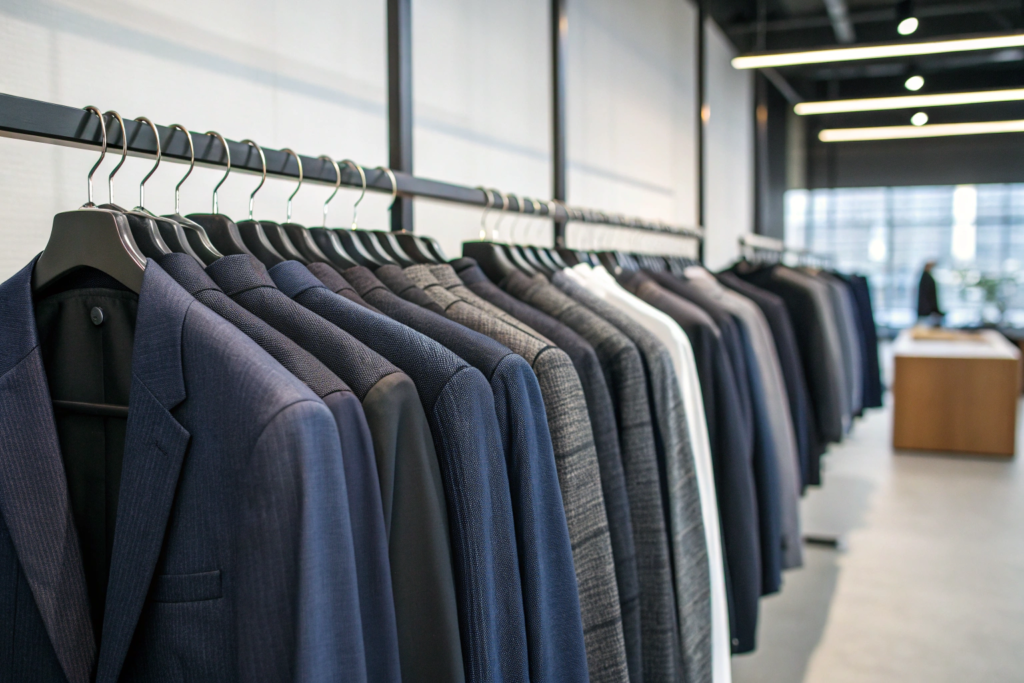
We achieve professional visual interest through what I call "Micro-Texture Engineering." Instead of a flat, piece-dyed poplin that looks like a tablecloth, we use a yarn-dyed fil-à-fil (end-on-end) weave. A black warp yarn and a charcoal weft yarn create a subtle, heathered depth that reads as solid color from five feet away but reveals a quiet, sophisticated texture upon closer interaction. The fabric looks "expensive" without looking "loud." Another technique is a micro-herringbone twill. A standard 3/1 twill is uniform and predictable. A broken twill or a 2/2 micro-herringbone with a 3mm repeat introduces a barely perceptible surface rhythm that catches light gently. It distinguishes the uniform from a generic commodity fabric. The key is that these textures are tonal—same color family, low contrast—not contrasting stripes or checks that read as "fashion." A tonal charcoal herringbone suit reads as authoritative and refined. A black-and-white checkered suit reads as "I’m in a ska band." The difference is entirely in the contrast level and scale of the pattern. These techniques, drawn from luxury menswear but stripped of their ostentation, give uniform fabrics a quiet dignity that employees feel when they put the garment on. The discipline of subtle pattern engineering is often explored in how classic menswear weaving techniques like end-on-end and tonal herringbone are adapted for professional uniform textiles to achieve understated visual depth.
How Do We Avoid the "Shiny Polyester" Look That Cheapens Uniforms?
The "shiny polyester" problem is a fiber cross-section issue. Standard polyester filament is perfectly round. Light hits the round surface, reflects like a mirror, and creates that cheap, glossy, plastic sheen that screams "budget airline cabin crew."
We use a modified cross-section polyester with a multi-lobal or "octagonal" profile. The multiple flat surfaces scatter light in different directions rather than reflecting it directly back to the eye. The visual result is a matte, cotton-like luster. This is not a topical delustering agent that washes off; it’s a permanent geometric property of the fiber itself. For uniform shirting, we often blend this delustered polyester with combed cotton. The cotton fibers wrap around the polyester core, further diffusing the surface reflections. The final fabric has a clean, professional matte appearance under any lighting—harsh fluorescent, warm incandescent, or natural daylight. A buyer can instantly distinguish our uniform suiting from a cheap polyester alternative by holding it under a direct light and tilting it. The cheap one flashes a bright white highlight. Ours shows a soft, diffuse glow. This simple fiber engineering choice is the invisible line between "professional" and "costume." The science of modifying synthetic fiber luster through cross-section engineering is discussed in a materials science overview of polyester fiber cross-section modification for controlling luster and achieving natural-fiber aesthetics in synthetic uniform textiles.
Can Uniform Fabrics Incorporate Subtle Branding Through Texture Instead of Print?
Yes, and this is the highest form of uniform customization. A printed logo on a chest pocket is temporary branding. It fades, cracks, and feels like an afterthought. A woven-in tonal jacquard pattern that subtly repeats the brand’s monogram or a geometric motif derived from the logo is permanent, sophisticated branding that becomes part of the fabric architecture itself.
We’ve developed custom uniform jacquards for several corporate accounts. The pattern is a 5mm repeat woven into the fabric using a dobby loom. The weave is tonal—a matte warp and a slightly brighter weft of the same color—so the pattern is only visible from a conversational distance. It reads as a subtle watermark, not a garish print. This technique is particularly effective for high-end hospitality and private aviation uniforms, where the brand identity must be ever-present but never shouted. The development process involves digitizing the brand’s logo or a simplified geometric abstraction of it, reducing it to a 5mm x 5mm pixel grid, and mapping the pixels to a dobby peg plan. The woven result is permanent, will never fade or peel, and survives the entire lifecycle of the garment. The technique is an extension of how custom jacquard weaving techniques are used to create subtle, tonal corporate branding textures in luxury uniform fabrics for high-end hospitality and private aviation sectors.
Conclusion
Uniform fabric is not a downgraded fashion fabric. It is a separate engineering discipline with inverted priorities. We have mapped the specific technical characteristics that distinguish a uniform-appropriate textile: the Neutral Anchor aesthetic that deliberately recedes from visual attention, the thermoplastic crease retention that holds a sharp front after 12-hour shifts, the core-sheath yarns that resolve the paradox of breathability and structure, and the anti-microbial silver-ion chemistry embedded in the fiber rather than painted on the surface. We have proven that color consistency over a three-year reorder cycle is not a hope but a spectrally archived guarantee with a Delta E under 0.6. We have revealed the micro-texture techniques—end-on-end weaves, tonal herringbones, multi-lobal delustered polyester—that deliver quiet, professional elegance without drifting into the shiny, fashion-forward territory that kills uniform credibility. A uniform should make your staff look competent, consistent, and authoritative. It should never make them look like they’re trying to get photographed outside a fashion week venue.
Your staff deserve fabric that works as hard as they do.
If you’re developing a new uniform program or need to replace an underperforming supplier who doesn’t understand the difference between a fashion textile and a workwear textile, let’s talk. Contact our Business Director, Elaine, at elaine@fumaoclothing.com. She will send you our Uniform Standards swatch book with the 45 core colors, the performance spec sheets for our industrial laundry-certified base cloths, and a reorder color guarantee document for your compliance files. Let’s build a uniform that respects the profession and the people who wear it.