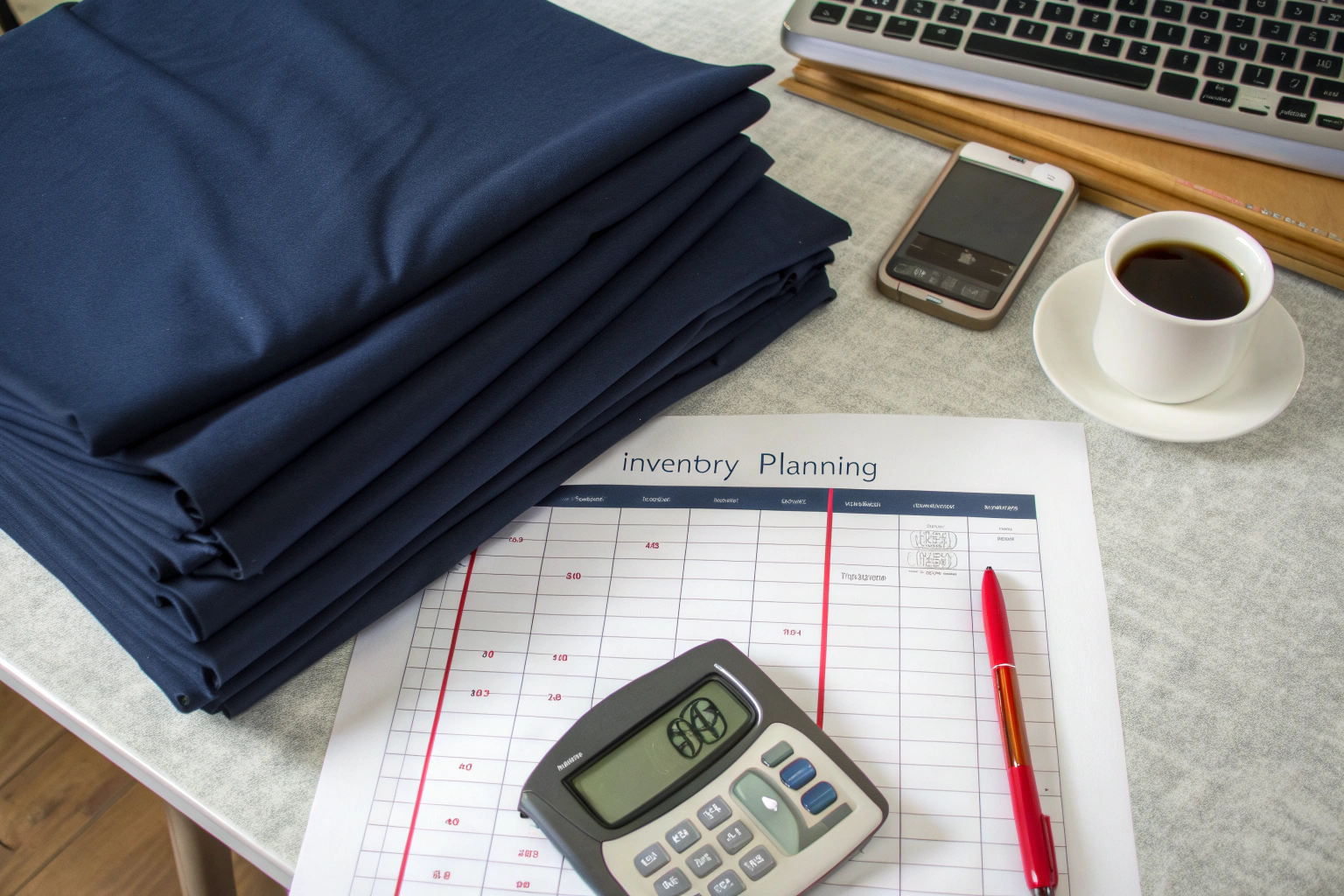
You’ve done the math. Your tech pack calls for 400 GSM French Terry. You order 5,000 yards. You plan to cut 10,000 hoodies. The fabric arrives. It feels thin. You weigh it. It’s 360 GSM. That’s 10% lighter. You just lost 500 hoodies worth of fabric. You don’t have enough inventory to fulfill your wholesale orders. You scramble to air freight a top-up order at triple the cost. Your production schedule is blown. Your retail partners are furious. All because the fabric weight on the spec sheet was a work of fiction. I’ve seen this exact scenario destroy cash flow and brand relationships overnight.
Fabric weight, measured in GSM (Grams per Square Meter) or OZ (Ounces per Square Yard) , is not just a number on a tech pack. It is the Single Most Important Variable in Inventory Yield Planning. A 5% variance in weight translates directly to a 5% variance in the number of garments you can cut. If you planned your entire seasonal buy based on a target weight, and the actual weight is consistently under spec, you are Short on Fabric. You miss shipments. You lose revenue. Conversely, if the fabric is consistently over weight, you are Overstocked and Over Budget. You bought 5,000 yards of "400 GSM" fleece, but it’s actually 440 GSM. You paid for 44,000 lbs of fabric but only needed 40,000 lbs. Your cost per garment just went up 10%, and you have 500 yards of leftover fabric that you can’t use. That’s dead cash sitting on a shelf.
At Shanghai Fumao, we treat weight consistency as a Financial Covenant, not a loose guideline. We understand that our +/- 3% tolerance on GSM is the difference between our clients hitting their margin targets or explaining a material variance to their investors. I’m going to break down exactly how weight variation happens, how it wreaks havoc on your cutting room and your balance sheet, and the specific technologies and protocols we use to keep our fabric weight dead-on, roll after roll, year after year.
How Does GSM Variation Destroy Garment Yield Predictions?
Let’s get into the hard math. Garment yield is calculated by dividing the Total Fabric Area by the Fabric Consumption per Garment. The total fabric area is determined by the Length (Yards) and the Width (Inches) . The weight (GSM) doesn’t directly appear in that area calculation. So why does weight matter for yield?
Because Fabric is Sold by Length (Yards), but Made by Weight (Kilos) . A knitting machine or a weaving loom consumes yarn by weight. If the yarn is slightly thicker (higher Denier or higher Cotton Count variation), the machine produces a Heavier Fabric. But the supplier still rolls it up and sells it to you as a "Yard." If that yard is 10% heavier, the supplier Lost 10% Yield on their yarn purchase. To compensate, unethical mills might Stretch the Fabric on the stenter to make it appear longer and thinner. They hit the weight spec on the lab report, but the fabric is Unstable. It will relax and shrink in your warehouse, and you’ll end up with fewer usable yards.
Here is the direct yield impact. You order 5,000 yards of 60-inch fabric at 400 GSM. The total weight of this shipment should be approximately 11,000 lbs. You planned your garment consumption based on that weight and thickness. If the fabric arrives at 360 GSM, it’s Thinner. A thinner fabric has More Linear Yards per Kilo. The supplier might still ship you 5,000 yards, but those yards are physically less substantial. Your cutting room lays it out. It seems fine. But because it’s thinner, the Drape is Different. It might stretch more on the cutting table. The pieces might distort. And most importantly, the End Customer Feels It. They expected a heavy, cozy hoodie. They got a lightweight sweatshirt. Returns spike. The yield in units might be the same, but the Brand Yield (customer satisfaction) plummets.
At Shanghai Fumao, we monitor Both Length and Weight. We ensure that 5,000 yards of 400 GSM fabric contains the correct Mass of Fiber. We don’t play the stretching game.
What Is the Difference Between Finished Weight and Relaxed Weight?
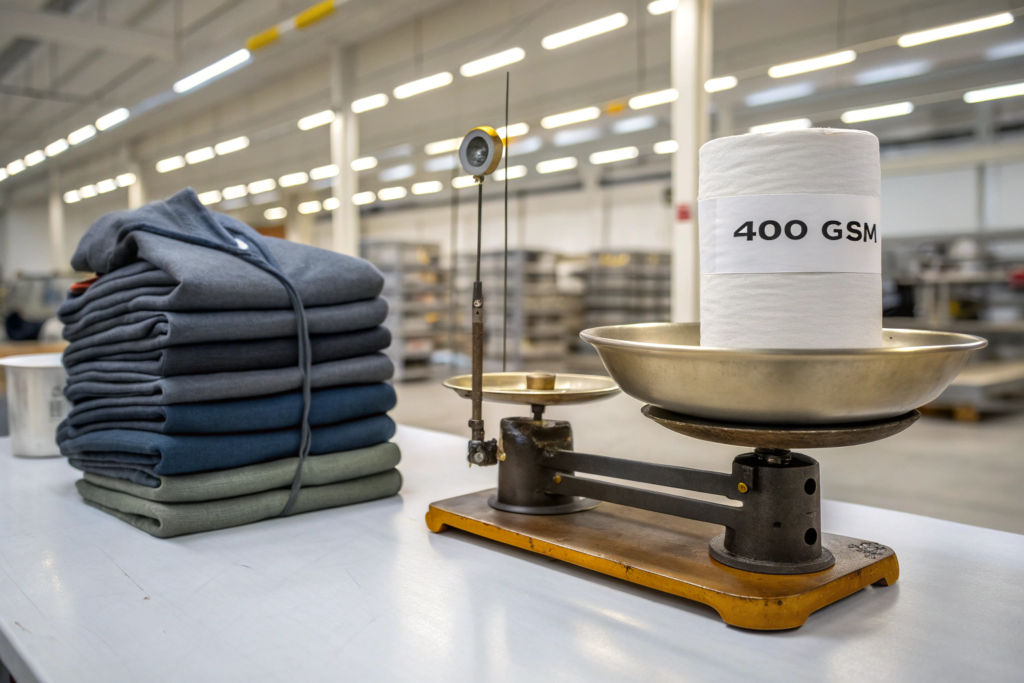
This is a trap that catches even experienced buyers. Finished Weight is the GSM measured immediately as the fabric comes off the stenter frame and is rolled up. It’s hot. It’s under tension. It’s often Lighter than the true weight because it’s been stretched lengthwise during drying.
Relaxed Weight is the GSM measured after the fabric has been unrolled and allowed to rest for 24-48 Hours in a standard atmosphere (65% RH, 20°C). During this time, the yarns "bloom." They absorb moisture from the air. The crimp in the yarn relaxes. The fabric shrinks slightly in length and width, becoming Denser and Heavier per square meter.
A shady mill will quote you the Finished Weight (e.g., 200 GSM). By the time the fabric hits your cutting table in the US, it has relaxed to 220 GSM. You just got a 10% heavier fabric than you ordered. Your lightweight summer blouse fabric now feels like a mid-weight shirt. You can’t use it. Or worse, they ship you a fabric that was Over-Stretched to hit a target Finished Weight. When you wash the garment, it shrinks 8% because the yarns snap back to their relaxed state. That’s a size change defect.
At Shanghai Fumao, we test Relaxed GSM only. We cut a sample, let it sit in our Conditioned Lab for 24 hours, and then weigh it on a calibrated GSM Cutter and Scale. The number on our lab report is the number you will see in your warehouse. No surprises. You can read more about this in the ASTM D3776 standard test method for fabric mass per unit area.
Why Does Moisture Regain Affect Fabric Weight in Warehousing?
This is the invisible hand of physics messing with your inventory value. Textile fibers are Hygroscopic. They absorb and release moisture from the air. Cotton can absorb up to 8% of its weight in water. Nylon absorbs 4%. Polyester absorbs 0.4%.
Imagine you are a brand in Arizona (Dry Climate) . You receive a shipment of cotton fabric that was weighed and inspected in humid Keqiao, China (Wet Climate) . The fabric had 7.5% moisture content when it left our factory. It travels across the ocean. It sits in your dry warehouse for a month. The moisture content drops to 4.5%. The fabric just Lost 3% of its Weight. Your 10,000 lb shipment is now 9,700 lbs. You didn’t lose any fabric. You lost water weight. But if you are selling the fabric by the pound to a jobber, or if you are calculating yield based on a "per pound" basis, that 3% is a financial discrepancy.
At Shanghai Fumao, we use Conditioned Weight for all official transactions. We use Oven-Dry Testing to determine the exact Moisture Regain of the lot, and we mathematically correct the weight to the Commercial Regain Standard (e.g., 8.5% for Cotton). This ensures you are paying for Fiber, not Water. When you store our fabric, you should maintain a stable 50-60% Relative Humidity to prevent the fabric from becoming brittle (too dry) or moldy (too wet). You can learn more about this from the textile storage guidelines on the Textile Museum’s website.
How Does Fumao Control Weight During Knitting and Weaving?
Weight control starts at the very beginning, with the Yarn. You cannot make a 400 GSM fleece with yarn that is too thin. Period. Our first line of defense is Incoming Yarn Inspection.
Every single cone of yarn that enters our factory is tested for Yarn Count (Ne for Cotton, Denier for Polyester) . We use an Uster Evenness Tester. This machine pulls the yarn through a capacitor at 400 meters per minute and measures the Mass Variation every 8 millimeters. If the yarn is even 2% lighter than spec, the resulting fabric will be 2% lighter. We reject yarn lots that fall outside our +/- 2% Count Tolerance.
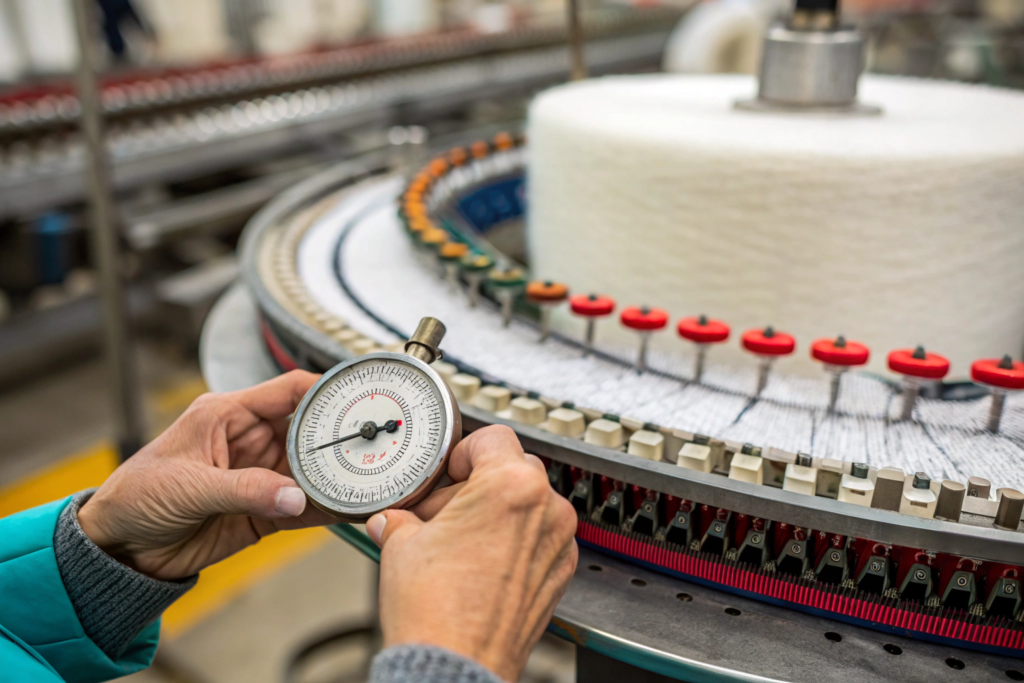
During production, we monitor Stitch Length (for Knits) and Pick Density (for Wovens) . These are the mechanical settings that determine how much yarn goes into a given length of fabric. On a knitting machine, the Stitch Cam Setting controls loop size. A difference of 0.1mm in stitch length can change the fabric weight by 5%. Our knitting mechanics use Dial Gauges to check stitch length every 2 hours. On a weaving loom, we monitor Picks Per Inch (PPI) . The loom computer counts the weft insertions. If the PPI drops (fabric becomes looser/lighter), the machine alarms. We also use Automatic Weft Feeders that maintain constant tension on the yarn, preventing "loose picks" that create light spots.
What Is the Tolerance for Weight Variation in a Dye Lot?
This is a critical specification that should be in every purchase contract. The industry standard for Piece-Dyed Wovens is +/- 5%. At Shanghai Fumao, our internal standard is +/- 3% , and we aim for +/- 2% on core programs.
Why is the tolerance so "wide" (even 3% is noticeable)? Because dyeing and finishing Adds Weight. Fabric is not just fiber. It has Size (Starch), Dyes, Softeners, and Finishes applied to it. The amount of chemical uptake varies slightly from batch to batch. A heavy softener application can add 2-3% to the finished weight.
We manage this by Weighing the Input and Output. We know the exact weight of the Greige Fabric entering the dye machine. We know the exact amount of chemicals added. We can predict the finished weight with high accuracy. After finishing, we check the weight on our Mahlo Weight Monitoring System mounted on the stenter frame. This system uses Beta Radiation (harmless, very low level) to measure the mass of the fabric passing underneath it, in real-time, without touching it. If the weight drifts outside the tolerance, the stenter operator adjusts the Overfeed (the speed at which fabric is fed into the oven). More overfeed = more fabric bunched up = Higher GSM. Less overfeed = fabric stretched tight = Lower GSM.
This real-time control loop is what separates a professional finishing operation from a "dump and run" dye house. We don’t guess at the weight. We measure it 1,000 times per second.
Can You Guarantee Weight Consistency Across Different Fabric Widths?
This is a tricky one. The answer is Yes, but it requires separate setups. You cannot simply take a fabric finished at 60 inches wide and slit it to 58 inches and expect the GSM to be the same. When you cut off the selvedge, you are removing a specific Mass of fabric. The remaining fabric has the same thickness but a narrower width. The GSM of the body fabric hasn’t changed, but the Average GSM of the Roll might appear to change if you include the dense selvedge in the calculation.
We guarantee consistency by running Separate Finishing Batches for different width requirements. If a client needs both 60-inch and 58-inch rolls of the same fabric, we finish them as separate lots with specific stenter width settings. We don’t just run 60-inch and then razor-cut it down.
The challenge comes with Tubular Knits. A tubular knit is a continuous tube. When you slit it open, the "Open Width" can be 58 inches or 62 inches depending on how much you spread it on the slitting table. The GSM is inversely proportional to the width. Wider slit = Lower GSM. Narrower slit = Higher GSM. That’s why we always specify "GSM at Finished Width." For knits, we target a specific Tube Diameter during knitting and finishing to achieve a consistent Slit Width and GSM. This is a dance between the knitting machine cylinder size and the finishing tension. Our knitters are masters of this dance.
Why Is Heavyweight Fabric More Prone to Weight Inconsistency?
Heavyweight fabrics (400 GSM and above) like Fleece, French Terry, and Sherpa are Monsters of Variation. The heavier the fabric, the more Raw Material there is to vary. A 5% error on a 100 GSM chiffon is 5 grams—barely a whisper. A 5% error on a 500 GSM fleece is 25 grams. That’s a Quarter of a Kilo per Meter. That’s massive.
The main culprit is the Backing Yarn or Filling Yarn. In a three-thread fleece, the heavy, bulky yarn that creates the loops on the back is very sensitive to Tension and Crimp. If the tension on the loop-forming sinkers is too tight, the loops are small and tight, and the fabric is Lighter and Stiffer. If the tension is loose, the loops are big and fluffy, and the fabric is Heavier and Softer. This tension can drift over an 8-hour shift as the machine heats up.
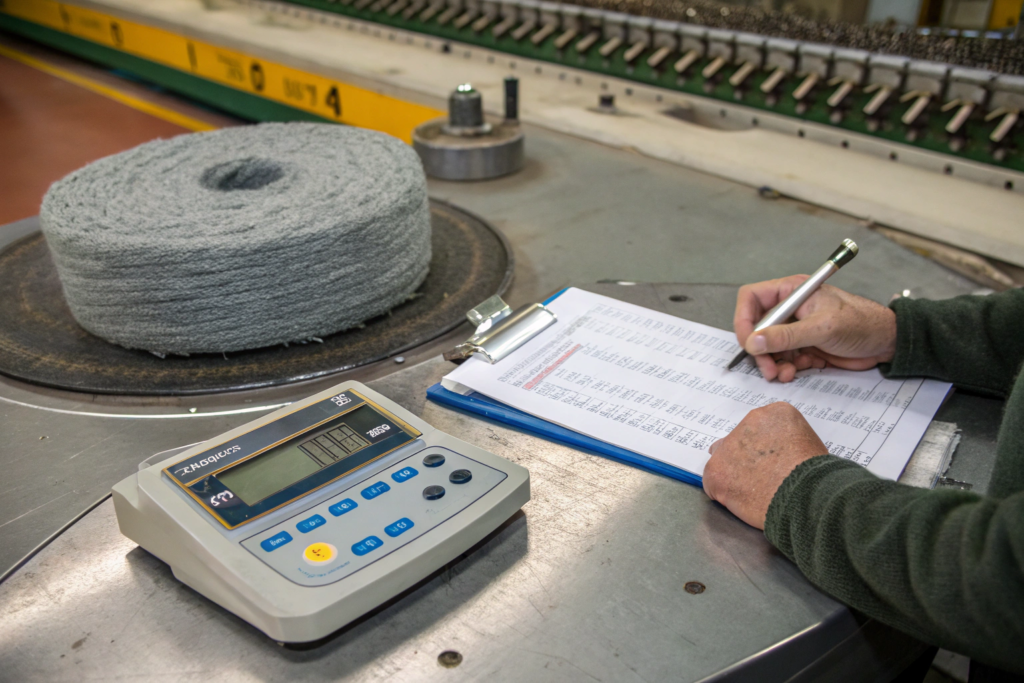
At Shanghai Fumao, we combat this with Mandatory Shift-Change Weighings. At the start of the shift, middle of shift, and end of shift, the knitting operator cuts a sample of the greige fleece and weighs it on a Portable GSM Scale right at the machine. If the weight is trending down (yarn tension tightening), they adjust the Yarn Feed Rate. This is old-school, hands-on quality control. No fancy laser can fix a tension drift. It requires a human with a scale and a wrench. (Here I have to jump in—our best fleece knitter, Mrs. Zhang, can tell the GSM of a roll just by squeezing it with her thumb and forefinger. She’s right within 2% every time. That’s 25 years of experience you can’t download from a software update.)
Does the Brushing Process Reduce Finished Fabric Weight?
Yes. Significantly. This is a "gotcha" that surprises many designers. They spec a 400 GSM greige fleece. Then they want it Heavy Brushed on both sides for a soft, cozy hand feel. The brushing machine uses Rotating Wire Rollers that literally Tear Fiber Ends Out of the Yarn to create the fuzzy pile. That fiber that is torn out? It goes into a Vacuum Waste Bin. It is no longer part of the fabric.
A heavy brushing process can Reduce Fabric Weight by 5-8% . That 400 GSM greige fleece might finish at 370 GSM after brushing. If you didn’t account for this, your finished fabric is now a completely different weight class. You can’t add the fiber back.
We manage this by Reverse Engineering the Greige Spec. If a client wants a Finished Weight of 400 GSM Brushed Fleece, we know from experience that we need to knit a 430-440 GSM Greige Fabric. We "overbuild" the greige to compensate for the brushing loss. We also control the Brush Pressure and Speed precisely to ensure the weight loss is consistent across the entire dye lot. This is why you can’t just take a stock greige fabric and "brush it a little." The starting point has to be engineered for the end result.
How Do You Account for Weight Loss in Garment Washing?
This is the next step in the weight loss journey. The fabric is finished. It’s 400 GSM. You cut it. You sew it into a hoodie. Then you send it to a Garment Wash for a vintage, soft look. The garment wash (especially with enzymes or pumice stones) Beats Up the Fabric. It abrades the surface. More fibers fall off. The garment comes out Lighter and Thinner.
This weight loss is part of the aesthetic. But it affects the Hand Feel and Durability. A brand needs to know the Post-Wash GSM to set customer expectations. A hoodie that is 400 GSM "Pre-Wash" might be 360 GSM "Post-Wash." It’s still a great hoodie, but it’s not a 400 GSM hoodie anymore.
At Shanghai Fumao, we offer Garment Wash Simulation in our lab. We take a swatch of the finished fabric and run it through a Lab-Scale Washing Machine with the specific wash recipe (e.g., Cellulase Enzyme, 45 min, 40°C). We then dry it and measure the Final Weight and Shrinkage. We provide this data to our partners so they can set accurate product descriptions. Claiming a garment is "400 GSM Heavyweight" when it’s actually 360 GSM after the wash you specified is False Advertising. We help our clients avoid that legal and reputational trap.
How Should Brands Audit Fabric Weight Upon Delivery?
Trust, but verify. Even with a partner like Shanghai Fumao who provides detailed lab reports, you should have a Standard Operating Procedure (SOP) for incoming inspection. It protects both of us. If there’s a shipping error or a mix-up, catching it at the receiving dock is a \$500 problem. Catching it after cutting 5,000 yards is a \$50,000 problem.
Here is the 10-Minute Receiving Inspection for Fabric Weight:
- Select Random Rolls: Pick 3-5 rolls from different pallets in the shipment. Do not let the warehouse pick them for you.
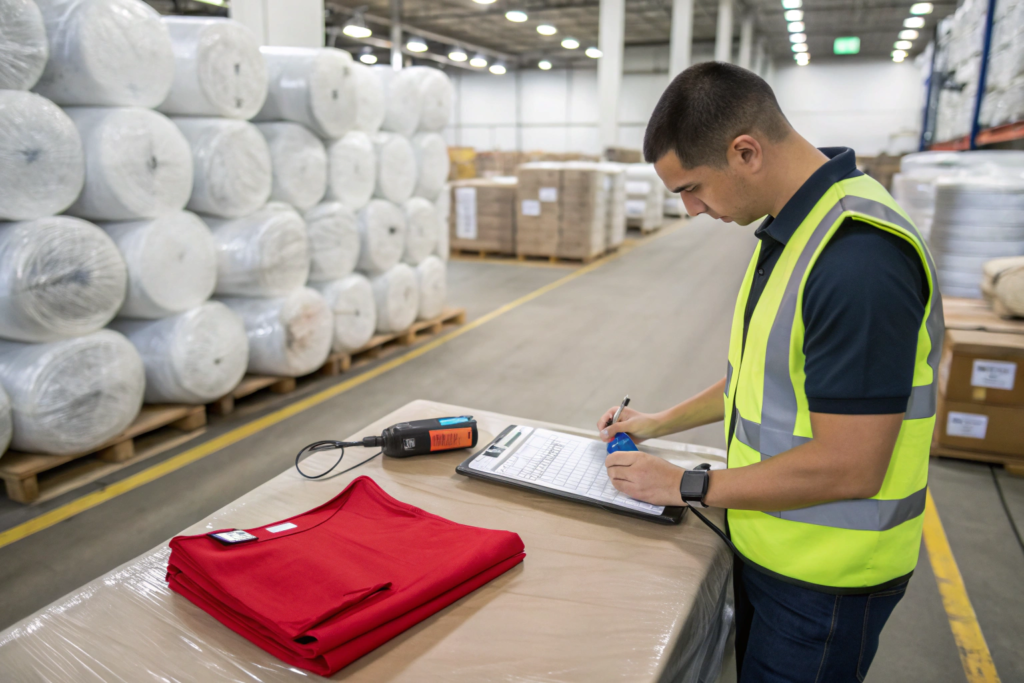
- Unroll and Relax: Pull off the first 2 yards of the roll (it’s often compressed and distorted). Cut a sample from the Middle of the roll width.
- Use a GSM Cutter: Use a Standardized Round Cutter (100 square cm area). Don’t cut a square with scissors—it’s inaccurate.
- Weigh on a Calibrated Scale: Use a digital scale that reads to 0.01 grams. Multiply the reading by 100 to get GSM.
- Compare to Packing List and Lab Report: Is it within +/- 5% of the ordered spec? If it’s outside 5%, Stop Unloading and contact us immediately.
Also, weigh the Entire Roll on a floor scale. Compare the actual gross weight to the weight listed on the roll ticket. A significant discrepancy (more than 2-3 lbs per roll) indicates a problem with either the length or the GSM.
What Equipment Is Needed to Verify GSM In-House?
You don’t need a \$50,000 lab. You need about \$150 worth of equipment to do a basic verification.
- GSM Round Cutter (Die Press): \$80 – \$120 on Amazon or Alibaba. Get the 100 cm² size. This is standard.
- Replacement Cutting Blades: The blade dulls. Replace it every 100 cuts.
- Digital Pocket Scale: 0.01g Readability, 200g Capacity. \$20. Calibrate it with a 100g Calibration Weight (\$10).
- Self-Healing Cutting Mat: To protect your table and the cutter blade.
The Process: Place the fabric on the mat. Place the cutter on the fabric. Press down firmly and give it a quarter turn. You have a perfect 100 cm² circle. Place it on the scale. Reading = 3.95 grams? Your GSM is 395. It’s that simple.
Warning: Do Not use a generic "fabric scale" that claims to measure GSM by just placing a swatch on it. Those are garbage. They assume a specific fabric density. The Cutter Method is the only accurate field method.
Should You Use Conditioned Weight or As-Received Weight?
For a Quick Pass/Fail Audit at the warehouse dock, As-Received Weight is fine. You’re looking for gross errors (e.g., ordered 400 GSM, received 320 GSM). The moisture difference isn’t going to account for an 80 GSM gap.
But for Official Dispute Resolution or Precision Cutting Yield Calculations, you must use Conditioned Weight. Here’s the proper lab procedure:
- Cut sample.
- Place sample in a Standard Atmosphere (21°C +/- 1°C, 65% RH +/- 2%) for 24 Hours . (A closet with a humidifier and a thermometer works).
- Weigh sample (W1).
- Place sample in a Lab Oven at 105°C for 2 hours to remove all moisture.
- Weigh sample immediately (W2 = Oven Dry Weight).
- Calculate Commercial Weight = W2 x (1 + Commercial Regain %).
This is what a professional testing lab (SGS, Intertek) will do. If you end up in a legal dispute over fabric weight, this is the only method that holds up. At Shanghai Fumao, our CNAS lab uses this exact protocol for every Certificate of Analysis we issue.
Conclusion
Fabric weight is the silent language of textile economics. It speaks directly to your Gross Margin, Your Inventory Turnover, and Your Customer Satisfaction. A fabric that is consistently on-spec is a silent partner in your success. A fabric that varies wildly is a noisy saboteur, creating chaos in the cutting room, confusion in the warehouse, and disappointment in the hands of the end consumer.
We’ve traced the journey of weight from the yarn cone to the finished roll. We’ve seen how Stitch Length, Brushing Loss, Moisture Regain, and Relaxation all conspire to shift that number on the scale. At Shanghai Fumao, we’ve built our entire quality system around taming these variables. We don’t just report a weight; we Engineer a Weight. We use Uster testers on the yarn, beta gauges on the stenter, and conditioned lab protocols on the final product. We do this because we know that when you order 400 GSM fleece, you’ve built a financial model around 400 GSM fleece. We will not let a 40 GSM error destroy that model.
If you’re tired of the "Weight Lottery" with your current suppliers and you want a partner who treats fabric weight as a science, not a suggestion, let’s talk. We can provide weight consistency data from our last 100 dye lots to show you exactly what our variance looks like. It’s tight. It’s predictable. It’s profitable.
Reach out to our Business Director, Elaine. She can send you our Weight Consistency White Paper and discuss how we can stabilize your most critical fabric programs. Her email is elaine@fumaoclothing.com. Let’s get your inventory planning back on solid ground.