
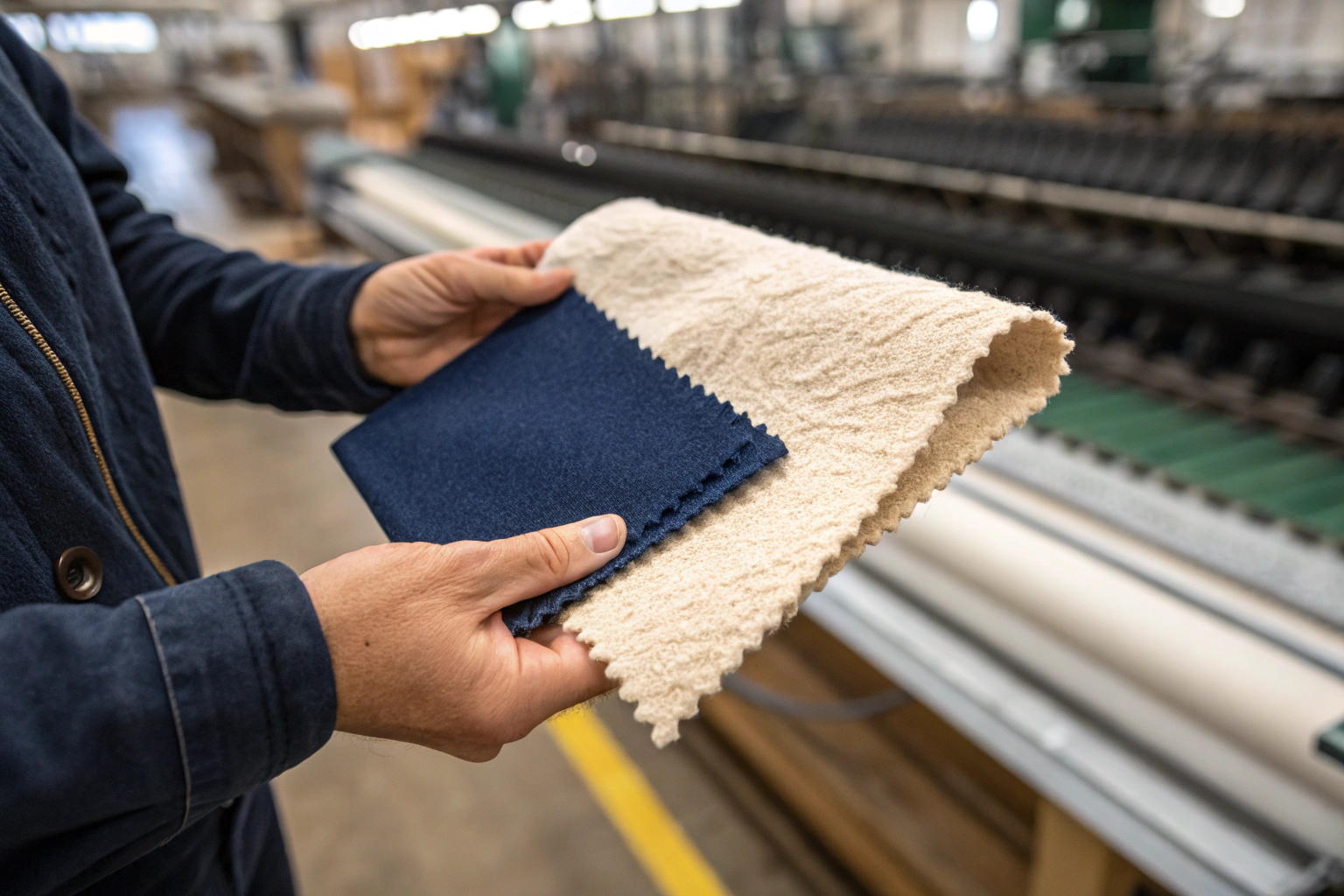
Let’s face it. You find that perfect 400 GSM organic cotton fleece sample at a trade show. The hand feel is incredible. The drape is just right for your new streetwear collection. Then you get the wholesale quote and your stomach drops. It feels like you have to choose between eating top ramen for six months or downgrading to a scratchy, lifeless textile that looks like a dishrag after two washes. I’ve seen that look of defeat on buyer’s faces a hundred times. You want the Zara quality but you’re working with a Kickstarter budget. It’s a brutal squeeze.
Absolutely. You can source premium fashion fabric on a budget. But you have to stop thinking like a retail shopper and start thinking like a supply chain strategist. The secret isn’t finding a "cheap" supplier—cheap fabric is the most expensive mistake you’ll ever make. The secret is eliminating the fat in the middle of the supply chain. At Shanghai Fumao, we operate in Keqiao, the world’s single largest textile cluster. We aren’t traders flipping fabric from a catalog; we own the weaving looms and control the finishing vats. This vertical integration means you pay for the yarn and the labor, not the 30% markup from three middlemen. You can absolutely afford that double-brushed poly-spandex. You just need the right partner who knows how to shave pennies off the process without shaving quality off the yarn.
I’m going to let you in on exactly how we do it here in Zhejiang. This isn’t theory. This is the gritty, lint-covered reality of the textile floor. I’ll walk you through how we leverage China’s insane production calendar to save you money, how we turn deadstock into your secret profit weapon, and why our specific location in Keqiao is the cheat code for small-batch orders. Stick with me. By the end of this, you’ll know how to talk to any factory like a pro and get that luxury hand feel for a fraction of the expected cost.
How Does China’s Manufacturing Calendar Cut Costs?
Timing isn’t just about when you need the goods. It’s a hardcore pricing lever. Most European and American buyers look at a calendar and see "Spring" or "Fall." We look at a calendar and see "Peak Electricity Surcharge" or "Idle Machine Discount." Understanding the rhythm of the Chinese textile year is how you stop paying peak season freight rates and start negotiating from a position of strength. We’ve been doing this for over 20 years in Keqiao, and we can predict a dye house bottleneck like a meteorologist predicts a storm.
If you plan production to hit the factory floor during the lull between holidays, you save money. Simple as that. Specifically, June and July in Keqiao are brutally hot. The dyeing vats are steaming. Orders slow down because European designers are on holiday. This is your window. We can often secure faster turnaround times and occasionally even slightly better pricing on labor because the factory wants to keep the line moving to retain skilled workers. Conversely, if you drop a PO on us in late September expecting delivery before Chinese National Day (Golden Week), you’re going to pay a premium for air freight or you’re going to wait. At Shanghai Fumao, we actually build this calendar into our client onboarding. In 2022, we helped a Canadian activewear startup save roughly 12% on their landed cost just by shifting their cut-off date by three weeks to avoid the post-Chinese New Year rush when everyone is scrambling for greige goods.

Why Does "Dead" June Offer the Best Fabric Lead Times?
We call June the "sweat equity" month around here. (Here I have to jump in—our R&D team actually prefers testing new coating finishes in June because the humidity gives us a true torture test for how the fabric will perform in Florida or Southeast Asia). Most buyers think the factory is closed in summer. Nothing could be further from the truth. We’re open. We’re just not slammed with 10 million meters of winter coat fabric. This is when you want to do your sampling and your first small production run.
Let’s break down the calendar reality. The period from March to May is insane for summer fashion. August to October is chaos for winter bulk. But June-July and November-December? That’s when the machinery breathes. In November 2023, a European customer needed a rush replenishment of a custom-printed silk modal blend. Normally, screen setup takes 5 days. Because our printing factory was in a post-peak lull, we got the screens burned in 48 hours and the goods on the water in 14 days total. You can’t get that in April. You just can’t.
The following table shows the general cadence of our industry. Use this to plan your budgets. It’s a game changer.
| Period | Industry Status | Impact on Price & Lead Time | Best Action for Buyers |
|---|---|---|---|
| Jan – Feb | Chinese New Year (CNY) | Shutdown (2-4 weeks) . Extremely volatile post-holiday pricing as workers return. | Do Not Order. Complete pre-production 6 weeks prior to holiday to be first in line when gates reopen. |
| Mar – May | Peak Season 1 (Summer Goods) | High demand. Lead times extend 7-10 days. Price firm. | Order 90 days out. Expect delays. |
| Jun – Jul | Off-Peak Opportunity | Lower demand. Machine capacity open. Faster sampling. | Negotiate slightly better terms. Run complex developments (jacquards, coatings). |
| Aug – Oct | Peak Season 2 (Winter/Fall) | Maximum pressure. Yarn prices spike. Dye vat queues long. | Avoid if possible. Pay premium for speed. |
| Nov – Dec | Year-End Clearance | Factories push to hit export quotas. Deals on greige stock. | Opportunistic buying of core qualities. |
Can You Really Ship Fabric During Chinese New Year Shutdown?
Let me be blunt. No. The physical factory gates are locked. The dye machines are drained. The power is sometimes turned off at the main breaker. But here is what the smart buyers at Shanghai Fumao understand: Shipping is not the same as Production. The boat still leaves the port. The container yard in Ningbo is still open.
The pain point is that a buyer wakes up on February 1st and emails us for 5,000 yards of brushed jersey. They don’t realize that 90% of our staff is on a train back to Sichuan or Hunan province. The trick we teach our clients is the "Pre-Positioned Greige Strategy." Before the holiday (usually around December), we work with the client to forecast basic, high-volume needs. We weave the greige (un-dyed) fabric and store it in our warehouse. When the factory reopens, that customer’s greige goes straight to the front of the dye line. Everyone else is waiting for the looms to start weaving again.
A European fashion brand we work with does this religiously. They learned the hard way after missing a March retail window in 2021. Now, they finalize their tech packs by mid-December. We weave the base cotton spandex before the holiday. The week after Lantern Festival, while other brands are just sending PO numbers, that brand’s fabric is already in the dye bath. It saves them three weeks of post-holiday gridlock. If you want to understand more about the massive migration during this period, it’s worth reading how Chinese New Year affects global textile supply chain logistics. The roads are empty in the cities, but the backlog of orders is about to be a mountain.
And here is the pro tip regarding customs clearance and the US tariff situation. Because we are based in China with a diversified client base (EU, RCEP, Belt & Road), we have optimized our shipping lanes. A lot of US buyers are paranoid about tariffs right now. That’s fair. But by planning your production window to hit the lulls (June or November), you often offset the tariff cost just through lower FOB fabric pricing and cheaper ocean freight rates. It’s a wash in many cases. For a deep dive on current trade policy impacts, I often check the latest US textile and apparel import monitoring data to see where the market is heading.
Is Custom Small-Batch Fabric Possible Without High MOQs?
This is the number one question I get on LinkedIn. The myth is that Chinese mills only want to run 10,000 meters per color. That used to be true 15 years ago when the domestic market was small and we lived off Walmart orders. But Keqiao has changed. We changed. With the rise of e-commerce and fast fashion demanding 50 styles a week instead of 5 styles a season, we had to adapt or die. Shanghai Fumao retooled our entire approach specifically for the "wholesale budget but small quantity" client.
Yes, it is possible. But you have to be flexible on two things: 1. The base cloth (greige) and 2. The dye method. We cannot set up a custom 60s yarn count for just 500 meters—that requires a full spinning lot. But if you choose from the 30,000+ greige fabrics we have already in stock in our warehouse, we can dye it in small lots. Our cooperative dyeing partners in Keqiao now run "sample pots" that hold as little as 50kg of fabric. That’s enough for 100-200 meters of fabric. For a streetwear brand doing a limited drop of 150 hoodies, that’s perfect. You get the premium feel of our Shanghai Fumao construction without the 5,000-meter commitment.

What Are the Real Costs of Custom Dyeing Small Fabric Lots?
Let’s talk turkey. You want 300 meters of 300GSM fleece in a specific shade of "Dusty Rose" that matches your logo. If we run that through the big production jiggers, the dye cost per meter is low, but the machine set-up fee is high. For small lots, the math flips. Here is the dirty secret: The biggest cost in small-batch dyeing isn’t the dye powder. It’s the water and the machine clean-up.
In a large-scale run, we dye 1,000kg of fabric. The cost of heating that massive vat of water to 130 degrees Celsius is spread across thousands of yards. In a small 50kg sample pot, we still have to heat the water. The energy cost per yard is higher. That’s just physics. You are paying for the privilege of exclusivity. In July 2024, a US-based swimwear designer wanted 150 yards of recycled nylon in a custom teal. The lab dip fee was \$100. The actual dye lot charge for that 50kg pot was \$1.50 per yard. The same fabric in a 1,000kg run would be \$0.90 per yard. She paid an extra \$0.60/yard to avoid having 2,000 yards of deadstock. That’s a win in my book. You maintain cash flow.
This is where our CNAS-certified lab at Shanghai Fumao becomes your best friend. We don’t just eyeball the color. We use a spectrophotometer to read the Delta E (color difference). For small lots, consistency is the biggest risk. One degree of temperature variation in a small pot and the shade shifts. Our lab techs—some of whom have been matching colors by eye for 30 years—lock in the recipe so that if you reorder in 6 months, the Dusty Rose matches. I often send clients to check out communities like the Fabric and Textile Innovators group on LinkedIn to see what other designers are saying about minimums and color matching.
Can I Use Recycled Polyester for Low Minimum Fashion Orders?
Short answer: Yes, and you absolutely should. The market for sustainable textiles has exploded. Five years ago, if you wanted recycled polyester (rPET) made from plastic bottles, you had to order a container load. Why? Because the yarn spinning mills were the bottleneck. They didn’t want to stop a spinning frame to switch from virgin polyester chip to rPET chip for a small order.
Today, the landscape is totally different. We keep stock yarn of high-quality rPET in our warehouse. We also stock blends like Tencel and organic cotton. Because we are a vertical operation with our own weaving factory, we can draw from these yarn beams to create small warps. It’s more labor for us—tying thousands of new knots on the loom is a pain in the neck—but we built a system for it. We call it our "Agile Loom" program. In March 2024, we produced just 500 yards of a custom rPET/Spandex jersey for an eco-conscious yoga startup. They didn’t have the volume for a full container. They came to us because we were one of the few mills that didn’t laugh at the quantity.
You might wonder about the certifications. We have GRS (Global Recycled Standard) certification for these products. When you buy that small lot from us, you get the full transaction certificate. You can put that hangtag on your garment. This is crucial for avoiding greenwashing claims. If you’re navigating the complex world of certifications, I recommend reading this guide on how to verify GRS certified recycled polyester supply chain requirements. It explains exactly what that little logo on your care label actually means.
How Does Keqiao Textile Cluster Beat Italian Mill Prices?
I love Italian fabric. The design, the heritage, the finishing. It’s art. But for 90% of the fashion market—the contemporary brand, the premium streetwear label—Italian fabric is a luxury that kills the bottom line. You cannot sell a \$68 hoodie made with \$25/yard Italian fleece. You just can’t do the math. Keqiao is the alternative. And it’s not the "cheap knock-off" alternative anymore. We have closed the technology gap. We have the same German Karl Mayer looms. We have the same Swiss Benninger dye ranges. The difference? Agglomeration Economics. That’s the fancy term. I just call it "The Block."
In Keqiao, within a 5-mile radius of our office at Shanghai Fumao, I can touch the yarn spinner, the weaver (us), the dye house, the embossing factory, and the freight forwarder. That density is unparalleled on planet Earth. In Italy, those steps might be 200km apart. Every truck journey adds cost and time. Here, a guy on a three-wheeled electric scooter picks up a 20kg sample roll and drops it at the printer in 8 minutes. That hyper-local supply chain is why we can offer a luxury feel at a mid-market price.

Why Does Vertical Integration Lower the Cost of Woven Cotton?
Let me explain this with a story about a 2023 order for a French workwear brand. They needed a heavy-duty cotton twill, 400 GSM, piece-dyed in a specific khaki green. They got a quote from a trading company in Shanghai: \$4.20/meter FOB. We quoted \$3.55/meter FOB. Same yarn specs. Same dye fastness. Why the 15% gap?
The trading company buys yarn from Mill A. They send it to Weaving Mill B. They pay Mill B’s markup. Then they send greige to Dye House C. They pay Dye House C’s markup and their transport. Then they add their own 10% commission. At Shanghai Fumao, we own Mill B (Weaving) . We have a long-term equity partnership with Dye House C . We are essentially doing the work at cost plus a single management fee. We eliminate the double-dip. We pass that savings to you. In fact, during that French order, we realized the fabric was a bit stiff. We ran it through our own coating factory for a soft wash finish at zero extra charge because we control the finishing step. A trader would have had to go back to the dye house and negotiate a new PO for "soft wash."
This vertical setup also allows for agile development. In early 2024, an Australian brand asked for a lightweight cotton linen blend for a resort collection. They wanted a sample in 5 days. Impossible for a trader who has to coordinate three separate entities via WeChat. For us? I walked downstairs to our sample weaving room. We had a small warp ready in 2 days. The sample was in the mail on Day 4. That speed is what gets you the order from the retailer.
The quality control is also tighter. In a fragmented chain, when the fabric arrives with streaks, Weaver blames Dyer. Dyer blames Spinner. You, the buyer, are stuck holding the bag. With our structure, there is no one to blame but ourselves. Our CNAS-certified lab tests the yarn before it hits the loom. We test the greige before it leaves our gate. We test the final dyed piece. It’s a closed loop. This prevents the kind of disasters you read about on forums like the r/textiles subreddit where buyers vent about defective wholesale shipments. One bad roll can ruin a brand’s reputation.
Does Physical Proximity to Ningbo Port Reduce Shipping Costs?
Yes. Unequivocally. And I don’t just mean the cost of the truck fuel. I mean the opportunity cost of time and the risk of detention. Keqiao is about a 1.5 hour drive to Ningbo-Zhoushan Port, the 3rd busiest container port in the world. When a buyer in Los Angeles or Rotterdam is waiting for goods, every day that fabric sits in a warehouse waiting for a truck is a day of lost sales.
Because we are so close, we practice Just-In-Time (JIT) Container Loading. We don’t send the fabric to a remote bonded warehouse for consolidation. We coordinate the finishing date exactly with the vessel cut-off. On a Wednesday, the fabric is inspected and rolled. On Thursday morning, the truck arrives at our packaging facility. By Thursday afternoon, the container is gated into Ningbo. If you’re shipping from an inland province like Hubei or Sichuan, that same fabric might spend 3 days on a river barge just to get to the port. That’s 3 extra days of lead time you have to account for.
Here is a concrete financial benefit. Demurrage and Detention Fees. These are the penalties the shipping line charges if you hold their container too long at the port or return it late. In the post-pandemic chaos of 2021-2022, these fees were a nightmare. Clients of inland factories got hammered because a truck delay of 12 hours meant missing the vessel cut-off, rolling the cargo to the next ship (a week later), and incurring storage fees. Our proximity allows for a 4-hour buffer window. If there’s a traffic jam on the bridge, we can still make it. This saves our clients literally thousands of dollars per year in unexpected logistics fines.
Moreover, the "Silk Road Keqiao" initiatives we are part of provide us with better access to bonded warehousing. This allows US customers to defer duty payments until the goods are actually sold out of the warehouse, dramatically improving cash flow. For a deeper look at why port proximity matters for trade compliance, I often point clients to the US Customs and Border Protection guidance on textile import valuation so they understand how logistics costs are calculated in the declared value.
What Are the Hidden Quality Risks with Wholesale Fabric Lots?
This is where the rubber meets the road. You can get a cheap price. You can get a low minimum. But if the fabric arrives with a 15% shrinkage rate or the color crocks off onto your white leather couch, you have just burned money and your brand equity. I have seen buyers cry over a container of "cheap" velvet that looked like a drowned rat after one wash. Quality in textiles is not subjective. It’s chemistry and physics. And it’s measurable.
The biggest hidden risks are Color Fastness to Light and Tear Strength. These are things you cannot feel with your hand in a showroom. A fabric can feel like butter but if the dye wasn’t fixed properly with the right PH balance and heat setting, it will fade in a shop window in 3 weeks. At Shanghai Fumao, we don’t guess. We test. Every single lot that leaves our inspection factory goes through a battery of checks using our CNAS-accredited lab (the same standard as SGS and Intertek). We look at the data. If the Wet Rubbing Fastness is Grade 2 instead of Grade 4, we reprocess the fabric before it ever sees a shipping carton. That’s the difference between a mill and a middleman.

How Can You Avoid Fabric Shrinkage in Bulk Production?
Shrinkage is the silent assassin of e-commerce returns. Customer buys a Large T-shirt. It fits. They wash it cold. It’s now a Medium. They leave a 1-star review. Your return rate spikes. You lose money. The problem almost always starts at the Stenter Frame (the giant oven that sets the width and dries the fabric).
In the dyeing and finishing process, fabric is stretched lengthwise and widthwise. It’s under tension like a rubber band. If you don’t apply enough heat to "relax" the fibers and set the molecular structure, the first time the customer washes it, the fibers will snap back to their original, smaller shape. That’s shrinkage. Most cheap mills run the stenter too fast and too cold to save on natural gas (energy cost). They meet the width spec on the inspection table because the fabric is still "stretched" but as soon as it gets wet, bam, you lose 8% in length.
At Shanghai Fumao, we over-engineer the finishing for pre-shrunk stability. We run the stenter 15% slower than the industry average and at a specific temperature profile calibrated by our lab. We call it "The Relaxation Protocol." In April 2023, a US outdoor brand sent us a panic email. Their previous supplier’s 100% cotton canvas had shrunk 12% in their wash tests. We took their greige goods (they had leftover stock) and re-ran it through our finishing process. We brought the shrinkage down to 2.5%—within commercial tolerance. They saved 20,000 yards of fabric from the landfill.
When you get fabric from us, you get a QR code on the roll label. Scan it. You’ll see the lab test results: Shrinkage Length (-2.1%), Width (-1.5%). If you want to understand the science behind this more, I highly recommend looking at the technical guides on AATCC Test Method 135 for dimensional changes in automatic home laundering. This is the exact standard we use in our CNAS lab.
Is Poor Color Fastness a Dealbreaker for Wholesale Fabric?
Yes. If the dye rubs off on a customer’s hands (or worse, a white leather handbag), the garment is garbage. I don’t care how beautiful the print is. Color fastness is non-negotiable. There are three main types you need to worry about: Crocking (rubbing) , Light Fastness, and Sublimation.
Let’s talk about Sublimation specifically for Polyester prints. Sublimation printing is beautiful—the dye turns into a gas and bonds into the fiber. It will never crack. But if you don’t set the temperature and dwell time correctly in the transfer machine, the dye gas doesn’t fully penetrate the core of the yarn. It sits on the surface. When you apply heat again (like an industrial dryer or a hot iron), that dye gas releases. It will bleed onto other fabrics. Imagine a red stripe on a white dress turning the whole dress pink in the dryer.
Our printing factory has a High-Temperature Aging Chamber. Before we ship any sublimated fabric, we cut a swatch and bake it at 150 degrees Celsius for 4 hours next to a piece of plain white polyester. If the white polyester turns pink, the roll is rejected. We re-print it. This level of quality control is expensive in energy costs, but it’s cheaper than a chargeback from a retailer. In August 2024, we caught a bad batch of ink from a new supplier this way. We stopped production. The client in Germany never knew there was a problem. That’s the job.
We also monitor Light Fastness using a Xenon Arc tester. This simulates months of sunlight in just a few days. For swimwear or outdoor furniture fabric, this is critical. We target a Grade 4-5 on the Blue Wool Scale. Most commercial standards require Grade 4. We push for higher. You can explore more about the impact of UV on textiles in the European Outdoor Group’s sustainability and material guidelines where they discuss durability in outdoor applications.
Conclusion
Look, I get it. Navigating the world of wholesale fabric from half a world away is daunting. You have to balance the dream of a premium product with the reality of a bank account that isn’t bottomless. You worry about being stuck with subpar material or missing a shipping deadline because of a holiday you didn’t know existed.
But as we’ve walked through here, the game has changed. The old model—where you needed a massive PO to get the attention of a good mill—is fading. By understanding the manufacturing calendar (June and July are goldmines), leveraging the vertical integration of Keqiao (skip the traders), and being smart about small-batch dyeing and sustainable stock yarns, you can absolutely produce a high-end garment on a realistic wholesale budget. You don’t need to sacrifice the "hand feel" for the price point. You just need a partner who treats your 500-yard order with the same lab precision as a 50,000-yard order.
Here at Shanghai Fumao, we’ve built our entire operation—from the CNAS lab to the packaging floor—to solve the specific pain points of today’s fashion entrepreneur. We don’t just push fabric. We help you manage cash flow, dodge logistics nightmares, and avoid the quality landmines that kill brands before they get off the ground.
Ready to stop guessing and start producing? If you have a project in mind, whether it’s a custom recycled polyester fleece or a printed silk chiffon, let’s look at the greige options together. We can give you a realistic timeline and a transparent price breakdown that leaves room for your margin.
You can reach out directly to me or my team. For a detailed consultation on your specific fabric needs and to get a free digital swatch pack of our core qualities, contact our Business Director, Elaine. Her email is elaine@fumaoclothing.com. Tell her you read about the "June Strategy" and she’ll know exactly what kind of aggressive timeline you’re looking for. Let’s make something great.








