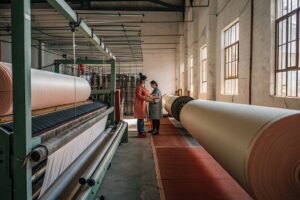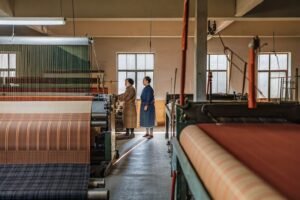
I remember standing on the factory floor in Keqiao with a young designer from San Francisco about four years ago. She was holding two navy blue shirts. One was from a competitor’s stock line. One was our development sample. She rubbed both between her fingers, held them up to the light, and asked me, "Why does this one look so… flat? And this one looks like it has depth, like a pool of water?" I smiled because she’d just stumbled into the single most important distinction in woven fabric coloring. The "flat" shirt was piece dyed. The "deep" shirt was yarn dyed. She had no idea what those terms meant, but her eyes and hands knew the difference instantly.
The fundamental difference is right there in the name. Yarn dyed fabric is colored before weaving. We take the raw yarn, dye it in a bath, dry it, and then weave it into fabric. Piece dyed fabric is colored after weaving. We take the greige (unfinished) fabric off the loom and dye the entire piece in one go. That’s it. That’s the textbook answer. But the implications of that simple difference ripple out into every aspect of the fabric’s performance, appearance, cost, and even your production timeline. Understanding this distinction is not academic. It’s the difference between ordering a fabric that looks vibrant for five years and one that fades in five washes.
At Shanghai Fumao, we produce both yarn dyed and piece dyed fabrics daily. I don’t have a horse in this race. I just want you to buy the right one for your specific design and price point. Because if you spec a yarn dyed fabric for a fast-fashion item that will be on the rack for six weeks, you’re overspending. And if you spec a piece dyed fabric for a premium heritage garment that’s supposed to last a decade, you’re under-delivering. Let’s unpack the real-world differences that happen on the factory floor.
How Does The Dyeing Sequence Affect Colorfastness And Durability?
This is the number one practical difference that affects your customer’s experience. When you dye yarn, the dye molecules have a chance to penetrate deep into the core of the twisted yarn bundle. The yarn is loose. The fibers are relaxed. The dye liquor can flow freely around every individual cotton fiber. We call this "full penetration." When we then weave that dyed yarn into fabric, the color is locked inside the structure.
When you piece dye, you’re trying to force dye into a dense, already-woven structure. The fabric is tight. The yarns are interlaced under tension. The dye has to navigate through thousands of tiny intersections. It’s like trying to paint the inside of a fully assembled birdhouse through a tiny hole in the bottom versus painting all the wooden pieces flat on a table before you nail them together. The paint on the assembled birdhouse will cover the surface, but it won’t get into the joints or the edges.
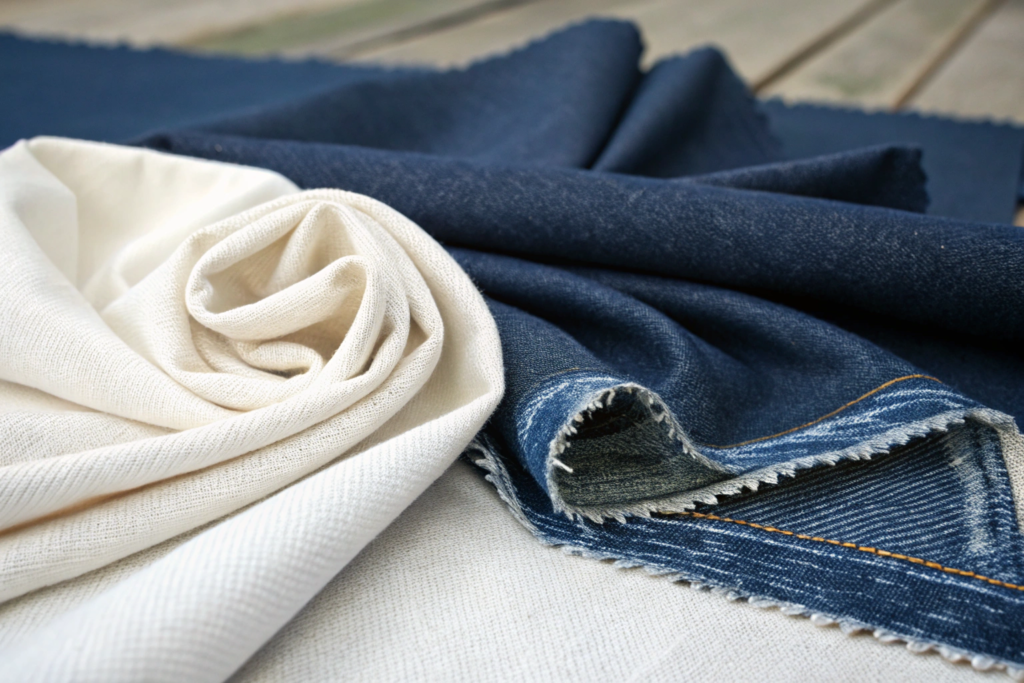
This is why yarn dyed fabrics have superior crocking resistance. If you rub a white cloth against a piece dyed navy twill, you’ll often see a faint blue smudge. Do the same with a yarn dyed navy twill, and the white cloth stays clean. The dye isn’t just sitting on the surface of the yarns; it’s part of the fiber itself. For a client producing dark denim jeans, this is non-negotiable. They can’t have indigo rubbing off on white couches and handbags. Yarn dyed (in this case, indigo rope dyed) is the only option.
Why Does Yarn Dyed Fabric Look Richer Over Time?
This is what my San Francisco designer friend was sensing. Piece dyed fabric tends to fade "flat." The entire surface of the garment loses color uniformly. It goes from navy to a dusty, chalky light blue. It looks tired. It looks old.
Yarn dyed fabric fades with "character." Because the dye is deep inside the yarn core, it doesn’t wash out all at once. As the garment wears and abrades, the surface fibers slowly lose a bit of color, but the core remains vibrant. This creates a beautiful, subtle variation in tone that we call "depth." It’s why a 10-year-old yarn dyed oxford shirt looks distinguished and lived-in, while a 10-year-old piece dyed poplin shirt just looks faded and worn out.
I had a menswear brand client from New York in 2023 who was developing a "heritage" work shirt. They wanted it to look like something a 1930s railroad worker would have worn. We developed a yarn dyed 2-ply twill in a deep olive green. The sample looked good. But the real magic happened when we sent them a washed-down sample. We took the fabric and gave it a heavy enzyme wash and stone tumble. The yarn dyed olive developed these incredible highs and lows—the peaks of the twill became a lighter sage green, while the valleys stayed deep olive. The piece dyed version of the same color just looked like a faded army surplus shirt. Flat. Lifeless. They chose the yarn dyed version and built their entire marketing campaign around "garments that age gracefully."
This aging characteristic is critical for how yarn dyed fabrics develop patina and character over time compared to piece dyed. If your brand story is about longevity and heirloom quality, you need yarn dyed. If your story is about trendy, of-the-moment color, piece dyed is perfectly fine.
Does Piece Dyeing Offer Any Advantages In Consistency?
Yes, and this is a huge factor for large-scale production. Piece dyeing offers superior shade consistency across large batches. Let me explain why. When you dye yarn, you’re dyeing thousands of small packages or hanks. There are slight variations in temperature, flow rate, and dye concentration from batch to batch. When you weave with those yarns, if Batch A was slightly lighter than Batch B, you might see a subtle stripe in the fabric called "yarn dye barré."
With piece dyeing, you put the entire 500-kilogram roll of greige fabric into one giant dye machine. The whole piece sees the exact same dye bath, the exact same temperature curve, and the exact same agitation. The color from the beginning of the roll to the end of the roll is incredibly uniform.
This is why most solid-colored sheeting, basic t-shirt jersey, and uniform fabrics are piece dyed. When a hotel chain orders 50,000 white sheets, they need Sheet 1 and Sheet 50,000 to be the exact same shade of optic white. They don’t want "character." They want consistency. Piece dyeing delivers that.
At Shanghai Fumao, our piece dyeing operation uses a fully automated color kitchen that measures dyestuff to the milligram. We can match a Pantone shade on a 5,000-yard lot and then match that exact same shade on a 50,000-yard re-order six months later. With yarn dyeing, re-orders are trickier. We keep a "bank" of the original dye recipe and a retained sample, but we always warn clients that yarn dye lots can have a +/- 5% shade variation. Most premium brands accept this as part of the "natural" appeal of the fabric. But for a fast-fashion brand where a mismatched sleeve is a quality claim, piece dyeing is safer.
How Do Production Timelines Compare Between The Two Methods?
This is where the decision gets real for anyone managing a production calendar. The timelines are fundamentally different because the sequence of operations is reversed. And if you’re navigating the peak production periods in China—March through May and August through October—understanding this difference can save you weeks of lead time.
Let’s walk through a standard order for a custom color woven fabric.
Yarn Dyed Timeline:
- Yarn Sourcing & Spinning (7-14 days)
- Yarn Dyeing & Drying (5-7 days)
- Warping & Weaving (7-10 days)
- Finishing (3-5 days)
Total: 22-36 days
Piece Dyed Timeline:
- Yarn Sourcing & Spinning (7-14 days)
- Weaving Greige (7-10 days) – This can happen concurrently while waiting for dye slots.
- Piece Dyeing & Finishing (5-7 days)
Total: 19-31 days
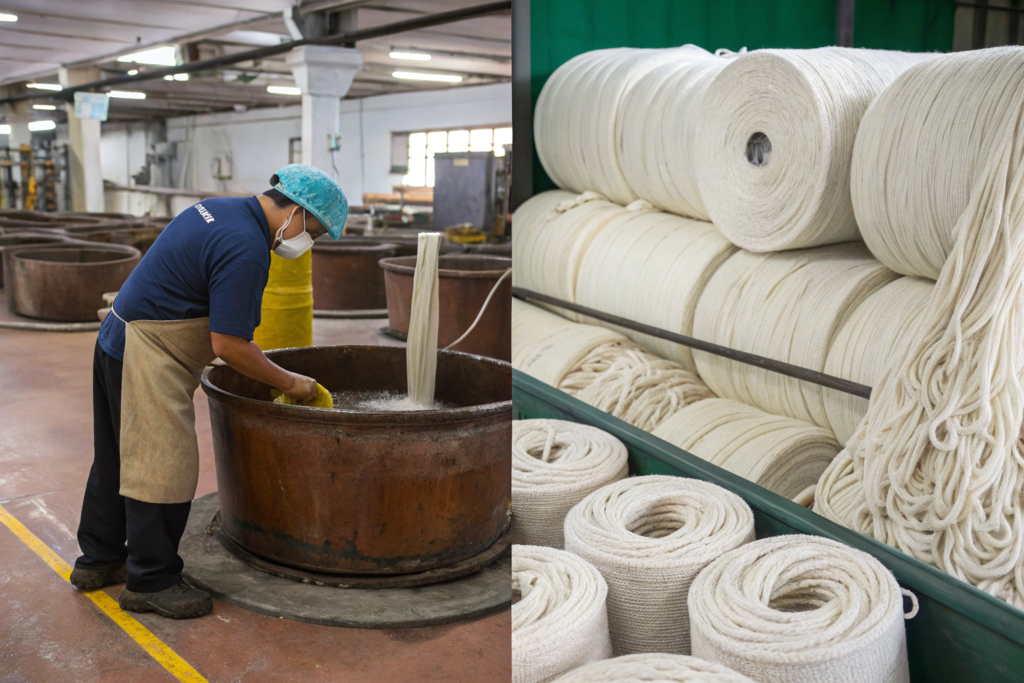
At first glance, the total time is similar. But the risk profile is different. In yarn dyeing, the most critical step (dyeing) happens first. If the yarn dye lot fails, you’ve lost 7 days before you’ve even started weaving. In piece dyeing, the weaving happens first. You can stockpile greige fabric in advance of the season. When a customer places an order for a specific color, you just pull a roll of greige off the shelf and dye it. This is called "Greige Stock Program."
Can Piece Dyeing Help Me Meet Tight Deadlines During Peak Season?
Absolutely. This is the strategic advantage of piece dyeing that smart production managers exploit. Imagine it’s September 15th. The Golden Week holiday is looming in two weeks. You need 5,000 yards of a specific shade of burgundy for a holiday collection. The yarn dyers are backed up for 3 weeks. You’ll never get yarn dyed and woven in time.
But if you work with a mill that has a Greige Stock Program, we already have 50,000 yards of your base poplin or twill woven and sitting on a shelf in greige form. We can pull 5,000 yards, load it into the piece dye machine tomorrow, and have it finished and inspected before Golden Week starts. You just saved three weeks on your critical path.
I had a client producing corporate uniforms for a bank merger announcement. The bank’s branding agency finalized the exact shade of blue on October 1st. The announcement event was November 15th. The uniforms had to be in stores by November 10th. Yarn dyeing was impossible. We had a greige stock of their 2-ply twill ready. We piece dyed it on October 5th, shipped it on October 12th, and the uniforms were sewn and delivered on time. They never would have made it with yarn dyed.
This is why how to use greige stock fabric programs to reduce lead times during Chinese holidays is such a valuable strategy. It decouples the weaving bottleneck from the color decision. You commit to the fabric construction early, but you can delay the final color choice until much later in the cycle.
Why Does Yarn Dyeing Require Longer MOQs?
This is a frequent point of friction with startup brands. They want 300 yards of a custom yarn dyed stripe or plaid. They’re shocked when we tell them the minimum order quantity (MOQ) is 2,000 yards. It seems arbitrary. It’s not.
The MOQ for yarn dyeing is driven by the dye machine capacity for yarn packages. A single yarn dyeing vessel might hold 500 kg of yarn. That’s the minimum batch size the machine can process efficiently. That 500 kg of yarn translates into roughly 2,000 to 2,500 yards of finished fabric, depending on the weight.
If you only need 300 yards, we would have to dye the full 500 kg batch of yarn anyway. The remaining 80% of the dyed yarn would sit on our shelves as dead stock, waiting for a re-order that might never come. The cost of that dead yarn has to be amortized over your small order. That’s why small-run yarn dyed is so expensive per yard.
Piece dyeing offers more flexibility for small runs. A sample piece dye machine can handle as little as 50 yards. So for a small, emerging brand that wants a custom Pantone color on a solid fabric, piece dyeing is often the only financially viable option. We can run 300 yards of piece dyed poplin without breaking the bank. We can’t run 300 yards of a custom yarn dyed awning stripe. This is a crucial consideration when you’re negotiating minimum order quantities for custom colored woven fabrics.
What Are The Visual And Textural Differences In The Final Fabric?
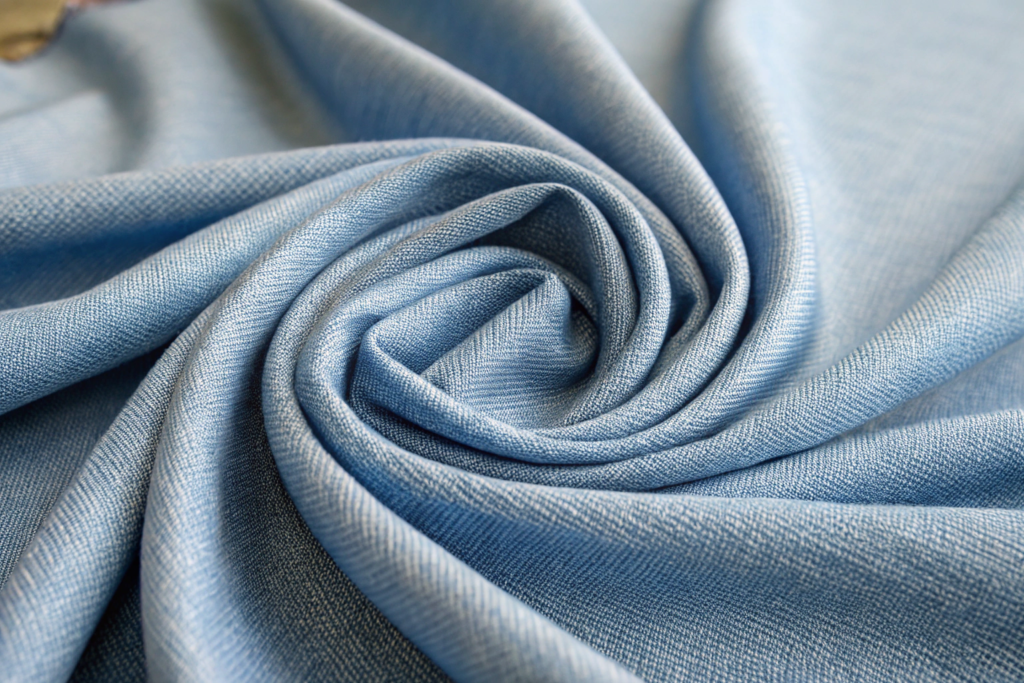
Beyond colorfastness and timeline, there’s a fundamental difference in how the fabric looks and feels. This goes back to the structure of the yarn itself. When you dye yarn, the dyeing process (especially for reactive dyes on cotton) is a wet, hot, turbulent process. The yarn swells and contracts. It loses some of its "size" (the protective coating used for weaving). The result is a yarn that is softer, loftier, and more absorbent before it even hits the loom.
When you weave with this pre-shrunk, pre-fluffed yarn, the resulting fabric has a distinctly softer hand feel and a more textured surface. Even a plain weave yarn dyed fabric has a subtle visual texture because the individual yarns are not perfectly uniform in color. This is called "heather" or "melange" in solids, and it’s the defining characteristic of fabrics like oxford cloth, chambray, and end-on-end.
Piece dyed fabric, by contrast, has a cleaner, more uniform surface. The yarns are woven in their raw, smooth, sized state. The fabric is dyed under tension. The finishing process flattens the yarns. The result is a fabric that is crisper, smoother, and more "papery" in its initial hand feel. It’s the classic poplin dress shirt feel.
How Does Yarn Dyeing Enable Patterns Like Stripes And Plaids?
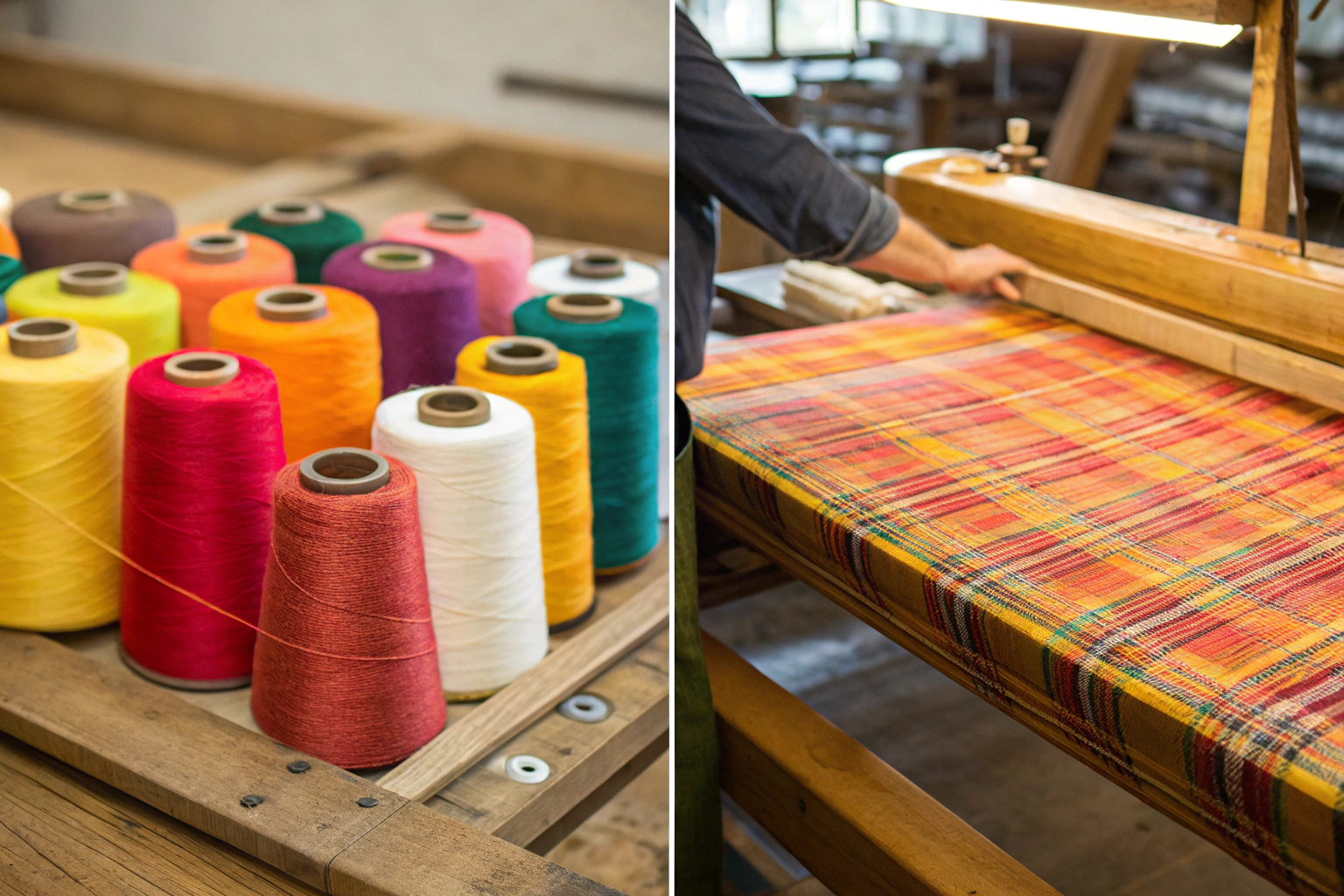
This is the most obvious visual difference, but the mechanics are worth understanding. You cannot make a true plaid or a true stripe with piece dyeing. It’s physically impossible. A piece dyed fabric is a solid color from selvedge to selvedge. If you see a stripe on a piece dyed fabric, it was printed on after dyeing. Printed stripes sit on the surface of the fabric and will eventually crack and fade. Yarn dyed stripes are woven into the very structure of the fabric. They never crack. They never fade in the same way.
Creating a yarn dyed pattern is like building with colored LEGO bricks. We warp the loom with a specific sequence of colored yarns. For a simple awning stripe, the warp might be: 10 ends white, 4 ends navy, 10 ends white, 4 ends navy. The weft (the crosswise yarn) might be all white. The resulting fabric has white horizontal stripes with navy vertical stripes. The intersection creates the pattern.
For a plaid, both the warp and the weft use a sequence of colors. The pattern is created by the intersection of the two sequences. This is called a "color-and-weave effect." The most famous example is Gingham. The warp is: 4 white, 4 blue, 4 white, 4 blue. The weft is identical: 4 white, 4 blue, 4 white, 4 blue. When woven in a plain weave, the white-on-white intersections create a solid white square. The blue-on-blue intersections create a solid blue square. The white-on-blue intersections create a mixed, 50/50 check. That’s gingham. You cannot fake that with printing. The back of a printed gingham is white. The back of a yarn dyed gingham is a mirror image of the front.
This is why how yarn dyed patterns like gingham and plaid are constructed on the loom is such a fascinating topic. It’s a binary code of color that produces complex visual results. When a customer brings us a vintage plaid shirt and asks us to replicate it, we don’t just scan the colors. We analyze the warp and weft sequences. We call it "reading the threads."
What Is The Difference In Hand Feel After Washing?
This is a critical distinction for the end consumer, and it’s one that many designers overlook during the sampling phase because they only handle the fabric in its finished, off-the-loom state.
A piece dyed fabric will arrive feeling crisp and smooth. It has a "new shirt" stiffness. After the first wash, it will soften dramatically as the sizing washes out and the fibers relax. This is the "break-in" period. A quality piece dyed poplin becomes quite soft after 3-5 washes.
A yarn dyed fabric arrives already soft. It’s already broken in. Because the yarn was dyed before weaving, it already went through the equivalent of several wash cycles in dye form. The fabric comes off the loom with a lived-in, comfortable hand feel from Day 1. It doesn’t change as drastically after washing because it’s already been "pre-washed" at the fiber level.
I had a client who made high-end baby clothing. They switched from a piece dyed cotton lawn to a yarn dyed cotton lawn. The piece dyed version was beautiful but the mothers complained that the fabric was "too stiff" for a newborn. The yarn dyed version, even in the exact same fiber content and weight, was "buttery soft" right out of the package. The difference was entirely in the dyeing sequence. The yarn dyed fabric had no residual sizing and the fibers were fully relaxed.
This is a key consideration for why yarn dyed cotton fabrics have a softer initial hand feel than piece dyed equivalents. If your product is worn directly against sensitive skin, and you don’t want the customer to have to "wash it first to make it soft," yarn dyed is the superior choice.
How Should I Decide Which Method To Specify For My Project?
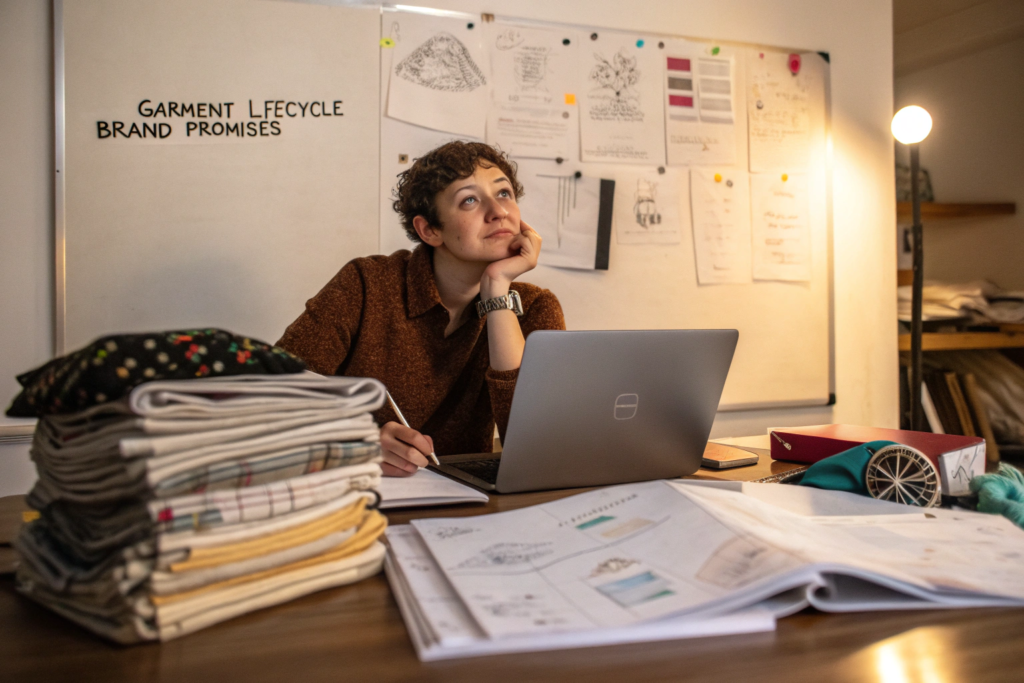
This is the question I ask every client when they send me a new tech pack. I don’t care if they’ve already written "100% Cotton Twill" on the spec. I want to know about the garment’s lifecycle and the brand’s promise. The decision tree is not complicated, but you have to be honest about your priorities.
Here is the framework I use with my team at Shanghai Fumao to guide clients. It’s based on twenty years of seeing which decisions lead to happy customers and which lead to chargebacks.
Choose Yarn Dyed If:
- The design includes stripes, plaids, or checks.
- The brand promise is "heritage," "heirloom," or "built to last."
- The color needs to be exceptionally crock-resistant (e.g., dark denim).
- The hand feel needs to be exceptionally soft right out of the box.
- The budget and MOQ can accommodate the higher cost.
Choose Piece Dyed If:
- The design is a solid color.
- The production timeline is tight and you need "greige stock" flexibility.
- You have a small MOQ (under 1,500 yards) for a custom color.
- The priority is absolute shade consistency across a massive order.
- The budget is the primary constraint.
Is There A Middle Ground Like "Top Dyeing" Or "Fiber Dyeing"?
Yes, and this is where things get nuanced. The textile industry has a whole spectrum of dyeing stages. It’s not just yarn vs. piece. There are four main stages, and each has a specific application.
| Dyeing Stage | Description | Typical Use | Opacity/Effect |
|---|---|---|---|
| Fiber Dyeing | Dyeing raw cotton stock before spinning. | Heathers, Melange knits. | Deepest penetration, heathered look. |
| Yarn Dyeing | Dyeing spun yarn before weaving. | Stripes, Plaids, Oxford cloth. | Excellent colorfastness, pattern definition. |
| Piece Dyeing | Dyeing woven greige fabric. | Solid poplin, Twill, Sheeting. | Best shade consistency, cost-effective. |
| Garment Dyeing | Dyeing cut-and-sewn garments. | Vintage t-shirts, Sweatshirts. | Soft hand feel, unique "washed" look. |
"Top dyeing" is a hybrid technique. You piece dye the fabric a base color, then over-dye it with a darker color. Or you apply a pigment dye to the surface. It’s used to create vintage, washed-down effects. But it’s less durable than true yarn dyeing.
For example, a client wanted a "blackwatch plaid" but wanted it to look like it was 50 years old. We could have yarn dyed it with muted colors, but that would look "new vintage." Instead, we yarn dyed it with bright, modern colors (vibrant navy and kelly green) and then garment dyed the finished shirt in a weak black pigment bath. The black dye "dirtied" the bright yarns, creating an authentic, uneven fade. That’s using multiple dye stages to achieve a specific aesthetic.
This is why understanding the complete guide to textile dyeing stages from fiber to garment is so valuable. You can mix and match techniques to create fabrics that are impossible to replicate with a single process.
Can You Show Me A Side-By-Side Cost Comparison?
Let’s use a real-world example. A standard 150 GSM cotton poplin, solid navy blue. 40/1 combed cotton. Order quantity: 5,000 yards.
| Cost Component | Yarn Dyed | Piece Dyed |
|---|---|---|
| Raw Cotton Cost | $1.20 / lb | $1.20 / lb |
| Spinning Cost | $0.80 / lb | $0.80 / lb |
| Dyeing Cost | $1.10 / lb (Package dyeing) | $0.45 / yd (Piece dyeing) |
| Weaving Cost | $0.55 / yd | $0.55 / yd |
| Finishing Cost | $0.25 / yd | $0.25 / yd |
| Total Cost (Approx) | $3.45 / yard | $2.95 / yard |
The yarn dyed version is about 17% more expensive. That $0.50 per yard difference comes entirely from the higher cost and complexity of dyeing yarn packages versus dyeing a continuous roll of fabric. On a 5,000 yard order, that’s a $2,500 difference.
Is it worth it? For a solid color poplin shirt that will be worn once a week and washed 50 times? Probably. The yarn dyed version will look better for longer. For a promotional tote bag that will be used three times and thrown in a closet? Piece dyed is the smart choice. You’re not wasting money on performance you don’t need. The key is to align the cost with the intended use and brand positioning. Don’t pay for a Mercedes engine if you’re building a go-kart.
Conclusion
The difference between yarn dyed and piece dyed fabric is the difference between building a house with painted bricks versus painting the entire house after it’s built. One method integrates the color into the very structure of the thing. The other applies color to the finished surface. Both methods produce a colored house. But one will look beautiful for decades as it weathers, and the other will need a fresh coat of paint every few years.
Yarn dyeing is the choice for depth, durability, pattern, and that intangible "soul" that makes a garment feel special. Piece dyeing is the choice for efficiency, consistency, flexibility, and cost-effectiveness. There is no universally "better" method. There is only the method that is better for your specific project.
At Shanghai Fumao, we don’t push clients toward one or the other. We push them toward clarity about their own requirements. We want you to understand the trade-offs so that when you open that container, the fabric inside matches the vision in your head. If you’re wrestling with a fabric decision or you’ve got a swatch you’re trying to replicate but can’t figure out if it’s yarn dyed or piece dyed, send it over. We’ll put it under the microscope and tell you exactly how it was made and what it will cost to make it again.
Reach out to our Business Director, Elaine, at elaine@fumaoclothing.com. She can set up a call to review your tech pack and help you navigate the dyeing decision with real numbers and real timeline expectations. Stop guessing. Start knowing.