I’ve been in this fabric game for two decades, and I’ll tell you the most expensive mistake I see brands make every single week: they commit to 5,000 yards of fabric based on a pretty digital photo and a PDF spec sheet. Then the container shows up, they cut into the goods, and the hand feel is wrong. Or the color is off by half a shade. Or the stretch recovery fails after two wears. And suddenly that "amazing deal" they negotiated on price becomes a warehouse full of unsellable inventory. I’ve watched this exact scenario play out with a streetwear brand from Atlanta in 2023—they skipped the sampling stage to save three weeks, and it cost them their entire Fall season.
The answer is yes, you absolutely can get custom fabric samples before bulk commitment. In fact, any reputable mill like ours at Shanghai Fumao insists on it. The process typically flows like this: you provide a reference swatch or technical specification, we develop a "handloom" or lab dip, you approve the color and texture, we produce a sample yardage (usually 3-5 yards), and then we proceed to bulk. The timeline ranges from 48 hours for a stock-supported development to 2-3 weeks for a fully custom yarn-dyed construction.
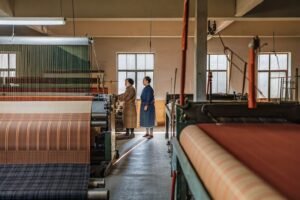
But here’s the part that trips up most importers: sampling isn’t just about "getting a piece of fabric." It’s about validating the supply chain’s ability to replicate that fabric consistently across 10,000 yards. A sample made on a hand-operated loom in the R&D room with the owner watching over the technician’s shoulder will always look perfect. The real question is whether the production floor at 3:00 AM on a Tuesday can match it. That’s what we’re going to unpack today—how to use the sampling phase to de-risk your entire production calendar, especially when you’re navigating those tricky Chinese manufacturing peak periods.
What Should I Expect During The Custom Sample Development Process?
Let me walk you through what actually happens on our end when you email Elaine with a subject line that says "URGENT: Custom Sample Request." First thing we do is panic for about 30 seconds. Just kidding. We have a system. But you need to understand that "custom" means different things to different people. Are we talking about taking an existing stock fabric and dyeing it to a specific Pantone? That’s a 5-day process. Are we talking about developing a completely new yarn blend with a unique slub texture and a special coating finish? That’s a 3-week process minimum.
I had a startup founder from Berlin reach out in February 2025. She had a vintage 1970s shirt she found at a flea market and wanted to replicate the exact drape and slub character. She sent us the garment. We deconstructed it in our lab—analyzed the yarn count (turned out to be a 45/1 linen-cotton blend with an irregular slub injection), identified the weave structure (a loose plain weave with a specific reed number), and reverse-engineered the wash treatment. We sent her four rounds of handloom samples over the course of 18 days before she said "that’s the one." That’s what custom sampling looks like when you’re chasing a specific hand feel.

What Information Do I Need To Provide For An Accurate Sample Quote?
If you want to avoid the back-and-forth email tennis that eats up two weeks of your development calendar, send us a complete package upfront. When a buyer sends us an email that says "I need some stretch fabric for pants," we have to ask 20 follow-up questions. When a buyer sends us a document with the fields below filled out, we can turn a quote around in under 4 hours.
| Required Information | Why It Matters For Sampling Accuracy |
|---|---|
| Fiber Content (%) | Different fibers shrink and dye differently. A 2% spandex difference changes recovery. |
| Target Weight (GSM or OZ) | Weight affects drape and shipping cost. Samples made at 180gsm won’t match 220gsm bulk feel. |
| Construction Type | Woven (plain/twill/satin) vs. Knit (jersey/rib/interlock) completely changes the machinery used. |
| Color Standard (Pantone/Lab Dip) | We need a physical target or at least a Pantone TCX/TPG code for dye formulation. |
| Finish Requirements | Peach finish? Water repellent? Anti-pilling? These are applied post-dyeing and affect hand feel. |
This is where understanding how to prepare a technical pack for Asian garment manufacturers becomes critical. A tech pack isn’t just a sketch; it’s a legal document that defines the parameters of the sample. If it’s not in the tech pack, it won’t be in the sample. And if it’s not in the sample, don’t expect it in bulk. We once had a client complain that the bulk fabric was "too shiny." They never specified "delustered yarn" or "matte finish" on the sample request. We matched the sample they approved. The sample was shiny. That was an expensive lesson for them in the importance of fabric specification standards for import compliance.
Why Do Lab Dips Take So Long To Approve?
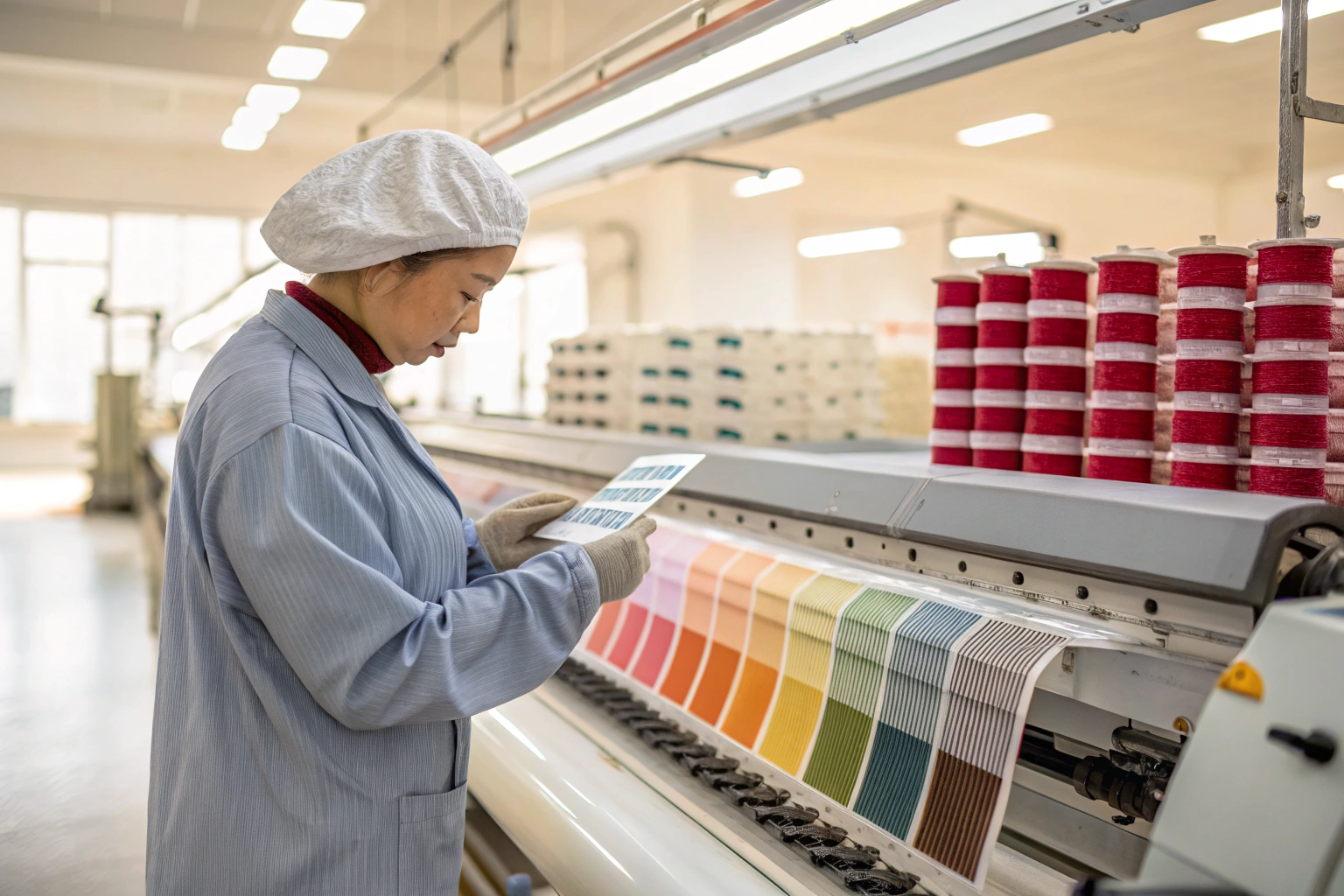
Lab dips are the single biggest bottleneck in the sampling process. I see brands lose 10-14 days just going back and forth on color. Here’s the technical reality that most designers don’t understand: the lab beaker holds about 10 grams of fabric. The production dye machine holds 500 kilograms. The physics of heat transfer and dye circulation are completely different at scale.
When we dip a tiny swatch in the lab, we can achieve perfect temperature control and agitation. When we scale that same recipe to a 500kg jet dye machine, the dye molecules take longer to penetrate the inner layers of the fabric rope. This is why the lab dip always looks a little "brighter" or "cleaner" than the bulk. It’s not a scam. It’s thermodynamics. We always tell our clients to approve a lab dip that is 5-10% "dirtier" or "flatter" than their target if they want the bulk to look vibrant. Or we adjust the recipe with a "scale-up factor" based on our historical data for that specific machine and fiber blend.
(Quick edit note: If you’re working on a tight deadline, ask your supplier if they can do a "production sample" dyeing on a smaller 50kg machine. It costs a bit more but it’s 95% representative of bulk. We do this for clients navigating peak production periods for Chinese textile factories, especially in March when every dye house is slammed.)
How Much Do Custom Fabric Samples Actually Cost?
Let’s address the elephant in the room. Money. I’ve had conversations with young designers who think samples should be free. They assume the cost of development is just "part of doing business" for the mill. That might be true if you’re a brand placing $5 million in annual orders. For everyone else, samples cost money to produce. The yarn has to be warped. The knitting machine has to stop making profitable bulk fabric to run your 5-yard trial. The dye house technician spends 2 hours mixing a custom color that might never be used again.
However, a smart mill structures sampling fees to protect both parties. At Shanghai Fumao, we have a tiered approach. If the sample is based on our stock yarn and stock greige, we typically charge a nominal fee ($50-$100) that covers shipping. If it requires custom yarn spinning or a special finish, the fee is higher ($200-$500) because we’re stopping real production. And here’s the key—100% of that sampling fee is credited back to your bulk order invoice once you place production. We do this to filter out the "tire kickers" from the serious buyers. If you’re not willing to invest $100 in verifying the fabric before a $50,000 order, you’re probably not ready to import.

Should I Expect To Pay For Multiple Rounds Of Sampling?
This is where the relationship gets real. Round 1 is almost never perfect. The hand feel might be 90% there. The stretch might be 5% too low. If the revision is minor—say, adjusting the softener level in the wash or tweaking the yarn tension—we typically absorb that cost as part of the development relationship. We want to get it right. It’s in our interest for you to place the bulk order.
But if you change the brief entirely—"Actually, can we try this in a 100% Tencel instead of the cotton-modal blend we agreed on?"—then we have to reset the clock and the cost. That’s a new sample with new yarn sourcing. In 2024, we worked with a Los Angeles activewear brand on a custom rib knit. They went through seven rounds of sampling. By round 3, they wanted a different recovery specification. By round 5, they wanted a brushed face instead of a clean face. We charged them for rounds 4 through 7. It was fair. We were burning machine time and technician hours on a moving target.
The lesson here: be decisive upfront. Do your market research. Bring a reference swatch that is as close as possible to your final vision. The closer your reference is to our guide to sourcing sustainable knit fabrics from China, the fewer sampling rounds you’ll need. If you show up with a vague idea and a mood board, you’re going to pay a "discovery fee" in time and money.
What Happens If I Reject A Sample And Walk Away?
This is a fair question, and it’s one of the main reasons mills charge sampling fees in the first place. If you pay the sampling fee and we ship you the 5 yards, and you decide the fabric just isn’t right for your collection, that’s it. The transaction is closed. You keep the sample fabric (you paid for it, after all). We file the development record. No hard feelings. We understand that not every idea makes it to market.
Where it gets sticky is when a client asks for a free sample yardage of a custom-developed fabric and then ghosts us. That’s happened maybe three times in our 20-year history. We now have a policy: custom sampling requires a credit card or a PayPal deposit before we thread the loom. It protects our R&D investment. The fabric industry runs on trust and small margins. We can’t afford to develop unique constructions for free and then watch the inquiry disappear.
Think of it like this: you wouldn’t ask a chef to cook you a custom 5-course tasting menu for free just so you can decide if you want to book the restaurant for a wedding next year. You pay for the tasting. It’s the same with fabric. And for those who are serious about how to negotiate minimum order quantities with textile mills, paying for samples is actually a bargaining chip. It shows you have skin in the game, and it makes us more flexible on the bulk MOQ.
How Long Does It Take To Receive Custom Samples From China?
Timing is everything, and this is where the user’s background on Chinese manufacturing cycles becomes critically important. If you email me on January 20th asking for a custom sample, you’re going to hear back from me saying "We can start this on February 15th." Why? Chinese New Year. The entire country shuts down. Our spinning partners, our dyeing partners, our lab technicians—everyone goes home for 3-4 weeks. If you don’t plan around this, your sample development will stall for a month.
Under normal operating conditions—let’s say you submit a clear, complete request in early June—here is our standard timeline commitment. We can produce a stock-supported custom sample (existing yarn, custom dye) in 5-7 business days plus courier shipping (FedEx/DHL takes 2-3 days to the US). A semi-custom sample (existing greige, new finish) takes 10-12 business days. A fully custom yarn-dyed woven sample can take 15-20 business days because the yarn has to be spun and dyed before weaving even starts.

How Do Chinese Holidays Affect Sample Lead Times?
I need to be brutally clear about this because I’ve seen too many designers cry over this. The dates are non-negotiable. The user’s prompt accurately describes the windows. Here is the practical impact on sample development specifically, which is more sensitive to labor availability than bulk production.
| Holiday Period | Typical Shutdown Duration | Impact on Sampling |
|---|---|---|
| Chinese New Year | 3-4 Weeks (Late Jan to Mid Feb) | Complete Halt. Labs close. No lab dips, no handlooms. Zero. |
| Golden Week | 1 Week (Oct 1-7) | Significant Delay. Limited technician availability before and after. |
| Dragon Boat Festival | 3 Days (June) | Minor Delay. Usually just a day or two slip in schedule. |
| Mid-Autumn Festival | 3 Days (September) | Minor Delay. Similar to Dragon Boat. |
The "pre-CNY rush" in early January is the worst time to request a first-round sample. Why? Because every technician is working overtime to finish bulk orders that need to ship before the holiday. Your 5-yard sample is the lowest priority in the building. We will get to it, but it might take 10 days instead of 5. The smartest brands—like the European fashion client mentioned in the user’s background—submit their sampling requests 6-8 weeks before CNY. They get the sample in December, approve it, and then the bulk order is queued up to start the minute the factory reopens in late February. That’s how you beat the textile production lead time delays during Chinese holidays.
Can I Pay For Expedited Sample Shipping?
Yes, and you should. This is one area where I tell clients not to be cheap. We can send a sample via standard airmail (7-14 days, no tracking reliability) or via FedEx/DHL (2-3 days, door-to-door tracking). The cost difference for a 1kg envelope is maybe $30 versus $50. Pay the $50. I’ve seen standard airmail packages sit in a sorting center in Shanghai for 5 days for no apparent reason. Or they get handed off to USPS and disappear into the black hole of the Jamaica, NY distribution center for a week.
We have a direct corporate account with DHL. We can bill the shipping to your account number or add it to the sample invoice. For clients in Los Angeles or New York, we often see samples delivered within 48 hours of leaving our facility in Keqiao if we use the "Express Worldwide" service and catch the evening cutoff. This speed is critical when you’re trying to make a line review meeting or a fabric sourcing decision. Don’t let a $20 shipping savings derail a $100,000 collection launch.
One more thing on logistics: if you are sampling for a trade show like Première Vision or Texworld, and you need the sample to travel with you, let us know. We can ship directly to your hotel in Paris or New York. We do this regularly. It’s a little trickier with customs forms, but we have the export documentation down to a science. You just need to provide the hotel address and your arrival date. (Here I have to say: our logistics coordinator in Keqiao is a wizard with the FedEx commercial invoice. She hasn’t lost a hotel shipment yet.)
How Can I Ensure The Bulk Fabric Matches The Approved Sample?
This is the million-dollar question. Or, depending on your order size, the $50,000 question. You’ve spent three weeks and $300 in sampling fees. You’ve approved a beautiful 12" x 12" swatch. It feels amazing. The color is perfect. Now you’re about to wire a 30% deposit on 8,000 yards. How do you sleep at night?
The answer is a three-step verification process that we call the "Golden Triangle" of quality assurance. First, you need a sealed approval sample that stays in your office and one that stays in our QC department. Second, you need a production counter sample cut from the first 50 yards of bulk fabric. Third, you need a third-party inspection report (SGS, ITS, or our CNAS lab data) that verifies the physical parameters match the approval sample. If all three align, the bulk will match. If any one of these is missing, you’re gambling.

What Is A Counter Sample And Why Do I Need One?
A counter sample—also called a "shipment sample" or "pre-production sample"—is a swatch cut from the actual bulk production run before the full order is cut and packed. In our workflow, as soon as the first roll of finished fabric comes off the stenter frame, our QC team cuts a 2-yard piece and FedExes it to you. This is your "counter" to the original approval sample.
Do not skip this step. I don’t care how tight your deadline is. I had a Canadian outerwear brand skip the counter sample on a water-repellent coated fabric in November 2024. They said, "We trust you, just ship it." We shipped it. The coating adhesion on the bulk was 5% lower than the lab sample because of ambient humidity in the factory that week. The fabric passed the spray test but barely. They weren’t happy. If they had requested a counter sample, we would have caught the variance and added a second pass through the coating line before shipping the container.
When you receive the counter sample, compare it to the approved lab sample under the same lighting conditions. Use a lightbox if you have one. Check the hand feel. Stretch it. If you’re serious about quality control procedures for importing textiles from Asia, this is your last line of defense. It costs about $40 in courier fees and buys you $40,000 worth of peace of mind.
How Do I Read A Fabric Inspection Report From The Mill?
Most mills will send you an inspection report with the counter sample. It’s usually a one-page document filled with numbers that look like this: "Shrinkage: W-2.1%, F-3.5%." "Colorfastness: 4.0." "Pilling: 4-5." If you don’t know what these numbers mean, you’re not alone. Here’s a quick decoder based on our CNAS lab standards at Shanghai Fumao.
| Test Parameter | Industry Standard (ASTM/AATCC) | What A "Good" Result Looks Like | Red Flag Alert |
|---|---|---|---|
| Dimensional Stability (Shrinkage) | AATCC 135 | Less than 3% in both directions | Anything over 5% means the garment will shrink a full size. |
| Colorfastness to Crocking (Rubbing) | AATCC 8 | Dry: 4.0+, Wet: 3.5+ | Wet crocking below 3.0 means the dye will bleed on a white couch. |
| Pilling Resistance | ASTM D4970 | 4.0 after 5 washes | 2.5 or below means the fabric will look fuzzy after 3 wears. |
| Tensile Strength | ASTM D5034 | Varies by weight, but generally >30 lbs | Low strength means seam slippage and tearing at stress points. |
If the counter sample report shows a parameter outside the agreed spec, do not release the shipment. We had a situation with a French lingerie brand where the wet crocking on a deep red modal was 3.0 (borderline pass). They rejected the counter sample. We re-washed the entire batch with a special fixative agent, re-tested, got it to 4.0, and then shipped. It delayed delivery by 4 days, but it saved them from a recall of 5,000 bras that would have stained customers’ skin. Understanding how to interpret textile test reports for fashion brands is a skill that separates professional importers from amateurs.
Conclusion
Getting custom fabric samples before bulk commitment isn’t just possible—it’s the only sane way to do business in this industry. The process takes time, it costs a small amount of money upfront, and it requires clear communication about your expectations. But it’s the difference between receiving a container of fabric that builds your brand’s reputation and receiving a container of fabric that destroys it.
The key takeaways are straightforward. Plan your sampling around the Chinese holiday calendar. If you’re reading this in December or January, accept that you’re in the pre-CNY bottleneck and adjust your timeline accordingly. Provide a complete spec sheet on the first email to avoid the back-and-forth that eats up a week of development time. Pay for the sample, knowing that the fee will be credited back to your bulk order. And always, always request a counter sample from the first bulk roll before the factory cuts the rest of the order.
The mills that push back on sampling—the ones that say "just trust us" or "we don’t do handlooms for small orders"—those are the mills that have something to hide. Walk away. A good partner embraces the sampling process because they know their production floor can back it up.
If you have a specific fabric idea rolling around in your head, or you’ve got a swatch you’re trying to match, let’s get it on the loom. We handle everything from yarn selection to final finish, and we don’t stop until the sample in your hand feels exactly right. Reach out to our Business Director, Elaine, at elaine@fumaoclothing.com. She can get the sample development process started today, and she’ll give you a realistic timeline that accounts for what’s happening on the ground in Keqiao right now.