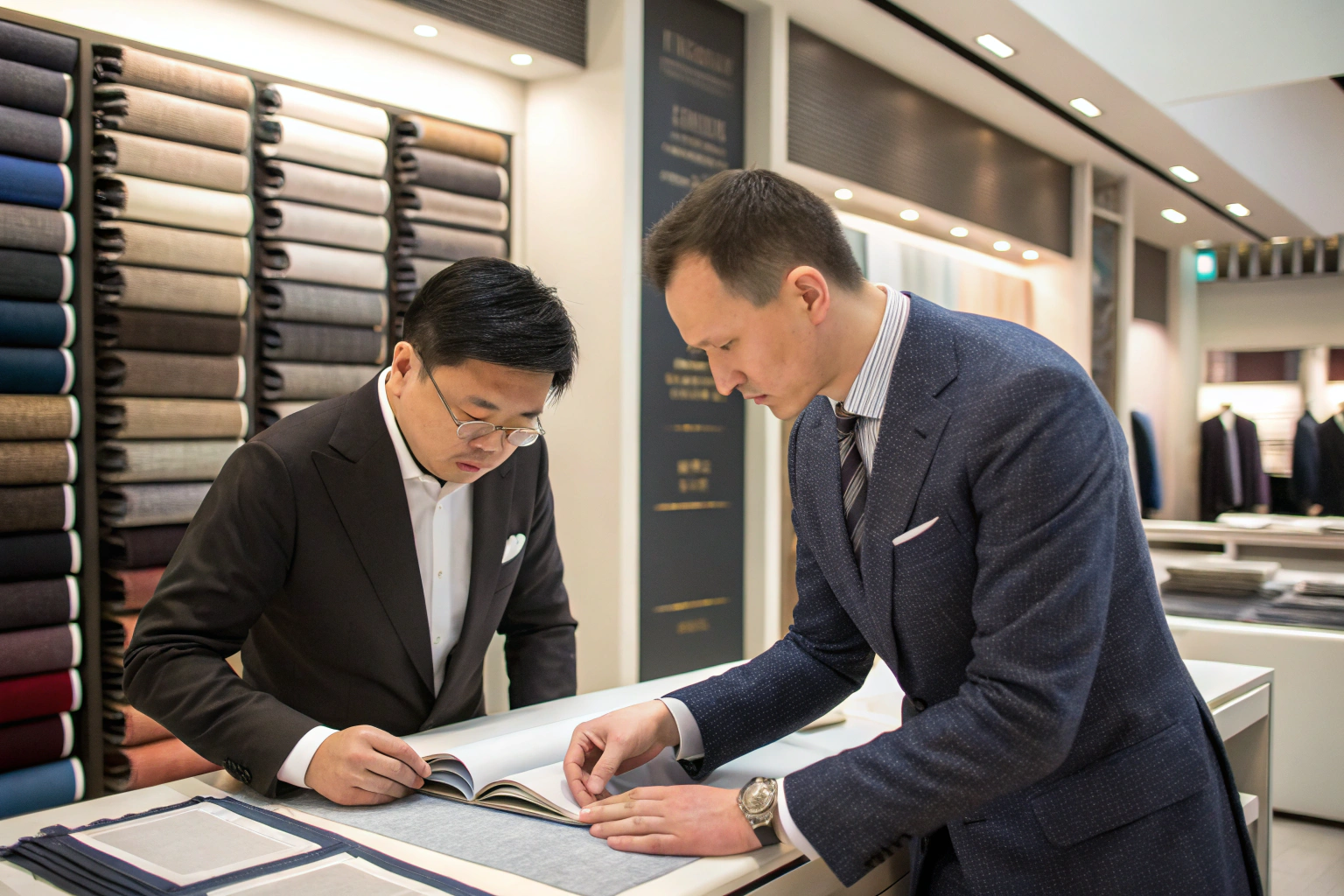
Let me share a conversation I had last year with a fabric distributor from Hamburg. He’d been in the business for 25 years. He’d seen suppliers come and go. He told me something that stuck with me: “In Europe, we don’t buy fabric. We buy reliability. We buy consistency. We buy a supplier who won’t disappear when things get hard.” He was frustrated. His previous supplier in China had delivered beautiful samples, but the bulk orders were inconsistent. Colors shifted between batches. Delivery dates slipped. When he tried to fix issues, communication went silent. He came to us looking for a partner, not just a supplier.
At Shanghai Fumao, we’ve spent over 20 years earning the trust of distributors across Europe. We do it by being the opposite of that unreliable supplier. We deliver consistent quality—every batch matches the approved standard. We deliver on time, even through Chinese New Year and peak seasons. We communicate transparently, with real-time tracking and proactive updates. We hold the certifications that European buyers demand: OEKO-TEX® STANDARD 100, GOTS, GRS, and ISO. And we understand the logistics and documentation required to move fabric smoothly from Keqiao to Hamburg, Rotterdam, or Le Havre. We don’t just sell fabric. We build supply chains that distributors can stake their reputation on.
I know that for European distributors, trust isn’t built overnight. It’s built order after order, year after year. It’s built when a shipment arrives exactly when promised. When the color matches the lab dip. When the certificate is real and verifiable. When a problem arises and the supplier fixes it without excuses. Let me walk you through exactly why so many European distributors have made us their go-to woven fabric partner.
How Do You Ensure Consistent Quality That Meets European Standards?
European distributors don’t have the luxury of being casual about quality. Their clients—the garment manufacturers, the fashion brands, the retailers—demand fabrics that meet specific standards. Shrinkage below 3%. Colorfastness to light at level 4 or higher. Tensile strength that won’t fail in production. If a distributor sends fabric that doesn’t meet those standards, they don’t just lose that order. They lose the relationship. I’ve seen it happen. That’s why we treat quality as the foundation of everything we do.
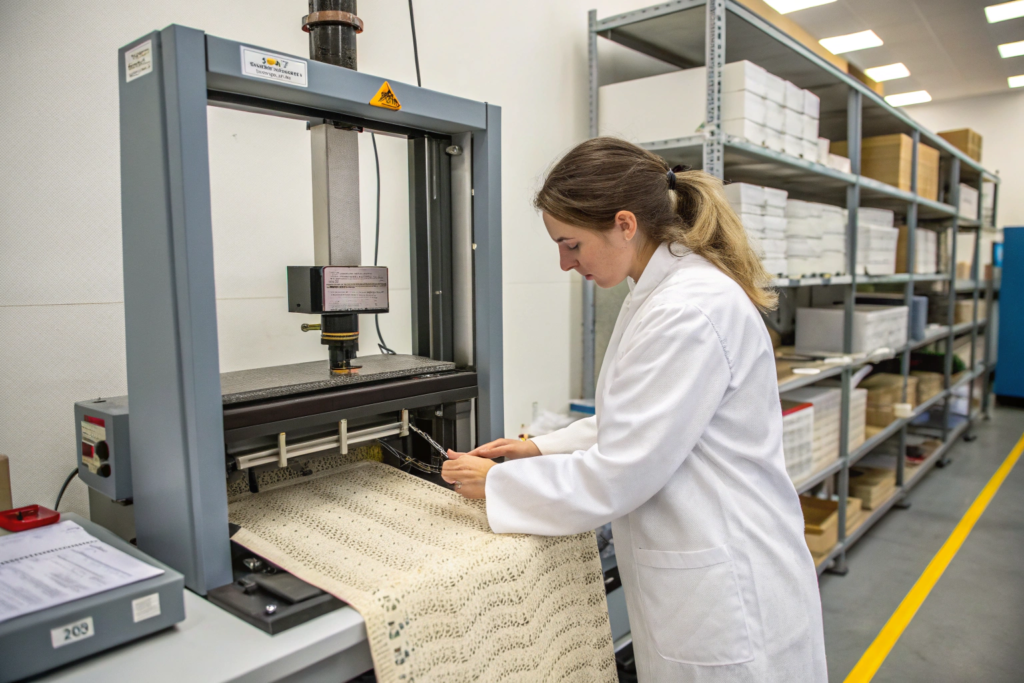
We ensure consistent quality through our CNAS-accredited testing laboratory and our end-to-end production control. Every batch of woven fabric—whether it’s a cotton poplin for shirting, a polyester suiting for menswear, or a linen blend for summer collections—is tested against the relevant international standards. We test for dimensional stability (shrinkage) using AATCC 135 or ISO 6330. We test for colorfastness to washing, light, and perspiration using AATCC 61, 16, and 15. We test for tensile and tear strength using ASTM D5034 and D1424. And we maintain shade bands and spectrophotometer records so that the color you approved in the lab dip is the color that arrives on the roll. We don’t rely on third-party labs for random checks. We test every batch, in-house, before it ships.
Let me give you a specific example from 2023. A distributor in Milan had been buying a classic cotton twill for men’s trousers from another Asian supplier. The quality was inconsistent—some batches had shrinkage over 5%, others had colorfastness issues. Their Italian garment makers were rejecting fabric, and the distributor was eating the cost. They came to us. We tested their standard and replicated it in our weaving and finishing facility. We ran pre-production samples, sent them for approval, and then ran the first bulk order of 20,000 meters. We tested every batch. Shrinkage was under 2%. Colorfastness was level 4 or better. The distributor’s rejection rate dropped from 12% with their previous supplier to under 1% with us. That’s the kind of consistency that builds trust.
What Testing Standards Do You Apply to Woven Fabrics for Europe?
European buyers typically expect fabrics to meet a specific set of standards. We’ve built our testing protocols around these requirements. Here’s a summary of the key tests we perform in our CNAS-accredited lab:
| Test Category | Common Standard | What We Test For | Typical European Requirement |
|---|---|---|---|
| Dimensional Stability | AATCC 135 / ISO 6330 | Shrinkage after washing | ≤3% in both warp and weft |
| Colorfastness to Washing | AATCC 61 / ISO 105-C06 | Color change and staining | Grade 4 or higher |
| Colorfastness to Light | AATCC 16 / ISO 105-B02 | Fading under UV exposure | Grade 4 for 20-40 hours |
| Colorfastness to Perspiration | AATCC 15 / ISO 105-E04 | Reaction to acid and alkaline sweat | Grade 4 or higher |
| Tensile Strength | ASTM D5034 / ISO 13934-1 | Breaking strength | Varies by fabric weight |
| Tear Strength | ASTM D1424 / ISO 13937-1 | Tearing resistance | Varies by fabric weight |
| Seam Slippage | ASTM D434 / ISO 13936-2 | Seam strength and puckering | ≤3mm slippage |
| pH Value | AATCC 81 / ISO 3071 | Acidity/alkalinity | 4.0–7.5 for next-to-skin |
| Formaldehyde | AATCC 112 / ISO 14184-1 | Free formaldehyde | ≤75 ppm (OEKO-TEX® Class I) |
We maintain test reports for every batch, linked to the QR code on each roll. When a European distributor receives our fabric, they can scan and see the data. No guessing. No surprises. If you want to understand what European buyers look for in woven fabric testing, these standards form the baseline for most commercial orders.
How Do You Maintain Color Consistency Across Multiple Production Runs?
Color inconsistency is a dealbreaker for European distributors. A slight shift in shade might be acceptable in some markets, but in Europe—where garment factories often cut and sew fabric from multiple rolls—inconsistency leads to visible differences in finished garments. Our approach to color consistency has three layers. First, we use spectrophotometer measurement for every dye batch. We store the approved standard digitally and measure every production batch against it. We maintain a ΔE (color difference) of 0.8 or less for most orders. Second, we create and retain physical shade bands. These are 50cm samples of the approved color that we keep in our lab. Every new batch is visually compared to the shade band under standardized lighting (D65, the international standard for daylight simulation). Third, we test colorfastness to ensure that the color won’t shift in subsequent processing—washing, pressing, or light exposure. In 2024, we produced a navy blue polyester suiting for a distributor in the Netherlands across three separate production runs totaling 45,000 meters. The distributor’s garment maker cut fabric from all three runs together and reported no visible color difference. That’s the result of rigorous control. For anyone sourcing from Asia, maintaining color consistency across batches is one of the hardest things to get right—and one of the most valuable when you do.
What Certifications Do European Distributors Require and How Do You Provide Them?
If there’s one thing I’ve learned from selling to European distributors for 20 years, it’s this: you don’t sell fabric without the paperwork. The days when a handshake and a sample were enough are long gone. Today, a distributor in Germany or France can’t even offer a fabric to their clients without a valid OEKO-TEX® certificate. If they’re selling organic cotton, they need GOTS. If they’re selling recycled polyester, they need GRS. And they need those certificates to be real—verifiable, traceable, and current.
We hold the full suite of certifications that European distributors demand. OEKO-TEX® STANDARD 100 across all our woven fabric categories, with certificates renewed annually. GOTS for our organic cotton, organic linen, and organic hemp fabrics, with Scope Certificates and Transaction Certificates for every order. GRS for our recycled polyester, recycled nylon, and recycled wool blends. ISO 9001 for quality management, ISO 14001 for environmental management, and ISO 45001 for occupational health and safety. And because our CNAS-accredited lab operates under ISO/IEC 17025, our test reports are recognized globally. We don’t just have these certificates. We integrate them into our production process so that every order can be traced back to certified inputs and processes.
Let me give you a concrete example of how certifications work for a European distributor. In late 2023, a distributor in Belgium was tendering for a contract with a major European outdoor brand. The brand required GRS-certified recycled polyester for their entire line, with full traceability from yarn to finished fabric. The distributor came to us. We provided our GRS Scope Certificate, which shows that our facility is certified to handle recycled materials. We then produced a custom recycled polyester woven fabric—a 100% rPET ripstop—and provided a Transaction Certificate (TC) for the specific batch. The distributor submitted the TC to the brand as part of their bid. They won the contract. That TC wasn’t just a piece of paper. It was the key to a multi-year deal.
How Do You Provide OEKO-TEX® Documentation for European Compliance?
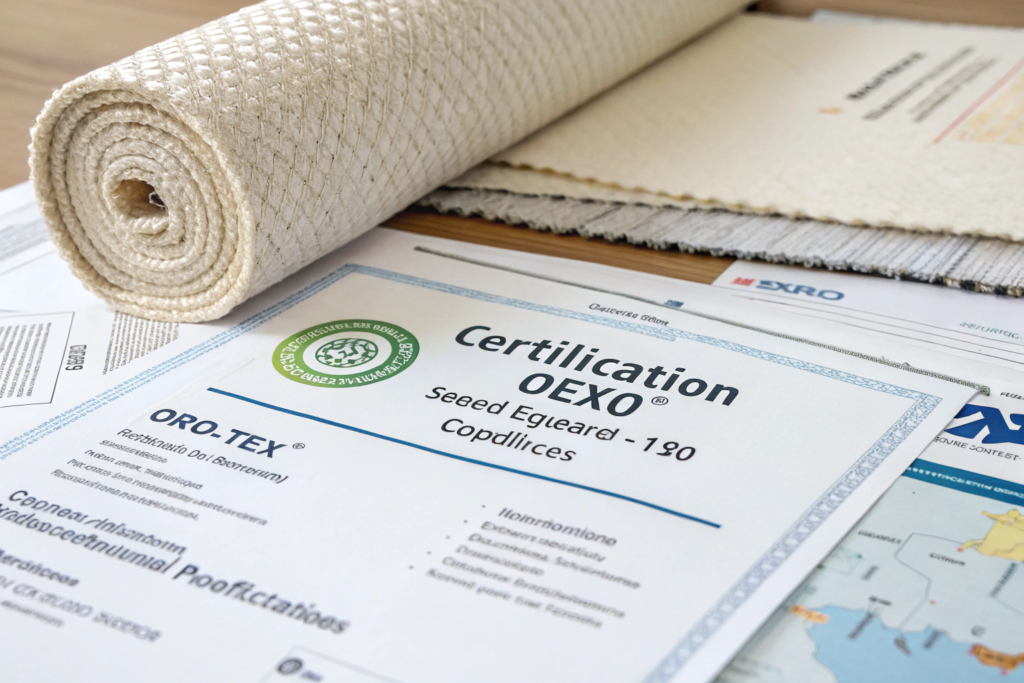
OEKO-TEX® STANDARD 100 is non-negotiable for most European fabric sales. It’s the proof that the fabric has been tested for harmful substances and is safe for human use. We maintain our OEKO-TEX® certification across all woven fabric categories. When you order from us, we provide the certificate number and the issuing institute (Hohenstein or Testex). We also provide the full certificate, which shows the certified facility name and address, the validity period, and the product class. For clients who need additional assurance, we can provide the original test report from our CNAS-accredited lab showing the specific test results for the batch. In 2024, a distributor in Spain was preparing a shipment for a children’s wear brand. The brand required OEKO-TEX® Class I certification—the strictest level, for baby products. We provided the certificate and the batch-specific test report showing formaldehyde levels below 10 ppm (the limit for Class I is 16 ppm). The shipment cleared without issue. For anyone wondering how to verify OEKO-TEX® certificates for textile imports into Europe, the verification portal is the first step, but batch-specific test reports add another layer of credibility.
What Is the Process for GOTS and GRS Transaction Certificates?
A Scope Certificate shows that a facility is certified to produce GOTS or GRS goods. But a Transaction Certificate (TC) is the document that links a specific shipment to that certification. It’s issued by the certification body—Control Union, Ecocert, or others—after the goods are produced and inspected. The TC includes:
- The name and address of the certified facility
- The buyer’s name and address
- The product description and quantity
- The certificate number and issue date
- A unique transaction number
We provide a TC for every GOTS or GRS order. The process is rigorous. We have to maintain separate inventory for certified and non-certified materials. We have to document the chain of custody from the certified yarn to the finished fabric. And we have to provide the certification body with production records and test reports before they issue the TC. In early 2024, we shipped a GOTS-certified organic cotton canvas to a distributor in the UK. The TC arrived electronically within 10 days of shipment. The distributor forwarded it to their client, a sustainable fashion brand, who used it to verify the organic content of their finished garments. If you’re looking to understand the importance of Transaction Certificates in sustainable textile supply chains, they are the essential proof that the fabric you bought is actually certified.
How Do You Handle Logistics and Documentation for European Ports?
I’ve watched European distributors struggle with a problem that has nothing to do with fabric quality. They order great fabric. The factory produces it on time. And then it sits at the port for three weeks because the paperwork is wrong, or the container booking was missed, or the shipping line cancelled the sailing without notice. A fabric distributor’s reputation is built on reliability. When the fabric doesn’t arrive when promised, that reputation takes a hit—even if the delay wasn’t their fault.
We treat logistics as part of our core service. Our in-house logistics team manages the entire export process from Keqiao to European ports. We work with a network of freight forwarders who specialize in Europe-bound cargo. We handle container booking, export customs clearance, document preparation, and vessel tracking. We know the major European ports—Rotterdam, Hamburg, Antwerp, Le Havre, Felixstowe—and we understand their documentation requirements. We prepare the commercial invoice, packing list, bill of lading, and certificate of origin accurately and completely. We also handle any required inspection certificates (like SGS or ITS reports) if the buyer requests them. We don’t treat shipping as someone else’s problem. We own it.
Let me give you a real example from 2023. A distributor in France placed a 35,000-meter order for a cotton-linen blend for their spring/summer collection. The timeline was tight—they needed the fabric in their warehouse in Lyon by a specific date to meet their garment maker’s cutting schedule. We coordinated with our freight forwarder to book vessel space on a direct sailing from Ningbo to Le Havre. We prepared the documentation, including a certificate of origin for the RCEP preferential tariff (which saved the distributor about 2.5% in duties). We cleared customs in Ningbo within 24 hours. The container loaded on schedule and arrived in Le Havre 32 days later—exactly as promised. The distributor told me that with their previous supplier, they never knew if the shipment would be on time. With us, they could plan.

What Shipping Routes and Transit Times Do You Use for Europe?
The choice of shipping route has a big impact on delivery reliability and cost. From Keqiao, we typically ship from the ports of Ningbo-Zhoushan or Shanghai. Here are the common routes and transit times for Europe:
| Destination Port | Typical Transit Time (Direct) | Common Shipping Lines | Notes |
|---|---|---|---|
| Rotterdam, Netherlands | 28–32 days | Maersk, MSC, CMA CGM | Largest European hub; frequent sailings |
| Hamburg, Germany | 30–35 days | Hapag-Lloyd, Maersk | May require transshipment at Rotterdam |
| Antwerp, Belgium | 30–34 days | MSC, CMA CGM | Good for Benelux and France |
| Le Havre, France | 32–36 days | CMA CGM, Maersk | Direct options available |
| Felixstowe, UK | 32–38 days | Maersk, MSC | Post-Brexit customs requirements apply |
| Genoa, Italy | 30–35 days | MSC, Maersk | Good for Mediterranean markets |
We advise our European distributors to add 7–10 days of buffer beyond the vessel transit time for customs clearance, inland trucking, and warehouse receiving. We also monitor vessel schedules closely. When a shipping line cancels a sailing—which happens more often than we’d like—we rebook immediately and notify the client. In early 2024, we had a shipment to Rotterdam that was affected by a vessel cancellation. We rebooked on the next sailing within 48 hours and the fabric arrived only 5 days later than originally planned. The distributor was able to adjust their production schedule without disruption. For distributors looking to optimize shipping logistics from China to Europe, working with a supplier who actively manages vessel bookings makes a significant difference.
How Do You Handle Customs Documentation for the EU?
Customs documentation is where many shipments get delayed. European customs authorities require precise information. Here’s what we prepare for every EU-bound shipment:
- Commercial Invoice: Includes detailed product descriptions, HS codes (the Harmonized System codes for fabrics), unit values, total value, and terms of delivery (Incoterms, typically FOB Ningbo or CIF European port)
- Packing List: Shows the number of rolls, net weight, gross weight, and carton dimensions
- Bill of Lading: Issued by the shipping line; we verify that the consignee name, address, and notify party are correct
- Certificate of Origin: Required for preferential tariff programs like RCEP (for China-EU) or GSP (Generalized System of Preferences). This can reduce duties by 2–5%
- Inspection Certificates: If requested by the buyer, we arrange for SGS or ITS inspection at the factory or at the port
We also track EU import regulations. For example, since 2021, the EU has tightened controls on certain chemicals in textiles. We ensure that our OEKO-TEX® certification and in-house test reports address these requirements. In 2023, a shipment to a distributor in Germany was randomly selected for customs inspection. The customs officer requested proof of REACH compliance. The distributor provided the OEKO-TEX® certificate and the batch-specific test report from our CNAS-accredited lab. The shipment cleared within 48 hours. For anyone importing fabric into the EU, understanding customs documentation requirements for textiles is essential for avoiding delays.
How Do You Communicate and Solve Problems Proactively?
Here’s the honest truth. Problems will happen. A dye batch might come out slightly off. A shipping line might cancel a sailing. A client might change their specification after production has started. The difference between a trusted partner and a transactional supplier is what happens next. A transactional supplier hides the problem, makes excuses, and leaves the distributor to deal with the consequences. A trusted partner communicates early, proposes solutions, and works to minimize the impact.
We believe in proactive communication. When something goes wrong—and it will, eventually—we tell the client within 24 hours. We explain the issue clearly. We propose solutions. And we give a revised timeline. We don’t wait for the client to chase us. We don’t make excuses. We solve problems. This approach has turned difficult situations into opportunities to deepen trust. European distributors tell us that our communication is one of the main reasons they stay with us. They know they won’t be left in the dark.
Let me share a real example from 2023. A distributor in the UK had ordered 25,000 meters of a custom-dyed cotton twill. The lab dip was approved. The fabric was dyed. But when our QC team did the final inspection, they noticed that the colorfastness to light (AATCC 16) was coming in at grade 3.5 on some rolls—just below the grade 4 that the client required. We could have shipped it and hoped the client didn’t test. Instead, we called the distributor. We explained the situation. We offered two options: re-dye the affected rolls (which would add 10 days to the timeline) or ship the rolls with a discount and a note that they were suitable for interior use (where lightfastness is less critical). The distributor chose to re-dye. We re-dyed, re-tested, and shipped 12 days later than originally planned. The distributor told me that while the delay was inconvenient, the transparency made them trust us more. They’ve since doubled their orders with us.

How Do You Handle Rejections and Quality Disputes?
No matter how good the quality control, disputes can happen. A distributor might receive a batch and claim it doesn’t meet the agreed standard. How we handle that moment defines the relationship. Our approach is to resolve, not argue. Here’s our process:
- Request evidence. We ask for photos, test reports, or physical samples showing the alleged defect.
- Verify internally. We check our batch records, test reports, and QC inspection data for the same batch.
- Propose a solution. If the defect is confirmed, we offer a replacement, a credit, or a discount. If the defect is not confirmed, we provide the data and work with the client to understand their concern.
- Learn and improve. If the defect was our error, we update our processes to prevent recurrence.
In early 2024, a distributor in Spain reported that a batch of our woven linen had shrinkage of 4.5%—above the agreed 3% maximum. They sent photos and test results. We pulled our records. Our in-house test had shown shrinkage of 2.8%. We realized there was a discrepancy in the washing method: the client’s garment maker was using a higher wash temperature than the agreed standard. We worked with the distributor to align on the test method. We replaced the affected rolls with a batch that was finished to withstand the higher temperature. The cost was split between us. The distributor continues to order from us. For anyone concerned about how to manage quality disputes with Asian suppliers, the key is to approach it as a partnership problem to solve, not a blame game to win.
What Language and Time Zone Support Do You Offer European Clients?
Communication breaks down when suppliers don’t speak the client’s language or aren’t available during the client’s working hours. We’ve built our team to address this. Our sales and client service team includes English speakers who can communicate clearly and professionally. We also have German and French speakers on staff to support our European clients. We work across time zones. When a distributor in London or Frankfurt has a question, they can expect a response within 12 hours—often much sooner. We use email, WhatsApp, WeChat, and video calls to stay connected. In 2023, a distributor in Austria had a last-minute request to change a dye specification after production had started. They reached out at 4pm their time, which was 11pm in China. One of our team members responded within an hour, assessed the feasibility, and confirmed the change. The fabric was re-dyed and shipped on schedule. That responsiveness is a big reason European distributors trust us. For buyers looking to evaluate a supplier’s communication capabilities, responsiveness during off-hours is a strong indicator of commitment.
Conclusion
Let me bring this all together. European distributors trust Shanghai Fumao because we’ve built our business around their needs. We understand that for a distributor in Milan, Hamburg, or Lyon, fabric isn’t just a product. It’s a commitment to their clients. It’s a promise that the garment factories will have the material they need, that the colors will match, that the certificates will be valid, that the shipment will arrive on time.
We deliver on that promise through:
- Consistent quality backed by our CNAS-accredited lab and rigorous testing
- Full certifications including OEKO-TEX®, GOTS, GRS, and ISO standards
- Reliable logistics with expert handling of shipping routes, documentation, and customs
- Proactive communication that keeps you informed and solves problems before they become crises
- Vertical integration that gives us control over knitting, finishing, and quality control
I’ve been in this industry for over 20 years. I’ve watched the textile business change. But one thing hasn’t changed: trust is earned, not given. And we’ve earned the trust of distributors across Europe by doing what we say we’ll do, order after order, year after year.
If you’re a European distributor looking for a woven fabric partner who understands your market, your quality requirements, your logistics challenges, and your need for reliability—I’d invite you to reach out. Our Business Director, Elaine, leads our European client team. She and her colleagues can walk you through our capabilities, share samples, and give you a clear picture of how we work.
Let’s build a partnership that lasts.
Email Elaine: elaine@fumaoclothing.com
From Keqiao, China, to your warehouse in Europe—we deliver the quality, the reliability, and the trust that your business depends on.