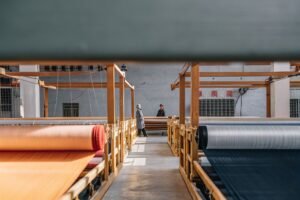
You know what keeps a menswear brand owner up at night? It’s not just about the cut or the collar style. It’s about the fabric. I’ve sat across from buyers from London, New York, and Milan who all tell me the same story. They’ve sourced shirtings from mills that promised the world, only to receive fabric that puckers at the seams, wrinkles after one wash, or feels stiff and uncomfortable against the skin. A men’s shirt is a staple. It has to perform. It has to look crisp at 8 AM and still look presentable at 8 PM. And when it doesn’t? The brand takes the hit. The returns pile up. The trust evaporates.
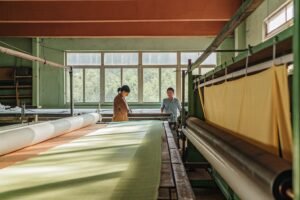
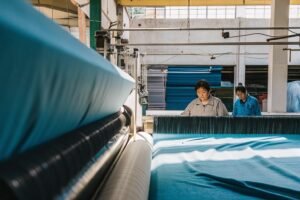
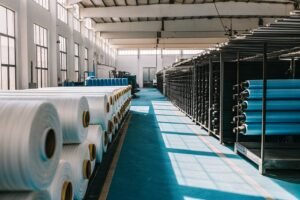
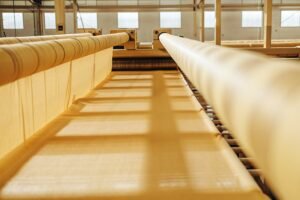
At Shanghai Fumao, we’ve spent over 20 years in Keqiao—the heart of China’s textile industry—perfecting woven fabrics specifically for men’s shirts. We’re not a generalist supplier. We understand that a great shirting fabric needs the right balance of structure and softness, durability and breathability, ease of care and luxury feel. Our vertically integrated operation—from our own weaving factory to our cooperative dyeing and finishing facilities—allows us to control every variable. We produce classic poplins, crisp broadcloths, textured oxfords, and luxurious twills that hold their shape, resist wrinkling, and feel premium against the skin. And because we own the process, we deliver consistency that global brands demand.
Now, I know what you’re thinking. “Every fabric supplier says their quality is good.” But let me get specific. I want to show you why the woven fabrics we produce for men’s shirts are different—not just in marketing claims, but in the actual weaving, the yarn selection, the finishing chemistry, and the quality control that happens at every step. Because when you’re building a shirt collection, the fabric isn’t just one component. It is the product. Let me walk you through exactly how we engineer that difference.
What Makes a Woven Shirting Fabric Comfortable and Breathable?
Let’s start with the most basic question a man asks when he puts on a shirt. “Does this feel good?” I don’t care how sharp the collar looks or how crisp the cuff is. If the fabric feels like plastic or traps heat, the shirt is a failure. I’ve seen too many “premium” shirting fabrics that look great on the roll but turn into a sweat trap after an hour of wear. That happens when the mill prioritized cost over construction.
Comfort and breathability in a woven shirt come down to three things: fiber selection, yarn construction, and weave structure. We start with the right fibers. For our classic shirting range, we use high-grade long-staple cotton—the longer the fiber, the smoother and softer the yarn. We also work with natural blends like linen-cotton for summer shirts and wool-cotton for winter weight. Then we focus on yarn construction. We use combed yarns, which remove short fibers and create a smoother, stronger, and more breathable yarn. Finally, we select the right weave. A poplin is tight and smooth, great for formal shirts. An Oxford has a basket weave that adds texture and airflow. A pinpoint oxford sits in between—formal enough for business but breathable enough for all-day wear.
But here’s where experience matters. You can have all the right ingredients and still end up with a stiff, uncomfortable fabric if the finishing process is wrong. That’s why we control our dyeing and finishing so tightly.
How Does Yarn Quality Affect the Feel of a Men’s Dress Shirt?
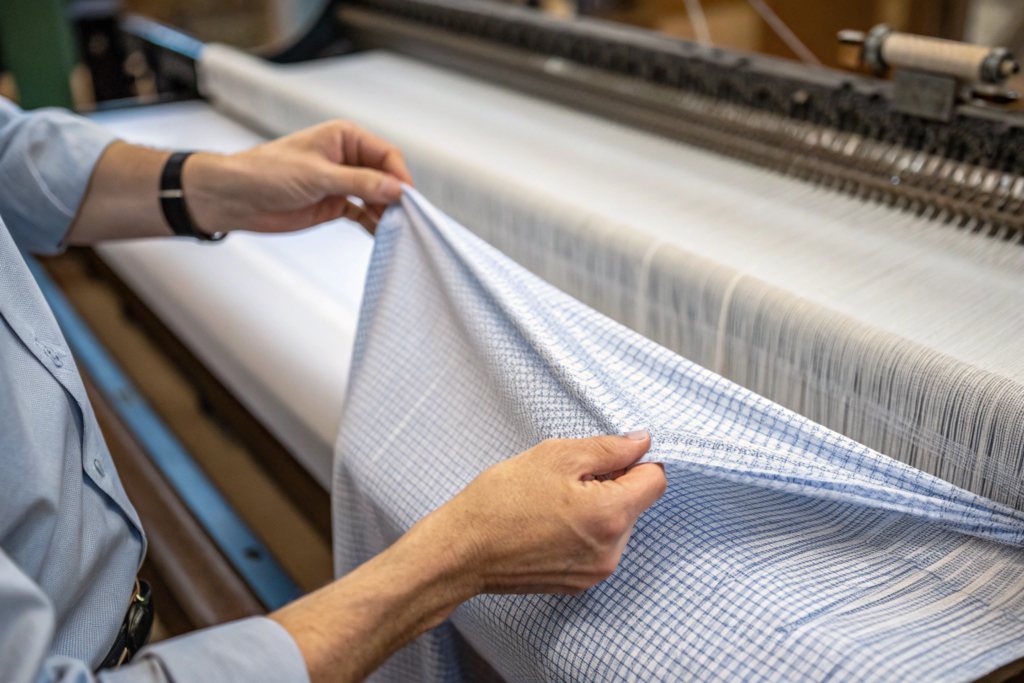
This is a detail that separates good shirting from great shirting. Yarn quality is measured by two main factors: fiber length and yarn count. For our premium shirtings, we use long-staple cotton, often from Xinjiang or similar high-quality sources. The staple length—the length of individual cotton fibers—determines how smooth and strong the yarn can be. Short fibers create hairy, uneven yarns that pill and feel rough. Long-staple fibers spin into fine, smooth, strong yarns that feel luxurious and last longer. Then there’s the yarn count, expressed as “Ne” (number English). A 40s yarn is common for basic shirts. A 60s or 80s yarn is finer, lighter, and softer. We routinely produce shirtings in 60s, 80s, and even 100s two-ply for clients who want a luxury hand feel. In 2023, we worked with a Scandinavian menswear brand that wanted a lightweight, breathable summer shirt. We developed a 100s two-ply cotton poplin with a special anti-wrinkle finish. The fabric was so light you could almost see through it, yet it had the structure to hold a sharp pleat. The client’s sell-through rate on that collection was 30% higher than their previous summer line. If you want to understand how to choose the right yarn count for men’s shirting fabrics, the rule is simple: higher count usually means finer, softer, and more expensive—but it also requires better weaving control to maintain durability.
Why Does Weave Structure Matter for Breathability?
The weave is the architecture of the fabric. A plain weave—like poplin or broadcloth—has a simple over-under structure. It’s smooth, holds a crease well, and is great for formal shirts. But it’s also denser, which can limit airflow. An Oxford weave uses a basket structure: two yarns woven together as one, creating a more open, textured surface. That texture allows air to circulate, which is why Oxford shirts feel cooler and more casual. A twill weave—like a herringbone or a diagonal twill—has a softer drape and better breathability than a plain weave of similar weight. We’ve done extensive testing in our CNAS-accredited lab on breathability, measured by air permeability (ASTM D737). Our Oxford shirtings consistently score 30-40% higher in air permeability than a comparable poplin, which means they’re significantly cooler to wear. In early 2024, a client from a tropical climate region—Singapore—came to us looking for shirts that wouldn’t stick to the skin in humid weather. We recommended a linen-cotton blend in a basket weave structure. The client ordered 20,000 meters, and their feedback was that the shirts sold out faster than any previous style. For those looking to source breathable shirting fabrics for warm climates, weave structure is just as important as fiber content.
How Do You Achieve the Perfect Balance Between Structure and Softness?
Here’s a tension I see all the time. A buyer wants a shirt that feels soft and luxurious—almost like a worn-in favorite. But they also want it to look crisp and professional, with a collar that stands up and cuffs that hold their shape. These two things—softness and structure—often seem like opposites. And honestly? Most factories pick one. They either make it soft and floppy, or they make it crisp and cardboard-stiff. We refuse to choose.
The balance between structure and softness comes from finishing chemistry and mechanical treatment. After the fabric is woven and dyed, we run it through a series of finishing processes that determine its final hand feel. For our men’s shirting range, we use a combination of mercerization (a caustic soda treatment that strengthens cotton and adds luster), sanforizing (a mechanical pre-shrinking process that ensures dimensional stability), and softening finishes (carefully selected non-silicone or silicone-based softeners that add drape without sacrificing crispness). We don’t over-soften. We don’t over-stiffen. We calibrate the finish to the specific weave and end-use.
Let me give you a real example. In Q2 of 2023, a British heritage menswear brand approached us. They wanted a fabric that mimicked the feel of their vintage shirts from the 1960s—soft with age, but with the crispness of a new shirt. They had tried other mills and been told it was impossible to replicate. We took their request to our finishing team. We ran a series of trials on a 2/2 twill weave using long-staple cotton. We adjusted the tension in the weaving, used a lower-temperature mercerization to preserve fiber integrity, and applied a minimal mechanical softener. The result? A fabric that had the soft, almost brushed hand feel they wanted, but with enough body that the collar stood up without interfacing. They placed a 50,000-meter order. That’s the kind of development work we do.
What Is Mercerization and Why Does It Matter for Men’s Shirts?
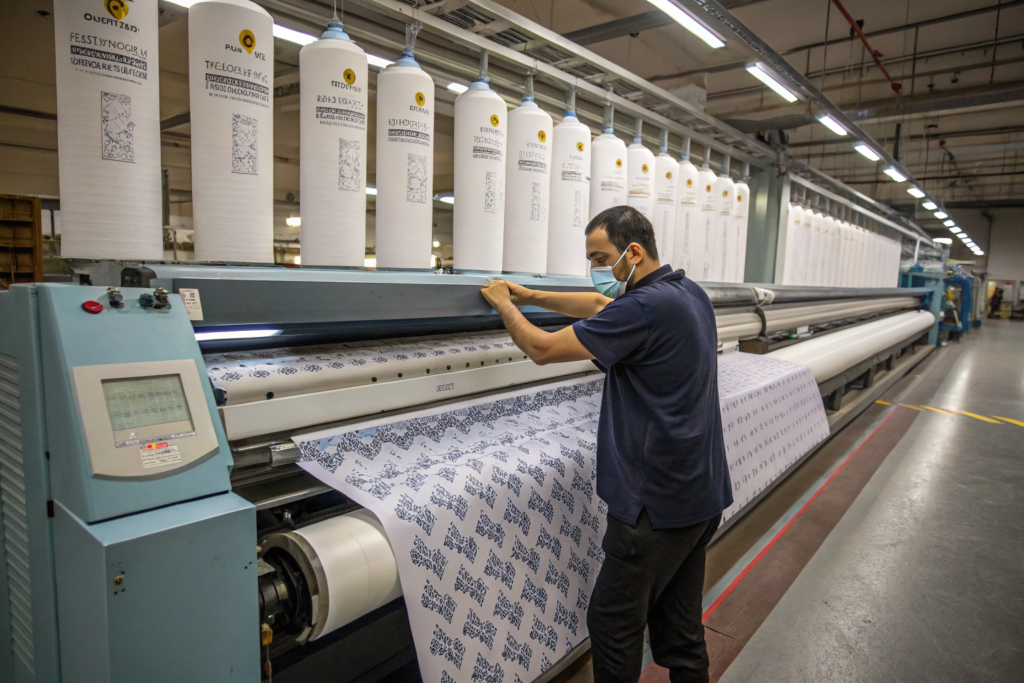
Mercerization is one of those finishing processes that sounds technical but makes a huge difference in the final product. Named after John Mercer who invented it in 1844, it’s a treatment where cotton fabric is soaked in a cold sodium hydroxide (caustic soda) solution under tension. What does it do? Three things. First, it strengthens the cotton fiber. Mercerized cotton is about 30% stronger than unmercerized cotton. Second, it adds luster. The treatment causes the fibers to swell and become more round, which reflects light better—giving the fabric a subtle sheen that looks premium. Third, it improves dye affinity. Mercerized cotton absorbs dye more evenly and deeply, which means richer, more consistent colors. In our own weaving factory, we mercerize most of our premium shirtings. A client from the US who runs a direct-to-consumer shirt brand told me that after switching to our mercerized cotton poplin, their customer reviews started mentioning the “luxurious feel and rich color” consistently. That’s not a coincidence. You can read more about how mercerization improves cotton shirting quality from textile education resources.
How Does Sanforizing Prevent Shrinkage in Cotton Shirts?
If you’ve ever bought a cotton shirt that fit perfectly in the store but became a crop top after the first wash, you know the frustration of uncontrolled shrinkage. That happens when the fabric isn’t properly pre-shrunk. Sanforizing is the mechanical process that solves this. The fabric passes through a sanforizing machine that compresses it with steam and pressure, effectively “pre-shrinking” it before it’s cut and sewn. In our cooperative finishing facility, we run every cotton shirting fabric through this process. The result? Our cotton shirtings typically have shrinkage rates of less than 2% in both warp and weft directions, tested according to AATCC 135 standards. I remember a client from a South American menswear chain who had a nightmare experience with a previous supplier. Their shirts were shrinking 5-7% after washing, and they were drowning in returns. They switched to us in 2022. We sent them pre-production samples with shrinkage test reports. They tested the samples themselves, confirmed the results, and placed a container order. Their return rate dropped by over 60% that season. For anyone looking to ensure shrinkage control in woven shirting fabrics, always ask for the sanforizing specification and the test data.
How Do You Maintain Color Consistency Across Large Production Runs?
Color inconsistency is the silent killer of menswear collections. I’ve seen it happen. A brand orders a run of 50,000 meters of light blue oxford for their core shirt line. The first batch looks perfect. The second batch—from the same supplier—has a greenish cast. The third batch is two shades lighter. Now the brand has to sort rolls, reject fabric, and potentially run out of stock on popular sizes. It’s a logistical nightmare. And it happens because the supplier doesn’t have control over their dyeing process.
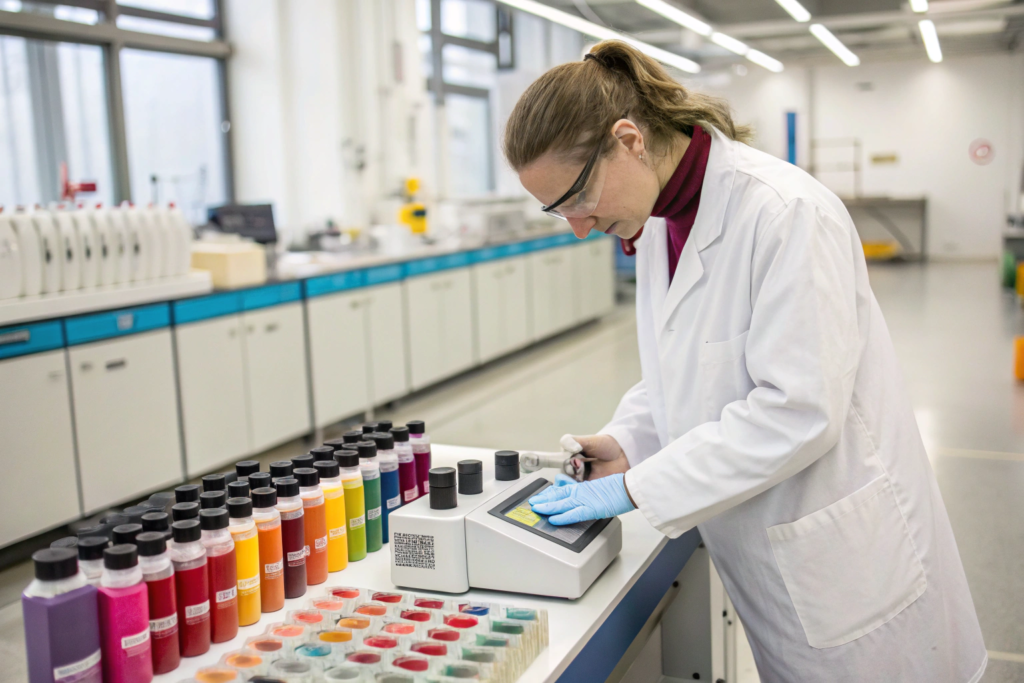
Color consistency is non-negotiable for us. We maintain it through a combination of recipe standardization, automated dispensing, and in-line spectrophotometer testing. In our cooperative dyeing factory, every color formula is stored in a digital system. When we run a batch of fabric, we don’t rely on a dyer’s “eye” to match the color. We use automated dispensing machines that measure dyes to within 0.01 grams. We test every batch with a spectrophotometer—a device that reads color numerically using the CIE Lab system—before it leaves the dyeing stage. We also maintain shade bands: physical samples of the approved color that we compare against every production lot. If the spectrophotometer reading falls outside the agreed tolerance, the batch doesn’t move forward.
Let me give you a specific example from 2023. A European menswear brand was launching a new collection with a signature navy blue—their brand color. They had used three different suppliers in the past and had three different versions of “navy.” They came to us because they needed 80,000 meters of a specific twill shirting in that exact navy across six months, with zero variation. We took their standard, digitized the formula, and stored it in our system. Over six production runs, we maintained a ΔE (color difference) of less than 0.8, which is well within industry tolerances for commercial acceptance. The brand’s production manager told me it was the first time they’d been able to ship a full season with consistent color across all orders.
What Is Spectrophotometer Testing and Why Does It Matter?
A spectrophotometer is the tool that removes guesswork from color matching. It measures color the way a thermometer measures temperature—objectively. It uses the CIE Lab color space, where L measures lightness, a measures red-green balance, and b measures yellow-blue balance. When we get a color standard from a client, we measure it with the spectrophotometer and store that numeric value. When we run production, we measure again. The difference between the two is called ΔE (delta E). In the textile industry, a ΔE of less than 1.0 is considered visually indistinguishable to most observers. We routinely hold our shirtings to a ΔE of 0.8 or less. In our CNAS-accredited lab, we also test for colorfastness to washing, light, and perspiration to ensure that the color doesn’t just start out consistent—it stays consistent over the life of the garment. For clients who want to learn more about how spectrophotometers ensure color accuracy in textiles, this technology is the industry standard for any serious supplier.
How Does Our Dyeing Factory Handle Small-Batch Custom Colors?
Not every client needs 50,000 meters. In fact, many of our customers are startups, designers, or niche brands who need small-batch custom colors—sometimes just 500 to 2,000 meters per color. This is where our agile R&D and our cooperative dyeing factory’s flexibility really shine. We use a laboratory dyeing machine to develop small samples. We can turn around a lab dip—a small swatch of the requested color—in 48 hours. Once approved, we scale up to production. Because our dyeing factory uses automated dispensing, even small batches get the same precision as large runs. In early 2024, a US-based online menswear startup came to us. They needed seven custom colors for their debut shirting collection, with quantities ranging from 800 to 3,000 meters per color. They had been turned away by larger mills that only wanted container orders. We took them on. We delivered all seven colors with consistent quality, and their launch sold out in three weeks. That’s the kind of partnership we build. If you’re looking for how to source custom-colored shirting fabrics with low MOQs, we’re built to handle it.
What Quality Control Measures Ensure Durability in Men’s Woven Shirts?
A man’s shirt has to work hard. It’s pulled, stretched, buttoned, unbuttoned, washed, dried, and ironed—sometimes every week for years. If the fabric can’t take that kind of use, it’s not a good shirt. I’ve seen clients who bought beautiful-looking shirtings that started pilling after three washes. Seams that puckered. Collars that went limp. That’s not just a fabric failure. That’s a brand failure.
Durability is engineered into our woven shirtings through rigorous testing and strict quality control. We test for tensile strength (how hard you can pull before it rips), tear strength (how easily it tears), seam slippage (whether the seams pull apart), abrasion resistance (pilling), and dimensional stability (shrinkage). Every roll of shirting fabric goes through our CNAS-accredited lab. We use the 4-point system for fabric inspection, which is the global standard for grading fabric quality. Only rolls that meet our pass rate—98% or higher—are shipped. And we back every roll with a QR code that links to the test data, so you can verify the quality for yourself.
I want to give you a specific example of how this testing process catches problems before they reach you. In late 2023, we were producing a run of fine cotton poplin for a European formalwear brand. During our routine seam slippage test (ASTM D434), we noticed that one batch was showing borderline results—the seam was holding, but the fabric was beginning to shift under tension. We flagged the batch. We traced it back to the weaving stage and found a minor tension inconsistency in that specific production lot. We rewound that batch and corrected the tension. The fabric that shipped was flawless. The brand never knew there was an issue, because we caught it in-house. That’s the value of owning your QC process.
What Is the 4-Point System and How Does It Protect Your Order?
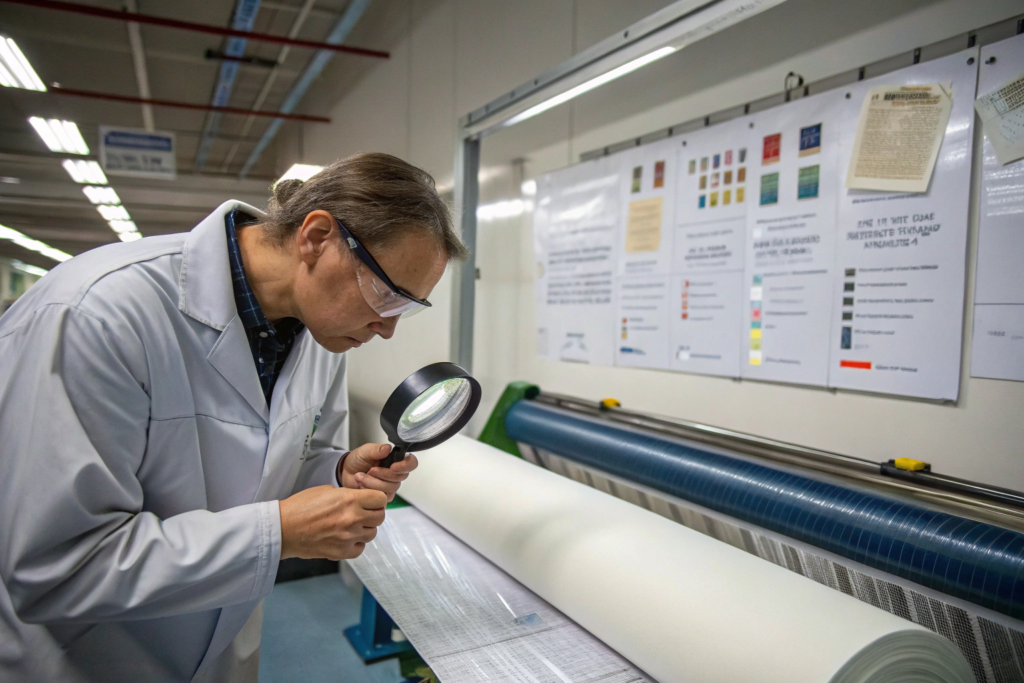
The 4-point system is the universal language of fabric quality. It’s a standardized method for grading fabric rolls based on defects. Each defect—a hole, a slub, a color variation—is assigned points based on its size and severity. A roll is graded as “first quality” if the total points per 100 square yards falls below a certain threshold (usually 20-25 points, depending on the buyer’s requirement). Our QC team is trained in this system. We inspect every roll of shirting fabric on our inspection machines, which run the fabric at a controlled speed under bright lights. The inspector marks defects, counts points, and assigns a grade. Only first-quality rolls are shipped. I’ve had clients tell me that after switching to us, their cutting room waste dropped by 10-15% because they weren’t constantly culling defective fabric. For anyone wanting to understand how the 4-point fabric inspection system works, it’s the standard you should expect from any serious fabric supplier.
How Does QR Code Tracking Give You Real-Time Quality Data?
This is something I’m particularly proud of. Every roll of fabric that leaves our facility has a QR code label. That QR code is linked to a digital record that includes the fiber composition, the weave type, the batch number, the dyeing date, the inspection results, and the test data for shrinkage, colorfastness, and strength. When you receive the fabric, you can scan that QR code with your phone and see everything. It’s our way of saying “we have nothing to hide.” In 2022, a large US retail chain placed a major order for their house brand shirting. They had a policy of third-party inspecting every shipment at their own facility—a process that usually added 2-3 weeks to their lead time. When we showed them our QR code system and the accompanying test reports, they waived third-party inspection for our shipments. The trust came from the data. We’ve since shipped over 200,000 meters to them with zero quality claims. That’s the power of transparency. If you’re looking for how to verify fabric quality before shipment using digital tracking, we’ve been doing it for years.
Conclusion
Let me take a step back and look at the bigger picture. A men’s shirt is one of the most basic, essential items in any wardrobe. But that simplicity is deceptive. Making a great shirting fabric requires mastery across multiple disciplines: fiber selection, yarn engineering, weave construction, dyeing precision, finishing chemistry, and rigorous quality control. One weak link, and the whole chain breaks.
At Shanghai Fumao, we’ve built our entire operation in Keqiao—the world’s largest textile cluster—to ensure that every link in that chain is strong. Our own weaving factory produces the greige goods. Our cooperative dyeing factory applies color with spectrophotometer precision. Our coating and finishing facilities add the final hand feel. Our CNAS-accredited lab tests every batch against international standards. And our QR code system gives you full transparency into the quality of every roll.
I’ve been doing this for over 20 years. I’ve seen trends come and go. But the fundamentals of a great men’s shirt never change. It has to feel good. It has to look good. It has to last. And it has to be consistent, order after order, season after season.
That’s what we deliver. Not just fabric. Confidence.
If you’re a menswear brand, a designer, or a buyer who’s tired of inconsistent shirting quality, I’d invite you to try something different. Reach out to our Business Director, Elaine. She and her team can walk you through our shirting collection—over 30,000 designs, from classic poplins to textured oxfords to luxury twills. They can arrange for samples, discuss custom colors, and show you how our quality control system gives you peace of mind with every shipment.
Let’s build your shirt collection together. Start with fabric you can trust.
Email Elaine directly: elaine@fumaoclothing.com
From the heart of Keqiao, China, to your customers around the world—we’re here to make your shirts stand out.