Let me share something that still makes my blood boil, even after 20 years in this industry. Back in 2019, a new client came to us after a nightmare experience. They had ordered what they thought was GOTS-certified organic cotton jersey from another supplier. The price was good, the samples looked decent, and the certificates looked official. But when their shipment arrived in Hamburg, customs flagged it. The "organic cotton" tested as conventional. The OEKO-TEX® certificate was fake. The entire container was seized. They lost $80,000 and six months of market time. That story isn’t unique. I hear versions of it from buyers all the time. And honestly? It makes me furious, because it hurts the trust our entire industry relies on.
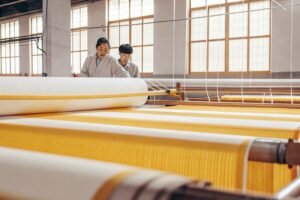
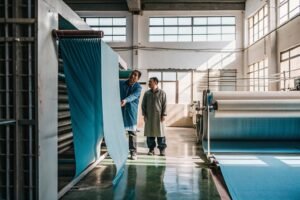
At Shanghai Fumao, we’ve made it our mission to be the antidote to this problem. The best way to avoid fake certificates is to work with a supplier who has nothing to hide—one who owns their own production chain, welcomes audits, and can provide verifiable, traceable documentation from the fiber to the finished roll. You need to look beyond the PDF a salesperson emails you. You need to verify the issuer, check the certificate number against the official registry, and—most importantly—inspect the supply chain that produced the fabric. We don’t just hand you a certificate; we show you the weaving factory, the dyeing process, and the testing reports from our own CNAS-accredited lab that back it up.
Now, I know what you’re thinking. "That sounds great, but I’m sitting in New York or London or Melbourne. I can’t just pop over to Keqiao to check every supplier." I get it. But there are concrete, actionable steps you can take—right from your desk—to separate the legitimate suppliers from the certificate forgers. And because we own our weaving, dyeing, printing, and coating operations, I can tell you exactly what a real, trustworthy certification process looks like from the inside. Let me walk you through the traps to avoid and the verification steps that actually work.
How Can You Verify an OEKO-TEX® Certificate Before Placing an Order?
I’ve seen fake OEKO-TEX® certificates that look almost perfect at first glance. They have the logo, the certificate number, the date, even a fake signature. But here’s the thing—OEKO-TEX® has a simple, foolproof verification system that any buyer can use. And yet, so many people skip this step. They see a certificate, feel reassured, and move on. That’s exactly what the forgers are counting on.
Every legitimate OEKO-TEX® STANDARD 100 or LEATHER STANDARD certificate has a unique certificate number and a verifiable link on the official OEKO-TEX® website. Before you place any order, you should take that number and enter it into the public verification portal at www.oeko-tex.com/en/our-standards/oeko-tex-standard-100. This will show you the exact scope of the certificate: the issuing institute, the validity period, the product categories covered, and—this is critical—the name and location of the certified facility. If the facility name on the certificate doesn’t match the supplier you’re talking to, that’s a massive red flag.
I want to share a real example from earlier this year. A buyer from a UK-based children’s wear brand was sourcing a knitted organic cotton jersey. They had a quote from a small trading company in another province, and the price was suspiciously low. They sent me the certificate PDF they’d received and asked for my opinion. I went to the OEKO-TEX® portal, entered the number, and what came up? The certificate was valid, but it belonged to a weaving mill in a completely different city—a facility that had no relationship with the trading company. The trading company had simply grabbed a legitimate certificate from another factory and photoshopped their name onto it. We ended up getting the order, but only because the buyer took that extra step to verify.

What Information Should a Real OEKO-TEX® Certificate Show?
A real certificate isn’t just a logo. It contains several key pieces of information you need to check. First, the certificate number must be alphanumeric and match what’s in the online database. Second, the issuing institute—like Hohenstein, Testex, or others—must be listed. Third, the validity period is usually one year, so if the certificate is expired, it’s worthless. Fourth, the certified facility name and address must match your supplier’s actual production location. Finally, the product class (I, II, III, or IV) tells you what the certification covers—Class I is for babies, Class II is for direct skin contact. If you’re buying fabric for t-shirts and the certificate only covers Class IV (decorative materials), you’re not covered. For a deeper understanding of how to read textile certification documents correctly, I always recommend buyers spend 10 minutes familiarizing themselves with the portal.
Can a Supplier Have OEKO-TEX® Without Owning the Factory?
This is a tricky one. Yes, a supplier—especially a trading company—can sell fabric that is OEKO-TEX® certified even if they don’t own the factory. The certificate belongs to the facility that actually produced the fabric: the spinning mill, the weaving mill, or the dyeing factory. A legitimate trading company will have a formal partnership with that certified factory and can provide you with the original certificate and a letter of authorization. But here’s the catch: you then have to verify that the fabric you receive actually came from that certified facility. That’s where traceability comes in. At Shanghai Fumao, because we own our weaving factory and partner with certified dyeing and printing factories, we can show you the entire chain. We provide a transaction certificate (TC) for certified goods, which is a document that proves the specific batch of fabric came from the certified supply chain. If your supplier can’t provide a TC, or if they hesitate when you ask for it, that’s a warning sign. You can learn more about how to request and verify transaction certificates for textiles from industry resources.
What’s the Difference Between a Real GOTS Certificate and a Fake One?
If there’s one certification that gets faked more than any other, it’s GOTS. I see it constantly. The Global Organic Textile Standard is the gold standard for organic textiles, but it’s also complex. It covers not just the fiber, but the entire production process, including chemical inputs, wastewater treatment, and social criteria. Because it’s so rigorous, some suppliers try to fake it. They know buyers want GOTS, but they don’t want to do the work to actually earn it.
A real GOTS certificate is never just a piece of paper. It comes with a Scope Certificate that is issued by an approved certification body like Control Union, IMO, or Ecocert Greenlife. This Scope Certificate lists the certified facility and the scope of its operations—whether it’s spinning, weaving, dyeing, or manufacturing. But here’s the key: for a finished fabric to be GOTS-certified, every stage of its production must be covered by a Scope Certificate, and you need a Transaction Certificate (TC) for the specific batch. A fake GOTS certificate will either have no Scope Certificate number, or the number will lead to a facility that doesn’t match the supplier. We maintain full GOTS certification across our organic cotton and organic linen product lines, and we provide TCs for every single order so our clients have complete traceability.
Let me tell you about a situation from Q3 of 2023. A client in Australia was launching an organic cotton activewear line. They’d found a supplier on Alibaba with a great price on GOTS-certified organic cotton jersey. The supplier sent them a certificate that looked fine at first glance. But when the client asked for the Scope Certificate number to verify it with the issuing body, the supplier got defensive. They sent excuses. They sent a different certificate. Finally, the client asked us for a quote. We provided our Scope Certificate from Control Union, our TC from a recent shipment, and—because we have a cooperative dyeing factory that’s also GOTS-certified—we offered to have the client’s representative video-call us for a walkthrough of the facility. The client ended up ordering from us. The other supplier? They disappeared when the client insisted on verification.
How Do You Verify a GOTS Scope Certificate Number?
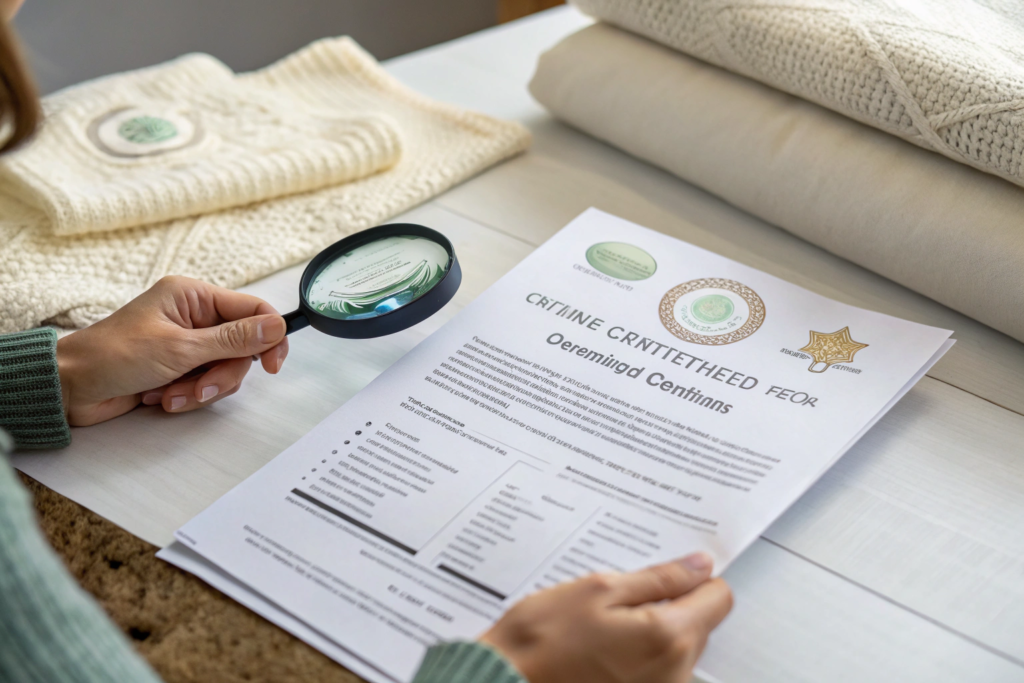
The process is straightforward but requires you to contact the certification body directly. Each approved GOTS certifier has its own public database or verification process. For example, Control Union has an online portal where you can search for a Scope Certificate by number or by company name. If the certificate number doesn’t appear, or if it appears under a different company name and address, it’s fake. I always tell my clients to take it one step further: ask for the certification body’s name and contact person. Then, send them an email to confirm that the certificate is current and that the supplier is in good standing. A legitimate supplier will have no problem with this. In fact, we encourage it. If you want to understand the proper way to verify GOTS certification from suppliers in Asia, the GOTS website itself has a list of all approved certifiers and their contact details.
Why Is a Transaction Certificate (TC) More Important Than the Main Certificate?
This is something a lot of buyers don’t realize. The Scope Certificate shows that a facility is capable of producing GOTS-certified goods. But the Transaction Certificate (TC) is the document that proves a specific shipment actually was produced to GOTS standards. It’s like the difference between a restaurant having a health inspection license (Scope Certificate) and the restaurant proving that the specific meal you ordered was prepared to those standards (TC). A TC is issued for each batch of certified goods. It includes details like the product description, the quantity, the buyer and seller information, and the certificate number of the certified facility. Without a TC, you don’t have proof that your fabric is actually organic. In 2022, we helped a European streetwear brand navigate this exact issue. They had a Scope Certificate from their previous supplier but had never asked for a TC. When we showed them the difference, they realized they had been buying non-certified fabric for over a year. They switched to us, and now we provide a TC with every GOTS order. For anyone looking to source GOTS certified knitted fabrics with full traceability, always insist on seeing the TC before the fabric ships.
What Should You Ask a Supplier to Prove Their Certifications Are Real?
Here’s the hard truth. A PDF certificate can be faked. A photo of a certificate on a wall can be photoshopped. So if you’re relying only on those things, you’re taking a risk. I’ve been on the other side of this conversation hundreds of times, and I can tell you exactly what a legitimate supplier sounds like—and what a fake one sounds like. It comes down to what they’re willing to show you and how they respond when you ask for proof.
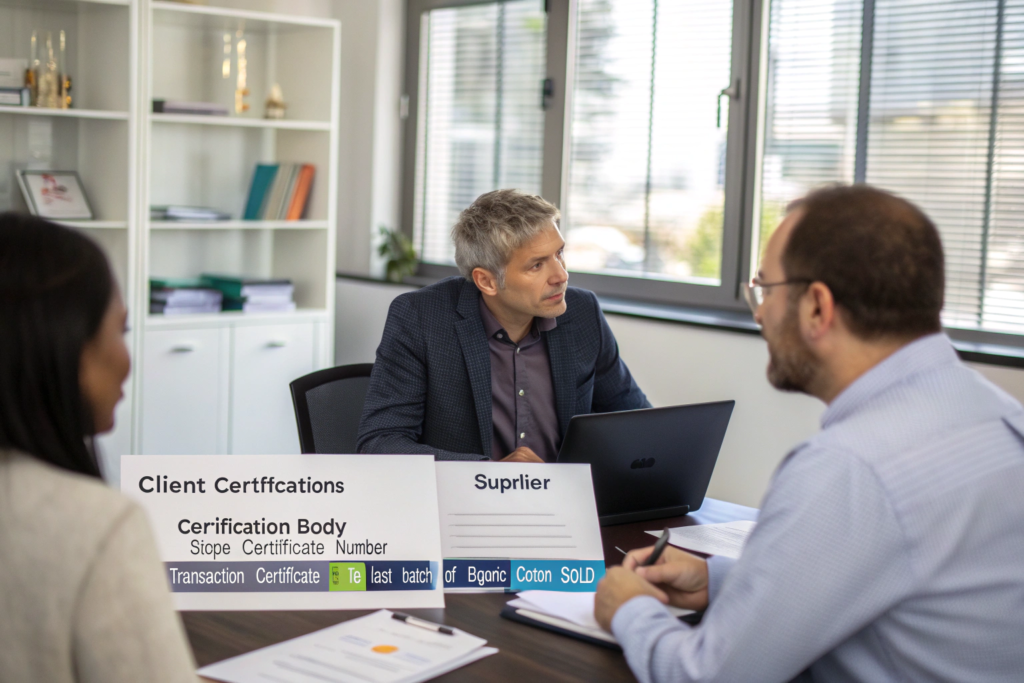
The best way to verify certifications is to ask questions that only a genuinely certified supplier can answer. Don’t just ask “are you GOTS certified?” Ask “what is your certification body and what is your Scope Certificate number?” Ask “can you provide the Transaction Certificate for the last batch of organic cotton you sold?” Ask “can I have a video call to see the production floor and the laboratory where you test your fabrics?” A legitimate supplier will have ready answers. A fake one will stall, deflect, or send you a generic certificate without the specific details you requested. At Shanghai Fumao, we have a policy: any client who asks for verification gets a full walkthrough, whether it’s via video call, photos, or documents. We have nothing to hide.
Let me share a specific example. In 2023, a buyer from the US was sourcing antimicrobial knitted fabric for a medical apparel line. The supplier they were considering sent over a certificate claiming their fabric was tested and certified to AATCC 100 standards. The buyer was about to move forward when they decided to ask a few more questions. They asked: “Which lab performed the test? Can you provide the original test report with the lab’s stamp?” The supplier said the certificate was the report. That was a red flag. A real test report contains raw data, test conditions, and a signature from the lab technician. A certificate is just a summary. The buyer then reached out to us. We sent them not just our certification, but the full test report from our CNAS-accredited lab, showing the exact reduction in bacterial growth. They placed a trial order with us and have been a repeat customer ever since.
What Specific Documents Should You Request Before Paying a Deposit?
I recommend you build a simple checklist. First, request the full certification document, not just the first page. Second, ask for the Scope Certificate for GOTS or the certificate holder information for OEKO-TEX®. Third, request a sample test report for the type of fabric you’re ordering—this should show test methods (like ISO 3071 for pH or AATCC 61 for colorfastness) and actual results. Fourth, if the fabric has a functional claim like waterproof or flame-retardant, ask for the performance test report from an accredited lab. Finally, ask for a video tour of the facility where the fabric will be produced. In one instance, a client from Canada asked for a video tour of our weaving factory and our coating factory. We did a live WhatsApp video call. They saw our looms running, our technicians working, and our QR code tracking system in action. That level of transparency is what a real supplier can offer. You can find more detailed guidance on requesting verification documents from textile suppliers from third-party inspection companies.
How Can a Video Factory Tour Help You Spot Red Flags?
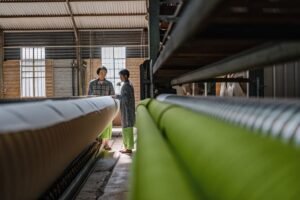
A video call is one of the most powerful tools you have. You don’t need to fly to China. A 20-minute WhatsApp or Zoom call can tell you more than a dozen emails. Here’s what to look for. First, ask to see the certificate posted on the wall—and watch them walk to it. If they hesitate or give you a close-up of a certificate without showing the surrounding area, that’s suspicious. Second, ask to see the testing lab or the area where quality checks happen. A legitimate factory will have one. Third, ask to see the rolls of fabric with the batch numbers and QR codes. We use QR code tracking on every roll, so we can show a client exactly where that fabric was woven, dyed, and inspected. Finally, pay attention to the environment. Is it organized? Do workers have safety gear? Is there a sense of professionalism? I remember a client from Brazil who was considering two suppliers. We did a video tour of our facility, showing our cooperative dyeing factory’s automated dispensing system and our QC team in action. The other supplier refused a video call. The client chose us. In his words, “you showed me you have nothing to hide.” If you’re looking for tips on conducting effective factory video audits for textiles, this approach is now standard practice for serious buyers.
Why Does Owning the Production Chain Matter for Certification Authenticity?
Let me be direct with you. A trading company can show you a certificate. A factory that actually produces the fabric can prove it. This is the fundamental difference that separates real certification from fake certification. When you work with a supplier that owns their own weaving factory, dyeing operation, and finishing facilities—like we do—you’re not relying on a story. You’re seeing the process. And when you control the process, you control the proof.
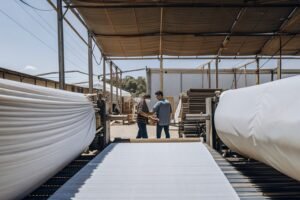
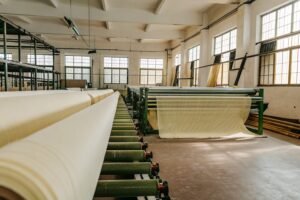
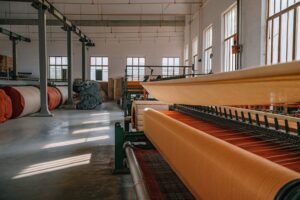
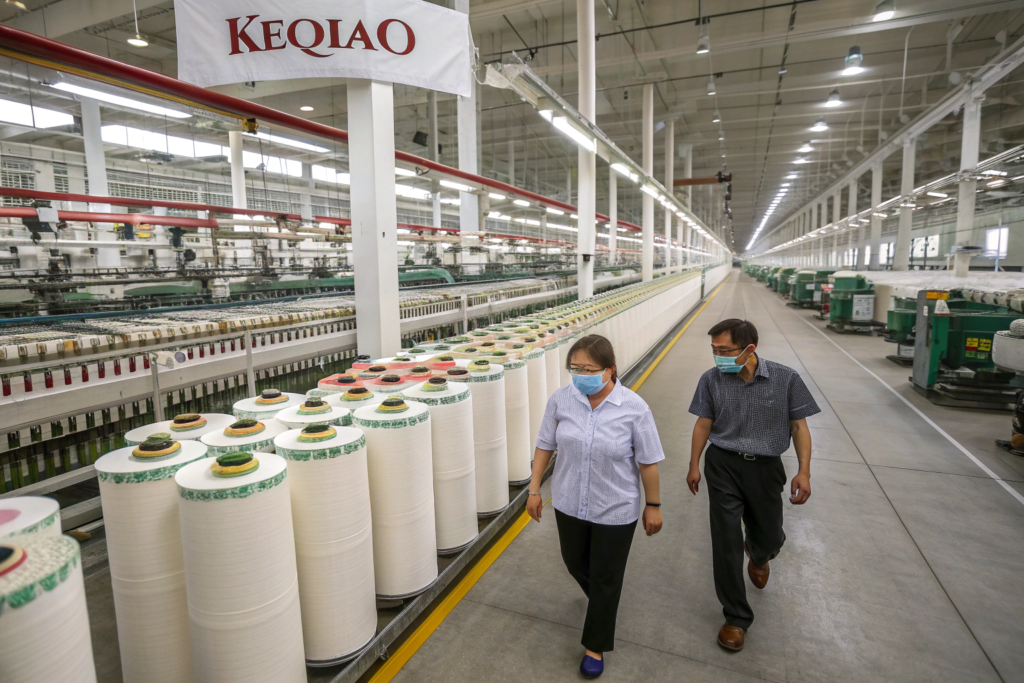
At Shanghai Fumao, our vertically integrated model means we don’t have to ask another factory to provide certification documents for us. We produce them. Our weaving factory produces the greige goods. Our cooperative dyeing factory applies certified dyes and finishes. Our coating factory applies specialized treatments. And our CNAS-accredited lab tests everything along the way. This integration means that when we give you a GOTS Transaction Certificate or an OEKO-TEX® test report, it comes directly from our own production and quality control chain. We’re not a middleman passing along someone else’s documents. We’re the source.
I want to give you a concrete example of why this matters. In early 2024, a European fashion brand was trying to source OEKO-TEX® certified stretch cotton twill. They had approached three different trading companies. Each one sent a certificate, but each certificate was from a different factory. The brand had no way of knowing which factory would actually produce their order—or if any of them would. When they came to us, we didn’t send a certificate from a third-party factory. We showed them our own OEKO-TEX® STANDARD 100 certificate, which lists our weaving facility and our partner dyeing facility by name. We walked them through our QR code system, which tracks the fabric from our looms to the dyeing vats to the final inspection. They placed a 50,000-meter order. Why? Because they didn’t want to guess. They wanted to know.
How Does Vertical Integration Prevent Certificate Switching?
One of the most common tricks I’ve seen is what I call “certificate switching.” A supplier shows you a certificate from a reputable factory to win the order. Then, when production starts, they source the fabric from a cheaper, non-certified factory to save money. You receive fabric with no actual certification, but the supplier hopes you won’t test it. This is impossible to pull off with a vertically integrated supplier. Because we own our weaving factory and control our dyeing and finishing, the certificate is tied to us. The fabric you order is the fabric we produce. There’s no separate factory to switch to. In 2023, we had a client who had been burned by certificate switching with a previous supplier. They told us their story: they had paid for GRS-certified recycled polyester fleece, but when they tested the fabric independently, it contained only 20% recycled content instead of the promised 70%. They switched to us, and now we provide them with the GRS Transaction Certificate for every batch. For anyone concerned about ensuring supply chain integrity for certified textiles, vertical integration is the safest path.
What Role Does an In-House CNAS Lab Play in Certification Authenticity?
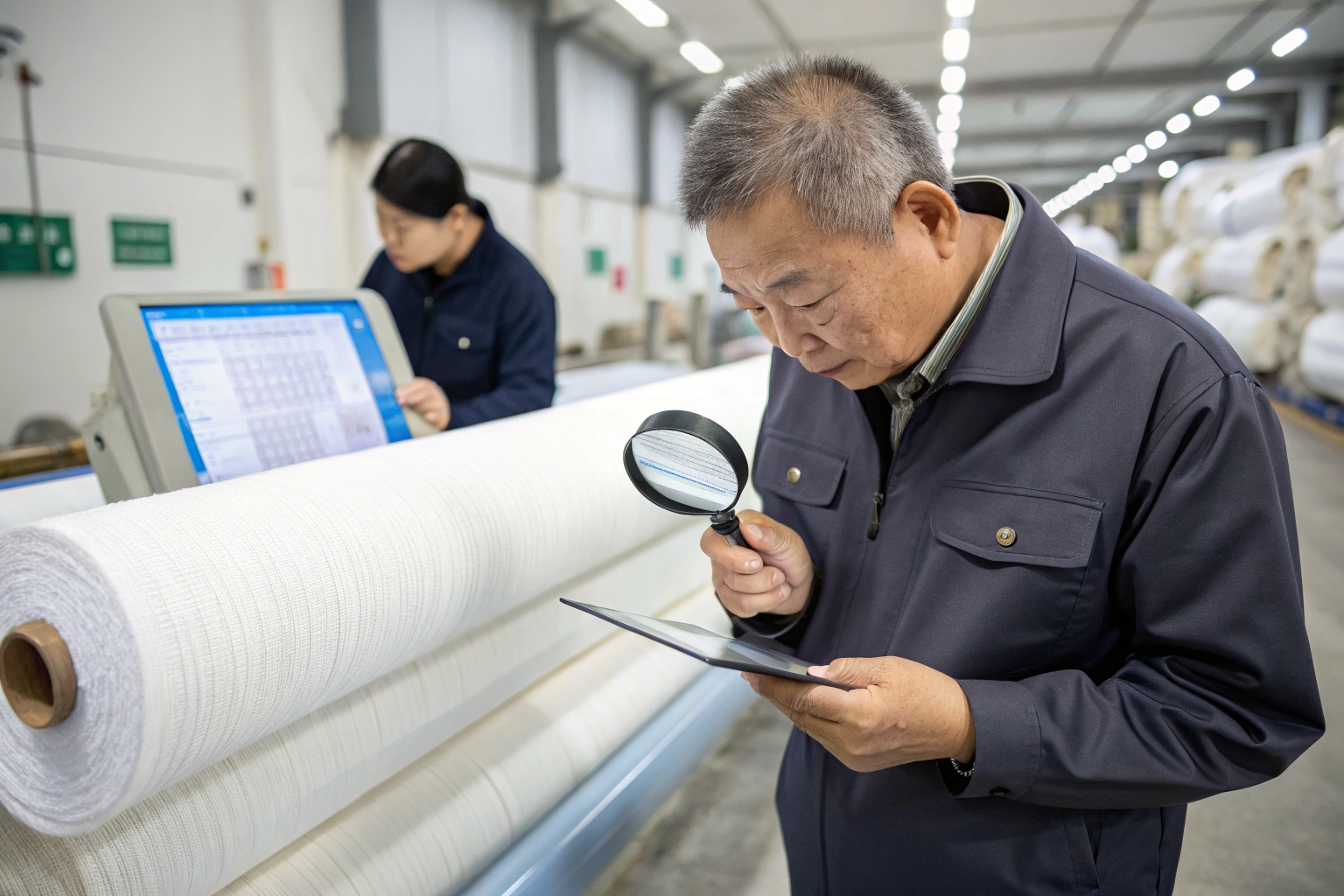
Our CNAS-accredited lab is the backbone of our certification integrity. It serves two critical functions. First, it allows us to pre-test every batch of fabric before it’s certified. We don’t wait for a third-party lab to tell us if a batch passes OEKO-TEX® standards; we test it ourselves first. If it doesn’t pass, it doesn’t ship. Second, it provides an independent, verifiable record of the fabric’s quality. Because our lab operates under ISO/IEC 17025, its test reports are internationally recognized. When a client receives a batch of fabric and needs to prove its compliance to their own customers, we can provide the original lab report with the batch number, the test date, and the technician’s signature. I recall a situation in late 2022 where a US client’s shipment was randomly selected for inspection by US Customs. The customs officer requested proof that the fabric was OEKO-TEX® certified. Our client was able to provide not just the certificate, but the in-house lab report showing the specific test results for that batch, matched to the QR code on the fabric rolls. The shipment cleared within 48 hours. If you’re sourcing from China, having a supplier with an in-house lab is like having a guarantee. You can learn more about how CNAS-accredited labs ensure textile certification reliability directly from the official body.
Conclusion
Let me bring this all back to where we started. The story about that client who lost $80,000 to fake certificates? It still bothers me. Not just because they lost money, but because it didn’t have to happen. There were signs they could have caught. They didn’t verify the OEKO-TEX® number online. They didn’t ask for a Transaction Certificate. They didn’t push for a video tour of the factory. And they trusted a trading company that couldn’t show them a single loom or a single dyeing machine.
I’ve spent 20 years building Shanghai Fumao on the opposite principle: complete transparency. When you work with us, you’re not getting a PDF that was forwarded from some unknown factory. You’re getting fabric from our own weaving operation, processed in our partner dyeing and finishing facilities, tested in our CNAS-accredited lab, and shipped with full traceability through our QR code system. We own the process, so we own the proof.
The four steps I’ve outlined here—verifying OEKO-TEX® numbers against the official portal, checking GOTS Scope Certificates and demanding Transaction Certificates, asking the right questions and requesting specific documents, and understanding the security of vertical integration—these aren’t just tips. They’re the difference between a smooth, successful partnership and a costly disaster.
You don’t have to accept risk as part of sourcing from China. You don’t have to settle for “trust me” when you ask about certifications. There are suppliers—like us—who have built our entire business around giving you the transparency you deserve. We don’t just sell fabric. We co-create value by protecting your supply chain, your brand reputation, and your peace of mind.
Now, if you’re reading this and you’ve had your own run-ins with questionable certificates, or if you’re simply tired of the uncertainty, I’d like to invite you to do something different. Reach out to our Business Director, Elaine. She and our team can walk you through what a real, verifiable certification looks like. She can show you how our QR code tracking system gives you real-time access to composition, shrinkage, and colorfastness data for every roll. She can arrange a video tour of our facilities so you can see for yourself.
Stop guessing. Start verifying. Contact Elaine today to start your certified fabric order.
Email: elaine@fumaoclothing.com
Let’s build a supply chain you can actually trust—from the heart of Keqiao, China, to your door.