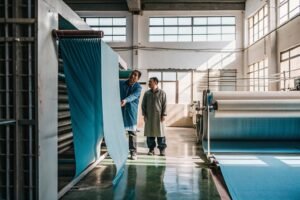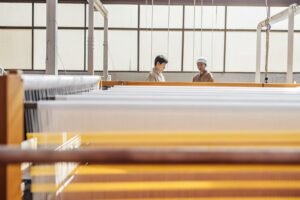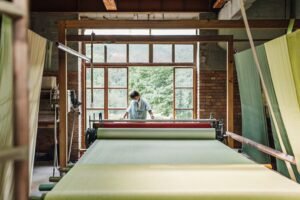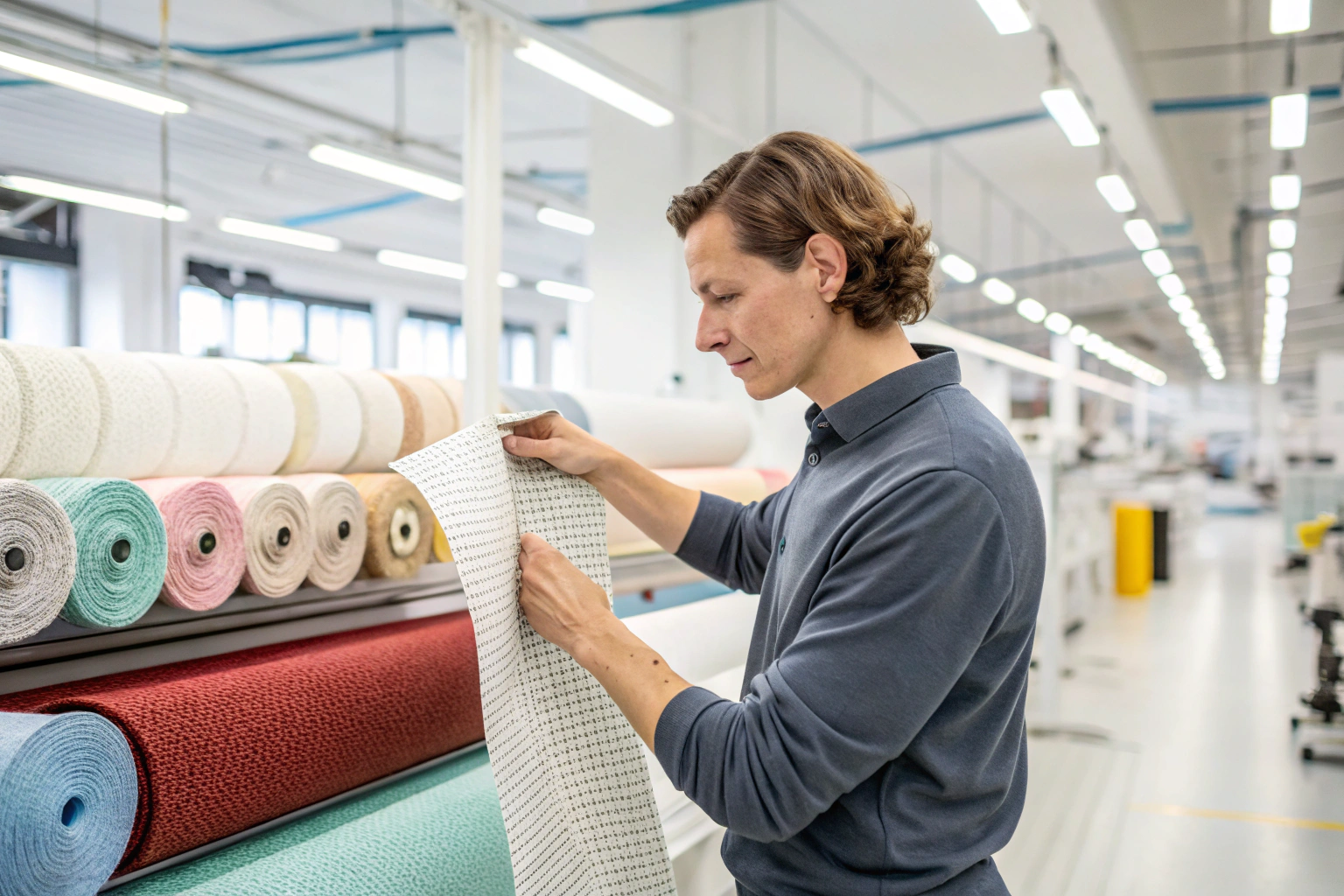
I’ve been in this industry long enough to watch the sourcing landscape change completely. Twenty years ago, finding a good knitted fabric supplier meant flying to China, walking the markets in Keqiao, and hoping you stumbled into the right factory. Today, there are more options than ever—online platforms, trade shows, sourcing agents, direct factory connections. But more options don’t always mean better results.
Let me give you the straight answer from someone who’s been on the supplier side for two decades. The best knitted fabric suppliers are found through a combination of targeted online research, strategic trade show visits, and direct factory relationships in established textile clusters like Keqiao. Each channel has its strengths, and the right approach depends on your volume, quality requirements, and how much hands-on involvement you want.
At Shanghai Fumao, we supply knitted fabrics to brands across the US, Europe, and Asia. I’ve seen our clients find us through every channel imaginable. I’ve also watched them struggle with suppliers they found through the wrong channels. This guide walks you through where to look, how to vet what you find, and how to build relationships that last.
What Are the Best Online Platforms for Finding Knitted Fabric Suppliers?
Online platforms are usually the first stop for brands starting their sourcing journey. But not all platforms are created equal, and how you use them matters as much as which platform you choose.
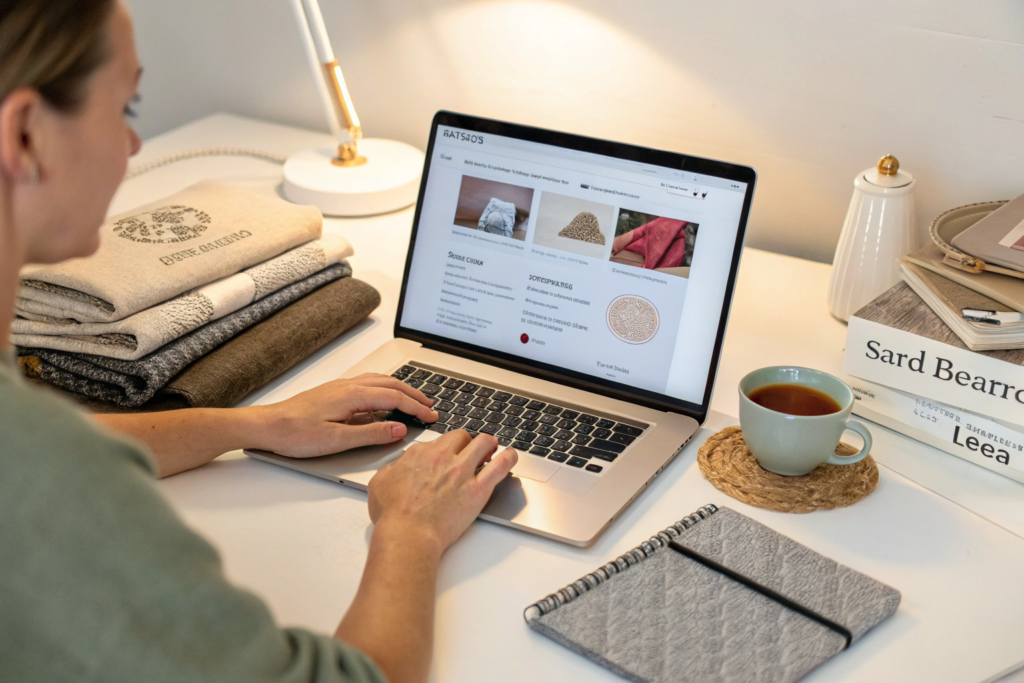
Which B2B Platforms Actually Work for Knitted Fabrics?
Alibaba is the 800-pound gorilla, and for good reason. The sheer number of suppliers means you can find almost anything. But that volume is also the problem. For every legitimate knitted fabric manufacturer on Alibaba, there are ten trading companies reselling from the same few factories.
The key is using Alibaba’s filters strategically. Look for suppliers with Gold Supplier status and Verified badges. These aren’t guarantees, but they indicate the supplier has paid for verification and has been in business for a while. More importantly, look for suppliers that list their own factory location. A supplier that says "Located in Keqiao, Zhejiang" and shows photos of a real factory is more likely to be a manufacturer than a middleman.
We get clients who found us through Alibaba. The ones who succeed are the ones who don’t just look at the first page of search results. They go deep. They look at transaction history. They read reviews. They ask detailed questions before they even request a quote.
Made-in-China is another strong option, particularly for larger volume buyers. The platform has stricter verification processes than Alibaba in some ways, and the suppliers tend to be more established manufacturers rather than trading companies.
A US activewear client told me they found us through Made-in-China after getting burned twice on Alibaba. The first Alibaba supplier sent them samples that didn’t match production. The second disappeared after they placed a deposit. They switched to Made-in-China specifically because of the verification process. They found our profile, checked our certifications, and reached out. That was three years ago. They’re still with us.
What About Niche Platforms and Directories?
Beyond the big B2B platforms, there are specialized directories that can yield better results. These platforms cater specifically to the textile industry and often have higher-quality suppliers.
Textile Exchange has a directory of suppliers with sustainability certifications. If you’re sourcing organic cotton, recycled polyester, or other sustainable knitted fabrics, this is a good place to start. The suppliers in this directory have been vetted for their certifications, which saves you a verification step.
OEKO-TEX has a public database of certified suppliers. If you need fabrics that meet OEKO-TEX standards for harmful substances, you can search for suppliers by product category and location. We’re listed there, and we get inquiries from brands who found us through the OEKO-TEX database specifically because they need certified fabrics.
A European children’s wear client found us through the OEKO-TEX database. They were sourcing for a new line of baby knits and needed OEKO-TEX Class I certification. They searched for suppliers in Keqiao with that specific certification, found our listing, and reached out. We passed their audit, and they’ve been ordering from us for two years.
How Do You Vet Suppliers You Find Online?
Finding a supplier online is step one. Vetting them is where the real work begins.
Look at their photos critically. Do the factory photos look consistent? Are the machines in the photos the right type for knitted fabrics? A supplier claiming to specialize in interlock but showing photos of weaving machines is a red flag. Do a reverse image search on their factory photos. If the same photos appear on multiple supplier profiles, they’re using stock images or stealing photos from other companies.
Check their certifications. If they claim to have OEKO-TEX or GOTS, ask for the certificate number and verify it on the certifying body’s website. A legitimate supplier will provide this without hesitation. We send our certificate numbers to every client who asks.
Ask for references. A supplier with a track record should be able to provide contact information for other clients. Call those references. Ask about quality, delivery times, communication, and how the supplier handles problems.
A UK startup founder told me she vetted three potential suppliers she found on Alibaba. She asked each for references. Two gave her names but couldn’t provide contact details when she followed up. The third—which turned out to be us—gave her two client contacts immediately. She called both. Both had been with us for years. That sealed the deal.
How Do Trade Shows Help You Find Reliable Knitted Fabric Suppliers?
Online platforms are useful, but nothing replaces face-to-face interaction. Trade shows let you see fabrics, feel quality, and assess a supplier’s professionalism in person.
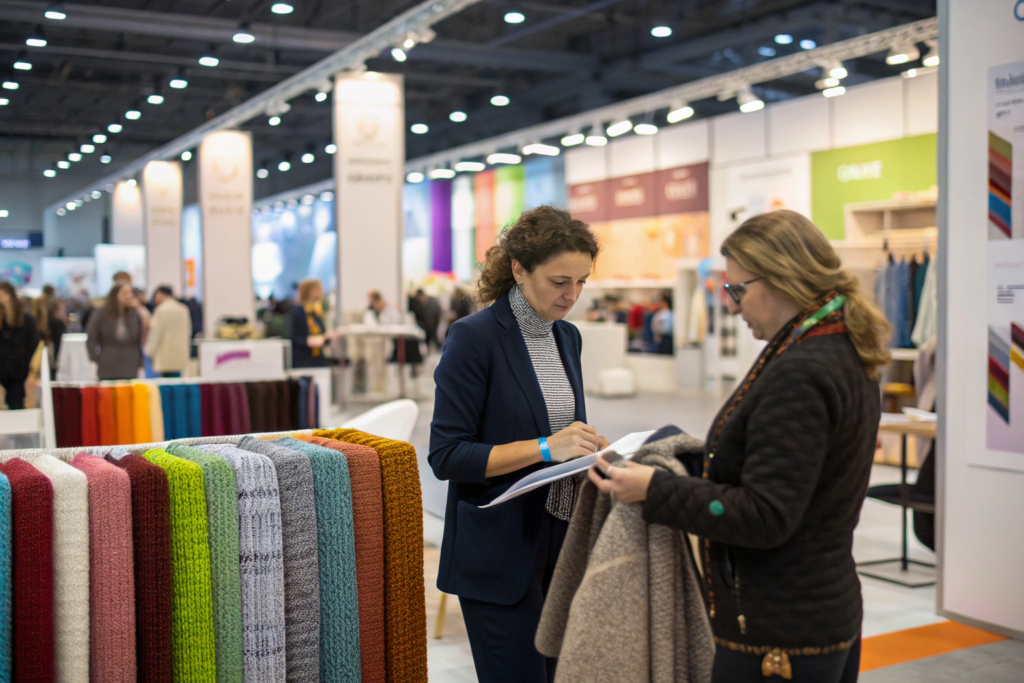
Which Trade Shows Should You Prioritize?
Intertextile Shanghai is the big one. It’s the largest textile trade show in Asia, held twice a year. Every major knitted fabric supplier in China exhibits here. If you’re serious about sourcing, you need to be at Intertextile at least once.
The spring show (March) aligns with the start of the peak production season. The autumn show (September) aligns with the second peak season. Both are valuable for different reasons. The spring show is good for planning your fall/winter collections. The autumn show is good for planning your spring/summer collections.
Canton Fair in Guangzhou is another major option. It’s broader—covering everything from electronics to home goods—but the textile section is substantial. The advantage of Canton Fair is that it’s huge. The disadvantage is that it’s huge. You need to be organized to find the knitted fabric suppliers among the thousands of exhibitors.
For European buyers, Première Vision in Paris and Munich Fabric Start are excellent options. These shows focus on higher-end fabrics and have strong representation from European mills. They also attract the top tier of Chinese suppliers who are targeting the European market.
A US brand owner told me she made the mistake of skipping trade shows for her first two years in business. She sourced entirely online and ended up with quality issues on three different orders. Her first trip to Intertextive Shanghai changed everything. She met suppliers face-to-face, saw their facilities, and built relationships that have lasted for five years. She now makes the trip every year.
How Do You Prepare for a Trade Show to Maximize Results?
Showing up unprepared is a waste of time and money. The buyers who get the most from trade shows are the ones who do their homework first.
Get the exhibitor list in advance. Most shows publish the list about a month before the event. Go through it and identify the suppliers that specialize in knitted fabrics. Mark their booth numbers. Prioritize your visits.
Bring your specifications. Don’t just walk up to a booth and ask "what do you have?" Bring a tech pack or at least a detailed spec sheet. Know your target GSM, your required certifications, your typical order quantities. A supplier will take you more seriously if you come prepared.
Bring samples. If you have existing fabrics you like or dislike, bring them. Show the supplier what you want to achieve. A good supplier can look at a sample and tell you what construction it is, what yarn was used, and whether they can match it.
A Canadian client came to our booth at Intertextile with a binder full of samples. Each sample had a label showing the fiber content, weight, and what she liked or didn’t like about it. She also had a list of 15 specific questions she asked every supplier she considered. She took notes on each conversation. By the end of the show, she had narrowed 20 potential suppliers down to three. We were one of them. She’s been a client for four years.
What Questions Should You Ask at a Trade Show Booth?
The questions you ask reveal whether you’re dealing with a manufacturer or a middleman.
Ask about their factory location. A real manufacturer will tell you the specific city, district, and often the street. A middleman will give you a vague answer like "in China" or "near Shanghai."
Ask about their knitting machines. What types do they have? What gauges? How many machines? A manufacturer can answer these questions. A middleman will struggle.
Ask about their quality control process. Do they have in-line inspection? Do they test in-house or send samples out? A real manufacturer will have a process they can describe in detail.
Ask about their lead times for different order quantities. A manufacturer knows their capacity and can give you specific timelines. A middleman will give you vague estimates.
A French buyer who found us at a trade show told me she asks every potential supplier the same five questions. She records the answers in a notebook. By the end of the show, she has a spreadsheet comparing suppliers. She says this system has saved her from at least three bad suppliers over the years.
What Are the Advantages of Sourcing Directly from Keqiao?
Keqiao is not just another textile district. It’s the world’s largest textile cluster, handling nearly 25% of global textile trade. For knitted fabric sourcing, being here gives you advantages you won’t find anywhere else.
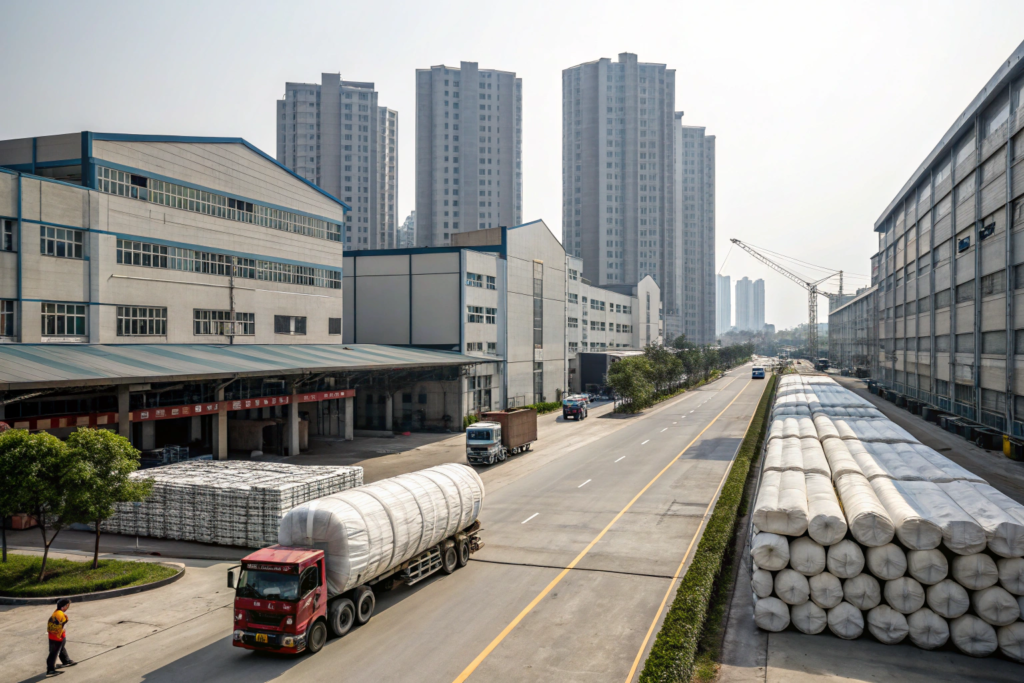
Why Is Keqiao the World’s Largest Textile Cluster?
Keqiao’s scale is hard to comprehend until you see it. The China Textile City complex alone has over 20,000 shops. If you walk into the main market, you can find every type of knitted fabric imaginable—cotton jersey, polyester interlock, spandex blends, recycled content, functional finishes. If you can’t find it in Keqiao, it probably doesn’t exist.
The concentration of suppliers creates efficiency. A manufacturer in Keqiao can source yarns from suppliers in the same industrial park, send fabric to dye houses within 10 kilometers, and have finishing done by specialists around the corner. That integration reduces lead times and keeps quality consistent.
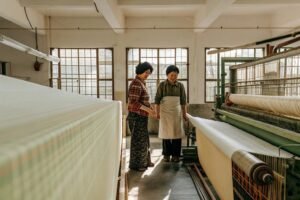
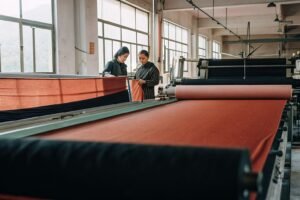
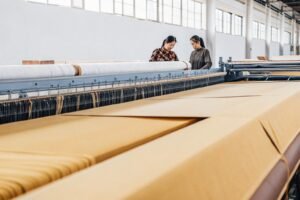
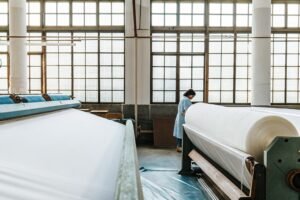
We’re based in Keqiao for exactly these reasons. Our weaving factory, dyeing operations, printing facilities, and finishing plants are all within the same industrial zone. When a client needs a rush order, we can coordinate across facilities without the delays of long-distance logistics.
A US brand owner visited Keqiao for the first time in 2023. She told me she had been sourcing from trading companies in Hong Kong and Shenzhen for years, paying a premium for fabrics that were ultimately made in Keqiao anyway. Her first trip to the district was eye-opening. She saw the actual factories, met the people making her fabric, and cut her costs by 20%. She now comes to Keqiao twice a year.
How Do You Find Factories Within Keqiao?
The scale of Keqiao can be overwhelming. Finding the right factory requires a strategy.
Work with a local agent if you’re new to the area. A good agent knows the market, speaks the language, and can connect you with manufacturers that match your needs. The cost of an agent is usually worth it for the time and mistakes you’ll avoid.
Use the market as your starting point. The China Textile City market has thousands of shops. Many are trading companies, but some are direct factory outlets. Ask at each shop whether they own their own factory. If they say yes, ask to visit it. A real factory will welcome a visit.
Look for industrial zones. The factories aren’t in the market. They’re in the industrial zones around Keqiao. Once you’ve identified a potential supplier through the market, arrange to visit their facility. See the knitting machines. See the QC process. See where your fabric will be made.
A European client found us through a combination of market research and factory visits. She spent three days walking the market, collecting cards from shops that specialized in the type of knitted fabric she needed. She narrowed it down to five shops that claimed to be manufacturers. She visited each factory. We were the third visit. She placed a test order with us that week.
What Are the Logistics Advantages of Sourcing in Keqiao?
Keqiao’s logistics infrastructure is built for textile exports. That matters when you need to move fabric from factory to your warehouse efficiently.
The district is close to major ports. Ningbo is about two hours away. Shanghai is about three hours. Both are among the busiest container ports in the world. A container loaded in Keqiao can be on a ship within 24 hours.
The area has specialized logistics providers who understand textile shipping. They know how to pack rolls to prevent damage. They understand documentation requirements for different markets. They have relationships with carriers that get you better rates.
We use these logistics advantages for all our DDP shipments. When a US client needs fabric delivered to their warehouse, we coordinate with local freight forwarders who know exactly how to handle textile shipments. The container loads in Keqiao, goes to Ningbo or Shanghai, and arrives at the client’s door with no surprises.
How Do You Build a Sourcing Strategy That Lasts?
Finding a supplier is step one. Building a relationship that delivers consistent quality over years is the real challenge.

How Do You Start with a New Supplier?
Start small. Don’t place a 50,000-meter order with a new supplier on your first try. Start with a sample order. Then a small production run. Then gradually scale up.
Use the sample order to test quality, communication, and reliability. Does the sample match your specifications? Does it arrive when promised? Is the quality consistent with what you saw at the trade show or in the sample book?
Use the first production run to test consistency. Does the production match the sample? Does the supplier communicate proactively about any issues? Do they deliver on time?
A US client started with us with a 500-meter sample order. They tested the fabric thoroughly in their own facility. They washed it. They stretched it. They checked shrinkage. They were satisfied. The next order was 2,000 meters. Then 5,000. Now they order 50,000 meters a year from us. Starting small let them prove the relationship without taking big risks.
What Should You Look for in a Long-Term Partner?
Quality consistency is the most important factor. A supplier who delivers the same quality order after order is worth their weight in gold.
Communication matters. A supplier who responds quickly, answers questions clearly, and proactively shares information is a supplier you can trust.
Reliability matters. A supplier who delivers on time, every time, allows you to plan your production with confidence.
A Canadian client has been with us for five years. She told me the reason she stays is simple: she never has to worry about her fabric. The quality is always consistent. The delivery dates are always met. When she has a question, she gets an answer within hours. That predictability allows her to focus on growing her business instead of managing her supply chain.
How Do You Manage Multiple Suppliers?
Most brands eventually need more than one supplier. The key is managing them effectively.
Segment your suppliers by category. One supplier for basic jersey. Another for performance knits. Another for sustainable fabrics. This specialization gives you the best of each supplier’s expertise.
Maintain relationships with backup suppliers. Even the best supplier can have problems. A backup relationship ensures you’re not stranded if something goes wrong.
Communicate your forecast. A supplier who knows your future needs can plan capacity and materials. That reduces lead times and improves reliability.
A UK client works with three knitted fabric suppliers. One handles their organic cotton basics. One handles their performance fabrics. One handles their fashion knits. They share their 12-month forecast with all three. Each supplier knows what to expect. The client gets better service from all three because they’re not constantly rushing orders.
Conclusion
Finding good knitted fabric for your apparel brand is about using the right channels, asking the right questions, and building relationships that last. Online platforms like Alibaba and Made-in-China give you access to thousands of suppliers, but you need to vet them carefully. Trade shows let you see fabrics in person and assess suppliers face-to-face. Sourcing directly from textile clusters like Keqiao gives you access to the heart of the industry with all the logistics advantages that come with it.
The best approach combines these channels. Use online platforms to identify potential suppliers. Use trade shows to meet them in person and evaluate their professionalism. Visit Keqiao to see the factories and understand where your fabric is really coming from. Start small, test the relationship, and scale up as trust builds.
At Shanghai Fumao, we’ve been producing high-quality knitted fabrics in Keqiao for over 20 years. We own our own knitting, dyeing, printing, and finishing facilities. We have a CNAS-accredited testing center. We provide QR code tracking on every batch. We’ve built our reputation on quality, reliability, and transparency.
Whether you’re a startup launching your first collection or an established brand looking for a better supplier, we’re here to help. Our team can guide you through the sourcing process, help you select the right fabrics for your needs, and deliver consistently, order after order.
Let’s talk about your knitted fabric needs for your next collection.
Contact our Business Director, Elaine, to start your sourcing journey.
Email: elaine@fumaoclothing.com