If you’ve been in apparel for any length of time, you’ve worked with twill. You might not have called it that. Denim is twill. Chinos are twill. The sturdy cotton pants your workwear line is built on? Twill. The silk jacket lining that drapes so beautifully? Probably twill too.
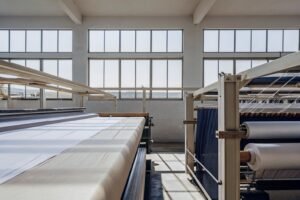
Here’s what I’ve learned from weaving millions of meters of fabric in Keqiao over the past 20 years. Twill’s diagonal weave structure creates a fabric that combines durability with drape, structure with comfort, and versatility with distinct visual character. It’s the reason one weave structure can produce everything from heavyweight work pants to lightweight summer shirts.
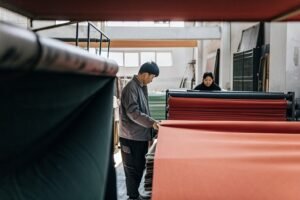
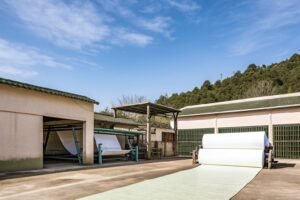
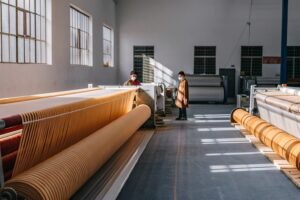
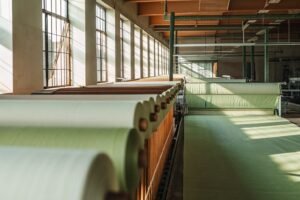
At Shanghai Fumao, we produce twill fabrics across our weaving factory every single day. Denim for US brands. Cotton twill for European workwear. Silk twill for luxury linings. Polyester twill for outdoor gear. The applications are almost endless. This guide walks you through why twill works for so many different apparel types and how to choose the right twill for your next collection.
What Makes Twill’s Weave Structure So Special?
Before we talk about applications, you need to understand what twill actually is. The structure is what gives this fabric its unique combination of properties.

How Does the Diagonal Weave Create Durability?
Twill is defined by its diagonal rib. In plain weave, each weft yarn goes over one warp yarn and under the next. The structure is tight, but it’s also relatively flat. In twill, the weft yarn passes over two or more warp yarns before going under. That creates a "step" pattern that forms the diagonal line.
The key to twill’s durability is that the floats—the places where the yarn sits on the surface—are longer than in plain weave. That means fewer interlacings per square inch. Fewer interlacings means the yarns can move slightly, distributing stress across more fibers. That’s why a twill fabric can be more durable than a plain weave fabric of the same weight.
I remember a US workwear client who came to us in 2023. They were using a heavy plain weave cotton for their mechanic pants. The fabric was stiff, uncomfortable, and the pants were wearing out at the knees after three months of use. We switched them to a 3×1 cotton twill of similar weight. The diagonal structure gave the fabric more flexibility, and the longer floats distributed stress better. Their wear testing showed the twill pants lasted 40% longer. The mechanics loved them because they were more comfortable too.
The diagonal structure also hides dirt and wear better than plain weave. Those diagonal lines break up the surface, so small stains and abrasion marks are less visible. That’s one reason denim became the default for workwear in the first place. A pair of jeans can get beat up and still look presentable. A plain weave pant of the same weight would look worn out much faster.
Why Does Twill Drape Better Than Plain Weave?
Here’s something that surprises a lot of buyers. A twill fabric can have the same weight and fiber content as a plain weave, but the drape is completely different. The longer floats in the twill structure allow the fabric to bend and fold more easily. The diagonal lines create a subtle bias that gives the fabric a natural curve.
This is why you see twill used in tailored garments like chinos, dress pants, and jackets. A plain weave of the same weight would be stiff and boxy. The twill moves with the body. It creases where it’s supposed to crease and relaxes where it needs to relax.
I had a European menswear client who was developing a new line of casual blazers. They tried a plain weave cotton first. The jacket looked like a cardboard box. The shoulders were stiff. The lapels didn’t lay flat. We showed them a 2×1 cotton twill of the same weight. The difference was immediate. The twill blazer had structure in the shoulders but softness through the body. The lapels curved naturally. They ordered 5,000 meters on the spot.
The drape advantage comes from the fact that twill has more yarns per square inch than plain weave of the same yarn count. Those extra yarns create more mass, but the longer floats mean the mass is distributed differently. It’s denser but more flexible. That combination is hard to beat for garments that need both structure and movement.
What Visual Effects Does the Twill Structure Create?
Let’s talk about looks. The diagonal lines of a twill create visual interest that plain weave just doesn’t have. You can see the structure from across the room. That texture adds perceived value. A garment made from a well-constructed twill looks more expensive than a plain weave garment of the same material.
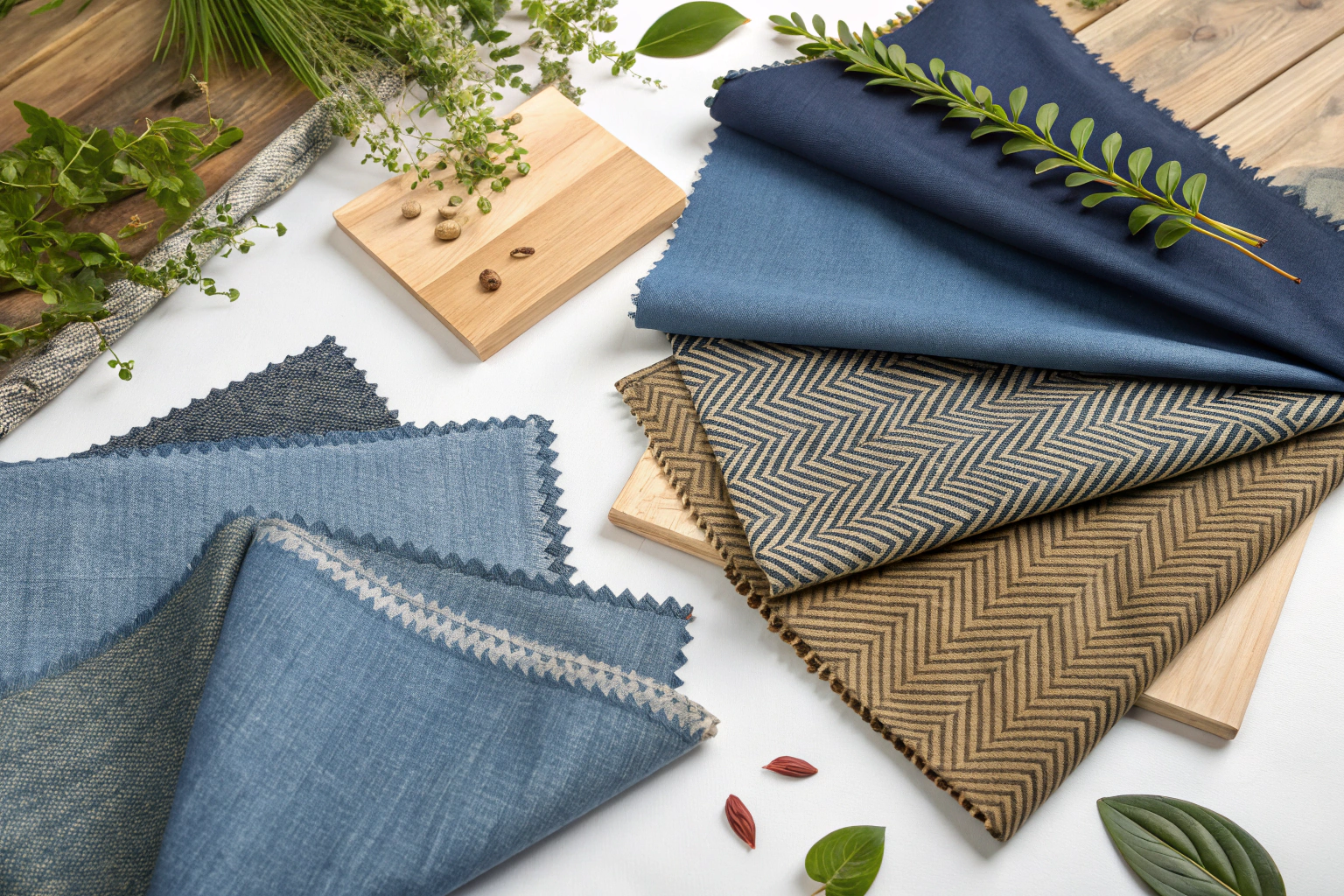
The angle of the diagonal changes the look. A steep diagonal (like a 3×1 twill) creates a more subtle, refined appearance. A shallower diagonal (like a 2×1 twill) creates a more pronounced, casual texture. The direction of the diagonal matters too. A right-hand twill has a diagonal that runs up and to the right. A left-hand twill runs the opposite direction. A broken twill, like herringbone, changes direction periodically to create a chevron pattern.
A US denim brand came to us looking for something different for their premium line. They had been using standard right-hand twill denim for years. We showed them a broken twill denim where the diagonal reversed every inch. The texture was more subtle and the fabric had less leg twist—a common problem with right-hand twill denim. They launched it as their "heritage" collection. It sold out in six weeks.
(Here’s a detail that matters in production: the direction of the twill affects how the fabric behaves on the cutting table. A right-hand twill has a natural bias that can cause patterns to shift if you’re not careful. A good pattern maker knows how to account for this. A left-hand twill is more stable. A broken twill is the most stable of all. When we work with clients on large orders, we factor this into the cutting instructions.)
What Apparel Categories Work Best with Twill?
Twill isn’t one fabric. It’s a family of fabrics. The weight, fiber, and finishing determine what garment it becomes. Here’s how the different members of the twill family perform across apparel categories.

Why Is Twill the Foundation of Denim and Workwear?
Let’s start with the most obvious. Denim is a twill. Specifically, denim is a 3×1 warp-faced twill where the warp yarns (usually indigo-dyed) dominate the surface. The weft yarns (usually undyed) appear only on the back and in the "white" parts of the fading pattern.
The twill structure is what gives denim its characteristic fading. As the garment wears, the surface yarns abrade, revealing the undyed weft underneath. That’s why your jeans fade along the diagonal lines. A plain weave denim—if such a thing existed—would fade in a flat, uninteresting pattern. The twill creates the visual depth that denim lovers obsess over.
But workwear isn’t just denim. Heavy cotton twill is the standard for work pants, chore coats, and mechanic wear. The durability we talked about earlier comes into play here. A 10 oz cotton twill can withstand abrasion that would destroy a plain weave of the same weight.
We supply a European workwear brand that outfits construction workers across Germany. They use a 12 oz 2×1 cotton twill with a water-repellent finish. The fabric takes abuse, holds up through hundreds of washes, and still looks professional. They’ve been using the same spec for eight years. That’s the kind of reliability twill delivers.
How Does Twill Perform in Tailored Clothing?
Chinos are the classic example here. A chino is a 2×1 or 3×1 cotton twill with a smooth, brushed finish. The twill gives the pants structure without stiffness. They hold a crease but still move with the body. That’s why chinos are the bridge between casual jeans and formal trousers.
But twill goes beyond chinos. Dress trousers are often made from worsted wool twill. The diagonal structure creates a fabric that drapes beautifully and resists wrinkling. Wool twill suits have a subtle sheen and a crisp hand that plain weave just can’t match.
We produce a silk twill for a luxury brand in Italy. They use it for jacket linings and lightweight scarves. The twill structure gives the silk more body than a plain weave satin. The lining slides on and off easily but doesn’t feel cheap or flimsy. That’s the kind of detail that premium customers notice.
A US menswear designer came to us looking for a fabric for their tailored shorts line. They wanted something that looked dressy but felt casual. We recommended a lightweight 2×1 cotton twill in a garment-washed finish. The twill gave the shorts enough structure to hold a crisp crease, but the wash softened them so they felt like a casual short. That collection became their bestselling summer item for three years running.
What About Activewear and Outdoor Applications?
People don’t usually think of twill for activewear, but it’s there. Softshell jackets often use a stretch twill face fabric bonded to a fleece backing. The twill provides abrasion resistance and a clean appearance. The diagonal lines hide scuffs from rocks and branches.
Waxed cotton jackets are almost always made from twill. The wax needs a fabric with enough surface texture to grip. A smooth plain weave would let the wax sit on the surface instead of absorbing into the fibers. The twill’s diagonal structure creates the perfect surface for wax application.
We worked with a Scandinavian outdoor brand that wanted a lightweight hiking pant that didn’t look like outdoor gear. They wanted something that could go from trail to cafe without screaming "technical." We developed a 5 oz nylon-cotton blend twill with a DWR finish. The twill gave it a casual appearance, the nylon added durability, and the DWR shed light rain. They launched it as their "urban explorer" line. It became their top-selling pant.
The beauty of twill is that it adapts. Change the fiber, you change the performance. Change the weight, you change the application. Change the finish, you change the hand. But the underlying structure—those diagonal lines—delivers the same combination of durability, drape, and visual interest across every variation.
How Do You Choose the Right Twill for Your Project?
Choosing the right twill is about matching the structure to your application. Here’s how we guide our clients through the decision process.

What Weight Is Right for Your Garment?
Weight is the first filter. Twills range from lightweight (under 5 oz per square yard) to heavy (over 12 oz). The weight determines what the fabric can do.
Lightweight twills (under 5 oz) are for shirts, blouses, and lightweight summer pants. They drape softly but still have more structure than a plain weave shirt fabric. A lightweight cotton twill makes a great casual button-down shirt. A silk twill in this weight is perfect for scarves and linings.
Mid-weight twills (5-8 oz) are the sweet spot for most apparel. Chinos, casual trousers, light jackets, skirts, and dresses all work in this range. The fabric has enough body to hold shape but isn’t heavy or stiff.
Heavyweight twills (8-12 oz) are for workwear, jeans, jackets, and outerwear. These fabrics are built to take abuse. They’re stiff at first but break in beautifully with wear.
Super heavyweight twills (12 oz and up) are for specialty applications—motorcycle jackets, heavy workwear, bags, and upholstery. These fabrics require industrial equipment to sew.
A US workwear client was developing a new line of lightweight summer work pants for electricians working in hot environments. They started with their standard 10 oz twill. Too heavy. We dropped them down to a 6 oz twill. Still durable enough for the job but breathable enough for a 95-degree day. The electricians loved them. They ordered 20,000 units in the first year.
Which Twill Construction Matches Your Aesthetic?
Now we get into the details. The number of warp and weft yarns in the repeat determines the angle of the diagonal and the character of the fabric.
2×1 twill has a shallower diagonal. It’s softer and more casual. Good for chinos, shirts, and lightweight jackets.
3×1 twill has a steeper diagonal. It’s more defined and structured. This is the classic denim construction. Also good for heavier trousers and jackets.
4×1 twill is a very steep diagonal. It creates a smooth surface with subtle texture. Good for worsted wool suiting and high-end cotton trousers.
Herringbone is a broken twill where the diagonal reverses direction. It creates a chevron pattern that’s visually interesting and extremely stable. Herringbone twill has less bias stretch than other twills, which makes it easier to cut and sew.
Gabardine is a steep twill with a very tight construction. It’s water-resistant and holds a crease beautifully. Gabardine was originally developed for trench coats and remains a classic for rainwear and tailored trousers.
A European luxury client wanted a cotton twill for their tailored trousers that had a subtle texture but a refined appearance. We recommended a 3×1 twill in a high-density construction with a brushed finish. The diagonal was visible but not pronounced. The brushing softened the hand. They ordered 3,000 meters for their first season and have doubled that every year since.
What Fiber Blends Give You the Best Performance?
Pure cotton twill is the classic, but blends can deliver better performance for specific applications.
Cotton-polyester blends add wrinkle resistance and durability. A 65/35 cotton-polyester twill will hold a crease better than pure cotton and resist fading. Good for uniforms and travel clothing.
Cotton-nylon blends add strength and abrasion resistance. A 60/40 cotton-nylon twill is nearly indestructible. Good for outdoor gear and heavy workwear.
Cotton-spandex blends add stretch. A 98/2 cotton-spandex twill gives you the look of classic chinos with the comfort of stretch. This has become a standard for menswear trousers.
Wool-polyester blends combine the drape of wool with the wrinkle resistance of polyester. Good for suiting and dress trousers.
Tencel-cotton blends add softness and sustainability. A 50/50 Tencel-cotton twill has the durability of cotton with the smooth hand of Tencel. Good for casual shirting and lightweight pants.
A US outdoor client wanted a lightweight hiking pant with stretch and durability. We developed a 70/25/5 nylon-cotton-spandex twill. The nylon gave abrasion resistance. The cotton added comfort. The spandex added stretch. The twill structure held everything together. They’ve been using that blend for three years across their entire outdoor pant line.
How Does Twill Perform in Production and Supply Chain?
Twill isn’t just versatile in design. It’s reliable in production. That matters when you’re ordering thousands of meters and need consistency.

Why Is Twill More Forgiving in Cutting and Sewing?
Twill’s structure makes it easier to work with than some other weaves. The diagonal lines give you a visual reference for grain alignment. If your pattern pieces are slightly off-grain, you can see it in the diagonal pattern.
The bias stretch in twill is more predictable than in plain weave. A skilled cutter knows how much the fabric will shift. That means less waste, fewer rejects, and faster production runs.
We supply a large garment factory in Vietnam that produces trousers for multiple European brands. Their production manager told me they prefer twill over plain weave for trousers because the cutting efficiency is 15% higher. The fabric lays flatter on the cutting table, the pattern pieces stay aligned, and the sewing operators have fewer alignment issues. That efficiency saves them real money.
How Does Twill Perform in Dyeing and Finishing?
Twill’s structure takes dye differently than plain weave. The longer floats on the surface absorb more dye, which can create a richer color depth. That’s why twill fabrics often look more vibrant than plain weaves of the same fiber and dye.
But the structure also requires more attention in finishing. If the finishing process isn’t controlled, twill can develop uneven dye uptake or distortion in the diagonal lines. That’s why you want a supplier with experience.
Our dyeing factory has specific programs for different twill constructions. A 3×1 denim requires different dyeing parameters than a 2×1 chino twill. We’ve dialed in these programs over years of production. When a client orders a twill fabric, we know exactly what settings to use to get consistent results.
A US denim client had been using a different supplier and was getting inconsistent fading patterns across their production runs. Some jeans faded with a strong diagonal pattern. Others looked almost like plain weave. The problem was inconsistent finishing tension. We adjusted our finishing process to control the tension precisely. Now every roll they get from us has the same diagonal character. Their customers expect a specific fade pattern, and we deliver it every time.
What About Twill’s Role in Sustainable Sourcing?
Twill’s durability makes it inherently sustainable. A garment made from a good twill lasts longer. Longer life means fewer replacements, less waste, and lower environmental impact over time.
We’re seeing more clients specify twill for their sustainable collections for exactly this reason. A 10 oz organic cotton twill jacket can last a decade. A lightweight poly-cotton twill shirt can outlast five fast-fashion alternatives.
We’ve also developed recycled content twills for clients who want both sustainability and durability. A 50% recycled cotton / 50% organic cotton twill gives you the durability of twill with a significantly reduced environmental footprint. The recycled cotton comes from post-industrial waste, diverted from landfill. The organic cotton reduces agricultural impact. The twill structure ensures the final garment lasts.
A UK sustainable brand launched a collection of twill trousers made from 60% recycled cotton and 40% organic cotton. The fabric was heavier than their previous trousers, but the durability meant customers kept them longer. Their return rate dropped by 30% compared to their previous line. Sustainability and durability work together.
Conclusion
Twill is one of the most versatile woven fabrics in the textile world, and for good reason. The diagonal weave structure creates a combination of durability, drape, and visual character that plain weave can’t match. From heavy denim workwear to lightweight silk scarves, from tailored wool trousers to technical outdoor gear, twill adapts to the application while delivering consistent performance.
Understanding twill means understanding the variables: weight, construction, fiber blend, finish. Get these right, and you have a fabric that will serve your garment well for years. Get them wrong, and you’ll fight with the fabric all the way through production.
At Shanghai Fumao, we’ve been weaving twill fabrics for over 20 years. Our large-scale weaving factory produces denim, chino twill, gabardine, herringbone, and custom constructions daily. We work with clients across the US, Europe, and beyond to match the right twill to the right garment. Our CNAS-accredited lab tests every batch for durability, colorfastness, and consistency. Our QC team inspects every roll before it ships.
Whether you’re launching a denim line, developing workwear, or creating a tailored collection, we can help you choose the twill that delivers the performance, appearance, and durability your customers expect.
Contact our Business Director, Elaine, to discuss your twill fabric needs.
Email: elaine@fumaoclothing.com