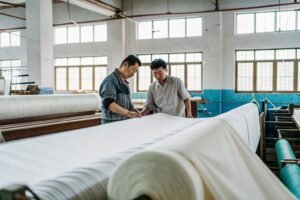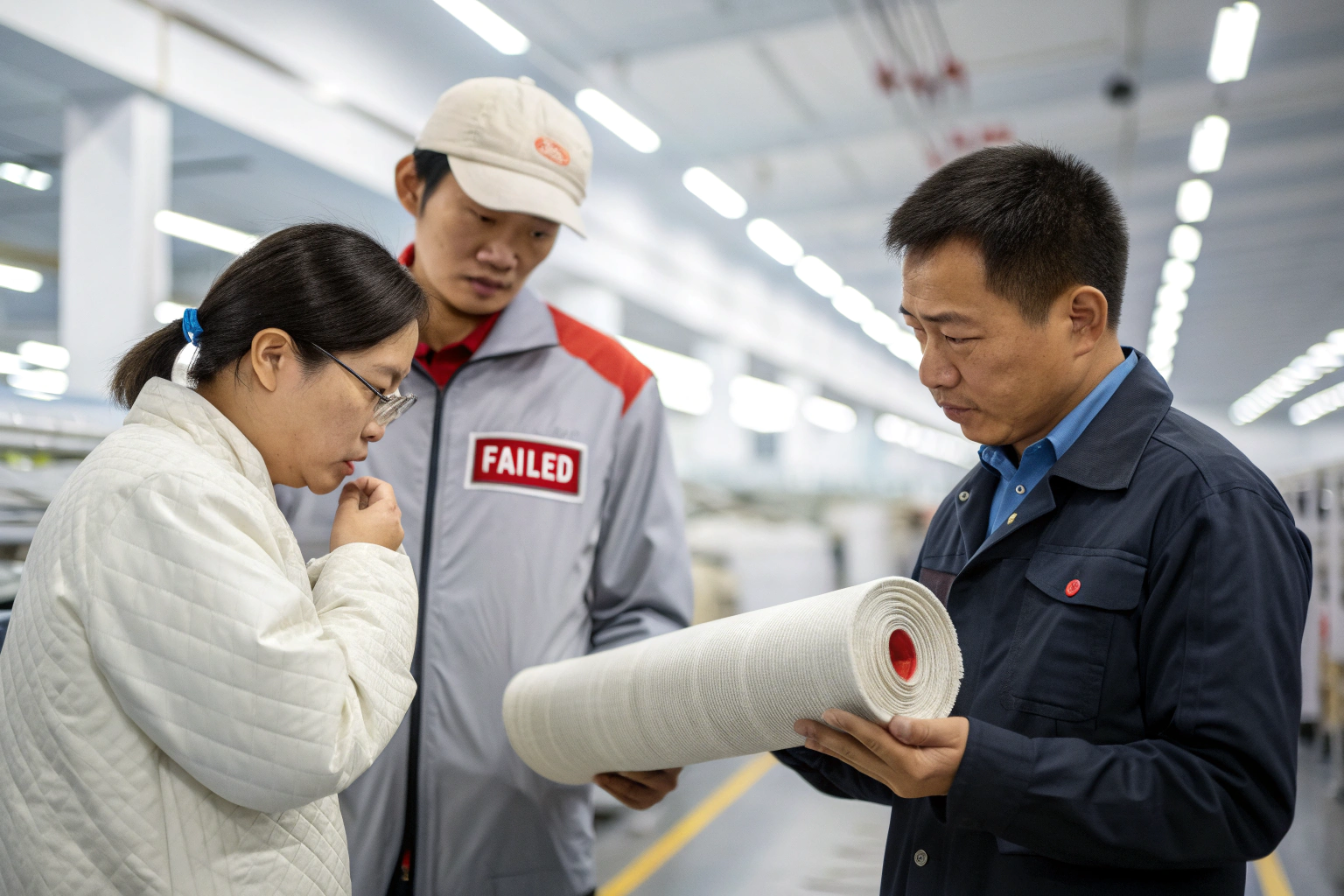
I still remember the phone call from a client in Milan about five years ago. He was almost in tears. He had ordered 15,000 meters of a specific grade of woven cotton twill for a high-end shirt collection. The fabric arrived, and his quality control team flagged it immediately. The weight was wrong. The thread count was lower than specified. The hand feel was stiff, not soft. The supplier had sent a lower grade of fabric—cheaper, poorer quality—but charged for the premium grade. The client’s production was scheduled to start in two weeks. He had already sold the collection to his retailers. He was facing cancellation fees, lost revenue, and a damaged reputation. He asked me, “What do I do?”
That question has come up more times than I care to count over my twenty years in this industry. A supplier sends the wrong fabric grade. Maybe it’s a different weight. Maybe the fiber content is off. Maybe the finish is wrong. Maybe it’s a completely different fabric that looks similar but performs worse. The reasons vary, but the result is the same: you have a problem, and you need to solve it fast.
At Shanghai Fumao, we’ve been on both sides of this situation. We’ve been the supplier who made a mistake. We’ve been the partner who helped clients fix problems caused by other suppliers. I’ve learned that how you handle this situation determines not just the outcome of this order, but the future of your supply chain. In this article, I’m going to walk you through what to do when you receive the wrong fabric grade—how to document the problem, how to communicate with the supplier, and how to protect your business.
How Do You Confirm That the Fabric Is Actually the Wrong Grade?
Before you do anything else, you need to be absolutely certain that the fabric is wrong. Sometimes what looks like a mistake is actually a misunderstanding. Sometimes the fabric meets the specifications but your expectations were different. You need evidence.

What Evidence Should You Gather First?
The first piece of evidence is the original specification. Pull out the contract, the purchase order, the specification sheet. What did you agree to? What was the weight? The fiber content? The weave? The finish? The color? You need to know exactly what you ordered.
The second piece of evidence is the approved sample. If you did your job right, you have a physical sample—a lab dip, a strike-off, a pre-production sample. That sample is your standard. Compare the delivered fabric to that sample. Put them side by side. Feel them. Stretch them. Hold them up to the light.
The third piece of evidence is testing. If the difference is not obvious to the eye or the hand, you need laboratory testing. Test the weight (GSM). Test the fiber content. Test the thread count. Test the shrinkage. Test the colorfastness. You need numbers, not just opinions.
I had a client who thought his supplier had sent the wrong fabric because the hand feel was different. He was ready to reject the whole order. I asked him to send me samples of the disputed fabric and the approved sample. I had our lab test both. The test showed that the fabric weight, fiber content, and weave were identical. The difference in hand feel was because the supplier had used a different finishing chemical. The fabric was technically correct, just finished differently. We negotiated a discount to compensate for the hand feel difference, and the client used the fabric. If he had rejected the order without testing, he would have lost weeks and the supplier relationship would have been damaged. For a guide to fabric testing methods, this quality control resource offers a checklist of tests for verifying fabric specifications.
How Do You Document the Discrepancy?
Documentation is your shield. You need a clear, objective record of what’s wrong. Take photos. Good photos. Take photos of the disputed fabric next to the approved sample. Take close-ups that show the weave difference. Take photos with a ruler to show the scale. Take videos that show the hand feel difference—bunching the fabric, stretching it, draping it.
Write a detailed description of the problem. Note the date you received the fabric, the date you inspected it, the people who conducted the inspection. List the specific deviations from the specification. Use numbers: “Weight is 210 GSM, specification was 240 GSM.” “Shrinkage is 8%, specification was under 3%.” Vague complaints get vague responses. Specific complaints get specific solutions.
Keep all your documentation in one place. A folder, physical and digital. When you communicate with the supplier, you want to be able to send clear, organized evidence. It’s harder for a supplier to argue with a well-documented case.
I remember a client who received a shipment of printed fabric where the print registration was off. He called the supplier and said, “The print is bad.” The supplier said, “It looks fine to us.” The argument went nowhere. Then the client sent a photo with the approved sample next to the disputed fabric, with a red circle around the misalignment. He sent a second photo with a ruler showing the offset. The supplier saw the evidence and immediately offered a solution. The photo was worth a thousand words. For a guide to documenting fabric quality issues, this sourcing resource offers a template for quality discrepancy reports.
How Do You Communicate with the Supplier?
Once you have your evidence, you need to communicate with the supplier. This is a delicate moment. Your goal is to get a resolution, not to win an argument. You want the supplier to work with you, not against you. The way you communicate matters.

What Should You Say in Your First Communication?
Your first communication should be factual, professional, and immediate. Don’t wait. The longer you wait, the harder it is to resolve. Contact the supplier as soon as you discover the problem. Use email so there’s a written record. If the problem is urgent, call as well, but follow up with an email.
State the problem clearly. “The fabric received for Order #12345 does not match the approved sample. The weight is 210 GSM, specification was 240 GSM. Please see the attached photos and test report.” Attach your evidence. Then state what you need. “Please advise how you will resolve this issue. We need replacement fabric by [date] or a discount of [amount] to compensate for the quality difference.”
Don’t be accusatory. Don’t say “You sent the wrong fabric.” Say “The fabric does not match the specification.” The first statement blames. The second states a fact. You want the supplier to be your partner in solving the problem, not your adversary.
I had a client who received a shipment of fabric that was the wrong color. His first email to the supplier said, “You idiots sent the wrong color. Fix it now.” The supplier’s response was defensive. They argued. They delayed. The resolution took weeks. Another client, with a similar problem, sent an email that said, “The fabric we received for Order #67890 appears to be a different shade from the approved sample. Please see the attached comparison. Can you help us understand what happened and how we can resolve this quickly?” The supplier responded immediately, apologized, and offered a solution within 24 hours. The tone matters.
For a guide to effective supplier communication during quality issues, this sourcing resource offers a template for quality complaint emails.
How Do You Handle a Supplier Who Denies the Problem?
Sometimes the supplier will deny the problem. They’ll say the fabric is within tolerance. They’ll say your test methods are wrong. They’ll say the sample you’re comparing to isn’t the right one. When that happens, you need to escalate.
First, refer back to your contract. What does it say about quality standards, testing methods, and dispute resolution? If you have a clear contract, you have leverage. Second, involve a third party. Send the disputed fabric and the approved sample to an independent testing lab. Get a certified test report. A third-party report is harder to argue with than your own opinion.
Third, escalate within the supplier’s organization. The salesperson who sold you the fabric may not have the authority to approve a discount or a replacement. Ask to speak to their manager, their quality control manager, or their general manager. Sometimes the person you’re dealing with is protecting their own ego. A manager may be more willing to find a solution.
I remember a situation where a supplier denied that the fabric was the wrong weight. The supplier’s QC manager said their test showed the weight was correct. I asked them to send me their test method. They were using a different standard. We agreed to send samples to a third-party lab using an agreed-upon standard. The third-party test confirmed the fabric was underweight. The supplier accepted the result and offered a discount. The key was moving from a subjective argument to an objective, third-party standard.
For a guide to resolving disputes with suppliers, this trade compliance resource offers a step-by-step dispute resolution process.
What Are Your Options for Resolving the Issue?
Once you’ve communicated with the supplier and they’ve acknowledged the problem (or you’ve proven it), you need to decide how to resolve it. You have several options. The right one depends on the severity of the problem, your timeline, and your relationship with the supplier.

Should You Ask for a Replacement?
A replacement is the cleanest solution. The supplier sends you the correct fabric, and you return the wrong fabric. But replacement takes time. You need to ship the wrong fabric back. The supplier needs to produce the correct fabric. That can take weeks or months. If you have a tight production deadline, replacement may not be feasible.
Replacement works best when the fabric is completely wrong—wrong weight, wrong fiber, wrong color—and when you have time. It also works best when the supplier is cooperative and has the capacity to produce the replacement quickly.
I had a client who received a shipment of cotton fabric that was supposed to be 100% combed cotton but was actually a cotton-polyester blend. The blend changed the hand feel and the care requirements. The client couldn’t use the fabric for their intended product. They asked for a replacement. The supplier agreed, but the replacement took eight weeks. The client’s production was delayed, and they missed their retail window. In hindsight, they should have considered a different resolution.
For a guide to managing replacement orders, this logistics resource offers a checklist for return and replacement processes.
Should You Accept a Discount and Use the Fabric?
Sometimes the fabric is wrong but usable. Maybe the weight is slightly off, but you can still make the garment. Maybe the color is a different shade, but it still works with your other components. In these cases, you can negotiate a discount and use the fabric.
The discount should reflect the reduced value of the fabric. If the fabric is 10% lighter than specified, maybe you ask for a 10% discount. If the color is off and you’ll have to discount the finished garments, maybe you ask for a 20% discount. Be reasonable, but don’t be a pushover.
I had a client who received a shipment of woven fabric that was the wrong shade of navy. The approved sample was a true navy. The delivered fabric was a slightly lighter, more vibrant navy. The client could still use the fabric. They would just have to adjust their trim colors to match. They negotiated a 15% discount from the supplier. They used the fabric, adjusted the trim, and the collection sold well. The discount covered the cost of the trim changes and gave them a little extra margin.
If you accept a discount, get it in writing. Issue a credit note. Don’t just take the supplier’s word. And make sure the discount is reflected in your final payment. For a guide to negotiating discounts for quality issues, this sourcing resource offers a framework for discount calculations.
Should You Ask for Rework?
Sometimes the fabric can be fixed. If the color is off, it might be possible to re-dye it. If the finish is wrong, it might be possible to re-finish it. If the fabric is contaminated with oils or chemicals, it might be possible to wash it. Rework can be faster than replacement, but it’s not always possible.
Rework has risks. The rework process can damage the fabric. It can change other properties. It can introduce new defects. You need to test a sample of the reworked fabric before you commit to reworking the whole order. If the rework works, great. If it doesn’t, you’re back to square one.
I had a client who received a shipment of printed fabric where the print was slightly out of registration. The supplier offered to re-print the fabric. But re-printing would have required stripping the existing print and re-printing from scratch. The process would have damaged the fabric. Instead, the client negotiated a discount and used the fabric for a different product where the registration issue was less visible.
For a guide to fabric rework options, this textile finishing resource offers an overview of rework processes and their limitations.
How Do You Protect Yourself from Future Problems?
Once you’ve resolved the current issue, you need to prevent it from happening again. A supplier who sends the wrong fabric grade once will do it again if you don’t change something. You need to tighten your process.

How Do You Strengthen Your Quality Specifications?
The first line of defense is your specifications. Vague specifications lead to wrong fabric. You need to be specific. Very specific.
Don’t just say “100% cotton.” Say “100% combed cotton, ring-spun, 40s count.” Don’t just say “twill.” Say “3×1 right-hand twill, 280 GSM ± 5%, 58/60 inches width.” Don’t just say “dyed.” Say “reactive dyed, colorfastness to washing grade 4 or higher.” The more specific you are, the less room there is for error.
Include the approved sample in the contract. State that the bulk fabric must match the approved sample. Attach a photo of the sample to the contract. Store a physical sample in a secure place. The sample is your reference.
I had a client who started using a detailed specification sheet for every order after a bad experience with a supplier. The sheet had everything—fiber, weave, weight, width, finish, color, testing standards. When a later supplier sent the wrong fabric, the client could point to the specification sheet and say, “This is what we agreed to.” The supplier couldn’t argue. The resolution was quick.
For a template of a detailed fabric specification sheet, this sourcing resource offers a downloadable fabric spec template.
How Do You Implement a Pre-Shipment Inspection?
The best way to catch wrong fabric before it ships is to inspect it before it ships. A pre-shipment inspection means you or a third party goes to the factory and inspects the fabric before it’s packed and shipped. If the fabric is wrong, you catch it before it’s on the boat.
A pre-shipment inspection can be done by your own team, by a third-party inspection company, or by a trusted partner like us. The inspector checks the fabric against the approved sample. They test the weight, the fiber content, the color. They look for defects. If the fabric passes, it ships. If it fails, it doesn’t.
The cost of a pre-shipment inspection is small compared to the cost of receiving wrong fabric. A pre-shipment inspection for a container of fabric might cost $500 to $1,000. The cost of rejecting a container of fabric can be $50,000 or more. The math is simple.
I had a client who started using pre-shipment inspections after a bad experience. For their next order, the inspector found that the fabric was the wrong weight. The supplier had switched yarns to save cost. The client rejected the fabric before it shipped. The supplier produced a replacement. The client’s production was delayed by two weeks, not eight weeks. The pre-shipment inspection saved them.
For a guide to pre-shipment inspections for textiles, this quality control resource offers a checklist for fabric inspections.
Conclusion
Receiving the wrong fabric grade is one of the most stressful situations in sourcing. Your production is on the line. Your margins are at risk. Your reputation is at stake. But how you handle it determines the outcome.
The first step is confirmation. Gather evidence. Test the fabric. Document the discrepancy. Don’t rely on opinions. Get numbers. The second step is communication. Contact the supplier immediately. Be factual, not accusatory. Provide your evidence. State what you need. The third step is resolution. Choose the option that works best for your situation—replacement, discount, rework, or return. And the final step is prevention. Strengthen your specifications. Implement pre-shipment inspections. Build relationships with suppliers you can trust.
At Shanghai Fumao, we’ve been on both sides of this situation. We’ve made mistakes. When we do, we own them. We work with our clients to find a solution—whether that’s a replacement, a discount, or rework. We know that our reputation depends on how we handle problems, not just on how we handle perfect orders. And we’ve learned that the best way to handle wrong fabric is to prevent it from happening in the first place. That’s why we test every order before it ships. That’s why we keep approved samples on file. That’s why we communicate clearly and frequently with our clients.
If you’re dealing with a supplier who sent the wrong fabric grade, take a deep breath. Gather your evidence. Communicate clearly. Choose your resolution. And then, when this is over, find a supplier you can trust. Because a supplier who sends the wrong fabric once is likely to do it again. And you deserve better.
Contact our Business Director, Elaine, to discuss how we can help you with reliable fabric sourcing.
Email: elaine@fumaoclothing.com
Let’s make sure you get the fabric you ordered, every time.