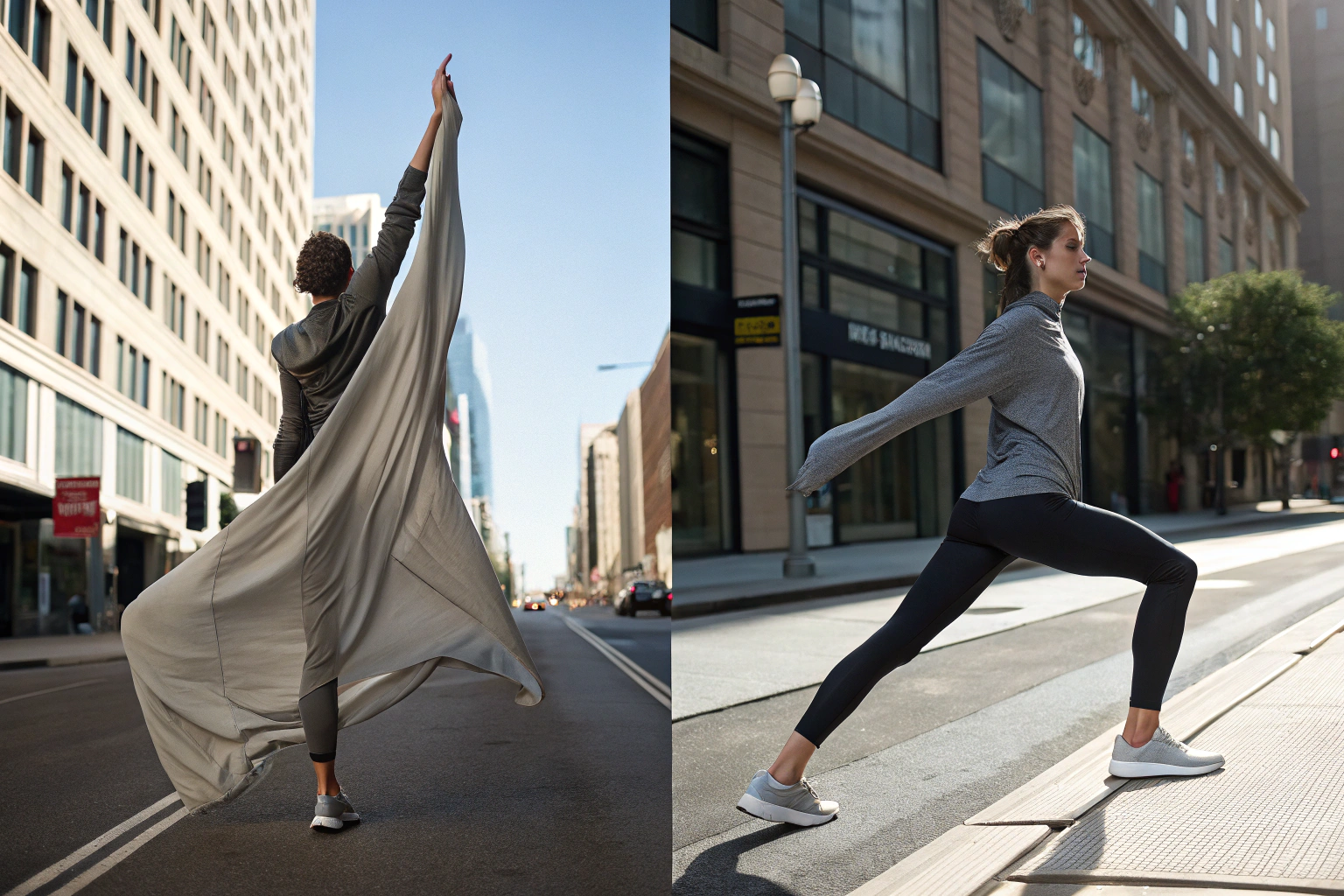
I remember the conversation with a client from Vancouver in early 2023. She had built a successful yoga brand using woven fabrics because she loved the structured look. But her customers kept complaining. The pants didn’t stretch enough during forward folds. The tops felt restrictive during arm raises. She was losing customers to competitors who used knitted fabrics. She called me frustrated, asking if she had to completely redesign her collection.
The truth is, athleisure sits at the intersection of fashion and function. Your customers want clothes that look good enough to wear to brunch but perform well enough for a workout. And the fabric choice—knitted versus woven—determines whether you hit that sweet spot or miss it entirely.
I’ve been producing fabrics for athleisure brands for over a decade. I’ve seen the market evolve from basic cotton jerseys to high-performance engineered knits. I’ve worked with startups launching their first leggings line and established brands scaling their activewear collections. Let me walk you through what I’ve learned about choosing the right fabric structure for athleisure.
Why Does Knitted Fabric Dominate Athleisure for Movement?
If there’s one thing I’ve learned from years of supplying athleisure brands, it’s this: movement requires stretch. And knitted fabric delivers stretch in a way that woven fabric simply cannot match. I had a client from Berlin who learned this lesson the hard way in 2022. She designed a line of woven cotton pants for her athleisure collection. They looked beautiful on the model standing still. But when her testers wore them to a Pilates class, the pants restricted movement and the seams strained. She had to write off 5,000 units.

How Does Knit Structure Enable Four-Way Stretch?
The magic of knitted fabric for athleisure comes from its loop structure. Unlike woven fabric, where yarns are locked in a grid, knitted fabric has interconnected loops that can open and close as the fabric stretches.
In 2023, we produced a run of nylon-spandex jersey for a US-based athleisure brand. The fabric had 18% spandex content, which gave it true four-way stretch. The client tested it against a woven stretch fabric from another supplier. The woven fabric had two-way stretch—it stretched horizontally but not vertically. When the testers did squats, the woven fabric pulled down at the waistband. The knitted fabric moved with the body and recovered perfectly.
The key is recovery. Stretch without recovery is useless for athleisure. A fabric that stretches but doesn’t snap back will bag out at the knees and sag at the waist. We test recovery in our lab using a cyclic stretch test. We stretch the fabric to a set point, release it, and measure how much it returns to its original dimensions. For athleisure, we target at least 90% recovery.
If you’re sourcing knitted fabric for athleisure, ask about spandex content and recovery percentage. For leggings, I recommend 15-20% spandex for high-compression garments and 8-12% for lighter-support styles. For tops, 5-8% spandex is usually sufficient.
For a technical explanation of knit stretch properties, there’s a detailed resource on how different knit structures affect stretch and recovery in activewear . It covers the engineering behind fabric performance.
What Makes Moisture-Wicking Possible in Knits?
This is where knitted fabrics really shine for athleisure. The loop structure creates surface area that can be engineered to move moisture away from the skin.
In 2024, we worked with a Scandinavian running brand that wanted a moisture-wicking jersey for their summer collection. We used a polyester yarn with a specialized cross-section—not round like standard yarn, but shaped with channels that pull moisture along the fiber surface. We knitted it into a single jersey structure with a smooth face and a textured back. The back channels moisture away from the skin, and the smooth face allows it to evaporate quickly.
The client tested the fabric against a woven alternative. The woven fabric trapped moisture between the skin and the fabric. The knitted fabric moved moisture so effectively that the testers reported feeling dry even after a 10-kilometer run in humid conditions.
If you’re sourcing for athleisure, ask your supplier about moisture management testing. We run a vertical wicking test that measures how fast water moves up a strip of fabric. For high-performance athleisure, we target a wicking rate of at least 10 centimeters per minute.
For a guide to moisture-wicking technology, there’s a useful resource on how engineered yarns and knit structures manage sweat in activewear . It explains the difference between hydrophilic and hydrophobic fibers.
When Does Woven Fabric Make Sense for Athleisure?
Despite the dominance of knits in athleisure, I’ve worked with brands that successfully use woven fabrics. The key is understanding where woven fabric performs well and where it falls short. Woven fabrics excel at structure, durability, and a crisp aesthetic that some athleisure segments demand.

Can Woven Fabric Provide Enough Stretch for Activewear?
Yes, but it requires a different approach. Woven fabric doesn’t have the inherent stretch of knits, so you need to engineer stretch into the construction.
In 2023, we produced a line of woven stretch pants for a European athleisure brand that wanted a more tailored look than traditional knit leggings. We used a 2×1 twill weave with 3% spandex in the weft yarns. The spandex gives the fabric mechanical stretch—about 20% in the weft direction. That’s enough for walking, cycling, and light activity. It’s not enough for yoga or high-intensity training.
The client positioned these pants as "athleisure for travel and casual wear," not for workouts. The woven structure gave them a polished appearance that knit leggings couldn’t match. They sold out in three weeks.
The limitation of woven stretch is that it’s typically two-way stretch, not four-way. The fabric stretches in one direction (usually horizontally) but not vertically. For activities that require movement in multiple directions, this can be restrictive.
If you’re considering woven fabric for athleisure, ask yourself: what activity will your customer be doing? For light activity and lifestyle wear, woven stretch can work beautifully. For high-intensity movement, stick with knits.
For a comparison of woven versus knit stretch properties, there’s a good article on the difference between mechanical stretch and inherent stretch in fabrics . It explains why knits recover better than stretch wovens.
What Are the Best Applications for Woven Athleisure?
From my experience, woven fabrics work best for the "lifestyle" side of athleisure—the pieces that look like sportswear but are worn for everyday activities.
I’ve worked with several brands that use woven fabrics for:
- Athleisure jackets and blazers that need structure
- Golf pants and shorts where a crisp crease matters
- Travel pants that resist wrinkling
- Structured vests and gilets
In 2024, we produced a nylon-spandex woven for a New York brand’s athleisure blazer line. The fabric had a DWR (durable water repellent) finish, making it weather-resistant. The woven structure held the blazer’s shape, while the spandex allowed enough stretch for comfort. The client positioned it as "the blazer you can wear on a bike commute." It worked because they matched the fabric to the intended use.
If you’re using woven fabric for athleisure, pay attention to finishing. A good mechanical stretch finish can improve comfort without compromising structure. We use a combination of sanforization and mechanical softening to give woven fabrics a softer hand while maintaining their shape.
How Do You Choose Between Knitted and Woven for Different Athleisure Pieces?
I’ve developed a simple framework that I share with all my athleisure clients. It’s based on the garment’s primary function, not just how it looks. Let me walk you through how I advise clients to make this decision for different categories.

What Fabric Should You Use for Leggings and Sports Bras?
This is the easiest question I answer. Leggings and sports bras need maximum stretch and recovery. That means knitted fabric with high spandex content.
In 2023, we produced a run of compression leggings for a US brand. We used a 78% nylon and 22% spandex double-knit structure. The double-knit construction gave the fabric enough density to provide compression while maintaining four-way stretch. We tested the recovery after 50 stretch cycles. The fabric returned to 97% of its original dimensions. That’s the performance level that keeps customers coming back.
For sports bras, we use a similar construction but with higher nylon content for durability. The fabric needs to hold its shape through hundreds of wear-wash cycles. We run a pilling test and a tensile strength test on every batch.
If you’re sourcing for leggings or sports bras, ask for spandex content above 15% and double-knit or interlock construction. Single jersey is too thin and won’t provide enough compression or durability.
For a guide to leggings fabric construction, there’s a detailed resource on what to look for in performance knit fabrics for activewear . It covers spandex percentages, knit structures, and testing protocols.
What Fabric Works Best for Athleisure Tops and Hoodies?
This is where you have more flexibility. Tops and hoodies can work with either knits or wovens, depending on the look you want.
For fitted tops like base layers and sports tops, I recommend knitted jersey with 5-10% spandex. The stretch allows a close fit without restricting movement. We produce these in nylon-spandex for high-performance brands and cotton-spandex for lifestyle athleisure.
For oversized hoodies and casual tops, French terry and brushed fleece are my go-to recommendations. These are knitted fabrics with a looped or brushed back that provides warmth and a casual aesthetic. In 2024, we produced a line of cotton-polyester French terry hoodies for a streetwear-inspired athleisure brand. The fabric was 320 GSM—heavy enough to feel substantial but light enough for layering.
For structured tops like button-down shirts or bomber jackets, woven fabrics can work well. I’ve produced woven poplin and twill shirts for athleisure brands that wanted a more polished look. The key is adding spandex for comfort. A 2% spandex content in the weft gives enough stretch for movement without compromising the woven structure.
How Do You Handle Outerwear in Athleisure?
Athleisure outerwear—jackets, vests, windbreakers—often benefits from woven fabrics because they provide better wind and water resistance.
In 2023, we produced a woven nylon jacket fabric for a European athleisure brand. The fabric had a tight ripstop weave for durability and a PU coating for water resistance. We added 5% spandex in the warp for a small amount of stretch. The jacket performed well in rain and wind while allowing enough movement for cycling and hiking.
For lightweight outerwear, we use woven nylon or polyester with DWR finishes. For insulated pieces, we use woven face fabrics with knit linings—the best of both worlds.
If you’re sourcing outerwear, ask about water resistance testing. We run a hydrostatic pressure test that measures how much water pressure the fabric can withstand before leaking. For rain jackets, we target a minimum of 5,000 mm H2O. For lifestyle jackets, 1,000-2,000 mm is usually sufficient.
What Performance Features Should You Look for in Athleisure Fabrics?
Athleisure customers expect more than just stretch. They want fabrics that perform. I’ve seen brands succeed because they invested in the right performance features, and I’ve seen brands fail because they cut corners.

What’s the Difference Between Moisture-Wicking and Quick-Dry?
I get this question constantly. They’re related but different. Moisture-wicking moves sweat away from the skin. Quick-dry means the fabric releases that moisture into the air quickly.
In 2024, we produced a nylon-spandex jersey for a running brand that required both properties. We used a hydrophobic nylon yarn that doesn’t absorb water—it pushes moisture to the surface. Then we engineered the knit structure with a textured back that creates air channels for evaporation. The fabric wicks moisture in under 10 seconds and dries completely in under 30 minutes under airflow.
If a supplier tells you their fabric is moisture-wicking, ask how they achieve it. Is it a chemical treatment or an engineered yarn? Chemical treatments can wash out after 20-30 cycles. Engineered yarns last the life of the garment.
For a detailed explanation of moisture management technologies, there’s a resource on the difference between hydrophilic and hydrophobic fibers in activewear . It covers both chemical and mechanical approaches.
How Important Is UV Protection for Athleisure?
This depends on your customer’s activities. For outdoor sports like running, cycling, and hiking, UV protection is critical. For indoor yoga and gym wear, it’s less important.
We test for UPF (Ultraviolet Protection Factor) in our lab. A UPF rating of 30 means the fabric blocks 96.7% of UV radiation. UPF 50+ blocks 98% or more.
In 2023, we produced a UPF 50+ nylon-spandex jersey for a Australian surf brand. The UV protection came from the titanium dioxide in the yarn itself, not from a topical finish. That means the protection doesn’t wash out. The client positioned it as "all-day sun protection for beach activities." It became their best-selling fabric.
If you’re sourcing for outdoor athleisure, ask about UPF testing and whether the protection is inherent or applied. Inherent protection lasts longer and is more reliable.
For standards on UV protection, there’s a guide on the ASTM D6603 standard for UV protective fabrics . It explains how UPF is measured and labeled.
Conclusion
The best fabric for athleisure depends on what your customer will do in it. For high-intensity movement, moisture management, and all-day comfort, knitted fabrics with spandex are the clear winner. For structured pieces, outerwear, and lifestyle athleisure, woven fabrics with mechanical stretch can deliver the polished look your customers want.
At Shanghai Fumao , we produce both knitted and woven fabrics for athleisure brands around the world. We understand that one size doesn’t fit all. That’s why we start every project by asking about your customer, their activities, and your brand aesthetic. Then we engineer the fabric to match.
I’ve helped yoga brands find the perfect compression knit. I’ve helped running brands develop moisture-wicking jerseys that outperform the competition. I’ve helped lifestyle brands create woven stretch pants that look tailored but move like activewear. Every project is different, and every fabric is customized for the use.
If you’re developing an athleisure collection, you need a supplier who understands performance fabrics. My business director, Elaine, handles all our athleisure inquiries. She knows the knit structures, the spandex percentages, the moisture-wicking technologies, and the testing protocols. She can walk you through the options and help you choose the fabric that will make your collection perform.
Contact Elaine directly: elaine@fumaoclothing.com
Tell her about your athleisure collection. Let her help you find the fabric that balances fashion and function.