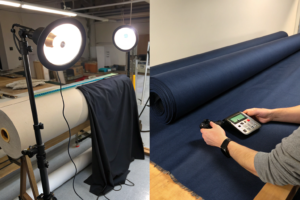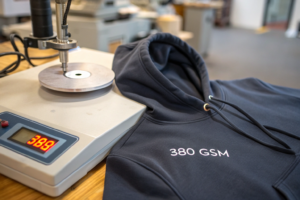
I still remember the call from a client in Chicago back in 2022. He was launching a premium hoodie line and wanted something substantial—not those flimsy fleeces that fall apart after three washes. He had already ordered samples from three suppliers. All of them sent him lightweight fabrics that felt nothing like the samples they had shown him on video calls. One supplier sent him a fabric labeled “400 GSM” that weighed in at 320 GSM on my scale. He was frustrated, and honestly, I didn’t blame him.
Heavyweight knitted fabrics are tricky. Get them right, and your hoodie becomes a customer’s favorite piece—the one they reach for every winter. Get them wrong, and you get returns, bad reviews, and a reputation for selling overpriced sweatshirts. I’ve been weaving and knitting fabrics in Keqiao for over 20 years. I’ve seen what makes a hoodie fabric perform, and I’ve seen what fails.
Let me walk you through exactly what to look for when you’re sourcing heavyweight knits. I’ll give you the numbers, the tests, and the questions you need to ask. Because if you’re going to invest in a winter collection, you need a fabric that delivers.
What Defines a True Heavyweight Knitted Fabric?
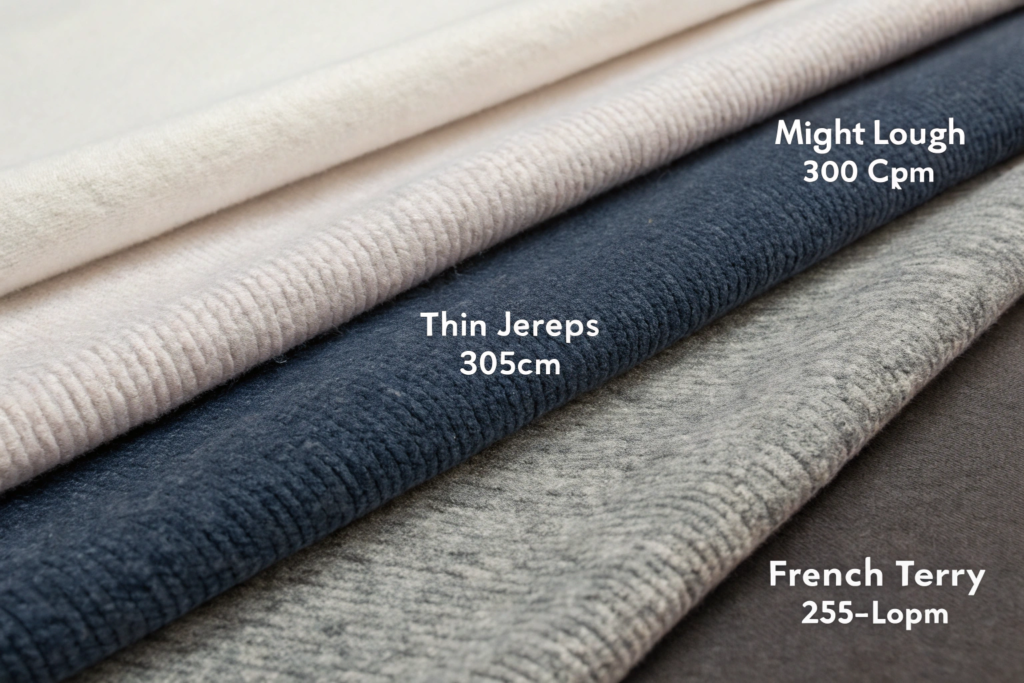
When I talk to buyers, everyone has a different idea of what “heavyweight” means. For some, it’s 280 GSM. For others, it’s 500 GSM. In my experience working with European and US streetwear brands, a true heavyweight hoodie fabric starts at 380 GSM and goes up to 500 GSM. Below that, you’re in mid-weight territory. It will feel substantial, but it won’t have that dense, structured hand that customers associate with premium winter hoodies.
What GSM Range Actually Delivers Winter Warmth?
Let me give you real numbers from orders we’ve produced. In 2023, we made a run of 450 GSM cotton-polyester blend French terry for a streetwear brand in Berlin. The fabric had a smooth face and a looped back. That looped back traps air, which is what keeps the wearer warm. When the client tested it against a 320 GSM fabric from another supplier, the difference was immediate. The 450 GSM fabric held its shape, draped better, and kept the wearer warmer in Berlin’s winter.
For a hoodie that’s truly warm, I recommend 400 GSM as the minimum. Between 400 and 450 GSM, you get a fabric that feels substantial without being too stiff. Above 450 GSM, the fabric becomes harder to sew, and the hoodie can feel like wearing a blanket. Some clients love that. A Japanese brand we worked with in 2024 ordered 520 GSM loopback fleece. They wanted that oversized, heavy drape. The fabric was so thick we had to use heavier needles on our sewing machines. The result was exactly what they wanted.
If you’re sourcing heavyweight fabric, ask your supplier for the exact GSM and a tolerance range. We guarantee +/- 5% on GSM. If a supplier tells you “it’s heavy” without giving you a number, that’s a red flag. Get it in writing.
For a deeper understanding of how GSM affects garment performance, there’s a detailed guide on how fabric weight impacts warmth and durability in knitwear . It explains the relationship between weight, loop structure, and thermal retention.
How Does Yarn Count Affect the Weight and Hand Feel?
GSM is one thing. Yarn count is another. You can have two fabrics with the same GSM that feel completely different because of the yarns used.
In 2022, a Canadian client wanted a heavyweight hoodie fabric that was soft to the touch. We recommended a 10/1 open-end cotton yarn for the face and a 7/1 for the loops. The coarser yarns create a thicker fabric with more air space. That air space gives you warmth without making the fabric too dense. The open-end spinning process also gives the yarn a slightly textured surface, which feels softer against the skin.
But here’s where it gets tricky. Some suppliers use finer yarns and then add a heavy brushing finish to bulk up the fabric. The fabric might weigh 400 GSM on the scale, but after a few washes, the brushing compresses and the fabric feels thin. I’ve seen this happen. A client from Sweden ordered what she thought was a heavyweight fleece. After three washes, the interior brushing had matted down, and the fabric felt like a 280 GSM jersey. She had to pull the entire collection.
To avoid this, ask your supplier about the yarn count and the finishing process. If they’re using yarns finer than 20/1 for a heavyweight fabric, ask how they’re achieving the weight. A reputable supplier will explain the construction. We use coarser yarns for the loop side specifically to maintain weight after washing.
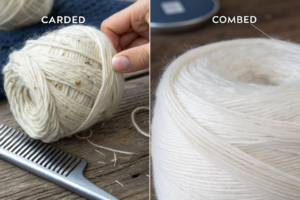
If you want to understand yarn counts better, there’s a helpful resource on the difference between carded, combed, and open-end yarns for knit fabrics . It breaks down how yarn quality affects the final fabric feel.
Which Fabric Construction Works Best for Heavyweight Hoodies?
Not all heavyweight knits are the same. The construction—how the fabric is knitted—determines how it performs. I’ve worked with three main constructions for hoodies: French terry, brushed fleece, and double-knit. Each has its strengths, and each serves a different type of hoodie.
Is French Terry or Brushed Fleece Better for Winter?
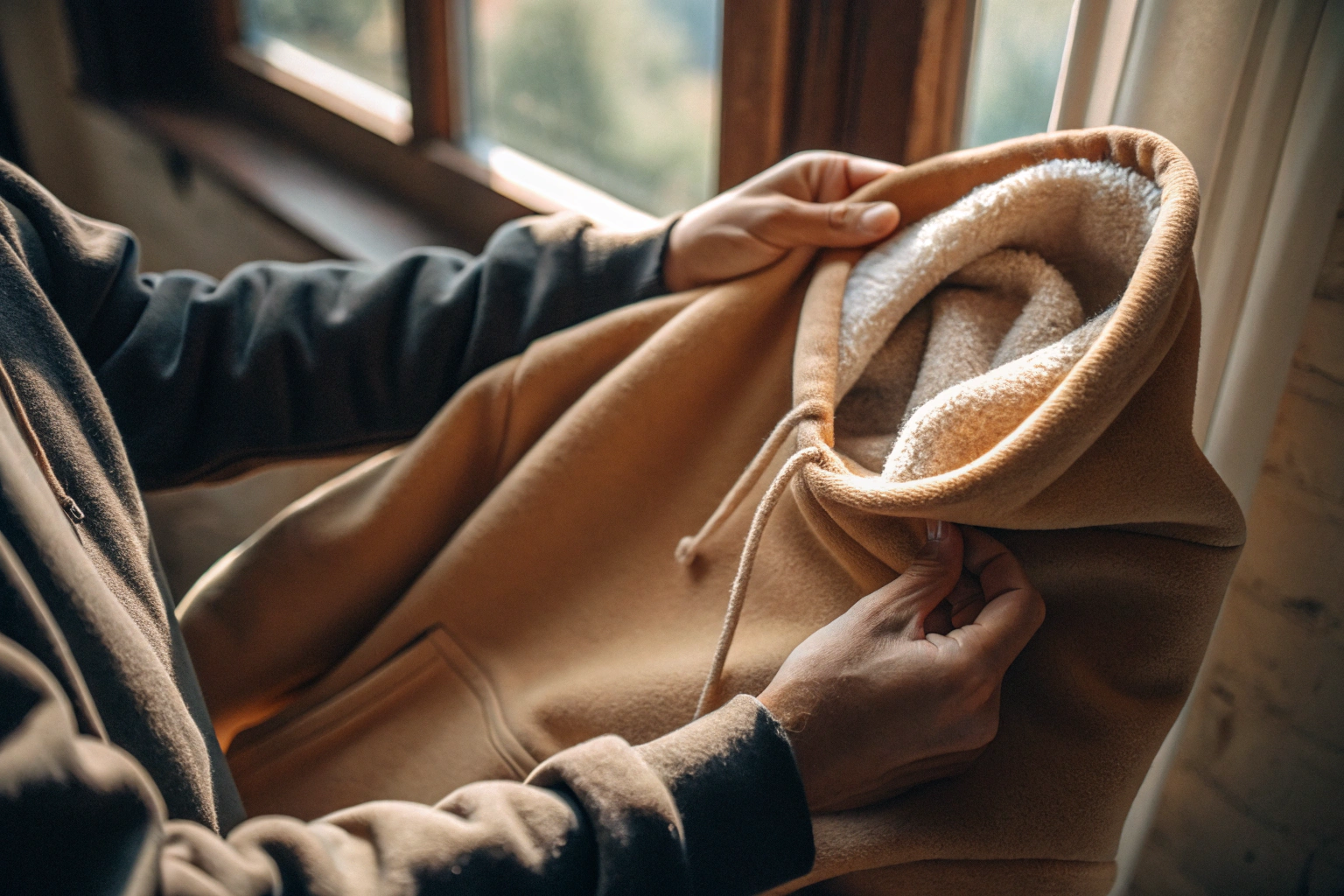
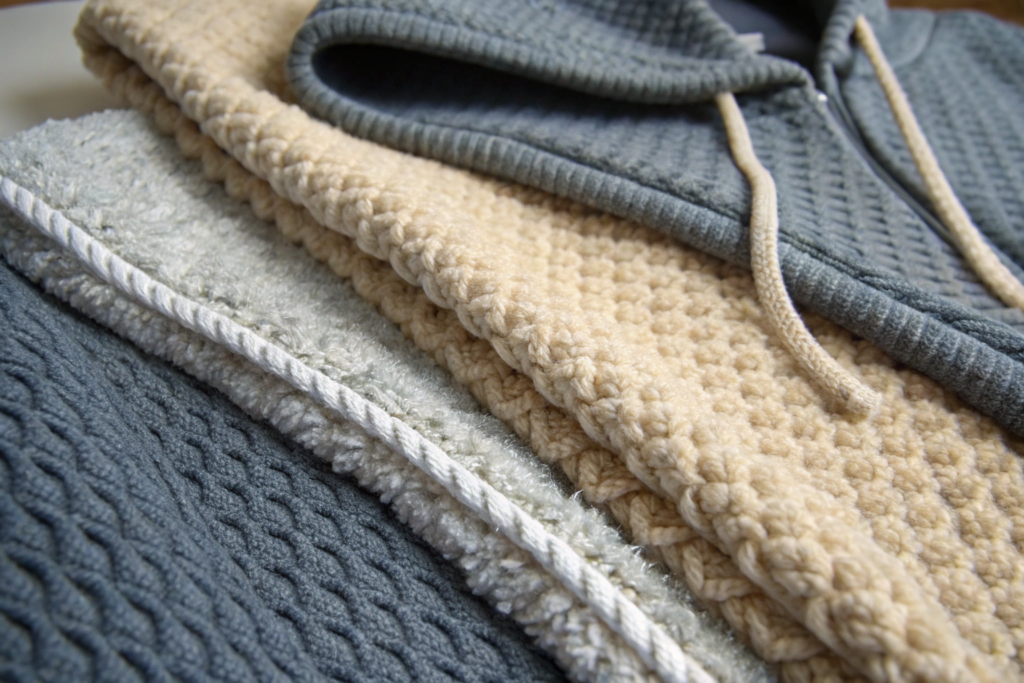
This is the question I get most often. French terry has a smooth face and a looped back. The loops are uncut. Brushed fleece is French terry that has been run through a brushing machine to raise the loops into a soft, fuzzy surface.
For winter hoodies, I lean toward brushed fleece for one reason: warmth. The brushing process creates millions of tiny fibers that trap air. That trapped air is what keeps the wearer warm. In 2023, we produced a run of 450 GSM brushed fleece for a Scandinavian brand. The fabric was so warm that their customers started wearing the hoodies as standalone outerwear in temperatures just above freezing.
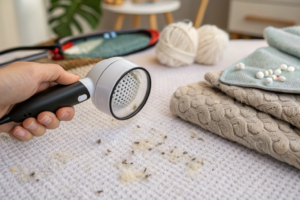
But brushed fleece has a trade-off. The brushing makes the fabric softer, but it can also cause pilling over time if the yarn quality isn’t good. We use long-staple cotton and high-tenacity polyester in our blends to minimize pilling. Before we ship any brushed fleece, we run a Martindale abrasion test. We simulate 5,000 cycles to see how the surface holds up. If it starts pilling before 3,000 cycles, we adjust the brushing intensity or change the yarn.
French terry, on the other hand, is more durable. Because the loops are intact, there’s less surface fiber to pill. Some of my clients prefer French terry for hoodies that will be worn frequently. A Japanese workwear brand uses our 420 GSM French terry for their hoodies. The fabric lasts for years without losing its structure.
If you’re trying to decide, ask yourself: is this a fashion hoodie or a utility hoodie? Fashion hoodies benefit from the soft hand of brushed fleece. Utility hoodies benefit from the durability of French terry.
For a comparison of the two constructions, there’s a good article on the differences between French terry and brushed fleece for activewear . It includes feedback from designers who’ve used both.
How Does Double-Knit Compare for Structured Hoodies?
Double-knit is a different animal. It’s made on a machine with two needle beds, creating two layers of loops that are interlocked. The result is a fabric that’s stable, doesn’t curl, and holds its shape exceptionally well.
I had a client from New York in 2023 who wanted a hoodie that looked structured—almost like a tailored jacket but made from knit fabric. We used a 450 GSM double-knit in a cotton-polyester blend. The fabric had enough body to hold a sharp collar and a structured hood, but it still had the comfort of a knit. The client sold out his first run of 3,000 pieces in two weeks.
Double-knit is heavier per square meter because it has two layers. A 400 GSM double-knit will feel more substantial than a 400 GSM French terry. But it’s also less breathable. If your customer runs hot, double-knit might be too warm. For a winter hoodie worn in cold climates, it’s perfect.
The downside of double-knit is cost. It requires more yarn per meter, and the knitting process is slower. In my experience, double-knit costs about 20-30% more than French terry for the same GSM. But for brands positioning themselves as premium, that extra cost translates into a garment that feels genuinely different from mass-market hoodies.
What Fiber Blends Perform Best for Heavyweight Hoodies?
The fiber blend determines how the fabric feels, how it performs, and how it holds up. I’ve tested dozens of blends over the years. Some work beautifully. Others fall apart after a season. Let me share what actually works based on orders we’ve shipped.
Is 100% Cotton the Best Choice for Heavyweight Hoodies?
I get this request often. “I want 100% cotton because it’s natural.” I understand the appeal. But for heavyweight hoodies, 100% cotton has limitations.
In 2022, we produced a 100% cotton 450 GSM brushed fleece for a European brand. The fabric felt incredible. Soft, substantial, exactly what they wanted. But after the first wash, the shrinkage was 8%. The hoodie went from oversized to fitted. The client’s customers complained. We had to re-cut the pattern to account for the shrinkage on the next order.
The issue is that cotton shrinks. Heavier cotton fabrics shrink more because there’s more fiber to contract. You can pre-shrink the fabric—we run it through a compactor—but that only reduces shrinkage to about 3-4%. It doesn’t eliminate it.
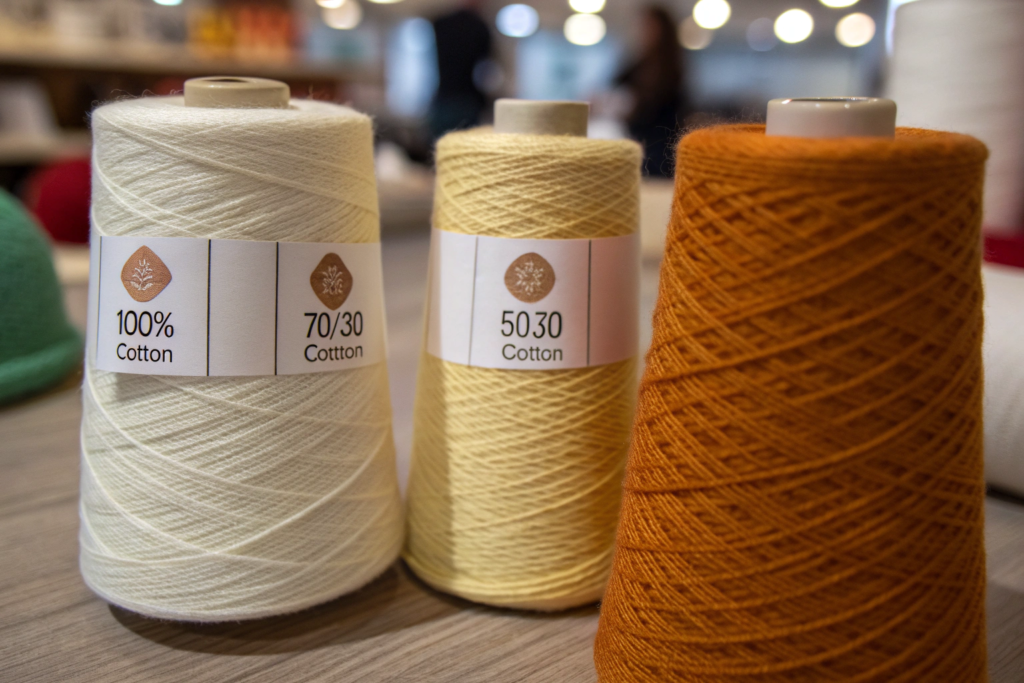
That’s why I usually recommend a cotton-polyester blend for heavyweight hoodies. The polyester locks the structure. A 70% cotton and 30% polyester blend gives you the hand feel of cotton with the stability of polyester. For a truly heavyweight fabric, I’ve used an 80% cotton and 20% polyester blend. The cotton gives you that premium feel. The polyester prevents shrinkage and adds durability.
If you’re set on 100% cotton, ask your supplier about pre-shrinking and compaction. We run all our 100% cotton knits through a compactor at high temperature to stabilize the fibers. It doesn’t eliminate shrinkage, but it reduces it significantly.
How Much Spandex Should You Add for Comfort and Recovery?
Spandex is the secret to a hoodie that keeps its shape. Without it, a heavyweight knit can stretch out at the elbows and knees and never recover. With the right amount, the fabric stretches when you move and returns to its original shape.
For heavyweight hoodies, I recommend 2-4% spandex. In 2023, we made a 400 GSM French terry with 3% spandex for a US activewear brand. The hoodie moved with the wearer during workouts and snapped back into shape afterward. The client told me their return rate for shape distortion was zero.
Less than 2% spandex doesn’t make a noticeable difference. More than 4% can make the fabric feel rubbery and difficult to sew. I’ve worked with clients who wanted 8% spandex for extreme stretch. The fabric was so elastic that it distorted on the cutting table. We had to use special spreading machines and adjust the pattern to compensate.
The key is where you put the spandex. In a knitted fabric, spandex is usually plated into the yarn. That means it runs through every loop. For French terry, we sometimes add spandex only to the face yarn and keep the loops 100% cotton. That gives you stretch without making the interior feel synthetic.
For a technical breakdown, there’s a useful resource on how spandex content affects knit fabric performance and durability . It covers optimal percentages for different applications.
How Do You Verify Quality Before Placing a Bulk Order?
I’ve seen buyers trust a sample, order 10,000 meters, and then discover the bulk fabric is completely different. The color is off. The weight is lighter. The hand feel is wrong. This happens because they didn’t verify the quality properly before committing. Let me give you the steps I recommend.
What Tests Should You Run on the Sample?
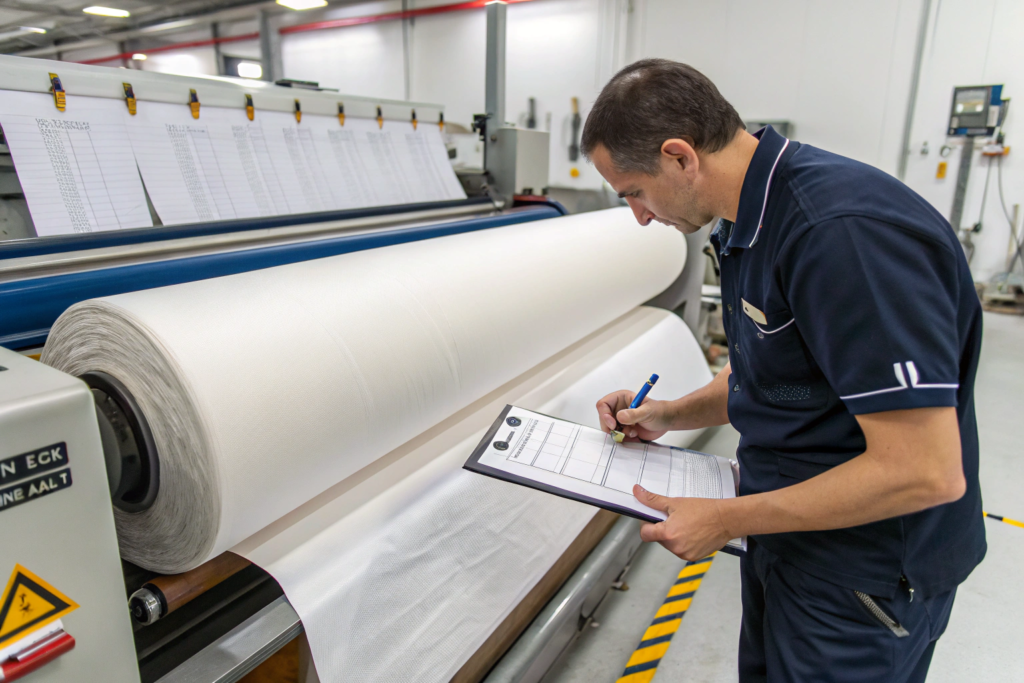
When you receive a sample from a supplier, don’t just look at it. Test it.
First, do a shrinkage test. Cut a 50cm by 50cm square. Mark the dimensions. Wash it in warm water and dry it on medium heat. Measure again. A good heavyweight knit should shrink less than 5%. In 2024, a client from the UK sent me a sample from another supplier. I washed it and it shrank 12%. She canceled the order.
Second, test for pilling. Rub a section of the fabric against a rough surface—your desk edge works. Do it 50 times. If the surface starts fuzzing up immediately, that fabric will pill after a few wears. We use a Martindale abrasion tester in our lab. But for a quick field test, your hand works.
Third, check the colorfastness. Wet a white cloth. Rub it firmly against the colored fabric. If color transfers, the fabric will bleed in the wash. This is especially important for dark colors like black and navy. We test for colorfastness to washing and crocking in our CNAS-accredited lab. If a supplier can’t provide these test results, ask for a sample and do the tests yourself.
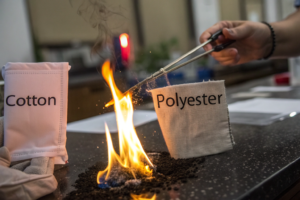
For a complete list of fabric tests you can do at your desk, there’s a practical guide on how to test fabric quality without a laboratory . It covers shrinkage, pilling, colorfastness, and tensile strength using simple tools.
Why Should You Request a Production Strike-Off Before Bulk?
This is non-negotiable for me. Before we start bulk production, we always make a production strike-off. It’s a small run—usually 5 to 10 meters—on the actual machines that will make the bulk order.
In 2023, a client from Australia wanted a specific shade of charcoal grey. We did a lab dip. She approved it. We did a strike-off on the production knitting machine. The color looked different. The production machine had a different tension than our sample machine, which changed how the color reflected. We went back to the dyehouse, adjusted the recipe, and did another strike-off. The third strike-off matched perfectly.
If we had gone straight to bulk, we would have wasted 2,000 meters of fabric. The strike-off cost $200. That’s cheap insurance.
When you approve a strike-off, ask for a sealed reference. Put a piece of the approved strike-off in a bag with both your signatures on it. When the bulk production arrives, compare it to the sealed reference. If it doesn’t match, you have leverage to reject or ask for a discount.
I also recommend asking for inline production photos. We send clients photos of their fabric on the knitting machine, in the dye bath, and on the inspection table. If a supplier won’t send photos, they might not have control over their production. They could be outsourcing to a different factory without telling you.
Conclusion
Sourcing heavyweight knitted fabric for winter hoodies is about getting the details right. The GSM needs to be high enough—at least 400 GSM for true warmth. The construction needs to match your garment’s purpose: brushed fleece for softness, French terry for durability, double-knit for structure. The fiber blend needs to balance natural feel with performance. And the quality verification needs to be rigorous.
At Shanghai Fumao , we’ve been making heavyweight knits for over a decade. We know what works and what doesn’t. We have the machines to knit heavy fabrics—our circular knitting machines can handle yarns as coarse as 3/1. We have the finishing equipment to brush, compact, and stabilize. And we have the CNAS-accredited lab to test every batch before it ships.
I’ve helped brands from Europe, North America, and Japan build hoodie collections that customers love. Some of those hoodies are still being worn three years later. That’s the kind of quality I stand behind.
If you’re planning a winter hoodie collection, let’s talk. My business director, Elaine, handles all our knit fabric inquiries. She knows the GSM ranges, the yarn counts, the construction types, and the testing protocols. She can guide you through the sample process, help you verify quality, and make sure your fabric arrives on time for your production schedule.
Contact Elaine directly: elaine@fumaoclothing.com
Tell her what you’re building. She’ll help you get the fabric right the first time.