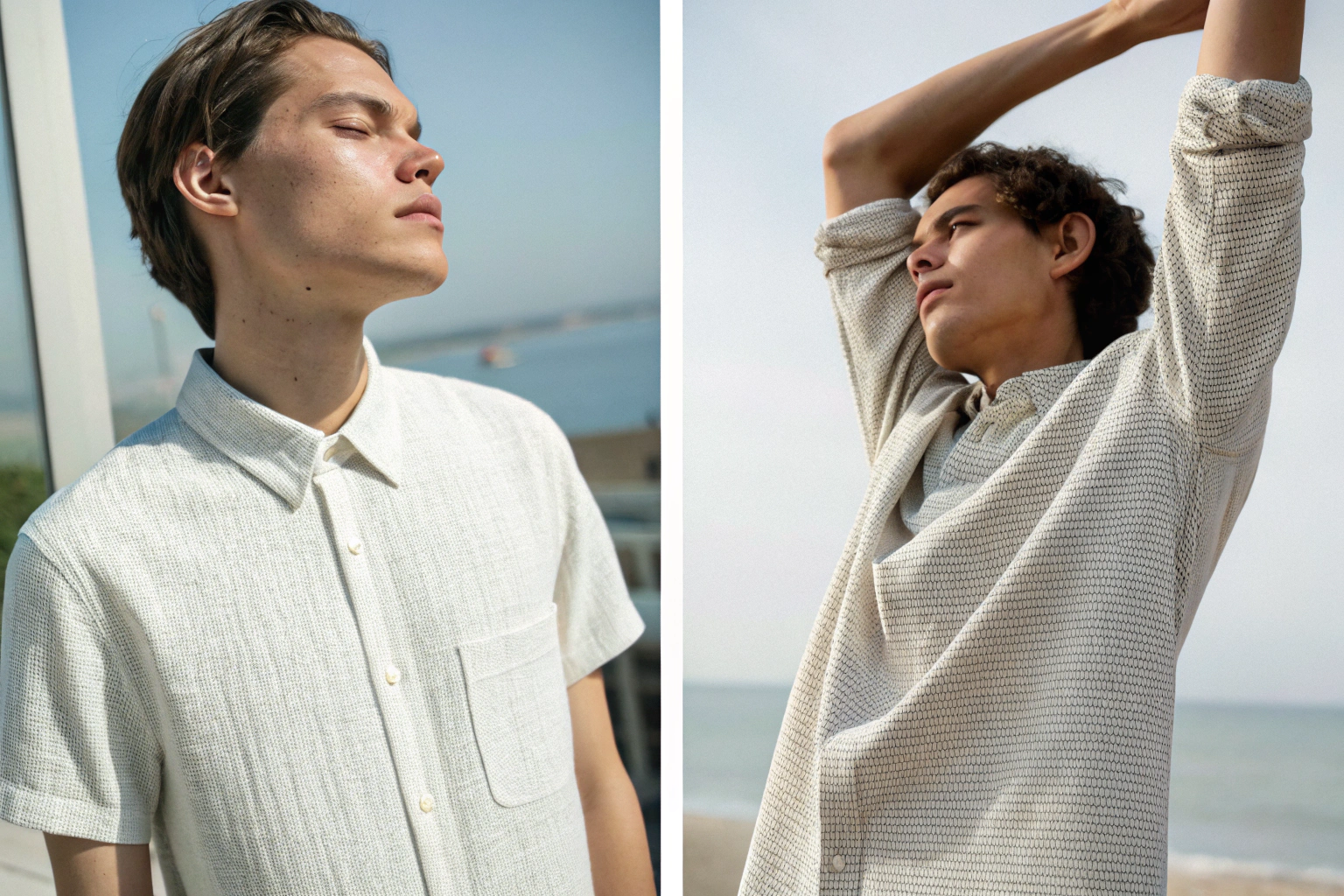
I still remember the day a client from Australia called me in a panic. She had designed a beautiful collection of yoga wear using a woven cotton fabric she found at a trade show. The fabric looked perfect on her mood board. But when her manufacturer started cutting and sewing, nothing worked. The pants had no stretch. The tops restricted movement. She wasted 800 meters of fabric and three weeks of production time. She made the classic mistake: she matched the fabric to her aesthetic instead of matching it to her garment function.
In my 20 years in Keqiao, I’ve watched this mistake happen again and again. Designers fall in love with a fabric’s drape or color, but they don’t understand how it behaves on a body in motion. Here’s the simple truth: knitted fabrics stretch. Woven fabrics hold their shape. If you put a woven fabric on a garment that needs to move with the wearer, you’re setting yourself up for failure.
Understanding this difference isn’t complicated. But it requires you to think about how your garment will be used, not just how it will look on a hanger. Let me walk you through what I’ve learned from working with global brands, and help you avoid the costly mismatches I’ve seen over the years.
How Do Knitted Fabrics Behave Differently from Woven Fabrics?
If you’re new to textiles, this is where you need to start. I tell every new buyer the same thing: think of woven fabrics like a sheet of paper, and knitted fabrics like a sweater. A sheet of paper has structure. It holds a crease. It doesn’t stretch. A sweater has give. It moves with you. It recovers its shape after you pull it.

What Makes a Knitted Fabric Stretch?
The stretch in a knitted fabric comes from its structure, not from the fiber itself. When we knit fabric on a circular knitting machine, we’re creating loops. Each loop is connected to the ones around it. When you pull the fabric, those loops straighten out. When you release, they return to their looped shape. That’s recovery.
I had a client from the US in 2023 who wanted a 100% cotton jersey for a fitted t-shirt line. She was worried about shrinkage. I explained that the stretch and recovery in a jersey knit comes from the loop structure. But if the cotton isn’t pre-shrunk properly, the loops can lock into a smaller shape after washing. We ran a compressive shrinkage test in our lab. We found the fabric had 8% shrinkage potential. We adjusted the finishing process by running it through a compactor to stabilize the loops. The final fabric tested at less than 3% shrinkage.
The key takeaway? Knitted fabrics give you stretch, but you need to manage how they behave after washing. If you’re sourcing for garments that will be washed frequently—like t-shirts or activewear—ask your supplier about pre-shrinking and compaction. Without it, your medium t-shirt might become a small after three washes.
If you want to dive deeper into the mechanics, there’s a great resource on how different knit structures affect fabric performance . It explains why a single jersey stretches differently than a rib knit or an interlock.
Why Do Woven Fabrics Hold Shape Better?
Woven fabrics are made on a loom. Two sets of yarns—the warp (lengthwise) and the weft (crosswise)—are interlaced at right angles. This creates a stable grid. The yarns can slide against each other slightly, but they don’t have the loop structure that gives a knit its inherent stretch.
In 2022, a European menswear brand approached us for a structured blazer fabric. They needed something with a crisp hand that would hold a pressed crease. We recommended a wool-blend twill weave. The twill structure creates a diagonal rib that adds durability and allows the fabric to hold a sharp crease. The client also wanted a bit of comfort stretch, so we added 2% spandex to the weft yarns. That gave the wearer some movement without compromising the structure of the blazer.
The mistake I see often is brands trying to use a woven fabric where they need stretch. I had a client who wanted to make leggings from a woven cotton. She loved the printed pattern. I had to explain that a woven fabric has no recovery. It would bag out at the knees and sag at the waist after the first wear. She ended up using the same print on a knitted spandex blend and the leggings sold out in weeks.
If you’re working with wovens, understand that the weave structure determines the fabric’s behavior. A plain weave is stable but stiff. A twill is more flexible. A satin weave has a smooth surface but can snag easily. If you need a woven fabric with a bit of give, ask about adding elastane to the weft. That gives you mechanical stretch without changing the woven structure.
Which Garment Types Demand Knitted Fabrics?
Over the years, I’ve developed a simple rule: if the garment needs to move with the body, start with a knit. This includes t-shirts, leggings, underwear, activewear, and any fitted garment. When a client comes to me with a sketch of a fitted dress or a pair of joggers, I immediately think about which knit structure will give them the balance of stretch, recovery, and drape they need.

Why Is Jersey the Go-To for T-Shirts and Basics?
Jersey is the most common weft knit structure. It’s what we use for most t-shirts, dresses, and casual tops. The front side has a flat, smooth surface. The back side has a slight texture from the loop structure. It drapes well, breathes, and has good recovery.
In early 2024, we produced a large order for a US-based direct-to-consumer brand. They wanted a heavyweight cotton jersey for a premium t-shirt line. They specified 220 GSM with a 4% spandex content for added stretch. We sourced organic combed cotton yarns to get that soft hand they wanted. The challenge was maintaining the weight while keeping the fabric breathable.
We used a 30/1 combed cotton yarn on the face and a 40/1 on the back, with spandex plated into the knit structure. The result was a fabric that felt substantial but wasn’t heavy. The client sold 50,000 units in the first drop. They told me later that customers specifically praised the fit and the feel.
If you’re sourcing jersey, pay attention to yarn count and GSM. A finer yarn (like 40/1) gives you a smoother, lighter fabric. A coarser yarn (like 20/1) gives you a heavier, more textured hand. And if you want a softer feel, ask for combed cotton. It removes the short fibers that cause pilling.
There’s a useful guide on how to choose the right jersey weight for your garment type that breaks down GSM ranges for different applications. It’s a quick reference I share with new clients.
When Should You Choose Rib Knits and Interlocks?
Rib knits and interlocks are what I recommend for garments that need more structure and recovery than a basic jersey. A rib knit has vertical rows of knit and purl stitches that create a textured, stretchy fabric. It’s what you see on cuffs, neckbands, and waistbands. An interlock is essentially two jersey fabrics knitted together. It’s heavier, more stable, and doesn’t curl at the edges.
In 2023, a Scandinavian children’s wear brand came to us for a line of baby basics. They wanted something soft but durable. We recommended an interlock knit in organic cotton. Interlock is perfect for baby clothes because it has a smooth surface on both sides, it doesn’t curl, and it holds up to repeated washing. We added a non-toxic antibacterial finish to protect against diaper rash and skin irritation. The collection passed all EU safety standards and sold well across their retail network.
If you’re making activewear, consider a rib knit for areas that need high stretch and recovery. I worked with a UK-based yoga brand that used a 2×2 rib knit for their waistbands. The rib structure allowed the waistband to stretch over the hips and then recover snugly at the waist. They combined it with a moisture-wicking polyester jersey for the main body. The combination worked perfectly for their target customer.
For garments that need both structure and stretch, interlock is often the better choice. It’s heavier and more stable than jersey, but it still has good recovery. I’ve used interlock for everything from polo shirts to lightweight hoodies. The key is matching the weight to the application. A 180 GSM interlock works for summer tops. A 260 GSM interlock works for winter base layers.
Which Garment Types Require Woven Fabrics?
When a garment needs structure, shape retention, or a crisp finish, I reach for wovens. This includes shirts, trousers, jackets, denim, and tailored dresses. Wovens give you the ability to create sharp lines, pressed creases, and structured silhouettes that knits simply can’t achieve.

What Makes Poplin and Oxford Perfect for Shirts?
Poplin and Oxford are plain weave fabrics. Poplin has a fine, tightly woven structure that gives it a smooth, crisp hand. Oxford has a basketweave structure that gives it a textured, more casual appearance. Both are workhorses for shirt-making.
In 2023, a Dutch menswear brand ordered 25,000 meters of GOTS-certified organic cotton poplin for their dress shirt collection. They wanted a fabric that would hold a sharp collar and cuffs while remaining breathable. We sourced 50/1 combed organic cotton yarns for the warp and weft. The fine yarn count gave us a lightweight, smooth fabric that still had enough body for the collar interlinings to work properly.
The challenge was achieving the right finish. They wanted a crisp hand without a heavy starch feel. We used a mechanical finish on our calender machine to give the fabric a smooth, lustrous surface without adding chemicals. The final fabric had a subtle sheen and a crisp drape that their customers loved. They reordered twice that year.
If you’re sourcing for shirts, pay attention to yarn count and finishing. A higher yarn count (like 60/1 or 80/1) gives you a finer, more luxurious fabric. A lower count (like 40/1) gives you a more durable, casual fabric. And ask about the finish. A “peach skin” finish softens the hand. A “crisp” finish gives you that classic dress shirt feel.
For a deeper dive into shirting fabrics, there’s a detailed article on the difference between poplin, oxford, and broadcloth for dress shirts . It’s written from a menswear perspective but the principles apply across categories.
Why Are Twills and Denims the Choice for Trousers and Jackets?
Twills and denims have a diagonal rib structure. This gives them more durability, better drape, and more flexibility than a plain weave. Twills are used for chinos, trousers, and jackets. Denim is a specific type of twill—usually a 3×1 or 2×1 twill—with colored warp yarns and white weft yarns.
In 2022, a US-based workwear brand came to us for a heavy-duty cotton twill for their carpenter pants. They needed something that would hold up to abrasion but still allow movement. We recommended a 2×1 twill with a 10 oz weight. The twill structure gives it durability, and we added a Teflon coating for water and stain resistance. The fabric passed their field tests with flying colors.
For denim, I’ve worked with brands who wanted everything from rigid raw denim to super-stretch comfort denim. In 2023, we produced a run of stretch denim for a Japanese streetwear brand. They wanted a 12 oz weight with 2% spandex in the weft. The challenge was maintaining the authentic denim look while adding the stretch. We used indigo rope-dyed warp yarns and natural weft yarns, then applied a sanforization process to control shrinkage. The final fabric looked like traditional denim but moved like a knit.
If you’re sourcing trousers or jackets, ask about the weave density and weight. A heavier twill (10 oz or more) will be more durable and hold its shape better. A lighter twill (6-8 oz) will drape more softly and work for summer trousers. And if you need stretch, ask for spandex in the weft. It adds comfort without compromising the structure of the weave.
What Happens When You Choose the Wrong Fabric for Your Garment?
I’ve seen this too many times. A brand picks a fabric because it looks beautiful on the roll, but it fails in the garment. The cost isn’t just the fabric itself. It’s the wasted production time, the delayed launch, the returns, and the damage to the brand’s reputation. Let me give you real examples from my experience.

Can You Use a Woven Fabric for Activewear?
Technically, you can. But you shouldn’t. I had a client from Canada in 2021 who insisted on using a woven linen for a collection of yoga pants. She loved the natural, breathable quality of linen. I warned her that linen has no stretch and no recovery. She went ahead anyway.
The manufacturer called me two weeks later. The pants were impossible to sew because the fabric wouldn’t stretch over the sewing machine’s feed dogs. When they finally finished the sample, the pants had no give. The wearer couldn’t lift their knee past 90 degrees. The client had to scrap the entire project. She lost over $15,000 in materials and development costs.
If you want a natural fiber for activewear, look at knitted bamboo or Tencel blends. They offer the breathability of natural fibers with the stretch and recovery of a knit structure. We’ve produced bamboo-spandex jersey for activewear clients that performs just as well as synthetic fabrics but has a natural, sustainable story.
What’s the Risk of Using a Knit for Tailored Garments?
The opposite problem happens when you use a knit for a garment that needs structure. In 2023, a New York-based brand asked us to produce a knitted fabric for a structured blazer. They wanted the comfort of a knit but the silhouette of a tailored jacket. We tried several approaches.
We produced a double-knit interlock with a 20% wool content. The fabric had enough body to hold a collar and lapel, but it didn’t have the recovery to maintain a pressed crease on the sleeves. We added a fusible interlining to the collar and front panels. That helped, but the overall garment still lacked the crispness of a woven blazer. The client ultimately decided to use the knit for a casual “blazer-style” cardigan instead of a true tailored blazer.
The lesson? If you need a garment to hold a specific shape—like a peaked lapel or a sharp shoulder—start with a woven fabric. If you want comfort, look for wovens with added stretch or consider a structured knit like a ponte di Roma. But don’t expect a knit to behave like a woven. It won’t.
I’ve found a useful discussion on how to choose between knits and wovens for specific garment types that breaks this down with garment examples. It’s written for pattern makers and designers, and I’ve shared it with many of my clients who are new to fabric sourcing.
Conclusion
Matching fabric to function isn’t complicated. But it requires you to think about how your garment will be worn, not just how it will look on a hanger. In my 20 years running Shanghai Fumao , I’ve seen brands succeed because they asked the right questions upfront. And I’ve seen brands fail because they fell in love with a fabric that didn’t fit their garment’s needs.
Knits give you stretch, comfort, and movement. Use them for t-shirts, activewear, underwear, and any garment that needs to move with the body. Wovens give you structure, shape retention, and crisp lines. Use them for shirts, trousers, jackets, and any garment that needs to hold a specific silhouette. And when you need the best of both worlds, ask about stretch wovens or structured knits.
Our team at Fumao works with clients every day to make this decision. We start with your sketch, your intended use, and your target customer. Then we recommend the fabric structure—knit or woven—that will perform. We run tests. We make samples. We adjust until the fabric works perfectly for your garment.
My business director, Elaine, handles all our design and development inquiries. She’s helped startups launch their first collections and established brands scale their production. She can look at your tech pack or your mood board and tell you exactly which fabric structure will give you the performance you need.
Contact Elaine directly: elaine@fumaoclothing.com
Tell her what you’re making. Let her help you choose the fabric that will make your garment perform.