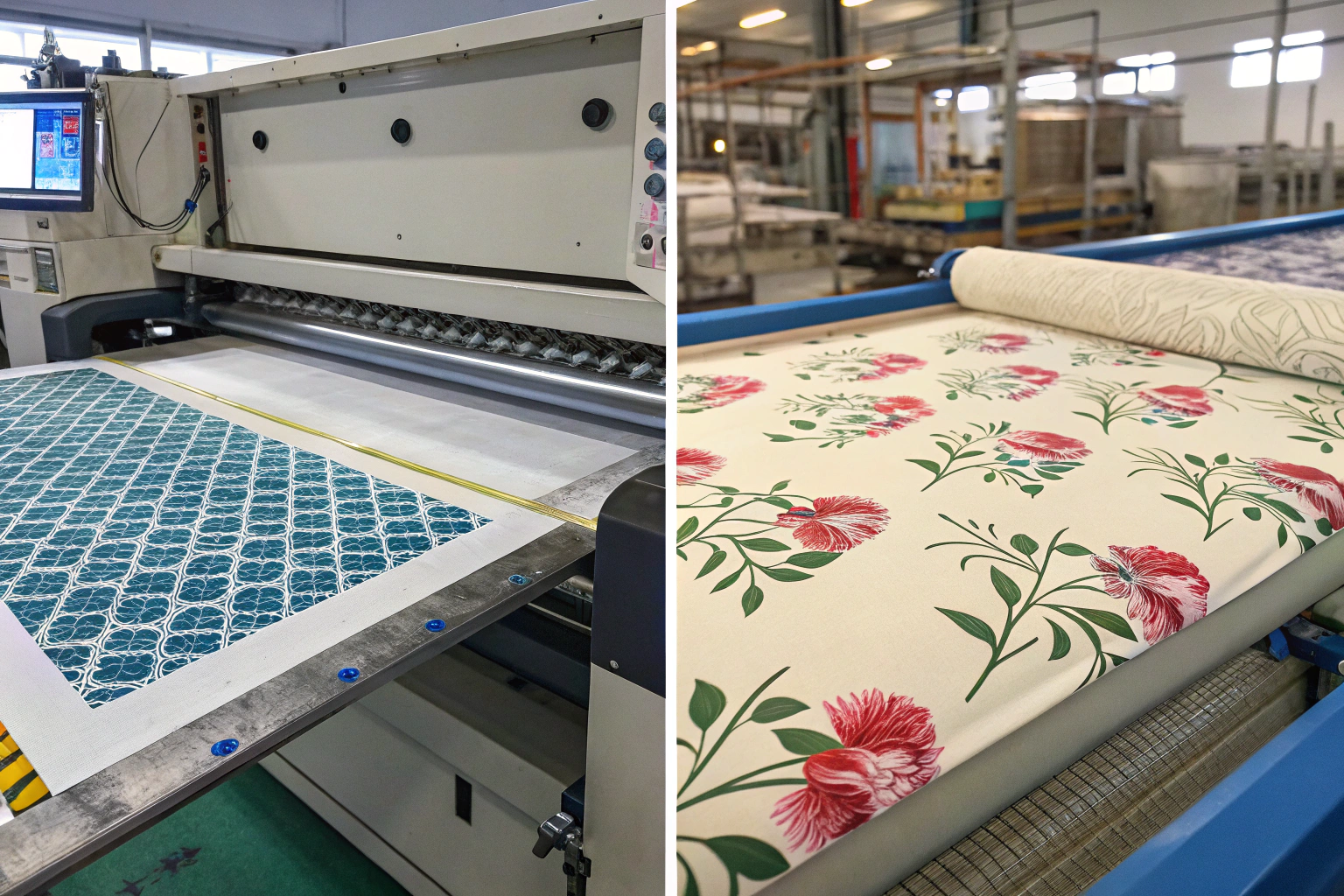
I’ve been in this industry long enough to know that printing is where a lot of projects go sideways.
You’ve got a beautiful design. You’ve sourced the perfect fabric. You send it to print. And then the phone call comes.
"Your registration is off." "The colors bled." "The pattern looks stretched and distorted."
I’ve been on both ends of that call more times than I want to admit.
Here’s what I’ve learned over 20 years of printing everything from cotton jersey to silk charmeuse to high-tech performance wovens: the question isn’t really which fabric is "easier" to print on. The question is which fabric is easier to print on for your specific design, your production volume, and your quality expectations.
Let me walk you through what I’ve learned from the thousands of printing jobs we’ve run through our two printing factories. I’ll tell you what works, what doesn’t, and how to make the right choice for your collection.
What Makes a Fabric "Printable" in the First Place?
Before we get into the knitted versus woven debate, I need to explain something fundamental.
A fabric isn’t just a surface you put ink on. It’s a structure. And that structure determines everything about how it prints.
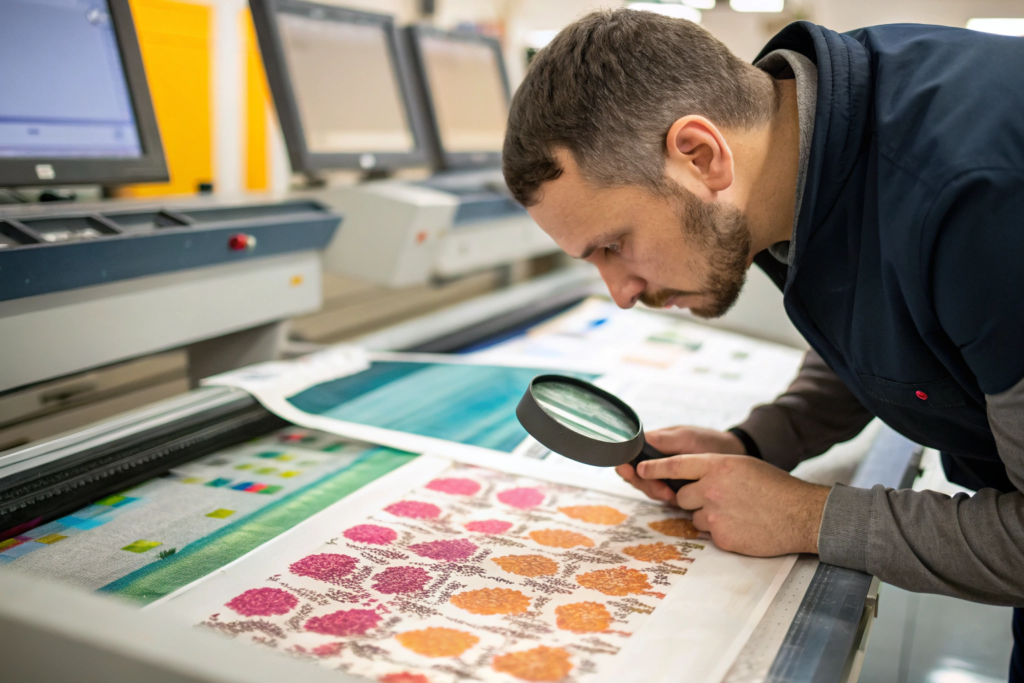
What’s Actually Happening When Ink Hits Fabric?
Let me break this down in practical terms.
When we print on fabric, we’re applying color to a three-dimensional structure. Yarns are twisted together, fibers are sticking out, spaces exist between the yarns. The ink or paste has to go somewhere.
On a woven fabric, the yarns are straight. They go over and under each other in a grid. It’s stable. It doesn’t move much. The spaces between the yarns are consistent.
On a knitted fabric, the yarns are looped. They’re connected to each other like a series of springs. When you pull on it, the loops shift. The spaces change. The whole structure moves.
This difference is the root of everything.
In 2022, we did a test for a US-based streetwear brand. They wanted to print the same design—a complex geometric pattern with fine lines and tight registration—on a cotton woven twill and a cotton jersey knit.
On the woven, the pattern was perfect. Sharp lines. Clean edges. No distortion.
On the knit, the pattern had to be adjusted. The fine lines needed to be thickened slightly because the ink spread more. The registration needed more tolerance because the fabric shifted during printing.
The woven was "easier" in terms of achieving the exact design. But the jersey sold three times as many units because it was more comfortable. So the question wasn’t which was easier to print. The question was which delivered the right balance of print quality and garment performance.
Why Does Fabric Stability Matter More Than You Think?
I’m going to give you a specific example from our factory.
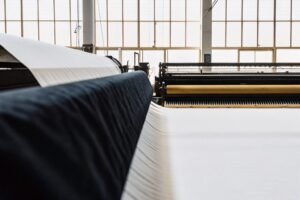
We run a lot of digital printing. And digital printing is amazing for small batches, complex designs, and quick turnaround. But digital printing has a specific requirement: the fabric needs to move through the printer on a flat, stable belt.
Woven fabrics? They glide through. They don’t stretch. The belt tension doesn’t distort them.
Knitted fabrics? They want to stretch. The belt tension pulls them. The fabric can narrow, the pattern can elongate, and suddenly your perfect design looks like it was printed on a piece of chewing gum.
We learned this lesson in 2023 with a Scandinavian children’s wear brand. They wanted a digital print on a cotton jersey for a line of t-shirts. The design was a cute animal illustration with lots of small details.
Our first run was a disaster. The fabric stretched on the printer belt. The animals looked elongated. The fine details blurred.
We had to adjust. We slowed the printing speed. We added a fabric feeding system that reduced tension. We printed a test on every roll before running the full batch.
The final prints were beautiful. But it took us twice as long as printing on a woven would have. And the cost per meter was higher because of the extra handling.
So when I say knitted fabrics are harder to print, I’m not saying it can’t be done. I’m saying it requires more skill, more equipment, and more attention to detail.
How Do Different Printing Methods Work on Knits vs. Wovens?
The printing method you choose is just as important as the fabric you choose. And the relationship between fabric and method is where a lot of printers get it right—or get it very, very wrong.
What’s the Best Printing Method for Knitted Fabrics?
Let me start with the method that works best for knits: rotary screen printing.
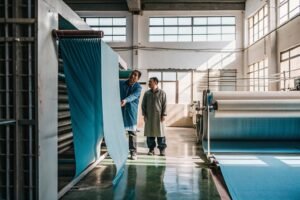
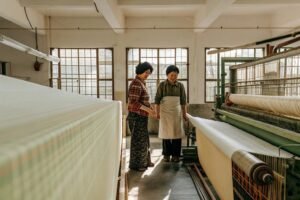
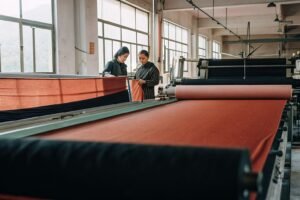
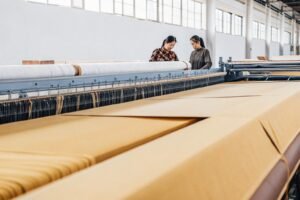
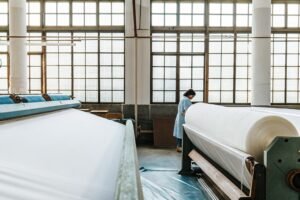
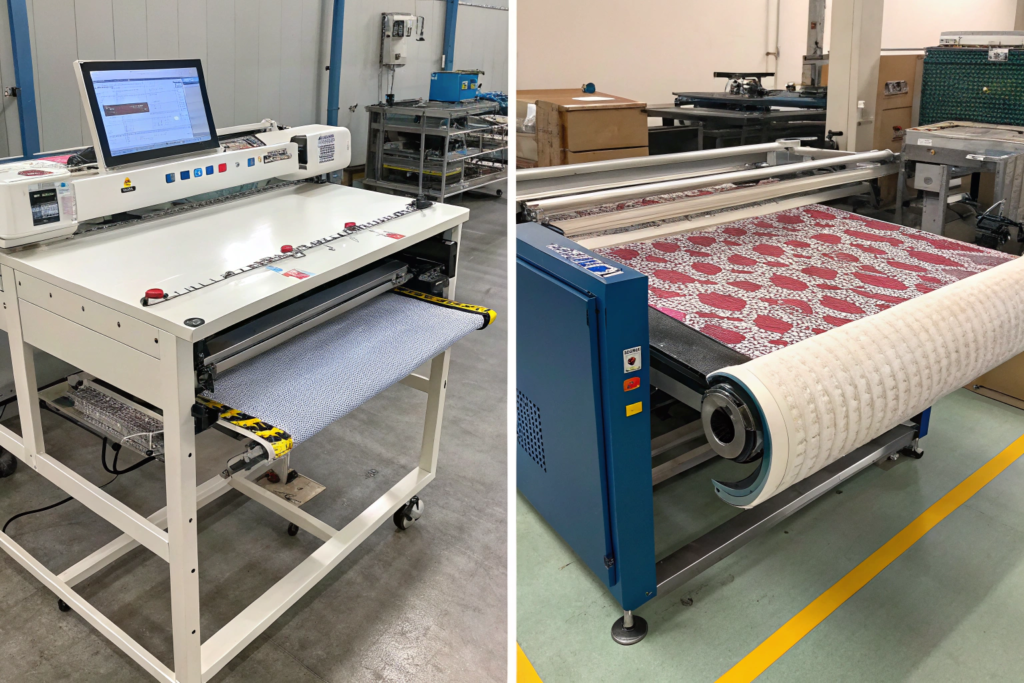
Rotary screen printing is the workhorse of the textile industry. It uses cylindrical screens that rotate against the fabric. The fabric is glued onto a continuous belt and moves under the screens at a consistent speed.
Why does this work for knits?
Because the fabric is supported by the belt. It doesn’t stretch. It doesn’t distort. The belt holds it flat and stable while the screens apply color.
We run a rotary screen printing line at our main printing factory. We print everything from cotton jersey for t-shirts to polyester spandex for activewear.
In 2024, we printed a 50,000-meter order of cotton-elastane jersey for a European fast-fashion brand. The design was a large-scale floral with four colors and fine detail registration. On rotary screens, it ran perfectly. The registration held. The color penetration was consistent. The speed was about 40 meters per minute.
For knits with spandex, rotary screen is usually the answer. The belt support eliminates the stretch problem. The continuous process handles large volumes efficiently.
Now, what about digital printing on knits?
Digital is getting better. The new generation of digital printers have specialized belt systems that minimize tension. Some have belt adhesives that hold the fabric in place without stretching.
But here’s what I’ll tell you honestly. For high-volume production on knits, rotary screen is still the most reliable. Digital is great for sampling, small runs, and designs with unlimited colors. But for consistency across thousands of meters, I choose rotary.
What’s the Best Printing Method for Woven Fabrics?
Wovens give you more options.
Flat screen printing is where wovens really shine.
Flat screen printing uses flat screens that are lowered onto the fabric, which is stretched on a long table or belt. The fabric doesn’t move. The screen is precisely aligned. For designs that require extremely sharp edges and tight registration, flat screen is the gold standard.
In 2023, we printed a collection of silk scarves for a French luxury brand. The fabric was a 16-momme silk chiffon—delicate, translucent, and expensive. The design had extremely fine lines and a gradient effect that required perfect registration.
We used flat screen printing. Each color was a separate screen. We printed one color, dried it, aligned the next screen, printed again. It was slow. We only did about 500 meters a day. But the quality was flawless. The fine lines were crisp. The registration was perfect.
That’s the trade-off with wovens. You can achieve higher precision, but it often requires slower, more controlled processes.
Digital printing on wovens is also excellent. Because wovens don’t stretch, they handle the digital printing process without special tension control. The pattern stays accurate. The registration is consistent.
We do a lot of digital printing on woven cotton, linen, and polyester blends for clients who need small batches or complex color designs. It’s fast, flexible, and produces excellent quality.
Let me give you a comparison table from one of our recent projects:
| Factor | Knitted Fabric (Cotton Jersey) | Woven Fabric (Cotton Twill) |
|---|---|---|
| Best Printing Method | Rotary Screen | Flat Screen or Digital |
| Registration Precision | Good, but requires allowance for fabric movement | Excellent, sharp edges possible |
| Color Penetration | Ink penetrates between loops, may show on back | Ink sits on surface or penetrates based on weave |
| Speed (meters/day) | 3,000-5,000 for rotary | 500-2,000 for flat screen, 2,000+ for digital |
| Stretch During Printing | High risk, requires tension control | Minimal risk |
| Cost per Meter | Lower for high volume | Higher for precision work |
How Do Fiber Content and Fabric Construction Affect Print Results?
The printing method is one part of the equation. But the fiber and how it’s constructed into fabric matter just as much.
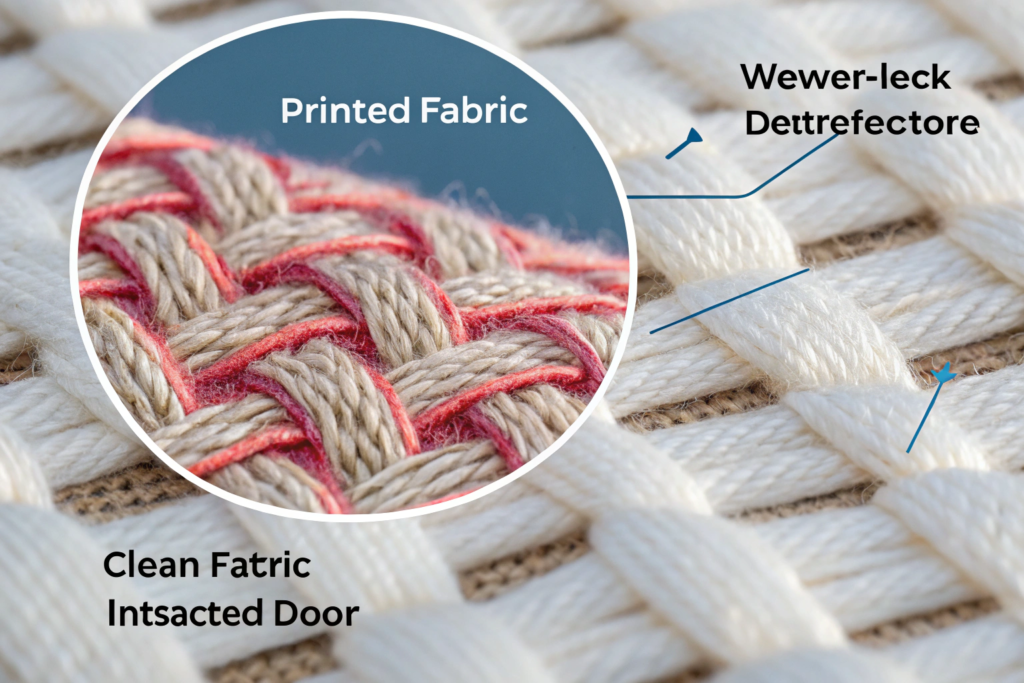
Why Does Cotton Print Differently Than Polyester?
Let me give you a chemistry lesson that every designer should understand.
Cotton is a natural fiber. It’s hydrophilic—it loves water. When we print on cotton, we use reactive dyes or pigment inks. The dye bonds with the cellulose structure of the cotton fiber. The result is vibrant, colorfast, and breathable.
Polyester is synthetic. It’s hydrophobic—it hates water. To print on polyester, we need disperse dyes. These dyes don’t bond with the fiber chemically. Instead, they’re heated until they open up the polyester molecular structure and diffuse into the fiber. It’s called dye sublimation for digital printing, or thermosol for screen printing.
Here’s where the knitted versus woven question gets interesting.
A cotton jersey knit prints beautifully with reactive dyes. The ink penetrates into the loops, and the result is soft with excellent color.
A cotton twill woven also prints beautifully with reactive dyes. But because the surface is flatter, the color appears more saturated and the pattern edges are sharper.
A polyester jersey knit—like the kind used for athletic wear—is usually printed with sublimation. The paper is printed with disperse dyes, then heat-pressed onto the fabric. The process works well on knits because the heat and pressure don’t distort the fabric significantly.
A polyester woven, like a taffeta or ripstop, also prints well with sublimation. But the flat surface gives a glossier, more technical look.
In 2024, we had a client from Australia who was launching a line of printed activewear. They wanted the same design on a polyester spandex knit for leggings and a polyester woven for outerwear shells.
We printed the knit with sublimation. The colors were bright, the stretch didn’t affect the print, and the leggings performed perfectly.
We printed the woven with sublimation as well. But the woven required higher heat and pressure to get the dye to penetrate properly. The result was a slightly glossier finish with more color saturation.
Same fiber, same printing method, different results because of the fabric construction.
What Happens When I Print on Stretch Fabrics?
This is where I see the most failures.
Stretch fabrics—whether knitted or woven with spandex—add a layer of complexity to printing.
When you print on a stretch fabric, you have to consider what happens when the fabric stretches during wear. The print needs to stretch with the fabric. If it doesn’t, it cracks.
For knitted stretch fabrics like cotton-spandex jersey or polyester-spandex athletic knits, we use specialized inks that have built-in stretch. Reactive dyes on cotton-spandex usually have good stretch because the dye bonds with the cotton fibers and the cotton itself stretches with the spandex.
For sublimation on polyester-spandex, the print stretches with the fabric because the dye is inside the fiber structure. This is one reason sublimation is so popular for activewear.
For woven stretch fabrics—usually cotton or polyester with a small percentage of spandex woven in—the stretch is less than knits. But the printing challenge is different. The spandex in woven fabrics can cause uneven dye uptake. The spandex fibers don’t take dye the same way as cotton or polyester, which can create subtle color variations.
In 2023, a US-based denim brand came to us. They wanted to print on a cotton-spandex stretch denim. The denim was a woven twill with 2% spandex.
We ran tests. The first tests showed subtle shading where the spandex fibers created slight differences in dye penetration. The color looked consistent until you held it at an angle, and then you could see variations.
We solved it by adjusting the dye formulation and increasing the dwell time in the steamer. The final prints were uniform. But it took us three test runs to get it right.
The lesson? Stretch fabrics require testing. Don’t assume your standard printing process will work. Run samples. Test the stretch. Make sure the print moves with the fabric, not against it.
How Do I Choose Between Knitted and Woven for My Printed Collection?
I’ve given you a lot of technical detail. Now let me help you make a decision.
The question isn’t which is "easier." The question is which is right for your specific project.
When Should I Choose Knitted Fabrics for Printing?
Choose knitted fabrics when:
1. Comfort is your primary requirement. If you’re making t-shirts, sweatshirts, leggings, or any garment that needs to move with the body, knits are the answer. The trade-off is that you may need to simplify your designs or accept slightly less sharpness in fine details.
2. You need high volume at lower cost. Rotary screen printing on knits is efficient. For large runs of t-shirts or basic apparel, knits give you the best balance of quality and cost.
3. Your design is bold and graphic. Large blocks of color, simple geometric patterns, and designs that don’t require extreme fine detail work beautifully on knits. The fabric movement during printing won’t ruin a bold graphic the way it might ruin a delicate floral.
In 2024, we printed 100,000 meters of cotton jersey for a US-based streetwear brand. Their designs were large, bold logos and graphics. Rotary screen printing on jersey was perfect. The colors were vibrant, the production was fast, and the final garments were exactly what they wanted.
When Should I Choose Woven Fabrics for Printing?
Choose woven fabrics when:
1. Precision is critical. If your design has fine lines, small text, or complex registration requirements, wovens give you the control you need. Flat screen printing on a stable woven base will deliver the sharpest possible result.
2. You need a structured garment. Shirts, jackets, pants, and tailored garments are usually made from wovens. If your printed fabric needs to hold a shape rather than drape, wovens are the choice.
3. You’re using natural fibers for luxury applications. Silk, linen, and high-end cotton wovens print beautifully and command premium prices. The slower, more precise printing processes add value that your customers will recognize.
In 2023, we printed a collection of silk shirts for a European luxury brand. The fabric was a 19-momme silk charmeuse—slippery, delicate, and expensive. The design was a small, intricate floral pattern with multiple colors and fine detail.
We used flat screen printing. It was slow. It was expensive. But the result was stunning. The shirts retailed for over $500 each, and they sold out.
Conclusion
So, knitted fabric versus woven fabric: which is easier to print on?
The honest answer is that wovens are technically easier to print on if your only measure is achieving the sharpest, most precise reproduction of your design. The stability of wovens gives you more control, sharper edges, and less risk of distortion.
But that’s not the whole story.
Knitted fabrics are what your customers want to wear. They’re comfortable. They’re versatile. They sell. And with the right printing method—usually rotary screen with proper tension control—they can deliver excellent print quality that meets the needs of most commercial applications.
What I’ve learned from 20 years in this industry is that the best results come from matching the fabric to the design and the printing method to the fabric.
If you’re designing a t-shirt with a bold graphic, a cotton jersey printed with rotary screens is going to be your best combination of quality, cost, and comfort.
If you’re designing a tailored shirt with a fine, intricate pattern, a cotton poplin or twill printed with flat screens is going to deliver the precision you need.
At Shanghai Fumao, we do both. We run two printing factories. We have rotary screens, flat screens, and digital printers. We print on everything from cotton jersey to silk charmeuse to polyester spandex to linen blends.
And what we’ve learned is that every project is different. The best approach is to test. Run samples. See how your design looks on different substrates. Adjust your design if needed. Choose the printing method that matches your volume and quality requirements.
If you’re working on a printed collection and you’re not sure whether knits or wovens are the right choice, I invite you to reach out.
Let’s talk about your design. Let’s run some samples. Let’s find the combination that gives you the print quality you need and the garment performance your customers expect.
Ready to print your next collection? Contact our Business Director, Elaine, directly at elaine@fumaoclothing.com. She’ll help you navigate the options, run test samples, and choose the right fabric and printing method for your designs.