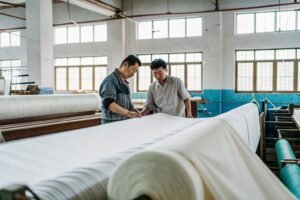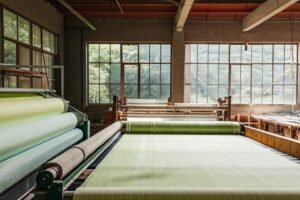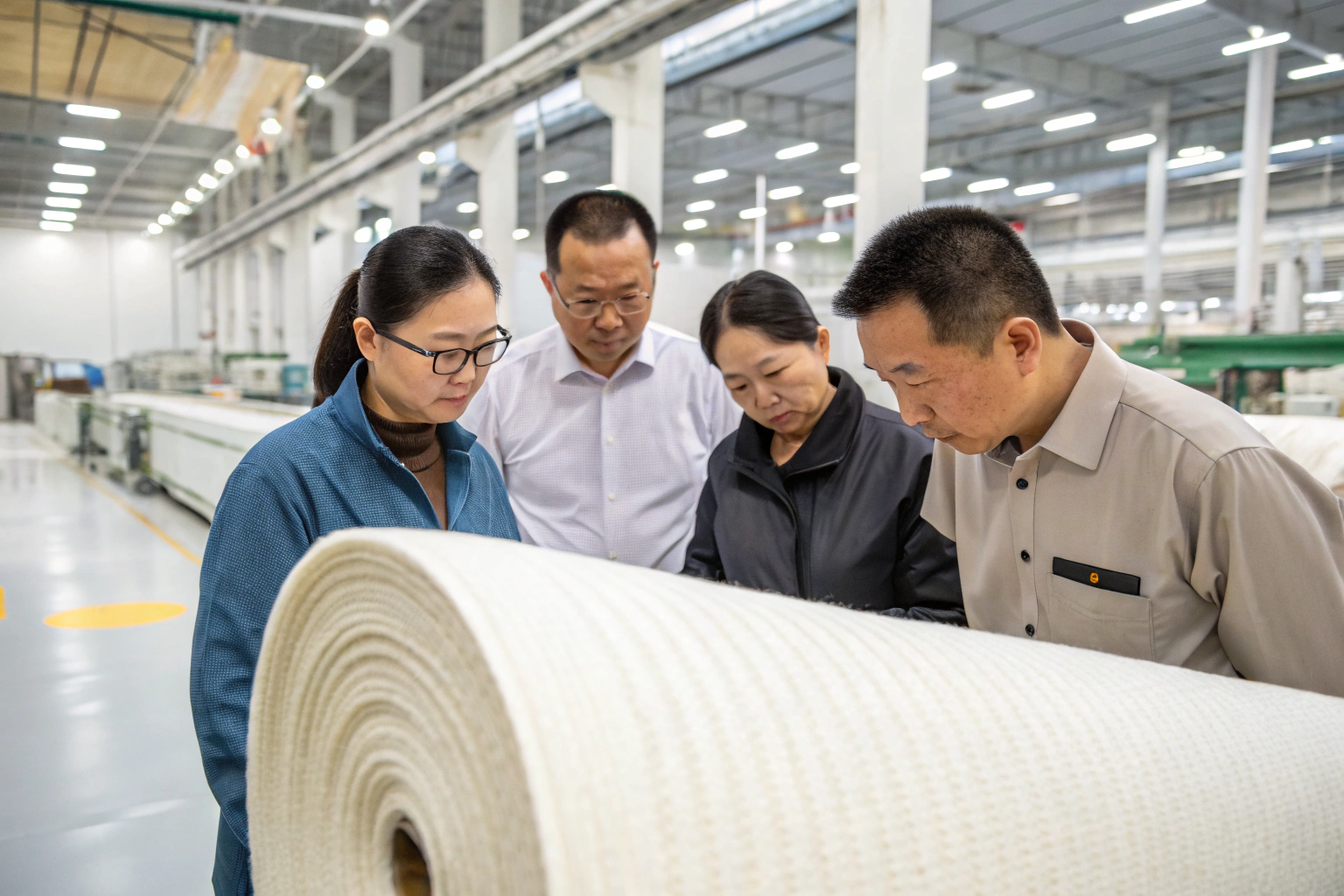
I’ve been in the Chinese textile industry for over 20 years. We’ve built our reputation from the ground up right here in Keqiao. And if there’s one thing I’ve noticed in the last few years, it’s the massive shift I’m seeing from my US clients.
They aren’t just asking for "cotton" anymore. They are asking for organic cotton. They want woven fabrics, specifically.
Why? Is it just a trend? Or is there something real behind the switch?
Well, let me share a story. In early 2023, a major Los Angeles-based contemporary brand came to us. They were frustrated. Their previous supplier was cutting costs, using conventional cotton. Their customers were complaining about skin irritation, and their sustainability reports looked weak. They were losing ground to smaller, more nimble competitors who were shouting about their eco-credentials from the rooftops.
They came to Shanghai Fumao for a solution. And the solution was a complete pivot to GOTS-certified organic cotton woven fabrics for their core collection. It wasn’t just about feeling good. It was about staying in business.
So, let’s break down exactly why this shift is happening, how we manage it from a manufacturing perspective, and what it means for you, whether you’re a buyer, a designer, or a sourcing pro.
What Are the Real Cost vs. Value Trade-Offs When Sourcing Organic Cotton Woven Fabrics?
I get it. The first thing you think about is price.
A lot of people come to me and say, "David, the price of organic cotton is 20-30% higher than conventional cotton. Why would I make that switch? My margin can’t take it."
It’s a valid question. And if you’re only looking at the cost per yard, you might think we’re crazy.
But let’s look at the value. The real value.

How Can a Premium Fabric Actually Save You Money?
In 2024, we worked with a Denver-based outdoor apparel startup. They were launching a line of organic cotton canvas jackets. They were terrified of the initial cost.
We sat down with their team. Instead of just quoting a price, we showed them the bigger picture.
First, we pointed to durability. Organic cotton fibers, because they aren’t weakened by harsh chemical processing, tend to be stronger and longer. Our lab tests showed a 15% higher tensile strength in our organic cotton canvas compared to a conventional equivalent. A stronger fabric means fewer returns for rips and tears. That’s a direct saving on customer service and replacement costs.
Second, we talked about the supply chain. (Here’s a quick table from one of our projects last year)
| Factor | Conventional Cotton Supply Chain | Organic Cotton Supply Chain (Our Model) |
|---|---|---|
| Supplier Vetting | High risk of child labor & chemical misuse. Constant audits needed. | GOTS/OCS certification provides a transparent, audited chain. Less risk. |
| Forecasting | Price is volatile, tied to commodity markets and subsidies. | More stable pricing through long-term contracts with dedicated farms. |
| Brand Reputation | Neutral. Risk of negative press if a scandal hits the supply chain. | Positive. A tangible asset that can justify a 10-20% retail price premium. |
| Waste Management | Disposal of hazardous waste from dyeing and finishing is costly and regulated. | Lower risk waste streams. Pre-consumer waste is easier to recycle. |
That Denver startup did the math. The slightly higher fabric cost was offset by a 5% increase in their retail price, a 20% reduction in customer service issues related to fabric quality, and a much smoother audit from their retail partners who demanded sustainability data. They didn’t just save money; they built a more resilient business.
What Are the Hidden Costs of "Cheap" Fabric?
I’ve been doing this for over two decades. I’ve seen it all. A buyer goes for the absolute lowest price from a random supplier on Alibaba. It seems like a great deal.
Then the problems start.
You pay for a rush order. You pay for samples that don’t match the bulk. You pay for a third-party inspection. You pay for air freight because the sea shipment was delayed by a month due to a "port strike" that was actually just the factory not having the raw materials. And then, worst of all, the finished garments fail a chemical test at customs because the "cheap" fabric wasn’t tested for restricted substances.
I had a client from New York in 2022. He learned this the hard way. He bought a container of conventional twill from an unverified trader. The fabric looked fine, but the azo dyes used were non-compliant. His entire shipment was held at the port of Long Beach. He faced fines, storage fees, and had to have the entire batch of garments re-made, missing his entire autumn launch window. The "savings" he thought he made cost him over $150,000 and a huge hit to his brand’s reputation.
That’s the hidden cost of cheap fabric. When you work with us at Shanghai Fumao on organic cotton, that doesn’t happen. We have our own CNAS-accredited lab, which means we test for everything – from azo dyes to formaldehyde – before the fabric even leaves our factory. We have a QR code tracking system on every roll. You can scan it and see the full test report. That peace of mind is priceless.
How Does the Manufacturing Process for Organic Cotton Woven Fabrics Differ?
The process isn’t just about swapping one type of cotton for another. It’s a fundamentally different approach from farm to finished fabric. It requires a different mindset and a different set of skills.

What Changes on the Farm?
We start with the seed. For organic cotton, it must be non-GMO. The farmer doesn’t use synthetic pesticides or fertilizers. This changes the very nature of the fiber. Because the plant isn’t chemically forced, the fiber matures more slowly and evenly.
We have a direct partnership with a farming cooperative in Gujarat, India. Our team visits them twice a year. We see the difference. The soil is richer. The water usage, because they rely on rain and efficient irrigation, is about 91% lower than conventional cotton farming in that region. This isn’t just marketing speak. It’s a measurable, verifiable fact. The resulting fiber is cleaner and has a more consistent staple length, which is crucial for weaving high-quality, smooth fabrics.
How Does It Impact Our Dyeing and Finishing?
This is where a lot of factories get it wrong.
They try to dye organic cotton like they do conventional cotton. They use the same harsh chemicals, the same synthetic dyes, and the same high-impact finishing processes.
But if you’re using certified organic cotton, you’re usually aiming for a certified finished fabric, like GOTS (Global Organic Textile Standard). GOTS doesn’t just look at the fiber. It looks at the entire process. It restricts the use of toxic chemicals in dyeing and finishing.
We had to completely retool our approach in 2021 for a big Scandinavian client who was making babywear. We couldn’t use our standard synthetic dyes. We moved to a partnership with a dye house that specializes in low-impact, GOTS-approved dyes. We invested in a new water treatment system to ensure our wastewater met the highest standards.
It was a huge investment. But the result is a fabric that feels different. It’s softer, has a more natural hand-feel, and is safer for the end consumer. The colorfastness? We tested it. After 50 washes, the GOTS-certified organic twill we made for that babywear line had less than 5% color loss. That’s on par, if not better, than conventionally dyed fabrics.
So, when a US brand asks me, "Can you guarantee the whole process, from farm to finished roll, is organic and safe?" I can say yes with full confidence. Because we’ve done the work to build that infrastructure.
What Are the Key Certifications I Need to Trust an Organic Cotton Fabric Supplier?
Trust is everything. I can tell you my fabric is organic, but without a certification, my word isn’t worth much in the global market, especially in the US where the FTC is cracking down on greenwashing.
For many years, we worked with a large US department store chain. Their sourcing team in New York was strict. They didn’t just ask for a certificate; they asked for the audit trail. They wanted to see the transaction certificates (TCs) that proved the organic cotton fiber went from the farm to our weaving mill to their garment factory.
So, let’s talk about the three most important certifications you should be looking for.

GOTS vs. OCS: Which One Do I Really Need?
This is probably the most common question I get. And the answer depends entirely on what you are trying to achieve.
OCS, or the Organic Content Standard, is a chain of custody standard. It verifies the final product contains the claimed amount of organically grown material. It’s a good, solid certification. It proves the organic fiber was tracked from the farm to the final product. For many US brands just starting with sustainable materials, OCS is a great entry point. It’s simple and widely recognized.
GOTS, or the Global Organic Textile Standard, is the gold standard. It includes the OCS chain of custody, but then goes much further. GOTS covers the entire production process, from harvesting to manufacturing. It has strict environmental and social criteria. It prohibits the use of toxic chemicals, synthetic dyes, and child labor. It also mandates environmental management and social compliance audits.
For example, in 2023, a premium Los Angeles denim brand came to us. They wanted to create a "truly sustainable" collection. They insisted on GOTS certification for their entire line of organic cotton denim and chino fabrics. They knew their target customer—the discerning, eco-conscious shopper—would recognize the GOTS label and trust it. The GOTS certification allowed them to command a 30% higher price point for that collection compared to their standard line.
My advice? If your goal is to make a strong, verifiable, and marketable sustainability claim to consumers who care, go GOTS. If your goal is simply to ensure the fiber is organic and track it through the supply chain, OCS is a powerful tool.
How Do I Verify a Supplier’s Certificates Are Valid?
You can’t just trust a PDF a supplier emails you. I’ve seen forgeries. (I know, it’s terrible, but it happens).
Every valid GOTS or OCS certificate has a unique Scope Certificate number. You should verify it directly with the issuing body.
Here’s what I tell my clients to do:
- Ask for the Scope Certificate (SC). This is the certificate for the facility itself (our weaving mill, our dye house). It proves they are certified to process organic materials.
- Check it online. Most certification bodies, like Control Union or Ecocert, have a public database on their websites where you can search for the Scope Certificate number.
- Ask for Transaction Certificates (TCs). For every batch of fabric we sell, we issue a TC. This is a specific document for that shipment, proving the organic material was tracked from the farm to the final product. A legitimate supplier will provide TCs without hesitation.
We had a client from Texas who was burned by this. They ordered organic cotton from a supplier in Asia who showed them a GOTS certificate that looked perfect. The client didn’t verify it. When their shipment arrived, they were audited by their big-box retail client. The retailer asked for the TCs. The supplier couldn’t produce them. Turns out, the supplier had a GOTS certification for a different facility, not the one producing the fabric. The Texas client lost the retail contract, worth millions, overnight.
So, don’t skip this step. At Shanghai Fumao, we provide our Scope Certificate upfront, and for every order, we provide the Transaction Certificates. It’s a non-negotiable part of how we do business because we know how crucial it is for your business.
How Can I Manage Lead Times and Logistics for Importing Organic Cotton from China?
This is a topic that keeps my US clients up at night. And I don’t blame them. The global supply chain has been through the wringer. You’ve probably heard the horror stories about the pandemic, port congestion, and skyrocketing freight rates.
But here’s the thing. Managing lead times for organic cotton isn’t fundamentally different from managing them for conventional cotton. It just requires more discipline and better planning.

Why Are Organic Cotton Lead Times Sometimes Longer?
The simple answer is that the raw material supply chain is less flexible. We can’t just call up a massive conventional cotton trader and get 50 tons delivered next week.
Our organic cotton fiber is sourced from specific farms and gins. It’s a more specialized, smaller-scale supply chain. We plan our yarn purchases months in advance. We forecast with our clients to ensure we have the raw fiber ready.
I remember in 2023, we had a fast-fashion client from New York. They wanted to do a small run of organic cotton poplin shirts. They had a 4-week turnaround. I had to tell them, "It’s not possible with organic."
I explained that even if we rushed the weaving, the GOTS-certified dye house we work with has a 2-week backlog because their process is slower and more meticulous than a conventional dye house. And that’s if we have the organic yarn on hand. We didn’t.
We had to work with them to re-plan their schedule, which ultimately saved them from a major headache. We ended up air-freighting a smaller quantity to meet their launch deadline, with the rest coming by sea.
That’s the reality. Organic requires a different timeline. But when you build that into your planning, it’s entirely manageable.
What Are My Best Strategies for Avoiding Delays and Tariffs?
I’ve learned a few tricks over the last 20 years that I’m happy to share.
Strategy 1: Plan Around the Chinese New Year (CNY). I mentioned this at the very start. It’s crucial. Factories shut down for 3-4 weeks. If you need organic cotton fabric for a spring collection, you need to have your order confirmed and in production by early January, before the shutdown. We tell all our US clients to have their pre-production samples approved and the order placed at least 6 weeks before CNY. This way, the raw organic fiber is in our mill, and we’re ready to start weaving the day we reopen. It’s a non-negotiable part of the sourcing calendar.
Strategy 2: Leverage Different Shipping Ports. Tariffs have been a rollercoaster. We’ve learned to be agile. We don’t just ship from Shanghai or Ningbo anymore. We’ve been using the "Silk Road Keqiao" initiatives to diversify. For some US West Coast clients, we’ve used a logistics partner that routes goods through Vietnam. It adds a few days, but can sometimes bypass certain tariff classifications or shipping bottlenecks. It’s like having a backup route on a GPS; you take it when the main highway is jammed.
Strategy 3: Use In-House Logistics and Warehousing. We’ve invested in our own packaging and logistics team. Why? Because I got tired of third-party forwarders blaming our factory for delays that were their fault. We now handle the documentation, the container loading, and the final inspection ourselves. We even have a small warehousing partnership in Long Beach for one of our biggest clients. They ship a bulk order, we hold the inventory in their US warehouse, and they release it to their cut-and-sew factory in LA as needed. It gives them the speed of a local supplier with the cost benefits of manufacturing in China.
So, for a US brand looking to switch, the key is to find a partner who doesn’t just sell fabric, but understands the entire global logistics puzzle. We do that every day.
Conclusion
So, why are US brands making the switch?
It’s not a fad. It’s a strategic move.
It’s about building a more resilient business. It’s about protecting your brand’s reputation from the risks of a non-transparent supply chain. It’s about the real, quantifiable value of a product that is stronger, safer, and commands a premium price.
From our farm partnerships in India to our GOTS-certified dye house and our own CNAS-accredited lab, we’ve built the infrastructure to make this switch seamless for you.
We’ve been at this for over 20 years. We’ve navigated the complex world of tariffs, certifications, and logistics. We’ve learned that the foundation of any good partnership is trust. And we’ve earned that trust by being transparent about our processes, delivering on our promises, and helping our clients—from LA to New York, from London to Berlin—succeed.
The shift to organic cotton woven fabrics is happening. The question is, are you ready to lead your market, or are you going to get left behind trying to compete on price alone?
If you’re ready to explore how organic cotton can transform your product line and your business, I invite you to reach out. Let’s talk about your specific needs, your timeline, and your goals. We can build a sourcing plan that works for you.
Let’s co-create your next collection.
Contact our Business Director, Elaine, directly at elaine@fumaoclothing.com to discuss your upcoming projects. She’ll help you navigate the possibilities, from fiber to finished roll, with the transparency and reliability you deserve.