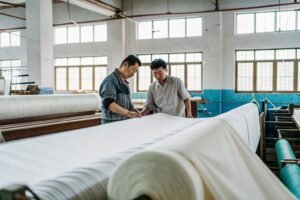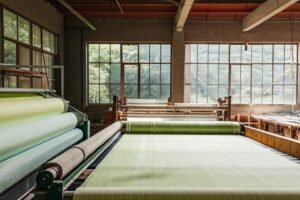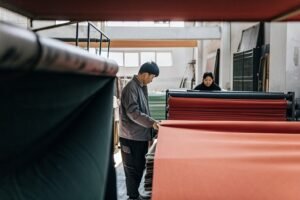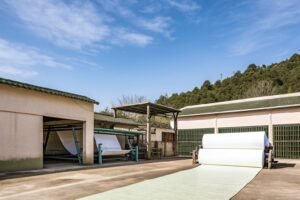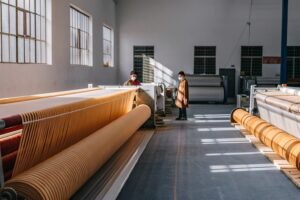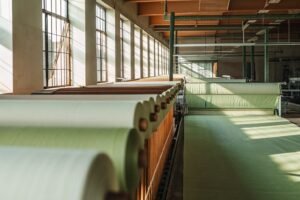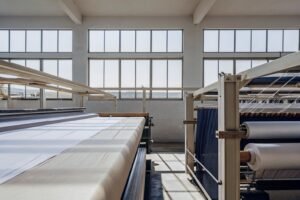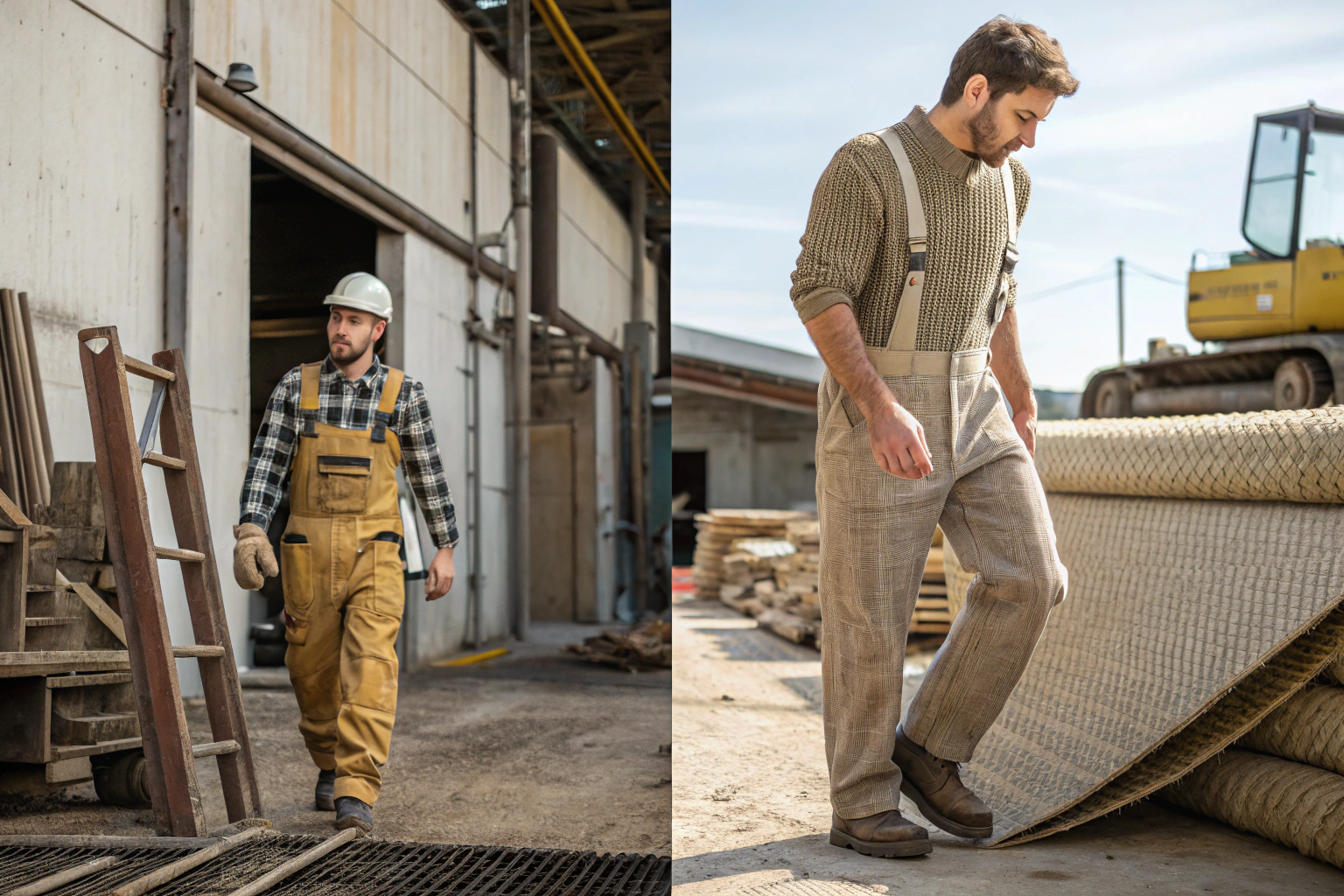
I’ve supplied fabrics for workwear for over two decades, and I’ve seen every possible failure mode. I’ve seen knit uniforms bag out after three months, leaving workers looking sloppy and unprotected. I’ve seen woven fabrics outlast their expected life by years, saving companies thousands in replacement costs. The difference isn’t accidental—it’s fundamental to how these fabrics are constructed.
Here’s the straightforward answer: woven fabrics perform better for workwear because their construction provides superior durability, abrasion resistance, dimensional stability, and protective properties. The interlaced structure creates a fabric that stands up to the demands of physical work in ways that knits simply cannot match.
Let me walk you through exactly why wovens dominate workwear applications, what specific properties matter for different jobs, and how to select the right woven fabric for your workwear needs.
What Structural Properties Make Wovens More Durable?
The durability of wovens starts with their fundamental construction.
The interlaced structure creates stability. In a woven fabric, warp yarns run the length and weft yarns run the width, crossing at right angles and locking together. This grid distributes stress across multiple intersections. When pressure is applied, it’s shared among many yarns rather than concentrated on individual loops as in knits.
Abrasion resistance follows from this stability. The tight, flat surface of a woven distributes rubbing forces across the fabric. Yarns are protected by their neighbors. In a knit, the raised loop structure presents individual yarns to abrasion. Those loops wear down faster, leading to thinning, pilling, and eventual holes.
Tear strength is inherently higher in wovens. When a tear starts, it must break multiple interlaced yarns to propagate. The structure resists tearing. In knits, a single broken loop can "run" along a course, creating a ladder that grows rapidly.
Seam strength benefits from woven stability. Seams in woven fabrics hold securely because the fabric doesn’t distort around stitches. In knits, seams can pucker or stretch, and the fabric can "grin" (show white at the seams) when stretched.
A German workwear manufacturer tested both constructions for their mechanic pants. The woven fabric averaged 18 months before showing wear; the knit alternative lasted 4 months. The choice was obvious.

How Does Abrasion Resistance Differ Between Constructions?
Abrasion resistance is measured in cycles on a Martindale tester. The numbers tell the story.
Lightweight woven work shirts (poplin, twill) typically achieve 20,000-30,000 cycles. Heavy-duty woven pants (canvas, denim) reach 50,000-100,000 cycles. Some industrial grades exceed 200,000 cycles.
Knit workwear fabrics (pique polos, jersey tees) typically achieve 10,000-20,000 cycles. Heavy-duty knits may reach 25,000-30,000, but at the cost of weight and comfort that approaches woven territory.
The practical difference: a woven work shirt might last two years in an office-adjacent role. A knit polo in the same role might last one year. In physically demanding jobs, the gap widens further.
For context, a typical office chair exerts about 5,000-10,000 cycles of abrasion per year on a garment’s seat area. A delivery driver might experience 20,000+ cycles from getting in and out of vehicles. The numbers align with real-world experience.
A Swedish logistics company switched from knit polos to woven shirts for their warehouse staff. Uniform replacement frequency dropped from every 8 months to every 22 months. The savings paid for the higher initial cost many times over.
Why Do Wovens Hold Their Shape Better?
Dimensional stability is critical for workwear that needs to look professional and fit properly over time.
Wovens resist stretching because the interlaced yarns lock together. Under tension, the yarns themselves may stretch slightly, but the structure maintains its dimensions. When tension releases, the fabric returns to its original shape.
Knits stretch more easily because the loops can deform. This gives comfort but also means the fabric can "grow" over time. Elbows bag out, knees sag, waistbands stretch. Even with spandex, knits eventually lose recovery.
Wovens resist shrinkage better when properly finished. Sanforized (pre-shrunk) woven fabrics typically shrink less than 2% after multiple washes. Knits, even when compacted, may shrink 3-5%—enough to affect fit.
Wovens hold creases and pleats. For workwear that needs a professional appearance—pressed trousers, crisp shirt fronts—wovens are essential. Knits won’t hold a crease.
A Canadian railway company requires all uniform trousers to be 100% cotton twill. They’ve found that knit alternatives stretch out during long shifts, creating safety hazards from loose fabric. Wovens maintain their fit shift after shift.
What Protective Properties Do Wovens Offer?
For many workwear applications, protection is as important as durability.
Flame resistance requires fabric that won’t melt or continue burning. While both wovens and knits can be made from FR fibers, wovens provide better barrier protection. The tight construction prevents flames from penetrating to skin. FR-treated cotton twill is the industry standard for good reason.
Chemical resistance depends on fabric density. A tightly woven fabric provides better barrier against splashes and particulates than a knit with its open loop structure. For chemical handling, woven fabrics with special finishes are essential.
UV protection is higher in dense wovens. The tight construction blocks more UV radiation than open knits. For outdoor workers, a woven shirt provides better sun protection than a knit polo of the same fiber.
High-visibility requirements often specify woven fabrics for their color retention and durability. The fluorescent dyes used in hi-vis wear hold better on woven substrates, and the fabric maintains its appearance through repeated washing.
Cut resistance can be engineered into both constructions, but wovens offer more predictable performance. The grid structure provides consistent cut protection, while knits may have weak points where loops can separate.
A French petrochemical company specifies only woven FR coveralls. They’ve tested knit alternatives and found that the protective properties degrade faster with wear and washing. Woven FR outlasts knit FR by 3x.

How Do Wovens Handle Extreme Temperatures?
Temperature extremes challenge both fabrics, but wovens respond better.
Heat resistance in wovens comes from stability. A woven fabric exposed to high heat maintains its structure. Knits may shrink, distort, or lose recovery, compromising fit and protection.
Cold weather performance favors wovens for wind resistance. A tightly woven fabric blocks wind better than a knit, which allows air movement through the loop structure. For outdoor winter work, woven outer layers are essential.
Insulation can be added to both, but wovens provide better shell properties. A woven outer fabric with a knit lining combines the best of both—woven durability outside, knit comfort inside.
Moisture management differs. Wovens can be engineered with breathable membranes for waterproof protection. Knits alone won’t stop water penetration, though they can be laminated to membranes.
A Norwegian offshore oil platform requires all crew to wear woven FR workwear with windproof and water-resistant properties. Knits wouldn’t provide adequate protection in that environment.
What About Static Dissipation for Hazardous Environments?
Static control is critical in many industrial settings.
Woven fabrics can be engineered with conductive fibers integrated into the structure. The grid pattern allows for consistent static dissipation paths. Carbon or metal fibers are woven at regular intervals, creating reliable grounding.
Knits can also incorporate conductive fibers, but the loop structure creates less predictable paths. Static may not dissipate as consistently, especially as the fabric stretches and recovers.
For explosive environments (chemical plants, grain handling), woven static-dissipative fabrics are the standard. The predictable performance justifies the choice.
A US chemical manufacturer requires all maintenance workers to wear woven static-dissipative coveralls. They’ve tested knits and found unacceptable variability in performance.
How Do Different Work Environments Demand Different Wovens?
Not all wovens are the same. The right choice depends on the work.
For industrial and construction work, heavyweight wovens dominate. Cotton canvas (10-12 oz) and denim (12-14 oz) provide maximum abrasion resistance. Twill weaves add durability while maintaining some flexibility. These fabrics are built to survive concrete, tools, and rough surfaces.
For healthcare environments, lighter wovens serve different needs. Cotton or cotton-polyester twill in 6-7 oz weights provides durability with comfort for long shifts. The woven structure holds up to frequent laundering better than knits, maintaining appearance through dozens of wash cycles.
For hospitality and front-of-house, appearance matters as much as durability. Polyester-viscose blends in 8-9 oz weights offer wrinkle resistance and shape retention. The woven construction holds creases and maintains a crisp professional appearance throughout long shifts.
For transportation and logistics, mid-weight wovens balance durability and comfort. Cotton-polyester blends in 7-8 oz weights provide good abrasion resistance with breathability for active workers. The dimensional stability ensures uniforms fit properly shift after shift.
A hotel chain uses three different woven fabrics for their staff: heavy twill for maintenance, mid-weight poly-viscose for front desk, and lightweight cotton for housekeeping. Each matches the demands of the role.

What Weight Wovens Work Best for Different Roles?
Weight selection affects both protection and comfort.
Lightweight (4-6 oz) works for office-adjacent roles where appearance matters more than abrasion resistance. Executive shirts, receptionist uniforms, light-duty roles. These fabrics are comfortable for all-day wear but won’t survive rough conditions.
Mid-weight (6-8 oz) serves most active roles. Warehouse workers, delivery drivers, technicians. Good balance of durability and comfort. A 7 oz cotton twill will outlast a 5 oz version by years while still being comfortable enough for daily wear.
Heavyweight (8-12 oz) for demanding environments. Construction, manufacturing, outdoor work. These fabrics resist abrasion and provide protection but are less comfortable in hot conditions. They’re essential where the work requires it.
Ultra-heavy (12+ oz) for extreme conditions. Welders, foundry workers, heavy industrial. These fabrics are built for maximum protection, not comfort. They’re hot and stiff but necessary.
A German automotive plant issues different weight uniforms to different departments. Office staff get 6 oz; production line gets 8 oz; maintenance gets 10 oz. Each gets appropriate protection without over-engineering.
How Do Blends Enhance Woven Workwear Performance?
Fiber blending optimizes performance for specific needs.
Cotton-polyester blends combine comfort with durability. The cotton provides breathability and natural feel; polyester adds strength and wrinkle resistance. The classic 65/35 poly-cotton blend is the workhorse of industrial uniforms for good reason.
Cotton-nylon blends add exceptional abrasion resistance. Nylon is stronger than polyester and resists abrasion even better. For the toughest applications, cotton-nylon (typically 75/25 or 60/40) outperforms all-cotton significantly.
Cotton-spandex blends add stretch for mobility. A small percentage of spandex (2-4%) transforms a rigid woven into a fabric that moves with the worker while maintaining durability. For roles requiring bending and reaching, this is transformative.
FR blends (modacrylic-cotton, aramid blends) provide flame resistance with comfort. These specialized fabrics meet safety standards while being wearable for full shifts.
A UK logistics company switched from 100% cotton to 65/35 poly-cotton for their driver uniforms. The new uniforms last twice as long, resist wrinkles better, and cost only 15% more. The ROI was obvious.
What Maintenance Advantages Do Wovens Offer?
Workwear gets washed frequently—often weekly, sometimes daily. Maintenance requirements differ dramatically between constructions.
Industrial laundering compatibility favors wovens. The stable structure withstands the aggressive action of commercial washers better than knits. Woven fabrics maintain their dimensions and appearance through dozens of industrial wash cycles.
Stain removal is more effective on wovens. The smooth surface releases stains more readily than knit loops that can trap soils. For food service and healthcare, this matters enormously.
Wrinkle recovery in properly finished wovens is excellent. Resin-treated cotton or poly-cotton blends can be tumble-dried and worn without ironing. Knits wrinkle less initially but may require more care to maintain appearance over time.
Color retention varies but well-dyed wovens hold color through repeated washing. The stable structure means less fiber movement, so less dye loss. Dark uniforms stay dark longer.
A Canadian healthcare network tested both woven and knit scrubs in their industrial laundry. The wovens lasted 50 washes before showing significant wear; the knits averaged 30. The wovens also looked crisper throughout their life.

How Do Wovens Handle Industrial Laundering?
Industrial laundering is brutal on fabrics—high heat, aggressive chemicals, mechanical action.
Wovens resist the mechanical action better because the structure is stable. The interlaced yarns don’t shift and abrade as much as knit loops under agitation.
Chemical resistance depends on fiber. Polyester blends resist bleach and alkaline detergents better than cotton. For uniforms that must be sanitized, higher polyester content extends life.
Heat tolerance matters for drying. Wovens can withstand higher drying temperatures without distorting. Knits may shrink or lose recovery when over-dried.
The combination means woven uniforms can survive 50-100 industrial washes while maintaining appearance. Knits might need replacement after 25-50 washes.
A US food processing plant requires all uniforms to be at least 65% polyester for industrial laundering durability. Their woven uniforms average 18 months of life; previous knit uniforms lasted 8 months.
What Care Instructions Extend Woven Workwear Life?
Even durable wovens last longer with proper care.
Follow wash temperature guidelines. Hot water cleans but can shrink cotton. Follow recommendations based on fiber content.
Avoid over-drying. Remove from dryer while slightly damp to reduce heat exposure and make ironing easier (if needed).
Use appropriate detergents. Harsh chemicals degrade fibers over time. For FR fabrics, use only approved detergents.
Repair promptly. Small tears become big problems if ignored. Catch them early.
Rotate uniforms. Having multiple sets extends the life of each by reducing wear frequency.
A German industrial laundry service provides detailed care instructions to all their clients. They’ve found that following guidelines extends uniform life by 30-50%.
What Are the Comfort Trade-offs with Wovens?
Wovens aren’t perfect. They have comfort limitations that knits don’t.
Breathability is generally lower in wovens. The tight construction restricts air movement compared to knit loops. For hot environments, this can be a significant drawback. Solutions include open weaves (like hopsack) and moisture-wicking finishes.
Stretch is minimal unless engineered. Standard wovens don’t give, which can restrict movement. Stretch wovens with spandex solve this but cost more. For roles requiring full range of motion, stretch wovens are worth the investment.
Weight can be higher for the same level of warmth. Wovens are denser, so a warm woven jacket may be heavier than a knit alternative. For cold environments where weight matters, this is a consideration.
Initial stiffness varies. Some wovens need breaking in. Quality fabrics are soft from the start; cheaper ones may require washing to soften.
A Swedish construction worker told me: "My woven pants are stiff when new, but they last two years. My knit pants were comfortable immediately, but they lasted six months. I’ll take the two weeks of break-in for two years of wear."

How Do You Balance Comfort and Durability?
The trade-off is real, but modern fabrics narrow the gap.
Choose appropriate weight. Don’t use 10 oz fabric for a role that only needs 7 oz. Over-engineering reduces comfort without adding value.
Specify stretch where needed. For roles requiring bending and reaching, stretch wovens provide mobility without sacrificing durability.
Consider blends that enhance comfort. Cotton-rich blends with polyester for durability, plus spandex for stretch, create fabrics that perform well in both dimensions.
Use fabric finishes that improve hand feel. Enzyme washing, mechanical softening, and other treatments make wovens feel softer without compromising durability.
Test before committing. Have workers wear samples and provide feedback. Their experience matters more than specifications.
A Dutch logistics company tested five woven fabrics for their drivers. They chose one that scored highest in worker comfort, even though it wasn’t the most durable. The drivers’ preference improved retention, which was worth the slightly shorter uniform life.
When Do Knits Make Sense for Workwear?
Despite woven advantages, knits have their place.
For low-abrasion environments, knits can be perfectly adequate. Office workers, sales staff, supervisors—roles where uniforms face minimal wear can use knits successfully.
For roles requiring maximum mobility and comfort, knits excel. Yoga instructors, physical therapists, some healthcare roles—where movement matters more than durability, knits are appropriate.
For layering pieces, knits work well. Sweater vests, cardigans, and other layers that don’t face primary abrasion can be knits while outer layers are wovens.
For cost-sensitive applications where frequent replacement is acceptable, knits offer lower initial investment. Some employers prefer to replace uniforms more often at lower cost.
A hotel chain uses woven uniforms for front-of-house (appearance matters) and maintenance (durability matters), but knit polos for back-office staff (comfort matters, abrasion low). Each role gets appropriate fabric.
Conclusion
Woven fabrics outperform knits for workwear because their fundamental construction delivers superior durability, abrasion resistance, dimensional stability, and protective properties. The interlaced structure creates a fabric that stands up to the demands of physical work in ways that knits cannot match.
The specific advantages are clear:
- Higher abrasion resistance (50,000+ cycles vs 10,000-20,000 for knits)
- Better dimensional stability (holds shape, resists stretching)
- Superior protective properties (flame resistance, chemical barrier, UV protection)
- Longer life in industrial laundering (50-100 washes vs 25-50)
- Better appearance retention (holds creases, resists pilling)
The right woven fabric depends on the work:
- Heavyweight canvas/denim for industrial and construction
- Mid-weight twill for transportation and logistics
- Lightweight poplin for hospitality and office
- Specialized FR fabrics for hazardous environments
- Stretch wovens for roles requiring mobility
Comfort trade-offs exist but can be minimized through appropriate weight selection, stretch additions, thoughtful blends, and fabric finishes. Modern wovens are far more comfortable than their predecessors.
At Shanghai Fumao, we’ve supplied woven workwear fabrics for over two decades. Our range includes everything from heavy canvas to lightweight twill, in cotton, polyester blends, FR treatments, and stretch variations. We understand what different jobs demand and can help you select the right fabric for your workforce.
Whether you’re outfitting a construction crew, a hospital staff, or a corporate team, we have the woven fabrics that will perform shift after shift, wash after wash.
Contact our Business Director, Elaine, today to discuss your workwear fabric needs. She and her team will help you select the right weight, blend, and finish for your specific application. Email her directly at: elaine@fumaoclothing.com. Let’s outfit your team for success.