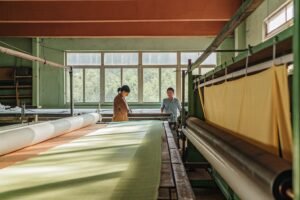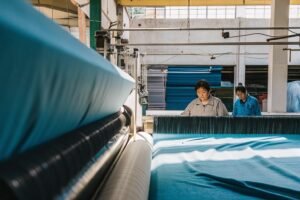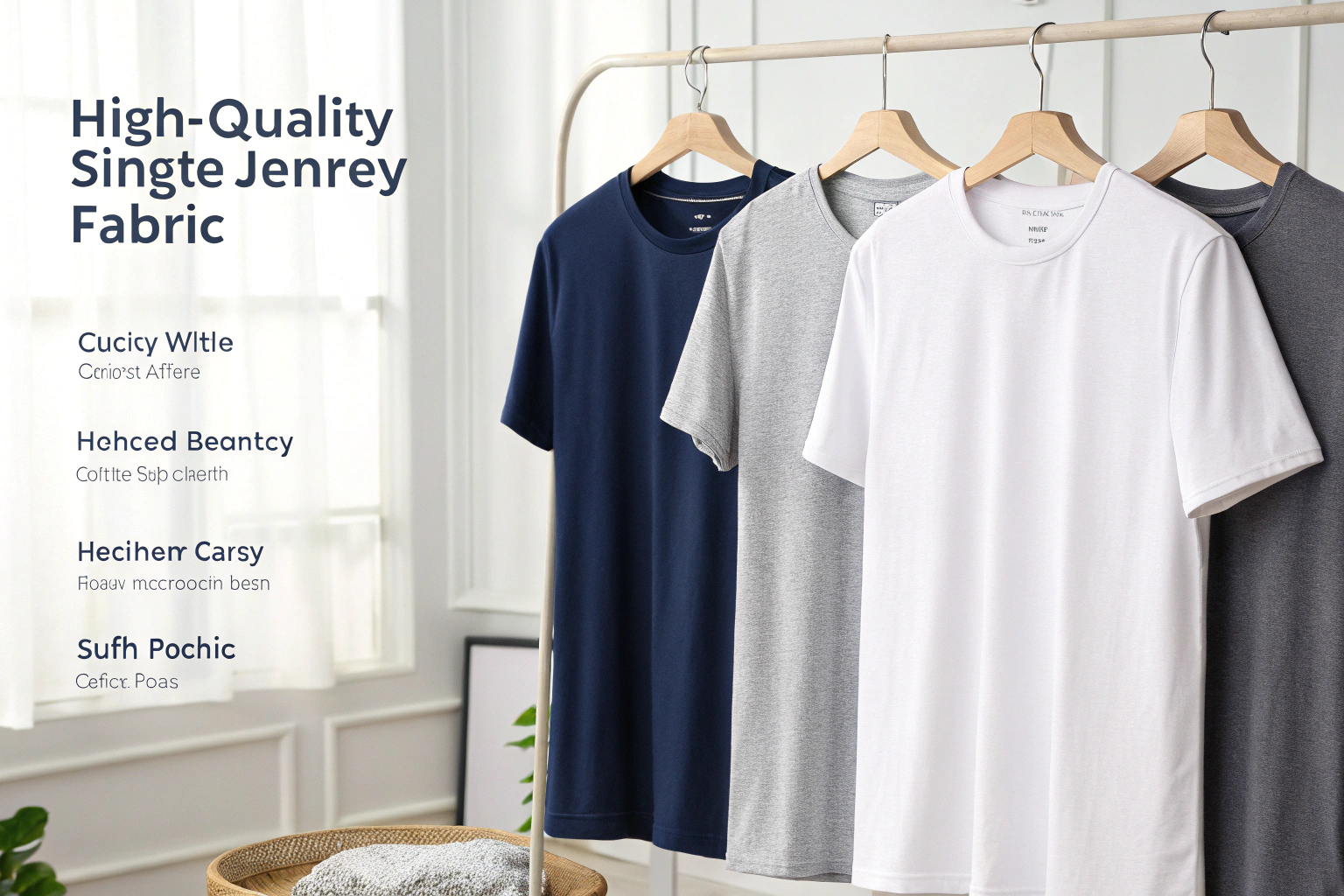
I’ve been in this industry for over twenty years, and if you asked me to name the single most important fabric in the history of apparel, I’d say single jersey without hesitation. It’s the fabric of the t-shirt—the most universal garment in human history. From multi-million dollar fashion houses to street vendors in every country, everyone works with single jersey. And there’s a reason for that.
Here’s the straightforward answer: single jersey knitted fabric offers the perfect balance of comfort, versatility, and economics for t-shirts. Its simple construction creates a fabric that’s soft against skin, breathable for everyday wear, and stable enough for reliable production. It takes dye beautifully, prints exceptionally well, and can be engineered for everything from budget basics to luxury essentials.
Let me walk you through exactly why single jersey dominates the t-shirt market, what makes it special, and how to choose the right quality for your needs.
What Makes Single Jersey Construction Unique?
Single jersey is the most fundamental weft knit construction. Understanding its structure explains its properties.
The fabric is knitted with all loops intermeshing in the same direction. This creates a fabric with a smooth face (the side with the knit stitches visible) and a looped back (the side with the purl stitches). The two sides look distinctly different—that’s why t-shirts have a "right side" and "wrong side."
The structure is simple: one set of needles knits continuously, creating rows of interlocking loops (courses) and columns of loops (wales). This simplicity makes production efficient and economical. A single jersey knitting machine can produce hundreds of meters per day.
The properties follow from structure. Single jersey has excellent stretch in the width direction (from the loop structure) and moderate stretch in the length. It drapes well because the loops can shift slightly. It breathes because air moves through the loop structure.
The limitations also follow. Single jersey curls at the edges—the face side curls toward the back, the back side curls toward the face. This requires careful handling during cutting and sewing. It also has less recovery than double knits, which is why t-shirts can stretch out over time.
A Portuguese t-shirt manufacturer once told me: "Single jersey is like a good basic recipe. Simple ingredients, simple technique, but the result depends entirely on the quality of what you put in." That’s exactly right.

Why Does Single Jersey Curl at the Edges?
The curl is inherent to the structure, not a defect.
The loop structure creates tension within the fabric. On the face side, the knit stitches pull in one direction; on the back, the purl stitches pull in the opposite. When you cut the fabric, that tension releases, causing the edges to curl.
The curl direction tells you which side is which. The face side curls toward the back; the back side curls toward the face. This actually helps in garment construction—once you know the pattern, you can predict how fabric will behave.
Curl affects cutting. When laying up multiple layers for cutting, curled edges can shift and misalign. Good cutting rooms use techniques to manage curl—spray adhesives, careful spreading, or pattern layout that minimizes edge exposure.
Curl can be reduced through finishing. Compacting and heat-setting can relax some tension, reducing curl. But some curl always remains—it’s part of working with single jersey.
A US t-shirt manufacturer trains all new cutters on curl management. They know that fighting the curl wastes time; working with it saves hours.
How Does Single Jersey Differ from Other Knit Constructions?
Understanding the differences helps you choose the right fabric.
Single jersey vs interlock: Interlock is essentially two single jerseys knitted together. It’s heavier, more stable, and doesn’t curl. It also costs more and has less drape. Interlock works for premium t-shirts where stability matters more than economy.
Single jersey vs rib: Rib has alternating knit and purl stitches creating vertical texture. It stretches more and recovers better. Rib works for cuffs, collars, and fitted styles where elasticity matters.
Single jersey vs double knit: Double knits are more complex structures with better stability and recovery. They’re heavier and more expensive, used for structured garments like knit blazers or heavier dresses.
Single jersey vs fleece: Fleece has a brushed back for warmth. It’s a variation of single jersey (or sometimes double knit) with additional processing. It’s for cold weather, not basic t-shirts.
A Swedish brand uses single jersey for their core basics, interlock for their premium line, and rib for their fitted styles. Each construction serves a distinct purpose.
What Comfort Properties Make Single Jersey Ideal for T-Shirts?
Comfort is why people choose t-shirts, and single jersey delivers.
Softness comes from the construction. The loop structure creates air pockets that make the fabric feel softer against skin than a woven of the same fiber. The yarns aren’t tightly constrained as in weaving, allowing them to move and conform.
Breathability is excellent. Air moves through the loop structure, preventing heat buildup. A single jersey t-shirt keeps the wearer comfortable across a wide range of temperatures and activities.
Moisture management depends on fiber choice. Cotton single jersey absorbs moisture, keeping it away from the skin initially but holding it. Performance blends (with polyester) wick moisture to the surface for evaporation. Both have their place.
Drape follows the body without clinging. The fabric has enough weight to fall nicely but enough give to move with the wearer. A well-made single jersey t-shirt flatters without revealing every contour.
Temperature regulation comes from the air trapped in the loops. In cool conditions, that air insulates slightly. In warm conditions, the open structure allows heat to escape. Single jersey is a four-season fabric.
A Japanese brand’s customer research found that "softness" was the number one reason customers repurchased their t-shirts. They invest in premium single jersey because they know comfort drives loyalty.

How Does Fiber Choice Affect Single Jersey Comfort?
The construction provides the platform; the fiber delivers the experience.
Cotton single jersey is the classic. It’s soft, breathable, and absorbent. Quality ranges from basic open-end yarns to premium ring-spun, combed cottons. The difference in hand feel between a cheap cotton tee and a luxury one is immediately apparent.
Organic cotton adds environmental appeal with similar comfort. Processing differences can make organic feel slightly different—often softer, sometimes more irregular. Good organic single jersey rivals the best conventional.
Polyester single jersey dominates performance wear. It wicks moisture, dries quickly, and resists wrinkles. Hand feel has improved dramatically—modern polyester can feel surprisingly soft, though different from cotton.
Cotton-polyester blends combine benefits. A 50/50 blend offers cotton’s comfort with polyester’s durability and wrinkle resistance. The hand feel is slightly less "natural" than pure cotton but more practical for many uses.
Modal and Tencel single jersey elevate luxury. These fibers create fabrics with incredible softness and fluid drape. A modal jersey t-shirt feels almost silky, with a liquid quality that cotton can’t match. Price reflects the difference.
A German brand offers the same t-shirt style in three fibers: basic cotton for price, organic cotton for sustainability, and Tencel for luxury. Customers self-select based on priorities.
What GSM Range Works Best for T-Shirts?
Weight affects everything from feel to durability to price.
Lightweight (120-150 GSM) works for summer tees, layering pieces, and hot climates. These shirts feel airy and cool but may be less durable and can be slightly sheer. They’re ideal for fashion basics and warm-weather wear.
Mid-weight (150-180 GSM) is the sweet spot for most t-shirts. Substantial enough to feel quality, durable enough for regular wear, but not heavy. Most premium basics live here. A 160-170 GSM combed cotton jersey is the classic "good t-shirt."
Heavyweight (180-220 GSM) delivers durability and structure. These shirts feel substantial, hold their shape better, and last longer. They work for pocket tees, graphic shirts, and styles where the t-shirt is the statement, not just a layer.
Ultra-heavy (220+ GSM) approaches sweatshirt territory. These are for fashion statements, not daily basics. They’re warm, structured, and expensive.
The trend has shifted over decades. In the 1990s, lightweight tees dominated. Today, mid-to-heavyweight is preferred for the "quality feel." A 180 GSM single jersey feels substantial without being heavy.
A US brand built their identity around a 200 GSM heavyweight tee. Customers pay premium prices because the fabric feels substantial and lasts for years.
What Production Advantages Does Single Jersey Offer?
For manufacturers, single jersey offers significant advantages.
Knitting efficiency is high. Single jersey machines run faster than more complex machines, producing more fabric per hour. This keeps costs down and lead times short.
Yarn consumption is predictable. The simple structure means yarn requirements can be calculated precisely, minimizing waste and cost surprises.
Dyeing and finishing are straightforward. Single jersey accepts dye evenly and responds predictably to finishing processes. Less risk of shading issues or processing defects.
Cutting and sewing, despite curl challenges, are well understood. Every cutting room knows how to handle single jersey. Patterns, spreading techniques, and sewing methods are standardized.
Quality control is simpler. The fabric’s properties are well known; deviations are easier to spot. A consistent single jersey indicates good production.
A Vietnamese factory told me they can train a new operator on single jersey machines in days. Complex jacquard machines take weeks or months. The simplicity translates directly to capability.

How Does Single Jersey Reduce Production Costs?
Lower costs come from multiple factors.
Machine speed means more output per hour. A single jersey machine can produce 20-30 meters per hour, sometimes more. Complex machines run slower.
Lower skill requirements mean less expensive operators. Basic knitting doesn’t require the expertise of jacquard programming or complex machine management.
Fewer quality issues mean less waste. Single jersey has predictable behavior; problems are easier to prevent and catch early.
Standardized processes mean less trial and error. Every mill knows how to knit, dye, and finish single jersey. No experimentation needed.
Volume economics apply. Because single jersey is so common, yarns are readily available, often at better prices. Mills run it continuously, spreading overhead across more production.
A Portuguese manufacturer estimates their single jersey production costs 30% less per meter than their jacquard knits. The simplicity savings are real.
What Are the Limitations Manufacturers Must Manage?
Every advantage has corresponding challenges.
Curl management requires attention. Cutting rooms must have systems to handle curl—spreading techniques, pattern layout, sometimes spray adhesives. This adds complexity but is well understood.
Stretch recovery is limited. Single jersey garments can bag out over time, especially in areas of high stress. Quality fabrics minimize this, but it’s inherent to the construction.
Edge fraying isn’t an issue (knits don’t fray), but laddering can be. If a stitch breaks, it can run. Quality construction minimizes this risk.
Dimensional stability requires proper finishing. Without compacting, single jersey can shrink significantly. Quality suppliers compact their fabrics.
A Canadian manufacturer trains all sewing operators on single jersey behavior. They know that pulling the fabric during sewing stretches it permanently. Gentle handling is essential.
How Do You Choose Quality Single Jersey for T-Shirts?
Not all single jersey is created equal. Quality differences are immediately apparent to trained eyes and hands.
Yarn quality is the foundation. Combed, long-staple cotton creates smoother, stronger, softer fabric. Open-end, short-staple yarns create rougher fabric that pills faster. The difference in cost is real, and so is the difference in finished product.
Knitting consistency matters. Even tension produces uniform fabric. Look for consistent stitch definition, no barre (horizontal streaks), and clean edges. Inconsistent knitting shows in the finished garment.
Dye quality affects appearance and durability. Rich, even color that penetrates the fibers indicates good dyeing. Surface-only color will fade and crock. Check color depth by stretching the fabric—if the color lightens dramatically, dye penetration is poor.
Finishing determines performance. Properly compacted fabric has controlled shrinkage and stable dimensions. Over-finished fabric may feel artificially soft but won’t perform.
Hand feel tells the story. Quality single jersey feels substantial without being heavy, soft without being mushy. It has a certain "life" that cheap fabric lacks.
A Swedish t-shirt brand rejects any fabric that doesn’t meet their hand feel standard. They’ve trained their team to know exactly how quality should feel.

What Tests Reveal Single Jersey Quality?
Simple tests reveal a lot.
The stretch test: Stretch the fabric widthwise and release. Quality fabric recovers quickly. Slow recovery means poor quality that will bag out.
The twist test: Wet a sample and let it dry flat. If it twists significantly, the knitting tension was uneven. Garments will twist after washing.
The pill test: Rub the fabric surface vigorously. Quality fabric resists pilling. Cheap fabric fuzzes quickly.
The light test: Hold fabric to light. Even light penetration indicates consistent construction. Patchy light means uneven knitting.
The wash test: Wash and dry a sample. Measure shrinkage and observe any distortion. Quality fabric shrinks minimally (under 5%) and retains shape.
A German brand performs all five tests on every potential supplier’s samples. They’ve rejected many that looked good but failed simple tests.
How Do You Specify Single Jersey for Custom Orders?
Clear specifications prevent misunderstandings.
Start with fiber: "100% combed, ring-spun cotton" or "50% organic cotton, 50% recycled polyester." Be specific.
Specify weight: "170 GSM +/- 5%" gives a target and tolerance.
Define width: "Finished width 60 inches after compacting" prevents surprises.
Describe finish: "Compacted, anti-pilling treatment, softener if needed." Be clear about hand feel expectations.
Set quality standards: "AQL 2.5 for major defects, 4.0 for minor. No visible barre. Shrinkage under 5%."
Provide physical standards: A sample swatch of approved fabric, marked and dated, becomes the reference.
A French client provides a "specification book" with every custom order: written specs, physical samples, and quality photos. Their orders always match expectations.
What Are the Latest Innovations in Single Jersey?
Single jersey may be classic, but it’s constantly evolving.
Performance enhancements through fiber engineering. New polyester variants offer cotton-like hand with technical performance. Phase-change materials regulate temperature. Anti-microbial treatments control odor.
Sustainability innovations are transforming the category. Recycled cotton from post-industrial waste, recycled polyester from bottles, and novel fibers from agricultural waste all appear in single jersey. Certification ensures claims are real.
Blends with specialty fibers create new possibilities. Tencel-cotton blends offer luxury hand feel. Hemp-cotton blends add durability with sustainability. Wool-cotton blends extend the season.
Finishing technology advances improve performance. Better anti-pilling treatments, more durable softeners, and eco-friendly finishes expand what’s possible.
Digital printing on single jersey enables mass customization. Short runs, personalized designs, and rapid response become economically viable.
A Dutch brand offers single jersey t-shirts in 15 different sustainable fiber options. Customers choose based on their priorities—organic, recycled, biodegradable, or novel fiber. The classic fabric becomes a platform for innovation.

How Is Sustainability Changing Single Jersey?
Sustainability is no longer optional—it’s expected.
Organic cotton single jersey has become standard for eco-conscious brands. GOTS certification verifies that claims are real. The quality gap with conventional has closed.
Recycled polyester single jersey transforms plastic bottles into soft, performance fabric. GRS certification ensures traceability. The technology has improved dramatically—early scratchy versions are gone.
Tencel and modal single jersey offer lower environmental impact with superior comfort. Closed-loop production and sustainable forestry appeal to conscious consumers.
Circular economy thinking influences design. Mono-material single jersey (100% cotton or 100% polyester) can be recycled at end of life. Blends complicate recycling.
Transparency matters. Brands want to know where fiber came from, how it was processed, and who handled it. Blockchain and QR codes provide answers.
A Swedish brand’s single jersey t-shirt carries a QR code showing the farm where cotton grew, the mill where it was spun, and the factory where it was knitted. Customers scan and see the story.
What Performance Features Can Be Added to Single Jersey?
Single jersey can be engineered for specific needs.
Moisture management through fiber selection or finishing. Hydrophilic finishes pull moisture away from skin; hydrophobic fibers repel it. Choose based on application.
Odor control via antimicrobial treatments. Silver, zinc, or chitosan additives inhibit bacterial growth. Particularly valuable for activewear and travel garments.
UV protection built into fiber or finish. UPF ratings of 50+ are achievable. Essential for outdoor and children’s wear.
Wrinkle resistance through resin finishing. Single jersey wrinkles less than wovens anyway, but treatment can further reduce creasing.
Stretch and recovery enhancement with spandex. A small percentage (3-5%) transforms recovery without changing hand feel significantly.
A California activewear brand uses silver-treated single jersey for their yoga collection. Customers love that the shirts stay fresh through multiple sessions.
Conclusion
Single jersey knitted fabric offers the perfect foundation for t-shirts because it balances comfort, versatility, and economics better than any alternative. Its simple construction creates fabric that’s soft, breathable, and reliable. Its production efficiency keeps costs accessible. Its adaptability allows endless variation through fiber choice, weight, and finishing.
The key to success with single jersey is quality selection. The difference between a basic tee and a premium essential isn’t the construction—it’s the yarn quality, knitting consistency, dye penetration, and finishing care. A 180 GSM combed cotton jersey from a quality supplier outperforms a 220 GSM cheap version in every way that matters to customers.
At Shanghai Fumao, we’ve produced single jersey for over two decades. We offer options from budget basics to luxury essentials: open-end for economy, ring-spun for quality, combed for premium, and everything in between. Organic, recycled, and specialty fibers available. Weights from 120 to 220 GSM. Finishing from basic to performance-enhanced.
Our single jersey is knitted on modern machines with precise tension control, dyed in consistent conditions, and compacted for stability. Every roll is inspected against AQL standards. We provide test data on shrinkage, recovery, and color.
Whether you’re launching a basics brand, expanding an existing line, or creating something entirely new, single jersey is the foundation to build on. It’s the fabric that millions of people wear every day, and when it’s done right, they never think about it—they just feel comfortable.
Contact our Business Director, Elaine, today to discuss your single jersey needs. She and her team will help you select the right quality, weight, and fiber for your t-shirts. Email her directly at: elaine@fumaoclothing.com. Let’s create t-shirts people love to wear.