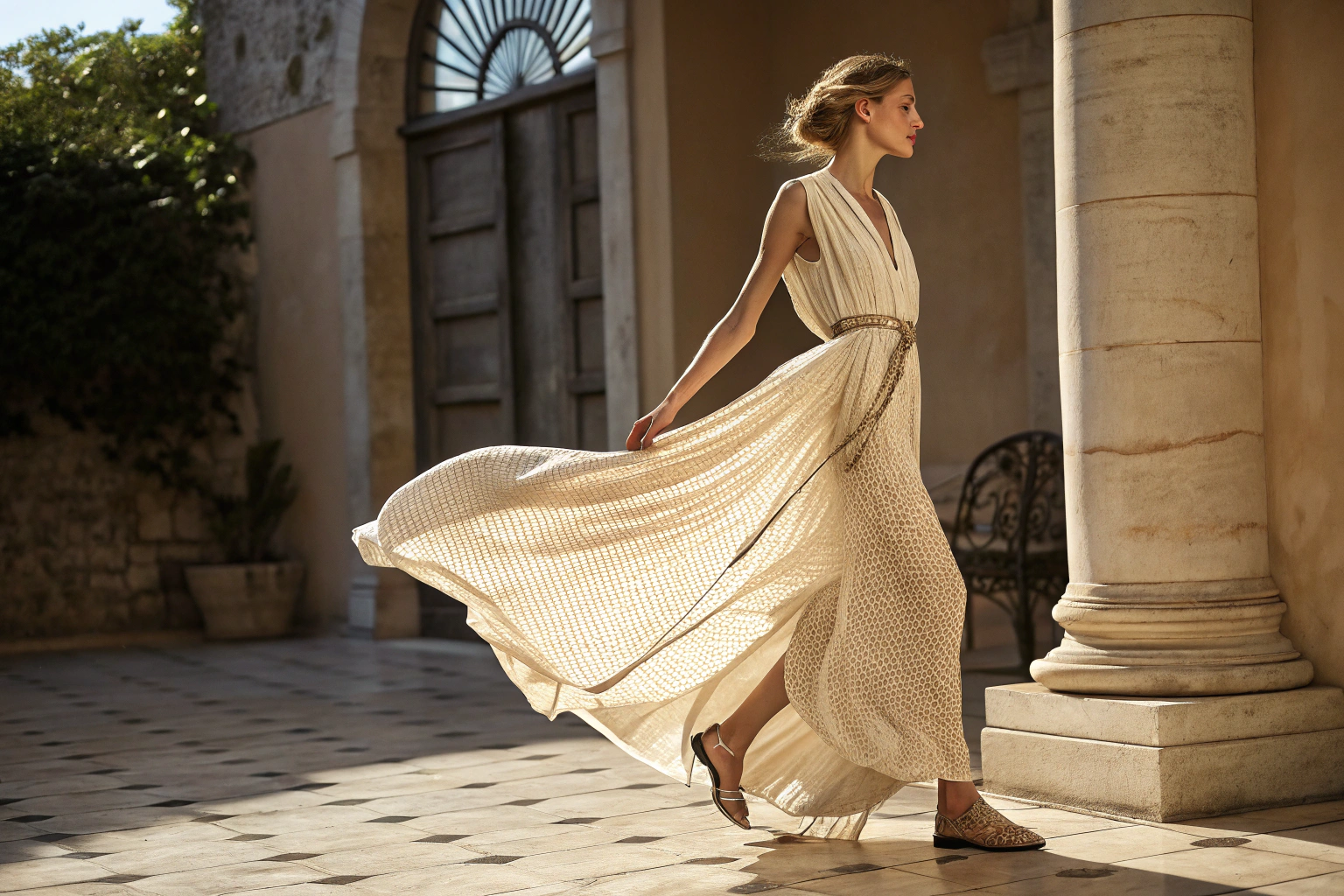
I get this question at least once a week, usually from a designer who’s fallen in love with the drape of rayon challis but isn’t sure what they’re actually working with. They’ve heard "challis" and "rayon" and maybe "viscose" all mixed together, and they’re confused about whether this magical fabric will stretch like a knit or hold shape like a woven. The confusion is completely understandable—rayon challis has a fluidity that feels almost knit-like, but its construction tells a different story.
Here’s the straightforward answer: rayon challis is a woven fabric, typically constructed in a plain weave with fine yarns that create its characteristic soft drape. Despite its fluid hand feel, it has the dimensional stability of a woven—it won’t stretch the way knits do, and it frays at the edges like any other woven. The confusion comes from the fiber itself: rayon (viscose) has a natural softness and drape that can feel similar to some knits, but the construction is definitively woven.
Let me walk you through everything you need to know about rayon challis for flowy dresses—its construction, properties, how to identify it, and why it’s become a favorite for summer styles.
What Exactly Is Rayon Challis?
Let’s start with the name, because it contains two important pieces of information.
"Rayon" (or viscose) refers to the fiber. It’s a regenerated cellulose fiber made from wood pulp, processed through chemical solution and extruded into filaments. Rayon fibers are smooth, round, and uniform, which contributes to the fabric’s soft hand and subtle luster. Unlike cotton’s irregular, twisted fibers, rayon’s smoothness allows it to drape more fluidly.
"Challis" (pronounced "shall-ee") refers to the fabric construction. Challis is a lightweight, soft woven fabric, traditionally made in a plain weave with fine yarns. The word comes from the Anglo-Indian "shallee," referring to a soft woolen fabric, but today it’s most commonly associated with rayon.
The combination creates a fabric that takes the best from both: rayon’s fluid drape and softness, plus the stability and structure of a woven construction. The plain weave—the simplest interlacing of warp and weft yarns—creates a fabric that’s stable on the grain but has enough yarn mobility to drape beautifully on the bias.
A French designer once described rayon challis as "the fabric that behaves like a liquid but cuts like a solid." That’s exactly right. It flows and moves like something much more fluid, but when you lay it on the cutting table, it stays where you put it.

How Is Rayon Challis Different from Other Rayon Fabrics?
Rayon is a fiber, not a fabric. The same fiber can create dramatically different fabrics depending on construction.
Rayon challis is lightweight (typically 100-150 GSM), with a soft, slightly textured hand from the plain weave structure. It has a matte finish with a subtle luster—not shiny, but with a gentle glow. The drape is fluid but not limp; it holds shape while moving beautifully.
Rayon crepe uses twisted yarns in the weave to create a pebbly texture and even more drape. It’s often slightly heavier than challis and has more "body" while still flowing. Crepe’s texture also hides wrinkles better than smooth challis.
Rayon jersey is a knit fabric, not woven. It has the stretch and recovery of any knit, with the softness of rayon fiber. This is what causes confusion—because rayon jersey is so common, people assume all soft rayon fabric is knit. But jersey’s looped construction is completely different from challis’s woven grid.
Rayon twill has a diagonal rib structure, making it heavier and more durable than challis. It’s used for pants, jackets, and heavier dresses where more structure is needed.
Rayon satin uses a satin weave with long floats that create a shiny, luxurious surface. It’s heavier and more formal than challis, with an entirely different aesthetic.
A Swedish client once ordered rayon challis for a dress collection, then panicked when samples arrived because they’d expected knit stretch. After we explained the difference, they tested the fabric and discovered its drape was perfect for their designs—they just needed to adjust their expectations.
What Makes Rayon Challis Ideal for Flowy Dresses?
The combination of fiber and construction creates perfect conditions for flowing silhouettes.
The plain weave structure provides stability on the grain. This means pattern pieces cut on the straight grain hold their shape—waistbands stay put, bodices maintain their structure. The fabric doesn’t stretch out during wear the way knits can.
The bias cut is where challis truly shines. Cut on the 45-degree angle, the fabric’s yarns can shift slightly, creating that beautiful, body-hugging drape that makes flowy dresses so flattering. The bias allows the fabric to curve over hips and bust while the straight-grain sections maintain structure.
The lightweight nature (typically around 120 GSM) means the fabric moves with the body rather than weighing it down. A challis dress floats and swirls with movement, creating those dreamy silhouettes that photograph so beautifully.
The soft hand against skin makes it comfortable for warm-weather wear. Unlike some wovens that can feel crisp or scratchy, challis has a gentle, almost caressing feel that customers love.
A New York designer told me rayon challis is her "secret weapon" for dresses that look expensive but feel approachable. The fabric photographs beautifully, drapes elegantly, and customers consistently comment on how comfortable it feels.
How Can You Tell Rayon Challis Is Woven, Not Knitted?
Since rayon challis can feel knit-like, you need reliable ways to confirm its construction. These tests take seconds and never lie.
The stretch test is definitive. Hold the fabric widthwise (from selvedge to selvedge) and pull gently. Rayon challis, as a woven, will have minimal stretch—typically less than 5% unless it’s a special stretch version with spandex. If the fabric stretches significantly, it’s either a knit or a stretch-woven (which should be labeled as such).
The edge test confirms the verdict. Look at a cut edge of the fabric. A woven will show individual yarn ends starting to fray almost immediately. Rub the edge gently—more fibers will loosen. A knit edge would curl and resist fraying. Rayon challis frays beautifully (which can be a challenge in production, but confirms its woven nature).
The surface inspection under good light reveals the grid. Look closely at the fabric surface—you’ll see the characteristic plain weave pattern of yarns crossing over and under. It might be subtle, but it’s there. A knit would show loops or V shapes.
The recovery test adds evidence. Stretch the fabric on the bias (45-degree angle). It should give slightly—this is the bias stretch that makes challis drape so beautifully. Release, and it should recover most of its shape. A knit would stretch more and recover differently.
A German buyer once pulled out a swatch of what they thought was knit jersey. Thirty seconds of testing—edge check, stretch test—confirmed it was woven challis. Their pattern maker had designed for knit and would have had major problems. The simple tests saved them.

What Does the Fray Test Tell You?
The fray test is your fastest confirmation of woven construction.
Take the fabric between thumb and forefinger at a cut edge. Rub gently back and forth. Within seconds, you’ll see tiny threads loosening and gathering at the edge. That’s weft yarns pulling free from the warp—classic woven behavior.
The rate of fraying also tells you about construction quality. A tightly woven, high-quality challis will fray slowly and cleanly. A loosely constructed version may fray aggressively, indicating lower quality that may cause production challenges.
For garment production, fraying matters. Seam allowances need to be finished to prevent unraveling. French seams, serging, or binding are essential. A fabric that frays heavily may need wider seam allowances or special handling.
The good news is that challis’s fraying is manageable with proper techniques. Most factories know how to handle it. The key is knowing it’s woven so you plan accordingly.
A Canadian brand learned this when their first challis order arrived and their cutter complained about fraying. They’d assumed it would behave like knit jersey and hadn’t specified seam finishing. Now they know to plan for woven behavior.
How Does Challis’s Drape Differ from Knit Jersey?
Both drape beautifully, but they drape differently.
Knit jersey follows the body’s contours closely because it stretches. A jersey dress hugs curves, moves with every motion, and can feel almost like a second skin. The drape is intimate and body-conscious.
Challis, being woven, drapes away from the body more. It creates softer silhouettes, with fabric that stands slightly away from curves before falling. The drape is more architectural, more about the fabric’s own shape than the body’s.
The bias cut changes everything. When challis is cut on the bias, it gains a fluidity that approaches knit behavior. The fabric wraps around curves rather than clinging, creating a flattering silhouette that skims rather than grabs.
For flowy dresses, this difference is perfect. A bias-cut challis dress moves beautifully without clinging in unflattering ways. It flatters a wider range of body types because it doesn’t require perfect fit to look good.
A London designer told me she chooses challis for dresses that need to "float" and jersey for dresses that need to "fit." Both have their place, but they’re not interchangeable.
What Are the Key Properties of Rayon Challis for Dressmaking?
Understanding challis’s properties helps you design and produce successfully.
Weight typically ranges from 100-150 GSM (3-4 oz), making it ideal for warm-weather dresses. It’s substantial enough to drape well but light enough to feel airy against skin. Heavier challis (150-180 GSM) works for dresses needing more body.
Drape is exceptional, ranking among the best of affordable woven fabrics. The combination of fine yarns, plain weave, and rayon fiber creates fluid movement that rivals more expensive fabrics. This is why challis is a go-to for designers creating romantic, flowing silhouettes.
Breathability is excellent. Rayon fibers absorb moisture and release it to the air, keeping the wearer cool in warm conditions. A challis dress is comfortable even on hot summer days, unlike synthetics that can trap heat.
Dye affinity is one of rayon’s superpowers. The fibers accept dye beautifully, producing rich, saturated colors with excellent depth. Challis prints also exceptionally well—the smooth surface holds crisp patterns that don’t bleed or blur.
Wrinkle behavior is moderate. Challis wrinkles less than linen but more than polyester blends. The wrinkles tend to be soft and hang out overnight, making it practical for travel and daily wear. For dressy occasions, a quick press restores crispness.
A Spanish brand chose challis for their summer dress collection specifically for its print quality. The vibrant floral prints they achieved wouldn’t have been possible on many other fabrics at the same price point.

How Does Challis Behave During Cutting and Sewing?
Working with challis requires some knowledge, but nothing mysterious.
Cutting requires care because the fabric can shift on the cutting table. The smooth surface means layers may slide. Using pattern weights rather than pins, sharp rotary cutters, and cutting single layers rather than stacks helps maintain accuracy.
Marking should be gentle. Challis can show pin marks, so use fine pins in seam allowances or fabric-friendly marking tools. Test on scraps before marking your good fabric.
Needle selection matters. A sharp, fine needle (size 70/10 or 80/12) works best. Ball-point needles are for knits; they can damage woven challis by pushing fibers aside rather than piercing cleanly.
Seam finishing is essential because challis frays. Serged edges, French seams, bias-bound seams, or zigzag finishes all work. Choose based on your garment’s quality level and the seam’s visibility.
Pressing requires care. Rayon can be heat-sensitive. Use a medium iron (cotton setting) and press on the wrong side or with a press cloth. Too much heat can shine or even scorch the fabric.
A US pattern maker told me challis is "forgiving but not foolproof." It behaves predictably once you understand its quirks. Test first, then proceed with confidence.
What Are Challis’s Limitations for Dress Applications?
No fabric is perfect. Challis has limitations worth knowing.
Durability is moderate compared to cotton or polyester blends. The smooth rayon fibers can abrade over time, especially in high-friction areas. A challis dress worn frequently may show wear faster than one made from more durable fibers.
Shrinkage can be significant if not properly pre-treated. Quality challis should be pre-shrunk (sanforized) before cutting. Even then, expect 2-4% shrinkage in the first wash. Garments should be cut with this in mind.
Stretch recovery doesn’t exist. Unlike knits, challis won’t stretch and snap back. Fitted styles need careful design—zippers, fit ease, or strategic seaming—to ensure they’re comfortable to put on and wear.
Care requirements are specific. Challis is often dry clean only, though some can be hand washed gently. Machine washing can cause shrinkage, fading, and loss of hand feel. Clear care labeling is essential.
A Japanese brand learned this when customers machine-washed their challis dresses despite "dry clean only" labels. The dresses shrank and lost their beautiful drape. Now they provide detailed care instructions and offer a hand-washable version for the mass market.
What Alternatives to Rayon Challis Should You Consider?
Depending on your priorities, other fabrics might serve your needs better.
Tencel (lyocell) twill offers similar drape with better durability. Tencel fibers are stronger than rayon when wet, making garments last longer and resist pilling. The twill construction adds subtle texture. Price is slightly higher than challis.
Viscose crepe provides more texture and even better wrinkle resistance. The twisted yarns create a pebbly surface that hides minor imperfections and drapes beautifully. Crepe is slightly heavier than challis and has more "body."
Cotton voile is crisper and more breathable. It’s ideal for very hot climates where the slightest coolness matters. Voile wrinkles more than challis but has a fresh, clean aesthetic that many love.
Modal jersey offers knit comfort with similar softness. If you want stretch and recovery, modal jersey (or modal-spandex blends) provides the drape of rayon with knit performance. This is a completely different category but worth considering for certain styles.
Silk habotai is the luxury alternative. It has similar weight and drape to challis but with silk’s natural temperature regulation and unparalleled hand feel. Price is significantly higher.
A Dutch brand offers the same dress style in three fabrics: challis for mid-price, Tencel for premium, and silk for luxury. Customers self-select based on their priorities, and all three sell well.

When Should You Choose Tencel Over Rayon Challis?
Tencel has advantages that justify its higher price in certain applications.
Choose Tencel when durability matters most. Garments that will be worn frequently, washed often, or subjected to abrasion will last longer in Tencel. The fiber’s higher wet strength means less pilling and fabric breakdown.
Choose Tencel for eco-conscious positioning. Tencel’s closed-loop production process has lower environmental impact than conventional rayon. If sustainability is central to your brand story, Tencel supports that narrative.
Choose Tencel when you need consistent quality. Tencel fibers are more uniform than rayon, producing more consistent fabric. For large production runs where consistency is critical, Tencel reduces variability.
Choose Tencel for a slightly crisper hand. Tencel has a clean, smooth feel that some prefer over rayon’s softer, almost fuzzy touch. It’s a subtle difference, but connoisseurs notice.
A German brand switched from rayon to Tencel for their bestselling dress after customer feedback about pilling. The Tencel version costs more but has eliminated complaints and supports their sustainability marketing.
How Does Challis Compare to Viscose Crepe for Dresses?
This comparison comes up constantly, and the answer depends on desired effect.
Challis offers a smoother, more uniform surface. Prints look crisp and clean. The drape is fluid but controlled—the fabric moves nicely but doesn’t overwhelm the silhouette.
Crepe offers texture that adds visual interest to solid colors. The pebbly surface catches light differently, creating depth. Crepe also hides wrinkles better, making it ideal for travel garments.
Crepe has more "body" than challis—it stands slightly away from the body, creating softer, more voluminous silhouettes. Challis follows the body’s lines more closely when cut on the straight grain.
Crepe is slightly heavier, which can be good or bad depending on the desired effect. Heavier crepe drapes differently, with more weight pulling the fabric down.
A French designer uses both: challis for fitted, printed dresses where the pattern is the star; crepe for solid, voluminous styles where texture creates interest. Both have their place in her collection.
What Care Instructions Should You Provide for Rayon Challis Garments?
Clear care instructions protect your customers and your brand reputation.
Dry cleaning is the safest option for most challis garments. Professional cleaning preserves hand feel, prevents shrinkage, and ensures colors stay vibrant. For higher-end garments, recommend dry clean only.
Hand washing is possible for many challis fabrics, but test first. Use cold water and mild detergent specifically for delicates. Submerge gently, swish carefully, and rinse thoroughly. Never wring or twist—this distorts the fabric and can damage fibers.
Drying must be gentle. Never machine dry. Reshape the garment while damp and lay flat on a clean towel, away from direct heat or sunlight. Hanging can stretch the garment out of shape.
Ironing should be done on the wrong side while the fabric is slightly damp. Use a medium heat setting (cotton setting) and avoid pressing too firmly, which can create unwanted shine. A press cloth adds protection.
Storage should be clean and dry. Folded storage is better than hanging for knits, but challis can be hung if the hanger is padded and the garment isn’t too heavy. Avoid wire hangers that can mark shoulders.
A UK brand includes a small care card with every challis garment. They’ve found that customers who follow instructions are happier and return less often. The card costs pennies and saves pounds.

Can Rayon Challis Be Machine Washed?
The short answer: usually not, but it depends on the specific fabric.
Some challis fabrics are specially finished to be machine washable. These have been treated to minimize shrinkage and maintain hand feel through laundering. If you’re ordering custom fabric, you can specify machine-washable finishing.
Standard challis will likely shrink, lose softness, and possibly fade in machine washing. The agitation can also cause fraying at seams and general wear. Machine washing voids the "premium" nature of the fabric.
If you must machine wash (for children’s wear or high-turnover basics), test extensively first. Wash samples multiple times to understand how the fabric behaves. Then build that behavior into your pattern making and care instructions.
A Portuguese children’s wear brand uses a specially developed machine-washable challis for their summer dresses. The fabric costs more, but parents appreciate the easy care. The investment has paid off in customer satisfaction.
How Do You Prevent Shrinkage in Challis Garments?
Shrinkage prevention starts before cutting.
Pre-treat your fabric. Before cutting, wash or steam the fabric according to how the finished garment will be cared for. This allows shrinkage to happen before cutting, not after.
Build shrinkage allowance into patterns. If you know the fabric will shrink 3%, add that to your pattern dimensions. A garment that’s slightly larger before first wash will fit perfectly after.
Use pre-shrunk fabric. Quality suppliers offer sanforized (pre-shrunk) challis that has been mechanically treated to minimize shrinkage. This costs more but saves headaches.
Communicate with customers. Clear care instructions help customers avoid shrinking garments themselves. "Dry clean only" or "hand wash cold, lay flat to dry" gives them the information they need.
A Canadian brand labels all their challis garments with both care instructions and a subtle warning: "This natural fiber garment may shrink slightly with washing. We recommend dry cleaning to maintain perfect fit." Customers appreciate the honesty.
Conclusion
Rayon challis is a woven fabric, constructed in a plain weave with fine yarns that create its characteristic soft drape. Despite its fluid, almost knit-like hand feel, it has the dimensional stability of a woven—it won’t stretch, it frays at edges, and it holds shape on the grain.
The confusion between challis and knits is understandable. The smooth rayon fiber creates a softness that feels similar to some knits, and the bias-cut drape can mimic knit behavior. But the construction is fundamentally different, and that difference matters for pattern making, sewing, and garment performance.
For flowy dresses, rayon challis offers an exceptional combination of properties:
- Beautiful drape that flatters many body types
- Lightweight comfort for warm-weather wear
- Excellent dye and print quality for vibrant designs
- Stable construction that holds shape where needed
- Moderate care requirements that customers can manage
Understanding what you’re working with—woven, not knit—lets you design appropriately, cut accurately, sew successfully, and care for garments properly. The fabric rewards that understanding with years of beautiful performance.
At Shanghai Fumao, we’ve supplied rayon challis to dressmakers around the world for over two decades. Our challis comes in weights from 100-150 GSM, in solids and prints, with pre-shrinking available. We know how it behaves, how to cut it, how to sew it, and how to care for it.
Whether you’re designing a romantic summer collection, creating versatile everyday dresses, or developing something entirely new, we have the challis expertise to help you succeed.
Contact our Business Director, Elaine, today to discuss your rayon challis needs. She and her team will provide samples, share technical specifications, and help you select the perfect fabric for your flowy dress collection. Email her directly at: elaine@fumaoclothing.com. Let’s create dresses that flow.