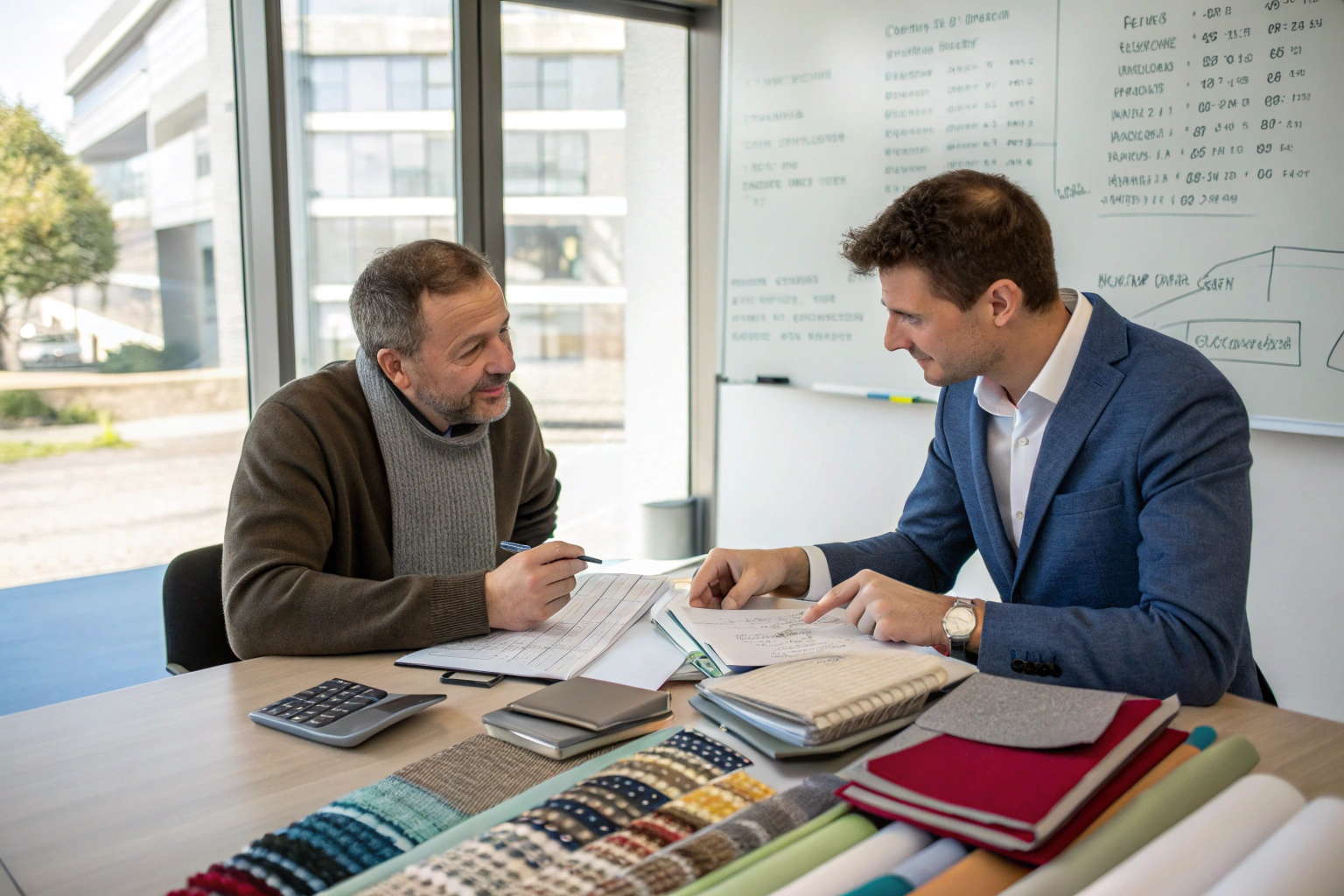
I’ve been on both sides of this table more times than I can count. I’ve been the manufacturer explaining why we need a certain minimum quantity to make a custom knit viable. And I’ve been the partner helping small brands find creative ways to get the fabrics they want without committing to volumes they can’t handle. The truth is, MOQs aren’t arbitrary hurdles—they’re rooted in real costs. But they’re also negotiable, if you understand what drives them.
Here’s the reality: custom knitted fabric requires investment. Yarn must be purchased, machines must be programmed, production time must be scheduled. These costs exist whether you order 100 yards or 10,000 yards. The MOQ is the point where those fixed costs become manageable per yard. But smart negotiation can find ways to share those costs, adjust the terms, or structure orders that work for both sides.
Let me walk you through exactly how MOQs are calculated, what costs drive them, and most importantly, how to negotiate effectively for lower quantities. I’ve helped countless small and medium brands get custom knits they thought were out of reach. You can too.
What Actually Goes Into a Custom Knit MOQ?
Before you negotiate, you need to understand what you’re negotiating against. MOQs aren’t pulled from thin air—they’re the sum of real costs.
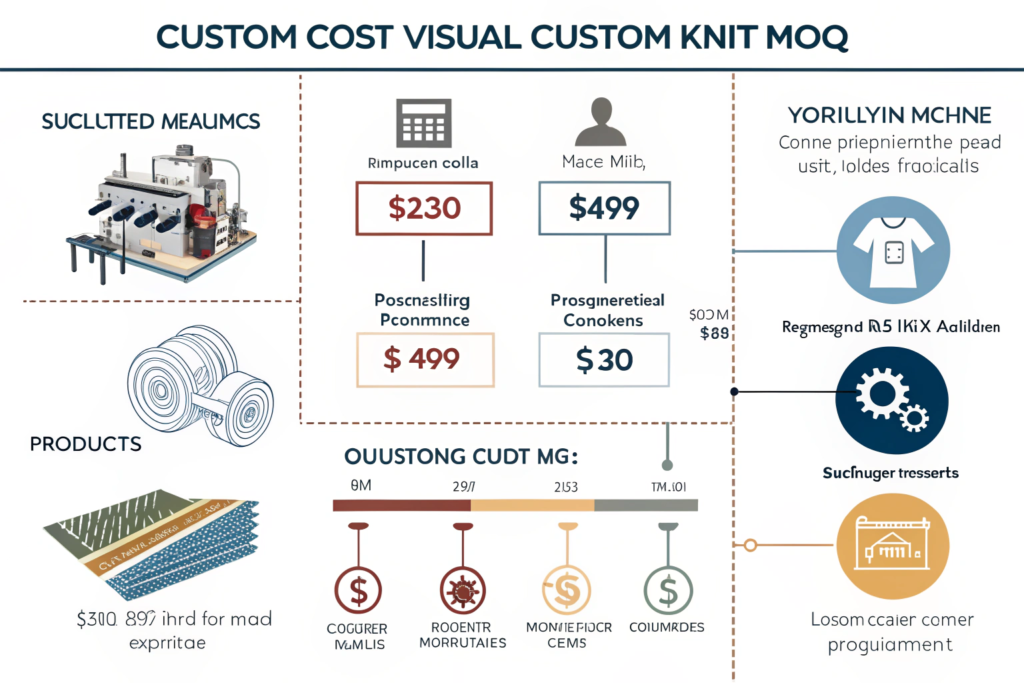
Yarn minimums are often the biggest driver. Yarn mills have their own MOQs—typically 100-200 kg per color, per yarn type. If your custom knit uses a specialty yarn (organic cotton, recycled polyester, Tencel), that yarn must be purchased in those minimums. For a fabric weighing 200 grams per meter, 200 kg of yarn yields about 1,000 meters of fabric. The yarn minimum alone sets a floor.
Machine setup costs include the time to prepare knitting machines for your specific construction. Patterns must be programmed, tensions set, yarns loaded. This setup takes hours of skilled technician time, whether you run 100 meters or 10,000 meters. That cost must be recovered.
Programming for complex knits (jacquards, patterns) adds significant cost. Each pattern must be digitized, tested, and refined. This is highly skilled work, and it’s the same whether you produce one roll or one hundred.
Sampling costs are incurred before production. Multiple sample rounds may be needed to get the hand feel, weight, and appearance right. Each sample consumes materials and machine time.
Production overhead—machine time, labor, factory overhead—continues during production. While these costs scale with quantity, the per-unit cost is higher for small runs because fixed costs are spread over fewer yards.
A Swedish brand once asked why our MOQ for a custom jacquard was 2,000 meters. We walked them through the math: 150 kg of specialty yarn (minimum from supplier), 8 hours of programming, 12 hours of setup, and sampling costs. The 2,000 meters was the point where these costs became reasonable per yard.
Why Are Yarn Minimums Often the Biggest Hurdle?
Yarn mills operate on a different scale than fabric factories. Their economics are different.
Yarn production is continuous. A yarn mill sets up to produce a specific yarn type and runs thousands of kilograms to make it economical. Stopping and restarting for small batches is inefficient and costly.
Color changes add complexity. If your custom knit requires specific colors, each color may have its own minimum. A three-color jacquard might require 600 kg of yarn total—200 kg per color—even if one color is used sparingly in the pattern.
Specialty yarns have higher minimums because they’re produced less frequently. A mill might run organic cotton only once per month. If you miss that run, you wait. The minimum ensures they’re not holding small lots of specialty inventory.
Lead times for yarn add another dimension. Even if you accept the minimum, you may wait weeks for production. Yarn mills schedule runs based on accumulated orders.
The solution isn’t fighting yarn minimums—it’s working within them. Choose colors from the supplier’s standard palette. Accept that your first run will be larger than ideal. Plan to use the extra yardage for future styles or sampling.
A German client wanted a custom blend using a specialty recycled yarn. The yarn minimum was 300 kg—enough for 2,000 meters of fabric. They couldn’t use that much immediately, so they bought the yarn, stored it at our facility, and produced fabric in two 1,000-meter runs over six months. The yarn minimum was satisfied; their cash flow was managed.
How Do Machine Setup and Programming Affect MOQs?
Setup and programming are pure fixed costs—they don’t vary with quantity.
Knitting machine setup involves threading yarns through guides, setting tensions, and test-running to verify everything works. For a basic single-jersey, this might take 2-3 hours. For a complex jacquard, it could take a full day or more.
Programming for patterned knits requires digitizing your design, converting it to machine language, and testing on small samples. This is skilled technical work. In China, a good jacquard programmer might cost the factory $50-80 per hour. Those hours add up.
Sample development multiplies these costs. Each sample round requires setup and programming time. If it takes three rounds to perfect your fabric, you’ve consumed significant resources before a single production meter is knit.
The factory must recover these costs. In a large run, they’re spread over many yards. In a small run, they dominate the cost structure. The MOQ ensures these costs don’t make the fabric prohibitively expensive.
A French designer wanted a complex textured knit that required 16 hours of programming and three sample rounds. The total development cost was nearly $2,000 before production started. Her 500-yard order would have cost $4 per yard just in development. By increasing to 1,500 yards, development cost dropped to $1.33 per yard. The MOQ protected both of us.
What Negotiation Strategies Actually Work?
Now that you understand the costs, here’s how to negotiate around them.
Offer to pay development costs separately. This is the most effective strategy for small orders. If you cover the $1,000-3,000 in setup, programming, and sampling, the factory’s fixed costs are covered. They can then accept a lower production MOQ because they’re not gambling on recovering development through yardage.
Accept standard yarn colors. If you choose colors from the factory’s standard palette, you avoid yarn minimums entirely. The factory stocks these colors and can draw on inventory for small runs. Your fabric may be less unique in color, but the structure can still be special.
Commit to a program, not just one order. "I need 500 yards now, but I’ll need 2,000 over the next year" is more compelling than "I need 500 yards and we’ll see." Factories will accept a smaller first order if they see a path to larger volume.
Split your order across multiple styles. If you need 1,000 yards total but want five different colors, that’s five setups, five yarn purchases, five small runs. Much harder than 1,000 yards of one color. Consolidate where possible.
Time your order during slow seasons. Factories with idle machines may accept smaller custom runs to keep production going. June-July and November-December are often slower. Ask about off-peak opportunities.
A US client wanted 300 yards of a custom slub knit. Our standard MOQ was 1,000 yards. They offered to pay the $1,500 development cost separately and committed to 300 yards now with 700 more over the next year. We agreed. The development cost was covered, and we had a path to full production.
How Do You Structure Development Cost Sharing?
Development cost sharing is a formal arrangement that protects both sides.
Get a detailed breakdown. Ask for the costs: programming hours, setup time, sampling materials, technician time. A transparent factory will provide this. If they won’t, be suspicious.
Agree on what’s included. Does the development fee cover all sampling until the fabric is approved? Or just the first round? What if it takes five rounds? Clarify upfront.
Decide how costs apply to future orders. Some factories will credit development costs against future production once you hit certain volumes. "Pay $2,000 now, and we’ll deduct $0.50 per yard from your first 4,000 yards" aligns incentives.
Put it in writing. A simple agreement protects both sides. It should specify the development scope, the fee, and how it relates to future production.
Understand that development fees are generally non-refundable. The factory is doing work regardless of whether you proceed. If you cancel after development, they’ve still incurred costs.
A Dutch brand paid a $2,500 development fee for a custom organic cotton jersey. The agreement credited $0.50 per yard against their first 5,000 yards. They’ve now ordered 8,000 yards and effectively recovered their development investment.
Can You Combine Orders with Other Brands?
Pooling orders is a creative solution, but it requires coordination.
Find complementary brands. Look for non-competitors who might share interest in similar fabrics. A children’s wear brand and a women’s wear brand might both want the same organic cotton jersey in different colors.
Work with a buying agent or group. Some agents specialize in aggregating orders from multiple small brands to meet minimums. They charge a fee but provide access to fabrics you couldn’t get alone.
Consider a fabric library model. Some factories will produce a custom fabric and hold inventory for multiple buyers. You commit to taking a certain amount over time, not all at once.
The challenge is coordination. Different brands have different timelines, color preferences, and quality expectations. Making it work requires a lead partner or agent to manage the complexity.
A Japanese buying agent works with 15 small brands, aggregating their custom fabric orders. Each brand gets their own color, but they share the base fabric construction. The agent handles coordination, and the factory gets volume that justifies custom development.
What Creative Approaches Reduce MOQs Without Reducing Quality?
Sometimes the path to lower MOQs isn’t negotiation—it’s redesign.
Use stock yarns. If your custom fabric can be made from yarns the factory already stocks, you avoid yarn minimums entirely. Ask what’s available—you might be surprised at the options.
Design multiple styles from one base fabric. A single jersey construction can become several different garments. By committing to more yardage of one fabric rather than small amounts of many, you hit MOQs while still offering variety.
Accept greige production and dye later. Produce the fabric undyed (greige), then dye in smaller batches as needed. The knitting MOQ applies to the base fabric; dyeing has lower minimums. This separates the two constraints.
Split orders across seasons. Commit to annual volume but take delivery in installments. The factory can schedule production efficiently, and you manage cash flow and inventory.
Consider slight modifications to existing fabrics. If the factory already makes a similar fabric, modifications may have lower minimums than starting from scratch. Changing a yarn count or finish is easier than a whole new construction.
A Canadian brand wanted a specific weight of organic cotton jersey that was slightly heavier than our standard. Instead of custom development, we adjusted our existing fabric by changing the knitting tension. The modification cost was minimal, and the MOQ was our standard 500 yards, not 2,000.
How Do You Balance Uniqueness Against MOQ Constraints?
Every brand wants unique fabrics, but uniqueness comes at a cost. The question is where to invest it.
Focus uniqueness where customers will notice. If you’re making a basic t-shirt, the fabric weight and hand feel matter more than a complex jacquard pattern. Invest your uniqueness budget in the qualities that drive purchasing decisions.
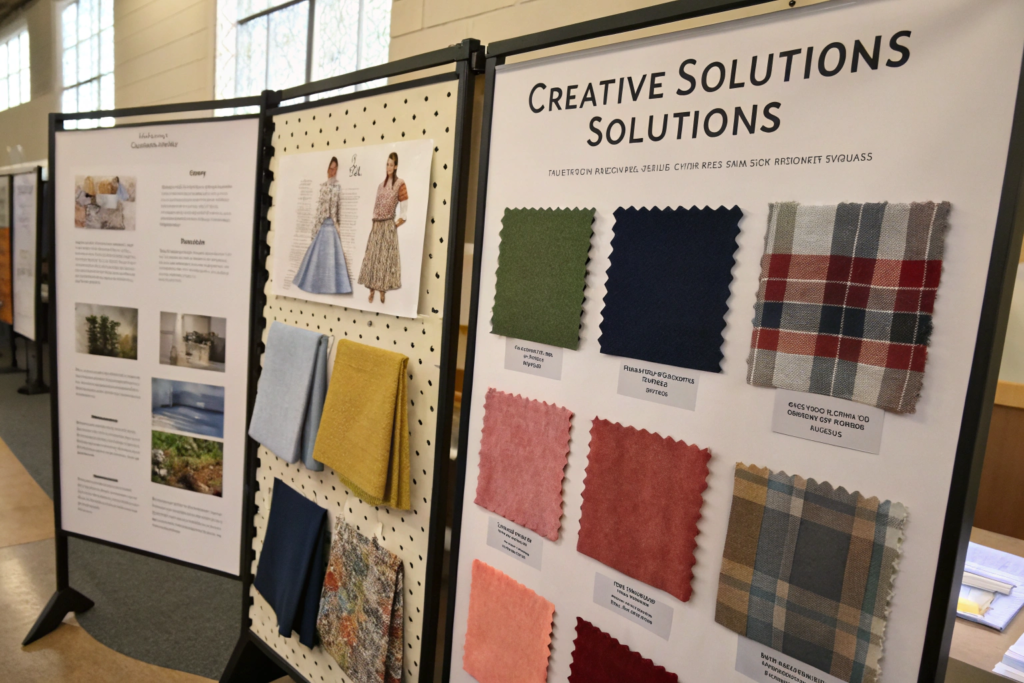
Consider "semi-custom" approaches. Use standard yarns but unique constructions. Or standard constructions but unique finishes. Each degree of customization adds cost; choose where it matters most.
Accept that some elements must be standard. If you need low MOQs, you may need to accept standard colors or standard yarns. The uniqueness comes from how you combine them, not from entirely new development.
Think about exclusivity differently. Maybe you don’t need a fabric no one else has—maybe you need a color no one else has in a fabric that’s otherwise standard. Color minimums are often lower than full development minimums.
A UK brand wanted something unique for their summer collection. They chose a standard organic cotton jersey but developed an exclusive color palette. The color minimums were manageable (300 yards per color), and the fabric felt unique because the colors were theirs alone.
What’s the Minimum Realistic MOQ for True Custom Knits?
This depends entirely on complexity, but here are realistic benchmarks.
For simple customizations (changing weight of an existing fabric, using a standard yarn in a standard construction), MOQs can be as low as 500-1,000 yards. The factory knows the process; changes are incremental.
For moderate customization (new construction using standard yarns, simple patterns), expect 1,000-2,000 yards. There’s real development work, but no yarn procurement hurdles.
For complex customization (new yarns, jacquard patterns, specialty finishes), 2,000-3,000 yards is realistic. Yarn minimums, programming, and multiple samples all add up.
For truly innovative fabrics (novel fibers, never-before-seen constructions), 3,000-5,000 yards or more. You’re asking the factory to invest significant resources with uncertain outcome. They need volume to justify the risk.
These are ranges, not absolutes. Factories with strong R&D focus may accept lower volumes for interesting projects. Factories focused on volume production may hold firm at higher minimums. The relationship matters.
A Portuguese designer developed a revolutionary knit using seaweed-based fiber. The project was scientifically interesting, and the factory invested heavily in development. The first order was 5,000 yards—but the fabric launched her brand internationally.
How Do You Build Long-Term Relationships That Improve MOQ Flexibility?
The best negotiation strategy is becoming a client worth accommodating.
Order consistently. Factories prioritize clients who order regularly, not one-time buyers. If you place small orders every quarter, you become part of their regular production. MOQs naturally become more flexible.
Pay promptly. Nothing builds trust like reliability. A client who always pays on time is a client worth going the extra mile for. When you need a small custom run, they’ll remember.
Communicate your plans. Share your coming needs, even if orders aren’t placed. Factories appreciate visibility and will work with clients who help them plan.
Accept flexibility when it benefits them. If they need to adjust your schedule to accommodate a large client, be gracious. Your flexibility now earns theirs later.
Visit when possible. Face-to-face relationships are powerful. A client who has visited, shared a meal, shown genuine interest—that client gets calls returned first, questions answered promptly, and MOQs considered more flexibly.
A Swedish brand has worked with us for eight years. Their first order was 300 yards—below our standard MOQ. But they were starting out, and we believed in their potential. Today, they order 20,000 yards annually, and we still accommodate their small custom runs because the relationship matters.

How Do You Transition from Small to Large Orders Gracefully?
Growth brings its own challenges. Managing the transition well preserves relationships.
Communicate your growth plans early. If you’re projecting growth, share that with your factory. They can plan capacity and may invest in serving you better.
Maintain relationship even as volume grows. Don’t become just another large account. Keep the personal connection that started the partnership.
Be reasonable about pricing as volume increases. You should get better prices with volume, but don’t squeeze so hard that the factory can’t provide the quality you need. Fair pricing sustains relationships.
Consider exclusivity as you grow. When you reach significant volume, you may want exclusivity on your custom fabrics. Negotiate this fairly—the factory deserves compensation for forgoing other business.
Remember your roots. The factory that helped you when you were small deserves loyalty when you’re large. Don’t switch suppliers for marginal savings. Value the partnership that built your success.
A French brand grew from 500-yard orders to 50,000-yard orders with the same factory over 12 years. They still work with the same sales representative, still visit annually, still treat the relationship as partnership. The factory prioritizes them above larger accounts because of that history.
What Happens When You Need Less Than MOQ After Building Trust?
Even with strong relationships, you can’t ask for the impossible. But trust changes what’s possible.
With trusted partners, we’ve done 200-yard custom runs for clients who normally order 5,000. We know they’ll eventually order more, or they’re testing a new style, or they have a special opportunity. The relationship justifies the accommodation.
But even trusted clients understand the costs. They pay for development separately. They accept slightly higher per-yard prices. They’re flexible on timing. The accommodation goes both ways.
The key is transparency. "I need 300 yards for a special project, and I know that’s below our normal. Here’s what I can offer to make it work." Present it as collaboration, not demand.
A German client once needed 150 meters of a specialty fabric for a celebrity styling opportunity. We did it because they’d been with us for years and the exposure would help them grow. They paid a premium, accepted our timing, and sent photos of the result. The relationship deepened.
Conclusion
Negotiating MOQs for custom knitted fabric isn’t about demanding lower numbers—it’s about understanding the costs, finding creative solutions, and building relationships that make accommodation possible.
The key insights:
- MOQs are driven by real costs: yarn minimums, machine setup, programming, sampling
- Different customizations have different cost structures and minimums
- Paying development costs separately is the most effective negotiation strategy
- Accepting standard yarns or colors reduces or eliminates yarn minimums
- Committing to a program rather than one order provides confidence for factories
- Timing orders during slow seasons can improve flexibility
- Building long-term relationships is the ultimate MOQ negotiation strategy
At Shanghai Fumao, we’ve helped hundreds of brands bring custom knitted fabrics to life—from tiny startups to global powerhouses. We understand that every brand starts somewhere, and we’re willing to work with serious partners to find creative solutions.
Our approach is transparent: we’ll explain the costs behind our MOQs, suggest ways to reduce them, and work with you to structure orders that make sense for both sides. If you need a small custom run, we’ll explore options—development cost sharing, standard yarns, off-peak scheduling. If you’re ready for larger volume, we’ll scale with you.
The goal isn’t just to sell fabric. It’s to build partnerships that last. And in lasting partnerships, MOQs become conversations, not barriers.
Contact our Business Director, Elaine, today to discuss your custom knitted fabric needs. She and her team will explain our MOQ structure, explore creative solutions for your specific situation, and help you bring your unique fabric vision to life. Email her directly at: elaine@fumaoclothing.com. Let’s create something together.