I’ve been in this industry long enough to know the rhythm of the year by heart. March through May and August through October—these are the months when my phone rings off the hook with anxious buyers asking the same question: "Where’s my fabric? It was supposed to ship last week." And every time, I have to explain that during peak season, the rules of production change. What takes 30 days in June can take 50 days in April, and no amount of urgency can change that.
Here’s the reality: peak season delays in woven fabric production aren’t random bad luck. They’re predictable, systemic, and almost entirely preventable with proper planning. The causes are woven into the structure of the industry—capacity constraints, labor shortages, raw material bottlenecks, and logistics backups that compound each other. Understanding these causes is the first step to avoiding them.
Let me walk you through exactly what causes delays during peak season, how these factors interact, and most importantly, how you can plan to keep your orders on track even when everyone else is scrambling.
What Capacity Constraints Cause the Biggest Delays?
The most fundamental cause of peak season delays is simple math: factories have fixed capacity, and demand exceeds that capacity.
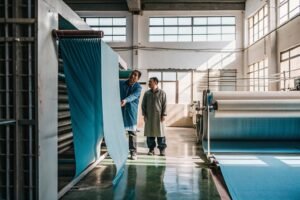
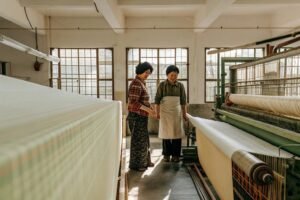
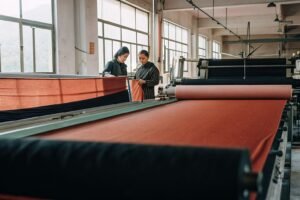
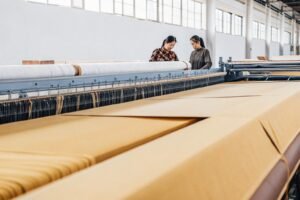
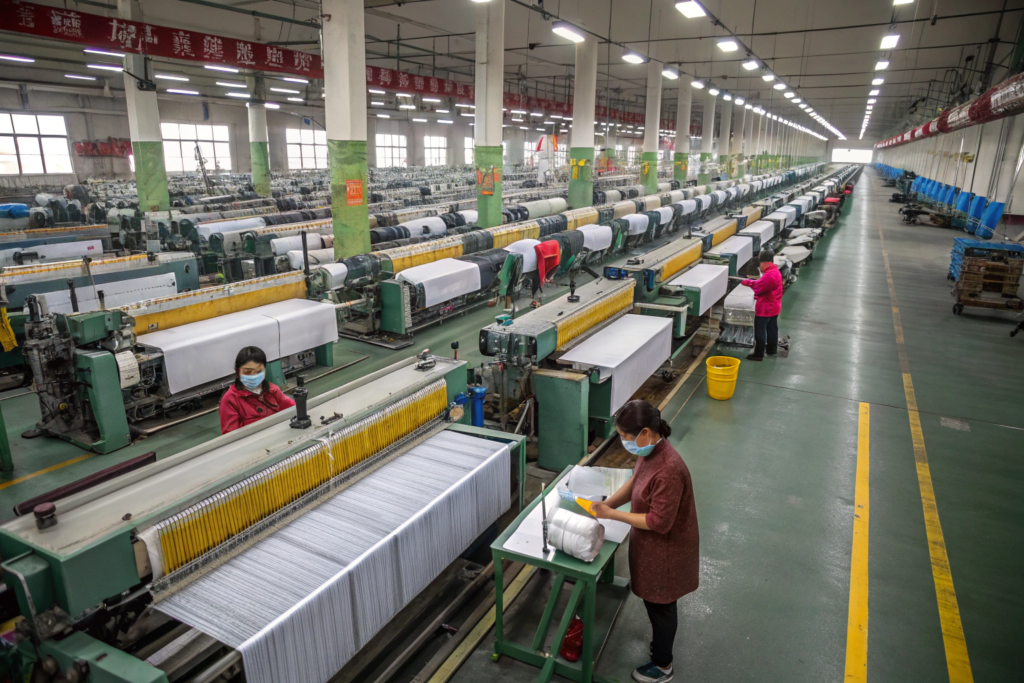
Weaving machines run 24/7 during peak season. There are no idle hours, no unused shifts. When every machine is running every minute of every day, any new order joins a queue. The queue determines your timeline, not the factory’s base production speed.
The math is brutal. A typical weaving mill might have 100 machines, each producing 50 meters per hour. That’s 120,000 meters per day maximum capacity. When orders total 150,000 meters per day during peak season, someone waits. The factory prioritizes based on relationships, order size, and preparation—but someone always waits.
Machine breakdowns become catastrophic during peak season. In slower months, a broken machine means a maintenance crew fixes it while other machines handle the load. In peak season, that broken machine represents lost capacity that can’t be recovered. Every hour of downtime pushes every order back by that hour.
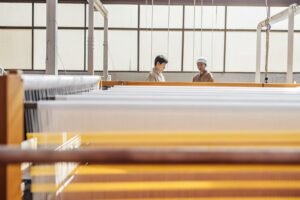
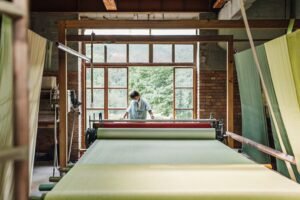
Yarn preparation becomes a bottleneck before weaving even starts. Warping—the process of arranging yarns onto beams for weaving—requires specialized equipment that’s often the tightest constraint. You can have weaving machines available, but if warping is backlogged, your order hasn’t even started.
A German client once placed an order in April expecting 45-day delivery. They didn’t realize that our warping department was already booked solid for three weeks. Their order sat in queue before a single thread was woven. They learned to ask about warping capacity, not just weaving capacity.
How Do Yarn Shortages Compound During Peak Season?
Yarn is the foundation of everything, and peak season exposes every weakness in the yarn supply chain.
Yarn mills also have peak seasons. When fabric demand surges, yarn demand surges first—factories need yarn to weave. Yarn mills become backlogged, lead times stretch, and fabric producers wait.
Specialty yarns become scarce first. Basic cotton yarn might be readily available because multiple mills produce it. But organic cotton, recycled polyester, or specialty blends—these come from fewer sources. When those sources are backlogged, the wait can be weeks.
Color-specific yarns add another layer. If your fabric requires yarn dyed in specific colors, that dyeing step happens before weaving. Yarn dye houses fill up during peak season, adding 1-2 weeks to timelines that buyers often forget to include.
Imported yarn faces additional delays. Much of the yarn used in Chinese weaving comes from other countries—India, Pakistan, Vietnam. International shipping delays affect yarn availability just as they affect fabric shipping. A container stuck at port means machines sitting idle.
A French brand once specified a specialty yarn from an Indian supplier. They didn’t factor in that Indian mills also have peak seasons. The yarn arrived six weeks late, pushing their entire production back. The fabric mill wasn’t the problem—it was waiting for materials.
Why Does Dyeing and Finishing Become a Bottleneck?
Dyeing and finishing are often the tightest constraints in woven fabric production.
Dyeing is a batch process, not continuous. Each batch of fabric requires setup time, precise chemical mixing, and careful temperature control. During peak season, dye houses run around the clock, but each batch still takes the same amount of time. The queue grows.
Color matching adds variability. If your color requires multiple attempts to match perfectly (and many do during peak season when technicians are rushed), you consume multiple batch slots. What should take one dye lot takes two or three, doubling your time in the queue.
Finishing processes vary by fabric. Some fabrics require simple finishing—just sanforizing and pressing. Others need multiple steps—enzyme washing, heat setting, compacting, calendaring. Each step adds time and requires its own equipment, each with its own queue.
Quality issues multiply under pressure. When everyone is rushing, mistakes happen. Off-shade dye lots need to be stripped and redone, consuming additional capacity. Finishing errors require rework. Each quality issue doubles the time a fabric spends in finishing.
A Swedish client learned this when their complex double-dye shade required three attempts to match during peak season. What should have taken one week took three, and their shipping date slipped by two weeks. The factory wasn’t incompetent—they were overwhelmed.
What Labor Factors Contribute to Peak Season Delays?
Behind every machine is a person, and during peak season, those people are stretched thin.
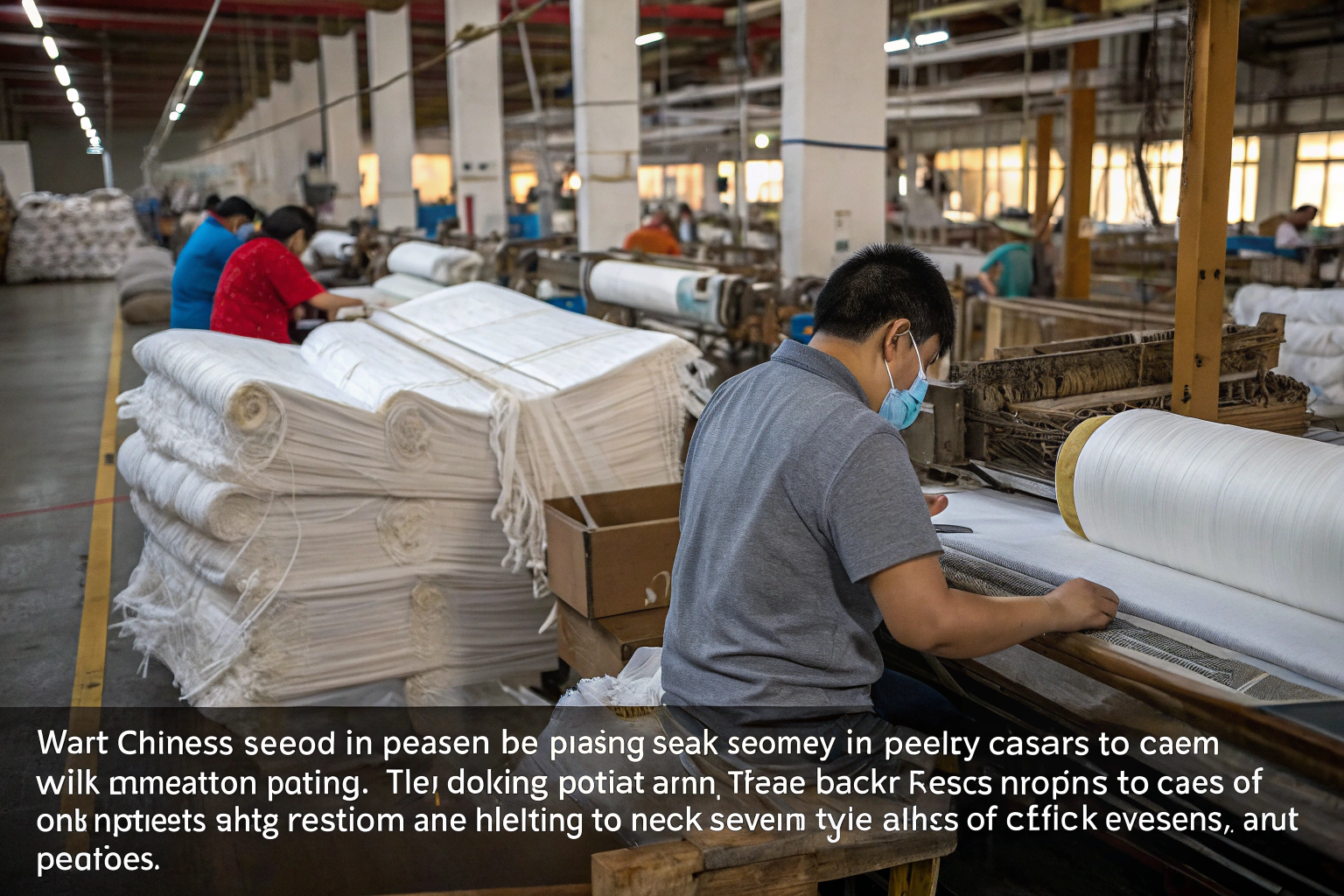
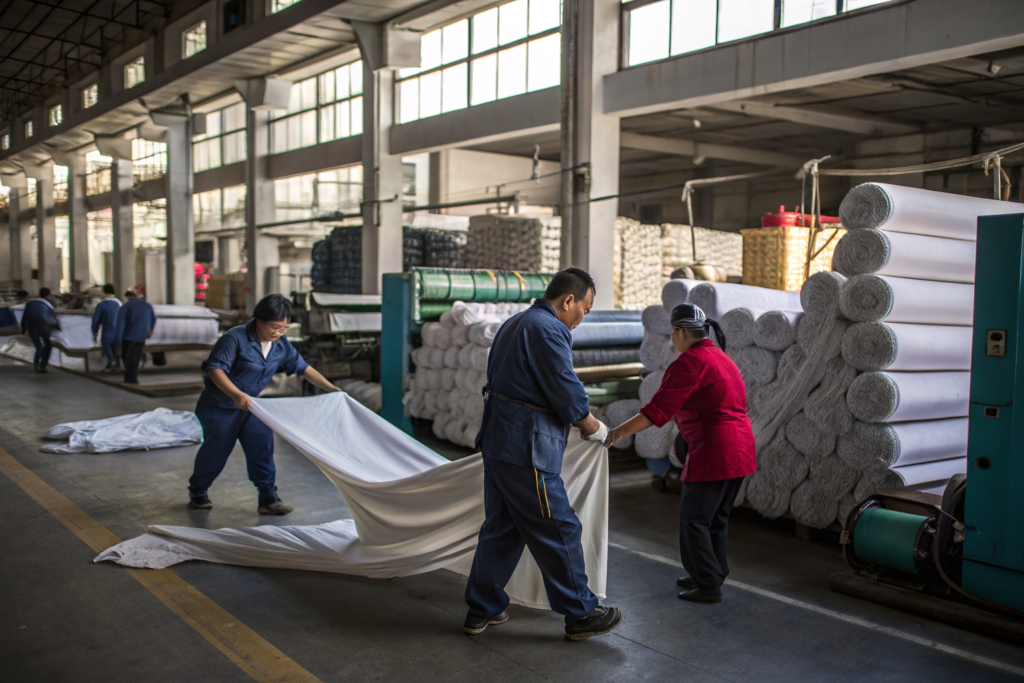
Experienced workers are a finite resource. Skilled weavers, dyers, and finishers take years to train. During peak season, they work overtime—12-hour shifts, seven days a week. Fatigue sets in. Productivity drops. Mistakes increase. The human factor becomes a constraint.
New workers join during peak season to meet demand, but they’re not fully productive. A trainee weaver might run one machine while an experienced weaver runs four. Training takes capacity away from experienced workers who must supervise. The net gain in capacity is less than the headcount suggests.
Turnover spikes during peak season. The work is exhausting, and some workers leave. Replacing them takes time, and new hires need training. The factory is constantly running to stand still.
Holiday absences create gaps. Even during peak season, workers need days off. In China, certain holidays (like Qingming Festival in April, Mid-Autumn Festival in September) fall within peak periods. These days reduce capacity when it’s most needed.
A US client once couldn’t understand why their order slowed down in early October. They didn’t realize that Golden Week holidays meant workers were returning from travel, not at full productivity. The week after a holiday is never as productive as the weeks before.
How Does Worker Overtime Affect Quality and Speed?
Overtime is necessary during peak season, but it has diminishing returns.
In the first week of overtime, productivity often increases—workers are motivated, focused, earning extra pay. By week three, fatigue sets in. Error rates climb. Machines run slower as workers become more cautious or more careless, depending on personality.
Quality control becomes harder. An exhausted inspector misses defects. An overworked dyer misreads a formula. These small errors compound into bigger problems that require rework, adding to the backlog.
Absenteeism rises with overtime. Workers who are exhausted call in sick, leaving machines idle. The factory must overstaff to account for absences, which is difficult when everyone is already working.
The solution isn’t eliminating overtime—it’s planning around its limitations. Factories that manage peak season well schedule maintenance during slower periods, cross-train workers to increase flexibility, and build realistic timelines that account for human factors.
A Japanese brand built relationships with multiple factories specifically to avoid overworking any single partner. By spreading orders, they ensure each factory maintains reasonable overtime levels and consistent quality.
Why Is Skilled Labor Harder to Find for Complex Wovens?
Complex wovens require expertise that can’t be quickly trained.
Jacquard weaving requires pattern programming skills that take years to develop. A technician who can translate a design into machine instructions is worth their weight in gold during peak season. There are only so many of them.
Finishing specialty fabrics—like those requiring precise shrinkage control or specific hand feels—depends on experienced operators who understand how machine settings affect outcomes. These operators are the first to be promoted, the last to be replaced.
Color matching for complex dye shades is an art as much as a science. Experienced dyers can look at a sample and know what adjustments to make. Less experienced dyers run multiple trials, consuming capacity and time.
Quality inspection for high-end fabrics requires trained eyes. Inspectors need to know what defects matter and which are acceptable. Training new inspectors takes months, not days.
A Italian luxury brand works with the same factories year-round, not just during peak season. Their consistent orders keep skilled teams employed and available when peak season hits. The relationship ensures they’re not competing for scarce expertise.
How Do Logistics and Shipping Delays Multiply Production Delays?
Even when fabric is finished on time, shipping delays can push delivery weeks later. During peak season, these delays multiply.
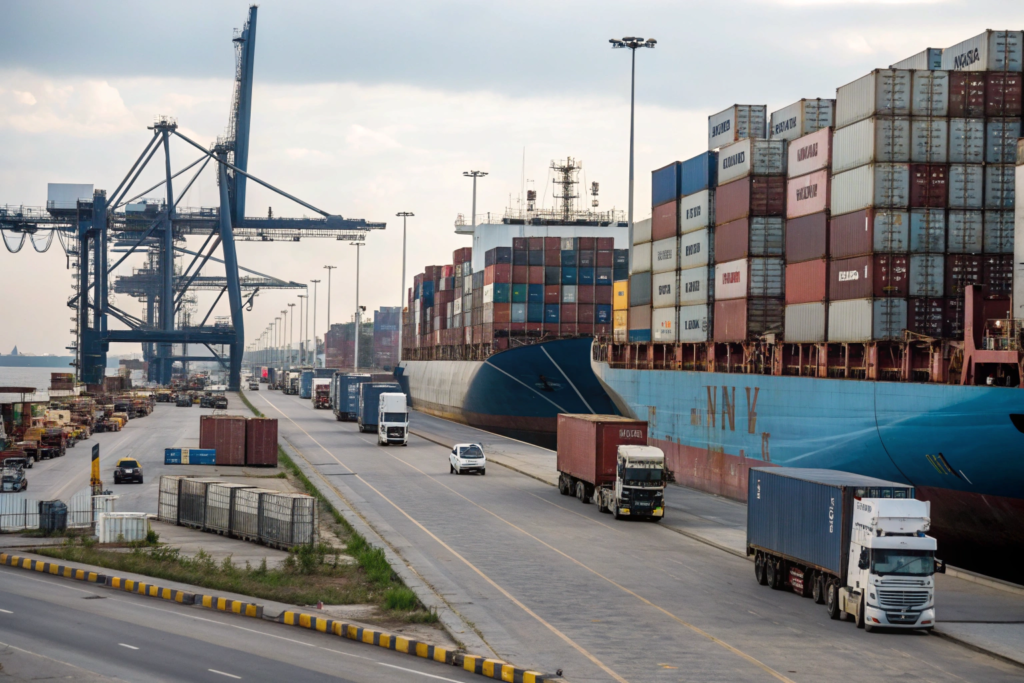
Container shortages become acute during peak months. The same containers that carry fabric also carry everything else China exports. When demand spikes, containers become scarce. Booking a container might take days or weeks longer than usual.
Space on vessels is limited. Shipping lines operate on fixed schedules with fixed capacity. During peak season, vessels fill weeks in advance. If your fabric finishes after the cutoff for the next sailing, you wait for the next—and possibly the next after that.
Port congestion slows everything. When every exporter is shipping, ports become crowded. Containers wait longer for loading. Vessels wait longer at berth. Each day of delay compounds.
Inland transportation backs up. Trucks that move containers from factories to ports are also in peak demand. Booking a truck takes longer. Routes that normally take a day take two or three.
Documentation delays become more common. With everyone shipping, banks and customs brokers are overwhelmed. Letters of credit take longer to process. Export declarations face longer queues. Every administrative step adds time.
A Canadian client once had fabric finished on October 15—perfect timing for their November 1 deadline. But vessels were fully booked through October. The next available sailing was November 5. Their fabric sat at port for three weeks before loading.
Why Do Freight Rates Spike During Peak Season?
Higher demand for limited capacity means higher prices—simple economics.
Container rates are set by supply and demand. During peak season, demand exceeds supply, and rates rise. A container that cost $3,000 in June might cost $5,000 in September.
Surcharges multiply. Peak season surcharges, congestion surcharges, fuel surcharges—each adds to the cost. These aren’t hidden fees; they’re transparent responses to real costs, but they add up.
Space guarantees cost extra. If you need guaranteed space on a specific vessel, you may need to pay premium rates or book through specialized services. The certainty costs money.
The rate increases affect everyone, but they hit smaller buyers hardest. Large buyers with annual contracts may have rate protection. Spot market buyers pay whatever the market demands.
A Spanish brand learned to budget 30% more for freight during peak season. Their finance department now builds this into costings, avoiding margin surprises.
How Far in Advance Should You Book Shipping During Peak Season?
The answer will shock buyers used to normal conditions.
During off-peak months, booking 1-2 weeks in advance is usually sufficient. During peak season, 4-6 weeks is safer. By the time your fabric is finishing, space on vessels may already be fully booked.
For guaranteed space, some buyers book before production starts. They reserve space based on expected completion dates, then adjust if production slips. The cost of adjusting is less than the cost of waiting weeks for the next vessel.
For LCL shipments, booking even earlier is wise. LCL space is more limited than FCL, and consolidation services fill up faster.
The key is communication with your freight forwarder. They see the booking situation daily and can advise on realistic timelines. A good forwarder will tell you "book now for mid-October" when you’re planning September production.
A Dutch client books all peak season shipments six weeks before their expected completion. If fabric finishes early, they adjust. If it finishes late, they have space reserved. The system has eliminated shipping delays from their critical path.
What Planning Strategies Prevent Peak Season Delays?
Peak season delays are predictable, which means they’re preventable—with the right planning.
Order earlier. This sounds obvious, but it’s the most effective strategy. If you know peak season runs March-May, order in January for April delivery. The factory has capacity, yarn is available, and shipping is manageable. Your fabric may arrive early, but early is better than late.
Build buffer into every timeline. Add 2-3 weeks to the factory’s quoted lead time during peak season. Add another 1-2 weeks for shipping. If the factory says 45 days, plan for 60. If it arrives in 50, you’re happy. If it takes 55, you’re still on time.
Secure yarn commitments early. If your fabric uses specialty yarns, order them months ahead. Some buyers buy yarn and store it at the factory, guaranteeing availability when production starts. The storage cost is minimal compared to delay costs.
Consider off-peak production for core styles. If you have staples that sell year-round, produce them during slow months (June-July, November-December). Build inventory during off-peak, sell from inventory during peak. Your production becomes decoupled from demand spikes.
Diversify your supplier base. One factory may be overwhelmed, but another with different specialties may have capacity. Building relationships with multiple suppliers gives you options when one is backlogged.
A US brand now produces 60% of their core styles during June-July, storing fabric for the following spring. Their peak season orders are only for new styles and bestseller replenishment. Their delay rate has dropped from 30% to under 5%.

How Do You Get Accurate Lead Time Estimates During Peak Season?
Asking "how long will it take?" during peak season requires nuance.
Don’t ask for a single number. Ask "what’s your current backlog for weaving?" and "how long is the dye queue?" and "what’s the shipping situation?" Break the timeline into components and estimate each.
Ask what they’re running now. "What orders are you working on today, and where would mine fit?" This reveals queue position, not just theoretical lead time.
Check back weekly. Lead times shift as backlog grows or shrinks. A factory that quotes 45 days today might be quoting 50 next week if three large orders come in. Stay in communication.
Build relationships with production planners, not just sales. Salespeople want your order and may be optimistic. Planners know the real schedule. If you can talk to planners, you’ll get more accurate information.
Use past experience. If the same factory took 50 days for a similar order last peak season, plan for 55 this year. Trends matter more than promises.
A Swedish client maintains a spreadsheet tracking every order’s actual vs quoted lead time. After three years, they can predict any factory’s peak season performance within a week. Their planning is based on data, not hope.
What Should You Do When a Delay Is Inevitable?
Despite best planning, delays happen. How you respond determines the outcome.
Communicate immediately. As soon as you know there’s a delay, tell your customer, your retailer, your team. Bad news doesn’t get better with time. Early communication allows everyone to adjust.
Understand the cause. Is it yarn, production, or shipping? Each requires different mitigation. Yarn delays might mean sourcing elsewhere. Production delays might mean accepting partial shipments. Shipping delays might mean air freight.
Explore partial shipments. If 70% of your fabric is ready, ship it. The remaining 30% can follow. Your customer gets product to sell while waiting for the rest. Air freight a small balance is cheaper than air freighting everything.
Consider alternatives. Can you source similar fabric elsewhere? Can you substitute a different color that’s available? Sometimes a creative solution beats waiting.
Document everything. If the delay causes you costs, you may have claims against the supplier or forwarder. Documentation supports those claims.
A French brand faced a six-week delay on a key style. They communicated immediately with their retailer, negotiated a later delivery, and air-freighted a small initial shipment to cover launch. The retailer appreciated the transparency and kept the order.
How Do Different Woven Constructions Affect Delay Risk?
Not all wovens face the same delay risks. Understanding which constructions are most vulnerable helps you prioritize.
Basic constructions (plain weave, basic twills) face the lowest delay risk. They use standard yarns, simple warping, and straightforward dyeing. When delays happen, these fabrics are often prioritized because they’re easiest to move through production.
Complex constructions (jacquards, dobby weaves) face higher risk. They require specialized machine setup, pattern programming, and more skilled operators. During peak season, the limited number of skilled jacquard technicians becomes a bottleneck.
Yarn-dyed fabrics add preparation time before weaving even starts. Each color must be dyed separately, and yarn-dyeing facilities fill up during peak season. A yarn-dyed stripe may take 2-3 weeks longer than a piece-dyed solid of the same construction.
Fabrics requiring specialty finishes face additional queue risk. Enzyme washes, anti-microbial treatments, or specialty coatings each require their own equipment and expertise. If the finishing house is backlogged, your fabric waits.
Wider width fabrics can face machine constraints. Not all looms weave wide widths. If the factory’s wide looms are fully booked, your wide fabric waits even if narrow looms are available.
A UK brand learned to order their complex jacquards six weeks earlier than their basic twills. The timing difference meant both arrived together despite the jacquard’s longer production path.
Why Do Yarn-Dyed Fabrics Take Longer During Peak Season?
The multiple steps create multiple queues.
First, each yarn color must be dyed. If your fabric has four colors, that’s four separate dye lots, each requiring setup time and machine time. During peak season, yarn dye houses are as busy as fabric dye houses.
Second, the dyed yarns must be prepared for warping. Each color goes on its own cones or beams, requiring careful organization. This preparation step has its own capacity constraints.
Third, warping for yarn-dyed fabrics is slower and more complex. Each color must be positioned correctly for the pattern. Warping machines run slower, and mistakes are harder to fix.
Fourth, weaving itself is slower because pattern changes are more frequent. A solid fabric might run for days without stopping. A yarn-dyed stripe might require pattern changes that stop the loom.
Finally, finishing must handle multiple colors that may behave differently. What works for one color might affect another. Finishing requires careful testing and adjustment.
A Portuguese client once ordered a three-color yarn-dyed stripe in August for November delivery. The yarn dyeing alone took four weeks. They learned to order yarn-dyed fabrics for the following season, never the current one.
How Does Fabric Weight Affect Production Speed?
Weight influences speed in ways that surprise many buyers.
Lightweight fabrics (under 120 GSM) weave more slowly because the fine yarns break more easily. Loom speeds must be reduced to prevent breaks. A lightweight poplin might produce 30% fewer meters per hour than a mid-weight twill.
Heavyweight fabrics (over 300 GSM) also weave slowly because the thick yarns require more force and careful handling. Heavy fabrics may also require slower drying and finishing.
Mid-weight fabrics (150-250 GSM) generally weave fastest. The yarns are robust enough for high speeds but not so heavy as to slow processes.
The impact on scheduling: if you order a very lightweight or heavyweight fabric during peak season, you’re competing for loom time that produces less output per hour. Your order consumes more machine time for the same yardage, potentially facing longer queues.
A Canadian brand learned to order their lightweight voiles earlier than their standard poplins. The factory’s lightweight loom capacity was limited, and booking early secured their place.
Conclusion
Peak season delays in woven fabric production aren’t mysterious or random. They’re the predictable result of capacity constraints, labor limitations, raw material bottlenecks, and logistics backups that compound each other. Understanding these causes is the first step to avoiding them.
The key factors to remember:
- Machine capacity is fixed, and demand exceeds it during peak months
- Yarn availability, especially for specialty fibers, becomes constrained
- Skilled labor is a finite resource that can’t be quickly expanded
- Dyeing and finishing queues lengthen as everyone rushes
- Shipping and logistics face their own peak season pressures
- Different fabric constructions face different delay risks
The strategies that work:
- Order earlier than you think necessary
- Build buffer into every timeline
- Secure yarn commitments in advance
- Produce core styles during off-peak months
- Diversify your supplier base
- Communicate early when problems arise
At Shanghai Fumao, we’ve managed peak season production for over two decades. We know exactly how our capacity behaves, where the bottlenecks form, and how to keep client orders moving. We communicate transparently about lead times, queue positions, and potential delays. And we work with clients to plan production around peak season realities.
We also offer off-peak production planning for clients who want to avoid peak season entirely. By producing core styles during slower months, you can focus peak season orders on new products and replenishment only.
Whether you’re planning your first peak season or your fiftieth, we’re here to help you navigate the challenges. Realistic timelines, honest communication, and proactive planning make the difference between stress and success.
Contact our Business Director, Elaine, today to discuss your woven fabric production planning. She and her team will provide realistic lead time estimates, help you schedule around peak season constraints, and ensure your orders arrive when you need them. Email her directly at: elaine@fumaoclothing.com. Let’s plan together for success.