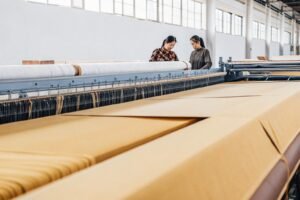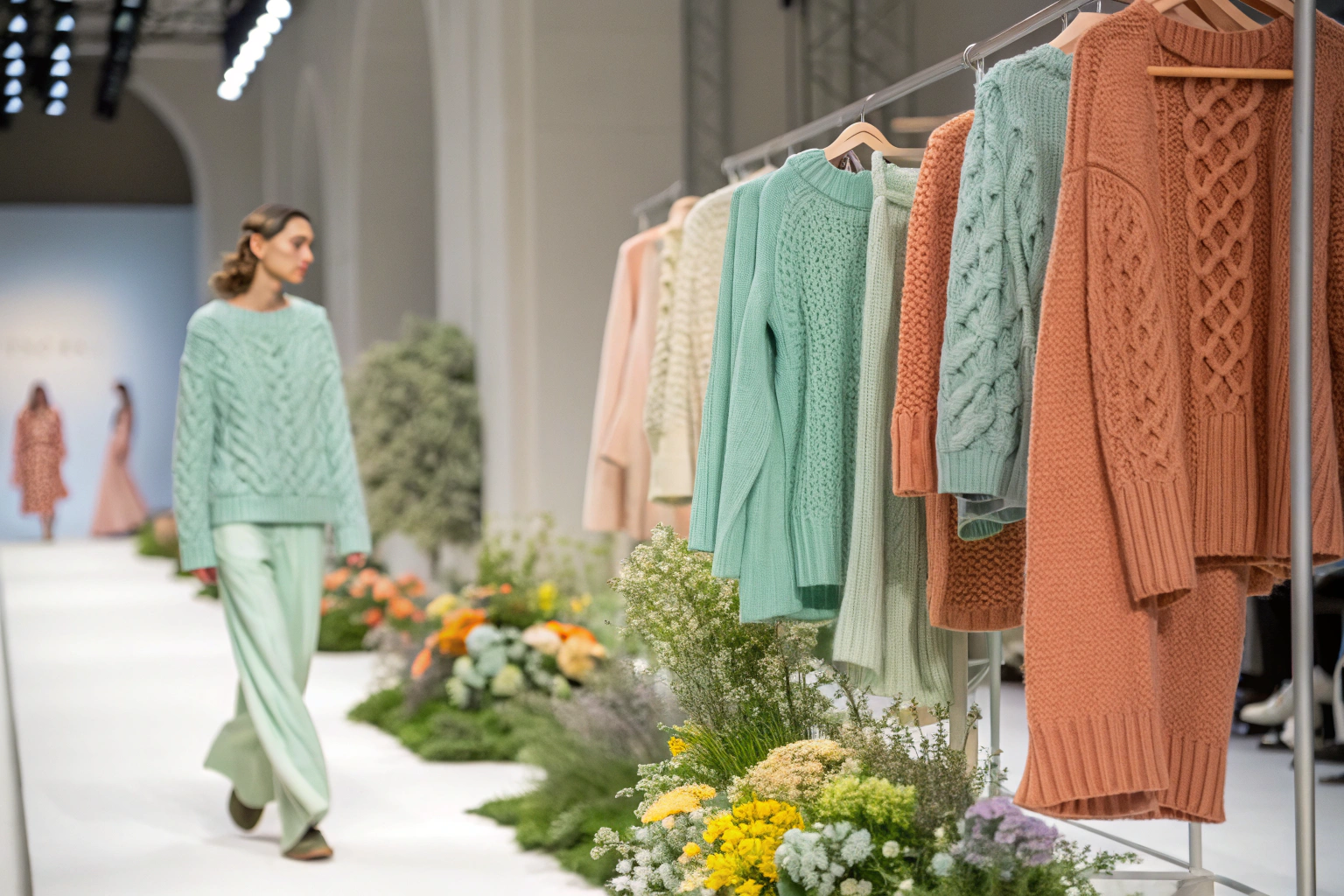
I’ve been in this industry long enough to see trends come and go, but the shift I’m witnessing for Spring 2026 feels different. Knitted fabrics are no longer just the comfortable option—they’re becoming the fashionable choice. Designers who spent years focused on wovens are suddenly exploring what knits can do, and the results are transforming how we think about spring fashion.
Let me share what I’m seeing from our clients, from trend forecasters, and from the runways. Spring 2026 is shaping up to be the season of the knit—but not the knits you remember from seasons past. We’re talking about innovative structures, unexpected textures, sustainable fibers, and colors that feel both fresh and timeless.
Here’s what’s trending in knitted fabrics for Spring 2026, based on real orders, real samples, and real conversations with designers around the world.
What Colors Are Dominating Spring 2026 Knit Collections?
Color forecasting is always a blend of art and data, but for Spring 2026, the direction is unusually clear. After years of either extreme brightness or total neutrality, we’re seeing a move toward what I call "conscious color"—hues that feel grounded, natural, and emotionally resonant.
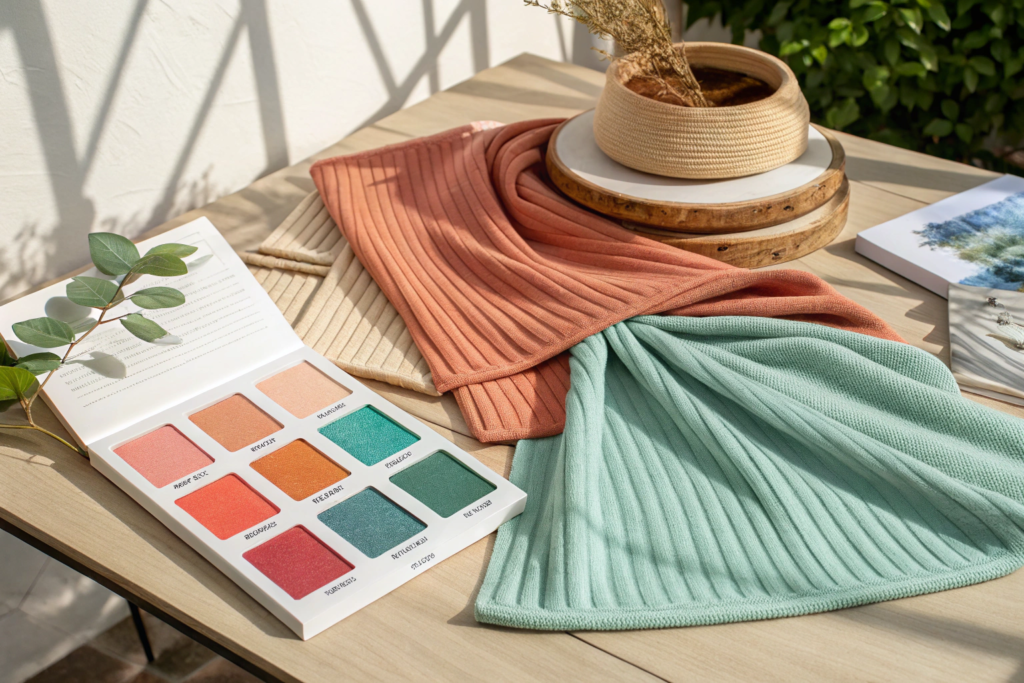
Terracotta and clay tones are leading the way. These warm, earthy oranges and browns connect to nature and feel both ancient and modern. In knitted fabrics, they take on additional depth—the texture of a rib or cable catches light differently, making the color appear to shift and breathe. A Swedish brand just ordered 15,000 meters of terracotta fine-gauge jersey for their spring collection. They’re betting big on this color.
Sage green and muted herbal tones are everywhere. This isn’t the bright kelly green of past seasons—it’s softer, more contemplative. In open-stitch knits, sage creates an almost ethereal effect, like looking through leaves. In denser structures, it reads as sophisticated and calm. We’re developing several variations for clients who want this exact shade.
Powder blue is returning in a big way. Not the icy blue of winter, but a warmer, almost milky blue that feels soft and approachable. In fine-gauge knits, it reads as luxurious and gentle. Several luxury loungewear brands have made powder blue their signature for the season.
Warm cream and off-white remain foundational, but with a difference. The bright optic white of recent years is giving way to warmer, more natural creams that feel less sterile and more organic. In textured knits, these creams create beautiful shadow play.
A pop of coral provides accent. Not everywhere, but strategically—a coral trim, a coral stripe, a coral accessory against neutral grounds. It adds energy without overwhelming.
A Milan-based designer told me: "Spring 2026 colors are about feeling grounded but optimistic. They’re the colors you see in a Mediterranean garden at dawn—soft, warm, full of promise." That captures it perfectly.
How Are These Colors Different from Previous Seasons?
The shift is subtle but significant. Spring 2025 was dominated by brighter, more saturated colors—vibrant pinks, electric blues, bold yellows. It was energetic, almost aggressive. Spring 2026 dials that energy back, replacing it with warmth and depth.
The difference is in the undertones. Previous seasons favored cool, clean colors. Spring 2026 colors are warmer, more complex. A blue that might have been sharp and electric is now soft and powdery. A green that might have been sharp and acidic is now muted and herbal.
This shift reflects broader cultural trends. After years of disruption, people are seeking calm and connection. Colors that feel natural and grounding resonate more than colors that shout for attention.
For knits specifically, these warmer, more complex colors work beautifully with texture. The play of light across a rib or cable reveals the color’s depth in ways that flat, bright colors don’t.
A Japanese brand that forecasts color trends told us they’re calling this palette "Conscious Calm." It’s about colors that make you feel something, not just colors that make you look.
What About Prints and Patterns in Knits?
While solids dominate, prints are appearing in new ways. The key trend is what I’d call "embedded pattern"—designs that are knitted in, not printed on.
Jacquard knits are having a moment. Geometric patterns, abstract designs, even photorealism in knit—these are appearing in high-end collections. The technology has advanced to where jacquard knits can be incredibly detailed while maintaining softness and drape. A German brand just launched a collection of jacquard knit dresses with patterns inspired by aerial photography of farmland. They’re stunning.
Stripes remain classic but with twists. Uneven stripes, blurry stripes (achieved through careful color blending), and stripes that fade in and out are replacing the sharp, graphic stripes of previous seasons. These feel more organic, less rigid.
Textural patterns are replacing printed patterns for many designers. Instead of printing a floral, they’re knitting a texture that suggests a floral. The result is more subtle, more luxurious, and more durable.
A French luxury house told us they’re moving away from prints entirely for their knitwear. "Print is surface. Knit is structure. We want structure." That philosophy is spreading.
What Knit Structures Are Trending for Spring 2026?
Structure is where Spring 2026 knits get really interesting. After seasons focused on smooth, basic fabrics, designers are embracing texture and complexity.
Fine-gauge ribs are everywhere. Not the chunky ribs of winter sweaters, but delicate, closely spaced ribs that create subtle vertical texture. In lightweight yarns (60/1 cotton count or finer), these ribs add visual interest without bulk. They’re appearing in everything from t-shirts to dresses to lightweight cardigans. The effect is elegant and sophisticated—a fabric that rewards close attention.
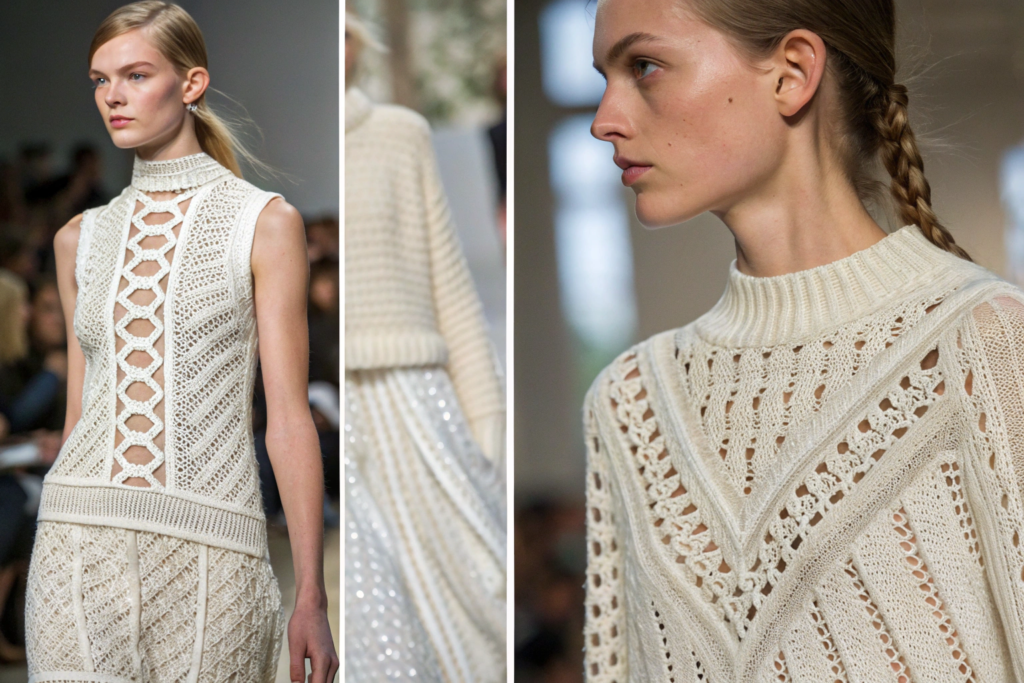
Open stitches and eyelets connect to the season’s desire for lightness. These aren’t the chunky holes of heavy-gauge knits, but delicate openings that create almost lace-like effects. In fine yarns, open stitches read as ethereal and romantic. They also increase breathability, which matters for spring layering.
Textured jacquards provide dimension without color. By using the same yarn throughout but varying the stitch structure, designers create fabrics that play with light and shadow. A honeycomb texture, a basketweave effect, a subtle geometric pattern—all in a single color. These fabrics are sophisticated and versatile.
Airy mesh knits offer transparency and lightness. Not the athletic mesh of sportswear, but delicate, almost gauzy knits that layer beautifully over other pieces. In spring collections, these are appearing as overlay dresses, lightweight cardigans, and scarves.
A New York designer described the trend: "We want fabrics that have something to say, but say it quietly. Texture does that. It rewards the person who looks closely without shouting at everyone else."
How Are Designers Using Sheer and Semi-Sheer Knits?
Sheer knits are having a significant moment for Spring 2026. The key is in how they’re being used—not as provocative statements, but as layered elements that add depth and interest.
Sheer knit overlays are appearing over solid bases. A sheer knit dress worn over a slip, a sheer knit top over a camisole, a sheer knit cardigan over a fine-gauge tank. The effect is dimensional and nuanced, with the sheer layer softening and texturizing what’s beneath.
Sheer panels and inserts add interest to otherwise solid garments. A sleeve in sheer knit, a yoke in open stitch, a back panel that reveals a glimpse of skin or another layer. These details feel modern and intentional.
The yarns matter enormously. Fine merino, silk blends, and high-quality cottons create sheers that feel luxurious, not cheap. The best sheers have a subtle halo or luster that catches light beautifully.
A London-based brand is showing a collection entirely built around sheer knit layering. Their lookbook features a sheer knit tunic over a fine-gauge rib dress, a sheer knit scarf over a solid sweater, a sheer knit overlay on a structured skirt. It’s ethereal without being precious.
What Role Does "Imperfect" Texture Play?
There’s a growing appreciation for knits that embrace "imperfect" textures—fabrics that look and feel handmade, even when they’re machine-produced.
Slub yarns create irregular thickness that reads as artisanal. These yarns have intentional thick-and-thin sections that produce fabric with subtle variation and depth. In solid colors, slub knits have a natural, organic feel that’s very much on trend.
Bouclé and loop yarns add dimensional texture that’s almost sculptural. These aren’t the heavy bouclés of winter coats, but lighter versions suitable for spring. In soft colors, they create fabric that’s incredibly tactile and inviting.
Nep yarns (with tiny colored specks) add visual interest to solid grounds. A cream knit with tiny black or colored neps reads as sophisticated and slightly unexpected. These fabrics feel special without being loud.
The trend toward "imperfect" texture reflects a broader cultural shift toward authenticity and away from mass-produced perfection. Fabrics that look like they could have been made by hand feel more valuable, more human.
A Danish brand built their entire spring collection around slub-knit jersey in soft, earthy colors. Their customers can’t stop touching the fabric—it’s become their signature.
What Fibers and Blends Are Leading Spring 2026 Knits?
Fiber selection for Spring 2026 reflects both sustainability concerns and performance requirements. The trends are toward natural fibers, responsible synthetics, and clever blends that maximize benefits.
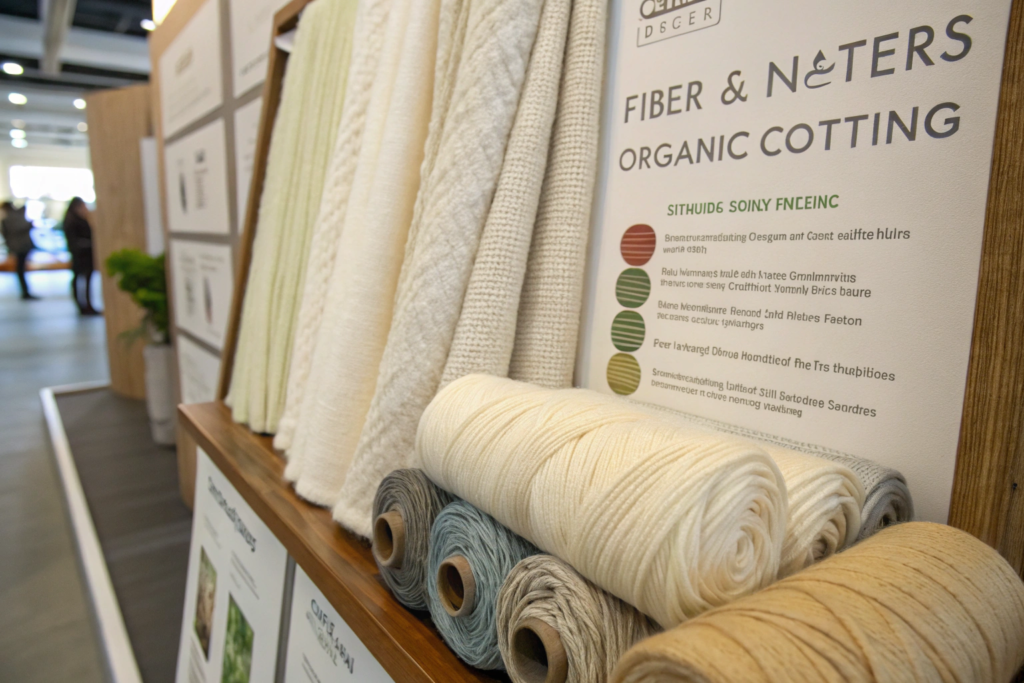
Organic cotton remains foundational, but with higher quality expectations. Long-staple organic cottons (Supima, Egyptian, Giza) are replacing standard grades as brands compete on softness and durability. The difference is noticeable—fabrics feel smoother, pill less, and wear longer. A Portuguese brand that supplies luxury basics now specifies only GOTS-certified long-staple cotton for their spring knits.
Tencel (lyocell) is having a moment. Its fluid drape, subtle luster, and exceptional softness make it perfect for spring knits. In blends with cotton or alone, Tencel creates fabrics that feel luxurious and drape beautifully. The closed-loop production process appeals to sustainability-focused brands. We’re seeing significant growth in Tencel jersey and Tencel-cotton blends.
Recycled polyester continues its growth, but with higher expectations. The cheap, scratchy recycled poly of early years is being replaced by premium grades that feel almost like natural fibers. In blends with cotton or Tencel, recycled polyester adds durability and wrinkle resistance without compromising hand feel. A German activewear brand now uses 100% recycled polyester in their spring knit collection—and you can’t tell the difference from virgin.
Linen blends bring texture and breathability. Pure linen in knits can be stiff, but linen-cotton and linen-Tencel blends create fabrics with linen’s natural character and cotton’s softness. These are perfect for warm-weather knits that need to breathe.
Merino wool continues to expand beyond winter. Superfine merino (17.5 micron and below) is comfortable against skin even in spring weather. It breathes, resists odors, and drapes beautifully. A Swedish brand now offers merino knit t-shirts as their year-round staple.
A Swiss textile expert told me: "The fiber wall is breaking down. We used to think of cotton for spring, wool for winter. Now we have merino for everything, Tencel for everything, blends that work across seasons." That’s exactly right.
How Are Sustainable Fibers Performing in Spring Knits?
Sustainability is no longer a niche concern—it’s a baseline expectation. But performance must match the sustainability story.
Organic cotton has closed the quality gap with conventional. Through better breeding and processing, organic cotton now matches or exceeds conventional in softness and durability. The price premium has narrowed as volume has grown. For most spring knit applications, there’s no performance reason to choose conventional over organic.
Tencel outperforms many natural fibers in key metrics. Its strength when wet exceeds cotton’s, reducing pilling and extending garment life. Its moisture management keeps wearers comfortable in variable spring weather. Its drape is exceptional. For designers who want sustainability plus performance, Tencel is often the answer.
Recycled polyester has transformed. The fiber quality now matches virgin, and the environmental benefits are real and measurable. For knits that need durability and easy care, recycled polyester blends are the responsible choice.
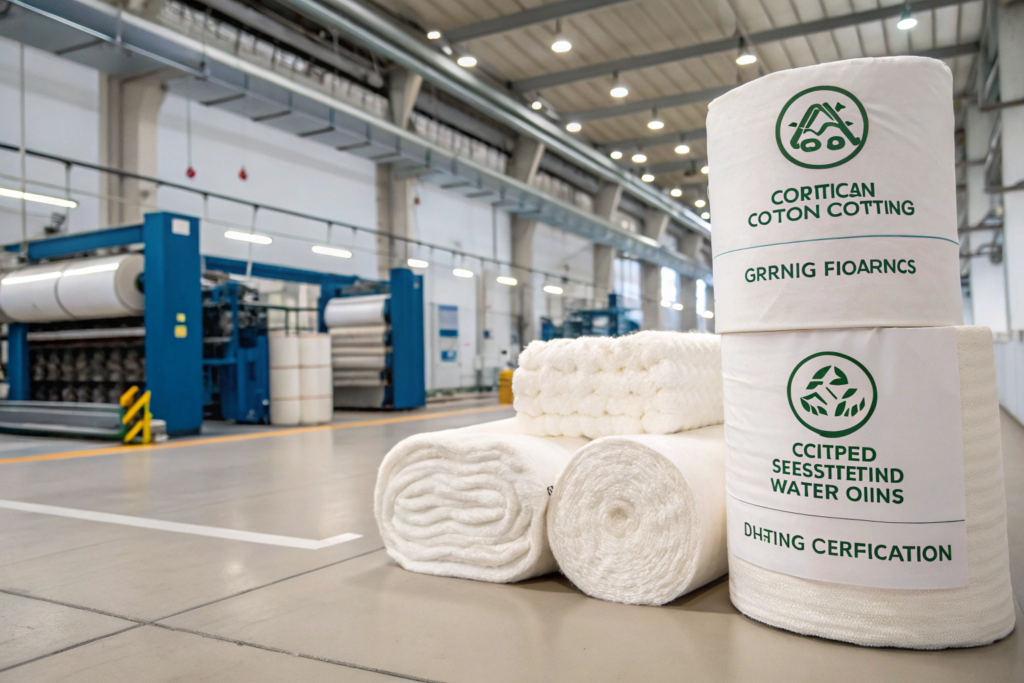
The challenge is verification. With so many "sustainable" claims, certification matters more than ever. GOTS for organic, GRS for recycled, OEKO-TEX for safety—these aren’t optional extras. They’re proof.
A French brand tests every sustainable shipment against their claims. They’ve rejected fabric that didn’t meet specifications. Their customers trust them because they verify.
What About Novelty Fibers and Innovations?
Spring 2026 is seeing interesting innovations in fiber technology.
Bamboo charcoal infusions are appearing in performance knits. The charcoal is added during fiber production, creating fabric with natural odor control and moisture management. Several activewear brands are incorporating this into their spring collections.
Seaweed and algae-based fibers are moving from novelty to commercial reality. These fibers add minerals and vitamins to fabric (though the longevity of these benefits is debated). The sustainability story is compelling—renewable, ocean-harvested resources.
Hemp-cotton blends are growing. Improved processing has eliminated hemp’s historic stiffness. Modern hemp-cotton knits are soft, breathable, and exceptionally durable. The sustainability story (hemp grows with minimal water, no pesticides) resonates with eco-conscious consumers.
Milk fiber (casein) is reappearing in luxury knits. Made from milk protein, these fibers have a silky hand and natural antibacterial properties. They’re expensive and niche, but for ultra-luxury spring knits, they offer something truly different.
A Japanese innovator we work with has developed a fiber from orange peel waste. The fabric has a subtle citrus scent (which fades after washing) and a silky hand. It’s not yet commercial at scale, but the potential is exciting.
What Garment Categories Are Driving Spring 2026 Knit Trends?
The application of knits is expanding beyond traditional categories. Spring 2026 sees knits appearing everywhere.
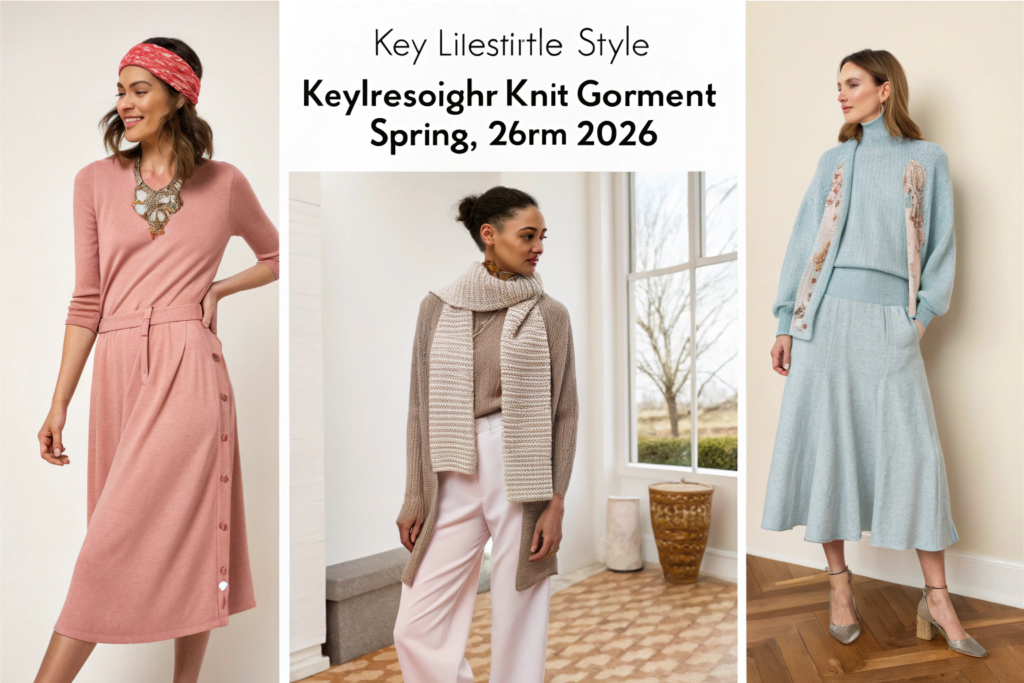
Knit dresses are having a moment. Not just jersey t-shirt dresses, but sophisticated styles in fine-gauge ribs, open stitches, and textured jacquards. These dresses drape beautifully, travel well, and transition from day to evening. A New York brand’s best-selling spring item is a midi dress in fine-gauge rib, available in six colors.
Knit separates—matching sets in coordinated knits—offer versatility and ease. A fine-gauge knit top with matching skirt, or a cardigan with matching trousers. These sets can be worn together for a polished look or mixed with other pieces. The trend toward "soft suiting" continues.
Knit blazers and tailored knits are evolving. Double-knit constructions create fabrics with enough structure for tailoring but enough give for comfort. A knit blazer moves with the body in ways a woven can’t, while maintaining a professional appearance. Several office wear brands are introducing knit blazers for spring.
Knit tops with interesting details are replacing basic t-shirts. Boat necks, bishop sleeves, keyhole backs, and asymmetric hems—all executed in fine-gauge knits. These tops feel special without being fussy.
Knit accessories—headbands, scarves, light wraps—add finishing touches. In open stitches and airy yarns, these accessories provide warmth without weight.
A Milanese designer summed it up: "Knits are becoming the whole wardrobe, not just the comfortable part. Spring 2026 is the season knits grow up."
How Are Knit Dresses Evolving for Spring?
Knit dresses for Spring 2026 are more sophisticated than ever.
The shift dress in fine-gauge rib is a key silhouette. Simple, elegant, and endlessly versatile, these dresses work for work, weekends, and evenings. The rib adds texture without bulk, and the fine gauge ensures the dress drapes beautifully rather than clinging.
The sweater dress has been reimagined for spring. In lighter weights and open stitches, these dresses are appropriate for warmer weather while maintaining the cozy appeal of knit. Pair with sandals for a relaxed look or boots for transitional weather.
The knit slip dress in silky Tencel or modal blends offers liquid drape and exceptional comfort. These dresses layer beautifully under jackets or cardigans and stand alone for evening.
The knit maxi dress in open stitches creates ethereal, bohemian looks. In soft colors and airy constructions, these dresses feel romantic and modern.
A London brand’s spring collection features a knit dress in every silhouette—rib shift, open-stitch maxi, silky slip. They’re betting that women want knit dresses for every occasion.
What About Knits in Men’s Spring Fashion?
Men’s knitwear for Spring 2026 is evolving beyond the polo shirt.
Fine-gauge knit polos remain essential but with updates. New collar treatments, interesting stitch structures, and updated proportions keep this classic fresh. In luxury fibers (merino, Supima cotton), the knit polo rivals the woven shirt for refinement.
Knit shirts with collars are emerging as alternatives to woven button-downs. These shirts have the appearance of a dress shirt but the comfort of a knit. In fine-gauge interlock or pique, they work for casual offices and smart-casual occasions.
Lightweight knit blazers offer men tailored looks without the restriction of wovens. In double-knit constructions with slight stretch, these blazers move with the body while maintaining a professional appearance. They’re particularly popular for travel.
Knit sweaters and cardigans in lighter weights provide layering options. Fine-gauge crewnecks, V-necks, and cardigans in merino or cotton work across seasons.
A Swedish men’s brand reports that their knit shirt category grew 40% in 2025 and they expect similar growth for 2026. Men are discovering the comfort of knits without sacrificing style.
What Sustainability Trends Are Shaping Spring 2026 Knits?
Sustainability isn’t a trend anymore—it’s a requirement. But for Spring 2026, the conversation has matured beyond simply "is it sustainable?" to "how sustainable, and how do we know?"
Traceability is becoming the new frontier. Consumers want to know not just that fabric is organic, but where the cotton was grown, how the workers were treated, and how the fabric was processed. Blockchain and QR code tracing are moving from novelty to expectation. Several major brands now require full traceability for their spring knits.
Circularity is gaining attention. Fabrics designed to be recyclable at end of life, or made from recycled materials that can be recycled again. This requires careful fiber selection (mono-materials rather than blends) and design for disassembly. A Dutch brand’s spring collection features knits made entirely from recycled polyester that can be recycled again—a closed loop.
Low-impact processing is becoming standard. Waterless dyeing, energy-efficient finishing, and chemical management systems are no longer differentiators—they’re expectations. Brands are asking about our environmental certifications (ISO 14001, Bluesign) as routinely as they ask about fabric specifications.
Biodegradability is being questioned more critically. A fabric that’s biodegradable in industrial composting facilities may not be biodegradable in a landfill. Brands are asking for specifics: under what conditions, how long, with what residues.
A German brand’s sustainability director told me: "We’re past the era of simple claims. Our customers want data. They want to know exactly what they’re buying." That’s where the industry is heading.
How Are Brands Communicating Sustainability to Consumers?
The communication around sustainability has become more sophisticated.
Certification labels remain important but are no longer sufficient alone. Brands are adding QR codes that link to detailed supply chain information. Scan the tag, see where the cotton was grown, watch a video of the knitting process, read the test results. This transparency builds trust.
Storytelling focuses on specific impacts, not vague claims. "This shirt saved 50 liters of water compared to conventional cotton" is more compelling than "eco-friendly." "Made from 8 recycled plastic bottles" gives consumers a tangible understanding.
The language has shifted from guilt to aspiration. Instead of "buy this to save the planet," it’s "buy this because it’s better made, more beautiful, and responsible." Sustainability as a feature, not a burden.
Social sustainability is getting attention alongside environmental. Fair wages, safe working conditions, and community investment are becoming part of the story. Consumers want to feel good about how their clothes were made, not just their environmental impact.
A Swedish brand’s spring collection includes a QR code on every garment that shows the face of the person who knitted it and tells their story. It’s powerful and personal.
What Certifications Matter Most for Spring 2026 Knits?
The certification landscape remains complex, but certain credentials stand out.
GOTS (Global Organic Textile Standard) remains essential for organic natural fibers. It covers the entire supply chain and includes social criteria. For spring knits made from organic cotton, GOTS is the gold standard.
GRS (Global Recycled Standard) verifies recycled content and responsible processing. For knits containing recycled polyester or other recycled materials, GRS provides credibility.
OEKO-TEX Standard 100 certifies that fabrics are free from harmful substances. For any fabric touching skin, this is increasingly expected. Class I for children’s wear, Class II for adult apparel.
Bluesign certification focuses on environmental health and safety throughout the supply chain. It’s particularly valued by outdoor and performance brands.
The key is verification, not just claims. A certificate without a verifiable number and a way to check it is just a piece of paper.
A US brand now requires all three major certifications (GOTS or GRS plus OEKO-TEX) for their spring knit collection. They’ve found that suppliers who can provide all three are generally the most reliable and transparent.
Conclusion
Spring 2026 is shaping up to be an exciting season for knitted fabrics. The trends point toward sophistication, texture, and responsibility—fabrics that feel as good as they look, made in ways that respect both people and planet.
Color trends favor warm, grounded hues that feel calming and optimistic. Terracotta, sage, powder blue, and warm cream lead the palette, with coral providing accent. These colors work beautifully with the textured knits that define the season.
Knit structures are moving beyond basics. Fine-gauge ribs, open stitches, textured jacquards, and airy meshes offer variety and visual interest. These aren’t your grandmother’s knits—they’re modern, sophisticated, and endlessly versatile.
Fiber selection reflects both sustainability and performance. Organic cotton, Tencel, recycled polyester, and merino wool lead the way, often in clever blends that maximize benefits. Novelty fibers offer innovation at the high end.
Garment categories are expanding. Knit dresses, separates, blazers, and tops in sophisticated styles are proving that knits can be fashionable, not just comfortable. Men’s knits are evolving beyond polos into refined shirts and tailored pieces.
Sustainability has matured from trend to requirement. Traceability, circularity, and verifiable claims are now expected. Certifications like GOTS, GRS, and OEKO-TEX provide the proof that consumers demand.
At Shanghai Fumao, we’re seeing these trends play out in real orders from real clients. The designers who succeed in Spring 2026 will be those who embrace the possibilities of knitted fabrics—their texture, their comfort, their versatility, and their potential for responsible production.
We’re ready to help you navigate these trends. Our development team can create samples in trending colors and structures. Our sustainable offerings (GOTS organic cotton, GRS recycled polyester, Tencel blends) meet the highest standards. And our quality systems ensure your spring knits perform as beautifully as they look.
Whether you’re developing a full collection or just exploring possibilities, we’re here to help you make Spring 2026 your most successful season yet.
Contact our Business Director, Elaine, today to discuss your Spring 2026 knit fabric needs. She and her team will share samples, discuss trends, and help you select fabrics that will delight your customers. Email her directly at: elaine@fumaoclothing.com. Let’s create something beautiful together.