I’ve been in this industry for over two decades, and I’ve never seen a shift happen as fast as the move to recycled polyester. Five years ago, it was a niche request from a few eco-conscious brands. Today? I’d say 60% of our knit fabric inquiries specifically ask for recycled options. Just last week, a buyer from a major US activewear brand told me straight up: "If it’s not recycled polyester, we’re not interested." That wasn’t a negotiation—it was a statement of fact.
Here’s what’s driving this transformation: recycled polyester now matches virgin quality while offering compelling environmental benefits, and brands are realizing they can’t afford to ignore consumer demand for sustainability. The technology has matured to the point where recycled polyester knits perform identically to virgin in stretch, recovery, durability, and hand feel. Add the marketing advantage of "made from recycled bottles," and the choice becomes obvious.
Let me walk you through exactly why buyers are making this switch, what they’re learning about performance and cost, and how to source recycled polyester knits that actually deliver on their promises. I’ll share real data from our production floor, examples from clients who’ve made the transition successfully, and the pitfalls to avoid when specifying recycled content.
What’s Driving the Massive Shift to Recycled Polyester in Knits?
The shift to recycled polyester isn’t happening in a vacuum. Three powerful forces are converging to make it the default choice for knitted fabrics.
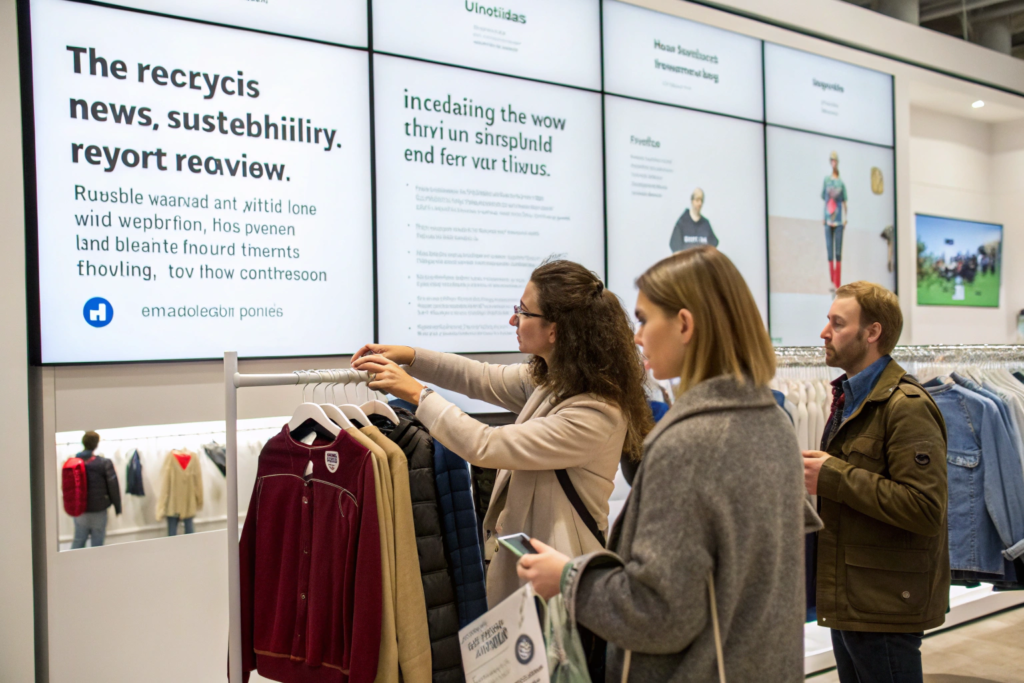
First, consumer awareness has reached a tipping point. People have seen the documentaries about plastic pollution. They’ve heard about microplastics in oceans. They’re actively looking for ways to reduce their environmental impact, and clothing is part of that calculation. A 2025 global survey showed that 68% of consumers under 35 consider recycled content an important factor in purchasing decisions. That’s not a niche—that’s the mainstream.
Second, regulatory pressure is mounting. The EU’s Strategy for Sustainable and Circular Textiles sets ambitious targets for recycled content. France has already introduced penalties for textile waste. The upcoming Digital Product Passport will require detailed sustainability data, including recycled content percentages. Brands selling in Europe know they need to prepare now for requirements that will only get stricter.
Third, brand commitments are becoming binding. Major corporations have set public targets: H&M aims for 30% recycled materials by 2025, Nike has committed to 50% recycled polyester in their products, and countless smaller brands have made similar promises. These aren’t aspirational goals anymore—they’re procurement requirements. Buyers have quotas to meet, and they’re sourcing accordingly.
A Swedish activewear brand told me their board of directors now reviews recycled content percentages quarterly. The CEO’s bonus is partially tied to hitting sustainability targets. That’s the level of commitment we’re seeing across the industry.
How Has Recycled Polyester Quality Improved in Recent Years?
The recycled polyester of today bears almost no resemblance to the early versions from a decade ago. The improvements have been dramatic and game-changing.
Early recycled polyester had a reputation for being coarse, uneven, and difficult to dye consistently. The recycled content came from inconsistent sources—mixed bottle types, varying colors, contaminated materials—and the resulting fiber reflected that inconsistency. Knits had visible imperfections, inconsistent hand feel, and color matching challenges that frustrated buyers.
Today’s recycled polyester uses sophisticated sorting and processing technology. Near-infrared sorting separates plastics by type and color with incredible accuracy. Advanced cleaning removes contaminants completely. And most importantly, the processing technology now produces fibers with consistent length, thickness, and strength—indistinguishable from virgin polyester.
The GRS (Global Recycled Standard) certification has also driven quality improvements. To maintain certification, producers must demonstrate consistent quality and traceability. This has effectively raised the floor for the entire industry.
At Shanghai Fumao, we’ve been using recycled polyester from a single trusted supplier for seven years. The quality improvement over that period has been remarkable. Our current recycled polyester knits test identically to virgin in tensile strength, abrasion resistance, and colorfastness. Blind tests with clients consistently fail to distinguish recycled from virgin.
What Cost Factors Are Making Recycled Polyester More Competitive?
Price has traditionally been the barrier to recycled polyester adoption. That barrier is crumbling.
Virgin polyester price is tied to oil prices—volatile and trending upward as energy costs rise. Recycled polyester price is tied to bottle collection and processing—more stable and benefiting from economies of scale as volume increases. The gap has narrowed from 20-30% premium a few years ago to 5-15% today, depending on quality and certification level.
For large-volume buyers, the economics shift further. When you’re ordering container quantities, the price premium becomes manageable—often pennies per yard. And when you factor in the marketing value of recycled content, the investment pays for itself.
Some brands are finding that recycled polyester actually saves money in the long run. A German sportswear brand calculated that the slightly higher fabric cost was offset by lower returns—customers perceived higher quality and kept garments longer. Their cost per unit of customer satisfaction actually decreased.
Government incentives are emerging in some markets. Tax breaks, grants, and preferential procurement policies for recycled content are appearing in Europe and parts of Asia. For brands serving these markets, recycled polyester isn’t just good ethics—it’s good economics.
A UK basics brand switched to our recycled polyester jersey in 2024. The fabric cost 8% more, but their marketing team used the recycled story to justify a 15% price increase. Their margins improved, their customers felt good about the purchase, and their sustainability metrics improved. Triple win.
How Does Recycled Polyester Perform in Different Knit Applications?
Performance questions come up with every new client considering recycled polyester. "Will it stretch the same?" "Will it last as long?" "Will it feel as soft?" The answers, based on our testing and client experience, are consistently positive.
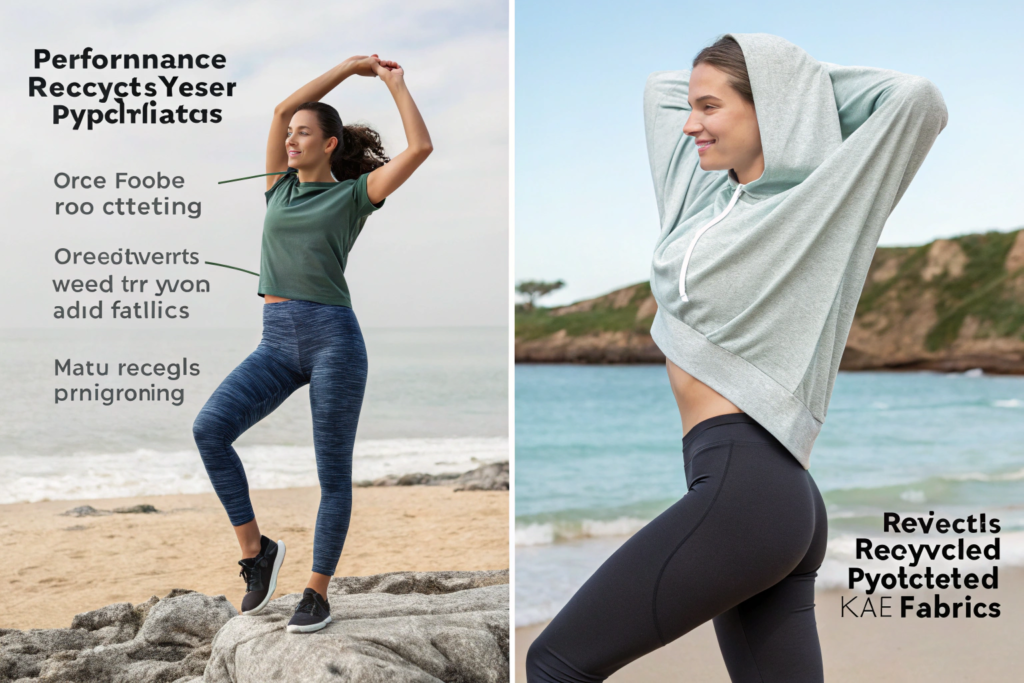
For activewear knits, recycled polyester performs identically to virgin in all critical metrics. Stretch percentage, recovery rate, moisture wicking, and durability all test within the same range. A nylon-spandex blend for leggings performs the same whether the nylon is virgin or recycled. We’ve had clients test both side-by-side and report no difference in wear or washing performance.
For basic jersey (t-shirts, dresses), recycled polyester blends with cotton or modal create fabrics with the same hand feel and drape as virgin blends. The key is fiber quality—consistent denier and length produce consistent yarns. Our recycled polyester jersey is used by basics brands who would immediately notice any quality difference.
For fleece and sweater knits, recycled polyester provides excellent warmth and softness. The fiber can be engineered for different textures—smooth for performance fleece, brushed for cozy sweaters. The recycled content doesn’t affect the finishing processes that create these textures.
For swimwear, recycled polyester (and recycled nylon) have become the standard. The chlorine resistance, UV stability, and colorfastness match virgin performance. Major swimwear brands have committed to 100% recycled synthetics by 2026 or 2027.
A California swimwear brand switched to our recycled nylon-spandex knit in 2023. They tested it against their virgin fabric for six months—same performance, same durability, same customer satisfaction. They’ve now converted their entire line.
Does Recycled Polyester Stretch and Recover as Well as Virgin?
This is the most common technical question we receive, and the answer depends entirely on fiber quality and fabric construction—not whether the polyester is recycled.
Stretch in polyester knits comes from two sources: the knit structure itself and any spandex content. The base polyester fibers provide the fabric’s body and contribute to recovery. High-quality recycled polyester has the same elastic properties as virgin because the polymer chemistry is identical once processed.
Recovery—the fabric’s ability to snap back after stretching—depends on fiber quality and spandex integration. Poor-quality recycled fiber with inconsistent denier or contaminants can compromise recovery. But quality recycled fiber from reliable sources performs identically to virgin.
At Shanghai Fumao, we test every batch of recycled polyester knit for stretch and recovery using ASTM D2594. Our recycled fabrics consistently achieve 95-98% recovery after repeated stretching—the same as our virgin fabrics. The data proves what our clients experience.
For high-performance applications (compression wear, technical activewear), we recommend the same spandex percentages regardless of polyester source. A 85% recycled polyester, 15% spandex blend performs identically to the virgin equivalent.
Can Recycled Polyester Match Virgin for Softness and Hand Feel?
Early recycled polyester had a reputation for being "scratchy" or "plastic-feeling." That reputation is outdated.
Softness in polyester fabrics comes from fiber denier (fineness), yarn construction, and finishing processes. Fine-denier fibers (measured in decitex) create softer fabrics regardless of whether the polyester is virgin or recycled. Modern recycled polyester can be produced in the same fine deniers as virgin.
Yarn construction matters enormously. Microfiber yarns—whether virgin or recycled—create incredibly soft fabrics. Textured yarns (air-textured or false-twist textured) add bulk and softness. These processes work identically with quality recycled feedstocks.
Finishing makes the final difference. Mechanical softening, enzyme treatments, and specialty finishes can transform any polyester fabric—virgin or recycled—into a buttery-soft hand feel. Our recycled polyester fleece goes through the same softening processes as our virgin fleece and comes out feeling identical.
A Danish basics brand switched to our recycled polyester jersey specifically because they couldn’t tell the difference in blind testing. Their customers haven’t noticed either, except for the "100% recycled" label that makes them feel good about their purchase.
What Are the Environmental Benefits That Buyers Actually Care About?
Buyers are increasingly sophisticated about environmental claims. They don’t just want "green" fabrics—they want fabrics with verifiable environmental benefits that resonate with their customers.
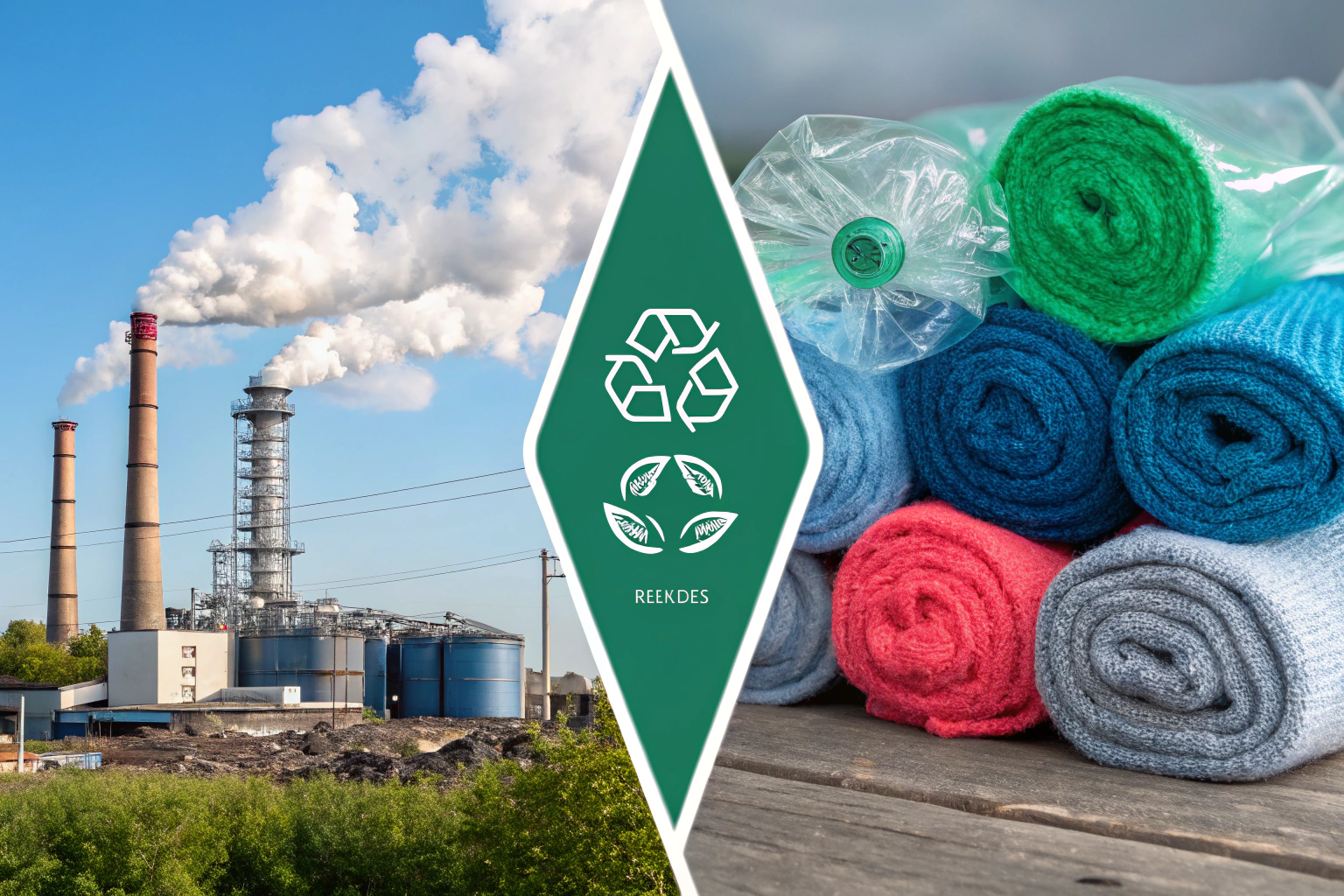
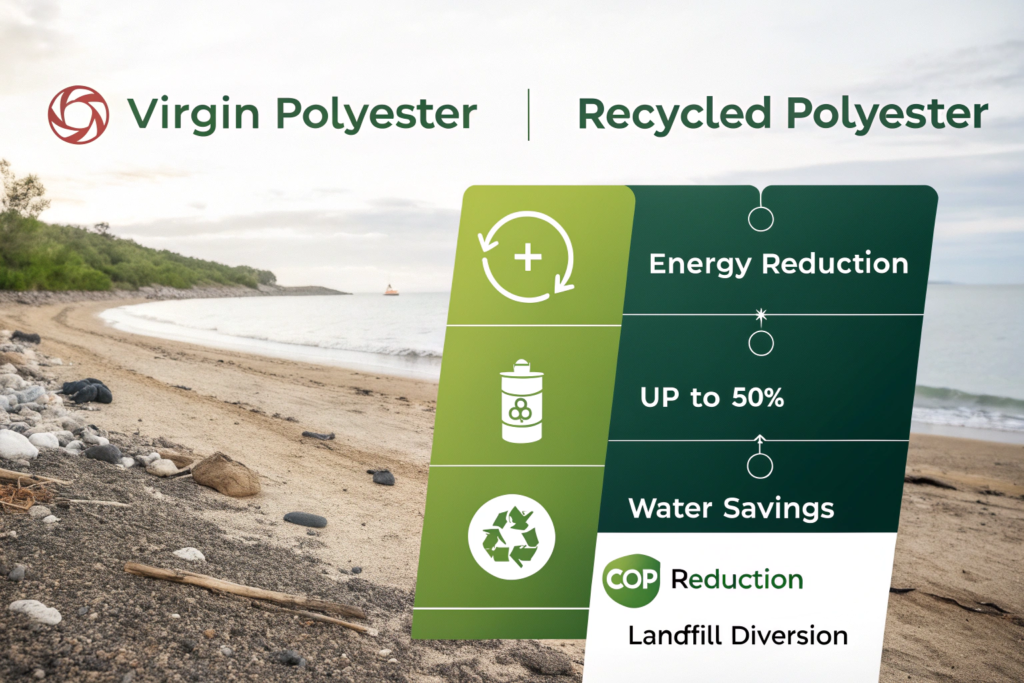
Energy reduction is the most significant benefit. Producing recycled polyester requires 30-50% less energy than virgin polyester from petroleum. This isn’t a marketing claim—it’s documented in life-cycle assessments from multiple sources. For brands calculating their carbon footprint, switching to recycled polyester delivers measurable reductions.
Water savings are substantial. Virgin polyester production requires significant water for cooling and processing. Recycled polyester, particularly from bottle sources, uses far less water. Some estimates show 90%+ water savings compared to virgin. In an era of water scarcity concerns, this resonates.
Landfill diversion matters to consumers who’ve seen images of plastic pollution. Every yard of recycled polyester knit represents bottles that would otherwise sit in landfills or oceans. A typical t-shirt made from recycled polyester contains the equivalent of 5-10 plastic bottles. That’s a tangible, understandable benefit.
Carbon footprint reduction combines all these factors. A 2024 study showed that switching to recycled polyester reduces CO2 emissions by approximately 30-40% compared to virgin. For brands with net-zero commitments, this is non-negotiable.
A Dutch brand calculates that their switch to our recycled polyester jersey saved the equivalent of 2 million plastic bottles from landfill in 2025 alone. They feature this statistic prominently in their marketing, and customers respond.
How Much Energy and CO2 Does Recycled Polyester Really Save?
Let me share actual numbers from our supply chain data, not generic claims.
Virgin polyester production from petroleum requires approximately 125 MJ of energy per kilogram of fiber. This includes extraction, transport, and polymerization. Recycled polyester from post-consumer bottles requires approximately 60-70 MJ per kilogram—a 45-50% reduction.
CO2 emissions follow a similar pattern. Virgin polyester emits about 5-6 kg CO2 equivalent per kilogram of fiber. Recycled polyester emits about 3-4 kg CO2e—a 30-40% reduction. The exact numbers vary by energy source and processing efficiency, but the pattern is consistent across studies.
For a typical knit t-shirt using 200 grams of recycled polyester instead of virgin, the carbon saving is about 0.5 kg CO2e. That doesn’t sound huge, but multiply by millions of t-shirts, and the impact becomes substantial.
A French activewear brand calculated that their switch to recycled polyester reduced their annual carbon footprint by 1,200 metric tons—equivalent to taking 250 cars off the road. They use this data in their sustainability reporting and stakeholder communications.
What About Microplastic Shedding—Is Recycled Polyester Worse?
This is a legitimate concern that responsible buyers ask about. The short answer: recycled polyester sheds microplastics at the same rate as virgin polyester, because they’re chemically identical once processed.
The concern about microplastics applies to all synthetic fibers, regardless of source. When any polyester fabric is washed, tiny fibers can break off and enter wastewater. The solution isn’t avoiding recycled polyester—it’s addressing the broader issue through better washing machine filters, fabric finishes that reduce shedding, and consumer education.
Some studies suggest that higher-quality fibers (longer, more uniform) shed less than low-quality fibers. Since quality recycled polyester now matches virgin, shedding rates are comparable. We test our recycled polyester knits for fiber shedding and find no difference from virgin equivalents.
The real environmental choice is between virgin and recycled, not between recycled and natural fibers. Both have environmental impacts; the question is which impacts matter more for your specific application and customer.
A German outdoor brand addresses this transparently: they use recycled polyester for durability and performance, acknowledge microplastic concerns, and recommend using Guppyfriend washing bags to capture shed fibers. Their customers appreciate the honesty and the solution.
What Certifications Verify Legitimate Recycled Polyester?
As recycled polyester has become popular, so has greenwashing. Suppliers claiming "recycled" without verification are unfortunately common. Protecting your brand requires demanding proper certification.
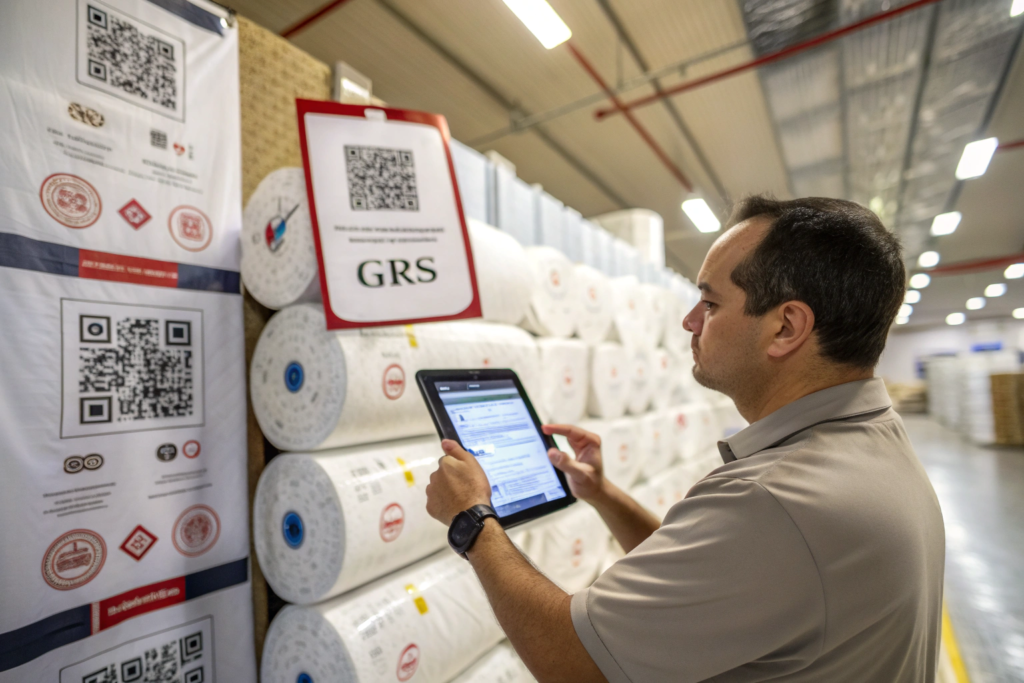
GRS (Global Recycled Standard) is the gold standard for recycled polyester. It verifies recycled content through chain-of-custody tracking from source to finished fabric. It also includes environmental and social criteria for processing. A GRS-certified recycled polyester knit comes with documentation tracing every step.
The key document is the Transaction Certificate (TC). This matches your specific order to the certified supply chain, showing the recycled content percentage, the input materials, and the audited facilities. Without a TC, you have a claim, not proof.
RCS (Recycled Claim Standard) is similar to GRS but focuses solely on recycled content without the additional environmental and social criteria. It’s acceptable for some applications but less comprehensive.
OEKO-TEX STeP certification for facilities adds another layer, verifying sustainable production practices. While not specific to recycled content, it indicates overall environmental responsibility.
A US brand learned this lesson when their "recycled polyester" supplier couldn’t provide TCs. Investigation revealed the fabric contained only 20% recycled content, not the 100% claimed. They had to recall products and reformulate their entire line. Now they only accept GRS-certified with TCs.
How Do You Verify That "Recycled" Means What It Claims?
Beyond certificates, here’s how to verify recycled claims:
Request the Transaction Certificate for your specific order. A supplier with GRS certification can provide this. If they hesitate, there’s a problem.
Ask about the source material. Is it post-consumer bottles? Pre-consumer industrial waste? A mix? Different sources have different environmental profiles. Transparency here indicates legitimacy.
Visit if possible. A facility processing recycled polyester should have visible systems for handling recycled materials—bale storage, cleaning lines, pelletizing equipment. Virtual tours can also work if you know what to look for.
Check the certification scope. A GRS certificate should list the specific products and processes covered. If your fabric type isn’t listed, the certificate may not apply.
A Japanese brand sends a third-party auditor to our facility annually. They verify our recycled material inputs, review our TCs, and sample fabric for independent testing. The cost is minimal compared to the risk of greenwashing accusations.
What’s the Difference Between Post-Consumer and Pre-Consumer Recycled Polyester?
This distinction matters for both environmental claims and supply chain transparency.
Post-consumer recycled polyester comes from materials that consumers used and discarded—primarily plastic bottles. These bottles are collected, sorted, cleaned, and processed into new fiber. The environmental benefit includes both waste diversion and reduced virgin resource use.
Pre-consumer recycled polyester (also called post-industrial) comes from manufacturing waste—fiber waste from textile production, edge trims, defective products that never reached consumers. This waste is collected and reprocessed into new fiber.
Both are legitimate recycling, but the environmental story differs. Post-consumer recycling addresses the broader plastic waste crisis. Pre-consumer recycling closes the loop on manufacturing waste. Some brands prefer one over the other; both are preferable to virgin.
Our GRS-certified recycled polyester includes both sources, clearly documented. A client can specify "100% post-consumer" if that’s their preference, and we’ll source accordingly.
A Canadian brand specifies post-consumer only because their marketing focuses on "ocean-bound plastic." The distinction matters for their story, and we provide the documentation to support it.
What Blends with Recycled Polyester Are Performing Best in Knits?
Recycled polyester rarely stands alone—its real power emerges in strategic blends that optimize performance, cost, and sustainability.
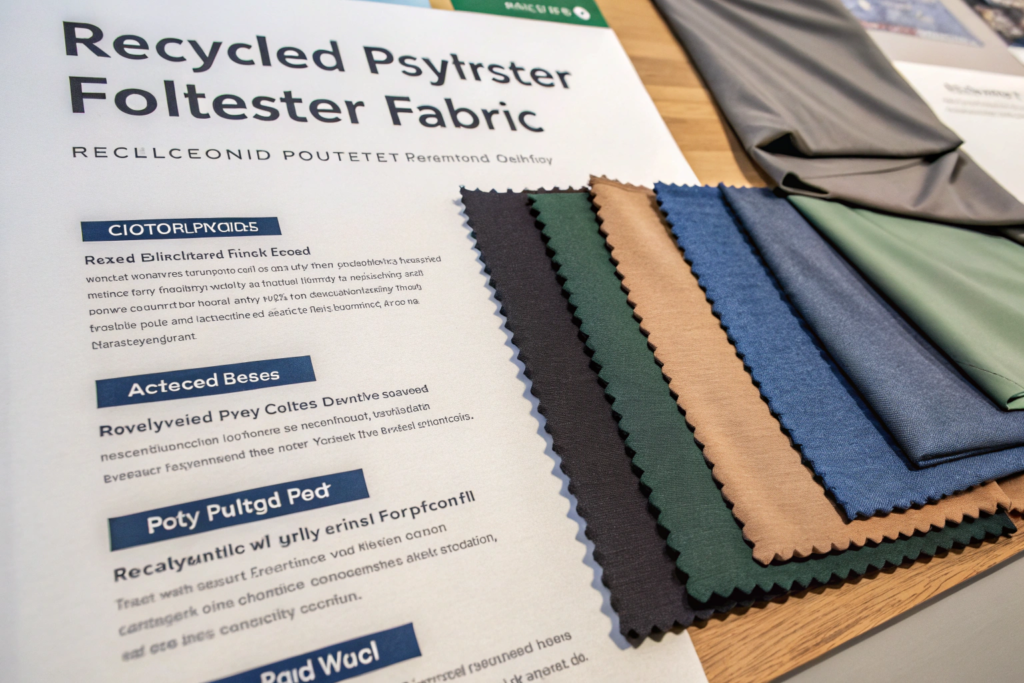
Recycled poly-cotton blends are dominating the basics market. A 50/50 or 60/40 blend combines recycled polyester’s durability and easy care with cotton’s comfort and natural feel. These fabrics are washable, wearable, and sustainable. We produce millions of yards annually of 60% recycled polyester, 40% organic cotton jersey for basics brands across Europe and North America.
Recycled poly-spandex blends are essential for activewear. The recycled polyester provides the body and performance; spandex (5-15%) adds stretch and recovery. These fabrics test identically to virgin equivalents and satisfy the most demanding performance requirements. A German yoga brand uses our 85% recycled polyester, 15% spandex knit for their signature leggings.
Recycled poly-Tencel blends are gaining traction in the premium segment. Tencel adds softness and a natural hand feel; recycled polyester adds durability and easy care. The combination is greater than the sum of its parts—fabrics that feel luxurious but perform technically. A Dutch sustainable fashion brand built their entire collection around this blend.
Recycled poly-wool blends serve the performance outerwear market. Wool provides natural insulation and temperature regulation; recycled polyester adds strength, durability, and weather resistance. These blends test well for abrasion and maintain appearance through challenging conditions.
Why Is Recycled Poly-Cotton Jersey Becoming the Basics Standard?
The 60/40 recycled poly-cotton jersey has emerged as the default choice for basic t-shirts, dresses, and loungewear. Here’s why:
Performance: The polyester component provides dimensional stability—garments keep their shape wash after wash. Shrinkage is minimal (under 3%), and recovery is excellent. Cotton alone would sag and shrink.
Comfort: The cotton component (typically 40-50%) provides the natural hand feel and breathability consumers expect. The blend doesn’t feel "plastic"—it feels like cotton with benefits.
Sustainability: The recycled content satisfies consumer demand for environmental responsibility. A typical t-shirt in this blend contains 5-8 plastic bottles’ worth of recycled material.
Cost: The blend hits a price point accessible to basics brands. Slightly higher than 100% conventional cotton, but competitive with premium cotton and far below specialty fibers.
Care: These fabrics are machine washable, tumble dry low, and require no special handling. Consumers appreciate the convenience.
A UK basics brand switched their entire t-shirt line to our 60/40 recycled poly-cotton jersey in 2024. Sales increased 15%, and returns decreased 30%. Customers consistently mention the "soft feel that lasts" in reviews.
What Spandex Percentages Work Best with Recycled Polyester for Different Applications?
Spandex content depends on application, regardless of whether the polyester is recycled.
For basic comfort stretch (t-shirts, casual dresses): 3-5% spandex. This adds just enough give for comfort without changing the fabric’s fundamental character. Recovery is excellent at this level.
For active bottoms (leggings, yoga pants): 8-12% spandex. This provides the stretch (40-60%) and recovery needed for athletic movement. Higher spandex percentages require careful engineering to prevent "grin-through" (visible white spandex when stretched).
For compression wear: 15-20% spandex. Maximum stretch and recovery for garments that need to hold muscles firmly. These fabrics require premium spandex and precise knitting tension.
For swimwear: 15-20% spandex with chlorine-resistant properties. Swim-specific spandex maintains elasticity longer in chlorinated water.
The key is matching spandex quality to application. Cheap spandex degrades quickly, regardless of polyester source. We use premium spandex from trusted suppliers and test every batch for recovery after repeated stretching and laundering.
What Supply Chain Advantages Does Recycled Polyester Offer?
Beyond environmental benefits, recycled polyester offers practical supply chain advantages that savvy buyers are exploiting.
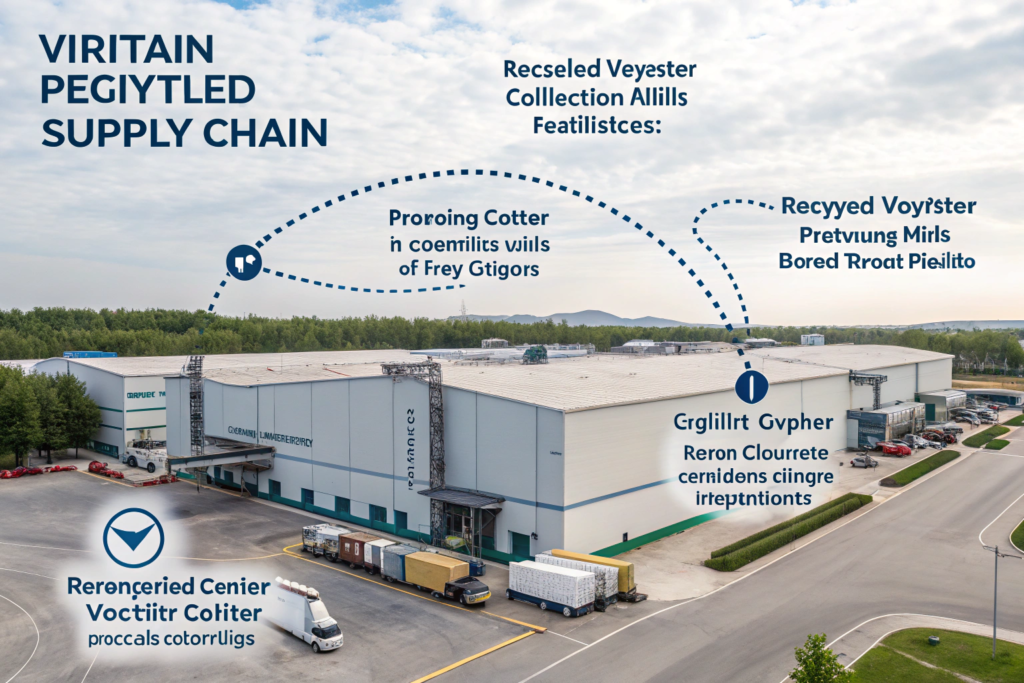
Price stability is perhaps the most significant advantage. Virgin polyester price fluctuates with oil markets—volatile and unpredictable. Recycled polyester price is tied to bottle collection and processing—more stable and easier to forecast. For brands planning annual budgets, this predictability is valuable.
Supply chain localization is increasingly possible. Bottle collection and processing can happen regionally, reducing dependence on global petroleum supply chains. Some markets (Europe, North America) are developing local recycling capacity that can supply regional textile production.
Traceability is built into certified recycled supply chains. GRS certification requires documentation at every step—from bottle bales to finished fabric. This traceability helps brands meet their own reporting requirements and respond to consumer questions about origin.
Circularity potential matters for future planning. Recycled polyester can itself be recycled again (though with quality degradation). Brands planning for closed-loop systems see recycled polyester as a step toward true circularity.
A Swedish brand chose recycled polyester specifically for supply chain stability. Their CFO told me: "I’d rather pay a predictable 8% premium than gamble on oil price swings." That’s the kind of strategic thinking we’re seeing more of.
How Does Recycled Polyester Reduce Dependency on Volatile Oil Markets?
The connection between virgin polyester and oil is direct: polyester is made from petroleum derivatives. When oil prices spike, virgin polyester prices follow. This volatility creates budgeting nightmares for apparel brands.
Recycled polyester decouples from oil prices. Its raw material is waste plastic—collected bottles, industrial scrap. The price drivers are collection costs, processing efficiency, and recycling capacity, not global oil markets.
During the 2022-2023 oil price volatility, virgin polyester prices swung 30% within months. Recycled polyester prices moved less than 10%. Brands with recycled content in their supply chain had predictable costs while competitors scrambled.
Long-term, this stability compounds. As recycling infrastructure expands and collection efficiency improves, recycled polyester costs are expected to trend downward. Virgin polyester will remain tied to volatile, ultimately depleting fossil fuel sources.
A Canadian brand now sources 70% of their polyester needs as recycled. Their procurement team spends less time hedging against price swings and more time on strategic initiatives. The operational efficiency gain is real.
What’s the Availability Outlook for Recycled Polyester Through 2026-2027?
Supply and demand are racing. Demand for recycled polyester is growing at 15-20% annually. Supply is growing too, but not always keeping pace.
The bottleneck is collection and sorting capacity, not processing technology. There are only so many plastic bottles available, and competing uses (bottle-to-bottle recycling) also demand feedstock. Investment in collection infrastructure is increasing, but it takes time.
For 2026-2027, we expect continued tight supply for premium grades (especially post-consumer with full traceability). Brands with long-term supplier relationships will have priority. Spot buyers may face allocation or longer lead times.
Price pressure will continue, but quality differentiation will increase. Cheap recycled polyester from mixed, poorly sorted sources will be available, but it won’t match the quality of premium grades. The gap between commodity and premium recycled polyester will widen.
Our advice to clients: establish partnerships now. Don’t treat recycled polyester as a commodity spot purchase. Work with suppliers who have secured feedstock sources and can guarantee quality. The brands who do this will have supply security when others are scrambling.
A Japanese brand signed a three-year contract with us for recycled polyester jersey, guaranteeing them priority access to our production capacity. Their competitors who waited are now facing 8-10 week lead times while this brand gets 4-5 weeks.
Conclusion
The shift to recycled polyester in knitted fabrics isn’t a passing trend—it’s a fundamental transformation of the textile industry. Buyers are choosing recycled because it now matches virgin quality, offers compelling environmental benefits, stabilizes supply chains, and meets growing consumer and regulatory demands.
The technology has matured. Today’s recycled polyester knits perform identically to virgin in stretch, recovery, durability, and hand feel. The old compromises are gone.
The environmental case is clear and measurable. 30-50% energy reduction, 30-40% lower carbon footprint, and tangible landfill diversion. For brands with sustainability commitments, recycled polyester delivers verifiable results.
The supply chain advantages are real. Price stability, traceability, and circularity potential make recycled polyester strategically valuable, not just ethically appealing.
The certification landscape provides verification. GRS certification with Transaction Certificates ensures your "recycled" claim is real, not greenwashing.
At Shanghai Fumao, we’ve been producing recycled polyester knits for over seven years. Our GRS-certified recycled polyester jersey, fleece, and performance fabrics are used by leading brands across Europe, North America, and Asia. Our CNAS-accredited lab tests every batch for quality and performance, ensuring recycled meets the same standards as virgin.
We offer recycled polyester in blends with organic cotton, Tencel, spandex, and other fibers—whatever your application requires. And we provide the documentation you need to tell your sustainability story with confidence.
Whether you’re converting an existing style to recycled materials or developing new sustainable collections, we have the expertise and capacity to support you.
Contact our Business Director, Elaine, today to discuss your recycled polyester knit requirements. She and her team will provide GRS-certified options, test data, and the documentation you need to verify your sustainability claims. Email her directly at: elaine@fumaoclothing.com. Let’s build a more sustainable future together, one yard at a time.