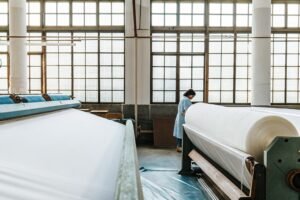
I’ve been supplying fabrics for children’s wear for over twenty years, and if there’s one thing I’ve learned, it’s that kids are the toughest customers you’ll ever have. They don’t care about your brand story or your beautiful color palette. They care about whether the outfit lets them climb, run, roll in the dirt, and still feel comfortable. And their parents? They care about durability, easy care, and whether that adorable dress will survive the playground. Choosing between knitted and woven fabrics for kids’ wear isn’t just a design decision—it’s about safety, practicality, and keeping your customers happy enough to come back.
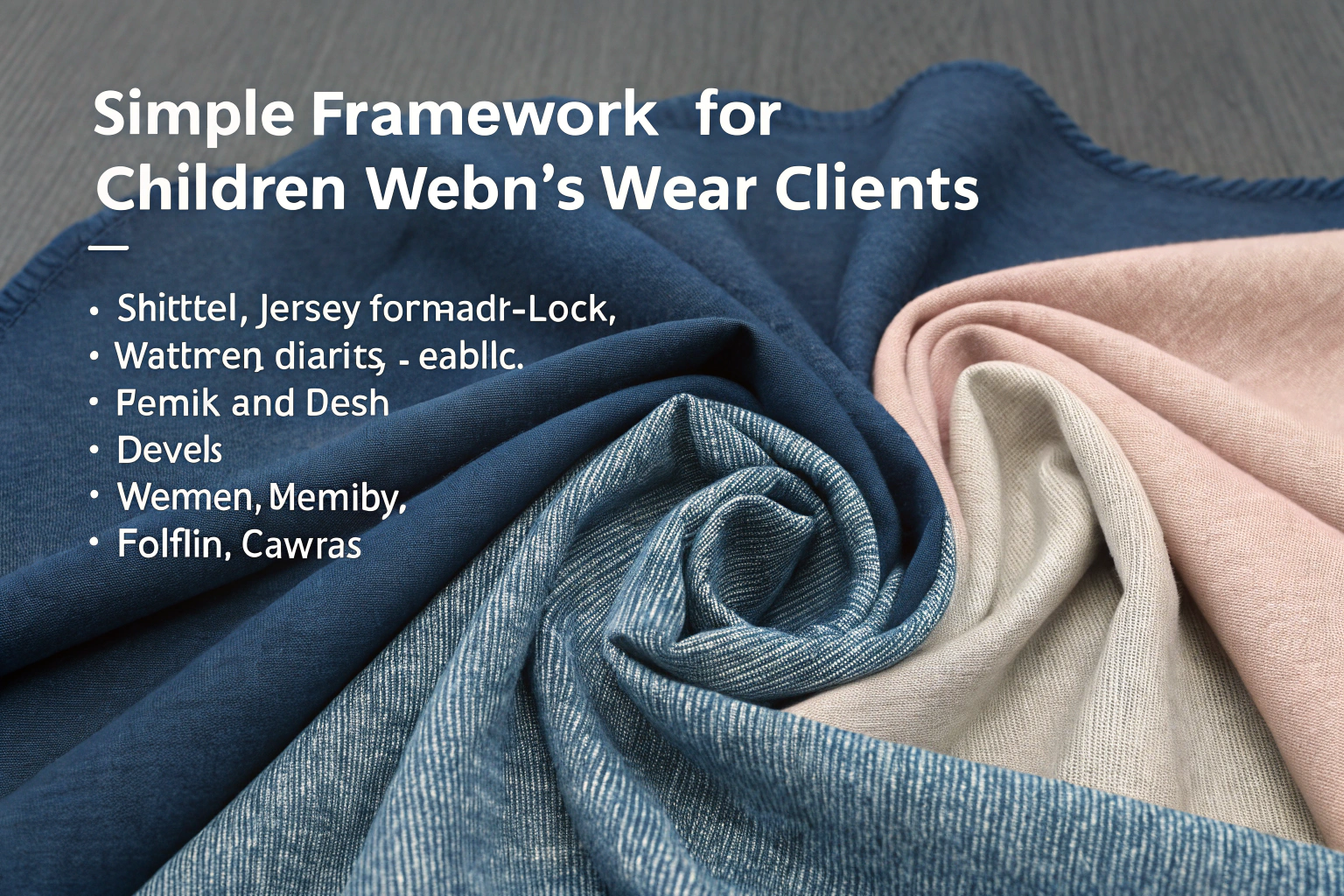
Let me give you the simple framework we use with every children’s wear client at Shanghai Fumao: knits for movement and comfort, wovens for structure and durability. Knitted fabrics like jersey, interlock, and rib stretch with active kids, resist wrinkles, and feel soft against sensitive skin. Woven fabrics like poplin, denim, and canvas hold sharp shapes for dresses and shirts, resist abrasion better, but restrict movement unless carefully designed. The right choice depends entirely on what the garment needs to do and where the child will wear it.
I’m going to walk you through everything we’ve learned supplying children’s wear brands across Europe, North America, and Asia. We’ll talk about safety standards, durability requirements, growth accommodations, and the specific fabric constructions that work for different ages and activities. I’ll share real examples from clients who’ve gotten it right—and a few who learned expensive lessons by getting it wrong.
What Safety Standards Must Children’s Wear Fabrics Meet in 2026?
Before we talk about knits versus wovens, we need to talk about safety. Because nothing else matters if your fabric isn’t safe for children. The regulations get stricter every year, and 2026 is no exception. I’ve seen brands lose entire shipments because their fabric failed a simple flammability test or contained prohibited chemicals they didn’t even know were there.
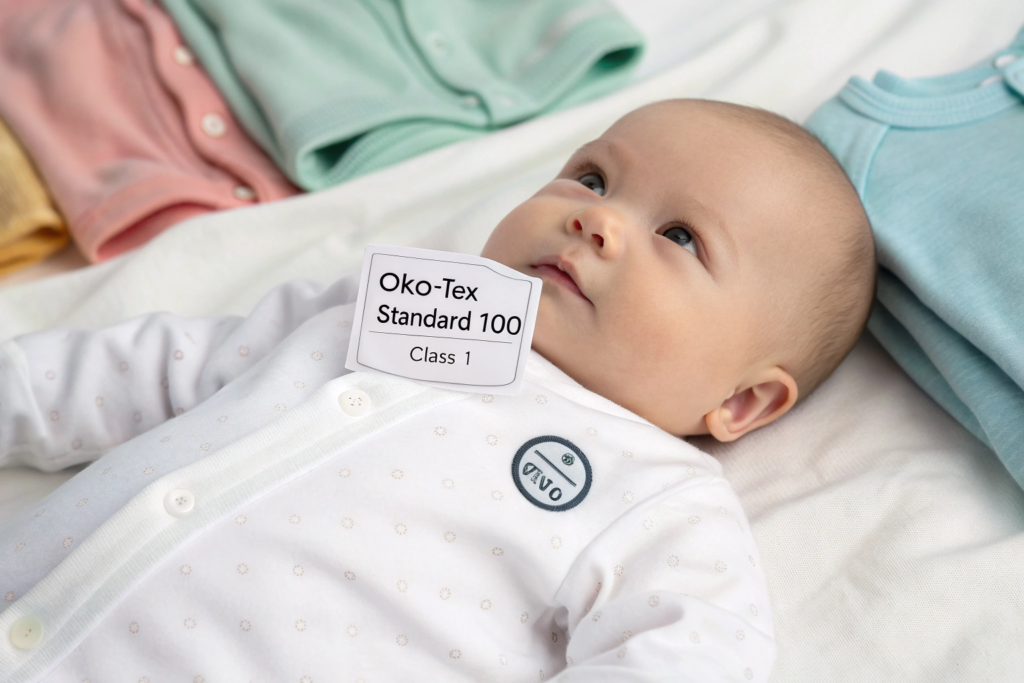
The first thing every children’s wear buyer should know: OEKO-TEX Standard 100, Class 1 is the minimum requirement for infant and toddler clothing in most developed markets. Class 1 is the strictest category, designed for babies up to 36 months. It tests for over 300 harmful substances including heavy metals, formaldehyde, pesticides, and phthalates. If your fabric isn’t Class 1 certified, you’re taking a huge risk with your smallest customers.
For the US market, CPSIA (Consumer Product Safety Improvement Act) compliance is non-negotiable. This includes lead and phthalate testing, tracking label requirements, and flammability standards for all children’s products. We test every children’s wear fabric against CPSIA requirements and provide documentation with every shipment. A Canadian client once received a massive fine because their previous supplier couldn’t provide CPSIA compliance docs. Don’t let that be you.
Flammability is another critical factor. Children’s sleepwear in the US must meet strict flame resistance standards—either inherently flame-resistant fabric or tight-fitting styles that don’t require treatment. Some natural fibers like cotton are actually more flammable than synthetics, which surprises many new designers. We guide clients through these requirements based on their garment type and target market.
What Certifications Should You Demand from Your Fabric Supplier?
Here’s my honest advice based on decades of experience: don’t accept promises, demand proof. Any supplier can tell you their fabric is safe. The ones who actually have certification will provide it without hesitation.
For global markets, start with OEKO-TEX Standard 100, Class 1 or 2 depending on age range. Class 1 is for babies 0-36 months, Class 2 for older children. Ask for the actual certificate, not just a mention on their website. Check the certificate number against the OEKO-TEX database to ensure it’s current and valid for their production location.
For US-bound products, request CPSIA testing reports from an accredited lab. These should show lead content below 100 ppm, phthalates below 0.1%, and flammability passing 16 CFR 1610. We provide these reports with every children’s wear shipment because our CNAS-accredited lab generates them as part of our quality process.
For organic claims, GOTS certification is the gold standard. It covers not just fiber content but also processing chemicals and social criteria. A GOTS-certified organic cotton knit for babies means the entire supply chain—from farm to finished fabric—meets strict environmental and social standards. We maintain GOTS certification specifically for our children’s wear clients who need that assurance.
A UK-based children’s wear brand learned this lesson when their previous supplier’s "organic cotton" failed random testing at UK customs. The fabric contained pesticide residues that disqualified it from organic claims. They had to relabel an entire season’s inventory, losing thousands in marketing materials and customer trust. Now they only buy GOTS-certified from us.
How Do Safety Requirements Differ Between Knits and Wovens for Kids?
The safety standards themselves don’t differentiate between knits and wovens—a toxic chemical is toxic regardless of construction. But the practical application of safety standards can vary based on fabric type.
For flammability, surface texture matters. Brushed or fleece knits (like those cozy sweatshirt fabrics) can have higher flame spread because of the raised surface. The air trapped in the brushed fibers actually helps fire spread faster. For children’s sleepwear, smooth-surface knits or tight-weave wovens are safer choices. We advise clients to avoid heavy brushing for any garment that might be worn near heat sources.
For chemical absorption, knits generally have more surface area than wovens of the same weight. The loop structure creates more fiber surface exposed to potential chemicals. This doesn’t mean knits are less safe—it means rigorous testing matters equally for both constructions. We test all children’s wear fabrics regardless of construction, because safety isn’t something you guess about.
For physical safety, small parts attachment matters more for wovens because they’re often used for structured garments with buttons, snaps, and decorative elements. A woven dress might have multiple attachments that need testing for security. A knit onesie might have fewer attachments but requires stretch testing to ensure snaps don’t pop open during active wear. Different constructions, different risk profiles, same rigorous attention to safety.
Which Fabric Construction Works Best for Different Ages and Stages?
Children aren’t one homogeneous market. A newborn has completely different needs than a five-year-old, who has different needs than a ten-year-old. The knit-versus-woven decision shifts dramatically as kids grow and their activities change.
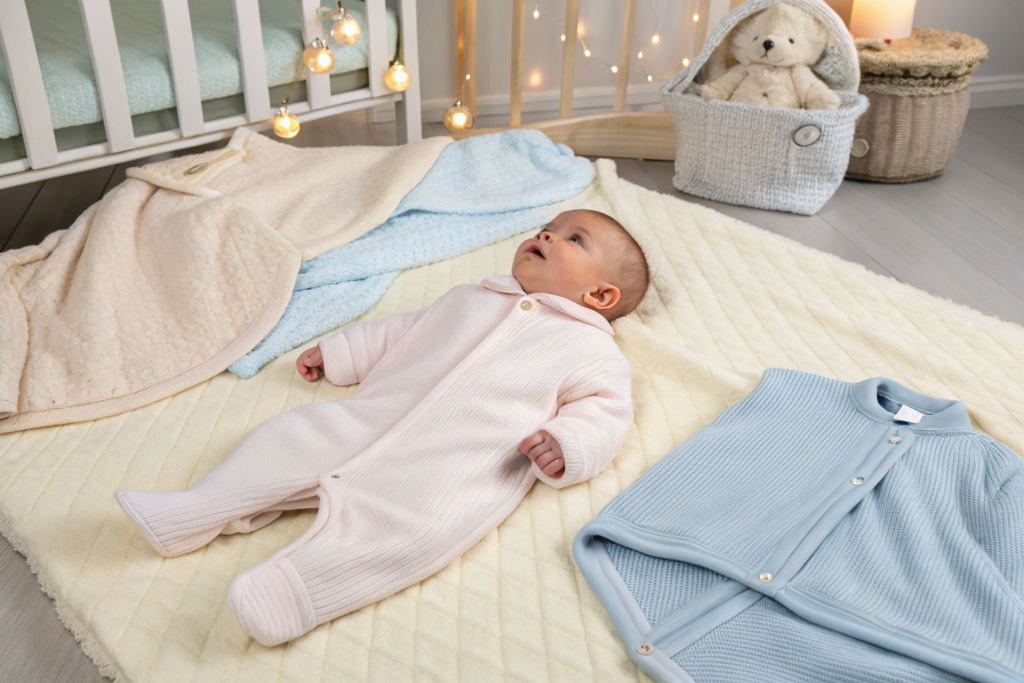
For infants 0-12 months, knits absolutely dominate. Think about it: newborns spend most of their time lying down, being held, or learning to roll. They need softness against sensitive skin, stretch for diapers and movement, and easy dressing for frequent changes. A cotton interlock knit is perfect—smooth on both sides, no irritation, with just enough stretch. We supply enormous volumes of interlock for baby bodysuits, sleep sacks, and lightweight blankets. Wovens at this age are mostly limited to special occasion wear—christening gowns, photo shoot outfits—where structure matters more than comfort.
For toddlers 1-3 years, the mix expands. This is the age of constant motion—walking, running, climbing, falling. Knits remain essential for activewear: jersey t-shirts, rib-knit cuffs on sweatshirts, stretchy leggings for easy movement. But wovens enter the picture for items that need more durability: denim jeans that resist abrasion from crawling, twill shorts that hold shape through countless washes, poplin dresses for special occasions. The key is knowing where each construction belongs.
For school-age children 4-12 years, both constructions play important roles. School uniforms often combine knits (polo shirts, sweater vests) with wovens (pleated skirts, tailored trousers). Play clothes lean heavily toward knits for freedom of movement. Dressy occasions call for wovens with structure and polish. The child’s activities determine the fabric choice, not just the garment category.
Why Do Infant Bodysuits Use Almost Exclusively Knit Fabrics?
Let me break down exactly why knits are non-negotiable for infant bodysuits, based on what we’ve learned supplying millions of yards to baby brands worldwide.
First, diaper access. A bodysuit needs to open at the crotch for diaper changes, and those snaps need to align perfectly every time. Knit fabrics stretch slightly, allowing the snaps to align even if the garment shifts during wear. A woven bodysuit would need precise snap placement and zero give—if the baby moves, the snaps might not line up, frustrating parents during already challenging diaper changes.
Second, head passage. Infant bodysuits are typically pullover style with envelope necks or shoulder overlaps. Knit fabrics stretch to allow the head through easily, then recover to fit snugly. Woven fabrics would require buttons or snaps at the shoulder, creating bulk and potential discomfort when the baby lies on their side. We’ve tested both constructions, and parents consistently prefer the ease of knits.
Third, softness against sensitive skin. Newborn skin is incredibly delicate—thinner than adult skin, with less natural protection. Knit fabrics have a softer hand because the loop structure creates more air pockets and less direct fiber contact. A fine-gauge cotton interlock is like butter against baby skin. Wovens, even high-quality ones, have a crisper hand that can irritate during extended contact.
A Swedish baby brand switched some of their bodysuits to a fine woven poplin for a "premium" collection in 2023. Returns were three times higher than their knit baseline, with parents complaining about stiffness and difficulty dressing. They abandoned the line after one season and returned to 100% knits for bodysuits.
When Should You Choose Woven Fabrics for Toddler and School-Age Clothing?
Wovens have their place in children’s wear, and understanding when to use them separates successful brands from those with constant quality complaints.
For bottoms that need shape and durability, wovens often outperform knits. Toddler jeans in cotton denim (a woven) resist abrasion from crawling and playing on rough surfaces much better than any knit. The knees might still wear through—kids are tough on clothes—but they’ll last longer than knit alternatives. We recommend heavier wovens (8-10 oz denim or twill) for active play bottoms.
For school uniforms, wovens provide the crisp, professional appearance that parents expect. A pleated skirt in polyester-viscose woven holds its pleats through a full school day and multiple wears. A tailored trouser in wool-blend woven looks sharp and resists bagging at knees better than knits. The structure communicates "uniform" rather than "play clothes," which matters for dress-code compliance.
For special occasion wear, wovens deliver the polish that photos demand. A communion dress in cotton organdy (woven) has a lightness and structure that no knit can replicate. A holiday shirt in poplin stays crisp through family dinner photos. These garments might be worn only a few times, so comfort compromises are acceptable for the right look.
A US children’s wear brand we supply uses wovens strategically: denim and twill for play bottoms, poplin for school uniform shirts, specialty wovens for holiday collections. Their knit business (t-shirts, leggings, loungewear) is three times larger by volume, but the woven items drive higher margins and brand perception. Both constructions are essential to their success.
How Do Durability Requirements Differ Between Knits and Wovens for Kids?
Kids destroy clothes. It’s just a fact. They crawl, climb, slide, spill, and generally test fabrics beyond anything adult garments experience. Durability requirements for children’s wear are fundamentally different from adult apparel, and the knit-versus-woven decision dramatically affects how long a garment survives.
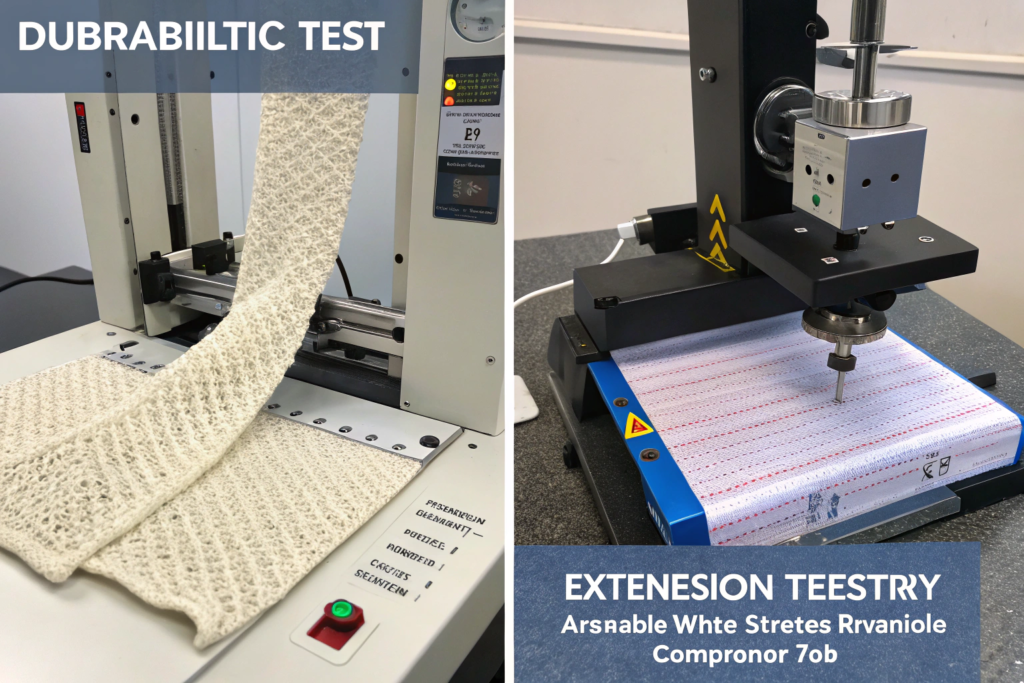
For knits, the primary durability threat is stretching out of shape. A child wearing the same leggings three times a week will eventually stretch the knees, the seat, the waistband. Recovery matters more than initial stretch. We test every children’s wear knit for "growth" after repeated stretching—how much the fabric permanently elongates after simulated wear. A good quality knit for active kids should have less than 5% growth after 20 stretch cycles. Cheap knits can show 10-15% growth, meaning baggy knees within weeks.
For wovens, the primary threat is abrasion. Knees, elbows, seats—these areas see constant friction against floors, playground equipment, school chairs. We use Martindale abrasion testing to simulate this wear. For children’s denim, we recommend minimum 25,000 cycles abrasion resistance. For school uniform trousers, 30,000+ cycles. Anything less, and you’ll see thinning and holes within months.
Seam strength matters for both constructions but manifests differently. Knit seams need to stretch with the fabric without popping. We use specific needles (ball-point) and threads (textured polyester) to maintain seam integrity during stretch. Woven seams need sufficient stitches per inch to prevent seam slippage where the fabric pulls apart at the seam line. Both require proper specification, but the solutions differ.
What Abrasion Resistance Should You Expect from Children’s Wear Fabrics?
Let me give you specific numbers based on our testing and client feedback, so you have realistic expectations when sourcing.
For lightweight knits (jersey, interlock) used in t-shirts and dresses, expect 10,000-15,000 Martindale cycles. This is sufficient for typical wear—these garments won’t see heavy abrasion. For mid-weight knits (fleece, sweatshirting) used in hoodies and joggers, aim for 15,000-20,000 cycles. The raised surface actually reduces abrasion resistance because the fibers are more exposed, so construction matters.
For woven bottoms (denim, twill, canvas), 20,000 cycles is the absolute minimum for children’s wear. We recommend 25,000-30,000 for active kids who spend hours on playgrounds. Our premium children’s denim tests at 35,000+ cycles, and clients report significantly fewer complaints about knee wear-through.
For school uniform fabrics, requirements are even higher. Polyester-wool blends for trousers should hit 40,000+ cycles. Cotton-polyester blends for blazers need similar performance. The combination of daily wear and institutional laundering (harsher than home care) demands exceptional durability.
A German school uniform brand learned this when their previous supplier’s trousers failed after three months of wear. Testing revealed only 18,000 cycles abrasion resistance. We now supply them with a polyester-viscose-wool blend testing at 42,000 cycles, and their replacement orders have dropped to nearly zero.
How Does Pilling Affect Children’s Wear in Different Constructions?
Pilling—those tiny fuzzy balls that form on fabric surfaces—is a huge complaint driver for children’s wear. Kids are active, creating friction everywhere, and parents notice when clothes look old after a few washes.
Knits are generally more prone to pilling than wovens because the loop structure allows fibers to work loose more easily. Fleece and brushed knits are the worst offenders—the raised surface fibers are barely anchored and can ball up quickly. We combat this through fiber selection (longer staple fibers pill less), yarn construction (higher twist holds fibers tighter), and finishing (singeing removes loose surface fibers).
Wovens pill less overall, but can still develop pills in high-friction areas like seats and elbows. The tighter construction holds fibers more securely, but abrasion can still work short fibers loose. Blends with synthetics actually help—polyester fibers are smoother and less likely to tangle into pills than cotton.
We test every children’s wear fabric for pilling using the Martindale method (same machine as abrasion, different evaluation). A rating of 4-5 (on a 5-point scale) is our minimum for children’s wear. Fabrics rating 3 or below will generate complaints. A French children’s wear brand switched to our specially engineered jersey after their previous supplier’s fabric pilled after two washes. Their customer return rate dropped from 8% to under 1%.
What Stretch and Recovery Properties Matter Most for Active Kids?
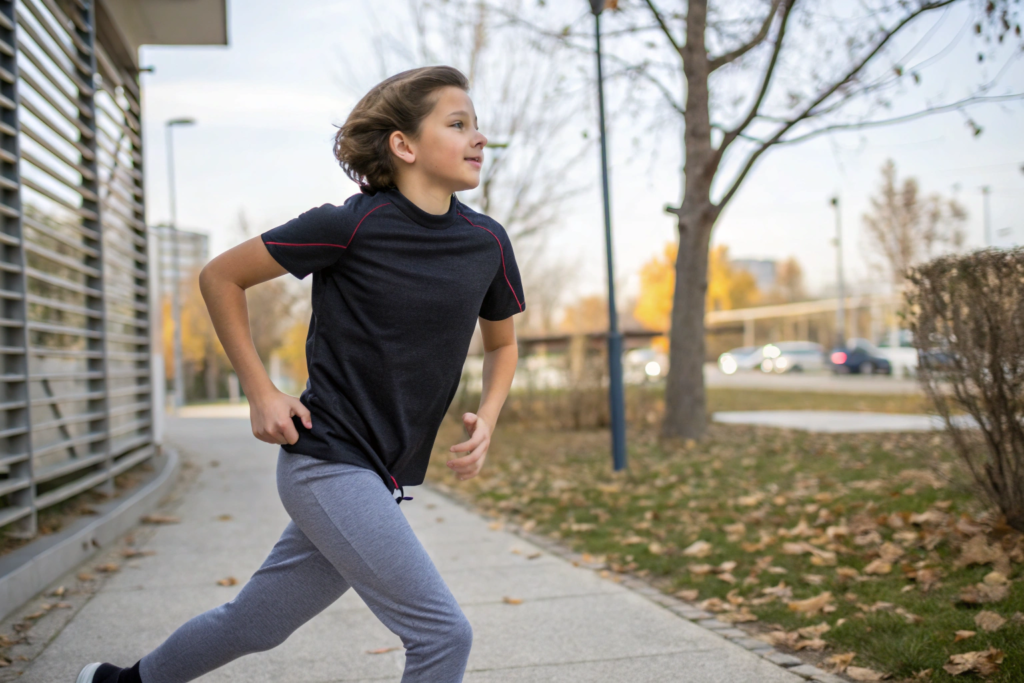
Active kids don’t walk—they run, jump, climb, and contort their bodies into positions that would challenge a yoga instructor. Their clothing needs to move with them, not restrict them. This is where knits dominate, but not all knits are created equal.
For everyday active wear, 15-25% stretch is usually sufficient. This covers playground play, school activities, general running around. A standard cotton-spandex jersey with 5-8% spandex delivers this comfortably. The fabric stretches enough for freedom of movement but recovers well enough to maintain shape between wears.
For sports and dance, higher stretch (40-60%) becomes necessary. A child in gymnastics class needs leggings that stretch for splits and backbends. A young dancer needs leotards that move through full range of motion. These applications demand four-way stretch (stretch in both length and width) with excellent recovery. Nylon-spandex blends typically outperform cotton-spandex for these demanding applications.
Recovery matters more than stretch. A fabric that stretches 60% but only recovers 80% will be baggy and loose after one wear. A fabric that stretches 40% with 98% recovery will look and perform better over time. We test recovery after multiple stretch cycles, because kids don’t stretch once—they stretch thousands of times over a garment’s life.
How Much Spandex Is Optimal for Different Children’s Wear Applications?
Spandex content is one of the most misunderstood aspects of children’s wear sourcing. More isn’t always better—it’s about matching content to application.
For basic comfort stretch (t-shirts, lightweight dresses), 3-5% spandex is plenty. This adds just enough give for ease of movement without changing the fabric’s fundamental character. A 97% cotton, 3% spandex jersey feels like cotton, breathes like cotton, but has that little extra recovery that keeps garments looking fresh.
For active bottoms (leggings, joggers), 5-8% spandex provides the stretch and recovery active kids need. This range delivers 25-40% stretch with excellent recovery, perfect for playground play and general activity. We produce millions of yards of 92% cotton, 8% spandex jersey for children’s leggings—it’s the sweet spot for comfort and performance.
For high-performance applications (dancewear, gymnastics), 12-20% spandex is appropriate. These fabrics need maximum stretch and recovery, often in both directions. Nylon-spandex blends dominate this category because nylon’s smooth fibers allow the spandex to work more effectively. A dance leotard might use 85% nylon, 15% spandex for 60%+ stretch with near-perfect recovery.
The danger with high spandex content is "grin-through"—where the white spandex fibers become visible when the fabric stretches. This looks cheap and can be embarrassing for older kids. We solve this through careful yarn engineering and dye selection, ensuring color coverage even at full stretch.
Can Woven Fabrics Provide Enough Stretch for Active Children’s Wear?
For most active applications, the answer is no. Woven fabrics, even stretch wovens with spandex cores, typically max out at 15-20% stretch—enough for comfort, not enough for active movement. A child in woven school trousers can walk and sit comfortably, but they’ll feel restricted during running and climbing.
Where stretch wovens excel is in garments that need the look of wovens with a little give for comfort. School uniform trousers with 8-10% stretch are much more comfortable than rigid wovens, especially for active kids who spend all day sitting, standing, and moving. The stretch prevents binding at the seat and knees without changing the tailored appearance.
For hybrid garments, consider strategic paneling. A pair of cargo pants might use woven fabric for the main body (for durability and pockets) but knit gussets at the crotch and knees for movement. This approach gives you the best of both constructions, though it increases sewing complexity and cost. A Dutch outdoor brand uses this technique for their children’s hiking pants, and parents love the combination of durability and freedom.
What Care and Maintenance Factors Should Influence Your Fabric Choice?
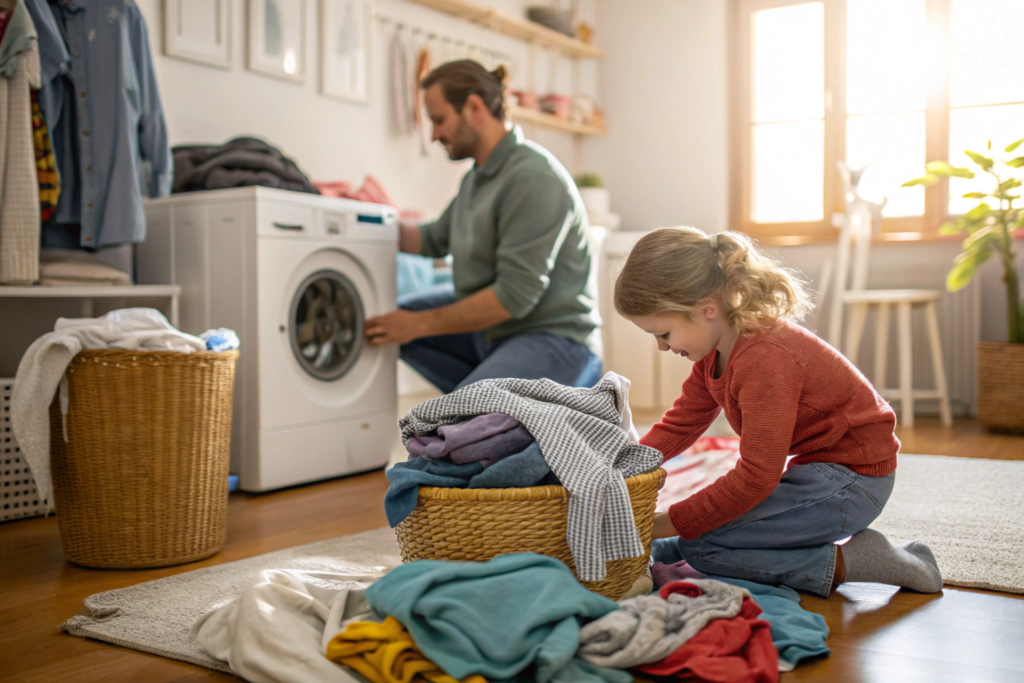
Here’s something many designers overlook until complaints start rolling in: parents don’t read care labels. They throw everything in the wash together, use whatever detergent is on sale, and dry on high heat because they need that outfit tomorrow morning. Your fabric choice determines whether the garment survives this reality.
Knits generally tolerate home laundering better than wovens. The loop structure accommodates some shrinkage and distortion without permanent damage. A cotton jersey t-shirt might shrink 3-5% in the first wash, but it will still fit and function. The same shrinkage in a woven shirt can cause pulling at seams, button misalignment, and permanent distortion.
Wovens are more sensitive to washing conditions, especially temperature and agitation. A crisp poplin shirt washed too hot can develop permanent wrinkles that no ironing removes. A denim jacket washed aggressively can shrink unevenly, creating puckered seams and distorted pockets. We recommend specific care instructions for woven children’s wear and encourage clients to include clear, simple care labels.
Drying is where most damage occurs. High heat damages elastic fibers in both knits and wovens, reducing recovery and causing premature aging. Spandex, in particular, degrades quickly at temperatures above 130°F (55°C). A garment that survived 50 washes with line drying might fail after 10 machine drying cycles. We advise clients to specify "tumble dry low" or "line dry" on care labels, though we know many parents ignore this.
How Do Different Fabrics Behave After Repeated Washing?
Let me share real data from our wash testing lab. We run every children’s wear fabric through 25 home laundering cycles (according to AATCC standards) and measure changes in dimensions, appearance, and performance.
Cotton knits typically shrink 3-5% in the first 3 washes, then stabilize. Color may fade gradually, and some surface fuzzing may appear, but overall function remains. High-quality cotton knits with compact finishing shrink less (2-3%) and maintain appearance longer.
Cotton-polyester blend knits shrink less (1-2%) and retain color better. The polyester component adds dimensional stability and colorfastness. For basics brands targeting value-conscious parents, these blends outperform 100% cotton in wash testing.
Cotton wovens shrink similarly to knits (3-5%) but the effects are more visible. Seam puckering, button alignment issues, and loss of crispness are common complaints. Pre-shrinking (sanforizing) reduces but doesn’t eliminate these issues. For premium wovens, we recommend clients account for 3% shrinkage in pattern grading.
Performance fabrics (nylon-spandex, polyester-spandex) typically show minimal shrinkage (<2%) but may lose stretch recovery over time. The spandex component degrades with heat and agitation, gradually reducing the fabric’s ability to snap back. After 25 washes, a good quality performance knit might retain 90% of its original recovery; cheap versions might drop to 70% or less.
What Finishes Extend the Life of Children’s Wear Fabrics?
Several finishing technologies can dramatically improve fabric durability for children’s wear.
Anti-pilling finishes use enzymes or resins to reduce surface fuzz formation. These treatments are particularly valuable for fleece and brushed knits, where pilling is a constant complaint. A Swedish children’s wear brand saw pilling complaints drop 70% after we added anti-pilling finishing to their sweatshirt fleece.
Easy-care finishes (resin treatments) reduce wrinkling and improve shape retention in wovens. While not as common in children’s wear as adult apparel, they’re valuable for school uniform items that need to look sharp all week. The treatment adds cost but reduces parent frustration with ironing.
Stain-release finishes help parents deal with the inevitable spills and dirt. These fluorochemical treatments make it easier to wash out organic stains (food, mud) without harsh scrubbing that damages fabric. For younger children’s wear, this feature justifies a significant price premium.
Biological protection finishes (antimicrobial, anti-odor) are growing in children’s wear, especially for active kids. Silver-based or zinc-based treatments inhibit bacterial growth that causes odors, allowing longer wear between washes. This isn’t about laziness—it’s about reducing wash frequency to extend garment life and save parents time.
A Canadian children’s outdoor brand uses our stain-release finish on all their woven items. Their customer feedback consistently mentions how much easier it is to keep clothes looking new, directly supporting their premium positioning.
Conclusion
Choosing between knitted and woven fabrics for your children’s wear line isn’t about picking a winner—it’s about matching the right construction to each garment’s purpose. Knits deliver the comfort, stretch, and ease of care that active kids and busy parents need for everyday wear. Wovens provide the structure, durability, and polish required for uniforms, special occasions, and items where appearance matters most. The best children’s wear collections use both strategically, understanding the strengths and limitations of each.
Safety must be your non-negotiable foundation. OEKO-TEX certification, CPSIA compliance, and proper flammability testing aren’t optional—they’re the price of entry for responsible children’s wear brands. Work only with suppliers who provide documented proof of compliance, not vague promises.
Durability requirements for children’s wear exceed adult standards in every dimension. Abrasion resistance, stretch recovery, pilling performance—all must be tested and verified before bulk production. The cost of returns and lost customer trust far exceeds the investment in proper fabric selection.
At Shanghai Fumao, we’ve spent two decades perfecting fabrics for children’s wear. Our CNAS-accredited lab tests every production batch against children’s wear standards. Our GOTS-certified organic cottons, OEKO-TEX certified synthetics, and CPSIA-compliant processes provide the documentation you need for global markets. And our experience with brands worldwide means we understand the specific requirements of different age groups, garment types, and use cases.
Whether you’re launching a sustainable baby basics line, designing school uniforms for European academies, or creating activewear for American kids, we have the fabrics, the expertise, and the quality systems to help you succeed.
Contact our Business Director, Elaine, today to discuss your children’s wear fabric needs. She and her team will guide you through safety certifications, durability testing, and fabric options tailored to your specific market and age range. Email her directly at: elaine@fumaoclothing.com. Let’s create children’s wear that parents trust and kids love to wear.