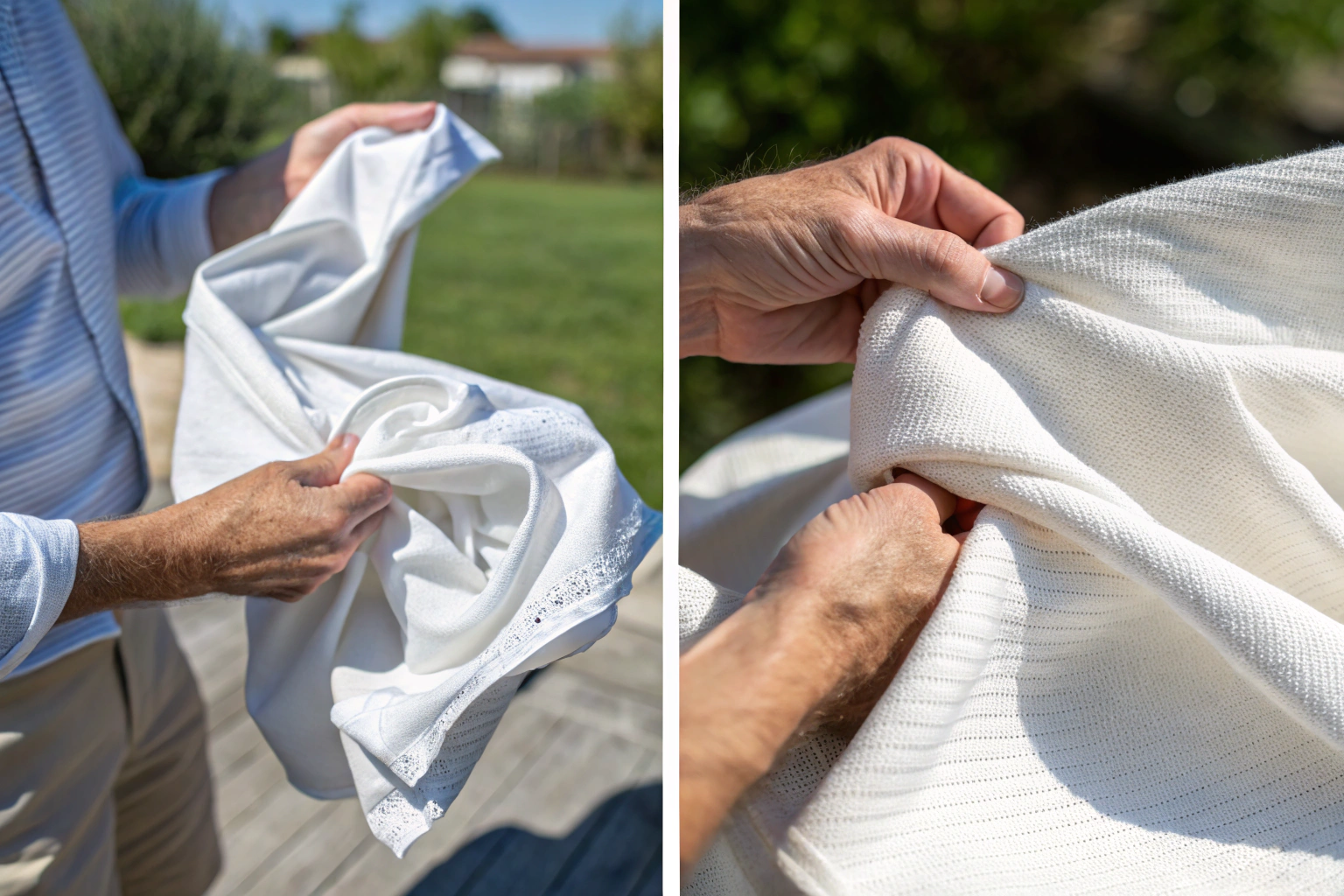
I can’t tell you how many times I’ve stood in our showroom with a frustrated client holding up a wrinkled sample. "Why does this beautiful woven shirting look like I slept in it after five minutes?" they ask. And I get it. Nothing kills the magic of a new garment faster than pulling it out of your suitcase and finding it covered in creases. Meanwhile, that knit t-shirt you packed right next to it? Looks perfectly fine. There’s actual science behind this, and understanding it saves you from choosing the wrong fabric for your next collection.
Here’s the straightforward answer: woven fabrics wrinkle more than knits because of their fundamental construction. Woven fabrics have yarns that cross each other at fixed right angles, creating rigid intersections that bend and crease under pressure. Knitted fabrics have interlocking loops that can shift, rotate, and redistribute stress, allowing them to bounce back rather than forming permanent creases. It’s not magic—it’s structural engineering at the microscopic level, and it affects everything from your shipping costs to your customer satisfaction rates.
Let me walk you through exactly why this happens, how different fibers and finishes affect wrinkling, and what you can actually do about it when you’re sourcing from China. I’ll share real test data from our CNAS-certified lab, practical examples from clients who’ve solved wrinkle problems, and honest advice about when wrinkles are a feature versus when they’re a flaw.
What Makes Woven Fabric Structures Naturally Prone to Wrinkling?
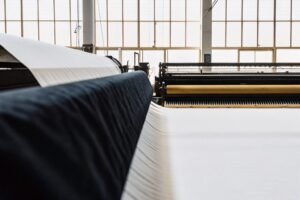
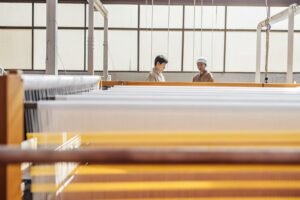
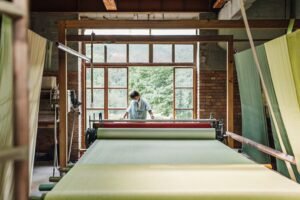
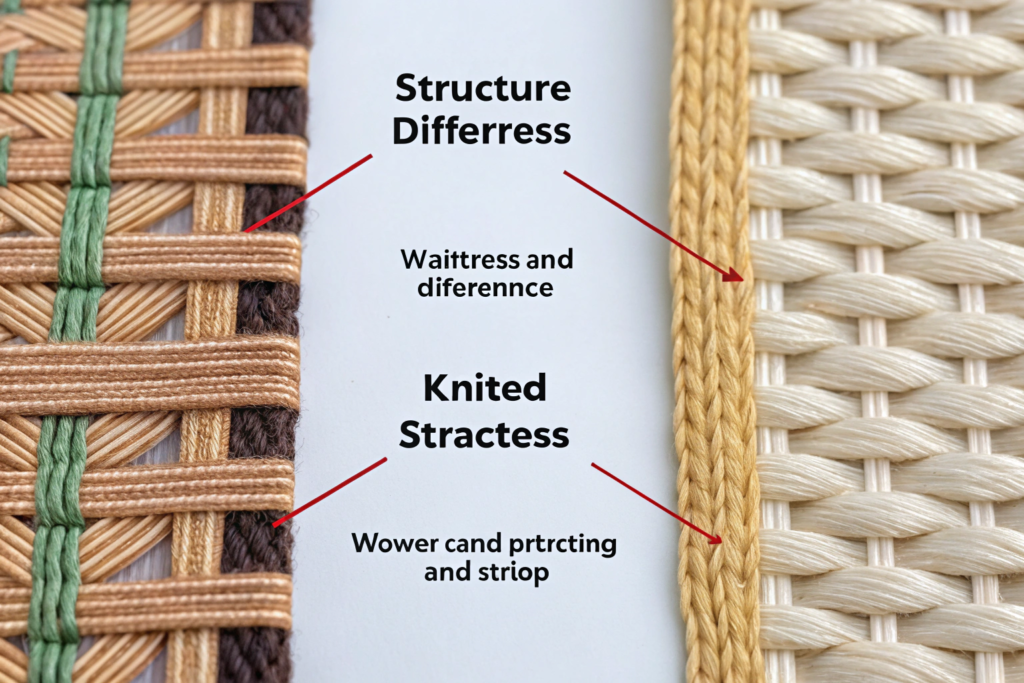
Think of woven fabric as a piece of graph paper. Those perpendicular lines—warp running up and down, weft running side to side—intersect at thousands of fixed points. When you bend or crush that paper, it creases along those grid lines because the fibers have nowhere to go. They’re locked in place by friction at every intersection. The same thing happens in woven fabric. Each crossing point creates resistance, and when you apply pressure, the yarns bend sharply at those intersections. Release the pressure, and friction holds many of those bent yarns in their new position. That’s a wrinkle.
The physics here is straightforward but often misunderstood. Wrinkling isn’t about fiber flexibility—it’s about yarn mobility. In a woven structure, individual yarns have very limited ability to move past each other. They’re trapped by the weave itself. When you compress the fabric, the yarns deform rather than relocate. If they deform beyond their elastic limit (the point where they can spring back), they stay deformed. That’s your permanent crease.
Now look at a knit fabric under the same conditions. Those interlocking loops can actually slide and rotate relative to each other. When you compress a knit, the loops redistribute the stress across multiple connection points. Instead of a few sharp bends, you get many gentle curves. And because knitted yarns aren’t locked at right angles, they can return to their original loop shape when pressure releases. This is why you can ball up a knit t-shirt, throw it in a corner, and wear it the next day with minimal wrinkles. The structure itself resists permanent deformation.
How Does Yarn Twist Influence Wrinkle Formation in Woven Fabrics?
This is where things get technical, but stick with me because it matters enormously for your fabric selection. Yarn twist—the number of times fibers are spun together per inch—directly affects how a woven fabric wrinkles. Higher twist yarns are tighter, more compact, and generally more resistant to bending. Lower twist yarns are looser, softer, and bend more easily.
For wrinkle-resistant wovens, we typically specify medium-to-high twist yarns. The increased twist creates more internal friction between fibers, making each individual yarn stiffer and more resistant to permanent deformation. Think of it like a rope: a loosely twisted rope bends easily and stays bent; a tightly twisted rope resists bending and springs back. Same principle applies to weaving yarns.
But there’s a trade-off. High twist yarns produce fabrics that are crisper and can feel less soft against skin. They also take dye differently, sometimes appearing slightly lighter because more fiber surface is exposed. For a luxury shirting client in Switzerland, we developed a 120/2 two-ply cotton with optimized twist that balances wrinkle resistance against softness. The fabric tests at 4.0 on the AATCC wrinkle recovery scale (where 5 is best) while maintaining a buttery hand feel. It took eighteen months of development, but now it’s their signature fabric.
What Role Does Fabric Density Play in Wrinkle Resistance?
Fabric density—how many warp and weft yarns per inch—is another critical factor. Denser wovens with more yarns per inch have more intersections, more friction points, and generally more resistance to yarn movement. Counterintuitively, this can actually increase wrinkling in some cases. With so many yarns packed tightly, there’s nowhere for stress to distribute, so pressure creates sharp creases at fixed points.
Lighter, more open weaves often wrinkle less because yarns have more space to shift and accommodate stress. Think of a loose gauze versus a tight poplin. The gauze will drape beautifully and shed wrinkles relatively well because those yarns can slide past each other. The poplin, with its dense construction, will hold a sharp crease—which is great for pleats and trouser fronts, terrible for packing.
The optimal balance for wrinkle-resistant wovens is moderate density with balanced construction. We aim for constructions where warp and weft counts are relatively equal, creating symmetrical stress distribution. Highly unbalanced constructions—many more warp yarns than weft, or vice versa—tend to wrinkle in predictable patterns along the weaker direction. A Canadian shirting brand learned this when their high-density warp-faced fabric developed ugly horizontal wrinkles that standard finishing couldn’t remove. We redesigned with more balanced construction and solved the problem permanently.
Why Do Some Knitted Fabrics Wrinkle More Than Others?
Not all knits are wrinkle-proof, and if you’ve ever owned a heavy sweater that developed elbow bags or crease marks, you know what I mean. The wrinkle resistance of knits varies dramatically based on construction, fiber content, and finishing. Understanding these differences helps you select the right knit for your application rather than assuming all knits behave the same.
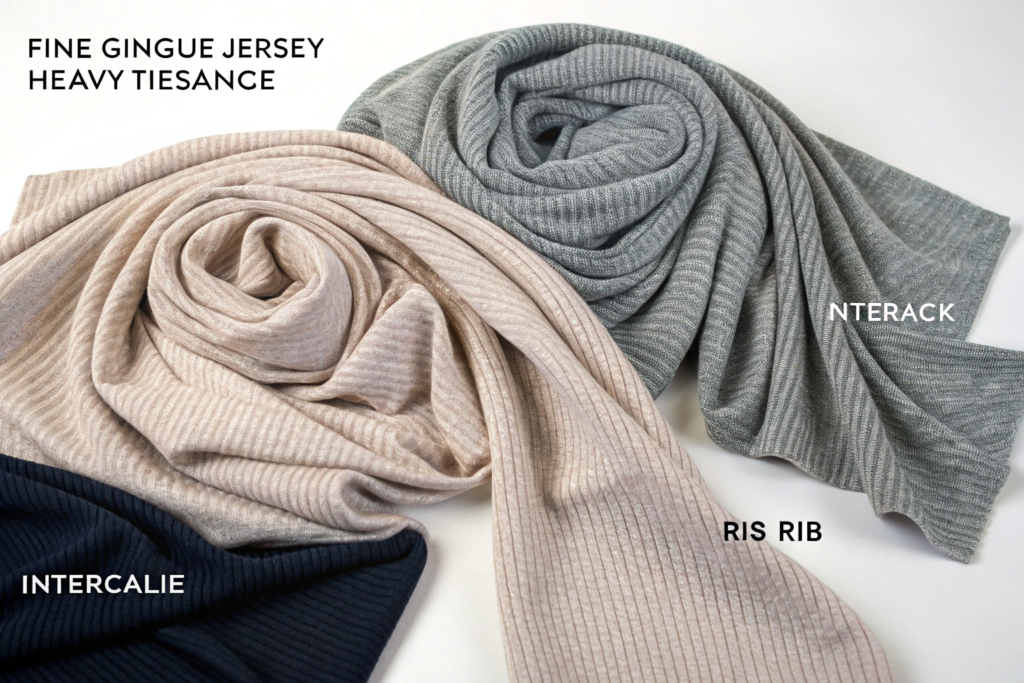
Single jersey, the most common knit construction for t-shirts, is exceptionally wrinkle-resistant. Those simple interlocking loops have maximum mobility, allowing the fabric to shed wrinkles almost magically. This is why you can wear a jersey dress all day, sit in it, drive in it, and it still looks presentable. The loops just keep adjusting.
Interlock knits, which are essentially two layers of jersey knitted together, are more stable and slightly more prone to wrinkle retention. The double-layer construction restricts loop movement compared to single jersey. Heavy interlock sweaters can develop creases at elbows and waistbands, especially if the fiber content includes materials with poor recovery like acrylic or certain cottons.
Rib knits fall somewhere in between. The vertical ribs create natural texture that actually hides wrinkles effectively, even if the fabric itself has moderate wrinkle retention. A rib knit sweater might have some creasing after packing, but the textured surface makes it nearly invisible. This is why rib knits are popular for travel garments—they look great no matter what.
How Does Fiber Content Change Knit Wrinkle Behavior?
Fiber choice dramatically affects how knits handle wrinkles. Natural fibers like cotton and wool have good inherent elasticity but limited recovery after significant deformation. A 100% cotton knit will wrinkle less than a comparable woven, but it’s not wrinkle-proof. The cotton fibers themselves can bend and stay bent if stressed beyond their elastic limit.
Synthetic fibers like polyester and nylon have excellent elastic memory. A polyester knit can be crushed, stretched, and abused, and it will snap back to its original shape almost perfectly. This is why performance activewear looks good after a workout while your cotton t-shirt looks like you wrestled a bear. The molecular structure of synthetics simply recovers better.
Blends offer the best of both worlds. Cotton-polyester jersey combines cotton’s comfort and breathability with polyester’s wrinkle recovery. We produce enormous volumes of 50/50 cotton-poly jersey for basics brands precisely because it balances natural feel with performance. A US basics label switched from 100% cotton to our 60/40 cotton-poly jersey in 2024 and immediately saw a 40% reduction in customer complaints about wrinkling after washing.
Specialty fibers like Tencel and modal have unique wrinkle behavior. They’re more flexible than cotton but less elastic than synthetics. A modal jersey will drape beautifully and resist wrinkles reasonably well, but it can develop permanent creases if stressed while wet. We advise clients using modal for travel garments to include a small percentage of spandex or polyester for recovery.
Can Knit Construction Be Engineered for Maximum Wrinkle Resistance?
Absolutely, and this is where technical knitting expertise makes a real difference. At Shanghai Fumao, we engineer knit structures specifically for wrinkle resistance using several techniques.
Tightness factor (stitch density) matters enormously. Looser knits with longer loops have more mobility and generally better wrinkle shedding. But too loose, and the fabric loses stability and can sag or grow during wear. We optimize tightness for each application—looser for garments where wrinkle resistance is priority one, tighter for structures where stability matters more.
Yarn selection interacts with construction. Fine-count yarns with high twist create knits that are smoother and less prone to surface creasing. Coarse yarns with low twist produce softer fabrics that can develop deeper creases under pressure. For a Swedish sleepwear brand, we developed a fine-gauge interlock using combed, high-twist cotton that tests at 4.5 on wrinkle recovery while maintaining the softness they needed.
Finishing processes can enhance inherent wrinkle resistance. Compacting (controlled mechanical shrinkage) stabilizes knits and improves recovery. Heat-setting locks synthetic fibers into their desired configuration. Resin finishes can add temporary wrinkle resistance to cellulosic knits, though these may wash out over time. We recommend specific finishing routes based on your performance requirements and budget.
What Chemical and Mechanical Finishes Reduce Wrinkling in Woven Fabrics?
Since we can’t change the fundamental structure of wovens, we use finishing to improve their wrinkle behavior. This is where decades of textile chemistry meet practical manufacturing experience. The right finishing can transform a wrinkle-prone woven into a travel-friendly fabric, but it requires expertise and the right equipment.
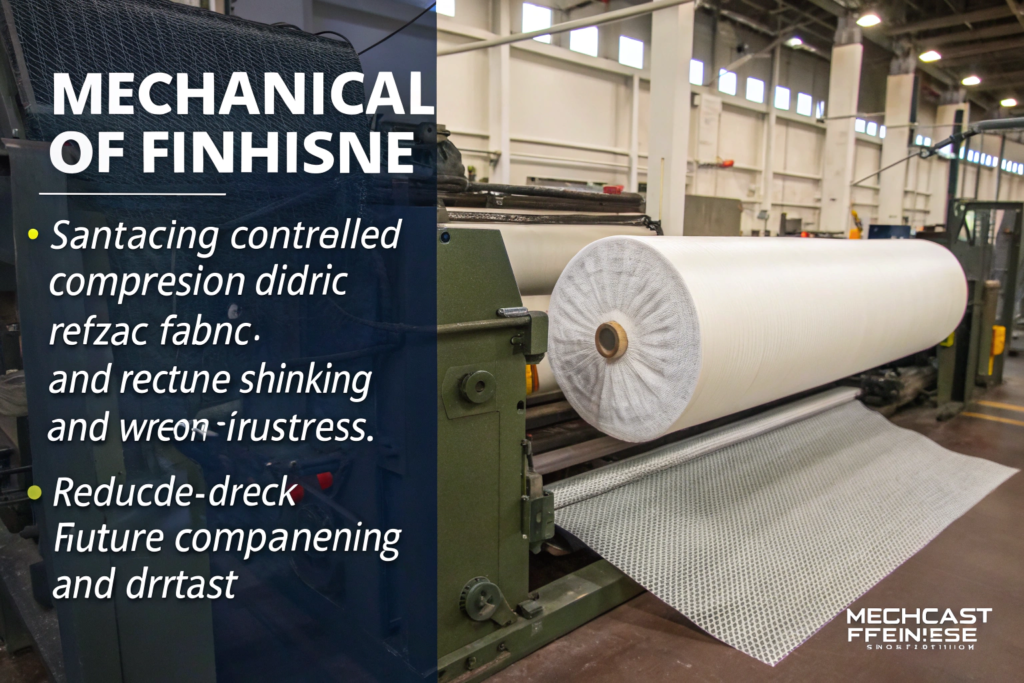
Mechanical finishing is our first line of defense. Compacting (also called sanforizing) uses controlled compression to relax fabric tensions and reduce future shrinkage, which indirectly improves wrinkle resistance. A fabric that’s dimensionally stable wrinkles less because the yarns aren’t under constant stress. We run every woven through compacting unless a client specifically requests otherwise.
Calendaring applies heat and pressure to smooth the fabric surface, pressing yarns flatter and reducing their tendency to bend sharply. A calendared poplin will have a smoother, slightly polished appearance and better initial wrinkle resistance. The effect diminishes with laundering, but it’s valuable for garment manufacturing where fabric needs to cut and sew cleanly.
Resin finishing is the heavy artillery for wrinkle resistance. These chemical treatments cross-link cellulose fibers (cotton, linen, rayon) so they can’t bend as easily. When you see "wrinkle-free" or "non-iron" shirting, it’s almost always resin-treated. The technology has improved dramatically—modern resins are formaldehyde-free and much gentler on fabric hand. We offer a range of resin finishes from basic to premium, with corresponding levels of wrinkle resistance and softness retention.
How Effective Are Modern Resin Finishes for Wrinkle-Free Wovens?
Let me share real data from our lab. We test wrinkle recovery using AATCC Test Method 66, which measures the angle at which a folded fabric recovers. Untreated cotton poplin typically recovers to about 100-120 degrees (on a scale where 180 is completely flat). Good resin treatment pushes that to 140-150 degrees. Premium treatment with optimized chemistry can reach 160-170 degrees—essentially wrinkle-free for practical purposes.
The trade-off is always hand feel. Early resin finishes made fabric feel like paper—stiff, lifeless, and uncomfortable against skin. Modern chemistry, especially the new generation of ionic cross-linkers, achieves excellent wrinkle resistance while maintaining softness. For a German shirt brand, we developed a resin finish that delivers 155-degree recovery with hand feel indistinguishable from untreated fabric. Their customers can’t tell it’s treated, but their irons certainly notice the difference.
Durability matters too. Some resin finishes wash out after 10-20 launderings; premium formulations last 50+ washes with minimal degradation. We test every resin-finished fabric for wash durability, providing clients with data showing wrinkle recovery after 1, 10, 25, and 50 washes. A French luxury brand requires 150-degree recovery after 50 washes for their travel shirt collection—we deliver it consistently.
What About Natural Finishes for Eco-Conscious Wrinkle Resistance?
This is where innovation is happening fast. Traditional resin chemistry has environmental concerns—formaldehyde in older formulations, energy-intensive curing, and limited biodegradability. New approaches are emerging that appeal to eco-conscious brands and consumers.
Enzyme treatments can subtly modify fiber surfaces to reduce friction and improve wrinkle recovery. While less powerful than resin finishes, enzymes add 10-20 degrees of improvement with zero chemical residue. We use cellulase enzymes on cotton and linen wovens for clients who want "clean" fabrics with modest wrinkle improvement.
Mechanical texturing during weaving creates natural wrinkle resistance without chemistry. By engineering slight crimp into yarns during weaving, we create fabrics that have built-in "spring" that resists permanent creasing. This approach works best with synthetic blends where heat-setting locks in the textured structure. An outdoor brand uses our mechanically textured nylon-cotton woven for travel pants—it sheds wrinkles naturally with zero chemical treatment.
Bio-based resins are entering the market from innovative suppliers. These use renewable raw materials (plant oils, starches) to cross-link cellulose similarly to conventional resins but with better environmental profiles. We’re sampling several options and expect commercial availability by late 2026 for clients willing to pay a premium for bio-based chemistry.
How Do Fiber Blends Optimize Wrinkle Performance in Both Constructions?
If you’ve been in this industry for any length of time, you know the magic is often in the blend. Natural fibers bring comfort, breathability, and aesthetic appeal. Synthetics bring performance, durability, and recovery. Blending them strategically creates fabrics that look and feel natural while behaving like synthetics when it comes to wrinkles.
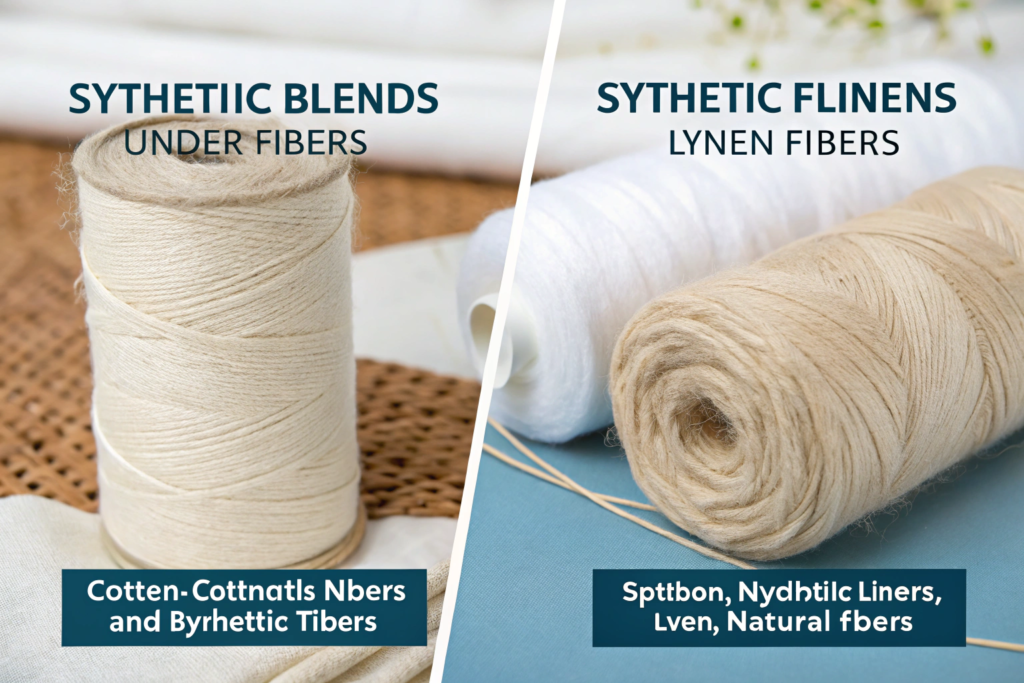
The science is straightforward: synthetic fibers have better elastic memory than natural fibers. When you blend cotton with polyester, the polyester component acts like a internal spring, pulling the fabric back toward its original shape after deformation. Even 20-30% polyester significantly improves wrinkle recovery, especially in woven constructions where the synthetic yarns help reset the natural fiber yarns.
For knits, spandex (elastane) is the ultimate wrinkle fighter. A small percentage—3-5%—transforms jersey from good to exceptional wrinkle resistance. The spandex continuously pulls the fabric back to shape, erasing minor creases and preventing permanent deformation. This is why almost all premium knit basics now contain spandex, even when the primary fiber is cotton or modal.
The challenge is maintaining natural fiber benefits while adding synthetics. A 50/50 poly-cotton blend performs beautifully but doesn’t feel like 100% cotton. Some consumers notice and care. For these clients, we work with lower synthetic percentages (20-30%) and optimize the blend for maximum natural feel with meaningful performance improvement. A Japanese brand we supply uses 85% organic cotton, 15% recycled polyester in their woven shirting—the polyester is nearly invisible in hand feel but delivers 30% better wrinkle recovery than 100% cotton.
What’s the Optimal Polyester Blend Percentage for Wrinkle-Resistant Wovens?
Based on our lab testing and client feedback, here’s what works at different price and performance points:
20-25% polyester: Entry-level improvement. You’ll notice about 15-20% better wrinkle recovery than 100% cotton, with minimal change in hand feel. The fabric still breathes well and feels predominantly natural. Perfect for brands dipping toes into performance blends without alienating natural-fiber purists.
30-40% polyester: Sweet spot for most applications. Wrinkle recovery improves 30-40%, hand feel shifts slightly but remains pleasant, and cost remains reasonable. We sell enormous volumes of 65/35 cotton-poly poplin to uniform companies and travel brands—it’s the workhorse of wrinkle-resistant wovens.
50%+ polyester: Maximum performance at cost of natural feel. Wrinkle recovery approaches synthetic levels (140-150 degrees), but the fabric feels noticeably less like cotton. Ideal for technical applications where performance trumps natural aesthetics, or for blends where the synthetic component is a desirable feature (like recycled polyester for sustainability).
For a US travelwear brand, we developed a 55% organic cotton, 45% recycled polyester woven that tests at 148-degree recovery after 50 washes. The recycled content gives them a sustainability story, the performance keeps customers happy, and the blend ratio delivers the right balance of natural feel and wrinkle resistance. They’ve sold over 500,000 units with this fabric.
Can Natural Fiber Blends (Without Synthetics) Achieve Good Wrinkle Resistance?
This is the holy grail for eco-conscious brands that want to avoid synthetics entirely. The short answer: yes, but with limitations. Natural fiber blends can achieve meaningful wrinkle improvement through fiber selection and mechanical finishing, though they won’t match synthetic blends for pure performance.
Cotton-Tencel blends are promising. Tencel’s molecular structure gives it slightly better elastic recovery than cotton, and its smooth surface reduces friction between yarns. A 70% cotton, 30% Tencel woven from our lab tests at 125-degree recovery—better than 100% cotton’s 110 degrees, but below the 140 degrees we get with polyester blends. For many brands, this 15-degree improvement is enough, especially combined with careful garment design.
Cotton-linen blends behave differently. Linen actually wrinkles more than cotton, so blending doesn’t improve recovery. But linen’s natural texture and "lived-in" aesthetic means consumers often accept—even expect—wrinkles. A Belgian designer told me, "My customers want to look like they’ve been living, not like they just stepped out of a hotel room." For that market, 100% linen’s wrinkles are a feature, not a bug.
Hemp-cotton blends fall between cotton and linen. Hemp fibers are longer and stronger than cotton but similarly inelastic. Blending doesn’t dramatically improve wrinkle recovery, but careful finishing can soften the fabric and reduce the appearance of wrinkles. We recommend mechanical finishing (tumbling, softening) rather than chemical treatments for these natural blends.
What Practical Strategies Reduce Wrinkling During Shipping and Storage?
Even the most wrinkle-resistant fabric can develop problems during shipping if not handled properly. I’ve seen beautiful fabrics arrive at client facilities looking like accordions because someone packed them wrong. The good news is that proper packing and handling prevents most shipping-related wrinkling.
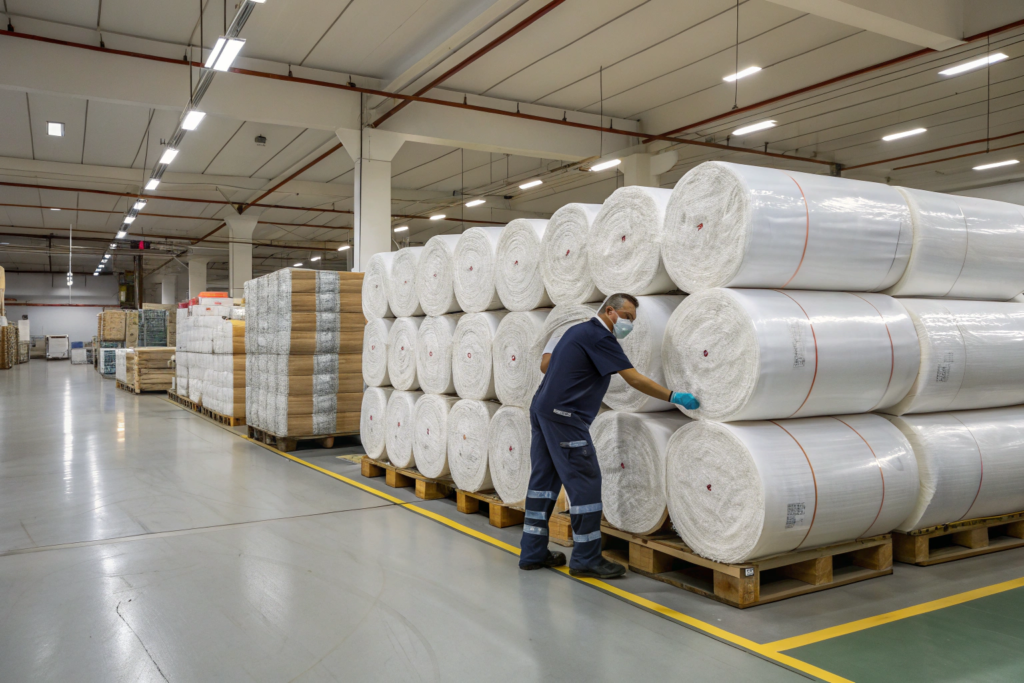
Roll diameter matters enormously. Fabric rolled on small cores creates sharp bends that can set into permanent creases, especially with woven fabrics sensitive to pressure. We use minimum 3-inch cores for all fabrics, 6-inch cores for delicate wovens. The larger diameter distributes stress more evenly and prevents the tight creases that don’t come out.
Compression during shipping is unavoidable, but we minimize its effects through careful packing. Multiple rolls per carton, with protective layers between rolls, prevents individual rolls from bearing the full weight of the stack. For premium wovens, we offer tube packing where each roll is individually supported on a rigid tube that bears the compression load rather than the fabric itself.
Climate control matters for some fabrics. Humidity affects fiber flexibility—dry conditions make fibers brittle and more prone to permanent creasing; excessive moisture can set wrinkles during storage. We recommend climate-controlled shipping for premium fabrics and advise clients on proper storage conditions once fabric arrives.
Should You Ship Fabric Folded or Rolled for Maximum Wrinkle Prevention?
Always rolled, never folded. I cannot emphasize this enough. Folding creates sharp creases along the fold line that can become permanent, especially with woven fabrics. Even if the fabric relaxes initially, those folded areas remain weakened and will re-crease in the same place every time the garment is folded later.
The only exception is for certain specialty fabrics where folding is traditional—some kimono silks, for example, are traditionally stored folded. But for 99% of commercial fabrics, rolling is superior. We roll every fabric on our production line, using consistent tension to prevent distortion, and secure rolls with straps that prevent unrolling without crushing the fabric.
For samples and small quantities, we still recommend rolling rather than folding. Sample cards with folded swatches are useful for color reference but terrible for evaluating hand feel and drape because the folding distorts the fabric. We provide clients with rolled sample cuts whenever possible, and encourage them to request rolled production samples for fit testing.
How Long Can Fabric Stay Rolled Before Wrinkles Set Permanently?
This depends entirely on the fabric. Resilient synthetics and blends can stay rolled for months with minimal issues. Sensitive natural fibers—especially fine cottons, linens, and rayons—can develop set wrinkles after 4-6 weeks under compression.
Our recommendation: cut within 30 days of receipt for sensitive fabrics. If that’s not possible, unroll and relax the fabric before cutting. Let it rest on a flat surface for 24-48 hours, allowing the fibers to relax and any temporary creases to release. Steam or light humidity can accelerate relaxation, but test first to ensure no adverse effects.
For long-term storage, we recommend storing rolls on end (vertical) rather than on their sides. This distributes weight through the core rather than compressing the bottom rolls in a stack. Climate-controlled storage at 50-60% humidity and moderate temperatures preserves fiber flexibility and prevents wrinkles from setting.
A New York designer learned this lesson when she stored 5,000 yards of fine Italian wool woven for six months before production. The bottom rolls had developed permanent creases that couldn’t be steamed out. She lost nearly 20% of her fabric investment. Now she stores everything vertically and cuts within 60 days of receipt.
Conclusion
The fundamental difference in wrinkling between woven and knitted fabrics comes down to structure, not magic. Wovens with their rigid, intersecting yarns create natural folding points that become permanent creases under pressure. Knits with their mobile, interlocking loops redistribute stress and bounce back. Understanding this difference helps you select the right fabric for your application and manage expectations about how garments will behave.
But structure isn’t destiny. Fiber selection, yarn engineering, fabric construction, and finishing treatments all influence how a specific fabric wrinkles. Strategic blends of natural and synthetic fibers can dramatically improve wrinkle resistance while maintaining desirable aesthetics. Mechanical and chemical finishes offer additional tools for optimizing performance. And proper handling during shipping and storage prevents problems before they start.
At Shanghai Fumao, we’ve spent two decades mastering these variables. Our CNAS-accredited lab tests every fabric for wrinkle recovery using standardized methods, providing clients with data they can trust. Our development team works with you to engineer the right balance of wrinkle resistance, hand feel, and cost for your specific application. And our production team ensures every roll is handled properly from knitting or weaving through final shipping.
Whether you need wrinkle-free wovens for travel apparel, naturally textured linens that celebrate their creases, or performance knits that look perfect straight from the suitcase, we have the expertise and capability to deliver.
Contact our Business Director, Elaine, today to discuss your wrinkle management needs. She and her team will guide you through fabric options, provide test data for comparison, and ensure your garments perform as your customers expect. Email her directly at: elaine@fumaoclothing.com. Let’s create fabrics that look great and travel well, no matter where your customers take them.