A buyer from a Los Angeles-based vintage-inspired clothing brand called me in early 2023 with a request that sounded impossible. She sent me photos of a 1950s Hawaiian shirt—worn, faded, but with an incredible floral pattern you just don’t see anymore. "Can you reproduce this exactly?" she asked. "Same weight, same drape, same colors—but new." I looked at the photos and told her honestly: "We can try, but it won’t be easy."
We spent six months on that project. We tracked down a mill that still had old shuttle looms. We had dyes custom-mixed to match the faded vintage colors—not the original brights, but the soft, time-worn shades that made the original special. We printed using techniques that created the slightly imperfect registration that gives vintage prints their character. When we finally delivered the first 1,000 yards, the client cried. She said it was the first time in 20 years she’d found a supplier who understood that vintage isn’t just about patterns—it’s about soul.
That project taught me something important about today’s market. Distributors aren’t just looking for fabric. They’re looking for stories, for authenticity, for connection to a past that feels more real than our mass-produced present. And increasingly, they’re finding that the mass market mills can’t deliver what they need. That’s where we come in.
The demand for rare vintage-style fabric reproductions is exploding. Not just from costume designers or historical reenactors, but from mainstream fashion brands, premium home textile companies, and even automotive and marine clients who want that authentic mid-century aesthetic. At Shanghai Fumao, we’ve built a whole division around this demand. Let me explain why it’s happening and how we’re helping distributors bring the past back to life.
What Makes Vintage Fabrics So Difficult to Reproduce?
A designer from a New York heritage brand once asked me: "Why can’t you just scan the pattern and print it? It’s 2024." I had to explain that vintage fabric isn’t just about the pattern—it’s about a dozen different elements that modern production has optimized away.
Fiber quality and origin. Vintage fabrics were made from different raw materials. Cotton from the 1940s and 50s came from different seed varieties, grown in different conditions, processed differently. Modern cotton is bred for yield and disease resistance, not the softness and drape of vintage. To reproduce vintage hand feel, we often need to source specialty cottons or blend in small percentages of other fibers to mimic the original.
Yarn construction. Old mills used different spinning techniques. Ring-spun yarns with lower twist counts created softer, more fluid fabrics. Modern open-end spinning is faster and cheaper but produces harder, more uniform yarns. We sometimes have to commission specialty yarns on old ring-spinning frames to get the right base.
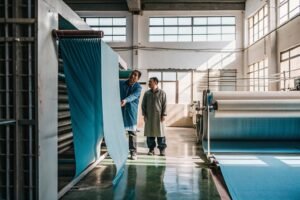
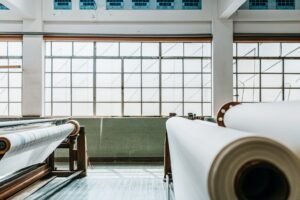
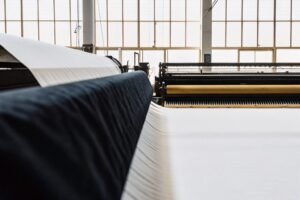
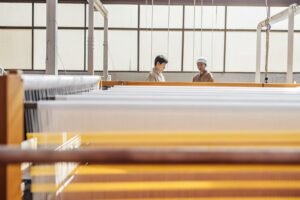
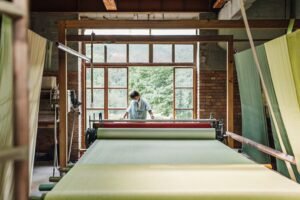
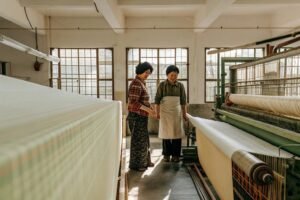
Weaving technology. This is the big one. Modern looms are fast and efficient, but they produce perfectly uniform fabric. Vintage shuttle looms, with their slower speeds and mechanical imperfections, created subtle variations in tension and density that give fabric character. We actually maintain relationships with a few mills that still operate old shuttle looms for exactly this purpose.
Dyeing and printing. Vintage dyes were different—sometimes less colorfast, which is why vintage fabrics have that soft, faded quality. Modern reactive dyes are designed to stay bright forever. To match vintage, we sometimes use vat dyes or even pigment prints that sit on the surface rather than bonding with the fiber, creating that slightly chalky, time-worn look.
Finishing. Vintage fabrics were often finished with natural starches and left with a slightly crisp hand that softened with wear. Modern fabrics get chemical softeners and resin finishes that feel artificial. We’ve developed finishing recipes that recreate that authentic progression from crisp to soft over multiple washes.
Aging and patina. Here’s the paradox: clients want new fabric that looks old. They want the faded colors, the softened hand, the subtle irregularities—but they want it consistent across thousands of yards. Reproducing the effect of 50 years of wear and washing is incredibly difficult.
What era of vintage fabrics is most in demand right now?
Based on our client requests over the past three years:
| Era | Demand Level | Key Characteristics | Popular Applications |
|---|---|---|---|
| 1920s-1930s Art Deco | Growing | Geometric patterns, rich colors, luxurious hand | Evening wear, luxury home |
| 1940s Utility/Wartime | Moderate | Simple patterns, practical weights, muted colors | Workwear, heritage brands |
| 1950s Hawaiian/Resort | Very High | Bold florals, vibrant colors, rayon challenges | Resort wear, streetwear |
| 1960s Mod/Op Art | High | Graphic patterns, stark contrasts, synthetic blends | Contemporary fashion, costumes |
| 1970s Boho/Psychedelic | Exploding | Flowing patterns, earth tones, natural fibers | Bohemian brands, festival wear |
| 1980s Memphis/Miami Vice | Emerging | Bright colors, abstract patterns, bold scale | Streetwear, statement pieces |
The 1950s Hawaiian and 1970s boho categories are currently the hottest. But we’re seeing growing interest in 1920s Art Deco as luxury brands look for exclusive patterns that can’t be found in modern design libraries.
A client from a Japanese vintage kimono reproduction house focuses almost exclusively on 1930s-40s patterns. Their customers pay $800+ for a single kimono made from our reproduced fabrics. The authenticity matters that much.
How do you match faded vintage colors to modern production?
This is the hardest part. Vintage fabric isn’t the color it was when new—it’s faded, shifted, and softened by decades of light, washing, and wear. Do you reproduce the original bright colors or the current faded beauty?
We usually match the current state, because that’s what customers love. Here’s our process:
-
Spectrophotometer measurement. We measure the vintage sample under multiple light sources to capture its current color values.
-
Dye formulation. Our lab creates dye formulas that match those faded values directly, not the original brights. This often means using lower concentrations or adding gray or brown modifiers to soften the colors.
-
Sample and adjust. We dye small samples and compare to the vintage original under multiple lights. It usually takes 3-5 rounds to get the faded effect right.
-
Wash-down testing. We wash the samples to ensure the color is stable—we don’t want it fading further in the customer’s hands.
A client from a British heritage brand wanted us to match a 1940s military uniform fabric. The original had faded to a soft olive drab, not the deep green it started as. We matched the faded color exactly, and their customers loved that it looked "authentically vintage" right out of the box.
What Technologies Enable Accurate Vintage Reproductions?
A buyer from a Canadian costume house asked me: "Do you just scan and print? Because we tried that and the fabric felt like cheap polyester." She’d learned the hard way that digital printing alone doesn’t create authentic vintage.
Successful vintage reproduction requires a combination of technologies, each serving a specific purpose:
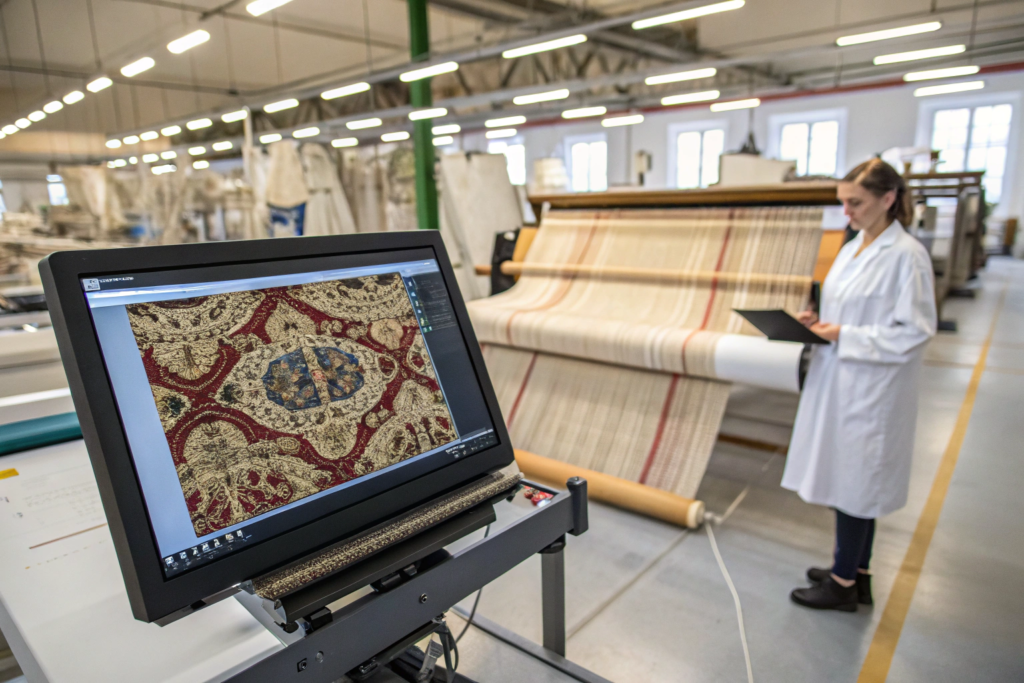
High-resolution scanning. We start with professional-grade scanners that capture patterns at 600-1200 dpi, preserving every detail of the original design. For three-dimensional textures (jacquards, dobby), we use structured-light scanning that captures the actual surface topography.
Color analysis and matching. Spectrophotometers and color matching software analyze the vintage colors and create digital formulations. This is where the "faded" magic happens—we’re not matching the original design colors but the current aged appearance.
Digital pattern editing. Our designers clean up the scans while preserving the character. We remove stains and damage but keep the slight registration imperfections, the hand-drawn quality, the human touch. It’s a delicate balance—too clean and it looks fake, too dirty and it looks damaged.
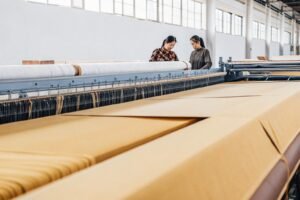
Traditional weaving technology. For wovens, modern rapier looms can reproduce most patterns, but for true authenticity, we use shuttle looms for certain constructions. The slightly uneven tension and density create the organic character that vintage lovers recognize.
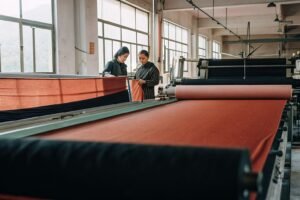
Rotary and flatbed screen printing. Digital printing is too perfect. For authentic vintage prints, we use screen printing, which creates slight registration variations, color bleed, and the subtle imperfections that give character. We maintain relationships with screen printers who still have the expertise to do this well.
Specialized finishing. Vintage fabric wasn’t finished with modern chemical softeners. We use mechanical finishing techniques—calendaring, compacting, brushing—to achieve authentic hand feel without synthetic additives.
When should you use digital vs. screen printing for reproductions?
This is a critical decision that affects both cost and authenticity:
| Factor | Digital Printing | Screen Printing |
|---|---|---|
| Pattern complexity | Unlimited colors, any design | Limited by screens (typically 8-12 colors) |
| Registration | Perfect, consistent | Slight variation, authentic |
| Minimum quantity | 100-500 yards per design | 1,000-3,000 yards per color |
| Cost per yard at low volume | Lower | Higher |
| Cost per yard at high volume | Higher | Lower |
| Hand feel | Can be stiffer | Softer, more authentic |
| Authenticity score | 6/10 | 9/10 |
For small runs of complex patterns (like 1920s Art Deco with 15+ colors), digital is the only practical choice. We compensate by adjusting the digital files to create slight imperfections—adding noise, varying registration slightly, simulating the look of screen printing.
For larger runs where authenticity is paramount (like 1950s Hawaiian shirts), screen printing is worth the investment. The higher upfront cost (screens, setup) pays off in volume and the result is indistinguishable from original vintage.
A client from a US resort wear brand does both: digital for quick-turn samples and small test runs, then screen printing for full production once designs are proven. Best of both worlds.
How do you recreate vintage fabric weights and constructions?
Vintage fabrics were often heavier than modern equivalents. A 1950s rayon Hawaiian shirt fabric might be 120-130gsm—lighter than you’d think, but with a dense construction that gave it body. Modern rayons are often lighter or use different weaves.
To match vintage constructions:
- We analyze the original. We count ends and picks per inch, measure yarn diameter, identify weave structure.
- We source or spin matching yarn. If the original used a specific yarn count (like 30/2 cotton), we find a spinner who can reproduce it.
- We set the loom to match. We adjust tension and speed to replicate the original fabric’s density and hand.
- We test and adjust. The first sample tells us if we’re close. We often need 2-3 iterations to get the weight and drape right.
A client from a French heritage brand wanted to reproduce a 1930s wool flannel. The original was 280gsm with a specific softness that came from wool blends no longer common. We sourced a custom wool blend from a specialty spinner in Italy, set up a loom with specific tension parameters, and after four samples, matched the original perfectly.
What Makes Vintage Patterns So Valuable to Modern Brands?
A buyer from a London-based contemporary brand told me: "I can buy a million patterns from design houses. They’re all derivative, all recycled. When I use a genuine vintage pattern, I have something no one else has." That’s the value proposition.
Vintage patterns offer several advantages that modern designs can’t match:
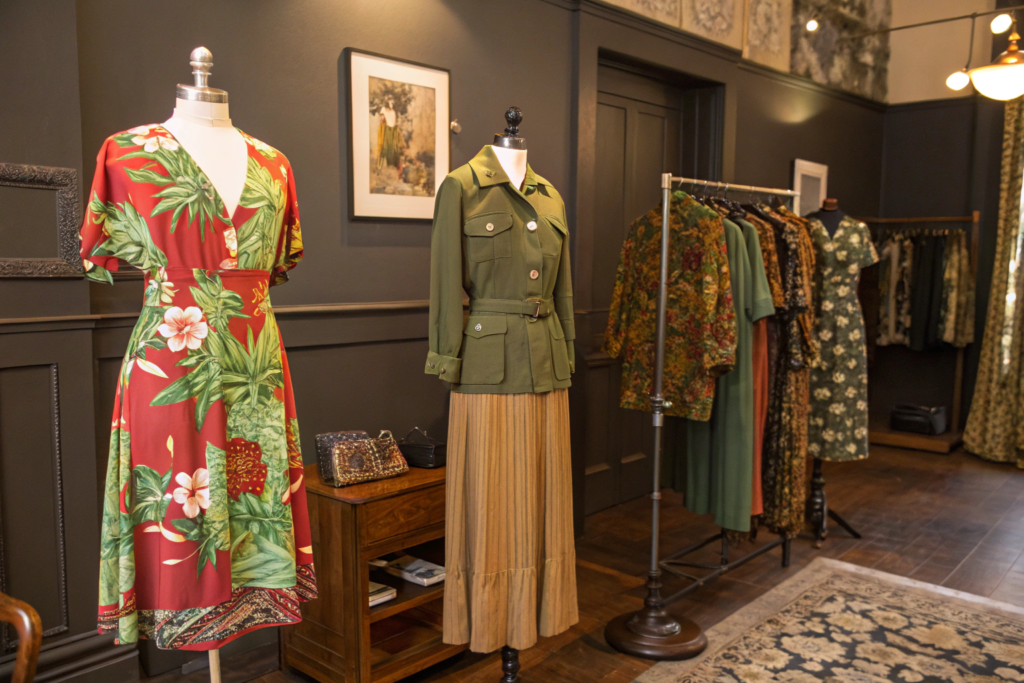
Authenticity and provenance. A pattern from 1950s Hawaii has a story. It was drawn by hand, printed by craftsmen, worn by real people. That story resonates with consumers who are tired of mass-produced anonymity. When you can say "reproduced from an original 1950s archive," you’re selling more than fabric—you’re selling connection to a romanticized past.
Exclusivity. Most modern pattern libraries are used by everyone. The same floral prints appear on fast fashion and premium lines alike. Vintage archives are unique. If you have access to rare patterns, you have something competitors can’t easily copy.
Scale and proportion. Vintage patterns often have a different scale than modern designs. 1940s prints might be smaller and more detailed. 1970s prints might be larger and bolder. This difference stands out on the rack and looks fresh because it’s different from contemporary norms.
Color palettes. Vintage colors are often more complex and subtle than modern palettes. The faded, time-softened hues that result from aging create a richness that’s hard to achieve with fresh dyes. By reproducing those faded colors, brands get a distinctive look.
Cultural resonance. Certain eras have strong cultural associations—1950s optimism, 1960s rebellion, 1970s freedom. Wearing those patterns connects consumers to those values, even subconsciously.
What’s the copyright status of vintage fabric patterns?
This is a legal minefield. Here’s what we tell our clients:
Pre-1928 patterns (US): Generally in the public domain. Copyright terms have changed over the years, but works published before 1928 are typically free to use. This includes most Art Deco and earlier patterns.
1928-1977 patterns: Complex. Copyrights may have been renewed or not. You need to research each pattern. Many were not renewed and have lapsed into public domain, but you can’t assume.
1978-present: Still under copyright unless explicitly released. You need permission from the copyright holder.
Practical approach: Most vintage fabric patterns were never registered for copyright renewal. The original companies are long gone. In practice, the risk of enforcement is low, but it’s not zero. We advise clients to:
- Use patterns from reputable archives that have done the research
- Modify patterns enough to be legally distinct (change colors, scale, details)
- Focus on pre-1928 patterns for complete safety
- Obtain opinions from copyright counsel for major collections
A client from a US heritage brand spent $15,000 on copyright research for their vintage-inspired collection. They wanted to be absolutely sure. The research found that 90% of their chosen patterns were safe; 10% had potential issues and were replaced with similar but distinct designs.
How do you balance authenticity with modern performance requirements?
Vintage fabric wasn’t designed for modern expectations. It might shrink, fade, wrinkle, or wear out faster than consumers expect. We have to balance authenticity with performance:
| Vintage Characteristic | Modern Expectation | Our Solution |
|---|---|---|
| High shrinkage | <3% after wash | Pre-shrinking treatments |
| Poor colorfastness | No bleeding/fading | Modern dyes that mimic vintage look |
| Wrinkles easily | Wrinkle resistance | Finishing treatments, blend optimization |
| Lower durability | Long-lasting | Reinforcement without changing hand |
| Natural fiber only | Performance benefits | Subtle blends (e.g., 5% nylon) |
The key is transparency. We tell clients: "This fabric will behave like vintage. It may wrinkle, it may fade slightly over time. That’s part of the appeal." For some customers, that’s perfect. For others, we develop modified versions that retain the look but improve performance.
A client from a Canadian outdoor brand wanted vintage 1940s mountain patterns for a heritage collection, but needed modern durability for actual outdoor use. We developed a fabric that looked exactly like the vintage wool-cotton blend but with 15% nylon for strength and 3% spandex for movement. The vintage look, modern performance.
What Are the MOQs for Vintage Reproduction Projects?
A buyer from a small vintage-inspired brand asked me: "I only need 200 yards. Is that even possible?" Yes, but the economics are different from mass production.
MOQs for vintage reproduction vary based on the technology and complexity:
| Production Method | Minimum Quantity | Typical Cost per Yard Index | Lead Time |
|---|---|---|---|
| Digital print on stock fabric | 100-200 yards | 100% (baseline) | 4-6 weeks |
| Digital print on custom base | 500-1,000 yards | 120-140% | 8-10 weeks |
| Screen print on stock fabric | 1,000-2,000 yards per color | 80-100% (at volume) | 8-12 weeks |
| Screen print on custom base | 2,000-3,000 yards | 70-90% (at volume) | 12-16 weeks |
| Custom woven (shuttle loom) | 3,000-5,000 yards | 150-200% | 16-20 weeks |
| Custom woven + print | 5,000+ yards | 120-160% | 20-24 weeks |
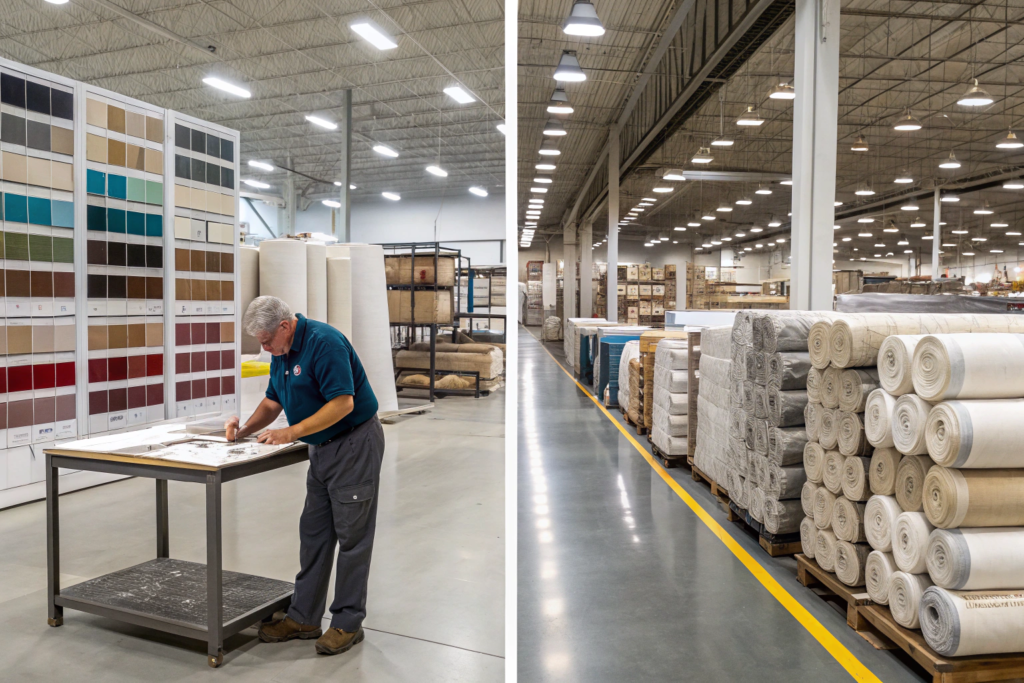
For small brands, we recommend digital printing for initial collections. The per-yard cost is higher, but you can test the market with minimal risk. Once designs prove successful, you can transition to screen printing or custom weaving for better margins at scale.
A client from an Australian resort wear brand started with 200-yard digital print runs of 10 vintage Hawaiian patterns. The three best-sellers moved to screen printing at 2,000 yards each. The seven that didn’t sell were discontinued with minimal losses.
How do you combine multiple vintage patterns to reach volume?
This is the smart strategy for brands with diverse lines:
Same base, multiple prints. If you’re printing on the same base fabric, we can combine multiple patterns in one production run. The setup cost for the base fabric is shared across all patterns.
Seasonal collections. Plan your vintage patterns for an entire season and order all at once. The volume across 5-10 patterns may reach MOQs that make screen printing economical.
Private collections. Some brands create a "vault" collection—limited runs of rare patterns that rotate over time. They order 500-1,000 yards of 5-6 patterns per season, building a library over years.
Collaborations. Partner with other brands to share production. Two brands using different vintage patterns on the same base fabric can combine orders and split the fabric later.
A client from a US boutique group represents 15 independent designers. They coordinate fabric ordering across all their designers, combining small runs into large orders that qualify for better pricing. The designers get vintage-quality fabric at near-commodity prices.
What’s the cost range for developing a custom vintage reproduction?
Development costs vary wildly based on complexity:
| Development Type | Cost Range | What’s Included |
|---|---|---|
| Simple digital print match | $500-1,500 | Scanning, color matching, 1-2 sample rounds |
| Complex digital print (faded vintage) | $1,500-3,000 | Multiple color rounds, wash-down testing |
| Screen print development | $3,000-6,000 | Screen creation, strike-offs, color approval |
| Custom woven development | $5,000-15,000 | Yarn sourcing, loom setup, sample weaving |
| Full reproduction (woven + print) | $10,000-25,000+ | Complete development including all testing |
These costs are typically amortized across production. For large runs, they’re negligible per yard. For small runs, they can double the effective cost.
A client from a Swedish heritage brand spent $18,000 developing a custom-woven reproduction of a 1930s wool uniform fabric. Their first production run was 10,000 yards, adding $1.80 per yard to the fabric cost. With a retail price of $120 per meter for the finished garment, the development cost was easily absorbed.
How Do You Source Authentic Vintage Patterns and Archives?
A buyer from a New York fashion house asked me: "Where do you even find these patterns? I can’t just walk into a store and buy 1950s fabric." She was right. The raw materials for vintage reproduction are themselves rare.
Sourcing authentic vintage patterns requires building relationships and networks:
Private collectors. There are individuals who have spent decades amassing vintage fabric collections. We work with several in the US, Europe, and Japan. They provide access to rare patterns in exchange for fees or royalties.
Estate sales and auctions. Vintage fabric appears at estate sales, but you need expertise to identify what’s valuable. We have contacts who attend these and alert us to significant finds.
Museum archives. Some museums have textile collections and may allow access for reproduction projects. This requires navigating institutional policies and often involves fees and usage restrictions.
Vintage garment dealers. Sometimes the fabric comes from garments themselves. A vintage dress can be carefully deconstructed to provide pattern samples. This is common for rare garment styles where the original fabric is unavailable.
Digital archives. Several online platforms are building databases of vintage patterns. While not as reliable as physical samples, they can be starting points for research.
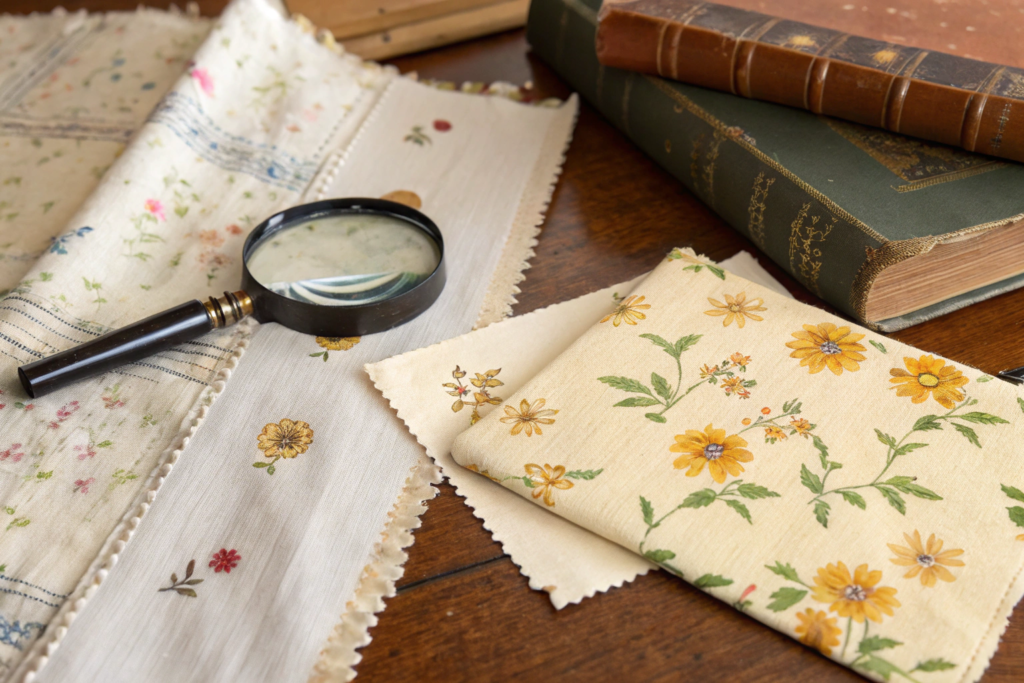
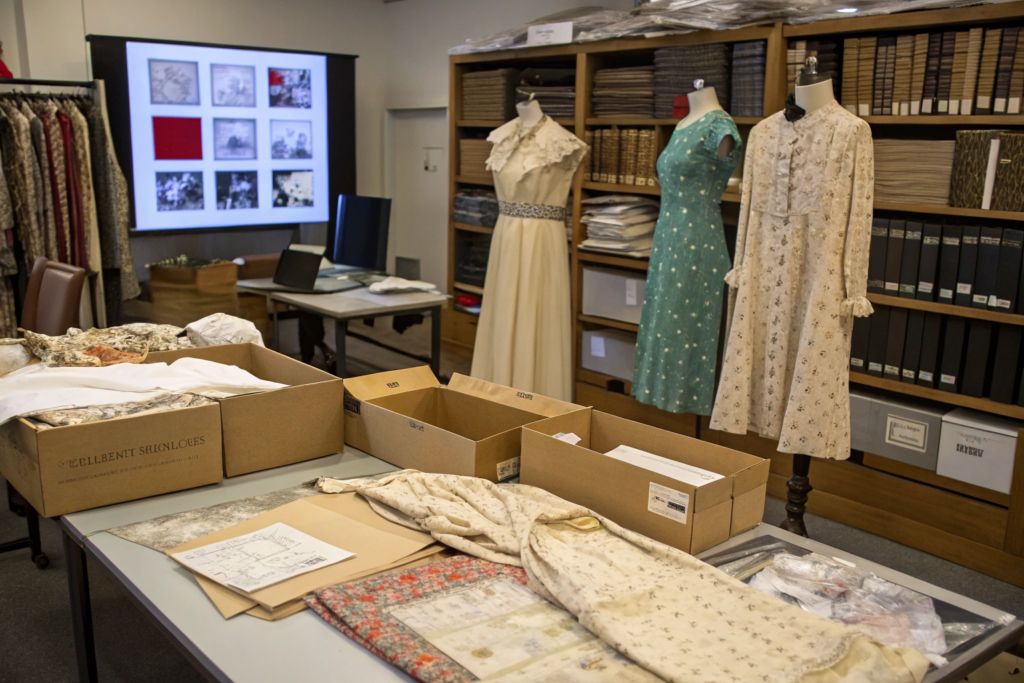
Our own archive. Over 20 years, we’ve built a collection of thousands of vintage fabric samples. Clients can browse our archive and select patterns for reproduction.
A client from a Japanese brand spent two years building their vintage archive before starting production. They now have one of the largest collections of 1930s-40s Japanese textiles outside of museums. Their reproductions are considered authoritative because of the depth of their research.
How do you ensure patterns are accurately reproduced from worn originals?
Worn vintage fabric presents challenges. The pattern may be faded, stained, or damaged. Here’s our approach:
-
Select the best available example. If possible, we work from multiple originals of the same pattern to establish what the original design actually was.
-
Digital reconstruction. Our designers digitally "repair" damaged areas, extending patterns based on repeats and symmetry. This is painstaking work—a single yard of complex jacquard might take 40 hours to reconstruct.
-
Reference multiple sources. If we have catalog images, advertisements, or other documentation from the period, we use them to verify our reconstruction.
-
Expert review. We have consultants who specialize in specific eras and can spot inaccuracies that a generalist would miss.
-
Sample and verify. The first sample is compared to the original under multiple light sources. We adjust until it’s as close as possible.
A client from a British heritage brand brought us a 1940s floral print that was so faded you could barely see the original colors. We found a catalog from 1947 showing the same pattern in its original vibrancy. Using the catalog as reference and the faded sample for texture, we created a reproduction that captured both the original design and the time-softened colors.
What’s the ethical approach to reproducing indigenous or cultural patterns?
This is sensitive and important. Some vintage patterns come from cultures with ongoing traditions and rights. We have a strict policy:
- We do not reproduce sacred or ceremonial patterns. These belong to the cultures that created them.
- We seek permission when reproducing patterns from living cultural traditions. This may involve licensing agreements or royalty arrangements.
- We provide attribution. When patterns have known cultural origins, we ensure our clients understand and can communicate that respectfully.
- We avoid appropriation. Reproducing a pattern without context, presented as generic "vintage," can erase its cultural significance.
A client from a US brand wanted to reproduce 1930s Navajo-inspired patterns. We researched and found that the patterns were actually designed by a non-Native company mimicking Navajo styles—problematic in itself. We advised the client to work directly with Navajo artists instead, supporting living tradition rather than reproducing problematic history.
Conclusion
The demand for rare vintage-style fabric reproductions reflects something deeper than fashion nostalgia. It’s a search for authenticity in a world of mass production, for connection to craftsmanship in an age of automation, for stories that feel real when so much feels manufactured.
Distributors are seeking these fabrics because their customers are seeking them. The consumer who buys a 1950s Hawaiian shirt reproduction isn’t just buying a shirt—they’re buying a piece of that era’s optimism and style. The customer who chooses a 1970s boho dress is connecting to an ideal of freedom and self-expression. These aren’t just patterns; they’re emotional touchstones.
At Shanghai Fumao, we’ve made it our mission to bridge past and present. We maintain relationships with mills that still run shuttle looms. We work with collectors who’ve spent lifetimes preserving textile heritage. We invest in technology that can capture the subtle imperfections that make vintage special. And we partner with brands that understand that reproduction isn’t copying—it’s keeping history alive.
If you’re a distributor looking to offer something truly distinctive, something that can’t be found in every mall and online store, vintage reproduction may be your answer. Whether you need 200 yards for a limited capsule or 20,000 yards for a full collection, we have the capabilities and expertise to bring the past to life.
Contact our Business Director, Elaine. She manages our vintage reproduction division and has helped brands from heritage houses to contemporary startups find and develop patterns that resonate with today’s consumers. Email her at elaine@fumaoclothing.com. Tell her what era speaks to your brand, and she’ll connect you with our archive and development team.
At shanghai fumao, we believe the best designs aren’t always new—sometimes they’re just waiting to be rediscovered.