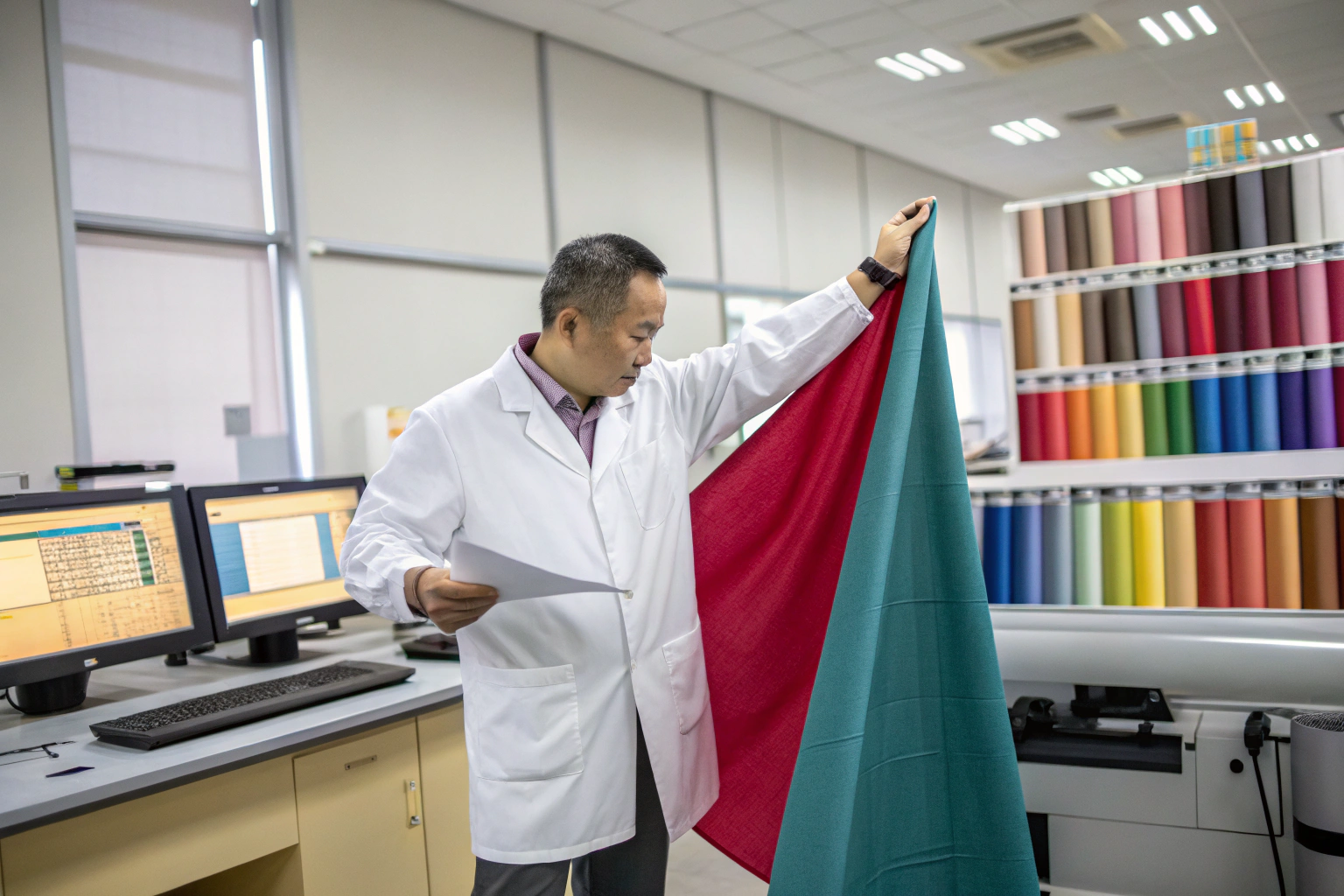
A buyer from a major American activewear brand called me in 2022 with a problem that still gives me nightmares. They’d ordered 50,000 yards of their signature royal blue performance fabric from another supplier—enough for an entire season’s production. When the shipment arrived, they opened the first 20 rolls and everything looked perfect. Then they opened roll 47. It was a different color. Not dramatically different—just enough that if you held it next to the others, you could see it. They checked more rolls and found the variation: rolls 1-30 were batch A, rolls 31-60 were batch B, and somewhere in the middle, the color had shifted. They had to re-cut their entire production, matching panels from the same rolls to avoid visible differences in finished garments. They lost $80,000 in wasted labor and missed their delivery window by six weeks.
That buyer is now our client. The first thing they asked when they came to us was: "How do you prevent this?" I walked them through our color control system—the one we’ve spent 20 years perfecting—and they’ve never had a mismatched shipment.
Color consistency is the single biggest quality challenge in textile production. It’s also the most visible to your customer. A consumer might not notice a slightly weak seam, but they will absolutely notice if the left sleeve of their hoodie is a different shade than the body. They’ll post about it on social media, return the garment, and never buy from your brand again.
At Shanghai Fumao, we treat color consistency as a non-negotiable. We’ve invested millions in equipment, training, and systems to ensure that the fabric you approve in sampling is exactly the fabric you receive in bulk—every roll, every batch, every time. Let me walk you through exactly how we do it, and what you should demand from any supplier claiming to deliver consistent color.
What Causes Color Variation in Large Production Runs?
A designer from a New York contemporary brand once asked me, "It’s just color. Can’t you mix up a big tank of dye and it’s all the same?" I had to explain that dyeing isn’t like mixing paint—it’s a complex chemical reaction happening inside a high-pressure vessel, with dozens of variables that can shift the result.
Understanding what causes color variation is the first step to preventing it. Here are the primary culprits:
Dye lot variations. Even when we use the same dye formula, different batches of dye powder can have slight variations in strength or shade. Dye manufacturers work to tight tolerances, but "tight" isn’t "identical." A 2% variation in dye strength can shift a color noticeably, especially in sensitive shades like grays or pastels.
Water quality fluctuations. Dyeing uses enormous amounts of water. The pH, hardness, and mineral content of that water affect how dyes react. If the water treatment plant upstream changes something, or if seasonal rainfall alters water chemistry, color can shift. That’s why we treat our own water to consistent standards regardless of municipal supply.
Temperature variations. Reactive dyeing (for cotton) requires precise temperature control. If the dye bath is 2°C cooler than target, the reaction slows. If it’s 2°C hotter, the reaction accelerates and can damage the fiber. Our dye machines maintain temperature within ±0.5°C throughout the cycle, but not all dye houses invest in that level of control.
Time variations. Dyeing is timed to the minute. If a machine operator shortens a cycle to catch up on production, the color won’t fully develop. If they extend it, the color can shift or the fiber can degrade. We program all cycles and monitor adherence automatically.
Fabric substrate variations. The same dye formula on two different fabric constructions will look different. Even the same fabric from different knitting runs can have subtle differences in tension or density that affect how dye absorbs. This is why we track fabric history back to the specific knitting machine and operator.
Drying and finishing variations. Color isn’t final until the fabric is dried and finished. Temperature in the drying range, tension on the stenter frame, and chemical finishes all affect the final shade. A fabric that looks perfect coming out of the dye bath can shift noticeably after finishing.
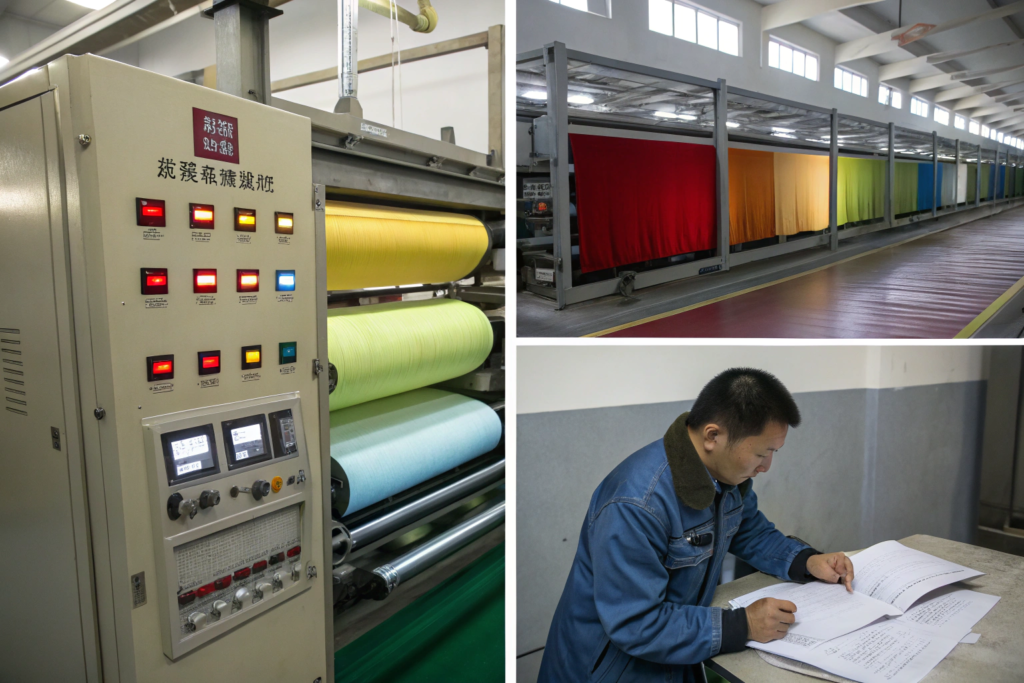
How do different fiber types affect color consistency?
Each fiber type has its own personality when it comes to color:
| Fiber Type | Dye Class | Consistency Challenge | Our Control Method |
|---|---|---|---|
| Cotton | Reactive, vat | Absorbs differently based on mercerization | Test mercerization uniformity before dyeing |
| Polyester | Disperse | Heat-sensitive, color shifts with temperature | Multi-point temperature monitoring in jets |
| Nylon | Acid | pH-sensitive, strikes fast | Automated pH control, slower strike rates |
| Wool | Acid, reactive | Fiber damage risk, uneven absorption | Low-temperature dyes, extended cycle times |
| Tencel/Modal | Reactive | Swells in water, consistency challenges | Pre-treatment to stabilize fiber |
| Blends | Multiple | Two fibers, two dye classes | One-bath two-step or two-bath processes |
Cotton is generally the most predictable once you control for mercerization. Polyester requires precise temperature control—a 5°C difference can shift color noticeably. Blends are the most challenging because you’re managing two different dye classes that may compete or interfere.
For a recent project with a German sportswear brand, we developed a cotton-polyester blend in a specific olive green. The first bulk run came out slightly redder than the sample because the polyester component had taken the disperse dye differently than our lab predicted. We adjusted the formula, ran another pilot, and now we have a documented process that works every time.
What role does fabric preparation play before dyeing?
This is the hidden factor that many buyers don’t consider. Fabric preparation—what happens before the fabric ever sees dye—is 50% of color consistency.
Desizing. Woven fabrics have sizing (starch) applied to protect yarns during weaving. If desizing isn’t complete, the size blocks dye absorption, creating lighter spots or overall shade variation.
Scouring. Natural and man-made fibers have oils, waxes, and impurities. Scouring removes these so dye can penetrate uniformly. Inconsistent scouring means inconsistent color.
Mercerization (for cotton). This process treats cotton with caustic soda under tension, increasing dye affinity and luster. If mercerization varies across the fabric width or between batches, dye uptake varies. We mercerize in controlled conditions and test absorption before dyeing.
Bleaching. For light and bright colors, the fabric must be uniformly white before dyeing. Uneven bleaching creates uneven color.
We test every batch of prepared fabric before dyeing. Small samples are dyed with a standard formula to verify that the substrate is ready. If the test sample doesn’t match our standard, we adjust the preparation or reject the batch. This adds time but prevents disasters.
What Equipment and Standards Ensure Accurate Color Matching?
A buyer from a luxury Italian brand visited our lab in 2023 and spent an hour just looking at our equipment. She’d been in the industry for 20 years and said our setup was better than some of her Italian suppliers. She wasn’t being polite—she was genuinely impressed. And she was right to care, because equipment determines outcomes.
Color matching isn’t guesswork anymore. It’s science, and the science requires specific tools:
Spectrophotometers. These devices measure color exactly, breaking it down into numerical values (Lab or LC*h). Unlike human eyes, they don’t get tired, they don’t see what they expect to see, and they don’t vary between morning and afternoon. We use spectrophotometers for every color approval and every batch inspection. Every measurement is recorded and traceable.
Standardized light booths. Color looks different under different light sources. Sunlight (D65), store lighting (TL84), home lighting (incandescent A)—each changes perception. Our light booths let us evaluate samples under all these conditions simultaneously. If a color matches in D65 but shifts in TL84, we know there’s a metamerism problem and adjust the formula.
Color formulation software. We input target Lab* values, and the software calculates dye recipes based on our specific dyes and fabric. It learns from previous batches, improving accuracy over time. First-pass hit rate (matching target without adjustment) has improved from 60% to 85% since we implemented this system.
Data tracking across batches. Every color we’ve ever produced is in our database. When a client reorders a color from two years ago, we don’t guess—we pull the exact formula, the exact dye lots, the exact process parameters, and we replicate them. Consistency across time is as important as consistency within a batch.
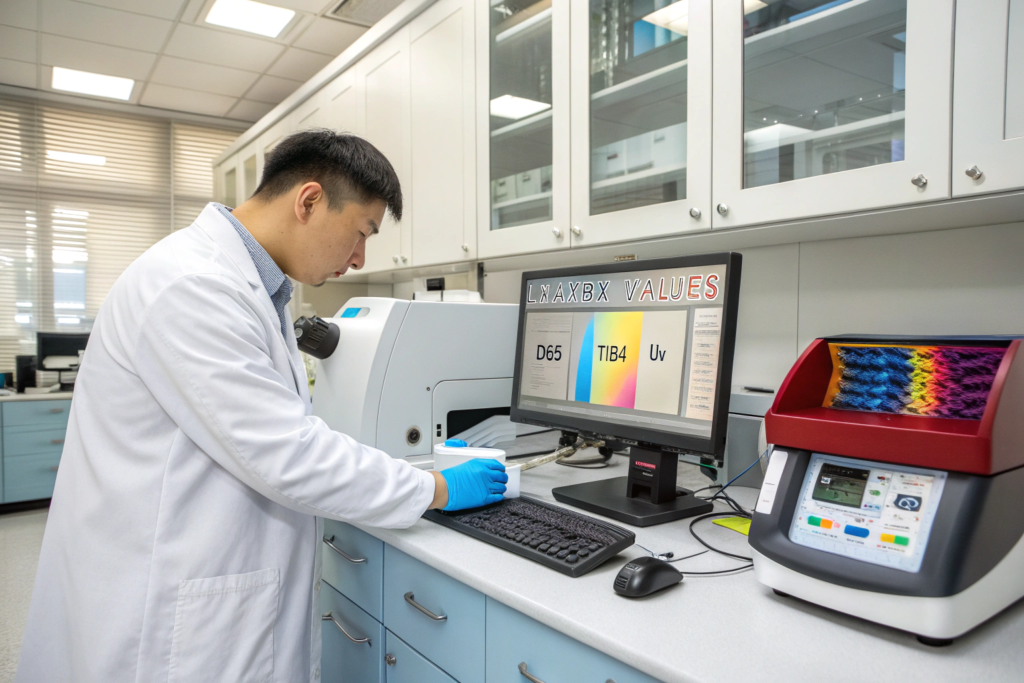
What is Delta E and what tolerance should you specify?
Delta E (ΔE) is the numerical measurement of color difference. Lower is better. Here’s what different Delta E values mean visually:
| Delta E | Visual Perception | Suitable For |
|---|---|---|
| < 0.5 | Not visible to trained eye | Ultra-luxury, automotive, panels that sit side-by-side |
| 0.5 – 1.0 | Visible to trained eye under controlled conditions | Premium fashion, luxury accessories |
| 1.0 – 1.5 | Visible to trained eye, sometimes to consumers | Good commercial quality |
| 1.5 – 2.0 | Noticeable to consumers | Basic apparel, fast fashion |
| > 2.0 | Obvious mismatch | Unacceptable for most applications |
For premium and luxury brands, we recommend specifying ΔE ≤ 1.0 between sample and bulk, and ΔE ≤ 0.8 between rolls within the same batch. This is tighter than many suppliers offer, but it’s achievable with proper systems.
For a recent project with a Japanese luxury brand, we worked to ΔE ≤ 0.5 on their signature black. That required extra steps: pre-blending all dyes from single lots, running the entire production without stopping, and inspecting every roll with a spectrophotometer. The cost was higher, but the result was perfect consistency.
One nuance: Delta E should be measured under multiple light sources. A color that matches in D65 (daylight) might shift in TL84 (fluorescent). We report Delta E under all standard illuminants and flag any metamerism issues before production.
How often should spectrophotometer calibration occur?
This matters more than most buyers realize. A spectrophotometer that’s out of calibration gives wrong readings, and you make decisions based on bad data.
We calibrate our instruments:
- Daily, before first use, using certified white and black standards
- Monthly, with full diagnostic checks
- Annually, with factory calibration and certification
We also maintain backup instruments so we can verify readings if something seems off. If two instruments give different readings, we know which one to trust based on calibration history.
When we send color standards to clients, we include the Lab values measured on our calibrated instruments. If they measure the same standard on their equipment and get different numbers, we can discuss whose calibration is correct. This prevents disputes.
A client from a Canadian outdoor brand once rejected a batch based on their in-house measurement showing ΔE 1.2. We flew to their facility with our calibrated instrument and measured the same fabric at ΔE 0.7. Their instrument was out of calibration. We calibrated it for them, and the batch was approved. Now they calibrate weekly.
How Do You Manage Color Across Multiple Batches and Time?
A buyer from a British heritage brand called me with a problem that sounded impossible. They needed to reorder a fabric they hadn’t bought in three years. The original supplier was out of business. They had one remaining garment—a sample from their archive—and needed us to match it exactly. No formula, no records, just a three-year-old piece of fabric.
We did it. It took four sample rounds and a lot of spectrophotometer work, but we matched that archive piece within ΔE 0.8. That client is now one of our longest-running partners because they know we can maintain their colors across time.
Managing color across multiple batches and years requires systematic approaches:
Physical color standards. When a color is approved, we create multiple physical standards. One goes to the client. One stays in our archive, sealed in light-proof, acid-free packaging. One goes to our lab for daily reference. These standards are handled only with clean gloves, stored in darkness at controlled temperature and humidity.
Digital color data. Every standard is measured and recorded with full spectral data. This includes Lab* values under multiple illuminants, spectral reflectance curves, and dye formula details. Even if the physical standard degrades over decades, the digital fingerprint remains.
Dye lot tracking. We record which specific dye lots were used for each production batch. When you reorder, we check if the same dye lots are still available. If not, we adjust formulas based on the new dyes’ characteristics to maintain the same final color.
Production history. Every batch’s process parameters—time, temperature, pressure, water quality—are recorded. If we need to reproduce a color from five years ago, we don’t guess—we replicate the exact conditions.
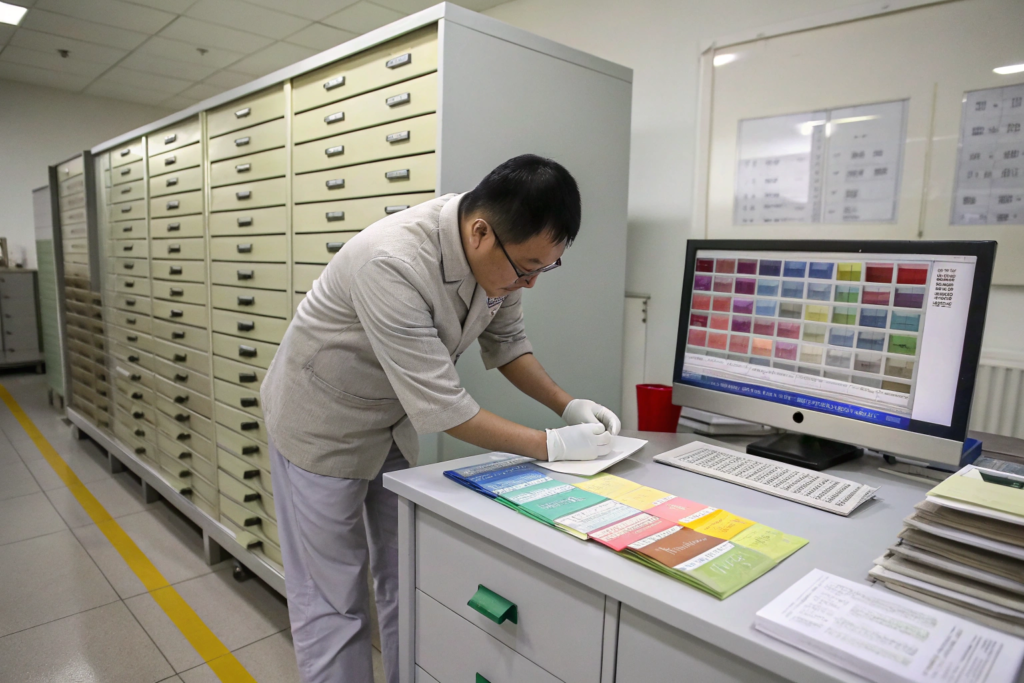
How long do physical color standards last?
Physical standards degrade over time, even with perfect storage. Here’s what we’ve learned:
| Storage Condition | Color Stability | Useful Life |
|---|---|---|
| Open to air, light | Rapid fading | Weeks to months |
| Sealed, room temperature, indirect light | Gradual shift | 1-2 years |
| Sealed, dark, climate-controlled (20°C, 50% RH) | Minimal shift | 3-5 years |
| Sealed, dark, refrigerated | Excellent stability | 5-10+ years |
For critical colors, we recommend refrigerated storage. A client from a German automotive supplier keeps their color standards in a dedicated refrigerator at 4°C, wrapped in aluminum foil inside sealed bags. Their standards from 2018 still match current production perfectly.
We also recommend refreshing standards every 2-3 years. When we produce a new batch that matches the old standard, we create a new standard from that batch and archive the old one. This creates a chain of physical references that maintain color integrity over decades.
What’s the protocol for approving color across different time zones?
This is a practical challenge for international buyers. You’re in New York, we’re in Shanghai. You need to approve color, but by the time you see samples, it’s your afternoon and our midnight.
We’ve developed a streamlined protocol:
-
Digital pre-approval. We send photos under standardized lighting with a color reference card. This isn’t final approval—it’s a check that we’re in the ballpark. It saves sample rounds.
-
Physical samples by express. For final approval, we ship physical samples. We use DHL or FedEx Priority, which reaches US/Europe in 2-3 days.
-
Virtual approval sessions. For critical colors, we schedule video calls where we hold samples up to our light booth while you watch via camera. It’s not as good as being here, but it catches major issues.
-
Batch sample approval. Before bulk production, we send a 1-meter sample from the actual production run. You approve that sample, and we proceed. This adds a week to timeline but eliminates risk.
A client from a Los Angeles brand now does all color approvals through our digital system. They trust our spectrophotometer readings more than their own eyes because they know the numbers don’t lie. They only request physical samples for their most critical colors.
What Batch Testing Should You Require Before Shipping?
A buyer from a French luxury brand taught me something valuable in 2021. After we shipped a 15,000-yard order that passed all our tests, she still tested every roll on arrival. She found one roll with a slight shade variation—within our agreed tolerance, but not within hers. She didn’t reject the whole order. She just set that roll aside for sampling and used the rest. But she showed me that her standards were real, not just paper.
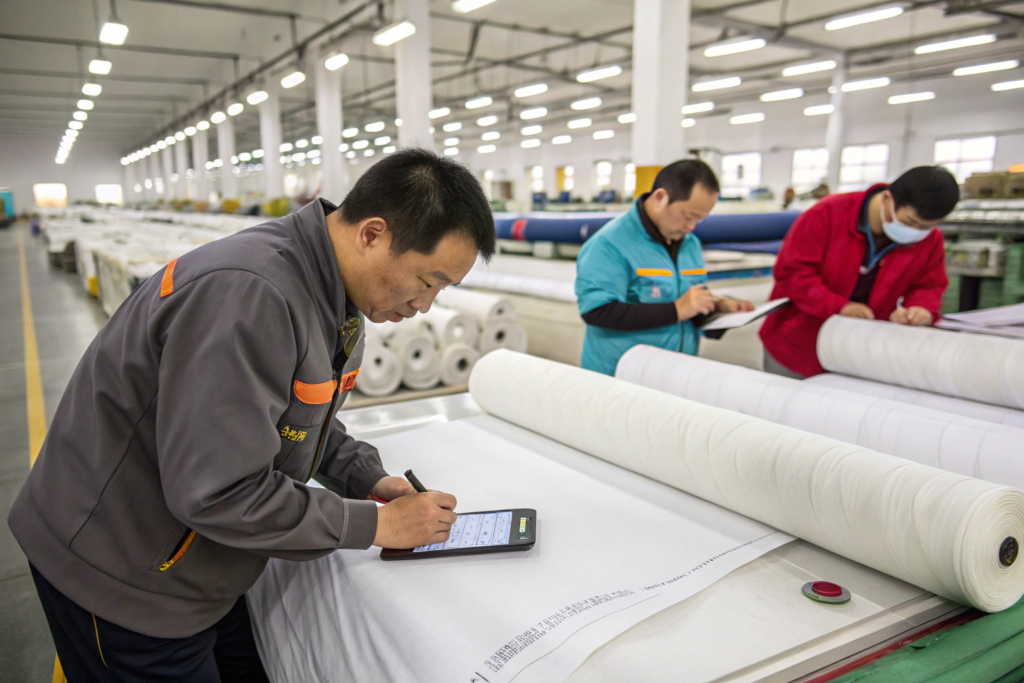
Before any bulk shipment leaves our warehouse, we run a comprehensive testing protocol. Here’s what you should require from any supplier:
Shade band testing. Every roll is assigned a shade band (A, B, C, etc.) based on its exact color measurement. Rolls within the same band are ΔE ≤ 0.5 from each other. Rolls in adjacent bands are within your specified tolerance. We provide a shade band report showing where every roll falls.
End-to-middle variation. Within a single roll, color can vary from the edges to the center or from the beginning to the end. We measure at multiple points along each roll and report the range. For critical applications, we can mark the fabric so your cutter knows which sections are which.
Batch-to-batch comparison. If your order spans multiple production batches, we test samples from each batch against the approved standard and against each other. We provide a report showing all measurements.
Light source variation. We test under multiple light sources (D65, TL84, A, UV) and report any metamerism. If a color shifts under store lighting, you need to know before you cut.
Wash/fade testing. For colors that might change with washing, we run accelerated wash tests and report the before/after measurements. This helps you set accurate care instructions.
Should you test every roll or use statistical sampling?
This depends on your tolerance for risk and the criticality of the color.
| Order Size | Sampling Method | When Appropriate |
|---|---|---|
| < 500 yards | Test every roll | Small orders, any variation is noticeable |
| 500-2,000 yards | Test 100% of rolls | Premium brands, critical colors |
| 2,000-10,000 yards | Statistical sampling (AQL) | Commercial quality, non-critical colors |
| > 10,000 yards | Combination: 100% first/last rolls, statistical middle | Balances risk and cost |
For premium and luxury clients, we recommend 100% testing regardless of order size. Yes, it costs more—about $0.10-0.15 per yard—but it’s insurance against a catastrophic mismatch.
For a recent project with a US workwear brand, they insisted on 100% testing of 25,000 yards. We found three rolls (out of 400) with slight shading. They set those rolls aside for pocket bags and facings where the color wouldn’t be visible. Without testing, those rolls would have ended up in visible panels and caused returns.
How do you document color data for future reference?
Documentation is as important as testing. When we ship an order, you receive:
Certificate of Analysis. This document lists every test performed, the results, and the pass/fail status. It’s signed by our QC manager and traceable to specific instruments.
Shade band report. A table showing every roll number, its shade band, and its ΔE from the standard. If you need to match panels later, you know which rolls are closest.
Digital color data. A file containing the full spectral data for each batch. You can load this into your own systems for future reference.
Physical retain samples. We keep 1-meter samples from every batch for 3 years, stored in light-protected conditions. If you have a question later, we can remeasure the actual fabric.
A client from a Japanese brand used our retain samples two years after delivery when a consumer complained about fading. We pulled the retain, tested it, and proved the fabric met specifications. The complaint was resolved with data, not argument.
How Do You Handle Color Complaints and Disputes?
A buyer from a Swedish brand once called me furious. "The fabric is wrong," she said. "It’s not the same color as the sample." I asked her to send photos. She did, and I could see the difference immediately. Then I asked her to send the physical sample and the fabric. When they arrived, I put them side by side in our light booth. They were identical. The problem was her photography—different lighting, different camera settings, different screen calibration. The color wasn’t wrong; the perception was.
Color disputes happen, even with the best systems. How they’re handled determines whether a relationship survives.
Start with data, not opinions. If you think a color is wrong, measure it. Send us the spectrophotometer readings. If you don’t have a spectrophotometer, send us a physical sample and we’ll measure it here. Opinions are subjective; data is objective.
Compare to the approved standard. The standard is the law. Not what you remember, not what you expected, not what you saw on a screen—the actual physical or digital standard we both approved. We pull our copy and measure against it.
Check viewing conditions. Are you evaluating under the same light source as we did? D65? TL84? A mismatch in viewing conditions can make identical colors look different. We can guide you through proper viewing protocols.
Consider tolerances. Was the color within the agreed Delta E? If yes, then it’s acceptable even if it’s not exactly what you imagined. If no, we need to understand why and fix it.
For legitimate issues, we fix them. If we missed the color, we replace the fabric at our cost. It’s happened—rarely, but it happens. We own our mistakes. But we don’t own perception errors or unrealistic expectations.
A client from a Canadian brand once claimed a color was wrong. Our data showed ΔE 0.9—within tolerance. We offered to fly to their facility with our spectrophotometer and demonstrate. They declined, but they also paid for the fabric. They’ve ordered from us for three years since, and we’ve never had another color dispute.

What’s the process for disputing a color rejection?
If you believe a color is wrong, here’s the process we follow:
-
Notify us immediately. Within 7 days of receipt. Colors don’t change in transit, but the sooner we know, the sooner we can investigate.
-
Provide samples. Send us 1 meter of the fabric you’re rejecting, plus the approved standard you’re comparing against. We need physical samples to measure.
-
Share your measurements. If you have spectrophotometer data, send it. If not, we’ll measure here.
-
We investigate. We measure your samples against our retain samples, check production records, and verify our calibration.
-
We propose resolution. If we’re wrong, we replace at our cost including shipping. If we’re right but you’re still unhappy, we discuss options—partial credit, return, or use for non-critical applications.
-
We document. Whatever the outcome, we record it in our system to prevent recurrence.
The key is speed. Color disputes that drag on become relationship killers. We resolve within 7 days or less.
How do you prevent the same color issue from recurring?
Every color issue is a learning opportunity. When something goes wrong, we ask why:
Was it a formula error? We review the dye calculation, check for data entry mistakes, and add verification steps.
Was it a process deviation? We check production logs, interview operators, and add monitoring points.
Was it a raw material issue? We test the dyes and fabric from that batch, quarantine similar materials, and review supplier quality.
Was it a communication issue? We review the approval process, clarify standards, and improve documentation.
After a client from a German workwear brand had a color issue with a navy blue, we discovered the problem was in the drying temperature—a new operator had run the stenter 5°C hotter than spec. We added automated temperature alarms and retrained all operators. The issue never recurred.
Conclusion
Color consistency is the difference between a fabric supplier and a true partner. Anyone can sell you fabric. A real partner ensures that every yard matches the sample you approved, every roll matches the next, and every reorder matches the last.
At Shanghai Fumao, we’ve built our reputation on this promise. Our investment in spectrophotometers, light booths, climate-controlled archives, and trained personnel isn’t overhead—it’s insurance for your brand. When you order from us, you’re not gambling on whether the color will be right. You’re betting on a system that’s been proven across thousands of batches and millions of yards.
If you’ve been burned by inconsistent color from other suppliers, if you’re tired of checking every roll yourself, if you want to focus on design and marketing instead of quality control—let’s talk. We’ll show you our system, walk you through our process, and demonstrate how we maintain color consistency that rivals the best mills in Italy and Japan.
Contact our Business Director, Elaine. She manages our quality assurance team and has helped countless brands eliminate color variation from their supply chain. Email her at elaine@fumaoclothing.com. Tell her about your color challenges, and she’ll explain how we can solve them.
At shanghai fumao, we believe that perfect color isn’t a luxury—it’s a baseline. Let us prove it to you.