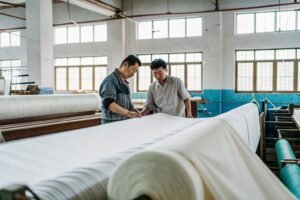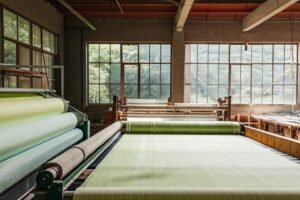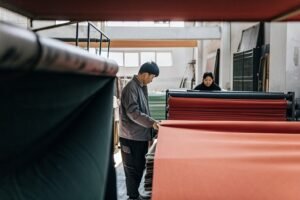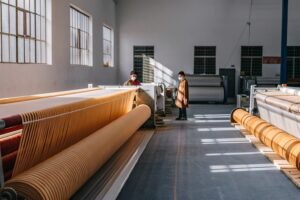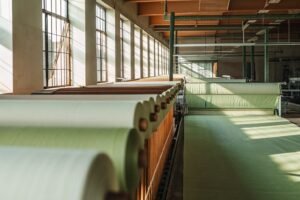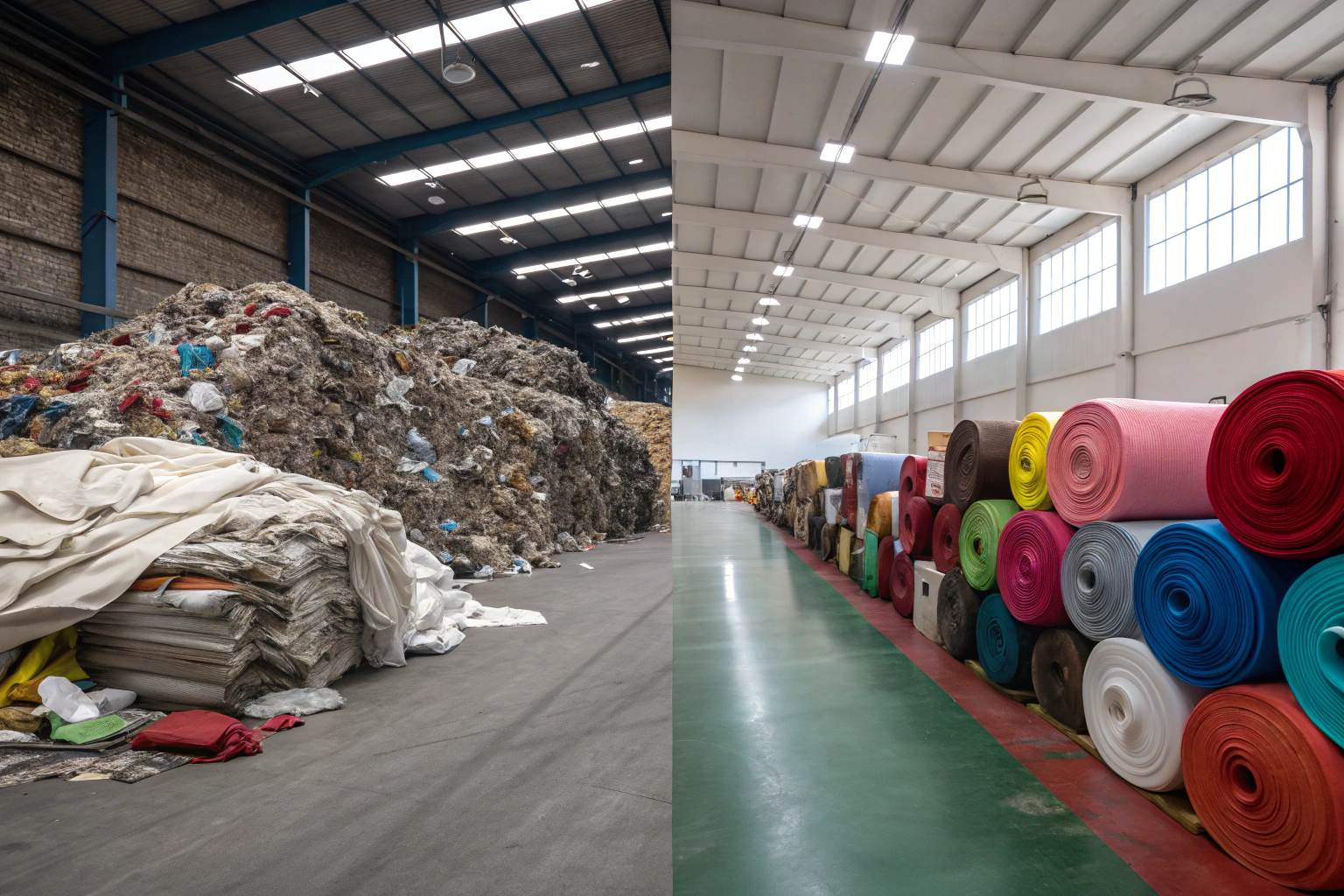
I was standing in our warehouse in Keqiao last year, walking through aisles of fabric rolls, when a client from Copenhagen asked me a question that stopped me cold. "How many of these rolls are deadstock?" she asked. I looked around at our perfectly organized inventory—thousands of rolls, all categorized, all "active" in our system. But she wasn’t asking about active inventory. She was asking about the leftovers, the overruns, the forgotten rolls hiding in the corners. And honestly, I had to admit I didn’t know.
That conversation started a complete reorganization of how we think about inventory. We literally went through every corner of our warehouse and our partners’ warehouses. We found over 50,000 meters of premium fabrics—Italian wool suiting, Japanese denim, French lace—that had been sitting for years. Some were overruns from cancelled orders. Some were samples that never got returned. Some were just mistakes that were too beautiful to throw away. And suddenly, every major brand we talked to wanted them.
The short answer to why brands are demanding deadstock and upcycled fabrics is simple: it solves three problems at once. It reduces environmental impact by keeping textiles out of landfills. It creates exclusivity because deadstock is by definition limited quantity. And it actually saves money compared to developing new fabrics from scratch. But the real story is more complicated, and it’s changing how we operate at Shanghai Fumao in ways I never expected.
What Exactly Counts as Deadstock Fabric in the Industry?
Let me clear up the terminology because it matters for sourcing. Deadstock, overstock, surplus, remnant—these terms get used interchangeably, but they mean different things with different implications for your purchasing.
Deadstock specifically refers to fabric that was produced for a specific order or collection but never used. Maybe a brand cancelled an order after the fabric was woven. Maybe a designer over-ordered for a season and has leftovers. This fabric is typically high quality because it was made to someone’s specifications, and it’s often unique—you can’t just order more.
Overstock is fabric a mill or supplier produced on speculation that hasn’t sold. We do this all the time—we weave popular constructions in our best-selling colors and hold them for quick delivery. When that inventory gets old, it becomes deadstock. The distinction is subtle but important: overstock is planned inventory, deadstock is usually unplanned surplus.
Remnants are the end pieces from fabric rolls. Every roll has a "beginning" and "end" section that might be 1-3 meters and can’t be sold as full rolls. In the past, these got thrown away or sold as rags. Now, brands are buying them for accessories, patchwork designs, and small-batch production.
In 2023, we started cataloging all three categories separately. We found we had about 15,000 meters of true deadstock—fabric woven for specific clients that was never picked up. We had another 80,000 meters of aging overstock that was more than two years old. And we had literally thousands of remnant pieces under 5 meters. We now offer all of it to clients who want unique, sustainable options.

How Do You Verify the Provenance of Deadstock Fabrics?
Here’s the challenge with deadstock: you’re buying fabric that wasn’t made for you, so you need to know exactly what you’re getting. When a brand buys deadstock from us, we provide the same documentation we would for any fabric—but with some additional history.
First, we trace the original order. Who was it made for? (We anonymize this for privacy, but we verify internally.) Why wasn’t it used? Was it a quality rejection, a cancelled order, or just overproduction? This matters because fabric rejected for quality reasons shouldn’t be resold as deadstock—it should be destroyed or downgraded.
Second, we test everything again. Even if the fabric was tested when originally produced, it may have been sitting in storage for years. We run our CNAS lab tests for fiber composition, colorfastness, shrinkage, and strength. We had a batch of deadstock silk from 2019 that tested perfectly except for minor color fading on the roll ends. We disclosed this to the buyer, and they used the center portions for their collection and the ends for sampling.
Third, we provide a provenance statement. This document tells the buyer where the fabric came from, why it’s available, and what testing we’ve done. For a UK-based designer we worked with last year, we provided a deadstock provenance showing the fabric was originally woven for a Japanese brand in 2021, the order was reduced due to COVID, and the remaining 800 meters had been stored in climate-controlled conditions ever since. That story became part of her marketing.
What Quality Risks Come with Buying Deadstock?
Let me be completely honest: deadstock is not without risk. Fabric that’s been sitting for years can have hidden problems. The biggest risk is aging degradation. Natural fibers like cotton and linen can yellow over time, especially if stored in poor conditions. Elastane content can break down, losing its stretch. Adhesive laminations can separate.
We mitigate this through rigorous testing before offering any deadstock to clients. For a batch of deadstock denim we found last year, we tested stretch recovery on every roll. Two rolls had lost over 30% of their elasticity—the elastane had degraded. We could have sold them cheap and let the buyer discover the problem, but instead we marked them "non-stretch" and sold them to a brand specifically looking for rigid denim for jackets.
The second risk is inconsistent dye lots. Deadstock often comes from multiple production runs. You might have 500 meters total, but it might be from five different dye lots that don’t match perfectly. We sort and label every deadstock roll with its original batch number and shade code. If there are variations, we tell you upfront. A Swedish brand bought 300 meters of deadstock wool suiting from us knowing it had slight shade variation between rolls. They used the darker rolls for pants and the lighter for jackets—turned it into a design feature.
The third risk is limited availability. You can’t reorder deadstock. Once it’s gone, it’s gone. This is actually a selling point for some brands—exclusivity—but it’s a risk if you’re planning a full-season collection. We advise clients to use deadstock for capsule collections, limited editions, or as accent fabrics within larger programs.
How Do Upcycled Fabrics Differ from Recycled Materials?
This is a distinction that confuses even experienced buyers. Recycled fabrics are made by breaking down existing materials (like plastic bottles or garment waste) and creating new fibers. Upcycled fabrics are existing fabrics that are given new life without being broken down. The difference matters for both sustainability claims and production capabilities.
Recycled polyester, for example, starts with plastic bottles that are cleaned, melted, and extruded into new polyester fiber. It’s a manufacturing process that requires energy and chemical inputs. The result is a new fabric that performs like virgin polyester but with lower environmental impact.
Upcycled fabric, by contrast, is already fabric. It might be deadstock from a factory, surplus from a brand, or even post-consumer garments that are deconstructed and the fabric reused. The environmental impact is even lower because you’re skipping the entire fiber production process.
At Shanghai Fumao, we now offer both. Our recycled polyester line uses rPET chips from certified sources. Our upcycled line uses deadstock we’ve collected from our own production and from partner mills across China. In 2023, we launched a "Heritage Collection" of upcycled fabrics—limited runs of unique textiles that would otherwise have been wasted. The response was overwhelming.

Can Upcycled Fabrics Meet the Same Performance Standards as New Fabrics?
Yes, with caveats. Upcycled fabrics were originally produced to meet certain standards, and they retain those properties if they’ve been properly stored. A deadstock performance fabric that was originally engineered for moisture wicking and UV protection still has those properties years later—the technology is in the fiber and construction, not the age.
However, certain properties do degrade. As I mentioned, elastane loses stretch over time. Water-repellent finishes can deteriorate. Flame retardant treatments may become less effective if the fabric has been washed or exposed to humidity. We test everything.
For a German workwear brand last year, we supplied 1,200 meters of deadstock cotton-nylon canvas originally made for a military contract. It had been stored for four years. We tested it for tear strength, abrasion resistance, and water repellency. The tear strength was actually higher than their current spec—older fabric sometimes "settles" and becomes stronger. The water repellency had dropped by 15%, so they re-applied the finish after garment construction. The fabric passed all their requirements, and they saved 30% compared to new production.
The key is testing. We never assume deadstock meets current specifications just because it did when it was made. Every deadstock order we ship includes current test reports. If the numbers fall short, we either discount the fabric or recommend alternative uses.
What’s the Carbon Footprint Difference Between Upcycled and Virgin Fabrics?
This is the question every sustainability-conscious brand asks, and the numbers are striking. According to our internal lifecycle analysis (conducted with a third-party consultant in 2023), using upcycled fabric reduces carbon footprint by approximately 80-90% compared to producing new fabric.
The math is straightforward: new fabric production requires fiber cultivation or synthesis, spinning, weaving or knitting, dyeing, and finishing. Upcycled fabric skips all of that. The only emissions come from storage, handling, and transportation. For a typical order of 1,000 meters of cotton fabric, the carbon savings are roughly equivalent to taking a car off the road for a full year.
We now provide carbon savings estimates with every deadstock shipment. When a US-based activewear brand bought 2,500 meters of deadstock recycled polyester from us last year, we calculated they saved approximately 3.2 tons of CO2 compared to buying virgin recycled polyester. They used that number in their sustainability report. It’s real, verifiable impact.
The caveat is that these savings only apply if the fabric would otherwise have been wasted. If we’re just holding inventory that we would eventually sell anyway, it’s not "saving" anything—it’s just good inventory management. That’s why we’re transparent about the source of our deadstock. Fabric from cancelled orders or abandoned production is genuinely waste diversion. Fabric from our regular overstock is just efficient selling.
How Are European Brands Incorporating Deadstock Into Their Collections?
European brands, particularly in Scandinavia and the UK, are leading the deadstock movement. They’ve figured out that deadstock isn’t just sustainable—it’s a competitive advantage. When you use fabric that no one else can get, your collection is automatically unique.
A Danish brand we work with built their entire 2024 spring collection around deadstock. They came to us with a mood board and said, "Show us what you have that we can’t order again." We pulled 30 deadstock fabrics—everything from Italian wool coating to Japanese chambray to deadstock liberty prints. They selected eight, each in limited quantities. The collection launched with a "one-of-a-kind" marketing angle. Every garment was numbered, and once a fabric sold out, that style was gone forever. They sold out in three weeks.
A French brand took a different approach. They use deadstock as accent fabrics within larger collections. A core style might be produced in 1,000 units in their standard fabric, with 50 units in a rare deadstock fabric as a "collector’s edition." These sell at a premium and generate buzz for the entire collection. The scarcity creates demand.
The key learning from these clients is that deadstock requires a different design approach. You can’t design a collection and then try to source deadstock to match. You have to source the deadstock first, then design around what’s available. Brands that understand this thrive. Brands that try to force deadstock into existing designs struggle with limited availability.

How Do You Market Deadstock Fabrics to End Consumers?
The marketing angle is almost as important as the fabric itself. Consumers love the story of "saved from landfill" and "one-of-a-kind." But they need to hear that story in a way that feels authentic, not like a marketing gimmick.
The brands that do this best include specific information about the fabric’s origin. Not "deadstock fabric," but "deadstock Italian wool from a 2021 collection, rescued from a Milan mill." Not "vintage fabric," but "1980s deadstock Japanese denim, originally woven for a brand that never launched." The specificity creates authenticity.
They also educate consumers about limitations. A UK brand includes a care card with every deadstock garment explaining that the fabric is unique, that color variation is part of its character, and that no two pieces are exactly alike. This manages expectations and actually increases perceived value—consumers feel they’re getting something special.
We provide our clients with fabric stories for every deadstock order. When we ship deadstock silk from a cancelled luxury order, we include the original order details (anonymized), the reason it became deadstock, and the storage history. Brands use this information in their marketing. One client created a QR code on the garment tag that leads to a video of me explaining the fabric’s journey. It’s brilliant marketing, and it’s built on our transparency.
What Price Points Work for Deadstock Fabric Garments?
Here’s the surprising truth: deadstock garments often sell at higher price points than comparable new-fabric garments. The exclusivity and sustainability story justify a premium. A standard cotton dress might retail for $120. The same dress made from a rare deadstock fabric might retail for $180—and sell out faster.
We see this across our client base. A Swedish brand that typically retails jeans at €120 launched a deadstock denim collection at €180. The jeans were made from the same construction as their core line, but the fabric was deadstock Japanese selvedge that could never be reproduced. They sold 80% of the collection at full price, compared to 60% sell-through on their core line.
For the fabric itself, deadstock pricing varies widely depending on rarity and quality. Common deadstock—basic cottons in standard colors—might sell at 20-30% below our regular wholesale prices. Rare deadstock—unique prints, luxury fibers, limited quantities—might sell at a premium above regular wholesale. A deadstock pure cashmere we found last year sold for $28 per yard, which is actually higher than our standard cashmere price, because it was a unique color and weight that no one could reproduce.
The key is transparency about value. We price deadstock based on its quality and rarity, not just "it’s leftover so it’s cheap." If it’s premium fabric, it commands premium pricing. Our clients understand this because they’re selling the same story to their customers.
What Challenges Do Suppliers Face in Offering Deadstock?
I need to be honest about the operational challenges here because they affect your ability to source deadstock reliably. The biggest challenge is inventory management. Deadstock, by definition, is not part of our regular inventory system. It’s scattered across warehouses, stored in corners, often poorly documented. Finding it, cataloging it, and making it available is labor-intensive.
We’ve invested heavily in solving this. In 2023, we hired a dedicated "deadstock coordinator" whose only job is to identify, catalog, and manage deadstock across our facilities and partner mills. She’s found over 80,000 meters of fabric that wasn’t in our active system. She tests every roll, photographs it, and adds it to a separate deadstock catalog that clients can browse.
The second challenge is consistency. Deadstock is inherently inconsistent. You might find 500 meters of a beautiful fabric, but it might be from five different dye lots with slight variations. We address this by being hyper-transparent. Every deadstock listing in our catalog includes photos of actual rolls, measurements of available quantities, and notes about any variations.
The third challenge is documentation. Deadstock often lacks the original certification paperwork. We solve this by re-testing and re-certifying where possible. For GOTS-certified deadstock, we work with our certification body to issue new Transaction Certificates for the deadstock quantities. It’s extra work, but it means our clients can still make certified claims.

How Do You Handle Minimums for Deadstock Fabrics?
This is where deadstock really shines for smaller brands. Deadstock has no minimums. If you want 50 meters of a fabric, and we have 50 meters, it’s yours. If you want 10 meters for sampling before committing to the remaining 40, we can do that too.
We’ve structured our deadstock program specifically to serve brands that can’t meet the minimums for new production. A start-up from Brooklyn bought 30 meters of deadstock deadstock wool suiting from us last year—enough for 10 jackets for their launch collection. They couldn’t have ordered 300 meters of new wool, but 30 meters of deadstock was perfect. They’ve since grown and now order new production from us, but deadstock got them started.
For larger brands, deadstock offers the opposite advantage: exclusivity. When a major European retailer bought 2,000 meters of deadstock deadstock linen from us, they knew no one else could get that fabric. It was a one-time opportunity, and they built a capsule collection around it.
The key is acting fast. Deadstock moves quickly because quantities are limited. We have clients who check our deadstock catalog weekly. When something interesting appears, they grab samples immediately. If you wait, it’s gone.
What Happens to Deadstock That Doesn’t Sell?
Even deadstock can become deadstock. If fabric sits in our deadstock catalog for more than two years without interest, we have to make tough decisions. Some goes to sample cutters who use it for prototyping. Some goes to design schools for student projects. Some gets donated to community arts programs.
The absolute last resort is disposal, but we try everything before that. In 2023, we partnered with a Shanghai-based design collective that creates accessories from textile waste. They took 3,000 meters of deadstock that we couldn’t sell—odd colors, small quantities, slightly flawed goods—and turned them into bags, headbands, and home goods. The fabric got a second life, and we avoided landfill.
We’re also experimenting with fiber-to-fiber recycling for deadstock that truly can’t be used as fabric. Some of our cotton deadstock goes to a partner that shreds it and spins it into recycled cotton yarn for industrial uses. It’s not as valuable as keeping it as fabric, but it’s better than burning or burying it.
The philosophy we’ve adopted is simple: every meter of fabric represents resources—water, energy, labor, carbon. Our job is to make sure those resources aren’t wasted. If we can sell deadstock to a brand, that’s best. If not, we find the next best use. But we never just throw it away.
How Can You Start Sourcing Deadstock Fabrics Reliably?
If you’re ready to explore deadstock for your collections, here’s my practical advice based on working with dozens of brands who’ve made the switch successfully.
Start with a flexible mindset. Don’t come to us with a fixed design and ask us to find deadstock that matches. Come with a mood board, a color palette, a fabric weight range. Let us show you what we have that could work within those parameters. The brands that succeed with deadstock are the ones who let the available fabric inspire the design, not the other way around.
Order samples early. Deadstock quantities are limited, so when you find something interesting, order samples immediately. We keep deadstock samples for 30 days, but after that, if someone else orders the fabric, it’s gone. We had a client from the Netherlands lose a fabric they loved because they waited three weeks to approve samples. By then, a German brand had bought the entire quantity.
Build relationships with multiple deadstock sources. We’re one source, but we’re not the only source. Work with us, but also connect with other mills, with liquidators, with vintage fabric dealers. The more sources you have, the more deadstock you’ll find. We’re happy to introduce our clients to our partner mills who also have deadstock programs.
Verify everything. Just because fabric is deadstock doesn’t mean quality standards are lower. Test it, certify it, document it. We do this automatically, but if you’re sourcing deadstock elsewhere, make sure you have the same rigor. We’ve seen brands burned by deadstock that looked beautiful but failed shrinkage tests or had hidden contamination.

What Questions Should You Ask When Evaluating Deadstock?
Based on hundreds of deadstock transactions, here are the questions that separate successful buyers from disappointed ones:
"What’s the original production date?" Fabric age matters. Older natural fibers may have yellowed. Older synthetics may have degraded. We test everything regardless, but knowing the age helps set expectations.
"Why is this fabric available as deadstock?" Was it a cancelled order? A quality overrun? A sample yardage accumulation? The answer tells you something about the fabric’s history and potential issues. Canceled orders are usually fine—the brand just changed direction. Quality overruns might mean slightly imperfect goods.
"Has it been tested recently?" Fabric that passed tests five years ago might not pass today. We retest everything. If a deadstock supplier can’t provide current test reports, be very careful.
"What are the exact quantities, and are they guaranteed?" Deadstock quantities can be fuzzy. One roll might be 80 meters, but the next might be 75. We measure every roll and provide exact meterage. If a supplier gives you a range, ask for specifics.
"Can I see actual photos, not stock images?" Deadstock fabrics can have unique characteristics—roll ends, storage marks, slight fading. We photograph every deadstock roll individually so you know exactly what you’re getting. If a supplier shows you a generic fabric image, assume the actual goods may differ.
How Do You Plan Production Around Limited Deadstock Quantities?
This is the operational challenge of deadstock. You can’t plan a 10,000-unit collection around 500 meters of fabric. You have to be strategic.
We see three successful approaches from our clients. First, capsule collections. Design a small, focused collection specifically around available deadstock. Limited quantities, premium pricing, exclusivity as the selling point. This works for both small and large brands.
Second, mix-and-match. Use deadstock for contrast details, linings, or accents within a larger collection. A standard cotton dress gets deadstock contrast cuffs or a deadstock pocket bag. The main fabric is available, the accent is exclusive.
Third, pre-order models. Sell garments before production, with deadstock quantities as the limit. When the fabric runs out, the style is gone. This eliminates inventory risk and creates urgency for consumers. Several of our Scandinavian clients use this model exclusively for their deadstock pieces.
The key is communication. Tell us your quantity needs, and we’ll tell you what deadstock we have that can support them. If you need 1,000 meters for a full collection, we might combine multiple deadstock fabrics with similar characteristics. If you need 50 meters for a test run, we probably have dozens of options.
Conclusion
The demand for deadstock and upcycled fabrics isn’t a passing trend—it’s a fundamental shift in how the industry thinks about waste. Every meter of fabric that already exists represents resources already spent. Using it honors those resources. Wasting them insults them.
At Shanghai Fumao, we’ve embraced this shift completely. We’ve cataloged our deadstock, invested in testing and verification, and built systems to make deadstock accessible to brands of all sizes. We offer deadstock alongside our new production, with the same quality standards, the same documentation, and the same service.
The brands winning with deadstock are the ones who understand its unique value. It’s not just sustainable—it’s exclusive, it’s authentic, it’s marketable. Consumers love the story, designers love the uniqueness, and buyers love the margins. Deadstock delivers on every level.
If you’re ready to explore what deadstock can do for your collections, let’s start a conversation. Whether you need 10 meters for sampling or 5,000 meters for a capsule collection, we have deadstock waiting to be discovered. And if we don’t have what you need today, we’ll find it—because deadstock is everywhere once you start looking.
Contact our Business Director, Elaine, to access our deadstock catalog and discuss how upcycled fabrics can elevate your next collection. She can arrange sample shipments, provide test reports, and help you plan production around available quantities.
Email Elaine directly at: elaine@fumaoclothing.com