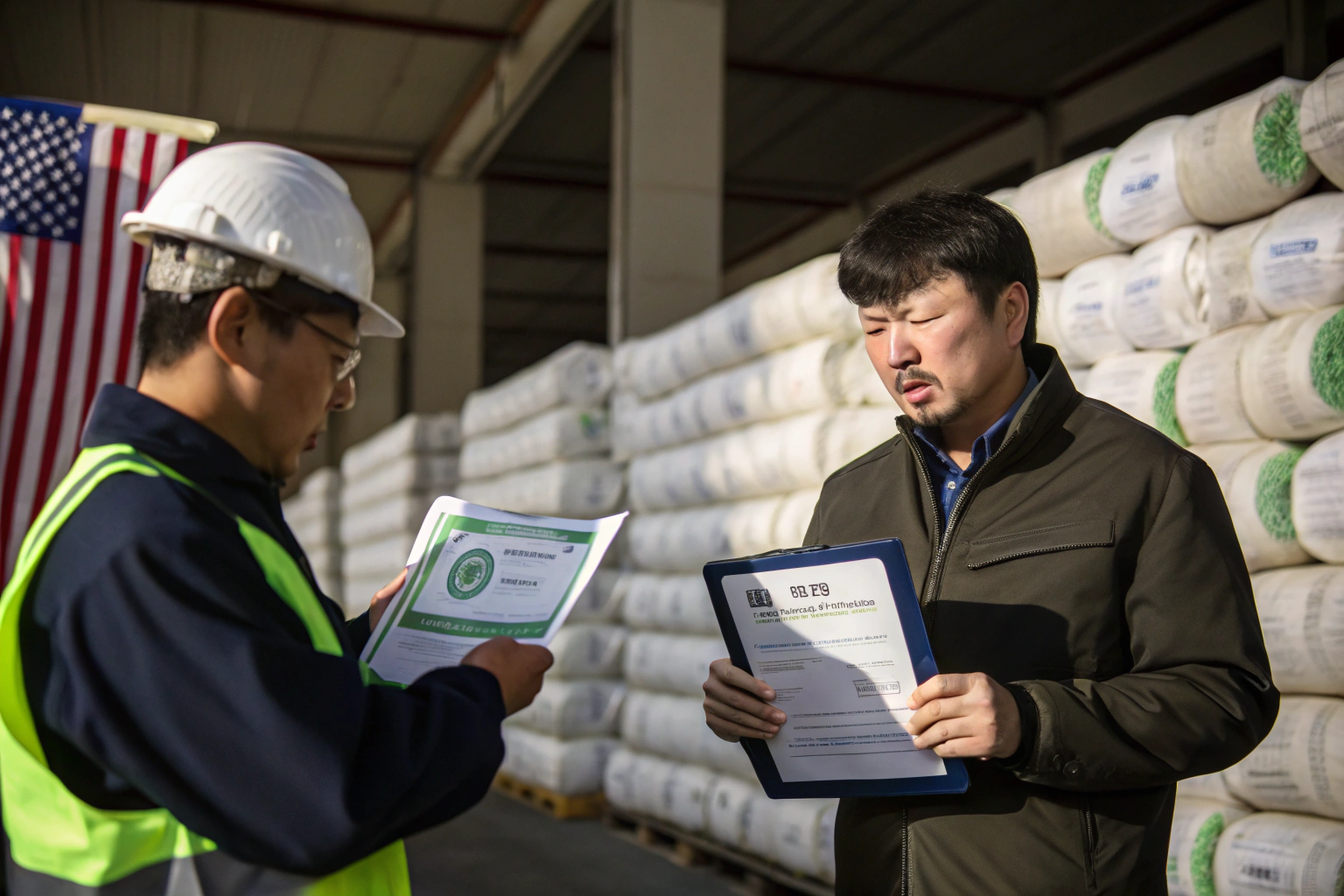
I remember the panic in a buyer’s voice like it was yesterday. It was October 2023, and a long-time client from Chicago called me on a Friday afternoon. US Customs had just seized 20,000 yards of his organic cotton fabric at the port of Long Beach. The problem? His supplier’s GOTS certificate had expired three months earlier, and nobody noticed until the fabric was sitting in a container. He faced destroyed goods, angry retail partners, and a six-figure loss. That call changed how I talk about certifications with every single client.
The truth about avoiding certification pitfalls is simple but brutal: you can’t just trust the certificate a supplier shows you. You have to verify it, trace it, and build it into your contract. At Shanghai Fumao, we’ve been through over 200 third-party audits in the past five years. We’ve seen every trick, every expired document, every "creative interpretation" of standards that importers fall for. And I’m going to walk you through exactly how to spot these traps before they cost you a shipment.
What Are the Most Common Certification Scams in Fabric Sourcing?
Let me start with the scam that caught my Chicago client. His supplier sent him a beautiful PDF of a GOTS certificate. It looked official—had the logo, the certification body’s name, a date. What he didn’t know is that certificate was from 2021, and the supplier had let their certification lapse in 2022. But they kept using the old PDF because nobody checked. This is called "certificate recycling," and it’s the most common scam in the industry.
The second scam is the "borrowed certificate." A factory will show you a certificate that belongs to a different company—sometimes a sister company, sometimes just a friend who let them use the file. The names might be similar enough that you don’t notice. "Fumao Textiles" versus "Fumao Fabric Company"—close enough to fool a quick glance, but different legal entities entirely. When customs checks, they’ll see the name mismatch and your shipment gets flagged.
The third scam is "creative scope." A factory has a valid OEKO-TEX certificate, but if you read the fine print, it only covers their polyester production line. They’re using it to sell you organic cotton. The certificate is real, the number is valid, but it doesn’t apply to your product. This is technically fraud, but it happens constantly because buyers don’t read the scope section.

How Can You Verify a Supplier’s GOTS Certificate in Real Time?
I teach every new client the "three-minute verification rule." It takes three minutes to verify a GOTS certificate, and it can save you $50,000. Here’s exactly what you do:
First, get the certificate number and the name of the certification body from the supplier. It’s usually in the bottom corner—Control Union, IMO, Ecocert, or similar. Second, go to the GOTS public database at www.global-standard.org. They have a "Certified Companies" search function. Type in the company name exactly as it appears on the certificate. If it’s not there, the certificate is fake or expired.
Third, check the scope. The database will tell you exactly what activities are certified—spinning, weaving, dyeing, finishing. If your supplier claims to be GOTS certified for fabric production but the database only shows them certified for trading or warehousing, they’re buying fabric from someone else and reselling it as certified. That’s not automatically illegal, but it means they’re not controlling the certified production themselves, which increases your risk.
In 2024, we had a French brand do this verification on us before placing their first order. They found us in the database, verified our scope, and then asked for our most recent audit report. We sent it within an hour. That’s how trustworthy sourcing works. If a supplier hesitates or gives excuses when you ask for verification, walk away.
What Hidden Fees Lurk in "Certified" Fabric Pricing?
Here’s something nobody talks about: certification fees often get passed to you in ways you don’t expect. A supplier quotes you $8.50 per yard for GOTS certified organic cotton. That seems reasonable. But then they hit you with a "certificate handling fee" of $500 per shipment. Or they charge for "certified segregation" during production—an extra $0.25 per yard to keep your certified fabric separate from conventional runs.
At Shanghai Fumao, we include certification costs in our base pricing. When I quote you $9.20 per yard for GOTS certified bamboo jersey, that’s the price. No hidden fees, no surprise charges. We absorb the cost of maintaining our certification because it’s part of doing business properly. But many smaller factories pass every certification cost directly to you, sometimes with markup.
Watch out for "certificate renewal fees" too. If a supplier’s certification expires mid-production, they might ask you to pay for the renewal to keep your shipment moving. This happened to a UK client last year. Their supplier’s GOTS expired, and they demanded $3,000 to rush the renewal. The client paid it because they had deadlines. Don’t put yourself in that position—verify expiration dates before you order, and build contract clauses that hold the supplier responsible for maintaining valid certification throughout your production.
How Do You Ensure Your Fabric’s Certification Matches Your End-Use Requirements?
Different markets, different rules. What passes for "organic" in one country might get your shipment seized in another. I learned this the hard way in 2019 when a shipment of "organic" cotton to a Canadian brand got held because our certification didn’t specifically mention the Canadian Organic Regime (COR). The fabric was perfectly good, the GOTS certification was valid, but Canada requires specific recognition. We fixed it, but the client missed their launch window.
For US importers, the critical distinction is between GOTS certification and the USDA Organic label. GOTS covers the entire textile processing chain—from field to finished fabric. USDA Organic only covers the fiber production. If you’re importing fabric and claiming "organic" to US customers, you need GOTS or a similar textile-specific certification. Simply having USDA certified cotton isn’t enough for the finished product.
For EU importers, the game is different again. The EU Ecolabel for textiles has specific requirements that go beyond GOTS in some areas—particularly around water usage and chemical restrictions. Some of our German clients require both GOTS certification and compliance with the EU Ecolabel standards. We maintain separate documentation for these clients because the requirements overlap but aren’t identical.

What’s the Difference Between GOTS and OEKO-TEX for US Importers?
This confuses almost every new client, so let me make it crystal clear. GOTS (Global Organic Textile Standard) certifies the entire supply chain AND the final product. It means the cotton was grown organically, processed with approved chemicals, and handled in socially responsible factories. It’s a holistic standard.
OEKO-TEX Standard 100 certifies that the final fabric is free from harmful substances. It does NOT certify organic fiber content. A fabric made from conventional cotton with synthetic dyes can get OEKO-TEX certified if it passes the chemical tests. It’s a safety standard, not an organic standard.
For US importers, you need to understand which one your customer actually wants. If you’re selling to a brand that markets "organic" clothing, they need GOTS. If you’re selling performance wear where chemical safety is the concern, OEKO-TEX might be sufficient. Some of our clients require both—GOTS for the organic claim and OEKO-TEX for additional chemical safety verification.
We maintain both certifications for exactly this reason. Our CNAS lab runs OEKO-TEX tests on every production batch, even for GOTS orders, because the testing standards are slightly different. It adds cost, but it means our clients never face a surprise rejection because their fabric passed GOTS but failed an OEKO-TOX requirement (yes, they’re different tests).
How Do You Handle Certification for Blended Fabrics?
Blends are where certification gets complicated fast. Take a 55% hemp, 45% organic cotton blend. The organic cotton component can be GOTS certified. The hemp component? Hemp isn’t typically GOTS certified because GOTS focuses on crops that are commonly grown organically. Hemp is naturally pest-resistant, so organic certification for hemp is less common and often unnecessary.
So how do you certify the blend? You have two options. First, you can certify the entire fabric under GOTS if both fiber components meet GOTS criteria (the hemp would need to be certified organic, which is possible but rare). Second, and more commonly, you certify the organic cotton component separately and blend it with conventional hemp, then test the final fabric for restricted substances under OEKO-TEX.
We do this regularly for European clients. We provide a GOTS certificate for the organic cotton fiber, a separate certificate for the hemp (usually just a fiber origin statement, not full organic certification), and an OEKO-TEX certificate for the finished fabric. It’s three documents instead of one, but it honestly reflects the reality of blended fabrics. Anyone promising you a single certificate for a complex blend is probably oversimplifying.
The key is transparency. We tell clients exactly what each certificate covers and what it doesn’t. That way, when their customer asks, "Is this fabric organic?" they can answer accurately: "The cotton component is GOTS certified organic, and the entire fabric is OEKO-TEX certified safe." That’s an honest, defensible claim.
What Documentation Do You Need Beyond the Certificate?
Here’s the mistake most importers make: they think the certificate is enough. It’s not. Customs and auditors want to see the trail. They want to know that the certified fabric you’re importing is actually the certified fabric that was produced.
The first document you need is the Transaction Certificate (TC) . This is issued by the certification body for each specific shipment. It links the certified raw material to the finished product. If you’re importing GOTS fabric, you need a TC that shows the batch number, the quantity, and the chain of custody. Without it, your certificate is just a piece of paper saying the factory is certified—not that this specific fabric is certified.
The second document is the Lab Test Report. Even with valid certification, we test every batch in our CNAS lab. We test for restricted substances, fiber composition, and colorfastness. We provide these reports with every shipment. When a US client gets audited, they have not just the certificate, but independent lab evidence that the fabric meets the standards.
The third document is the Commercial Invoice with Certification References. Your invoice should explicitly state the certification standards met and reference the certificate numbers. This sounds basic, but you’d be surprised how many shipments get held because the paperwork doesn’t explicitly connect the fabric to the certification.

Why Do Transaction Certificates Matter More Than the Main Certificate?
Think of it this way: the main GOTS certificate is like a restaurant’s health inspection grade. It tells you the restaurant passed inspection at some point. The Transaction Certificate is like the receipt for the specific meal you ordered, showing the kitchen actually used fresh ingredients to prepare your dish.
When US Customs audits a shipment, they want to see the Transaction Certificate. They want to know that the specific bales of organic cotton used for your fabric were tracked from the gin to the spinner to the weaver to the dyer. The TC shows that chain. Without it, the main certificate is almost worthless for proving your specific shipment is compliant.
We issue Transaction Certificates for every GOTS shipment. It’s a separate process that takes about a week and costs around $200-300, depending on the certification body. We build this into our lead times and pricing. If a supplier tells you they don’t need a TC because "the factory is certified," that’s a red flag. They either don’t understand the requirements or they’re trying to cut corners.
In 2022, we had a client from Boston who almost lost a shipment because their previous supplier never provided TCs. Customs asked for them, the supplier couldn’t produce them, and the shipment sat for six weeks. The client switched all their business to us specifically because we provide TCs automatically with every shipment. It’s not optional—it’s essential.
What Records Should You Keep for Post-Importation Audits?
Here’s something most importers don’t consider: audits can happen months or even years after you import the fabric. We had a client audited by a major European retailer 18 months after delivery. The retailer wanted to verify that the organic cotton used in a collection two seasons ago was actually certified.
Our record retention policy is seven years. We keep digital copies of every certificate, every TC, every lab report, every commercial invoice. We store them in the cloud with blockchain timestamps so we can prove they haven’t been altered. When that client got audited, we had the complete file to them within 24 hours. The audit passed.
You should keep at minimum: the supplier’s valid certificate from the time of production, the Transaction Certificate for each shipment, all lab test reports, and proof of payment showing you paid for certified goods (not conventional). If you’re claiming sustainability benefits for marketing, keep everything longer—consumer protection agencies can investigate years later.
We recommend our clients set up a digital folder for each shipment and never delete anything. Cloud storage is cheap; losing an audit is expensive. We provide all our clients with permanent access to our document portal, so even if you lose your files, you can always download them from us.
How Do You Verify Social Compliance Certifications?
Chemical and organic certifications get most of the attention, but social compliance is where many importers get blindsided. The UFLPA in the US has made social compliance certification critical, and Europe is moving in the same direction with mandatory human rights due diligence laws.
The key certification here is usually BSCI (Business Social Compliance Initiative) or SA8000. These audit factories for labor conditions—working hours, wages, child labor, forced labor, health and safety. But like chemical certifications, these can be faked or misrepresented.
I’ve seen factories show BSCI certificates with "A" grades that were actually from five years ago. I’ve seen certificates from auditing bodies that don’t exist. I’ve seen factories claim BSCI certification when only their office, not their production floor, was audited. The verification process is the same: check the database, verify the scope, ask for the full audit report.
At Shanghai Fumao, we maintain both BSCI and SMETA certifications. We publish our audit reports (with sensitive info redacted) on our client portal. When a US client needs to prove compliance with UFLPA, we don’t just show a certificate—we show the full audit trail, including time stamps and auditor notes. This level of transparency has saved multiple clients from customs holds.

What Red Flags Indicate Fake Social Compliance Audits?
Based on hundreds of audits we’ve been through and the ones we’ve seen clients get burned by, here are the red flags:
First, refusal to share the full audit report. A certificate summary tells you nothing. The full report includes findings, corrective actions, and sometimes photos. If a supplier won’t share it, they’re hiding something.
Second, perfect scores. Real audits almost never give perfect scores. There are always minor findings—a missing fire extinguisher sign, a training record out of date. A perfect score often means the audit was superficial or fabricated.
Third, the same auditor for years. Some factories develop relationships with corrupt auditors who rubber-stamp certificates. Legitimate audits rotate auditors to prevent this. Ask when the last audit was and who conducted it. Then verify with the certification body.
We had a client from Sweden who almost signed with a supplier that showed beautiful BSCI certificates. We suggested they ask for the audit firm’s contact information. When they called, the "audit firm" phone number was disconnected. The certificates were completely fabricated. That client now requires all their suppliers to provide audit reports directly from the certification body, not through the supplier.
How Do You Handle Certifications for Tier 2 and Tier 3 Suppliers?
This is the advanced level of certification verification. Your direct supplier might be perfectly certified, but where do they get their yarn? Where does the yarn spinner get their fiber? For UFLPA compliance especially, you need visibility into the entire chain.
We map our supply chain back to the fiber source for every certified product. For our organic cotton, we know the specific gin, the specific farm cooperative, and we have third-party audits for each. For our recycled polyester, we know the bottle collection source and the recycling facility. This is overkill for many buyers, but for those facing the strictest compliance requirements, it’s essential.
Ask your supplier: who are your top three yarn suppliers? Are they certified? Can you provide their certificates? If they hesitate, they probably don’t know—which means they can’t guarantee the origin of their materials. We maintain a database of our approved suppliers and their certification status. When a client asks about our recycled polyester supply chain, we can show them the rPET chip supplier’s certification within minutes.
What Should You Do When a Certification Expires Mid-Order?
This happened to a client from the Netherlands last year. They placed an order for 8,000 yards of GOTS certified linen. Production took eight weeks. Two weeks into production, their supplier’s GOTS certification expired. The supplier didn’t tell them. They shipped the fabric, the client paid, and then discovered the certificates were invalid when their own customer asked for documentation.
The solution is proactive contract language. Every order confirmation we send includes a clause: "Supplier warrants that all relevant certifications will remain valid through the date of shipment." If a certification expires during production, we are contractually obligated to either renew it at our cost or notify the client immediately.
If you find yourself in this situation, your options depend on timing. If the certification expired recently, you may be able to renew retroactively—some certification bodies allow this if the audit was already scheduled. If it expired months ago, you’re probably looking at re-auditing the entire production, which may not be possible.
The best protection is to check expiration dates before ordering and schedule production to finish well before any renewal date. We flag upcoming expirations in our system six months out. When a client orders fabric that will ship near a certification renewal, we tell them upfront: "Your order will ship on March 15, and our GOTS renews on March 1. We’ll provide the new certificate with your shipment." Transparency prevents surprises.

Can You Ship Fabric If the Certificate Expired During Production?
Legally, no. If you claim the fabric is GOTS certified, the certification must be valid at the time of production and shipment. Shipping with an expired certificate is misrepresentation. Customs can seize the goods, and your customers can reject them.
Practically, there’s sometimes a grace period. Some certification bodies allow factories to continue shipping for 30-60 days after expiration if the renewal audit is scheduled and passed. But this is at the discretion of the certification body, and you shouldn’t rely on it. If you ship during this grace period and the renewal audit fails for some reason, you’re stuck with uncertified goods.
Our policy is simple: we don’t ship certified goods unless the certification is valid. If a certification expires during production, we stop production until it’s renewed. This cost us two weeks on a large order in 2023, but the client preferred the delay to the risk of invalid certification. We communicated constantly, and they appreciated the honesty.
If a supplier tells you "it’s fine, we’re renewing next month," get that in writing, verify with the certification body, and consider whether the risk is worth it. In most cases, it’s not.
What Recourse Do You Have If You Receive Fabric with Invalid Certification?
This is where your contract and payment terms matter. If you’ve paid in full before discovering the certification issue, you have little leverage. The supplier already has your money, and chasing them legally across international borders is expensive and slow.
We recommend structuring payments to protect yourself: 30% deposit, 40% against shipping documents, 30% after delivery and verification. This gives you leverage at every stage. If the certification is invalid, you can withhold final payment until it’s resolved.
Your contract should also specify remedies for certification failure. Common remedies include: replacement with certified fabric at supplier’s cost, full refund including shipping, or a discount equivalent to the "green premium" you paid for certified fabric. We include these clauses in our contracts automatically because we know our certifications are valid. If a supplier resists including such clauses, ask yourself why.
In the worst case, you may need to involve the certification body. If a supplier fraudulently claimed certification, the certification body can investigate and potentially revoke their certification entirely. This doesn’t get your money back, but it prevents them from doing it to others. We’ve seen several factories lose their GOTS certification because buyers reported fraud.
Conclusion
Fabric certification isn’t just paperwork—it’s the difference between a successful shipment and a financial disaster. The scams are real: recycled certificates, borrowed certificates, scope mismatches, and outright fraud. But with the right verification processes, you can protect yourself completely.
At Shanghai Fumao, we’ve built our entire quality system around certification integrity. We maintain current GOTS, OEKO-TEX, BSCI, and SMETA certifications. We provide Transaction Certificates automatically with every shipment. We map our supply chain back to the fiber source. We flag upcoming expirations and communicate proactively. And we include certification guarantees in every contract.
When you work with us, you’re not just buying fabric—you’re buying certainty. Certainty that your shipment won’t be seized at customs. Certainty that your customers won’t reject your goods. Certainty that your sustainability claims can withstand any audit. In a world where certification fraud is common, that certainty is priceless.
If you’re tired of worrying about certification traps and just want fabric you can trust, let’s talk. Whether you need GOTS organic cotton, OEKO-TEX certified synthetics, or complex blended fabrics with multiple certifications, we have the systems and experience to deliver safely.
Contact our Business Director, Elaine, to discuss your certification requirements. She can provide our current certificates, explain our verification processes, and help you plan shipments that clear customs every time.
Email Elaine directly at: elaine@fumaoclothing.com