
Two years ago, I got a call that still makes my blood pressure spike. A buyer from a well-respected European outdoor brand was on the line, and he was furious. His company had just been hit with a major scandal. A competitor had exposed that a key supplier’s "GOTS certified organic cotton" was a complete fake. The certificate was a photoshopped PDF. The fabric was conventional cotton. The brand’s reputation was in tatters, and they were facing lawsuits. He asked me, desperately, "How did this happen? How do we make sure it never happens again?" I told him the uncomfortable truth: they had trusted, but they hadn’t verified.
The hard reality is that falsifying green certificates is a dirty secret in parts of the textile industry. As demand for sustainable fabrics has exploded, so has the incentive for unscrupulous suppliers to cut corners. Fake GOTS certificates, fraudulent OEKO-TEX claims, misleading "eco" labels—they are all out there. A 2023 investigation by the European Union Intellectual Property Office found that textile certifications are among the most commonly counterfeited documents in global trade. For a brand, getting caught using falsified certificates isn’t just an embarrassment; it’s a potential death sentence for your reputation. The good news is that with a little diligence, you can protect yourself. Verification is not difficult; it just requires a systematic approach and a healthy dose of skepticism.
I’ve been in this industry in Keqiao for over 20 years, and I’ve seen the good, the bad, and the ugly. The suppliers who are genuine are proud of their certifications and will happily guide you through the verification process. The fakes will become evasive, defensive, or "too busy" when you ask for the details. Let me walk you through exactly how to tell the difference, step by step, so you never end up on that panicked phone call.
Why Are Fabric Certificates So Commonly Falsified?
First, it’s important to understand the "why." This isn’t random crime; it’s a response to market pressure. Big brands demand certified materials. Consumers are willing to pay a premium for them. And the price difference between certified organic cotton and conventional cotton can be 20% to 40%. For a dishonest supplier, the profit margin on passing off conventional as certified is enormous.
I remember confronting a supplier years ago who had offered us a "GOTS certified" fabric at a price that was too good to be true. When I pushed back, he eventually admitted that his "certificate" was just for a small test batch he had done years ago. He was using the same PDF for all his current production, hoping no one would check the dates. He wasn’t a criminal mastermind; he was just a guy trying to make a sale, willing to lie to do it. But the damage he could have caused to my clients was immense.
Is certificate fraud really that common?
Yes, it’s more common than most buyers want to believe. Industry bodies like Textile Exchange and the International Trade Centre have published warnings about the prevalence of fraudulent certifications. A study by the European Commission found that up to 50% of "green claims" on products sold in the EU were exaggerated, false, or deceptive. While that includes marketing language, it also includes outright fake certificates.
The problem is particularly acute in complex global supply chains. A buyer in New York might never visit the factory in China. They rely on PDFs sent via email. And a well-forged PDF can look very convincing. The logos are copied, the language is correct, the signatures look official. But the underlying data is a lie. (The European Commission’s "Green Claims" initiative is directly addressing this problem.)
Who is most at risk of being sold fake certified fabric?
Small and medium-sized brands are the most vulnerable. Large brands like H&M or Nike have dedicated sustainability teams, legal departments, and auditors who visit factories. They have the resources to verify. A smaller brand, maybe a startup with a great idea and a limited budget, is much more likely to trust a friendly supplier on Alibaba who sends a pretty PDF with a green logo.
I’ve seen this happen to several clients. A young, passionate designer finds a supplier who offers "GOTS certified organic cotton" at a reasonable price. They exchange a few emails, the supplier seems helpful, the samples feel nice. They place a large order. Months later, when a big retailer asks for the certificate to verify, the supplier goes silent. Or they send an updated PDF that is clearly a bad Photoshop job. The brand is left with inventory they can’t sell and a damaged reputation. (The ITC’s Standards Map is a great tool for smaller brands to verify certifications.)
What Are the First Red Flags in a Supplier’s Certification Claim?
Before you even get into the technical verification, you can often spot a fake certificate through common sense and a few simple checks. Think of it as the "sniff test." If something feels off, it probably is. Your intuition, built on experience, is a powerful tool.
I train my own team to be skeptical. When a new supplier sends us a certificate, we don’t just file it. We look at it. We ask questions. We compare it to others we’ve seen. Often, the fakes reveal themselves quickly to a trained eye.
Does the certificate look professional and consistent?
This is the easiest check. A genuine certificate from a reputable certifier like Control Union, Ecocert, or SGS will have a professional, consistent layout. The logos will be sharp and clear. The fonts will be uniform. There will be no spelling or grammatical errors. The certificate number will be clearly visible.
Fake certificates often have subtle flaws. The logo might be slightly blurry or the wrong color. The fonts might change from one line to the next. There might be a typo in the certifier’s name or the standard’s name. The layout might be slightly off-center. These are signs that the document was assembled in Photoshop, not generated by a professional certification body. I once received a "GOTS certificate" where the certifier’s name was spelled "Controll Union." It was an obvious fake, but someone less experienced might have missed it.
Is the scope of the certificate aligned with what they are selling?
This is a huge red flag area. A certificate always has a "scope"—it specifies exactly what activities and products are covered. A supplier might have a valid GOTS certificate for "trading" (meaning they are certified to buy and sell GOTS goods), but they might be claiming they are a "GOTS certified manufacturer." Those are two very different things.
Ask to see the certificate. Look for the "scope" section. Does it list "spinning," "weaving," "knitting," "dyeing," or "finishing"? If they are selling you dyed fabric but their certificate only covers "trading," they cannot legally claim that the dyeing was done under GOTS. They need to provide the certificate of the actual mill that did the dyeing. A client from a Swiss brand once caught a supplier in this exact lie. The supplier had a valid trading certificate, but was claiming they "manufactured" GOTS fabric. The client asked for the mill’s certificate, and the supplier couldn’t produce it. (The GOTS website has a guide to reading scope certificates.)
How Do I Use Official Databases to Verify a Certificate?
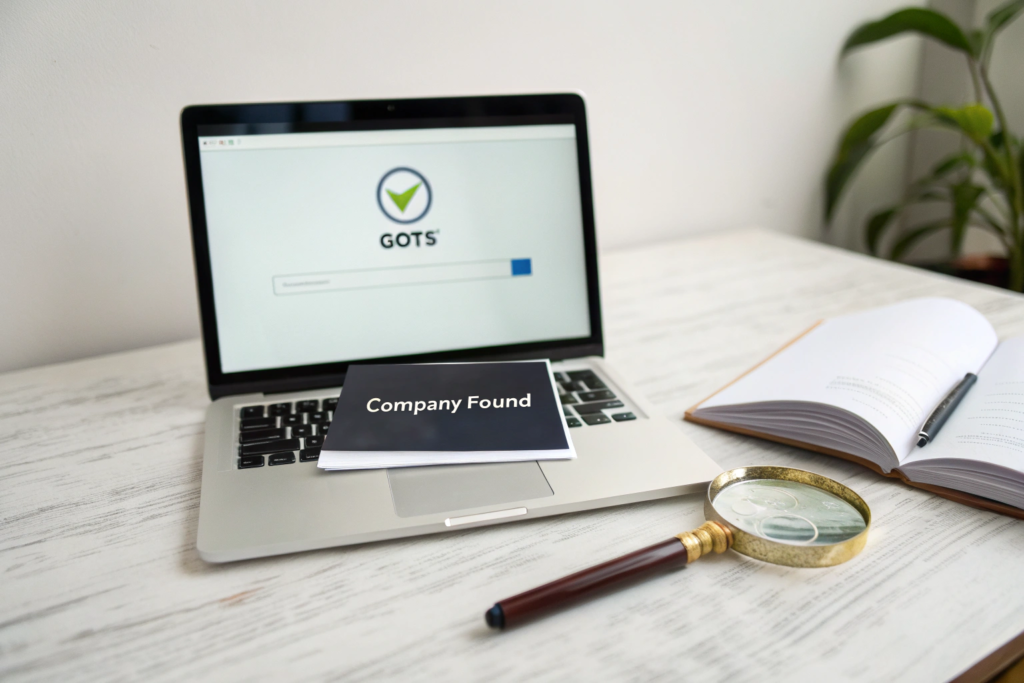
This is your most powerful weapon. Every reputable certification body maintains a public online database of certified companies. If a supplier is genuinely certified, they will be in that database. Full stop. If they are not, no amount of fancy PDFs matters. You must learn to use these databases.
I make it a standard part of my onboarding for any new client. I sit with them, virtually or in person, and show them how to verify our own certificates. I want them to see that we are in the database. I want them to know how to do it for any supplier. It’s the ultimate protection against fraud.
Where do I find the official GOTS and OEKO-TEX databases?
Bookmark these links. They are your best friends.
- GOTS Public Database: https://www.gots-certs.com/ You can search by company name, country, or certificate number. If a supplier claims GOTS, they must be here.
- OEKO-TEX Buyers’ Guide: https://www.oeko-tex.com/en/buyers-guide You can search for certified companies and products.
- FSC Certificate Database: https://connect.fsc.org/certificate-holder-search For verifying forest products certifications.
- ZDHC Gateway: https://www.zdhc-gateway.com/ For verifying chemical compliance.
When a client asks about our certifications, I don’t just send them the PDF. I send them the link to our entry in the GOTS database. I want them to click it and see for themselves. That’s transparency.
What do I do if the supplier’s name isn’t in the database?
First, double-check the spelling. Try variations. Sometimes companies are listed under a slightly different legal name. If you still can’t find them, ask the supplier for their exact legal name as it appears in the database and their certificate number. Then search by the certificate number.
If they still don’t appear, you have a massive red flag. It’s possible they are a new certificate holder and the database hasn’t been updated yet (though this is rare). More likely, the certificate is fake. Ask them to explain. A legitimate supplier will be concerned and will help you investigate. A fraudulent one will make excuses or become defensive. A client from a Canadian brand once found a supplier’s name missing from the GOTS database. The supplier claimed it was a "technical error." The client insisted on speaking directly to their certifier. The supplier refused. The client walked away. Months later, that supplier was exposed in an industry scandal. (The GOTS website has instructions on how to use their database.)
What Else Can I Do to Verify Beyond the Databases?
Databases are the first line of defense, but a truly diligent buyer goes further. There are additional steps you can take to build absolute confidence in your supply chain. These steps take more time and may require a willingness to push your supplier, but they are worth it for high-stakes orders.
I’ve had clients who go to extraordinary lengths to verify. A Japanese client once asked us to arrange a video call from our GOTS-certified dye house, showing them the machines running their fabric, with the batch numbers visible. We did it. Another client sent a third-party auditor to our facility unannounced. We welcomed them. If you are genuine, you have nothing to hide.
Can I ask for the "scope certificate" of the upstream supplier?
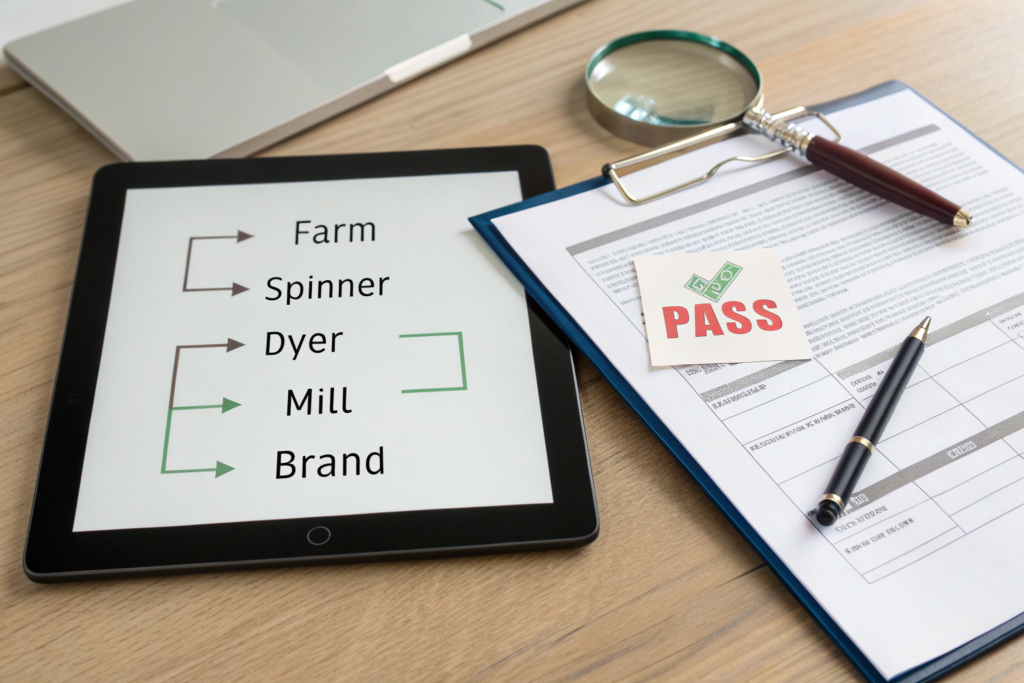
Yes, and you should. A fabric supplier might be certified, but they might be buying yarn from a non-certified spinner. For the final fabric to be GOTS certified, every stage of production must be certified. Ask your supplier for the scope certificates of their key upstream partners—the spinner, the dyer, the finisher. Then verify those certificates in the databases.
This is called "chain of custody" verification. It’s the gold standard. When we work with a client, we provide a full supply chain map, including the names and certificate numbers of our partner mills. A client from a German luxury brand required this for their entire organic cotton line. It took time to compile, but it gave them absolute confidence. (The Textile Exchange has resources on chain of custody.)
Should I request independent third-party testing?
Absolutely, especially for high-value or high-risk orders. Even with a valid certificate, things can go wrong. Cross-contamination can occur. A mill might have a temporary lapse. Independent testing gives you a final, verifiable check on the product itself.
You can request testing for specific parameters: fiber content (to verify it’s actually organic cotton), restricted substances (to verify OEKO-TEX compliance), or specific chemical residues. We offer our clients the option of having a sample from their production lot tested by an independent lab like SGS or Intertek. We pay for the test and share the report. It adds a small cost and a few days, but it provides ultimate peace of mind. A client from a US baby brand does this for every single batch of organic cotton fabric we ship. They sleep well at night. (The SGS and Intertek websites offer these testing services.)
What Questions Should I Ask During a Factory Audit or Video Call?
If you really want to be sure, nothing beats seeing the operation with your own eyes. A video call is a good start; an in-person audit is better. But you need to know what to look for. A fake supplier can have a nice office and a convincing sales pitch. You need to dig deeper.
I’ve hosted countless factory visits and video calls. The genuine suppliers welcome the scrutiny. We have nothing to hide. We show our machines, our labs, our warehouses, our waste treatment facilities. The fakes will try to limit what you see.
Can you show me the specific machines running my order?
This is a great question. If a supplier claims to be manufacturing your fabric, ask for a live video walk-through of the production floor. Ask them to show you the specific machines that are running your order. Can they zoom in on the fabric on the machine? Can they show you the batch numbers or production tags?
We do this routinely for clients. A buyer from a French luxury brand once asked us to video call from our dye house while her fabric was in the machine. We walked over, showed her the machine running, showed her the batch number on the screen, and even dipped a sample to show the color progress. She was thrilled. That’s the level of transparency you should expect. If a supplier refuses or makes excuses, it’s a major red flag.
Can you show me your chemical and waste storage areas?
This is a clever question for verifying environmental certifications like GOTS or OEKO-TEX. Certified facilities must have proper chemical management and waste treatment. Ask to see the chemical storage area. Is it organized? Are containers labeled? Are there spill containment measures? Ask to see the wastewater treatment plant. Is it operational? Can you see the treated water?
We are proud of our environmental facilities. We have a state-of-the-art wastewater treatment plant, and we love showing it to clients. A client from a Swedish brand spent an hour with our environmental manager, reviewing our discharge permits and testing our treated water. That’s the kind of diligence that separates serious brands from the rest. (The ZDHC Foundation has guidelines on chemical management.)
Conclusion
So, how do you verify your fabric supplier isn’t falsifying green certificates? You move from trust to verification. You start with a healthy dose of skepticism and a keen eye for red flags like unprofessional documents and mismatched scope. You master the use of official public databases—GOTS, OEKO-TEX, FSC—to confirm that your supplier, and their upstream partners, are legitimately listed. You go further by requesting full chain-of-custody documentation and independent third-party testing of the final product. And for ultimate confidence, you conduct virtual or in-person audits, asking to see the machines running your order, the chemical storage areas, and the waste treatment facilities. It’s a process that requires time and diligence, but the cost of getting it wrong—a ruined reputation, lost customer trust, potential legal action—is far, far higher.
This is exactly the level of transparency and integrity we’ve built our reputation on at Shanghai Fumao for over 20 years. We don’t just provide certificates; we invite you to verify them. We are listed in every relevant public database. We provide full supply chain maps and documentation from our certified partners. We welcome video calls and in-person audits. We will arrange independent testing at your request. Our commitment is simple: what we promise is what you get. If you are tired of wondering whether you can trust your supply chain and are ready to partner with a supplier who welcomes scrutiny, please reach out to our Business Director, Elaine. She can provide our certificates, walk you through our verification process, and answer any question you have. Email her directly at elaine@fumaoclothing.com. Let’s build a supply chain based on trust, verified.








