Last year, I had a video call with a sustainability director from a major denim brand in Italy that left me thinking for days. He was frustrated. His company had committed to reducing water usage by 30% across their supply chain by 2025. They had optimized their laundry processes, installed rainwater harvesting, and worked with farmers on water-efficient cotton. But the biggest water hog of all—fabric dyeing—remained a stubborn problem. He asked me, "Is there really a way to dye fabric without water, or is that just a lab fantasy?" I told him it’s not a fantasy. It’s real, it’s scaling, and it’s fundamentally changing how we think about fabric sourcing.
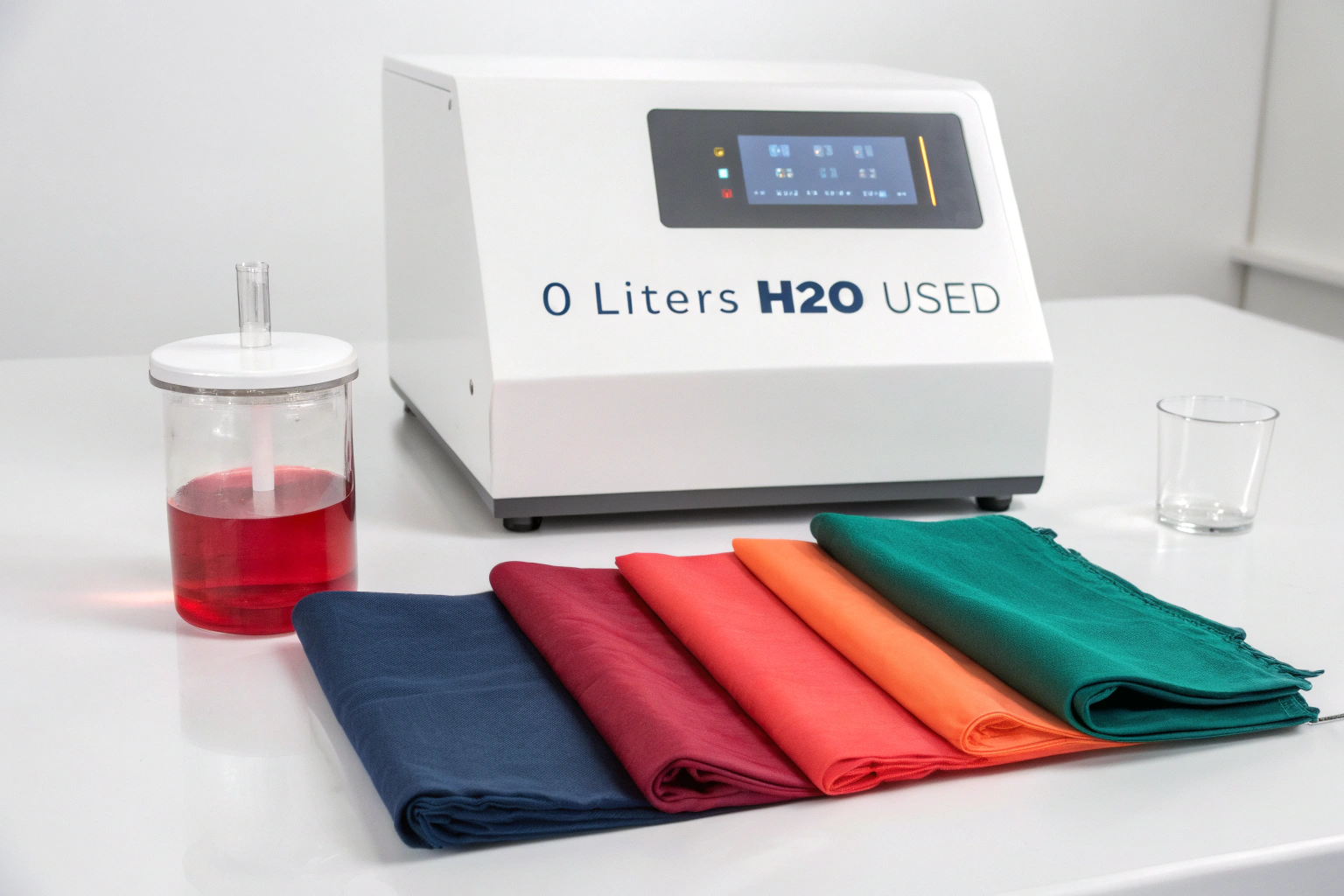
The answer is that waterless dyeing technology is revolutionizing fabric sourcing because it eliminates the single most environmentally damaging and resource-intensive step in textile production. Traditional dyeing uses massive amounts of water—anywhere from 50 to 150 liters per kilogram of fabric—and generates enormous volumes of polluted wastewater that requires expensive treatment. Waterless technologies, like air-dyeing, foam dyeing, and supercritical CO2 dyeing, slash water use by 95% to 100%, eliminate wastewater, reduce energy consumption by up to 60%, and often result in better, more consistent color. For brands facing tightening environmental regulations, soaring water costs, and consumer demand for genuine sustainability, waterless dyeing isn’t just an innovation; it’s becoming a competitive necessity.
But here’s the reality check I gave that Italian client. Waterless dyeing is not a simple "plug-and-play" replacement for your existing supply chain. It requires different equipment, different expertise, and often different fabric constructions. It can be more expensive upfront. And not every mill is capable of doing it right. The brands that are successfully adopting waterless dyeing are the ones who are partnering early with innovative suppliers, investing in education, and thinking long-term. I’ve been in this industry in Keqiao for over 20 years, and I’ve seen many "next big things" come and go. Waterless dyeing is different. It’s here to stay, and it’s going to reshape the sourcing landscape. Let me explain exactly how and why.
What Are the Main Waterless Dyeing Technologies Available Today?
First, let’s demystify the technology. "Waterless dyeing" is an umbrella term for several different processes that eliminate or drastically reduce the use of water as the medium for carrying dye onto fabric. Each has its own strengths, limitations, and ideal applications. Understanding them is the first step to making an informed sourcing decision.
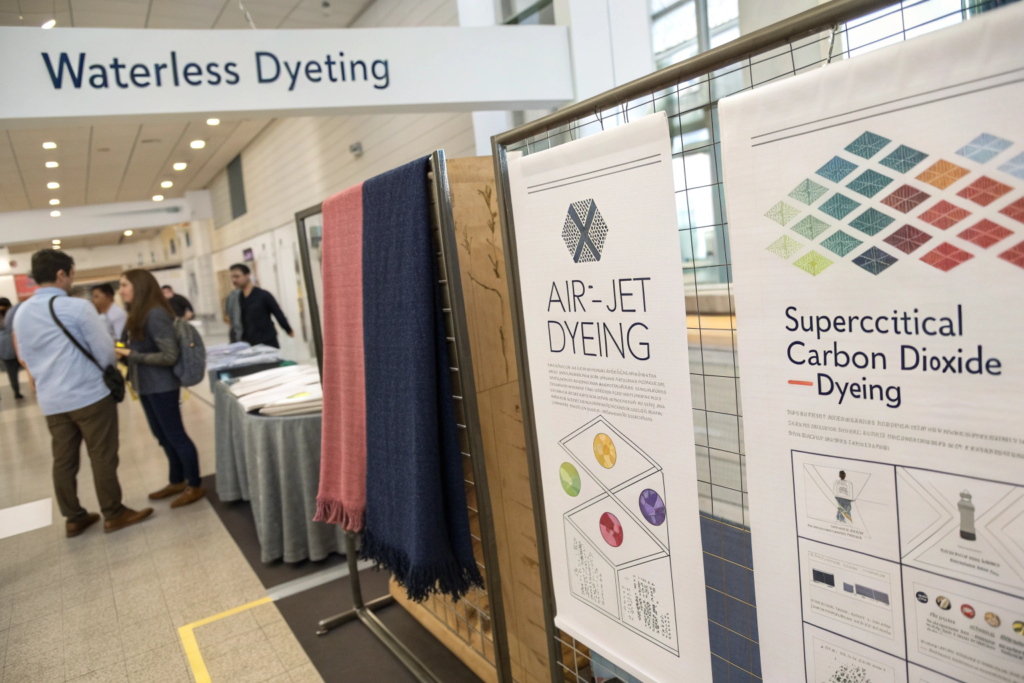
I remember visiting a textile machinery fair in Shanghai about five years ago and seeing a demonstration of CO2 dyeing for the first time. It looked like something from a science fiction movie—a massive, sealed stainless steel chamber, fabric being loaded, and then the technician explaining that they would pressurize CO2 gas until it became a "supercritical fluid" that acts like both a liquid and a gas, dissolving the dye and carrying it into the fibers. No water, no wastewater. I was stunned. That moment convinced me that the future of dyeing was not going to look like the past.
How does supercritical CO2 dyeing actually work?
This is the most radical and complete waterless technology. It uses carbon dioxide heated and pressurized above its "critical point" (31°C and 74 bar), where it becomes a supercritical fluid. In this state, CO2 has the density of a liquid but the viscosity and diffusivity of a gas. It can dissolve hydrophobic (water-hating) dyes, typically used for polyester, and carry them deep into the fibers.
After the dyeing cycle, the pressure is released, the CO2 returns to a gas, and it’s collected, re-compressed, and reused. The excess dye that wasn’t absorbed simply falls to the bottom of the chamber as a dry powder, ready to be collected and reused. There’s no water, no effluent, no drying step (because there’s no water to evaporate), and the entire cycle is faster than conventional dyeing. We’ve been working with a pilot-scale CO2 dyeing facility in China since 2022, testing it for a German sportswear client. The color fastness and vibrancy on polyester have been exceptional. The main barrier is the capital cost of the equipment—these are high-pressure vessels that are expensive to build and operate. But as the technology scales, costs are coming down. (The company DyeCoo is the pioneer in commercial CO2 dyeing technology.)
What are "air-dyeing" and "foam dyeing" and how do they compare?
These are related but less radical technologies that drastically reduce water use rather than eliminating it entirely. Air-dyeing (a proprietary technology from a company called ColorZen) uses air, not water, to propel dye into fibers. It’s primarily used for cotton and other cellulosics. It can reduce water use by up to 95% and energy use by up to 85%.
Foam dyeing is another approach. Instead of dissolving dyes in a huge water bath, they are mixed into a concentrated foam, which is then applied to the fabric. The foam collapses, depositing the dye, and the fabric goes directly into a steaming chamber to fix the color. This eliminates the need for a large water bath and drastically reduces the water and energy needed for drying. We’ve been using foam dyeing for some of our heavier cotton fabrics since 2023. The color penetration is excellent, and we’ve cut our water usage for those lines by over 70%. It’s not 100% waterless, but it’s a massive improvement. (This article from Textile World explains foam dyeing technology.)
How Does Waterless Dyeing Impact Fabric Quality and Cost?
This is where theory meets reality for a brand. The environmental benefits are clear, but if the fabric quality suffers or the cost is prohibitive, adoption will be slow. The good news is that waterless dyeing often produces better quality fabric. The bad news is that it currently comes with a cost premium, though that premium is shrinking.
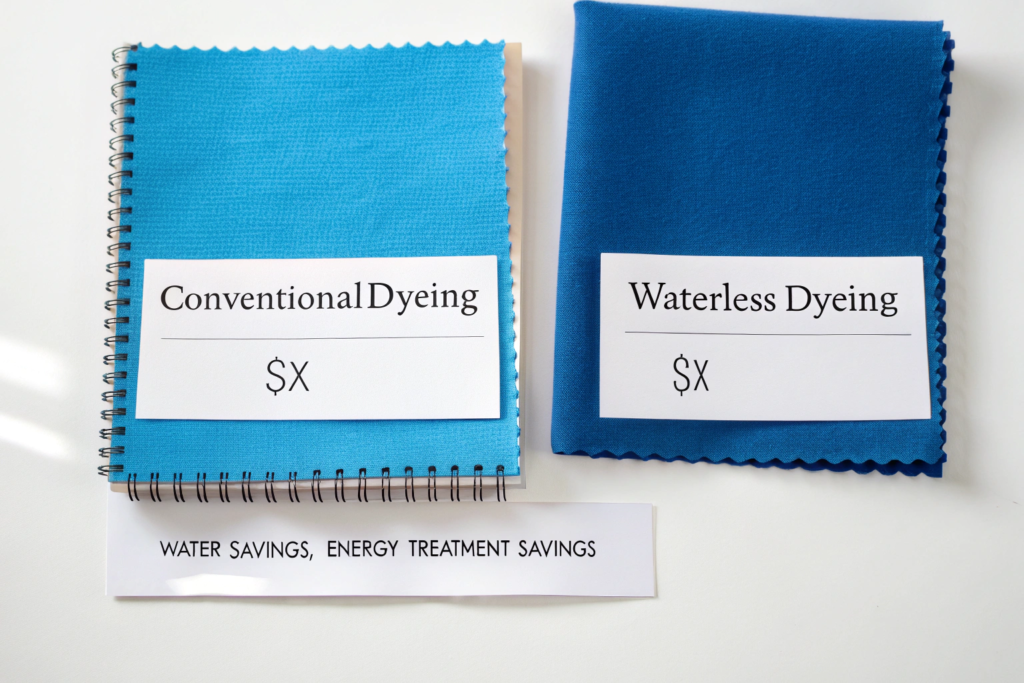
I’ve had to have honest conversations with clients about this. A buyer from a US-based activewear brand was initially excited about waterless dyeing, but when he saw the price, he balked. I explained that the price included not just the dyeing, but also the elimination of water costs, effluent treatment costs, and energy costs for drying. When we calculated the "true cost" including those factors, the premium was much smaller. For some clients, especially those selling to environmentally conscious consumers, the premium is easily justified.
Does waterless dyeing produce better, more consistent colors?
In many cases, yes. Because waterless processes like supercritical CO2 are so precisely controlled, they can achieve exceptional color consistency from batch to batch. There’s no variation in water hardness, no issues with pH drift, no human error in adding chemicals. The dye uptake is also often higher, meaning more of the dye actually ends up in the fabric and less is wasted.
For polyester, CO2 dyeing produces colors that are incredibly vibrant and have excellent fastness properties. Because the dye penetrates the fiber so thoroughly, the color is less likely to fade or wash out. We did a side-by-side comparison for a Japanese sportswear client in 2023. We dyed the same polyester fabric conventionally and with CO2. The CO2-dyed sample had deeper, more saturated color and performed better in crocking (rubbing) and lightfastness tests. The client was convinced. (This study from ResearchGate compares color fastness of CO2 vs. water-dyed polyester.)
What is the cost premium for waterless dyed fabrics today?
It varies by technology and scale, but generally, you can expect a premium of 10% to 30% compared to conventional dyeing for the same fabric. This is due to the higher capital cost of the equipment, the specialized expertise required, and the fact that the technology is not yet at full industrial scale for all fiber types.
However, this premium needs to be viewed in context. Conventional dyeing has hidden costs: water procurement, wastewater treatment, energy for heating and drying, and the potential for re-dyeing due to inconsistencies. When you factor all of these in, the gap narrows. For a client from a Scandinavian outdoor brand, we calculated the total cost of ownership for a large order. The waterless option was 18% more expensive on the invoice, but when we added their estimated water and energy savings at their own laundry facilities, the net cost increase dropped to under 8%. For their premium line, they decided it was worth it. (The Textile Exchange has published reports on the economics of sustainable dyeing.)
What Are the Environmental Benefits Beyond Water Savings?
While water savings are the headline, waterless dyeing technologies offer a cascade of other environmental benefits that are equally important. For brands serious about reducing their overall footprint, these "co-benefits" are a huge part of the appeal.
I was on a panel at a sustainability conference in Hong Kong a few years ago, and a representative from a major NGO made a point that stuck with me. She said, "We’ve been so focused on water that we’ve ignored energy and chemicals. Waterless dyeing tackles all three at once." She was right. It’s a systems-level solution.
How much energy does waterless dyeing save?
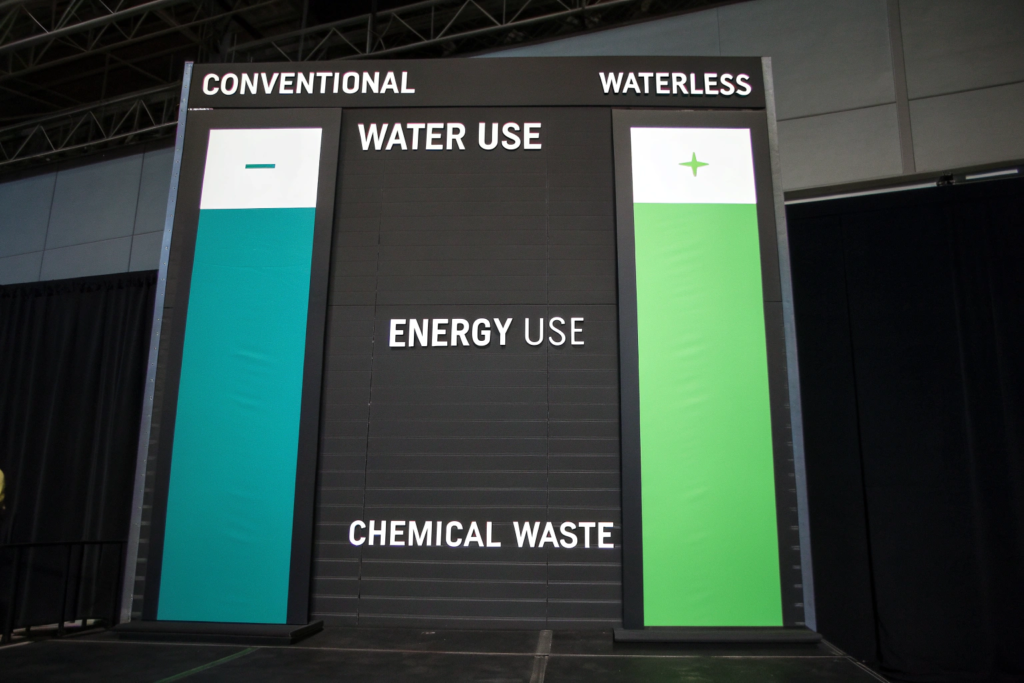
A tremendous amount. In conventional dyeing, you have to heat huge vats of water to high temperatures (often 100°C to 130°C for polyester) and then maintain that temperature for the entire dye cycle. After dyeing, you have to rinse with more hot water, and then you have to dry the fabric, which requires evaporating all that water. It’s an incredibly energy-intensive process.
Waterless technologies eliminate most of this. In supercritical CO2 dyeing, there is no water to heat and no drying step—the fabric comes out dry. The energy is used primarily for compression, and much of that can be recovered. Overall energy savings can be 40% to 60% compared to conventional dyeing. For a German automotive textiles client (yes, we do that too), we calculated that switching to CO2 dyeing for their polyester interior fabrics would reduce their energy-related carbon emissions by over 50% per year. (The Carbon Trust has analyzed the energy savings potential of alternative dyeing technologies.)
Does waterless dyeing eliminate chemical pollution?
It dramatically reduces it, and in some cases, eliminates it entirely. In conventional dyeing, the wastewater contains not just unfixed dye, but also salts, acids, alkalis, and a host of auxiliary chemicals like leveling agents, dispersants, and fixatives. Treating this complex chemical soup is expensive and difficult.
In CO2 dyeing, there is no wastewater. The excess dye is recovered as a dry powder and can be reused. No chemicals are discharged. In foam dyeing, the chemical load is much lower, and the small amount of residual foam can often be treated more easily. For a client from a French luxury brand, the elimination of chemical discharge was actually the primary motivation for exploring waterless dyeing. They were facing increasing pressure from regulators and NGOs to prove they weren’t polluting local waterways. Waterless technology gave them a way to guarantee it. (The Zero Discharge of Hazardous Chemicals (ZDHC) program is the key initiative in this area.)
What Are the Limitations of Waterless Dyeing Today?
I have to be honest. Waterless dyeing is not a universal solution—yet. It has limitations that brands need to understand. It works best for certain fibers, certain dye classes, and certain colors. It’s not something you can apply to every fabric in your line tomorrow. But the technology is evolving rapidly, and these limitations are shrinking.
A client from a UK-based multi-product brand asked me recently, "Can I use waterless dyeing for everything?" I had to tell him no. Not yet. But I walked him through what is possible now and where the technology is heading. That honest conversation built trust and helped him plan a phased approach.
Which fibers can be dyed with current waterless technologies?
Currently, waterless dyeing is most advanced for synthetic fibers, especially polyester. Supercritical CO2 is ideal for hydrophobic (water-hating) fibers because the CO2 can effectively carry the disperse dyes that polyester requires. It works beautifully.
For natural fibers like cotton, which are hydrophilic (water-loving), the technology is more challenging. Cotton dyes typically need water to dissolve and react with the fiber. However, there are innovations. Air-dyeing and foam dyeing technologies have been adapted for cotton with good results. There are also new classes of dyes and chemical pre-treatments being developed that allow cotton to be dyed with CO2. We’ve tested some of these in our lab, and the results are promising, though not yet at full commercial scale. For now, if you need waterless-dyed cotton, foam dyeing or air-dyeing are your best bets. (Lenzing has done research on dyeing Tencel with alternative technologies.)
Are there color limitations with waterless dyeing?
Generally, no. The color gamut achievable with waterless technologies is comparable to conventional dyeing. You can get vibrant brights, deep darks, and everything in between. For CO2 dyeing on polyester, the color saturation can actually be superior.
The main limitation is with small batches and color changes. In conventional dyeing, switching from a light color to a dark color requires a thorough cleaning of the equipment, which uses water and chemicals. In CO2 dyeing, because there is no water, cleaning between colors can be more complex. However, new machine designs are addressing this with modular systems that allow for quicker changeovers. For large production runs of a single color, it’s not an issue. For a sample room or a brand doing very small batches with many color changes, the economics are less favorable right now. (This article from Just-Style discusses the scalability of waterless dyeing.)
How Can Brands Start Integrating Waterless Dyed Fabrics?
If you’re convinced that waterless dyeing is part of your future, the next question is practical: how do you actually start? The answer is to be strategic, patient, and collaborative. This is not a technology you can just "order" from any supplier. You need to find the right partners and start with the right products.
I’ve guided several clients through this transition. The ones who succeed are the ones who treat it as a partnership, not a transaction. They come to us with an open mind, willing to test, learn, and iterate. They don’t expect perfection on the first try.
What’s the best product category to start with?
Start with polyester-based products where the fiber and the technology are most mature. Activewear, sportswear, outerwear, and performance fabrics are ideal candidates. These are often made from polyester or nylon, and the color performance and fastness of CO2 dyeing are excellent.
Also consider products where the sustainability story is a key selling point. If you have a "core basic" that you produce in high volume in a single color, that’s a perfect candidate. The economics of waterless dyeing improve with scale and consistency. We helped a Dutch activewear brand convert their best-selling black leggings to CO2-dyed recycled polyester in 2024. The color was perfect, the sustainability story was powerful, and the economies of scale made the cost premium manageable. (This case study from DyeCoo shows a successful brand adoption.)
How do I find a supplier with waterless dyeing capability?
This requires research. Not every mill has invested in this technology. Start by looking at textile machinery exhibitions like ITMA or tech-focused supplier directories. Ask your existing suppliers if they have waterless dyeing capabilities or are planning to invest in them.
You can also look for partnerships with technology providers. Companies like DyeCoo don’t just sell machines; they also have partner mills that use their technology. We’ve built relationships with several of these mills in China and are now able to offer CO2-dyed fabrics to our clients. When a client asks, we can show them our partner’s facility, explain the process, and provide samples. Transparency is key. (The ITMA exhibition website is a great place to find innovative machinery and suppliers.)
Conclusion
So, why is waterless dyeing technology changing fabric sourcing? Because it addresses the single biggest environmental problem in textile production—the massive consumption of water and the generation of toxic wastewater—while simultaneously saving energy, reducing chemical use, and often producing higher-quality fabric. Technologies like supercritical CO2 dyeing, foam dyeing, and air-dyeing are moving from lab curiosities to commercial realities. They offer brands a tangible way to slash their environmental footprint, prepare for tightening regulations, and meet the demands of increasingly conscious consumers. Yes, there are limitations today—it’s most advanced for synthetics, it comes with a cost premium, and it requires specialized partners. But the trajectory is clear: waterless dyeing is not a passing trend; it’s the future of color in textiles.
This is exactly the kind of forward-thinking innovation we embrace at Shanghai Fumao. With over 20 years of experience in Keqiao, we are constantly scanning the horizon for technologies that can help our clients stay ahead. We have partnered with leading waterless dyeing facilities in China, invested in our own testing capabilities, and helped numerous brands successfully integrate CO2-dyed and foam-dyed fabrics into their collections. We understand the technology, the economics, and the supply chain. If you’re ready to explore how waterless dyeing can transform your sourcing and strengthen your sustainability story, please reach out to our Business Director, Elaine. She can discuss your specific needs, share samples, and connect you with our partner mills. Email her directly at elaine@fumaoclothing.com. Let’s color the future, together.