Last spring, I got a panicked call from a children’s wear brand owner in Brooklyn. She had just received a large shipment of what she thought was "organic cotton" from a supplier she found on Alibaba. The price was decent, the samples felt okay. But when her largest retailer asked for the GOTS certificate to verify the organic claim before placing a massive re-order, the supplier went silent. Then they sent a PDF that was clearly photoshopped. She was stuck with 5,000 yards of un-certified fabric and a $200,000 order hanging by a thread. She asked me, "How do I make sure this never happens again? Where do I find the real deal?"
The answer is that finding genuine GOTS certified organic cotton for wholesale orders isn’t about finding a supplier; it’s about finding a partner who is deeply embedded in the certified supply chain. You need to look beyond a supplier’s website claims and verify their certificate against the official GOTS public database. You need to work with a mill or trader who can trace the fiber from the certified farm, through the GOTS certified gin, to the certified spinner, and finally to the certified fabric mill. It’s a chain of custody, and if one link is broken, your "organic" claim is worthless.
But let me be brutally honest with you. The demand for organic cotton has exploded, and where there’s demand, there are people looking to cut corners. I’ve been in this industry in Keqiao for over 20 years, and I’ve watched the organic cotton market mature from a niche curiosity to a mainstream requirement. The difference between a supplier who just slaps "organic" on a tag and one who actually delivers GOTS certified goods comes down to their willingness to show you their paperwork, their relationships with upstream suppliers, and their understanding of the year-round planning required to secure this precious fiber. Let me show you exactly how to navigate this, so you don’t end up like that poor buyer in Brooklyn.
What Does GOTS Certification Really Mean for My Wholesale Fabric?
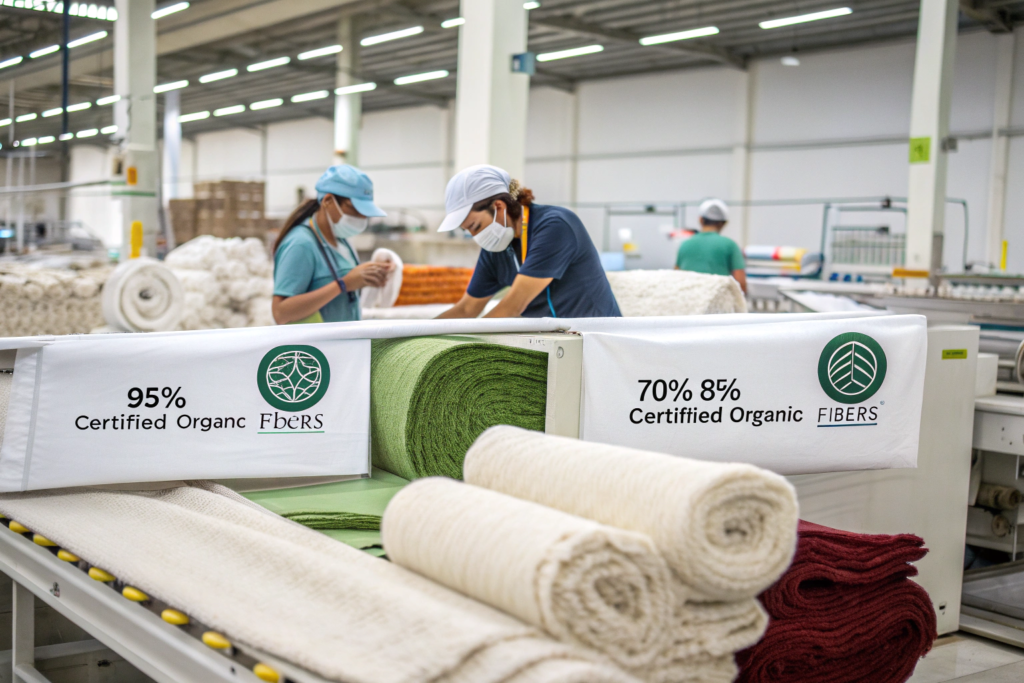
First, let’s clear up a massive misconception. GOTS is not just about the fiber being organic. It’s a holistic certification that covers the entire supply chain. It stands for the Global Organic Textile Standard, and it has two levels: "organic" (which requires 95%+ certified organic fibers) and "made with organic" (which requires 70%-95% certified organic fibers). But crucially, it also mandates strict environmental and social criteria for every stage of processing.
I had a client from a large Canadian yoga wear brand visit our facility in 2022. They had been buying "organic cotton" from another supplier for years. When we asked to see their GOTS scope certificate, they looked confused. They only had a fiber certificate. They didn’t realize that their fabric, dyed in a non-certified factory with who-knows-what chemicals, could not legally be sold as "GOTS certified." The environmental standards for GOTS prohibit things like toxic heavy metals, formaldehyde, and GMOs in the processing aids. It’s a complete ecosystem. (The official GOTS website has a fantastic introduction to the standard that I recommend every buyer read.)
Does GOTS certification guarantee the fabric is chemical-free?
Not exactly "chemical-free," because fabric needs processing. But it guarantees that the chemicals used are strictly controlled and environmentally friendly. GOTS approved dyes and auxiliaries must meet specific criteria for biodegradability and toxicity. They ban everything from aromatic solvents to nickel in zippers.
We learned the hard way how strict this is about a decade ago. We were running a GOTS certified organic cotton jersey for a German babywear client. Our normal dyeing auxiliaries, which we used for conventional cotton, were fine. But one of them, a simple wetting agent, wasn’t on the GOTS approved list. Our client’s auditor flagged it during a surprise inspection. We had to halt production, find an approved alternative (which cost more), and re-dye the entire batch. It was a painful lesson, but it taught me the depth of the GOTS commitment. For your wholesale orders, this depth is your protection. It means the garment you sell won’t just be organic fiber; it will be made without the most harmful industrial chemicals. (You can search for GOTS approved chemicals on their database.)
How is GOTS different from just "organic cotton" or OEKO-TEX?
This is the most common point of confusion. Let me break it down simply.
- "Organic Cotton" alone: This only refers to how the cotton was grown (without synthetic pesticides or GMOs). It says nothing about how it was processed, dyed, or finished. A fabric could be made from organic cotton but dyed with toxic chemicals in a factory paying poverty wages, and you could still technically call it "organic cotton fabric" (though it’s misleading).
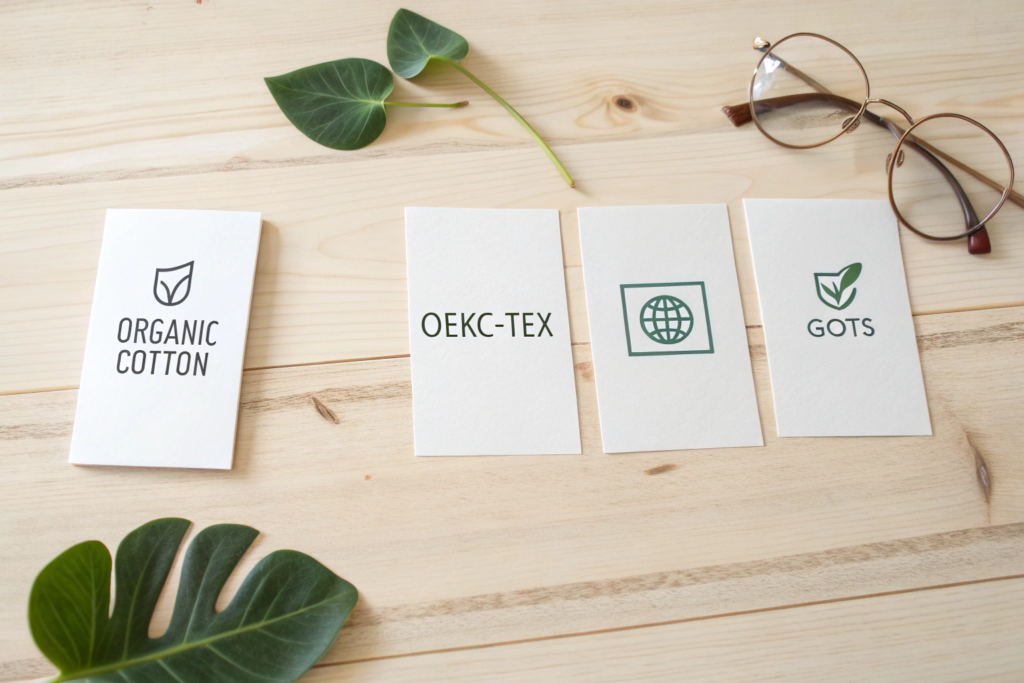
- OEKO-TEX Standard 100: This certifies that the final product is free from harmful levels of over 100 regulated substances. It’s about product safety for the wearer. However, it doesn’t care if the cotton was grown organically or conventionally. You can have OEKO-TEX certified conventional cotton.
- GOTS: This is the gold standard because it combines both. It requires the fiber to be certified organic and the processing to meet strict environmental and social criteria (including wastewater treatment and fair labor). It’s the whole package.
I use this analogy with clients: "Organic cotton" tells you the apples are organic. OEKO-TEX tells you the apple pie is safe to eat. GOTS tells you the apples are organic, the bakery uses clean energy, the ovens don’t pollute, and the baker gets a fair wage. For a premium children’s wear brand we work with in Switzerland, GOTS is non-negotiable because their customers demand that entire story. (This guide from Textile Exchange offers a great comparison of textile certifications.)
Where Exactly Should I Start My Search for GOTS Certified Suppliers?
Okay, so you know what you need. Now, where do you find it? The internet is full of suppliers claiming GOTS certification. Your job is to separate the legitimate ones from the pretenders. The process starts online, but it must end with verification. Don’t just trust a logo on a website. Anyone can download a GOTS logo and put it on their homepage. That means nothing.
I have a routine for any new client who asks me this question. I don’t just send them our certificate. I walk them through how to verify it themselves. I want them to feel confident, not just take my word for it. A buyer from a UK-based B-Corp loungewear brand told me last year that my willingness to do this "verification walk-through" was the reason she chose us over three other Chinese suppliers. She said the others just sent a PDF and got defensive when she asked questions. Trust is built on transparency.
Should I use the official GOTS public database as my first step?
Absolutely. This is your most powerful weapon. The official GOTS website has a public database of all certified companies globally. You can search by country, by certification scope (like "fabric manufacturing" or "spinning"), and by company name. If a supplier is truly GOTS certified, they will be listed here. Full stop.
Before you even email a supplier, go to the database. Search for them. When you find their listing, take note of the "scope certificate" number and the expiry date. Then, when you contact them, ask them for their most recent scope certificate. This PDF will list every stage of the supply chain they are certified for. For example, a trader might be certified for "trading," but if they are selling you "GOTS certified dyeing," they need to prove their dyeing partner is also certified. We had a client from Australia who found a potential supplier on the database, but when they asked for the scope certificate, it only covered "trading." The supplier couldn’t prove who actually wove or dyed the fabric. The client walked away. (Here is the link to the GOTS Public Database. Bookmark it.)
What’s the difference between a "trader" and a "mill" with GOTS?
This is a critical distinction. A "trader" with GOTS certification is certified to buy and sell GOTS goods. They are a middleman. They can be legitimate and hold inventory, but they are not the manufacturer. A "mill" (like us) is certified to actually process the fabric—weaving, knitting, dyeing, finishing.
Both can be valid sources. But if you buy from a trader, you need to ensure their scope certificate lists the specific mills they source from. When we work as a mill, we have our own scope certificate. If a client buys from us, they know exactly where the fabric was made. If you buy from a trader, ask for the name and GOTS certificate number of the actual mill that produced your specific fabric. Then, verify that mill in the database too. A buyer from a French luxury resort wear brand did this with a potential supplier last year. The trader had a valid certificate, but the mill they claimed to use wasn’t listed. It turned out the trader was buying uncertified fabric and trying to pass it off as GOTS. The brand dodged a bullet. (The Textile Exchange Material Change Index is another great tool for finding reputable suppliers.)
How Do I Navigate Pricing and Lead Times for GOTS Organic Cotton?
Here’s the reality check. GOTS certified organic cotton is not a commodity you can buy off the shelf like conventional cotton. It’s a specialty crop with a more complex supply chain. That means two things: it costs more, and it takes more planning. If a supplier promises you GOTS fabric at the same price and speed as conventional, they are either lying about the certification or they are about to go out of business.
I remember a conversation with a fast-fashion buyer from Spain in 2021. He was frustrated that our GOTS organic cotton jersey cost 30% more than his conventional supplier. He said, "It’s just cotton!" I had to explain the economics. The organic farmer gets a premium. The segregated supply chain (keeping organic fiber separate from conventional at every step) costs money. The GOTS approved dyes are more expensive. The annual audits cost thousands of dollars. It all adds up. He eventually understood, and his brand built that premium into their pricing. Their customers were happy to pay it for a genuinely sustainable product.

Why is GOTS organic cotton usually 20-40% more expensive?
Because the costs are baked in at every stage. First, organic farming itself has lower yields than conventional farming, especially during the conversion period, so the raw fiber costs more. Second, the entire supply chain must be "certified organic certified" and physically segregated from conventional cotton. You can’t just throw organic bales into the same truck as conventional bales. This requires separate logistics, cleaning between runs, and meticulous record-keeping.
Third, the processing chemicals are more expensive. GOTS approved dyestuffs and auxiliaries are a smaller market than conventional chemicals, so they cost more. Finally, the certification audits themselves are an annual cost that mills have to absorb. We pay for multiple audits every year—for our own facility, for our supply chain partners. It’s a significant expense. When you see a cheap price for "GOTS," ask yourself how they are covering all these costs. Usually, they aren’t. They are cutting corners, likely on the certification itself. (This report from the Pesticide Action Network on the true cost of organic cotton explains the economics well.)
How far in advance do I need to order GOTS fabric?
Much further than conventional. For conventional cotton, we can often spin yarn and weave fabric in a matter of weeks if we have the raw materials. For GOTS, you need to plan ahead. The organic cotton harvest is seasonal. The certified organic fiber is often contracted months before it’s even planted.
We advise our wholesale clients to plan 3-4 months ahead for standard GOTS fabric, and 4-6 months for anything complex or if they need a specific GOTS certified yarn that isn’t a standard stock item. We have a client in Sweden who orders the same GOTS organic cotton canvas for their tote bags twice a year. They place their orders like clockwork in January for April delivery, and in July for October delivery. Because they are consistent, we can reserve the certified yarn for them in advance. If they called us tomorrow and needed 10,000 yards of a specific GOTS fabric next month, we might struggle to source the certified yarn in time. (Seasonality and lead times are discussed in detail in the Textile Exchange Organic Cotton Market Report.)
What Red Flags Should I Watch Out For When Vetting Suppliers?
Over two decades, I’ve seen it all. I’ve seen fake certificates. I’ve seen suppliers put a "GOTS" label on a roll of conventional fabric. I’ve seen traders claim certification for mills that don’t exist. The organic cotton boom has unfortunately attracted bad actors. But if you know what to look for, you can spot them a mile away. Your due diligence is the best defense.
A buyer from a US outdoor brand told me a horror story in 2023. They had been working with a "GOTS certified" supplier for a year. The relationship seemed great. Then, a documentary crew investigating the cotton supply chain in Xinjiang showed up at their supplier’s warehouse. They discovered the supplier had been sourcing conventional, non-organic cotton from questionable sources and mixing in just enough organic fiber to pass a basic fiber test. The brand’s reputation took a massive hit. They are now in litigation. It’s a nightmare scenario that is entirely avoidable with proper vetting.
Should I be suspicious of suppliers who can’t show their full scope certificate?
Yes, 100%. This is the biggest red flag. A legitimate GOTS certified company is proud of their certification. They will happily share their most recent scope certificate. This certificate, issued by an accredited body like Control Union or Ecocert, lists the exact activities the company is certified for, the addresses of their facilities, and the effective dates.
If a supplier hesitates, sends a blurry PDF, or only sends a "certificate" that isn’t from a recognized GOTS accredited certifier, walk away. Also, check the dates. The certificate should be current. We recently had a new client ask for our certificate. They then cross-referenced the certifier’s name and the certificate number on the certifier’s website. That’s next-level diligence, and we applauded them for it. It’s exactly what buyers should do. (You can usually verify certificates on the websites of certifiers like Control Union or Ecocert.)
Can a fabric fail the residue tests even if it has GOTS paperwork?
Yes, it can. GOTS certification is about the process and the system. But mistakes happen. Cross-contamination can occur. A certified mill might have a temporary lapse in their chemical management. That’s why, even with a valid GOTS certificate, we always recommend that our clients do their own due diligence testing.
We offer our clients the option of having a representative sample from their production lot tested by an independent third-party lab for GOTS residue compliance. It adds a small cost and a few days to the timeline, but it provides absolute peace of mind. We did this for a Japanese client who was supplying organic cotton uniforms to a major hotel chain. The hotel chain required independent test reports for every batch. We set up a protocol where we pulled samples, sent them to SGS, and shared the report with the client before shipping. It built an incredible level of trust. (Organizations like SGS and ITS offer specialized testing for GOTS parameters.)
Conclusion
So, where do you find GOTS certified organic cotton for wholesale orders? You find it by becoming an informed and diligent buyer. You start with the official GOTS public database. You demand to see current, verifiable scope certificates from every link in the supply chain. You understand that GOTS is more than just the fiber—it’s a commitment to clean processing and ethical manufacturing that justifies a higher price and requires longer lead times. And you stay vigilant, watching for red flags like hesitant suppliers, blurry documents, or prices that seem too good to be true. The goal isn’t just to find a supplier; it’s to find the right partner who can consistently deliver genuine, verifiable GOTS fabric, order after order.
This is exactly the level of integrity and transparency we’ve built our reputation on at Shanghai Fumao. For over 20 years, we’ve been a trusted partner for global brands, and our commitment to genuine GOTS certification is unwavering. We don’t just have the certificate on the wall; we live the standard every day in our CNAS-accredited lab, our controlled supply chain, and our transparent communication. We’re happy to walk you through our certification, introduce you to our partner farms and spinners, and even arrange independent testing for your peace of mind. If you’re ready to source GOTS certified organic cotton with complete confidence, please reach out to our Business Director, Elaine. She can answer your questions, provide our latest scope certificate, and help you plan your order with realistic timelines. Email her directly at elaine@fumaoclothing.com. Let’s build a supply chain you can truly trust.