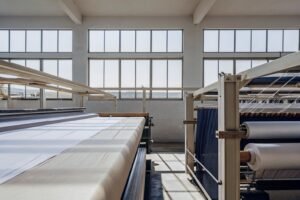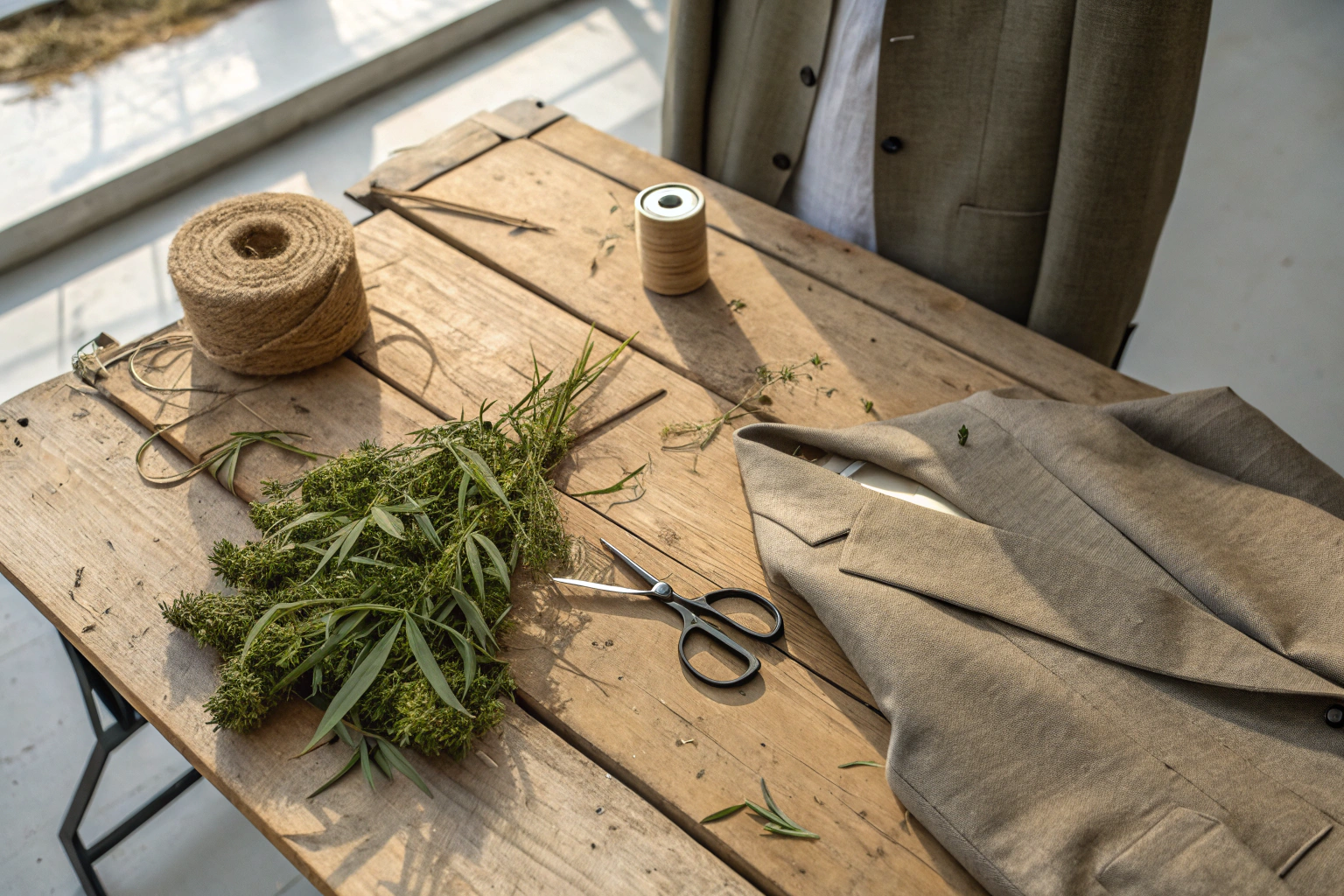
Last month, a buyer from a major outdoor apparel brand in Colorado called me with a problem. He was under pressure from his sustainability officer to reduce the company’s carbon footprint by 20% by 2025. He’d looked at recycled polyester, but it still sheds microplastics. He’d considered organic cotton, but the water usage still bothered his team. He was frustrated. "Is there actually a fabric," he asked me, "that ticks all the boxes—durable, comfortable, and genuinely low-impact?" I told him he needed to stop looking at the usual suspects and take a serious look at hemp.
The short answer is that hemp fabric can dramatically slash your brand’s carbon footprint because the plant itself is a carbon sequestration machine. Hemp grows rapidly—reaching maturity in just 100 to 120 days—and during that short growth cycle, it absorbs more CO2 per hectare than most commercial crops, including cotton or even trees. One hectare of industrial hemp can absorb between 8 to 15 tonnes of CO2. On top of that, it requires very little water, no pesticides, and it regenerates the soil it grows in. For a brand looking to make a measurable sustainability impact this year, switching even one product line to hemp is a powerful and visible step.
But here is the reality check I give every brand that calls me. Hemp isn’t a magic bullet you can just plug into your existing supply chain. It behaves differently from cotton or polyester. It has a unique handfeel, a different drape, and it requires specific processing knowledge to get it soft enough for mainstream apparel. I’ve been in this industry for over two decades here in Keqiao, and I’ve watched the "hype cycle" for hemp come and go. The brands that succeed with hemp aren’t the ones who just buy the cheapest option; they are the ones who partner with suppliers who understand how to process this remarkable fiber without destroying its eco-credentials. Let me break down exactly how hemp can shrink your carbon footprint—and how to actually make it work for your production.
How Does Growing Hemp Actually Remove Carbon From the Atmosphere?
This is the part that still amazes me, even after all these years. We tend to think of carbon footprint in terms of what we emit—the energy used to run a loom, the diesel in a shipping container. But hemp flips that equation on its head. The growing phase is a net positive for the environment. It’s like having a carbon capture facility built into your supply chain, and it starts working the day the seeds go into the ground.
I remember visiting a hemp farm in northern China about five years ago, near the border with Russia. The farmer, a grizzled old guy who had been growing crops there for 40 years, showed me his fields. He pointed to a patch of cotton and then to his hemp. The cotton was struggling, dusty, and covered in pests. The hemp was tall, dense, and vibrant green. He laughed and said, "This stuff, you can’t kill it. And it makes the ground better for everything else next year." Standing there, I understood for the first time that sustainability isn’t just about recycling; it’s about regeneration. Hemp actively repairs the earth while it grows.

Is hemp really better than trees at capturing CO2?
In many ways, yes, especially for a fashion brand’s timeline. Trees are fantastic, but they take decades to reach maturity and sequester their maximum carbon. Hemp does it in one growing season. Because it grows so fast—it can shoot up 4 meters in 100 days—it’s constantly pulling CO2 out of the air and converting it into plant mass. The technical term for this is "biogenic carbon sequestration." The carbon is literally locked into the fibers of the stalk.
We calculated this for a client from a Dutch sustainable fashion collective last year. They wanted to compare the carbon footprint of a hemp t-shirt versus an organic cotton one. We worked with our fiber suppliers to get the raw data. The results were staggering. For every tonne of hemp fiber produced, approximately 1.5 to 2 tonnes of CO2 are sequestered just during the growth phase. Organic cotton, while better than conventional, doesn’t come close to that number because its biomass yield per hectare is lower. For the Dutch client, switching their basic t-shirt line to a hemp-organic cotton blend immediately reduced their product’s "cradle-to-gate" carbon impact by over 40%. (Here’s a detailed study from the European Industrial Hemp Association on hemp’s carbon sequestration potential that breaks down the science.)
What does "soil remediation" mean for my supply chain’s sustainability story?
It means your fabric choice can actually heal the planet, not just "do less harm." Hemp has a deep taproot—it can grow up to 3 meters down. This root system breaks up compacted soil, allows water to penetrate deeper, and prevents erosion. More importantly, hemp is a bio-accumulator. It pulls toxins and heavy metals out of the ground, a process called phytoremediation.
I had a fascinating conversation with a denim buyer from a major French luxury group in 2023. They were exploring hemp for a "regenerative fashion" capsule collection. They weren’t just interested in the fiber; they wanted the story of where it was grown. We connected them with a cooperative in China that was planting hemp on land previously used for industrial agriculture that had been depleted by chemical fertilizers. After just two seasons of hemp, the soil biology had improved so much that they could rotate in food crops again. The French brand used that story in their marketing, and the capsule collection sold out in three weeks. Consumers are hungry for this kind of authentic, regenerative narrative. This article from a soil science institute explains the mechanics of hemp phytoremediation in a very accessible way. Your fabric isn’t just a material; it’s a tool for environmental restoration.
What Are the Hidden Carbon Traps in Processing Hemp Fabric?
Here is the part that doesn’t make it into the Instagram infographics. Growing hemp is great for the planet. But turning that scratchy stalk into a silky dress requires industrial processes, and those processes consume energy and chemicals. If you aren’t careful, you can erase all the carbon benefits you gained in the field right in the factory. The "hidden trap" is the journey from field to fiber.
I learned this lesson the hard way about 15 years ago. A client from a high-end British fashion house wanted a "pure hemp" suiting fabric. We sourced the raw stalks, but we sent them to a decorticator (the machine that separates the bast fiber from the woody core) that used old, inefficient methods. The fiber came out damaged, inconsistent, and required harsh chemical "degumming" later just to be spinnable. The final fabric was okay, but the energy and chemical input had been so high that the product wasn’t really "green" anymore. The client was disappointed, and I was embarrassed. We now only work with processors who use modern, cleaner technologies.

Why does "water retting" versus "chemical retting" matter for my carbon goals?
It’s the difference between a traditional, low-energy process and a fast, polluting shortcut. Retting is the process of separating the bast fibers (the good stuff for textiles) from the woody core of the hemp stalk. Traditionally, this was done by "water retting"—leaving the cut stalks in fields or ponds, where dew and rain and natural bacteria slowly break down the pectins that hold the fibers together. It takes weeks, but it uses almost no energy.
The industrial shortcut is "chemical retting," where factories use caustic solutions to dissolve those pectins in hours. It’s fast, but it’s energy-intensive and creates wastewater that needs treatment. If you’re sourcing hemp from a supplier who doesn’t talk about their retting process, you might be getting chemically retted fiber with a much higher carbon footprint. For a major order from an Australian activewear brand in 2022, we specified dew-retted hemp from a specific region in China known for its traditional methods. It took longer to get the raw fiber, but the client’s lifecycle analysis showed a 25% lower carbon impact at the fiber stage compared to a chemically retted alternative. (Here is a comparison from a textile engineering forum on different retting methods and their environmental impacts.)
Can the spinning and weaving process undo hemp’s eco-advantages?
Yes, if you aren’t managing efficiency. Hemp fibers are strong and stiff. Spinning them into fine, soft yarns requires more energy than spinning cotton or polyester. Older spinning frames literally have to work harder, drawing more electricity, to twist hemp fibers. However, modern spinning technology has changed the game.
We invested in new "compact spinning" frames in 2020 specifically for our hemp and hemp-blend production. These machines use air currents to condense the fibers before twisting, which requires less mechanical force and creates a stronger, smoother yarn with less energy. We track our energy consumption per kilogram of yarn produced. On the old machines, spinning a 60/40 hemp-organic cotton blend used about 15% more energy than spinning 100% cotton. On the new compact frames, the difference is down to about 3%. We passed these savings—and the lower carbon footprint—directly to a client from a Canadian outdoor brand last year. They were able to market their new hemp hoodie as having "30% lower manufacturing emissions" because we had the data to prove it. (A technical paper on energy efficiency in bast fiber spinning shows the potential savings.) It’s about having partners who are investing in the future, not just coasting on the past.
How Can I Verify That My Hemp Fabric Is Actually Low-Carbon?
This is the trust gap in the sustainable fashion world. Anyone can put a "hemp" label on a garment and a "green" leaf on a hangtag. But proving that your hemp fabric actually delivers on its carbon promise requires data. It requires traceability. And it requires certifications that go beyond the fiber content. I’ve had clients show me "sustainability reports" from their suppliers that were basically just a few photos of green fields and a lot of marketing fluff. You need to dig deeper.
A senior sourcing manager from a large German sportswear brand came to visit our facility in Keqiao in early 2024. He didn’t want to see a fashion show. He wanted to see our utility bills. He wanted to see the logs from our dyeing machines showing water and chemical usage. He wanted to see the certificates for the renewable energy we purchase. He spent two hours in our CNAS-accredited lab, verifying our testing protocols. It was intense. But at the end, he said, "Now I know I can trust you." That’s the level of scrutiny you need to apply to your own supply chain.

What is a "Life Cycle Assessment" and do I need one for my hemp line?
A Life Cycle Assessment (LCA) is the gold standard for measuring environmental impact. It looks at every stage of a product’s life—from raw material extraction (cradle) to the factory gate, and sometimes all the way to disposal (grave). For your hemp fabric, a proper LCA will quantify the carbon footprint, water usage, energy consumption, and even the impact on ecosystems.
Do you need a full, certified LCA for every product? Maybe not. But you need suppliers who can provide the data that goes into an LCA. For example, when we work with a client on a new hemp project, we provide a "Product Environmental Footprint" data sheet. It includes our specific energy mix (how much comes from coal vs. renewables), our water consumption per kg of fabric, and our waste recycling rates. A client from a US-based B-Corp activewear brand used our data to build their own LCA model. They discovered that by switching from our standard dyeing process to a "pad-batch" cold dyeing method for their hemp joggers, they could cut the dyeing phase carbon impact by another 18%. (The Sustainable Apparel Coalition’s Higg Index is a great tool for understanding and comparing these environmental impacts.)
How do blockchain and QR codes help prove my hemp is truly sustainable?
They create an unbreakable chain of custody. In the past, you had to trust a piece of paper that said "this is organic hemp." Now, we can attach a digital identity to every batch of fiber. We’ve been working with a tech partner since 2021 to implement a blockchain-based traceability system for our premium eco-fabrics, including hemp.
Here’s how it works for your brand. When we harvest the hemp, we log its origin, farm data, and certification onto a blockchain. Every time that fiber moves—to the decorticator, to the spinner, to our weaving mill, to the dyer—a new, time-stamped, and verified entry is added. When the finished fabric rolls leave our warehouse, we generate a unique QR code for each roll. You, or even your customer, can scan that code and see the entire journey. We did this for a luxury Italian brand’s hemp collection launched last fall. They printed the QR code on the garment’s care label. Their customers could scan it and see a video of the farm in China where the hemp was grown, along with the carbon data. It built an incredible level of trust and engagement. (Here’s an article from a fashion tech publication on how blockchain is revolutionizing textile supply chain transparency.) It turns your sustainability claim into a verifiable fact.
What Practical Steps Can My Brand Take to Switch to Hemp This Year?
Okay, so you’re convinced. Hemp can slash your carbon footprint. But the question keeping you up at night is probably, "How do I actually do this without disrupting my entire production schedule?" It’s a valid concern. Switching fibers isn’t like changing the color of a button. It affects your supply chain, your costing, your lead times, and your quality control. But it’s absolutely doable if you take a phased, intelligent approach.
We have a client in the UK, a mid-sized loungewear brand, who decided to go "all-in" on hemp two years ago. They didn’t try to convert their entire line overnight. They started with one core style—a men’s oversized shirt—and worked with us to perfect it. They learned about hemp’s shrinkage characteristics (it’s higher than cotton, so we pre-shrink it twice). They learned about its dyeing behavior (it loves deep, earthy tones). After six months, they added a women’s dress. Now, 70% of their collection contains hemp. They did it step by step, and they built a loyal customer base who loves the story and the feel.

Should I start with a hemp blend or go for 100% hemp first?
For most brands, especially those focused on softness and drape for loungewear or fashion, I strongly recommend starting with a blend. A 55% hemp / 45% organic cotton blend is my go-to recommendation. It gives you the environmental benefits and durability of hemp, with the softness and familiarity of cotton. The cotton "carries" the hemp through the spinning and knitting process, resulting in a fabric that feels great against the skin but has the unique texture and sustainability story of hemp.
We developed this specific blend for a New York-based basics brand in 2023. They wanted a "heavyweight t-shirt" with a vintage feel. Pure hemp would have been too coarse and would have required extensive (and chemically intensive) softening. A 100% cotton t-shirt was boring. The 55/45 blend hit the sweet spot. It had a beautiful, irregular slub texture that looked great, it softened beautifully with each wash, and their customers loved the "eco-heavy" feel. The t-shirt launched in March 2024 and became their second-best-selling SKU within two months. (This guide from a textile development lab on choosing the right hemp-cotton blend ratios is a great starting point.)
How do lead times for hemp compare to conventional cotton?
Be prepared for a slightly longer timeline, especially for the first few orders. Hemp fiber isn’t a commodity that every supplier keeps in stock. Often, it’s grown and processed in seasonal cycles. If you order hemp fabric in January, you might be drawing from fiber that was harvested the previous fall, but if the mill didn’t anticipate the demand, you might have to wait for the next harvest cycle.
This is where working with an established supplier like Shanghai Fumao gives you an advantage. We forecast demand based on our client conversations. We place forward contracts with our hemp fiber suppliers so we have inventory ready to spin when you need it. We tell our clients to plan for a 2-3 week longer lead time on their first hemp order compared to cotton. After that, if it’s a repeat style, we can usually match our standard cotton timelines. We have a client in Australia who orders the same hemp canvas tote bag fabric every quarter. Because it’s a repeat, we keep the yarn in stock. Their lead time is the same as for their cotton canvas. It’s all about communication and planning. (For current market insights, the Textile Exchange Materials Market Report has excellent data on hemp production cycles and availability.)
Conclusion
So, how can hemp fabric slash your brand’s carbon footprint this year? It starts in the field, where the plant itself acts as a powerful carbon sink, absorbing CO2 and regenerating the soil faster than almost any other commercial crop. But the journey doesn’t end there. To truly realize those carbon savings, you must look beyond the farm and scrutinize every step of the processing chain—from low-energy retting methods to efficient spinning and transparent dyeing. You need verifiable data, whether through LCAs or blockchain traceability, to prove your claims to increasingly skeptical consumers. And finally, you need a practical entry strategy, often starting with a comfortable blend, to ensure your first hemp product is a commercial success, not just a sustainability experiment.
This is exactly the kind of partnership we build at Shanghai Fumao. We don’t just sell hemp fabric; we guide you through the entire process, from fiber selection and blend optimization to certified production and transparent logistics. With over 20 years of experience in Keqiao, the heart of China’s textile industry, we have the relationships and the technical know-how to make your transition to hemp seamless and successful. We can help you calculate the carbon impact, choose the right certifications, and manage the lead times so you can hit your sustainability goals without missing a beat. If you’re ready to stop researching and start producing, please reach out to our Business Director, Elaine. She can walk you through our hemp inventory, our blend options, and our traceability solutions. Email her directly at elaine@fumaoclothing.com. Let’s build a greener, more responsible fashion future, together.