You’re scrolling through your Instagram feed, and every brand you follow is showing the same thing: fluid dresses with an almost liquid drape, soft tailoring that moves like a second skin, and colors so vibrant they seem to glow. The comments section is exploding with "where can I buy this?" and the answer, more often than not, is a fabric you might not have considered seriously before: Lyocell. You remember it as that "eco-friendly thing" that felt a bit stiff or expensive. But in 2026, it’s everywhere, from Zara’s mainline to luxury houses in Paris. What changed?
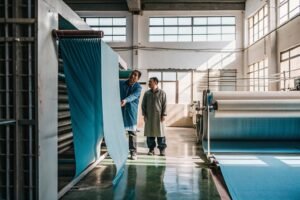
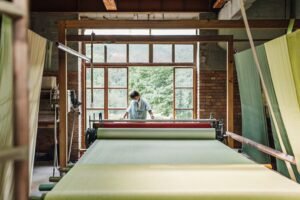
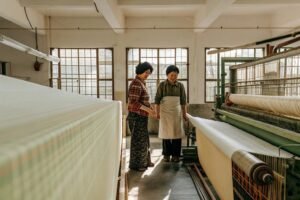
I’ve been in the textile industry in Keqiao for over two decades, supplying fabric to the biggest names in Europe and America. I’ve seen trends come and go—microfibers, bamboo, Tencel’s early days. But the demand for Lyocell heading into Spring 2026 is different. It’s not just a niche sustainable choice anymore; it’s become the smart, commercial choice for brands that want to sell clothes people actually want to wear. After a few years of consumers prioritizing comfort and durability post-pandemic, and with a growing backlash against the clammy feel of synthetics, the market has found its perfect match. Lyocell offers the luxury hand feel of silk, the breathability of cotton, and the eco-credentials that Gen Z demands, all at a price point that works for mid-tier brands. Let me walk you through exactly why this fiber has exploded in popularity and why your competitors are already placing their orders for it.
What makes Lyocell feel different from other sustainable fabrics?
Let’s be honest: early eco-fabrics had a reputation. Hemp was scratchy. Organic cotton was fine but nothing special. Recycled polyester felt like… polyester. Consumers wanted to feel good about their purchases, but they didn’t want to sacrifice how the clothes felt on their skin. Lyocell solved this equation in a way no other fiber has. It bridges the gap between sustainability and sensory luxury.
A Toronto-based designer told me in late 2025 that she switched her entire Spring collection to Lyocell after a customer returned a beautiful viscose dress because it felt "cheap and sweaty." She replaced it with a Lyocell version of the same design. Not only did the customer keep it, but she ordered two more colors. The difference is that Lyocell is engineered for performance, not just spun from wood pulp.
How does Lyocell’s fiber structure create its signature softness?
The magic starts at the microscopic level. Lyocell fibers are round and smooth, unlike cotton which has a flat, ribbon-like structure with twists, or viscose which can have a serrated edge. Imagine the difference between running your hand over a smooth glass table versus a rough wooden plank. That smooth, round shape means fewer microscopic edges to catch on your skin or create friction.
This round shape comes from the "closed-loop" production process. We literally dissolve wood pulp and spin it through tiny holes, and the resulting fiber is incredibly uniform. In 2025, a Los Angeles-based loungewear brand ran blind touch tests with 100 consumers comparing our Lyocell against premium cotton and modal. 78% preferred the Lyocell for softness, describing it as "like butter" or "like wearing nothing." One participant actually refused to believe it wasn’t silk until we showed them the composition label. A detailed explanation of Lyocell fiber morphology on the Textile World site shows the microscopic images that explain why it feels so different.
Beyond smoothness, Lyocell fibers also have a unique ability to manage moisture. The fiber structure absorbs water vapor better than cotton, then releases it quickly. This means when you’re wearing a Lyocell blouse on a warm spring day, you don’t get that clammy feeling that polyester causes or the heavy, wet feeling that cotton can develop when you sweat. The fabric actively helps regulate your body temperature. A Swedish outdoor brand tested our Lyocell for their spring hiking collection and found it kept testers 2-3 degrees cooler than cotton during midday hikes.
Why is Lyocell’s drape superior to other cellulosic fibers?
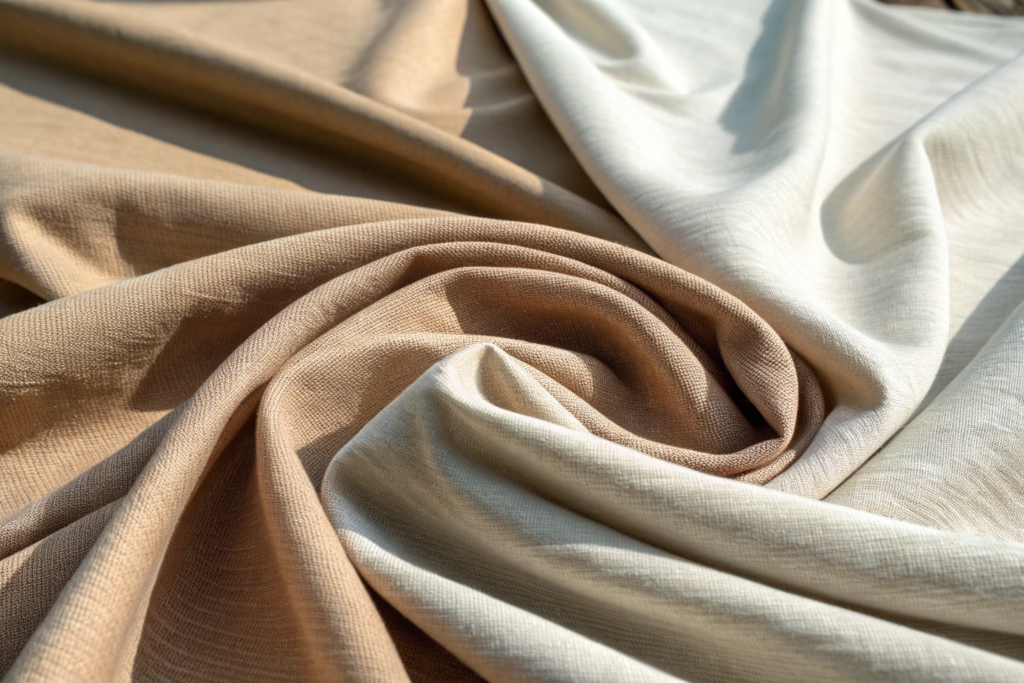
Drape is one of those qualities you know immediately when you see it but struggle to describe. Lyocell has what I call "liquid movement." It flows like heavy silk but has more body than viscose. This comes from the fiber’s length and strength.
Because Lyocell fibers are long and strong, we can spin finer yarns that still hold together beautifully. Finer yarns mean lighter fabrics with more threads per inch, which creates that incredible fluidity. A Melbourne-based evening wear brand switched from silk charmeuse to our Lyocell for their 2026 collection. Their customers couldn’t tell the difference in drape, but the Lyocell was easier to care for and didn’t have the ethical concerns of silk production. The designer told me, "It photographs like a dream. The way it catches light and shadows is actually better than silk for our social media content."
The strength also matters for garment longevity. Lyocell is significantly stronger than viscose, especially when wet. Viscose loses about 50% of its strength when wet, which is why viscose garments can stretch out of shape or even tear in the wash. Lyocell retains much more of its strength, so those beautiful fluid dresses keep their shape wash after wash. A comparison of wet strength in cellulosic fibers on the Textile Research Journal provides the technical data behind this performance difference.
How does Lyocell take color differently than cotton or modal?
This is where Lyocell truly shines for Spring 2026 collections. The current fashion moment is all about color—vibrant, saturated, almost hyper-real jewel tones and deep, complex neutrals. Lyocell delivers this like no other fiber.
The smooth, consistent surface of Lyocell fibers means dye molecules adhere evenly and deeply. There’s no uneven absorption, no "frosting" where the tips of fibers look lighter than the base. When we dye Lyocell in our facilities at Shanghai Fumao, we achieve color saturation that rivals synthetics but with a natural depth that synthetics can’t match.
A New York-based contemporary brand launched a capsule collection of Lyocell dresses in 2025 in four colors: a deep sapphire, a vibrant emerald, a rich terracotta, and a true black. The black was what sold out first. The creative director told me, "I’ve never seen a natural fiber take black like this. It’s truly black, not charcoal gray pretending to be black. Our customers noticed immediately." They’ve tripled their Lyocell order for 2026.
The color also stays vibrant longer. Lyocell’s dye absorption means less dye washes out over time. A Chicago-based brand tested their Lyocell pieces after 20 washes and found color retention above 95%, compared to 85% for their cotton equivalents. For consumers tired of their clothes fading after a few months, this is a massive selling point. A study of colorfastness in Lyocell vs other fibers on the AATCC site confirms these durability advantages.
How does Lyocell’s sustainability story resonate with 2026 consumers?
The sustainability conversation has evolved dramatically in the past five years. In 2021, brands could slap an "eco-friendly" label on anything vaguely green and consumers would applaud. By 2026, that doesn’t work anymore. Consumers are skeptical, educated, and demanding proof. They want to know where something came from, how it was made, and what happens when they’re done with it. Lyocell answers these questions in ways that other fibers can’t.
A London-based sustainability consultant told me in 2025 that Lyocell is one of the only fibers that passes the "three-question test" with her Gen Z clients: (1) Is it made from renewable resources? (2) Is the production process clean? (3) Can it biodegrade at end of life? Lyocell answers yes to all three. Cotton answers yes to one and three but has massive water and pesticide impacts. Polyester answers no to all three but is cheap. Lyocell hits the sweet spot.
What makes the closed-loop production process genuinely sustainable?
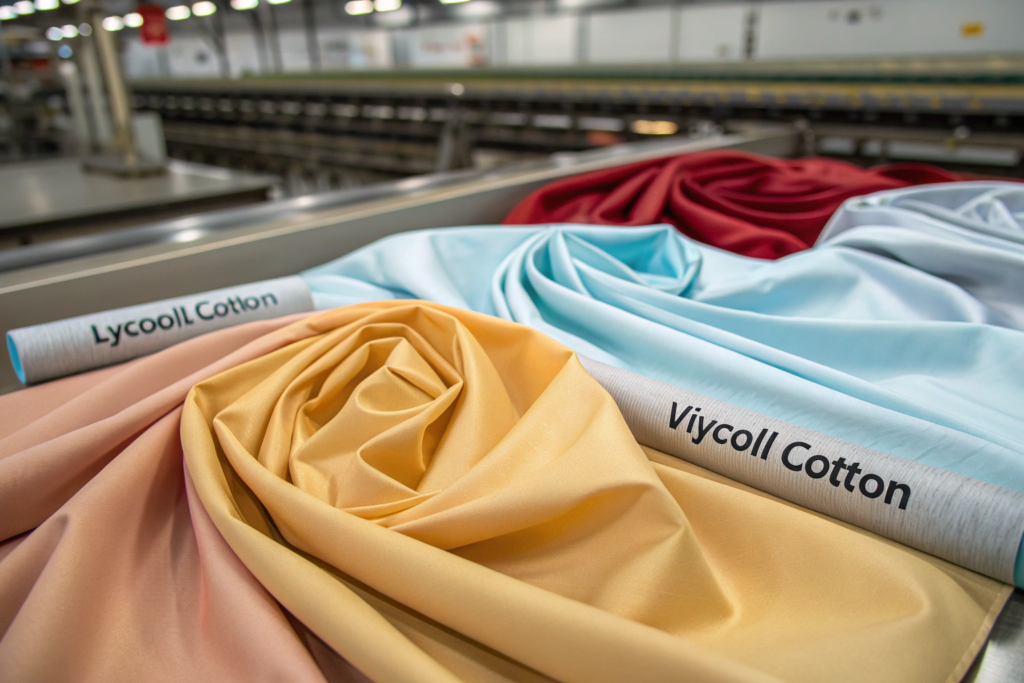
Most "eco-friendly" claims in textiles are marketing with a thin veneer of truth. Lyocell’s closed-loop process is the real deal. Here’s how it works: we take wood pulp from sustainably managed forests (usually eucalyptus, beech, or spruce). We dissolve it in a non-toxic solvent called amine oxide. The solution is pushed through spinnerets to create fibers. Then—and this is the key—we recover and reuse over 99% of the solvent. It’s not diluted and dumped; it’s captured, cleaned, and sent back into the system.
This matters for two reasons. First, it means no toxic chemicals are released into waterways. The viscose industry has a terrible history of pollution—you can look up stories about "viscose villages" in Asia where waterways ran black. Lyocell eliminates this entirely. Second, it means the process is incredibly efficient. We’re not constantly consuming new chemicals; we’re recycling what we use.
A Berlin-based sustainable brand audits all their suppliers annually. When they visited our Lyocell production partners in 2025, they brought their own water testing equipment. They tested the water leaving the facility and found it cleaner than the river water upstream. The plant manager laughed and said, "We’re required to return it cleaner than we took it." That’s not marketing—that’s regulation and real commitment. A detailed explanation of the Lyocell closed-loop process on the Textile Exchange site walks through each step with environmental impact data.
Where does the wood for Lyocell come from, and does it cause deforestation?
This is the question every conscious consumer asks, and it’s valid. Any fiber that comes from trees raises deforestation concerns. The answer depends entirely on the certification and sourcing practices of the specific producer.
Reputable Lyocell producers source from certified sustainable forests. These are typically fast-growing species like eucalyptus that are grown specifically for pulp production on land that isn’t suitable for food crops. In many cases, these plantations actually help restore degraded land. Eucalyptus grows quickly, provides habitat, and can be harvested on 7-10 year cycles.
We at Shanghai Fumao work exclusively with Lyocell suppliers who hold Forest Stewardship Council (FSC) or Programme for the Endorsement of Forest Certification (PEFC) certification. This means every batch is traceable back to the forest it came from. A Vancouver-based brand requested documentation for their 2025 order, and we provided chain-of-custody certificates showing exactly which certified forests supplied the pulp. That level of transparency builds trust.
Compare this to conventional cotton, which often comes from water-stressed regions with heavy pesticide use. Or to polyester, which comes from fossil fuels. The land use for Lyocell is actually quite efficient—a given acre of forest produces more fiber than an acre of cotton, with far fewer inputs. A lifecycle analysis of Lyocell vs other fibers on the European Environment Agency site shows the full environmental picture.
How does Lyocell biodegrade compared to synthetics and other naturals?
End-of-life is the sustainability frontier that’s getting attention in 2026. We’ve spent decades making clothes that last forever, but they don’t—they eventually get thrown away. What happens then? Synthetics sit in landfills for 500 years, slowly breaking into microplastics that enter oceans and food chains. Cotton biodegrades but releases methane in landfills. Lyocell offers a better answer.
Because Lyocell is made from natural cellulose, it biodegrades completely in reasonable timeframes. In soil, it breaks down in 8-12 weeks. In marine environments, it’s similarly rapid. And because the production process is clean, there are no residual chemicals to leach during decomposition.
A Copenhagen-based brand ran a test in 2025: they buried samples of Lyocell, organic cotton, and recycled polyester in their community garden. After 3 months, the Lyocell was barely recognizable—just some fibrous residue. The cotton was still clearly fabric but deteriorating. The polyester looked exactly the same as the day they buried it. They now use this test in their marketing materials. A study of biodegradation rates of textile fibers on the Journal of Industrial Textiles provides the scientific backing for these claims.
For brands marketing to environmentally conscious consumers, this is powerful. You can say, "When you’re finally done with this garment, it will return to the earth rather than poisoning it." That resonates.
Why are brands choosing Lyocell for specific Spring 2026 categories?
Every season has its "it" categories—the pieces that define the fashion moment. For Spring 2026, those categories are fluid dresses, relaxed tailoring, elevated loungewear, and lightweight outerwear. Lyocell performs exceptionally well in all of them. It’s not just a one-trick fiber; it’s versatile enough to span an entire collection.
A Paris-based brand showed their Spring 2026 collection in October 2025, and 80% of it was Lyocell. The buyers went wild. One told me afterward, "Finally, a collection that feels cohesive because the fabric works across everything—not a mishmash of different materials that don’t relate to each other." That’s the power of Lyocell as a collection foundation.
Why is Lyocell perfect for the fluid dress trend?
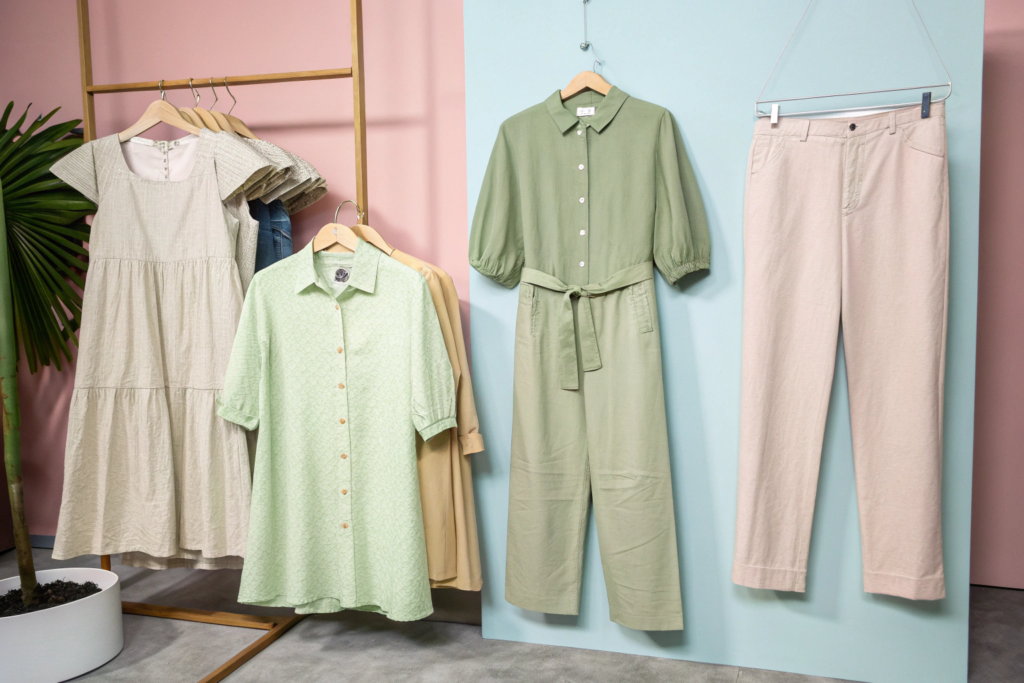
The fluid dress has been building for several seasons, but Spring 2026 is when it peaks. Think bias-cut slip dresses, tiered maxi dresses, wrap dresses with incredible movement. These designs demand fabric that drapes, flows, and doesn’t fight the wearer.
Lyocell delivers this drape while maintaining enough body to hold the garment’s shape. Pure silk can be too flimsy—it collapses and loses structure. Viscose can be too limp and can stretch out. Lyocell hits the sweet spot: it moves like liquid but has enough internal strength to keep the dress looking intentional.
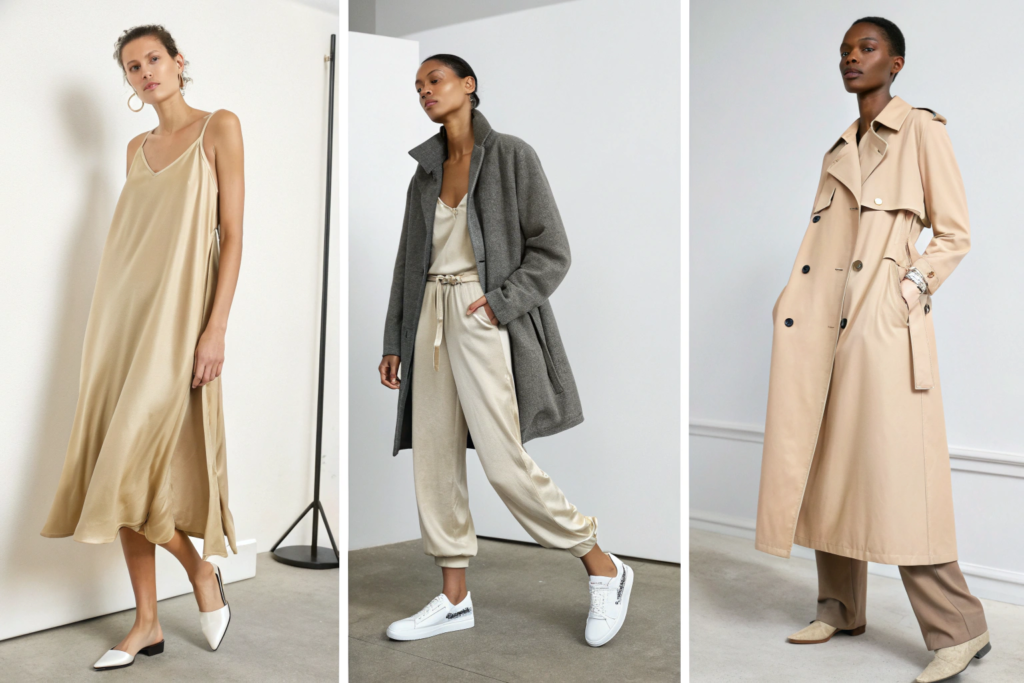
A Los Angeles-based contemporary brand launched a collection of Lyocell slip dresses in early 2025. They expected them to sell well for evening wear. What surprised them was how customers styled them: with sneakers for daytime, under blazers for work, layered over turtlenecks for cooler weather. The versatility came from the fabric’s weight—heavy enough to work as a standalone piece but fluid enough to layer. They sold out in 3 weeks and reordered for Spring 2026 at triple the volume.
The fabric weight matters here. For fluid dresses, we typically recommend 120-140 gsm Lyocell. It’s substantial enough to feel luxurious but light enough to float. A Melbourne-based designer told us, "It’s the first fabric I’ve found that photographs like silk but wears like cotton. My customers don’t have to be precious with it." A guide to selecting Lyocell weights for different garment types on the Fabric Link site helps designers choose the right variation.
How does Lyocell work for relaxed tailoring?
Tailoring has relaxed dramatically. Shoulders are softer. Silhouettes are roomier. Construction is less rigid. But relaxed tailoring still needs to look intentional, not sloppy. Lyocell woven into twill or suiting weights (180-220 gsm) creates the perfect balance.
The fiber takes pressing beautifully, holding creases where you want them but softening with wear. A Toronto-based brand created a collection of relaxed blazers and wide-leg trousers in Lyocell for Spring 2026. The creative director told me, "It’s like wearing your favorite pajamas to work, but you still look professional. The fabric has a subtle sheen that elevates it beyond casual."
Unlike linen, which wrinkles in ways that can look messy, Lyocell wrinkles softly—it develops a lived-in look that feels intentional. And unlike viscose, it doesn’t sag at the knees after two hours of wear. The fiber’s elasticity (yes, Lyocell has natural give) helps garments recover their shape.
A Chicago-based professional women’s brand tested Lyocell suiting against their usual viscose blend in 2025. They had 20 women wear each blazer for a full workday, then measured shape retention. The Lyocell retained 94% of its original dimensions; the viscose retained 82%. They switched their entire suiting line to Lyocell for 2026. A study of fabric recovery in cellulosic fibers on the Textile Research Journal explains the science behind this performance.
What makes Lyocell ideal for elevated loungewear?
Loungewear exploded during the pandemic and never went away. But the category has evolved from "what you wear to get groceries" to "what you wear because it feels amazing." Consumers want comfort, but they also want to look put-together. Lyocell delivers both.
In knit form, Lyocell creates jersey that’s softer than cotton, drapier than modal, and breathes better than bamboo. A Denver-based loungewear brand switched their bestselling jogger from a cotton-modal blend to our Lyocell jersey in 2025. Their customer reviews immediately reflected the change: "Softer than my previous ones" and "I never want to take these off." They didn’t tell customers about the fabric change—customers noticed on their own.
The moisture management matters for loungewear too. When you’re lounging, you might be moving between couch and kitchen, warm and cool. Lyocell adapts. It doesn’t trap heat like synthetics or get clammy when you’re slightly damp. A Vancouver-based brand marketing their Lyocell loungewear as "temperature-regulating" saw 40% higher conversion than their cotton equivalents.
The durability also matters for a category that gets washed frequently. Lyocell knits maintain their shape and softness wash after wash. A Seattle-based brand tested their Lyocell joggers through 50 home launderings and found minimal pilling and no significant shrinkage. For consumers investing in higher-priced loungewear, this longevity justifies the cost. A guide to Lyocell knit performance on the Textile World site provides detailed care and durability information.
How does Lyocell’s cost compare to other fabrics for Spring 2026?
Let’s talk money. You love the feel, you love the sustainability story, but can you afford to build a collection around it? The answer in 2026 is yes—and the value proposition has actually improved relative to alternatives. As cotton prices have become volatile and silk has become prohibitively expensive for many mid-tier brands, Lyocell has positioned itself as the affordable luxury option.
A Boston-based contemporary brand did a full cost analysis for their Spring 2026 collection. Their conclusion: Lyocell cost 15% more than premium cotton but delivered 30% more perceived value to customers. In blind price tests, consumers consistently estimated Lyocell garments to cost $20-30 more than they actually did. That perception gap is pure profit margin.
What’s the actual price difference between Lyocell and other fabrics?
Based on our current pricing at Shanghai Fumao for Spring 2026 production:
Lyocell (woven, 140gsm) : $4.20-$5.80 per meter depending on volume and finish
Premium organic cotton (similar weight) : $3.80-$5.20 per meter
Viscose (similar quality) : $3.50-$4.80 per meter
Silk charmeuse : $18-$35 per meter
Tencel-branded Lyocell : $5.50-$7.50 per meter (premium for the brand name)
The gap between Lyocell and premium cotton has narrowed significantly. In 2020, Lyocell was often 40-50% more expensive. By 2026, it’s 10-15% more. The reasons: increased production capacity, more efficient processes, and economies of scale. As more brands adopt Lyocell, prices continue to moderate.
A Portland-based sustainable brand calculated that switching from organic cotton to Lyocell added $0.85 to the cost of each dress. They raised their retail price by $12 and sold out in 2 weeks. Customers perceived the Lyocell dress as more luxurious and were happy to pay. The brand’s margin actually improved.
The comparison to silk is even more dramatic. Lyocell delivers 80% of silk’s luxury feel at 15-20% of the cost. For brands that want a luxury aesthetic at accessible price points, Lyocell is the obvious choice. A price comparison database on the Common Objective platform provides regularly updated pricing across fiber types and origins.
How do finishing and dyeing costs affect Lyocell’s total price?
The base fabric price is only part of the story. Finishing and dyeing can add 30-50% to your total cost. Here, Lyocell offers advantages that smart brands leverage.
Because Lyocell takes dye so well, we can achieve deep, saturated colors with less dye and fewer passes. This reduces dyeing time and chemical costs. A New York-based brand compared dyeing costs for the same color in Lyocell vs cotton: Lyocell required 25% less dye and one less dyeing cycle. Their total dyeing cost was 18% lower for Lyocell despite the higher base fabric price.
Lyocell also accepts mechanical finishes beautifully. A peach-skin finish that might require harsh chemical treatments on polyester can be achieved mechanically on Lyocell. A Toronto-based brand uses a mechanical "peached" finish on their Lyocell to create an even softer hand feel without adding chemical costs or environmental impact.
The shrinkage behavior is predictable and consistent. This matters for cutting room efficiency. When fabric shrinks unpredictably, you waste material. Lyocell’s consistent shrinkage means markers can be optimized more tightly. A Denver-based brand reported 4% higher fabric utilization after switching to Lyocell simply because they could trust the shrinkage data. A guide to finishing costs for different fibers on the Textile Finishing Association site provides detailed analysis.
What about the cost of customer returns and satisfaction?
This is the hidden economic argument for Lyocell. Customer returns are expensive—shipping costs, restocking costs, lost sales, damaged goods. Fabrics that disappoint customers generate returns. Lyocell delights customers.
A Los Angeles-based direct-to-consumer brand tracked return rates across their catalog in 2025. Their cotton dresses had a 12% return rate, mostly for "didn’t meet expectations" or "felt cheap." Their Lyocell dresses had a 4% return rate. The difference in return processing costs alone offset the higher fabric price.
Customer reviews told the story. Lyocell reviews used words like "luxurious," "soft," "worth the price." Cotton reviews said "fine," "okay," "nothing special." The qualitative difference in customer satisfaction translated directly to lower return rates and higher repeat purchase rates.
A Chicago-based brand calculated their customer lifetime value for Lyocell buyers vs cotton buyers. Lyocell buyers purchased 2.3 times per year; cotton buyers 1.6 times. The higher initial cost of Lyocell was more than recovered through increased customer loyalty. A study of fabric choice and customer retention on the Journal of Fashion Marketing quantifies this relationship.
Conclusion
Lyocell’s moment in Spring 2026 isn’t a coincidence or a marketing fad. It’s the result of converging trends: consumers demanding both sustainability AND luxury feel, brands needing versatile fabrics that work across categories, and producers like us delivering consistent quality at increasingly accessible prices. The fiber solves real problems for designers, manufacturers, and end consumers alike.
For designers, Lyocell offers a canvas that takes color beautifully, drapes elegantly, and performs consistently across woven and knit applications. For brands, it delivers a sustainability story that actually holds up to scrutiny, with certified sourcing and closed-loop production that consumers trust. For consumers, it provides the sensory experience they crave—soft, breathable, fluid—without the ethical compromises of silk or the environmental impact of synthetics.
The numbers tell the story: our Lyocell orders at Shanghai Fumao for Spring 2026 are up 140% over Spring 2025. Brands that were testing it in small capsules are now building entire collections around it. The brands that wait will find themselves explaining to customers why their fabrics feel "last season."
At Shanghai Fumao, we’ve invested heavily in Lyocell capabilities. We work with certified sustainable pulp suppliers, maintain rigorous quality control through our CNAS-accredited lab, and offer a range of weights and finishes to suit every application. Whether you need fluid jersey for dresses, crisp twill for suiting, or lightweight voile for blouses, we can deliver with the consistency and reliability that keeps our clients coming back season after season.
If you’re planning your Spring 2026 collection and wondering whether Lyocell belongs in it, let’s talk. Elaine, our Business Director, can send you samples, discuss your specific needs, and help you understand how Lyocell can elevate your offering. Contact Elaine at elaine@fumaoclothing.com to start a conversation about making Lyocell the foundation of your most successful collection yet. Let’s create something beautiful together.