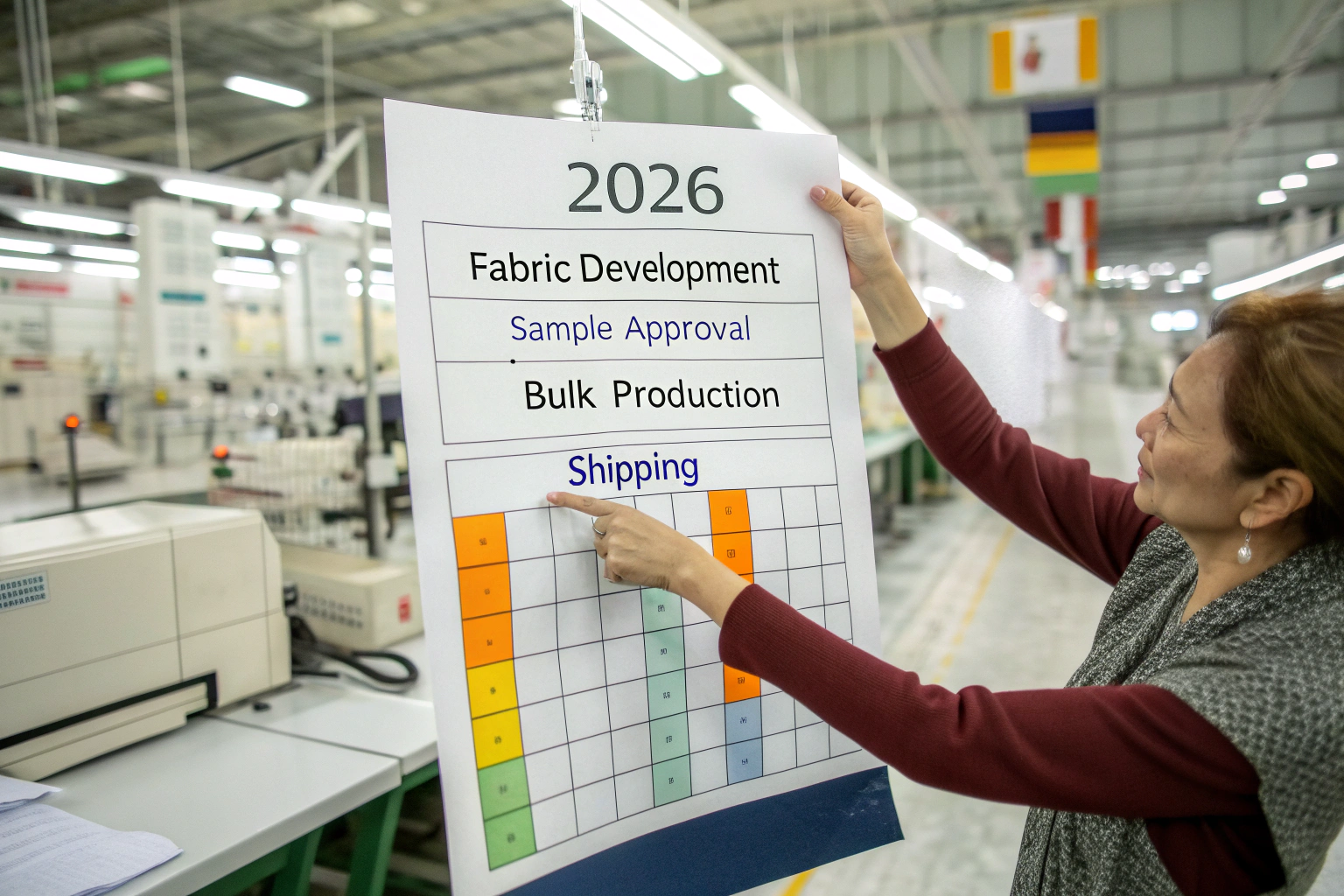
You’re sitting in your studio in Los Angeles, planning your Spring 2026 collection, and you need to know: when should I place my orders? Get it wrong and you’re either sitting on inventory that arrived months early, paying rush fees that destroy your margins, or watching your launch window disappear while you wait for fabric that’s stuck in production. I’ve had this conversation with hundreds of designers, and the answer keeps changing as the industry evolves.
Here’s the reality for 2026: lead times aren’t returning to pre-pandemic norms. The era of 60-day turnarounds from sketch to shipment is gone for most custom products. In 2026, smart buyers are planning 90-120 days for complex custom women’s wear, with flexibility built into every stage. Based on our production schedules at Shanghai Fumao and our partners in garment manufacturing, I can give you the real picture of what to expect and how to plan.
How does fabric selection impact my 2026 lead time?
You fall in love with a fabric at a trade show. It’s perfect—the drape, the hand feel, the color. You order it for your collection. Then you discover it’s a custom development that requires 10 weeks just for fabric production, plus another 6 weeks for garment manufacturing. Your 4-month timeline just became 6 months, and your collection misses the season. This scenario plays out constantly because designers don’t understand that fabric IS the timeline.
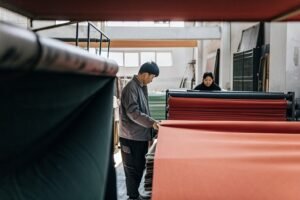
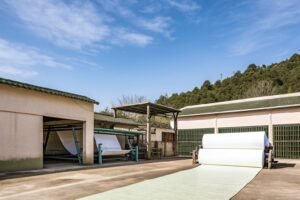
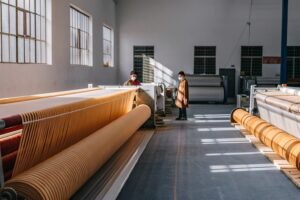
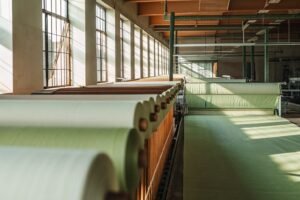
In 2026, the biggest variable in your lead time isn’t sewing—it’s fabric. Basic fabrics in stock colors might ship in 2-3 weeks. Custom developments with unique yarns, blends, or finishes can take 10-14 weeks before a single garment is cut. The difference between choosing a stock fabric and developing something exclusive can add 8 weeks to your timeline. A Melbourne-based designer learned this in late 2025 when her custom organic cotton slub took 12 weeks instead of the promised 6 because the spinner had yarn shortages. Her collection arrived after the summer selling window.

What are the actual lead times for different fabric types in 2026?
Let me break down what we’re seeing at Shanghai Fumao for 2026 production:
Basic stock fabrics (solid colors, standard constructions) : 2-4 weeks for fabric production. These are fabrics we run regularly, with yarns available and dye formulas established. A Toronto-based basics brand orders these constantly and counts on 3-week fabric turns.
Standard fabrics in custom colors: 4-6 weeks. We have to source yarn, schedule dyeing, and run production specifically for you. The color matching process alone takes 5-7 days for lab dips and approvals.
Custom constructions with standard yarns: 6-8 weeks. If you’re developing a unique weave or knit structure using available yarns, we need time to set up looms or knitting machines, run trials, and perfect the construction.
Full custom developments (specialty yarns, unique finishes) : 10-14 weeks. This is where we’re sourcing specific yarns (sometimes spun to order), developing finishes, running multiple trials, and perfecting the final product. A Denver-based outdoor brand’s 2026 technical shell fabric required 14 weeks from concept to first meter. They planned for it and hit their window perfectly.
Sustainable and certified materials: Add 2-4 weeks to any timeline. GOTS certification, recycled content verification, and other eco-credentials require documentation and sometimes third-party testing that extends timelines. A comprehensive fabric lead time guide on the Textile Exchange site provides detailed benchmarks for different categories.
Why are sustainable fabrics taking longer in 2026?
The demand for sustainable fabrics has exploded, but the supply chain hasn’t caught up. In 2026, recycled yarns, organic cottons, and innovative bio-based materials face significant capacity constraints. Spinners who produce recycled polyester are booked months in advance. Organic cotton growers are struggling with climate impacts. Certification bodies are backlogged.
A London-based sustainable brand learned this in early 2026. They ordered GOTS-certified organic cotton jersey expecting our standard 5-week timeline. What they didn’t know: their specific GOTS-certified yarn supplier had a 4-week queue just for yarn spinning. The fabric took 9 weeks total. They’ve now adjusted their planning to add 3 weeks for any certified material. A analysis of sustainable material lead times on the Common Objective platform shows which eco-fabrics face the longest delays.
How do fabric finishing requirements extend timelines?
Finishing is where fabric becomes special—and where timelines stretch. Basic finishing like sanforizing (pre-shrinking) adds 3-5 days. Complex finishes like peach-skin softening, water-repellent coatings, or anti-microbial treatments can add 10-14 days each. Multiple finishes stack.
A Chicago-based activewear brand wanted a fabric with moisture-wicking, anti-microbial, and UV-protective finishes in 2025. Each finish required separate treatment with drying and testing between. Total finishing time: 18 days, almost three weeks just for the final stage. Their original timeline didn’t account for it, and they had to air-freight to recover. We now walk every client through a detailed finishing schedule before quoting. A guide to fabric finishing processes and timelines on the Textile World site helps designers understand what they’re requesting.
What sample and approval stages add hidden time?
You send your tech pack, the factory sends a sample in 2 weeks, you love it, you approve it, production starts. That’s the dream. The reality is that most collections go through 2-4 sample rounds, each taking 10-20 days, with approval delays in between that you don’t count. By the time you finally approve the production sample, 8 weeks have passed and you haven’t cut a single production garment.
The hidden time isn’t in the factory’s sample making—it’s in your review process, the shipping between, and the communication back and forth. A Paris-based contemporary brand we work with tracked their 2025 sample timelines and discovered that 60% of the elapsed time was between sample receipt and their feedback, not between order and sample delivery. They changed their process and cut 3 weeks off their lead times immediately.

How many sample rounds should I expect for custom women’s wear?
For simple styles with standard fabrics and minimal details: 2 rounds. First sample for fit and construction, second sample to confirm corrections. Total sample time: 3-4 weeks.
For moderate complexity: 3 rounds. Fit sample, construction sample, production sample. Add 2 weeks for the extra round. Total: 5-6 weeks.
For high complexity (structured tailoring, intricate details, custom developments): 4+ rounds. Each iteration reveals new issues. A New York-based evening wear brand needed 5 sample rounds for a complex beaded gown in 2025. The sample process took 14 weeks. They planned for it and still hit their red carpet deadline.
The key is to be realistic. Don’t assume you’ll nail it in one round. Build multiple rounds into your timeline and celebrate when you need fewer. A sample round planning tool on the Fashion Incubator site helps calculate realistic timelines based on your product complexity.
What causes the biggest delays in sample approval?
From our experience with hundreds of clients, these are the top delay drivers:
Incomplete tech packs. When your first sample arrives and we discover your tech pack didn’t specify seam finishes or pocket construction, we have to stop, ask questions, wait for answers, then re-sample. That’s 2-3 weeks lost. A Seattle-based brand reduced their sample rounds from 4 to 2 simply by using our tech pack checklist before sending.
Slow feedback loops. You receive a sample on Monday. It sits on your desk until Friday while you’re busy. You send feedback Friday night. We get it Monday (time zones). We interpret and start corrections Tuesday. That 4-day delay in your hands added 8 days to the timeline. The most successful brands we work with have a rule: samples get reviewed within 24 hours of receipt.
Vague feedback. "The fit feels off" tells us nothing. "The shoulder seam should extend 1.5cm further and the armhole needs 0.5cm more ease" tells us exactly what to fix. A Toronto-based brand now includes photos with markups and specific measurements in every feedback email. Their correction samples are right the first time. A guide to effective sample feedback on the Sewport blog shows how to communicate clearly.
What’s the real timeline for pattern grading and marker making?
Once your sample is approved, the factory needs to grade the pattern to all sizes and create markers for cutting. This is invisible time that every buyer forgets. In 2026, with skilled pattern makers in high demand, grading can take 5-10 days for a full size range.
A Vancouver-based brand was shocked in 2025 when their approved sample took 12 days to grade and mark. They’d assumed it happened overnight. The reality: their pattern was complex, their size range was wide (XXS-3XL), and the factory’s grading team was backed up. We now advise clients to ask specifically: "How long for grading after sample approval?" before committing to timelines.
Digital pattern transmission helps. If you provide graded digital patterns in the factory’s required format, you can save 3-5 days. But most independent designers don’t have this capability, so build the time in. A guide to pattern grading timelines on the Pattern Making Academy site explains the variables.
How do 2026 production schedules differ from previous years?
The post-pandemic manufacturing world has new rhythms. Labor shortages, energy costs, and raw material volatility have changed how factories schedule work. In 2026, you can’t just place an order and expect production to start next week. Factories are booking capacity months in advance, especially for complex women’s wear that requires skilled operators.
A Copenhagen-based brand learned this in early 2026 when they placed an order with their usual factory and were told "we can start in 8 weeks." In 2019, it would have been 2 weeks. The factory now books production slots like hotels book rooms. If you’re not on the schedule, you wait. The brands who succeed in 2026 are those who book production capacity BEFORE samples are approved, based on estimated timing.

Why are factories requiring longer production lead times in 2026?
Three factors drive longer production timelines in 2026:
Skilled labor shortage. The pandemic drove many experienced garment workers out of the industry. They didn’t come back. Training new workers takes time, and they’re slower at first. A factory that could produce 10,000 units per week in 2019 might only manage 7,000 in 2026 with the same number of workers. Everything takes longer.
Energy cost volatility. Factories in China and throughout Asia face unpredictable energy costs and sometimes supply restrictions. Production scheduling now includes buffers for potential energy-related slowdowns. A Guangzhou-based factory we work with adds 2 weeks to every quoted timeline as an energy contingency.
Raw material unpredictability. Yarn supplies, dye availability, and chemical inputs are less reliable than pre-pandemic. When we quote 8 weeks for fabric, we’re building in 2 weeks of buffer for material delays that were rare five years ago. A analysis of 2026 manufacturing capacity constraints on the McKinsey Apparel CPO survey shows how these factors affect global lead times.
What’s the difference between quoted and actual production time in 2026?
Honest factories quote conservative timelines and deliver early. Unrealistic factories quote aggressive timelines and deliver late. In 2026, the gap between optimistic quotes and reality has widened.
We track our actual performance against quotes. In 2025, our average fabric production took 6.2 weeks against quoted 5.5 weeks—about 12% over. The overage came from unexpected yarn delays, equipment maintenance, and one major power outage. We now quote 7 weeks for what we used to quote 5, and we deliver on time or early.
A Boston-based brand told us in early 2026 that another supplier had quoted 4 weeks for custom fabric. We quoted 7. They went with the other supplier. The fabric arrived in 9 weeks, missing their production window. They’re now our client, and they’ve learned that realistic quotes protect their business. A study of quoted vs actual lead times in apparel sourcing on the Journal of Supply Chain Management site shows that the gap has widened across the industry.
How do Chinese holidays affect 2026 production schedules?
The 2026 calendar has specific challenges. Chinese New Year falls on February 17, 2026. That means factories will begin shutting down around February 5-7, with production stopping by February 10. Operations won’t fully resume until late February or early March. That’s 3-4 weeks of lost production time.
Golden Week is October 1-7, 2026, with disruptions 3-4 days before and after. Another 2 weeks of reduced capacity.
A Stockholm-based brand planning a Spring 2027 collection needs to understand that if their fabric order hits in February 2026, they’re waiting until March. They should either ship earlier or plan for later delivery. We’re already booking 2026 production slots with clients who understand this. A 2026 Chinese holiday calendar for sourcing professionals on the China Briefing site shows exact dates and recommended shipping windows.
How can I build a realistic 2026 production timeline?
You now have all the pieces: fabric lead times, sample rounds, production schedules, holiday impacts, shipping variables. The question is how to assemble them into a timeline that actually works. After helping hundreds of clients plan their collections, I’ve developed a formula that prevents missed deadlines and rushed production.
The biggest mistake I see is linear thinking. Designers add fabric time to sample time to production time to shipping time and call it done. But these stages overlap, and delays cascade. The successful approach is parallel planning with buffers at every stage. A Sydney-based brand now plans 120 days for what they used to plan 90, and they’ve stopped missing delivery windows entirely.

What does a realistic 2026 timeline look like for different product types?
Let me give you specific examples based on what we’re actually seeing:
Simple women’s wear (basic t-shirts, leggings, casual dresses) with stock fabric:
- Fabric production: 3 weeks (stock fabric)
- Sample rounds (2): 4 weeks (overlaps with fabric)
- Pattern grading: 1 week
- Bulk production: 3 weeks
- Shipping: 3 weeks (sea freight)
- Buffer: 2 weeks
- Total: 13-14 weeks from order to delivery
Moderate complexity (woven blouses, tailored pants, simple jackets) with custom color fabric:
- Fabric development: 5 weeks (custom color)
- Sample rounds (2-3): 6 weeks
- Pattern grading: 1 week
- Bulk production: 4 weeks
- Shipping: 3 weeks
- Buffer: 3 weeks
- Total: 18-20 weeks
High complexity (structured jackets, evening wear, technical outerwear) with custom fabric:
- Fabric development: 10 weeks (custom construction)
- Sample rounds (3-4): 10 weeks
- Pattern grading: 2 weeks
- Bulk production: 6 weeks
- Shipping: 3 weeks
- Buffer: 4 weeks
- Total: 28-32 weeks
A Denver-based outerwear brand used this framework for their 2026 collection and hit every delivery window. They started planning 8 months ahead instead of 4. A production timeline calculator on the Sourcing Journal site helps you build your own based on your specific product.
How do I overlap stages to save time?
Smart overlapping is how professional buyers compress timelines without risking quality. Here’s what works:
Start fabric development BEFORE final samples are approved. If you’re reasonably confident in your design, start fabric production based on preliminary specifications. If the sample requires minor changes, fabric can often be adjusted. A Toronto-based brand saved 4 weeks on their 2025 collection by starting fabric production at the second sample stage instead of waiting for final approval.
Book production capacity BEFORE samples are finished. When your second sample looks promising, ask the factory to reserve production slots based on your estimated timing. If you wait until final approval, the slots may be gone. A London-based brand now books tentative production 6 weeks before samples are finalized, with cancellation clauses if things change.
Arrange shipping logistics DURING production, not after. Book space with freight forwarders as soon as production starts. If you wait until fabric is finished, you’ll wait for the next available vessel. A guide to production-shipping overlap on the Logistics Bureau site shows how to coordinate these stages.
What buffer should I add to protect against 2026 uncertainties?
In 2026, buffers aren’t optional—they’re essential. Based on our 2025 experience, here are recommended buffers for different stages:
Fabric production: Add 20% to quoted time. If a factory quotes 5 weeks, plan for 6.
Sample rounds: Add 1 week per round for your own review time. If you think you’ll respond in 2 days, plan for 5.
Bulk production: Add 15% to quoted production time for unexpected delays.
Shipping: Add 1 week to quoted transit for port congestion and delays.
Total buffer: Build at least 3-4 weeks of total timeline buffer beyond the sum of all stages.
A Melbourne-based brand added zero buffer to their 2025 timeline, assuming everything would go perfectly. Nothing went perfectly. Their collection arrived 5 weeks late and missed the season. For 2026, they’re building 4 weeks of buffer and sleeping better. A risk assessment tool for production timelines on the Fashion Risk Management site helps determine appropriate buffers for your specific situation.
Conclusion
Production lead times for custom women’s wear in 2026 are longer, less predictable, and require more planning than ever before. The days of 60-day turnarounds are gone for most custom products. But this isn’t bad news—it’s just reality. The brands who succeed in 2026 will be those who embrace longer timelines, build in realistic buffers, and treat planning as a competitive advantage rather than an annoyance.
The formula is simple: understand your fabric’s true lead time, budget for multiple sample rounds, book production capacity in advance, overlap stages where possible, and add buffer for the unexpected. Plan 4-6 months for simple products, 5-7 months for moderate complexity, and 7-9 months for complex custom developments. Start earlier than feels comfortable. Your future self will thank you.
At Shanghai Fumao, we’ve built our 2026 planning around helping clients navigate this new reality. Our integrated model—controlling fabric from yarn to finished roll—reduces one of the biggest variables in your timeline. Our relationships with ethical garment factories mean we can help you book production capacity months in advance. Our logistics team navigates the shipping chaos so you don’t have to. We don’t just make fabric; we help you plan collections that actually arrive on time.
If you’re planning your 2026 collections and want to avoid the stress of missed deadlines, let’s talk. Elaine, our Business Director, has helped hundreds of brands build realistic production timelines that work. She can review your collection plan, identify where timelines might stretch, and help you build a schedule that protects your launch windows. Contact Elaine at elaine@fumaoclothing.com to start a conversation about making your 2026 production actually work. Let’s build something beautiful together, on time and on budget.