
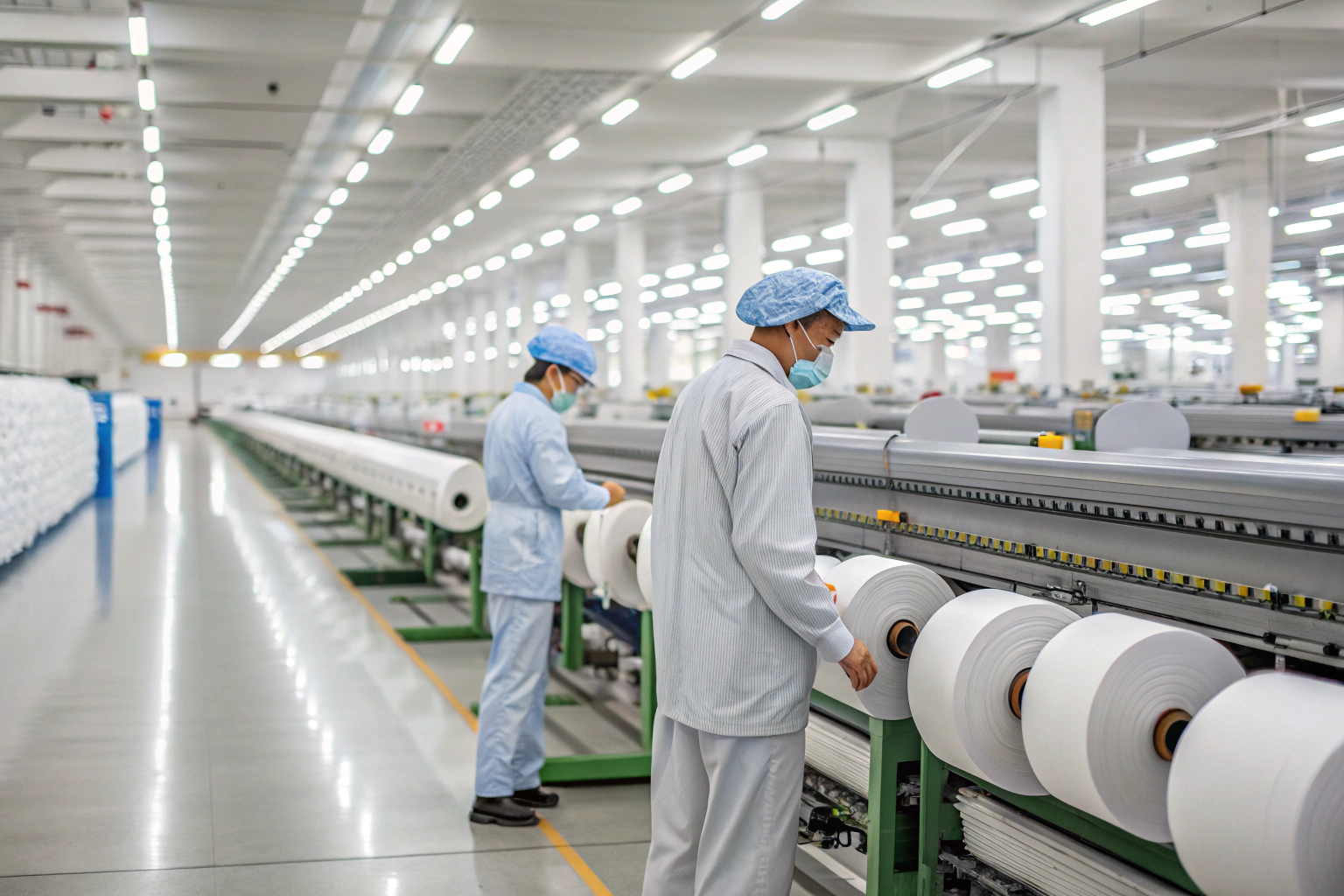
I get this question every single day in my inbox, and honestly, I’ve been asking it myself for the past 20 years. You’re probably worried about getting scammed, dealing with poor quality, or losing your money to a factory that doesn’t exist. I’ve seen buyers lose sleep over shipping delays, and I’ve watched startups fail because their supplier couldn’t deliver on time. It’s a jungle out there.
The short answer is: you find reliable manufacturers in China’s established textile clusters, not just on Google. For 2026, the most dependable partners are those with vertical integration, digital traceability, and a proven track record of navigating global trade shifts. They are located in places like Keqiao, the Pearl River Delta, and they hold certifications like SGS, ITS, and have CNAS-accredited labs in-house. It’s about verifying the physical infrastructure, not just the website.
But I know just naming cities isn’t enough. You want a strategy. You want to know exactly where to look, how to vet them, and how to make sure they don’t mess up your production timeline, especially with all the tariff talk and shipping chaos we are seeing lately. As the owner of a manufacturing and trading company right here in Keqiao, I’ve seen the good, the bad, and the ugly. Let me walk you through exactly how we, and other reliable partners, operate so you can find your perfect match for 2026.
How do Chinese factory schedules impact my delivery timeline?
Imagine you finally place your deposit, the factory confirms the order, and then… silence. Two weeks later, they tell you they are shutting down for Chinese New Year and your order is stuck. This happens way too often. When you’re buying from China, you aren’t just buying fabric or garments; you’re buying into a specific production rhythm that revolves around holidays and peak seasons. Ignoring this is the fastest way to miss your launch date.
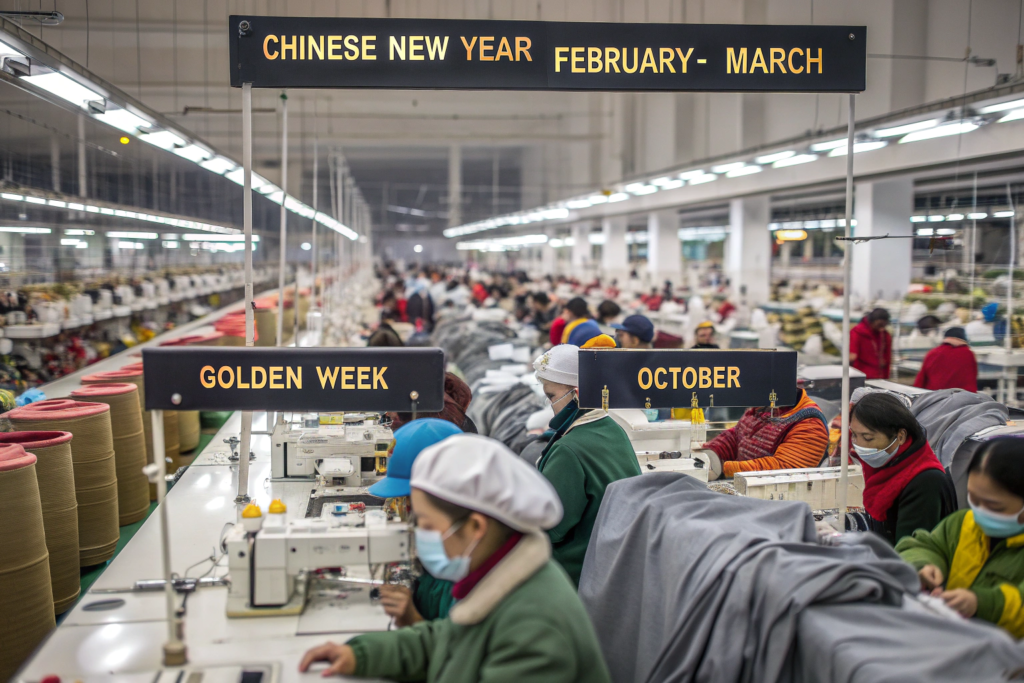
Chinese manufacturing runs on a cycle. You have two major peaks (March-May and August-October) where everyone is rushing, and two major shutdowns (Chinese New Year for 3-4 weeks and Golden Week for 1 week). For 2026, understanding these patterns is your secret weapon. If you plan your orders around the slower periods (June-July, November-December), you can actually cut your lead times by 2-3 weeks compared to peak season.
Let’s get specific. I’m not just talking theory here. I live this calendar. Our weaving looms run 24/7, but even we have to schedule around these realities. To really optimize your production scheduling, you have to look at the details. Here is a breakdown of what 2026 looks like for us at Shanghai Fumao.
Why is Chinese New Year 2026 a critical deadline for my orders?
Chinese New Year in 2026 falls on February 17th. But the shutdown doesn’t start that day. Factories start winding down about a week before as migrant workers head home. This means the real cutoff for production is late January. I always tell my clients, especially those in the US worried about tariffs, that they need to complete pre-production 6 weeks before the holiday. Just last month, I was helping a European fashion brand finalize their wool-blend orders specifically to beat this deadline. They sent their tech packs and fabric approvals in early December, ensuring we secured the greige goods before the mills stockpiled. When we reopen, their fabric is the first on the frames. This proactive approach is the difference between a 4-week delay and a seamless Q2 launch. You can read more about how to navigate these logistical hurdles on the U.S. Fashion Industry Association blog for real-world importer experiences. For the technical side of getting your fabric specs right the first time, check out this detailed guide on fabric quality control checkpoints from a third-party inspector.
Can ordering during slower periods really save me money?
Absolutely. During June-July and November-December, factories aren’t desperate for work, but they have capacity. This is when we can actually optimize our production scheduling to benefit the buyer. For example, in the summer months, dye houses aren’t as backlogged, so we can offer rush services without the usual premium. I remember a client from Sweden who needed a specific run of organic cotton jersey. Instead of the standard 45 days, we delivered in 28 days simply because we scheduled it during our "slow" window in July. (Here’s a pro tip: slow periods are also great for testing new developments. We have more time for sampling and adjustments). You get faster turnaround and sometimes even better attention to detail. For insights on how global shipping lanes affect these timelines, especially concerning US tariffs, I recommend following the Journal of Commerce (JOC) online, they break down the container shipping rates and capacity issues that often compound factory delays.
Which fabric manufacturers offer the best quality control for US buyers?
Price is easy to compare. Quality is not. I’ve had potential clients send me photos of fabric they bought from another supplier where the shade variation was so bad it looked like two different orders. For a US buyer, returning that fabric costs a fortune, and you often miss your selling window. So, how do you find a manufacturer that actually cares about quality as much as you do?
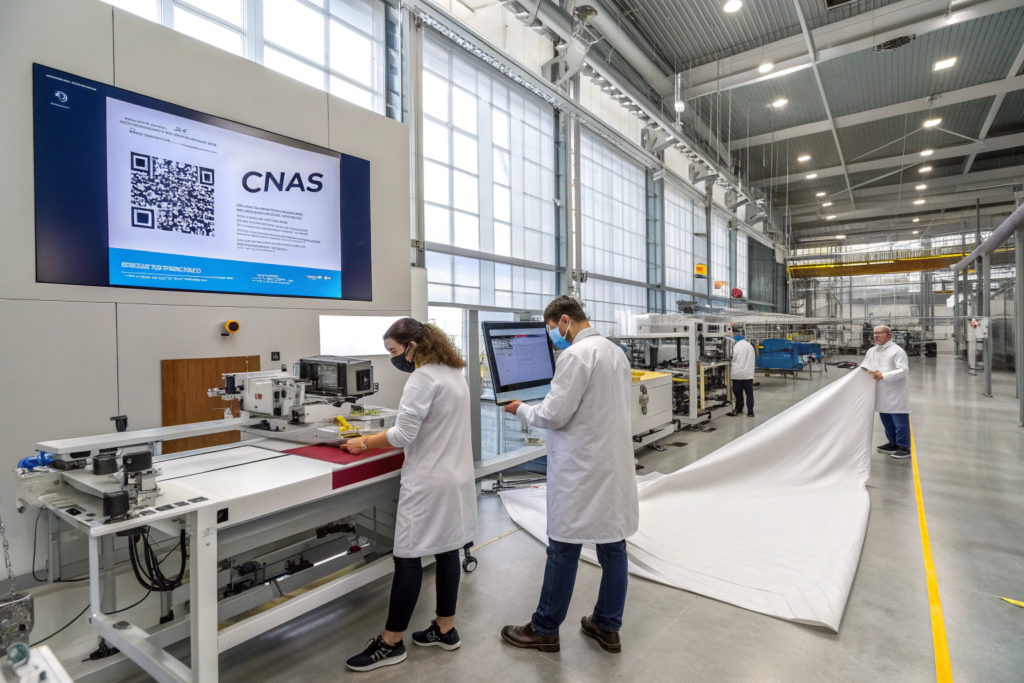
The best quality control for US buyers isn’t found in a promise; it’s found in a process. Look for manufacturers with in-house, CNAS-accredited testing labs. If they can test for colorfastness, shrinkage, and tensile strength on-site before the fabric is even rolled, you’ve found a partner who prioritizes prevention over inspection. At Shanghai Fumao, we use QR code tracking so our clients can see the test data for their specific batch in real-time. That’s the level of transparency you need for 2026.
Quality control in China has evolved. It’s not just about hiring an inspector at the end of the line. It’s about controlling the raw materials. For US buyers dealing with strict CPSIA requirements or PFAS regulations, you need a supplier who understands the chemistry. Let’s break down the tangible things you should ask for.
What specific certifications should a reliable fabric supplier have?
Don’t just ask if they have a certificate. Ask to see the latest test reports. For 2026, the key certifications are for product safety and sustainability. We hold GOTS and OCS for organic cotton, and we regularly test to OEKO-TEX Standard 100. But for US clients, the big one is compliance with CPSIA, especially for children’s wear. I always send our clients the test reports for lead and phthalates. For example, last year, we had a buyer from New York who was sourcing how to source GOTS certified organic cotton from China. We didn’t just show our certificate; we walked them through our entire supply chain, from the yarn supplier to the finished roll, proving the chain of custody. For a deeper dive into the differences between these certifications, check out this unbiased comparison on the Common Objective platform, it’s a great resource for fashion professionals.
How do I verify a factory’s development capacity before ordering?
You test them with a challenge. A simple stock fabric order tells you they have fabric. A complex development order tells you they have skill. I once had a client ask for a self-cleaning coating on a bamboo-cotton blend. It wasn’t something we did every day, but we took it to our R&D team. We sent them samples with three different application methods and documented the performance data. That’s how you verify capacity. You ask them to solve a problem. If they come back with excuses, walk away. If they come back with samples and data, you’ve found a partner. You can learn more about fabric development processes by browsing the technical articles on the Textile World magazine website. They often cover new finishing technologies that innovative suppliers should be aware of.
What are the hidden costs when shipping fabric from China to the USA in 2026?
You get the quote: $2.50 per yard. You do the math, place the order, and then the invoices start piling up. Freight, insurance, duties, trucking, warehousing fees… Suddenly, your landed cost is 40% higher than you planned. I hate it when this happens to my clients, because it feels like we didn’t communicate clearly. The truth is, the fabric price is just the beginning.
The hidden costs for US buyers in 2026 will revolve around three things: US tariffs, demurrage and detention charges at the ports, and the cost of money (interest rates). A reliable manufacturer helps you mitigate these. We don’t just sell fabric; we advise on HS codes to minimize duty, we pack containers to maximize volume (reducing per-unit freight), and we help you time your shipments to avoid peak surcharges.
Let’s put some real numbers to this. When a client asks me for a quote, I now automatically include a section on logistics. I’m not a freight forwarder, but after 20 years, I know the patterns. Here’s what you need to factor into your budget for 2026.

How are US tariffs affecting the cost of Chinese textiles?
Tariffs are a moving target, but they aren’t going away. The key is classification. We work with our clients to ensure the fabric is declared under the correct HTSUS code. Sometimes, a slight change in blend or construction can put you in a different tariff bracket. We saw this with the Section 301 exclusions. I’m not a customs broker, but we partner closely with them to provide accurate commercial invoices. For example, we clearly label "Recycled Polyester" when applicable, as certain eco-friendly goods might have different duty rates or buyer incentives. To stay updated, you should monitor the U.S. Customs and Border Protection (CBP) trade announcements directly. It’s the most authoritative source, though the interface isn’t the friendliest.
What role does incoterms play in avoiding unexpected fees?
This is the biggest mistake I see new buyers make. They take a DDP quote and think it’s expensive, but then they take an EXW quote and forget to add the $5,000 in freight and customs clearance. For 2026, I recommend FOB (Free on Board) or FCA (Free Carrier) for most mid-sized US buyers. It gives you control over the freight broker, so you aren’t paying a markup on shipping. But you have to be organized. If your freight forwarder misses the cargo cutoff date, your fabric sits on our dock, and you might start racking up storage fees. We always help our clients connect with reliable forwarders. For a great explanation of Incoterms 2024 updates, I found a clear breakdown on the International Trade Centre’s (ITC) market analysis tools page. It’s a UN/WTO joint agency, so the info is solid and non-commercial.
Can small brands get good pricing from Chinese mills, or only big players?
I remember meeting a young designer from Austin at a trade show. She was almost apologetic. "I know my first order is small, only 500 yards," she said. "Do you even want to talk to me?" I told her the same thing I’m telling you: the industry is changing. The days of mills only wanting 10,000-yard orders are fading, especially here in Keqiao. We’ve adapted.
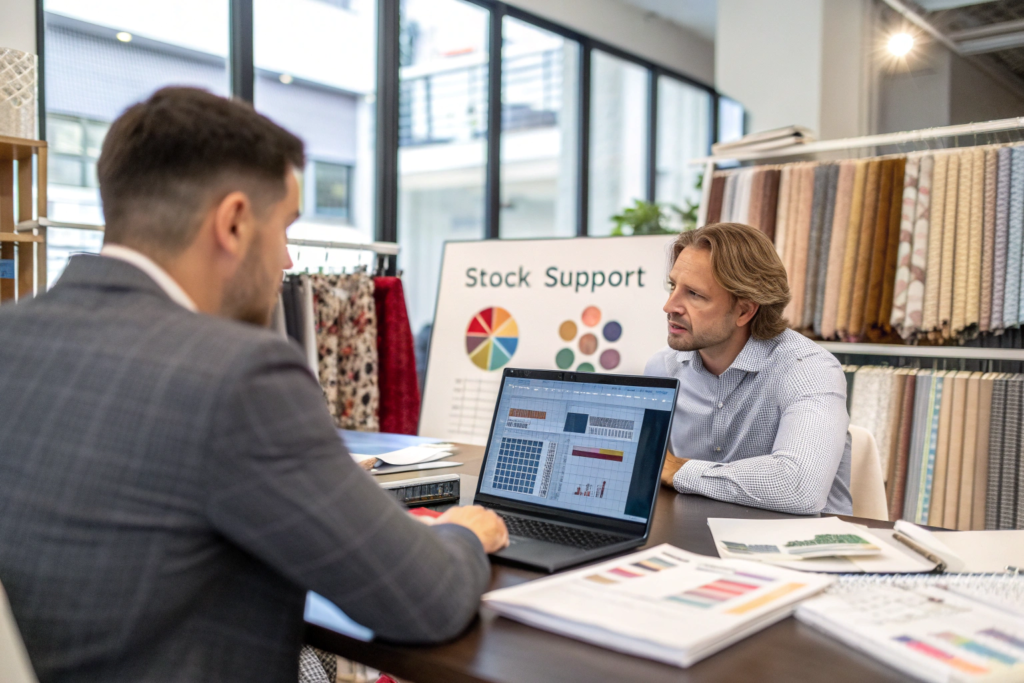
Yes, small brands can get excellent pricing, but you have to be smart about it. You won’t get the 100,000-yard price, but you can get the "stock support" price. By leveraging our 30,000+ seasonal designs in stock and our relationships with local dyeing and finishing partners, we can offer competitive pricing on small batches. For a 500-yard order, the secret is to choose base fabrics that we run regularly, minimizing custom setup costs.
The myth that you need to be huge to play in China hurts a lot of creative talent. We love working with startups because they grow with us. We’ve seen brands go from 500-yard trial orders to 5,000-yard bulk orders within two years. Here’s how to make that partnership work from the start.
Should I choose stock fabrics or custom developments for my first order?
Always start with stock fabrics or slight modifications for your first order. We have over 30,000 designs in stock for a reason. It allows us to ship quickly and keep costs down. If you find a beautiful viscose challis in our collection but want it printed in a different colorway, that’s a "half-custom" order. It uses our existing greige fabric, so the lead time is short, and the MOQ for printing is much lower. For a brand just starting out, this is the sweet spot. A great resource for understanding MOQs and fabric bases is the blog on Maker’s Row, they cover a lot of the practicalities of small-batch manufacturing.
How do Chinese suppliers support entrepreneurs with logistics?
This is where we really try to add value. We know shipping a few rolls of fabric to a home-based designer is different than shipping a container to Walmart. We’ve consolidated orders for multiple small clients going to the same region to save on freight. We also handle all the documentation for courier services like DHL or FedEx. For a client in Canada, we recently packed 20 different sample cuts into a single small box, labeled everything clearly, and created a digital packing list. It’s about providing a service, not just a product. You can find more tips on managing small-batch logistics on the eCommerce Fuel community forums, where other entrepreneurs share their sourcing and shipping experiences.
Conclusion
Finding a reliable clothing manufacturer in China for 2026 isn’t about finding a magic name on a list. It’s about finding a partner who understands your timeline, your quality needs, your cost structure, and your size. Look for the ones with the labs, the certifications, and the flexibility. Ask them about Chinese New Year before they tell you. Ask them about tariff classifications. See how they react. The right partner will answer with data, examples, and a plan.
At Shanghai Fumao, we’ve built our business on this exact principle for over two decades. We don’t just weave fabric; we build relationships that navigate the complexities of global trade together. Whether you are a large buyer needing thousands of yards of certified organic cotton or an entrepreneur with a sketchbook and a dream of 500 yards of custom printed satin, we have the infrastructure and the mindset to help you succeed. We handle everything from yarn sourcing to final QC and shipping documentation, so you can focus on your designs and your customers.
If you’re ready to stop worrying about where to find a supplier and start creating your collection, let’s talk. Contact our Business Director, Elaine, directly to discuss your 2026 production needs. She can help you plan around the upcoming Chinese New Year shutdown and secure your place in our production schedule. Email her at: elaine@fumaoclothing.com. Let’s make something great together.








