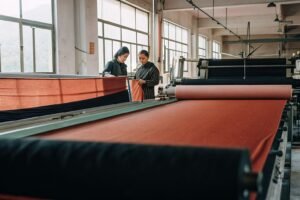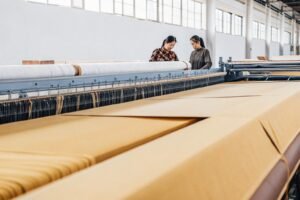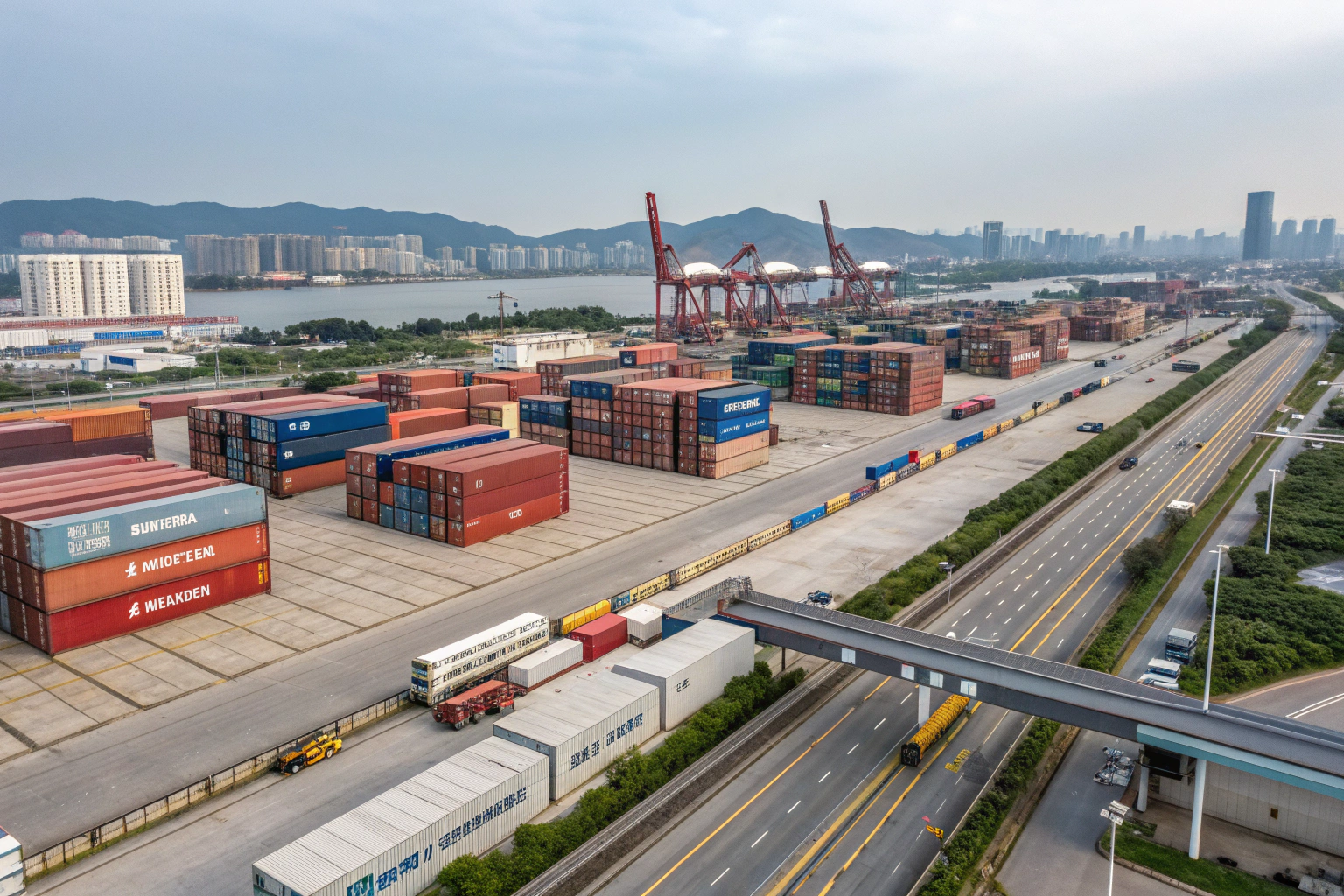
I was on a video call with a client in Chicago at 9 PM my time, which was 8 AM his time. He was panicking. His best-selling jacket was supposed to launch in six weeks, but his previous supplier had just told him the fabric shipment was delayed by a month due to "logistics issues." He’d already sold 10,000 units to retailers based on the original timeline. If he missed delivery, he’d face chargebacks, cancelled orders, and a ruined reputation. "Can you do it?" he asked. I looked at our production schedule, checked shipping availability, and did some quick math. "Yes," I said, "but we need to move fast, and you need to trust me." Five weeks later, his fabric arrived in Los Angeles. He made his launch date. That client has been with us for seven years now, and he still tells that story to anyone who asks why he sources from China.
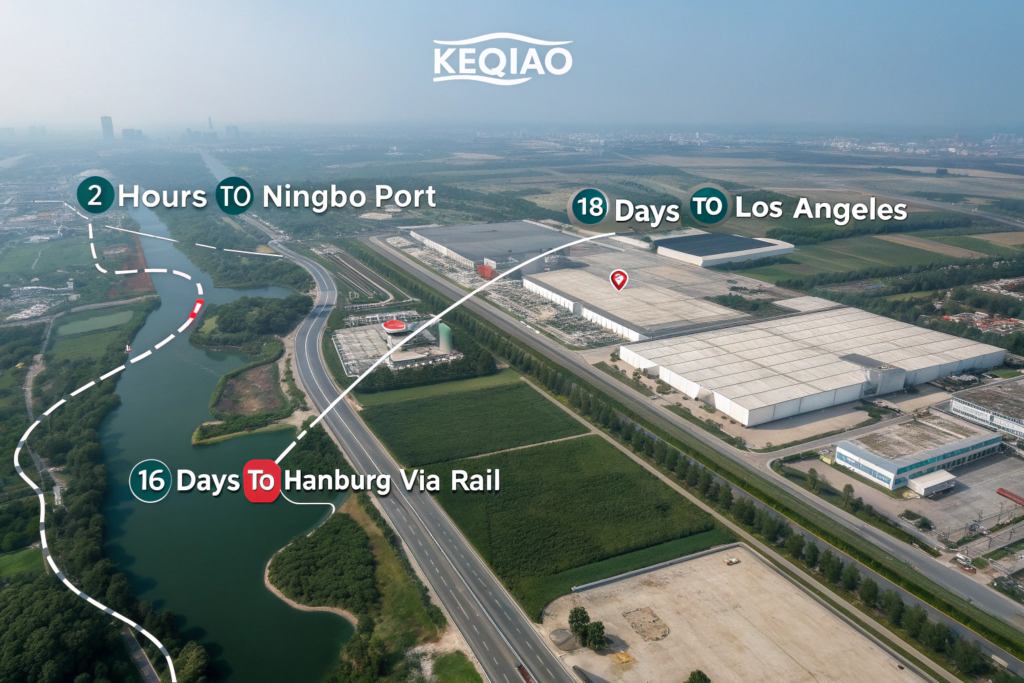
Fumao Fabric’s logistics network ensures on-time global delivery through a multi-layered strategy combining strategic location advantages, diversified shipping options, robust warehouse partnerships, and proactive communication systems. Located in Keqiao, Zhejiang—the world’s largest textile cluster—we’re within 2 hours of Ningbo port (one of the busiest and most efficient ports globally) and connected to the "Silk Road Economic Belt" rail network for faster Europe-bound shipments. We maintain strong relationships with multiple freight forwarders and shipping lines, allowing us to secure container space even during peak seasons. Our overseas warehousing partnerships in key markets (EU, US, Southeast Asia) enable faster replenishment and reduced transit times for repeat orders. Real-time tracking systems provide clients with visibility at every stage, from production to delivery. Crucially, we plan around Chinese production cycles—the March-May and August-October peaks, the Chinese New Year shutdown, and Golden Week holidays—to build realistic timelines that account for real-world conditions rather than optimistic estimates.
That Chicago client’s near-disaster taught me something important: in the fabric business, production is only half the battle. Getting the fabric to you, on time and in good condition, is just as critical. Over 20 years, we’ve built a logistics network that handles the chaos of global shipping so you don’t have to worry about it. Let me walk you through how it works.
How does our location in Keqiao give us a logistics advantage?
People often ask me why we’re based in Keqiao. The simple answer: it’s the center of the textile universe. But the practical answer is logistics.
Why does proximity to Ningbo port matter so much?
Ningbo-Zhoushan port is one of the busiest and most efficient ports in the world. It handles over 10 million TEUs (twenty-foot equivalent units) annually, with dozens of weekly sailings to North America, Europe, and everywhere else. Being just 2 hours away by truck means we can:
- Deliver containers directly to the port without costly intermediate storage
- Make tight sailing deadlines that would be impossible from inland locations
- Respond quickly to schedule changes or vessel substitutions
- Reduce inland transportation costs and carbon footprint
During the peak seasons (August-October), when container space becomes scarce, our relationships with local trucking companies and port officials help us secure priority handling. We’ve never missed a sailing because we couldn’t get a container to the port on time.
A Canadian furniture manufacturer learned the value of this when their previous supplier in a different Chinese province missed three consecutive sailing dates due to inland transportation delays. The supplier was 12 hours from the nearest port, and any traffic or weather delay meant missing the cutoff. With us, they know that once the container leaves our loading dock, it’ll be at the port in time for the booked vessel. The Ningbo-Zhoushan Port Authority’s shipping schedules and performance data are something we check daily to optimize our routing.
What about the Silk Road rail network for Europe?
For European clients, rail is increasingly attractive. The "Silk Road Economic Belt" rail connections from China to Europe take about 16-18 days—faster than sea (30-35 days) and cheaper than air. We regularly ship to Germany, Poland, and other European destinations via rail.
The rail option is particularly valuable for clients with:
- Medium urgency (not critical enough for air freight)
- High-value products (where inventory carrying costs justify faster transit)
- Sustainability goals (rail has lower carbon footprint than air or even sea)
A German automotive parts manufacturer we work with switched from sea to rail for their just-in-time inventory. The 16-day transit allows them to keep lower safety stock while still ensuring production lines never stop. They calculate that the slightly higher freight cost is more than offset by reduced warehouse costs. The China Railway Express scheduling and tracking system gives us real-time visibility for these shipments.
What shipping options do we offer and how do we choose the right one?
Every shipment is different. The right choice depends on your specific situation. We don’t push one option—we help you choose the best fit.
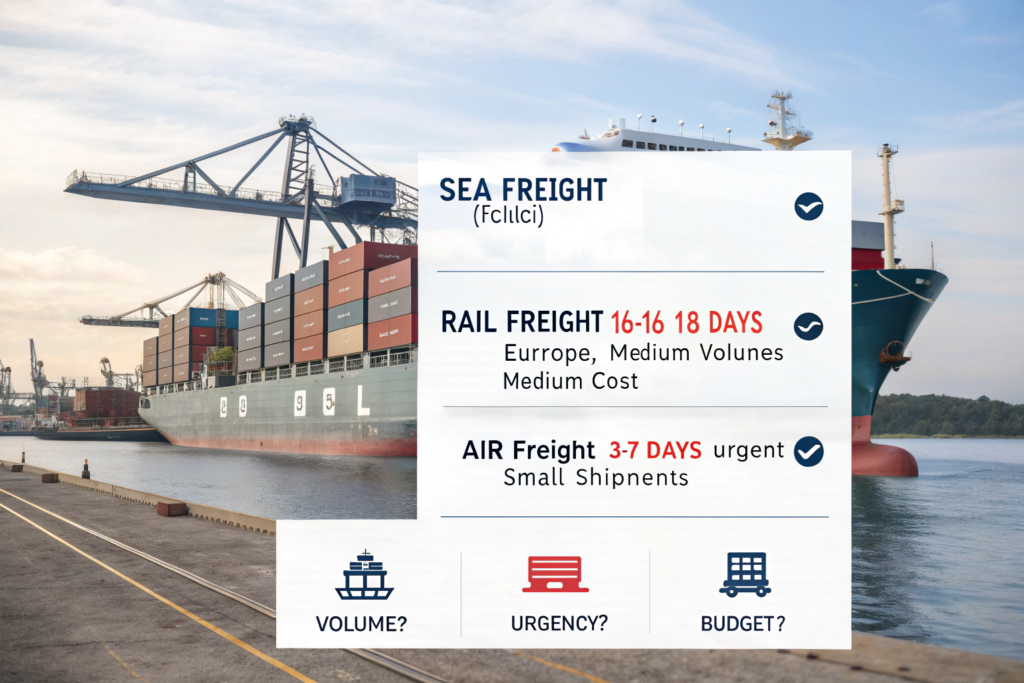
When should you choose sea freight (FCL vs. LCL)?
Full Container Load (FCL) is our default recommendation for most clients. You get an entire 20ft or 40ft container dedicated to your goods. Benefits:
- Lowest cost per meter
- No risk of damage from other shipments
- Simplified customs clearance
- Direct door-to-door service
A 40ft container holds approximately 25,000-30,000 meters of medium-weight fabric, depending on roll size. For orders below that, we consider Less than Container Load (LCL) , where your goods share a container with others. LCL works well for smaller orders (as little as 2-3 cubic meters) but has trade-offs:
- Higher cost per meter than FCL
- Potential for delays if consolidation/deconsolidation is slow
- Slightly higher risk of damage or loss
For clients starting small, we often recommend LCL initially, then transition to FCL as volumes grow. A Swedish yoga brand began with 50-meter orders shipped LCL. Now they order 40ft containers four times a year. We helped them plan that growth trajectory, adjusting shipping strategy at each stage. The International Maritime Organization’s guidelines for container shipping inform our standard operating procedures.
When does air freight make sense despite the cost?
Air freight is expensive—typically 5-10 times sea freight—but sometimes it’s the right choice. Common scenarios:
Emergency replenishment: A retailer runs out of stock unexpectedly and needs product before the next sea shipment.
Sample shipments: Small quantities needed quickly for buyer meetings or showroom displays.
High-value, low-volume products: Luxury items where inventory holding costs justify faster transit.
Launch deadlines: New collections with fixed launch dates that can’t be missed.
We had a client in Australia who sold out of a popular style in three weeks instead of the projected three months. They needed 5,000 meters urgently to capitalize on the momentum. We air-shipped half the order while the rest followed by sea. The air-freighted fabric arrived in 5 days, restocked their best-sellers, and generated enough profit to cover the freight cost many times over.
The key is transparency. We always show clients the full cost comparison so they can make informed decisions. A US-based brand uses our air freight cost calculator based on IATA rate guidelines to model different scenarios before committing to production timelines.
How do we handle peak seasons and Chinese holiday shutdowns?
The biggest mistakes we see from international buyers come from not understanding China’s production and shipping cycles. Let me explain how we navigate them.
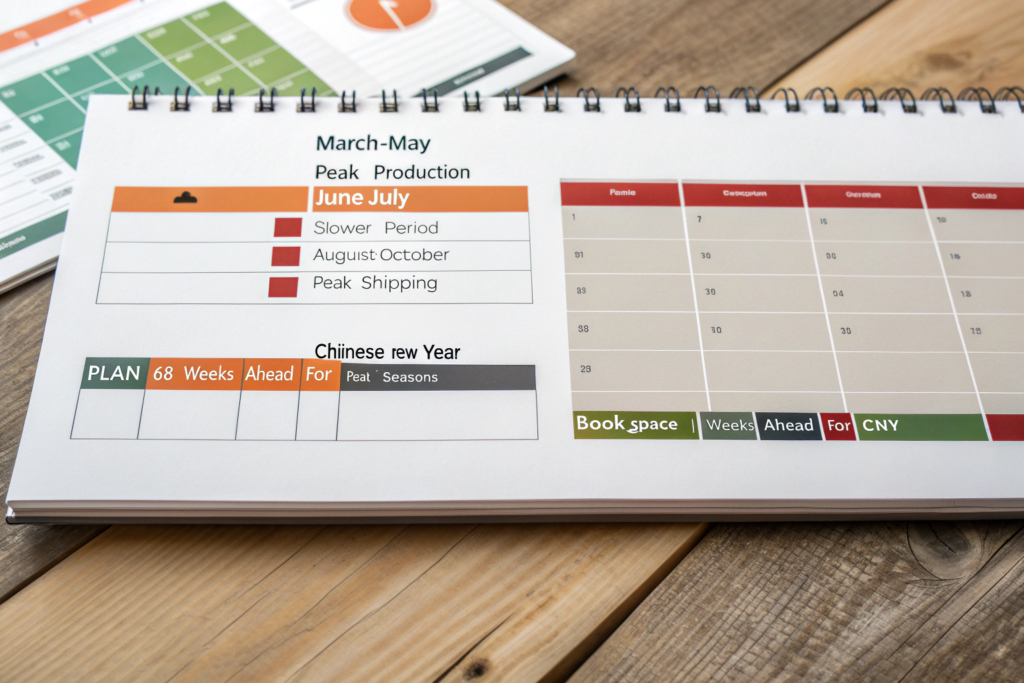
What happens during Chinese New Year and how do we plan for it?
Chinese New Year is the most important holiday in China. Factories shut down for 3-4 weeks as millions of workers travel home to their families. Production stops. Shipping slows. Nothing moves.
The key is working backward from the closure date. For a client needing fabric before the shutdown, we need to:
- Complete production at least 2 weeks before the holiday
- Allow time for quality control and packing
- Get containers to the port before carriers stop accepting bookings
That means orders must be placed 6-8 weeks before the holiday starts. For the 2024 CNY (February 10), that meant placing orders by mid-December 2023 for guaranteed pre-holiday shipment.
For orders placed during the shutdown, we schedule production for immediately after the holiday and reserve shipping space in advance. The first vessels after CNY fill up fast—we book container slots weeks ahead.
A British home textile company learned this the hard way in 2022. They placed an order in late January, assuming we could ship immediately. We had to explain that the factory was closing and their order would wait until March. They missed their spring launch. Now they plan their entire year around our Chinese New Year production calendar, which we publish based on government holiday announcements.
How do we manage the March-May and August-October peak seasons?
These are when everyone wants fabric. Production lines are fully booked. Shipping space is tight. Rates go up. The key strategies:
Forward planning: We encourage clients to forecast and order early. A client who commits to Q3 production in Q2 gets better pricing and guaranteed space.
Diversified carriers: We work with multiple shipping lines. When one is fully booked, another may have space.
Alternative ports: Sometimes shipping from Shanghai or Ningbo is congested, but nearby ports like Zhoushan or Yiwu have availability. We maintain relationships at multiple ports.
Buffer time: We build realistic buffers into our quoted timelines. If we say 8 weeks, we mean 8 weeks, not 6 weeks with 2 weeks of hidden buffer. Clients appreciate knowing the real timeline.
A US outdoor gear company plans their entire product launch calendar around these cycles. They place main-season orders during slower periods (June-July, November-December) when we have capacity and rates are better. Their launch deadlines are set to avoid peak shipping crunches. They’ve had zero logistics-related delays in five years. The Shanghai Shipping Exchange’s freight rate index helps us advise clients on timing to optimize costs.
What tracking and communication systems do we use?
In 2023, a client in France emailed me at 2 AM his time asking where his shipment was. I was asleep, but our system wasn’t. He logged into our tracking portal and saw exactly where the container was—mid-ocean, halfway to Hamburg, on schedule. He went back to sleep. That’s the level of transparency we aim for.
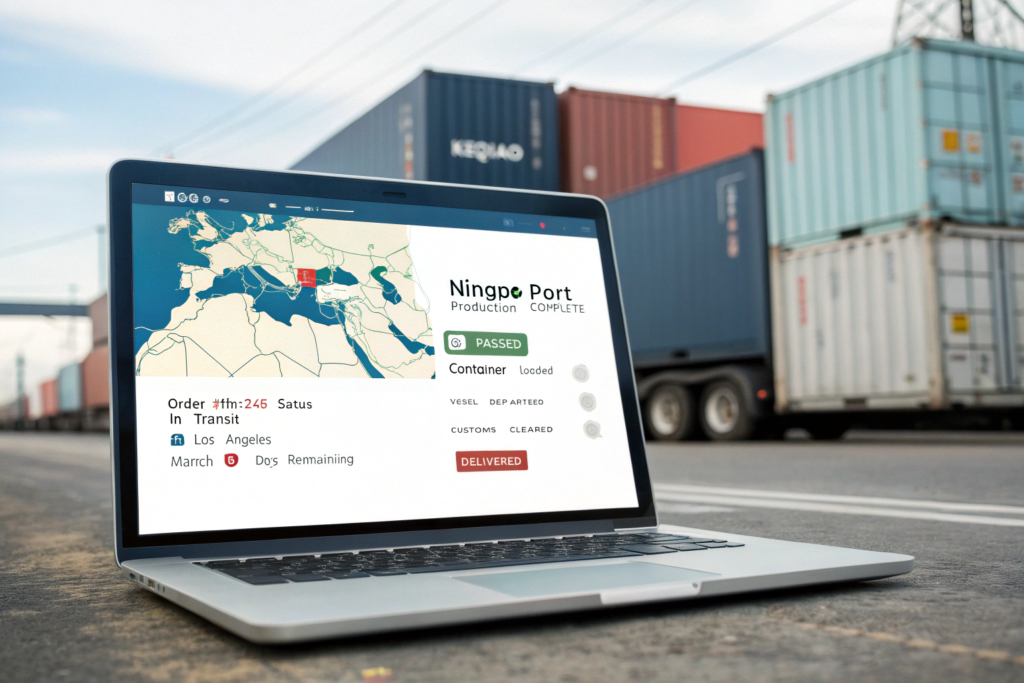
What information can clients access in real-time?
Every client gets access to our online tracking system with:
- Real-time GPS tracking for containers (where available)
- Milestone updates (production complete, loaded, departed, etc.)
- Estimated arrival dates updated daily
- Customs clearance status
- Final mile tracking
For air freight, we provide airway bill numbers and airline tracking links. For rail, we use the China Railway Express tracking system integrated with European rail partners.
We also send proactive alerts. If a vessel is delayed, we notify clients immediately with revised ETAs and options. Bad news doesn’t get better with time—we share it as soon as we know.
A Canadian distributor told us our tracking system saved them from a costly stockout. Their system showed a shipment delayed by weather. They were able to air-freight a small replenishment order to cover the gap, keeping their shelves stocked until the main shipment arrived. The International Air Transport Association’s tracking standards ensure our data integrates with major carriers’ systems.
How do we communicate unexpected issues?
Shipping is unpredictable. Weather happens. Ports congest. Vessels change schedules. The difference is how we handle it.
Our approach:
- Early warning: As soon as we see a potential issue, we flag it. No waiting until it’s certain.
- Options: We present alternatives—different routing, different carriers, partial shipments.
- Recommendation: Based on your priorities (speed vs. cost vs. certainty), we recommend a course of action.
- Execution: We implement the chosen solution immediately.
During the 2021 port congestion crisis, when Los Angeles/Long Beach had dozens of ships waiting offshore, we worked with clients to reroute containers to Oakland or Seattle, then truck to final destination. It added cost but saved weeks. Clients who took that advice got their goods while competitors waited.
A Swedish furniture company had a container stuck in that queue for six weeks. We helped them air-freight critical components while the container waited. Their production line never stopped. The Federal Maritime Commission’s port congestion updates were essential for making those decisions.
How do overseas warehouses improve delivery times?
For clients with steady demand, overseas warehousing transforms the supply chain. Instead of waiting 30 days for each order, they can replenish in days from regional stock.

How does our consignment stock program work?
We offer a consignment stock program where we hold inventory in overseas warehouses on your behalf. You draw down stock as needed, paying only for what you use. Benefits:
- 2-5 day delivery instead of 30+ days
- Lower minimum order quantities for replenishment
- Reduced ocean freight costs (we ship full containers to warehouse)
- Better cash flow (you pay when you withdraw, not when we ship)
A US-based fashion brand uses this for their core fabrics. They keep 6 months of supply in our Los Angeles warehouse. When they need fabric for a new collection, it arrives in 3 days instead of 5 weeks. They’ve reduced their fabric inventory holding costs by 40% while improving responsiveness.
The program requires forecasting, but we help with that. Based on their usage patterns, we recommend stock levels and reorder points. The Warehouse Education and Research Council’s best practices for consignment inventory inform our program design.
What about fulfillment for e-commerce brands?
For smaller brands selling direct-to-consumer, we can go further: we’ll hold finished goods and ship directly to your customers. You send us your products (or we help source them), we warehouse them, and when orders come in, we pick, pack, and ship.
A German yoga accessories brand uses this service. They design the products, we make the fabric and coordinate production with their cut-and-sew partners, then we warehouse the finished goods and ship to their customers across Europe. They focus on marketing and design; we handle the logistics. Their customers get 2-3 day delivery, and the brand has no warehouse overhead.
This direct-to-consumer fulfillment model is growing rapidly, and the eCommerce Fulfillment Association’s guidelines help us maintain quality standards.
How do we handle customs, tariffs, and documentation?
Nothing delays shipments like incorrect documentation. We’ve made all the mistakes over 20 years so you don’t have to.
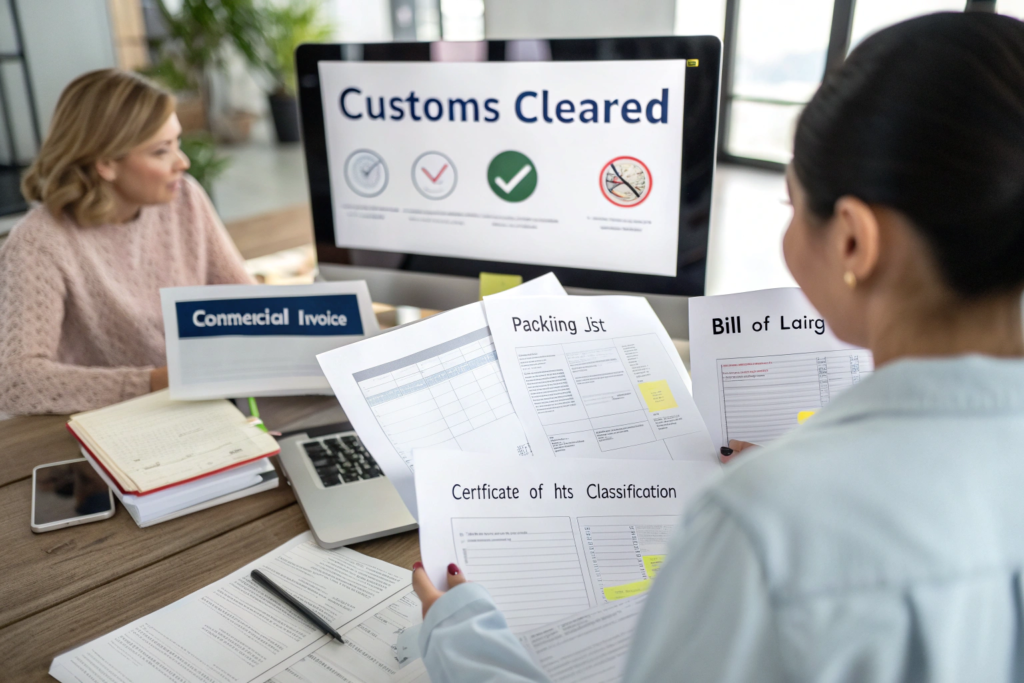
What documentation do we provide with every shipment?
Every shipment includes:
- Commercial invoice: Detailed description, values, HTS codes
- Packing list: Roll numbers, quantities, weights, dimensions
- Bill of lading / Airway bill: Proof of contract with carrier
- Certificate of origin: For trade agreement preferences
- Inspection reports (if applicable): Quality verification
- Certifications: GOTS, GRS, OEKO-TEX, etc., as required
We also provide guidance on HTS classification. Getting the code wrong can cost thousands in incorrect duties. Our logistics team stays current with classification changes and shares that knowledge with clients.
A US importer once used an incorrect HTS code and was hit with $15,000 in back duties and penalties. We now provide recommended codes with every invoice, and we encourage clients to verify with their customs brokers before shipping. The US Customs and Border Protection’s HTS search tool is something we use daily.
How do we handle US Section 301 tariffs and other trade barriers?
This is complicated, and anyone who says it’s simple isn’t being honest. Here’s our approach:
Classification first: Many fabrics have multiple possible HTS codes. Some are subject to tariffs, some are not. We help identify the correct, legally defensible classification.
Exclusions: Some products qualify for tariff exclusions based on end use. We provide documentation to support exclusion requests.
Sourcing flexibility: For clients severely impacted by tariffs, we can sometimes source from other countries through our network. We’re based in China, but we have partners across Asia.
Cost transparency: We show the full landed cost including estimated duties, so there are no surprises when the bill arrives.
A US outdoor furniture manufacturer was facing 25% tariffs on their Chinese fabric. We worked with them to reclassify under a different HTS code that accurately described their product but had lower duty rates. The change was legal and documented, saving them over $100,000 annually. The US Trade Representative’s tariff exclusion process guided our approach.
Conclusion
Logistics isn’t the glamorous part of the fabric business. Nobody posts photos of shipping containers on Instagram. But it’s the part that separates successful brands from failed ones. You can have the most beautiful fabric in the world, but if it arrives late, arrives damaged, or arrives with incorrect duties owing, your customer doesn’t care how beautiful it is.
At Shanghai Fumao, we’ve spent 20 years building a logistics network that treats your fabric like it’s our own. We’re 2 hours from one of the world’s great ports. We have relationships with multiple carriers so we can find space when others can’t. We track every shipment and share that data with you in real time. We hold inventory in overseas warehouses so you can replenish in days, not weeks. We handle the customs paperwork so you don’t make expensive mistakes. And we plan around China’s production cycles so you’re never caught off guard by a holiday shutdown.
That Chicago client who nearly missed his launch date? He’s now one of our biggest customers. He trusts us not just to make great fabric, but to get it to him when he needs it. That trust is earned shipment by shipment, year by year.
Whether you’re a startup placing your first order or a multinational with complex supply chain requirements, we have the logistics capabilities to support you. We’ll help you choose the right shipping method, plan around peak seasons, navigate customs, and track every step.
Ready to experience logistics that actually deliver? Let’s talk about your shipping needs. Contact our Business Director, Elaine, directly at elaine@fumaoclothing.com. Tell her about your typical order sizes, your target markets, and your delivery requirements. She’ll connect you with our logistics team, who can discuss shipping options, provide cost estimates, and develop a fulfillment strategy that ensures your fabric arrives on time, every time. Together, we’ll build a supply chain you can count on.