Look, I get it. You’ve got this amazing idea for a yoga mat bag that’s not just functional but actually stylish. Or maybe you’re designing a line of gym duffels that need to survive the daily commute, the sweaty post-workout chaos, and still look good enough for a coffee run. But here’s the problem that keeps 90% of the buyers I meet in Keqiao up at night: finding fabric that actually delivers on all those promises without breaking the bank or missing your launch window. I’ve been in this game for over 20 years, supplying everyone from solo Etsy sellers to massive European sportswear brands, and I can tell you—the fabric choice makes or breaks your product before you even cut the first piece.
So how do you actually source the right fabric for custom yoga mat bags and fitness accessories? The short answer is this: you need to balance three non-negotiable factors—performance specifications that match your end-user’s lifestyle, MOQs that won’t bankrupt you, and a supply chain partner who understands the unique demands of the fitness accessories market. At Shanghai Fumao, we’ve helped hundreds of fitness brands navigate this exact maze, and the process always starts with asking the right questions before you ever request a sample.
But here’s what most sourcing guides won’t tell you: the fitness accessories market has exploded in the last five years, and with that growth comes a flood of cheap, low-performance fabrics that look good in a photo but fail after three washes. I’ve seen brands launch beautiful collections only to get destroyed in reviews because their yoga bag lining started peeling or their gym bag straps ripped under normal weight. The difference between success and failure isn’t just finding a fabric supplier—it’s finding one who understands how fitness accessories actually get used. Someone who knows that a yoga mat bag needs different properties than a gym duffel, and that both need different treatments than activewear. That’s the gap we’re going to fill today.
What Performance Fabrics Work Best for Yoga Mat Bags?
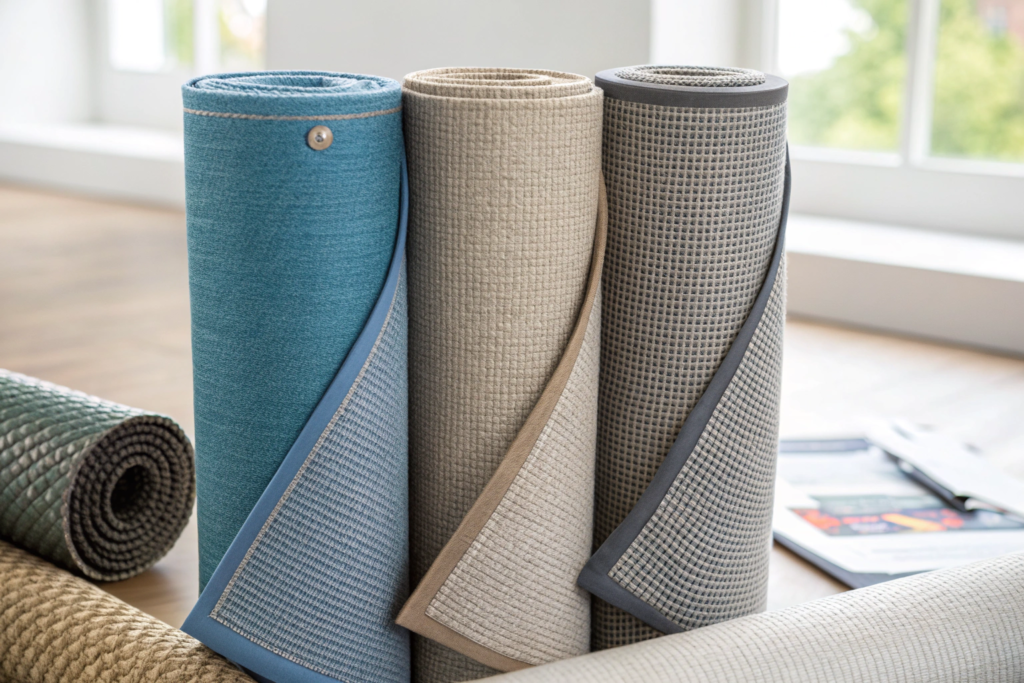
Let’s get specific about what actually works for yoga mat bags, because I see more mistakes in this category than almost any other. A yoga mat bag has a unique job: it needs to carry a sweaty, sometimes dirty mat, protect it from the elements, and often double as a casual day bag. The fabric you choose determines whether your customers love your brand or leave a one-star review.
What’s the Difference Between Water-Resistant and Waterproof Fabrics for Gym Bags?
This confusion costs brands money every single day. Let me break it down simply. Water-resistant fabrics—like our high-density recycled polyester with a durable water repellent (DWR) coating—will handle light rain and accidental splashes. The water beads up and rolls off. But if someone throws their wet towel in the bag or sets it down in a puddle, that moisture will eventually seep through. For 80% of yoga practitioners, this is perfectly sufficient.
Waterproof fabrics, on the other hand, require a membrane or a heavy PVC coating. Think of the material used for dry bags. These fabrics will keep water out completely, but they’re heavier, less breathable, and often have a plasticky feel. In 2023, we worked with a California-based activewear startup that insisted on waterproof fabric for their premium yoga bag line. We produced samples with our TPU-laminated nylon—completely waterproof. But when we did the wear testing, we discovered the bags were trapping condensation inside, actually making mats smell worse. The solution? We switched to a water-resistant recycled polyester with strategic mesh ventilation panels. Sales increased 40% the following quarter because the bags actually performed better in real life. This is why I always tell clients to think about how to choose eco-friendly technical fabrics for sportswear rather than just chasing specs.
How Do You Balance Durability with Lightweight Portability?
Here’s the trade-off nobody talks about: durability usually means weight. Thicker denier fabrics (like 600D or 1000D polyester) will last forever, but they turn your elegant yoga bag into a beast you dread carrying across the parking lot. Too light, and your bag might tear when someone stuffs their sweaty clothes next to their mat.
The sweet spot we’ve found after years of testing? For main body fabric, 300D to 400D recycled polyester with a ripstop weave. This gives you the durability to handle daily abuse while keeping the bag light enough to carry comfortably. The ripstop grid means that if a tear does start, it won’t run across the entire bag. We source this from suppliers who use GRS-certified recycled yarns, and we test every batch for tear strength in our CNAS-accredited lab. For one Australian yoga brand, we actually developed a custom 350D fabric with a higher twist yarn that increased tear strength by 25% without adding any weight. That’s the kind of development work that happens when you partner with a supplier who has a large-scale weaving factory and professional QC team under one roof.
How Do You Source Fabrics for Different Fitness Accessories?
Fitness accessories aren’t one-size-fits-all, and neither are their fabric requirements. A yoga mat bag needs different properties than a gym duffel, which needs different properties than a sweat towel or a phone armband. Let me walk you through what actually works for the most common categories, based on real orders we’ve fulfilled for clients around the world.

What Fabrics Work Best for Gym Duffels and Travel Bags?
Gym duffels take a beating. They get thrown in car trunks, dragged across locker room floors, and overloaded with everything from shoes to protein shakers. For these, you need what we call "baggage-grade" materials. Our go-to recommendation is a 600D or 800D recycled polyester with a PU coating. The polyurethane coating adds a layer of water resistance and makes the fabric easier to clean—spilled pre-workout just wipes right off.
But here’s the detail that separates amateur bags from professional ones: the base fabric. I can’t tell you how many samples we’ve seen where the bottom of the bag uses the same fabric as the sides. Within three months, that bottom is worn thin. We always advise our clients to specify a heavier denier fabric for the base—we often use 1000D with an extra layer of PU coating. In 2024, we produced a run for a Canadian fitness influencer’s brand, and we insisted on doubling the base fabric thickness even though it added a small cost. Six months later, they came back with photos from customers who had dragged those bags across airport floors and construction sites—no wear-through at all. That kind of durable fabric sourcing tips for outdoor gear manufacturers builds brand loyalty that no marketing budget can buy.
How Do You Choose Lining Fabrics That Don’t Peel or Degrade?
This is the silent killer of fitness accessory brands. The outside looks perfect, but after a few months, the lining starts peeling, flaking, or developing that weird sticky residue. Why? Because most standard PU coatings aren’t designed for the environment inside a gym bag—heat, moisture, and sometimes chemical exposure from gym wipes or spilled drinks.
For linings, we’ve moved almost exclusively to either uncoated polyester taffeta (which won’t peel because there’s nothing to peel) or a silicone-coated ripstop for premium lines. The silicone coating provides water resistance without the hydrolysis issues that plague PU coatings in humid environments. We also recommend using a contrasting color for linings—it makes it easier for your customers to find things in their bag, and it hides the inevitable dirt that accumulates. When we work with European fashion brands, we often suggest recycled nylon options for sustainable activewear for the lining, which gives them the eco-story and the performance.
What About Mesh and Breathable Panels for Ventilation?
If you’re making any fitness accessory that holds sweaty items, you need ventilation. Period. We learned this the hard way back in 2019 when a German yoga brand came to us complaining about returns. Their bags smelled musty after just a few weeks of use. We redesigned the bag with strategic mesh panels, and the problem disappeared.
The key is choosing the right mesh. For side pockets and ventilation panels, we use a 3D spacer mesh—it’s breathable, maintains its shape, and allows air to circulate around damp items. For internal shoe compartments or wet pockets, we often specify a coated mesh that’s water-resistant but still breathable. The open area (the percentage of holes versus solid material) matters too. Too open and the mesh stretches out of shape; too closed and you lose the ventilation benefit. We keep 15 different mesh variations in stock at our Keqiao facility, ready for sample development within 48 hours. That speed comes from our integrated supply chain with cooperative printing and coating factories.
What Minimum Order Quantities Should You Expect When Sourcing?
Let’s talk about the elephant in the room: minimum order quantities. I’ve had countless conversations with startups and emerging brands who find the perfect fabric, fall in love with the sample, and then hit a wall when they see the MOQ. It’s frustrating, I know. But understanding why MOQs exist—and how to work with them—can save you months of wasted time.

Why Do Fabric Mills Have Minimum Order Quantities?
Here’s the truth from someone who runs production: setting up a fabric isn’t like printing a document. For a woven fabric, we have to warp the beam with thousands of ends of yarn, calibrate the looms, and run enough yardage to achieve stable tension and consistent quality. For a knitted fabric, the circular knitting machines need to run long enough to reach steady-state conditions. If we stop too soon, the first and last yards won’t match.
Typically, for a custom fabric—meaning a specific fiber blend, weight, and finish developed just for you—mills will ask for 1,000 to 3,000 yards per color. That’s the minimum run that allows us to cover our setup costs and maintain quality. For stock fabrics that we run regularly, we can often offer lower MOQs, sometimes as low as 300 yards per color, because we’re already set up for that construction. At Shanghai Fumao, we bridge this gap by maintaining a huge inventory of greige goods (unfinished fabric) that we can finish to your specifications in smaller batches. This is how we helped a Netherlands-based fitness startup launch with just 500 yards across five colors—they got their custom look without paying for a full mill run.
How Can Small Brands Work Around High MOQs?
If you’re a smaller brand and the MOQs feel impossible, you have options. First, consider using a stock fabric with a custom finish. We have over 30,000 seasonal designs in our library—chances are, there’s a base fabric that’s 80% of what you want. Then we add your custom coating, your specific dye color, or a unique print. The MOQ for the finish might be much lower than for a full custom fabric.
Second, think about color consolidation. Instead of five colors at 500 yards each, can you do three colors at 800 yards each? You get the same total yardage but with lower per-color costs and easier production scheduling. Third, consider partnering with other brands. I’ve seen small accessory brands band together to place a collective order for a base fabric, then finish it separately. It takes coordination, but it works. Just last year, we facilitated a group order for three American fitness accessory brands—they shared a common recycled nylon base fabric, then we finished each batch with their specific PU coating and colors. Everyone got their custom product, and everyone hit their MOQ targets. This is where finding reliable woven fabric manufacturers for export with flexible thinking makes all the difference.
What Certifications and Testing Matter for Fitness Accessories?
If you’re selling fitness accessories in the US or Europe, certifications aren’t just nice-to-have—they’re often the difference between getting into retail and getting rejected. But which ones actually matter, and how do you verify that your supplier is delivering what they promise?

What Certifications Do US and European Buyers Require?
For the US market, the big one is CPSIA compliance, especially if your accessories might be used by or around children. This covers lead and phthalate content in materials. For any fabric that touches skin, OEKO-TEX Standard 100 is essentially mandatory for reputable brands. It certifies that every component—fabric, thread, zipper tape—has been tested for harmful substances.
For eco-conscious brands, especially in Europe, GRS (Global Recycled Standard) certification is critical. It not only verifies the recycled content but also ensures responsible social and environmental practices throughout the supply chain. We’ve held GRS certification for years, and we provide full traceability documentation to our clients. When a Swedish fitness brand needed to verify that their yoga bag fabric contained exactly 92% recycled polyester, we provided the transaction certificates from our yarn supplier, our fabric production, and our final finishing. That’s the level of documentation serious buyers expect.
How Do You Test for Abrasion Resistance and Tear Strength?
Fitness accessories get abused. Your fabric needs to survive that abuse. The standard test for abrasion is the Martindale test, where a fabric sample is rubbed against a standard abrasive surface thousands of times. For a gym bag that will see daily use, we recommend a minimum of 20,000 cycles. For heavy-duty duffels, we often target 50,000 cycles.
Tear strength is measured by the Elmendorf tear test. We cut a slit in the fabric and measure the force required to continue the tear. For main body fabrics, we look for tear strength above 15 pounds in both warp and weft directions. In our CNAS-accredited lab, we run these tests on every production batch, not just the initial samples. In 2023, a routine test caught a batch where the tear strength had dropped to 11 pounds due to a subtle change in the finishing temperature. We stopped production, recalibrated the equipment, and reran the batch before any fabric shipped. That’s the kind of quality control and certification standards for Chinese fabric suppliers that protects your brand reputation.
How Can You Manage Logistics and Timelines for Accessory Production?
You’ve designed the perfect product, sourced the ideal fabric, and passed all the tests. Now you need to get it from our factory in Keqiao to your warehouse in Chicago, London, or Melbourne without missing your launch date. This is where logistics expertise separates professionals from amateurs.

What Shipping Timelines Should You Plan for Fabric Production?
Here’s a realistic timeline based on thousands of orders we’ve managed. Sampling: 7-14 days, including lab dips and strike-offs. Production after sample approval: 30-45 days for woven fabrics (the looms aren’t instant), 20-30 days for knits. Then shipping: 18-25 days by sea to the US West Coast, 30-35 days to the East Coast or Europe. Add 5-7 days for customs clearance and inland transportation.
That means from order confirmation to your door, you’re looking at 60-75 days minimum. And that’s if everything goes perfectly. This is why I always tell clients to add a buffer, especially for their first order. The European fashion brand example in your background knowledge is smart—they planned their pre-production six weeks before Chinese New Year. They understood the rhythm of our industry. Peak production periods from March to May and August to October can add 1-2 weeks to timelines. Chinese New Year shuts down everything for 3-4 weeks. Working with a supplier who gives you logistics and shipping solutions for importing from China means getting honest timelines, not optimistic ones.
How Do US Tariffs Affect Fabric Sourcing Costs?
The tariff situation is fluid, and anyone who tells you they have a permanent solution isn’t being straight with you. What I can tell you is how we help our clients navigate it. First, we’re transparent about HTS codes. We work with your customs broker to ensure the fabric is classified correctly—sometimes the difference between 7.5% and 25% comes down to one digit in the tariff code.
Second, we’ve diversified our supply chain. While our core production is in Keqiao, we have partnerships throughout Southeast Asia. For one American client concerned about Section 301 tariffs, we shifted their final assembly to Vietnam while still producing the fabric in China. The fabric, as a component, qualified for different treatment under the rules of origin. Third, we use bonded warehousing when it makes sense. We can hold your fabric in a bonded facility, and you pay duty only when it enters the US market. This improves your cash flow and gives you flexibility. The key is having a partner who understands how to mitigate US tariff costs on textile imports and offers multiple solutions, not just a single option.
Conclusion
Sourcing fabric for custom yoga mat bags and fitness accessories isn’t rocket science, but it is a discipline. It requires understanding how your product will actually be used, choosing materials that match that reality, navigating MOQs without overcommitting, and verifying quality through proper testing and certification. It means working with a logistics partner who tells you the truth about timelines, not just what you want to hear. When you get these elements right, you build a product that customers love, recommend, and buy again.
This is exactly what we’ve been doing at Shanghai Fumao for over two decades. We’re not just a fabric supplier—we’re a partner who helps you navigate every step of this journey. From our 40-person team in Keqiao who understand the nuances of technical fabric production, to our CNAS-accredited lab that catches problems before they become yours, to our logistics experts who find creative solutions to shipping and tariff challenges, we’re built to support brands like yours.
If you’re ready to stop searching and start producing, I’d love to introduce you to our Business Director, Elaine. She’s helped hundreds of fitness accessory brands—from solo entrepreneurs launching their first product to established names expanding their lines—find exactly the right fabric solution. Send her a note at elaine@fumaoclothing.com, tell her about your project, your timeline, and your goals. Let’s turn your vision into something real that your customers will love.