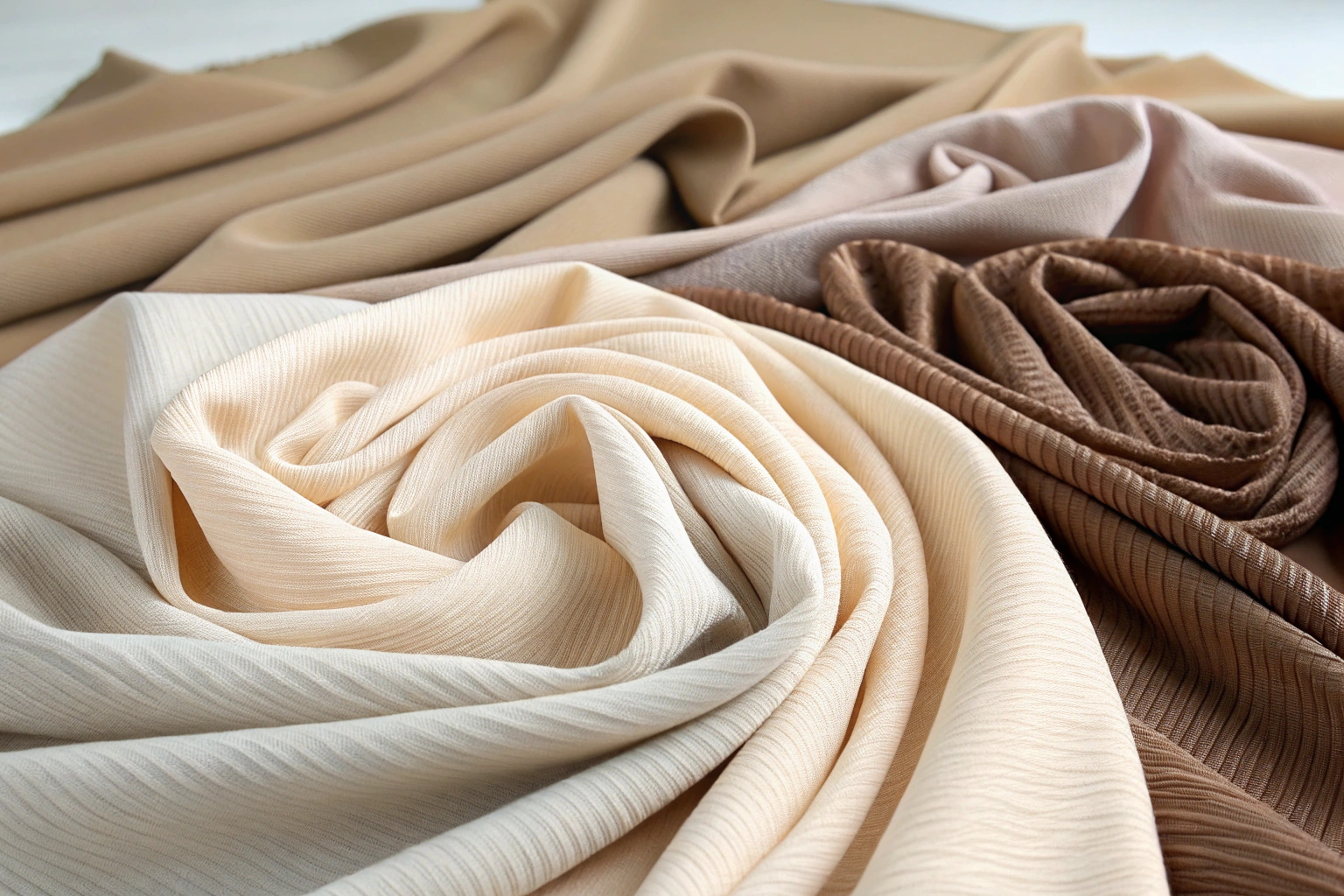
Navigating the world of textile sourcing, I know you’re not just looking for fabric; you’re looking for predictability, quality, and a partner who understands the nuts and bolts of production. When you see a beautiful, pebbled surface on a designer blouse or a flowing, textured dress, do you ever wonder how that distinct crinkle gets there? It’s not magic, but it is a precise science. As someone who has spent over two decades in the heart of China’s textile industry, I’ve seen firsthand how getting this process wrong can lead to shipment delays, failed quality checks, and unhappy customers. The process of creating crepe fabric is a journey of controlled distortion, and understanding it is the first step to ensuring you get exactly what you pay for.
So, how is that permanent crinkled texture actually achieved? In its simplest form, the crinkled effect in crepe fabric is created by using yarns with a high twist, or by exploiting the different shrinkage rates of fibers during finishing. When these highly twisted yarns (called crepe yarns) are woven into a fabric and then exposed to water, heat, or chemicals, they try to untwist, forcing the fabric to pucker and creating that signature pebbly surface. At Shanghai Fumao, we’ve refined this process over 20 years, moving it from an artisanal secret to a scientifically controlled manufacturing standard.
But here’s the kicker: the "process" isn’t a single line on a spec sheet. It’s a delicate balance of material science, machine calibration, and timing. Many buyers I talk to think you just weave a special yarn and you’re done. If only it were that simple. The real skill lies in controlling the variables—from the moment the fiber is twisted to the final chemical bath—to ensure that the crinkle is consistent, durable, and matches the hand-feel your design demands. This is where the experience of a dedicated supplier, with end-to-end quality control, makes or breaks your collection. Let’s break down exactly how we do it, step by step.
How Does Yarn Twist and Fiber Choice Influence Crepe Texture?
Let’s start at the very beginning—before the fabric even exists. The foundation of any great crepe fabric lies in the yarn. I always tell our clients in New York and Milan, "You can’t fix a bad yarn in the weaving." The texture you’re after starts with a decision on twist and fiber.

What Is a High-Twist Yarn and Why Is It Essential for Crepe?
Think of a standard piece of yarn. The fibers are twisted together just enough to hold. For crepe, we crank that up significantly. We’re talking about 2,000 to 3,500 twists per meter, compared to 500-800 for a standard woven fabric. This high-twist yarn is the engine of the crinkle.
When this yarn is under tension during weaving, it behaves. But once the fabric is relaxed in a wet finishing process, those highly twisted strands try to revert to their untwisted state. This creates internal stress, forcing the fabric to buckle and pucker. The result is that grainy, pebbled surface you love. We’ve run tests in our CNAS-accredited lab where we compared a fabric made with 1,500 TPM (twists per meter) versus one with 3,000 TPM. The higher twist produced a much more pronounced and durable texture. It’s a principle we rely on for everything from our classic how to source quality polyester crepe for blouses to more complex blends.
Does the Fiber Type Change the Final Crinkle Effect?
Absolutely. This is where a lot of new buyers get tripped up. They assume "crepe" is a specific fabric, but it’s actually a family of textures achievable with different fibers. Polyester, silk, viscose, and even wool can all be made into crepe, but they behave differently.
For example, polyester and other synthetics can be heat-set. This means we can create a "permanent" crinkle that holds up wash after wash. With natural fibers like silk or viscose, the crinkle is usually set with water or chemicals, which can be more delicate. In 2023, we worked with a European fashion brand that was insistent on a 100% silk crepe. The challenge was controlling the shrinkage. Silk, being a natural protein fiber, reacts differently than a recycled polyester options for sustainable activewear. We had to adjust our entire finishing formula to ensure the crinkle was pronounced but didn’t compromise the fabric’s tensile strength. The fiber dictates the process, not the other way around. That’s a lesson we learned by processing over 30,000 designs in our inventory.
Why Are Weaving Techniques Critical for a Consistent Crinkle?
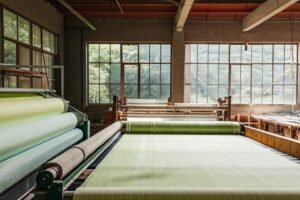
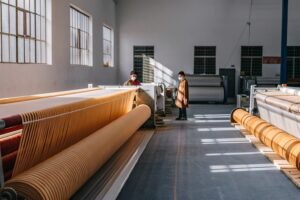
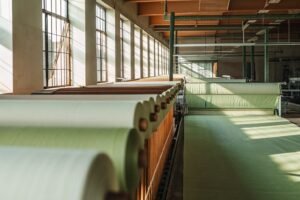
Once the yarn is prepped, it’s time for the loom. The weaving stage isn’t just about putting threads together; it’s about strategically placing the "engine" of the crinkle. You have to think of the weave as the skeleton that holds the future texture.

What’s the Difference Between Crepe Weave and Crepe Yarn?
This is a point of confusion I clear up daily. There’s something called a "crepe weave," which is a specific pattern of interlacing that creates a slightly pebbled surface on its own. But for a true, pronounced crinkled texture, we rely on "crepe yarn" (the high-twist we just discussed). In most cases, the magic happens when we use standard, non-high-twist yarns for the warp (the long threads running lengthwise) and insert the high-twist crepe yarn only in the weft (the threads going across).
This technique is what gives the fabric its characteristic cross-wise grain. I remember back in 2018, a buyer from a major US athleisure brand came to us with a sample they loved but couldn’t reproduce consistently. Their previous supplier was trying to use high-twist yarn in both directions. The result was a fabric that was too unstable and would distort during cutting. We shifted the production, using a stable warp and a high-twist weft, which solved their distortion problem and gave them the exact look they wanted. It’s about knowing how to find reliable woven fabric manufacturers for export who understand this nuance.
How Does Loom Tension Impact the Final Texture?
Let’s get a bit technical here. The tension on the loom isn’t just a setting; it’s a prediction of the final outcome. If the tension is too high during weaving, you’re essentially stretching the high-twist weft yarn so much that it can’t "spring back" effectively during finishing. The crinkle will be weak. If the tension is too low, the fabric might be too loose and prone to snagging or uneven texture.
We run our looms at a calibrated medium-high tension. This keeps the warp yarns taut enough to create a stable fabric but allows the weft to be inserted without being overstretched. After weaving, the fabric goes through a relaxation process. You can actually see the texture begin to bloom as the tension releases. We measure this using a fabric relaxation shrinkage test in our lab. For a standard polyester crepe, we aim for a shrinkage of 5-8% in the finishing process. That shrinkage isn’t a loss; it’s the creation of the texture. It’s a number we guarantee to our clients so they can factor it into their pattern making.
What Chemical and Mechanical Finishing Steps Set the Crinkle?
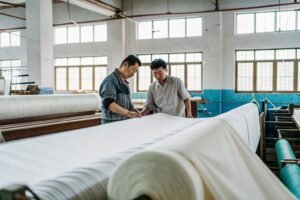
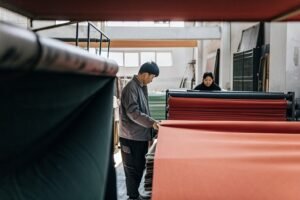
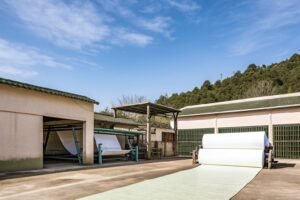
Weaving gives the fabric potential, but finishing makes it real. This is where the crinkle actually appears and is locked in. It’s a combination of chemistry and physics, and it requires a partner who has their own finishing capabilities. At our facility in Keqiao, we do this in-house to maintain total control.

How Does Scouring and Relaxation Activate the Crinkle?
When the greige (unfinished) fabric comes off the loom, it’s flat. It has all the tension from weaving locked inside. The first step in finishing is to release that tension. We run the fabric through a hot water bath or a scouring process. This heat and moisture relax the fibers.
For the high-twist yarns, this is their moment. They begin to untwist, forcing the fabric structure to buckle. It’s fascinating to watch. A flat piece of fabric, in a matter of minutes, develops a uniform, pebbly texture. We control the temperature and the speed of the fabric through the bath meticulously. Too hot, and the crinkle might be too aggressive, leading to a harsh hand-feel. Too cool, and it won’t fully develop. We have specific protocols for different weights and fibers, protocols we’ve developed by working closely with brands like those you see at the Première Vision trade shows. This is why partnering with a supplier who has a comprehensive textile printing and finishing factory is so critical.
What Role Do Heat Setting and Chemical Fixation Play?
After the crinkle is activated, we have to make it stay. For synthetic fibers like polyester, we use heat setting. The fabric is passed through a stenter frame—a huge oven—at high temperatures (typically 180-200°C for polyester). This resets the molecular structure of the fiber around the new, crinkled shape. The result is a "permanent" texture that won’t wash out.
For cellulosic fibers like viscose or cotton, we often use chemical resins to help fix the crinkle. This is a more delicate process. The resin helps the fibers hold the new shape but can sometimes affect the fabric’s softness. We balance this carefully. I recall a project in 2022 for a Scandinavian minimalist brand that wanted a stiff, architectural viscose crepe. We used a higher concentration of resin to achieve that rigid structure. For a softer, fluid drape, we reduce the resin and rely more on mechanical finishing, like calendering, to gently press and set the surface. It’s a toolkit of techniques, and knowing which tool to use is what 20 years of experience gives us.
How Can You Ensure Quality and Consistency in Crepe Fabric Orders?
You’ve sourced the yarn, you’ve woven it right, and you’ve finished it to perfection. But how do you know it’s right before it lands on your dock in Chicago or your warehouse in London? This is where a robust quality control system, not just a final inspection, becomes your best friend. At Shanghai Fumao, our process is designed to catch issues before they become your problems.

What Are the Common Defects in Crepe Fabric Production?
Crepe, by its very nature of being "distorted," can have some unique defects if not managed properly. The most common one we see is uneven crinkling. This can happen if the tension on the loom wasn’t uniform across the width of the fabric, or if the temperature in the finishing oven varied. One side of the roll might have a beautiful, tight texture, and the other might be almost flat.
Another issue is "cracks" or "creases" that become set during finishing. If the fabric folds over on itself in the wet processing stage, that fold can become a permanent, hard line that ruins the look. We prevent this by using open-width processing whenever possible. We also use AQL (Acceptable Quality Level) inspections at multiple stages. We don’t just check the final roll; we check the greige goods, the batch after scouring, and the final roll. This layered approach, backed by our QR code tracking system, gives our clients 100% transparency. They can see the test results for shrinkage, colorfastness, and texture consistency for their specific batch.
How Do We Simulate Real-World Use in Our Testing?
Lab tests are great, but they don’t always tell you how a fabric will perform after a customer buys a garment. That’s why we go a step further. We simulate real-world conditions. For crepe fabrics, a key test is the wash and dry cycle.
We’ll take a sample from the production run and run it through 3, 5, or even 10 home laundering cycles. Does the crinkle hold? Does the color change? Is there excessive shrinkage beyond the initial 5-8% we accounted for? In one instance for a client in the UK, our testing revealed that a particular batch of viscose crepe was losing its texture after just two washes due to a resin incompatibility. We caught it before shipping, reformulated the finishing bath, and saved them from a potential returns disaster. This is the level of diligence you need when you’re importing custom made fabrics from China for your clothing line. We’re not just selling you fabric; we’re selling you the confidence that it will work in the real world.
Conclusion
Understanding the process of creating crepe fabric—from the initial high-twist yarn decision to the final quality checks in the lab—isn’t just an academic exercise. It’s the blueprint for a successful product launch. When you know why a crinkle forms, you can better specify what you want. When you know the pitfalls of uneven tension or improper heat setting, you know the right questions to ask your supplier. You move from being a passive buyer to an informed partner in the creation process. You demand consistency, not just a sample.
For over two decades, this is the exact knowledge we have baked into our operations at Shanghai Fumao. We don’t just take orders; we guide our clients through this complexity. We’ve stood on the factory floor in Keqiao, watching thousands of meters of fabric transform, and we’ve sat across the table from buyers in Paris, helping them understand why their desired texture required a specific, and sometimes more expensive, yarn.
If you’re ready to stop guessing and start producing collections with the exact texture, quality, and consistency you envision, let’s talk. I invite you to reach out to our Business Director, Elaine, directly. Tell her about your project, your timeline, and your challenges. She and our team are ready to put our 20 years of expertise and our end-to-end quality control to work for you. Contact Elaine at elaine@fumaoclothing.com, and let’s create something exceptional together.