I remember the phone call that changed everything. It was 2015. A client from Germany had received 20,000 meters of fabric. The color was wrong. Not completely wrong, but different. The first 5,000 meters were perfect. The next 5,000 were slightly lighter. The last 10,000 were somewhere in between. When they laid the fabric out for cutting, the difference was obvious. They could not use it. They had to reorder, rush ship, and lost a season. That client never ordered from us again. I was devastated. But I learned. That failure drove us to build the quality control system we have today. Now, shade variation is something we control rigorously. We have not had a shade rejection in over 5 years.
So, how does Fumao Fabric’s quality control prevent shade variations in bulk orders? It is a combination of science, process, and discipline. We use standardized lighting, digital color measurement, careful lot management, and continuous monitoring throughout production. In this guide, I will walk you through our entire system. From lab dip approval to final inspection, we leave nothing to chance. Because when you order fabric from us, you need every meter to match. Every time.
Why do shade variations happen in textile production?
Before I explain how we prevent shade variation, let me explain why it happens. Understanding the causes helps you appreciate the solutions.
Dye lot differences: Dyeing is a chemical process. Even with the same recipe, different batches can vary slightly due to water quality, temperature, pH, or dye concentration. This is called "dye lot variation." If you order a large quantity, we may need multiple dye lots. If not managed, they can differ.
Fiber differences: Natural fibers like cotton can vary from bale to bale. This affects dye uptake. Even synthetic fibers can have slight variations in crystallinity that affect color.
Fabric construction: The same yarn, same dye, but different weave or knit density can change how light reflects, making color appear different.
Finishing processes: Heat setting, calendering, or chemical finishes can alter the shade. A fabric that is heat-set at a higher temperature may yellow slightly.
Lighting conditions: A color can look different under natural light, fluorescent light, and incandescent light. This is called metamerism. Two fabrics that match under one light may look different under another.
Human error: Even experienced colorists can misjudge a shade.
Time: Dye lots made weeks apart can vary as raw materials or conditions change.
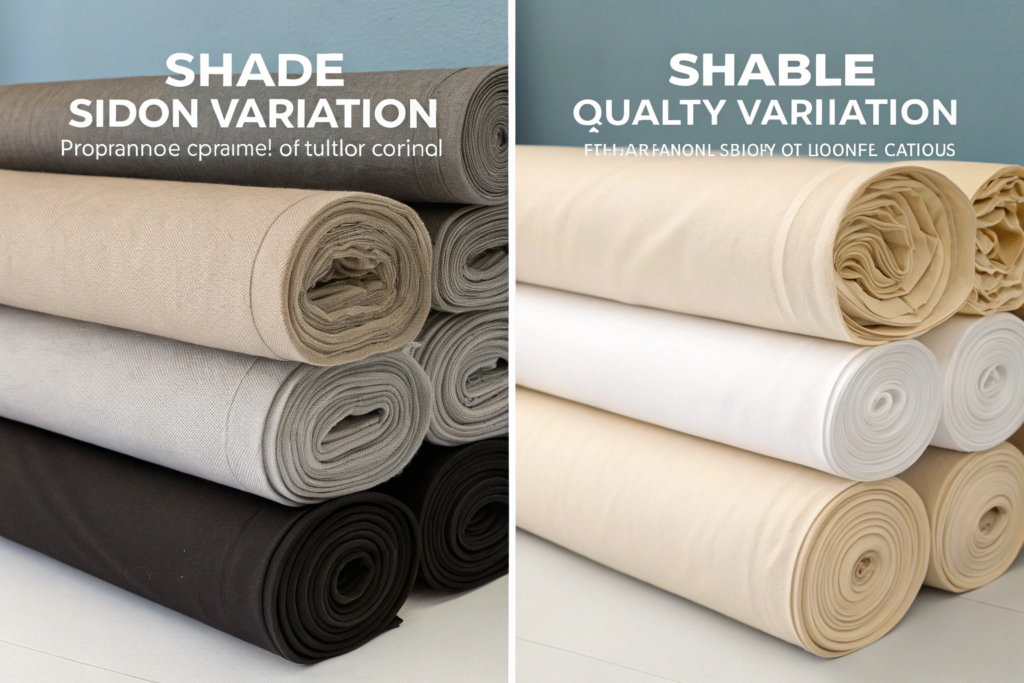
What is an acceptable shade variation?
In the industry, we use Grey Scales for color change. The scale goes from 1 to 5, with 5 being perfect match. For most apparel, a rating of 4 or above is acceptable (slight difference, noticeable only to trained eye). For high-end or brand-matched colors, we aim for 4-5 or 5.
But acceptable depends on the client. Some brands are very strict. A US activewear brand we work with requires a 5 for all their core colors. We deliver.
How does Fumao Fabric control shade from the very beginning?
It all starts with the lab dip. This is the first step, and it is critical.
Step 1: Receive the standard. The client sends us a standard: a Pantone number, a physical swatch, or a digital reference. If it is digital, we calibrate our monitors to ensure we see true color.
Step 2: Create lab dips. Our lab technicians take the specified fabric (or a similar base) and dye small samples using the recipe they think will match. They usually make several variations: slightly lighter, slightly darker, slightly different undertone. This gives options.
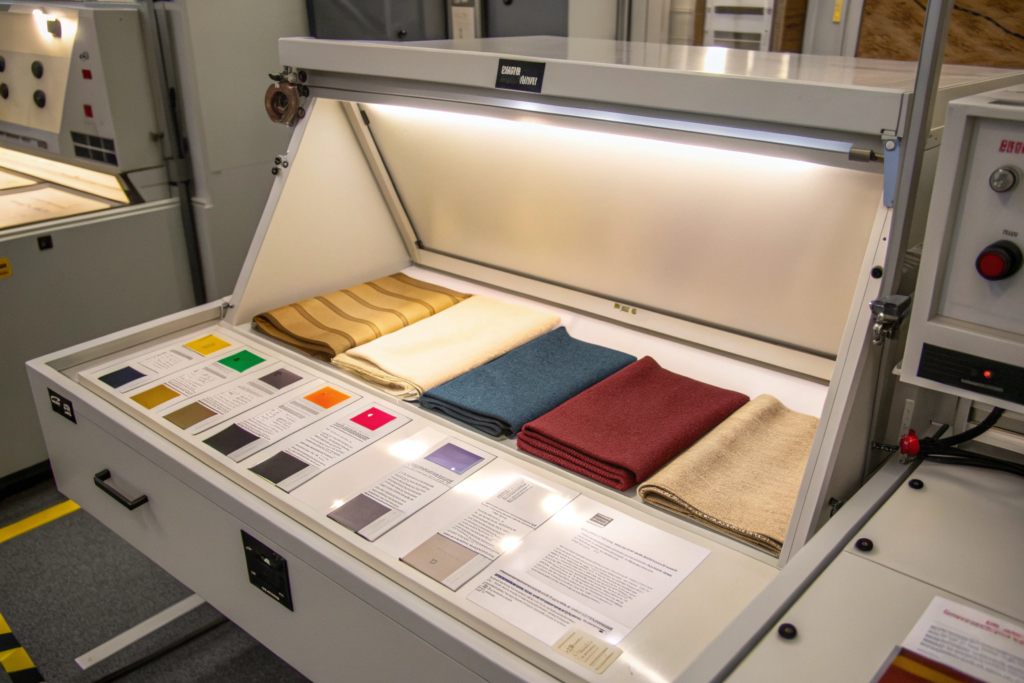
Step 3: Evaluate under multiple light sources. We use a light cabinet with at least three light sources: D65 (daylight), TL84 (fluorescent), and UV (to check optical brighteners). We evaluate the lab dips against the standard under each light. We look for metamerism (if they match under one light but not another).
Step 4: Select the best match. We choose the lab dip that matches best under all lights. We then send it to the client for approval. The client may approve, or ask for adjustments. We may go through 2 or 3 rounds.
Step 5: Save the approved standard. Once approved, we keep a physical sample of the lab dip and the standard. This becomes our reference for the entire production. We label it, date it, and store it in a dark, climate-controlled cabinet.
Step 6: Recipe. The exact dye recipe used for the approved lab dip is recorded. This includes dye concentrations, auxiliaries, temperature, and time. This recipe is used for the bulk production.
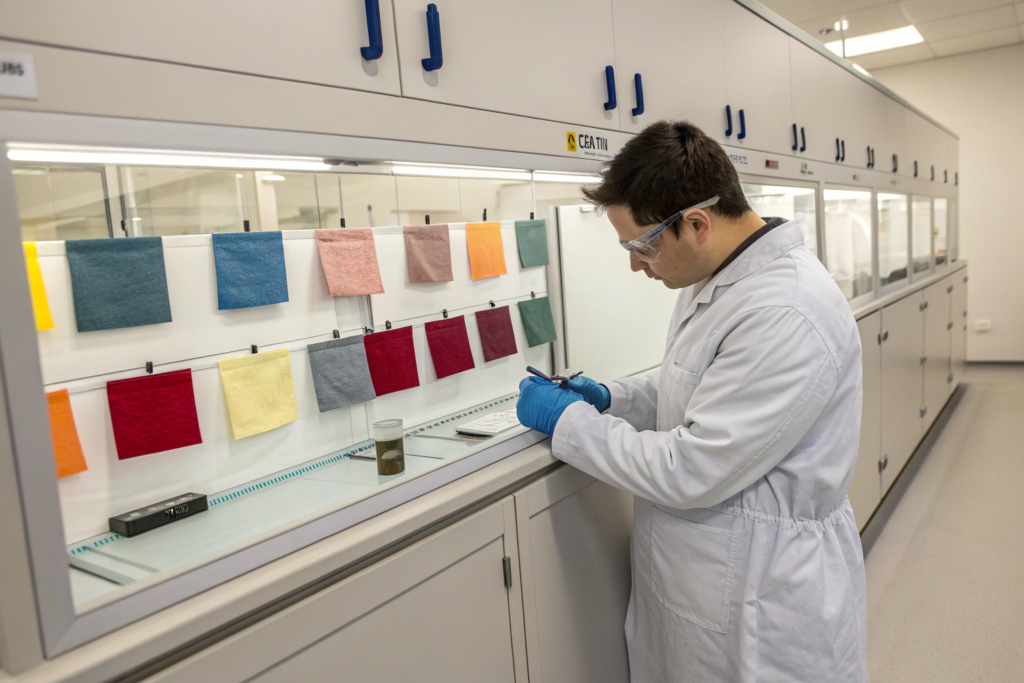
Why is the lab dip so important?
Because if the lab dip is wrong, the bulk will be wrong. We invest time here to get it right. A client from Sweden once sent a standard that was a piece of plastic. It was hard to match. We made 10 lab dips. The 8th was approved. That was 8 tries, but the bulk was perfect.
How do we manage production across multiple dye lots?
For large orders, we cannot dye all the fabric in one batch. Dyeing machines have limits. So we plan for multiple lots. Here is how we keep them consistent.
Lot planning: We calculate how many lots we need. Each lot is dyed using the same recipe, but we know there may be slight variation. So we plan to group lots by shade after dyeing.
First lot as reference: The first production lot is dyed. We compare it to the approved lab dip. If it matches, we keep samples as the "production standard." All subsequent lots are compared to this first lot, not just the lab dip.
In-process sampling: During each dye lot, we take samples at multiple points: beginning, middle, end. We check for consistency within the lot. If the shade drifts, we adjust.
Lot-to-lot comparison: After each lot is finished, we compare it to the first lot. We use both visual (light cabinet) and instrumental (spectrophotometer) methods. We measure the Delta E (color difference). For most clients, we aim for Delta E < 0.5 (very close). For critical clients, < 0.3.
Blending: If lots are very close, we may blend them during finishing or cutting. If there is a noticeable difference, we segregate. We label each roll with its lot number. The client can then use them in separate production runs.
Lot approval: Before shipping, we send shade cards to the client: small samples from each lot, arranged together. The client approves the combination. If they want only certain lots, we ship those.
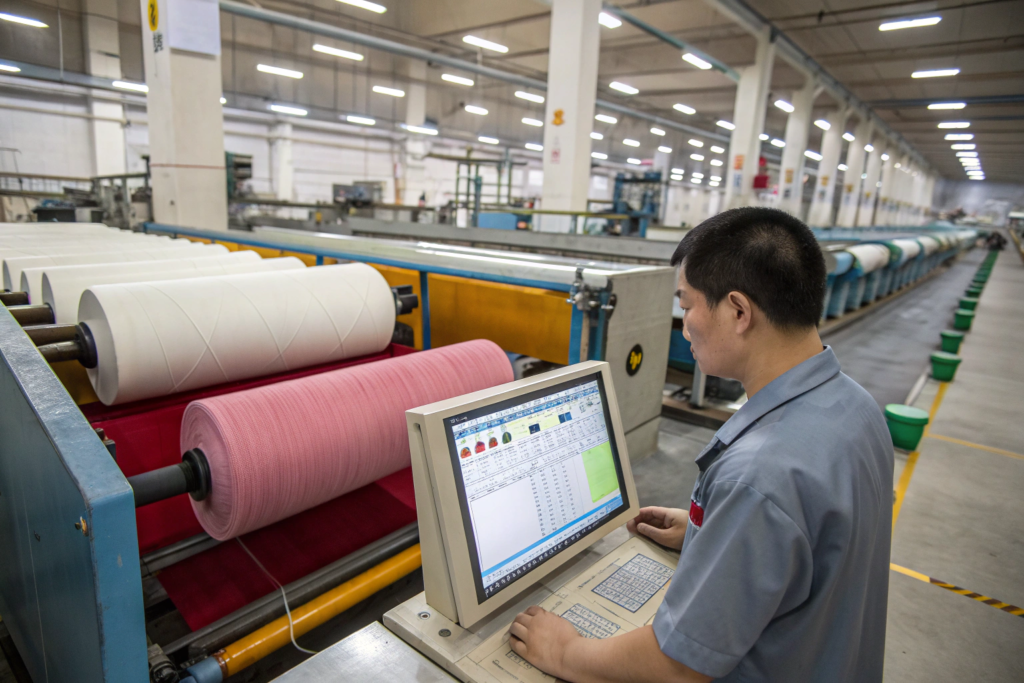
What if a lot is out of tolerance?
We have a procedure. If a lot measures outside our internal tolerance (e.g., Delta E > 0.8), we stop. We investigate. Maybe we can adjust the next lot to match. Maybe we can re-dye (strip and re-dye, though this is risky). If it is truly off, we do not ship it. We sell it as seconds or rework it. We do not send it to the client.
In 2022, we had a lot that was slightly too red. Delta E 0.9. The client might have accepted, but we did not want to risk it. We re-dyed. Cost us time and money, but the client was happy.
How do we use technology to measure color objectively?
Human eyes are good, but they are subjective. Instruments are objective. We use both.
Spectrophotometer: This instrument measures the color of a fabric sample across the visible spectrum. It gives numerical values: L (lightness), a (red-green), b* (yellow-blue). It also calculates Delta E, the total color difference from a standard.
Our process:
- We measure the approved lab dip (standard) and record its Lab* values.
- For each production sample, we measure and compare.
- We set tolerance limits. For a typical client, Delta E < 0.8 is acceptable. For critical, < 0.5.
- We also check for metamerism by measuring under different light settings (some instruments can simulate).
Light cabinet: Even with instruments, we still use visual inspection. Why? Because instruments can sometimes miss effects like metamerism or fluorescence. We view samples under D65, TL84, and UV light. We have a panel of trained observers. If the instrument says pass but the eye says fail, we trust the eye (and investigate why the instrument is wrong).
Digital color communication: We can send clients digital color data. Some clients have their own spectrophotometers. They can compare our data to their standard. This avoids shipping samples back and forth.
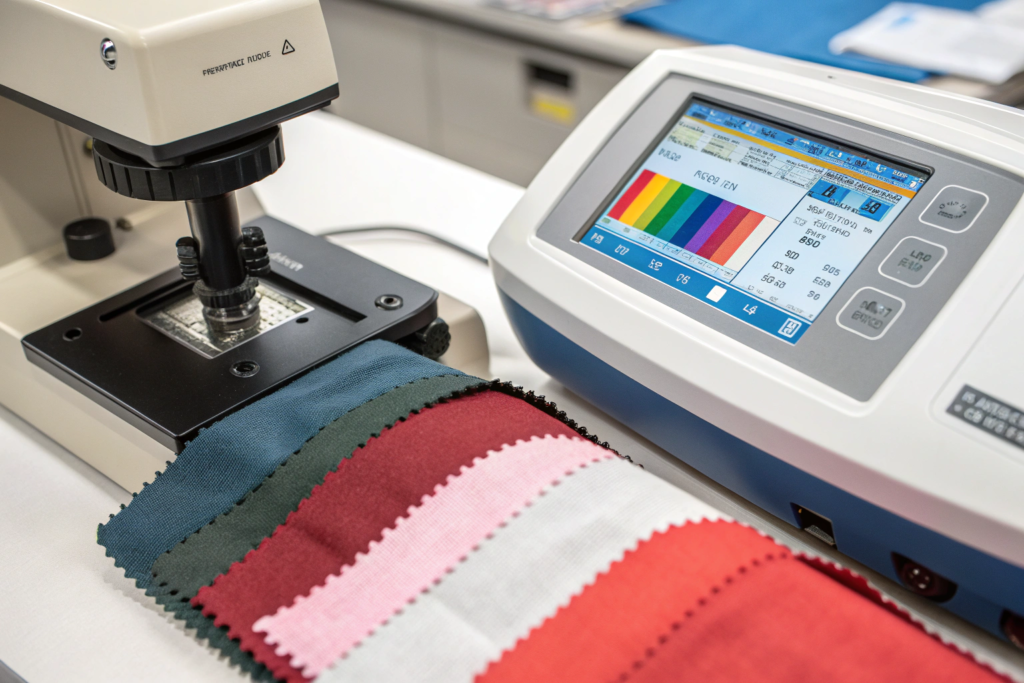
What is Delta E and what does it mean?
Delta E is a single number that represents the total color difference. It combines differences in lightness, red-green, and yellow-blue.
- Delta E < 0.5: Not visible to the human eye (perfect match).
- Delta E 0.5 – 1.0: Very slight difference, visible only to trained eye.
- Delta E 1.0 – 2.0: Small difference, visible to most people.
- Delta E > 2.0: Obvious difference.
We aim for Delta E < 0.8 for most clients. For high-end, < 0.5.
How do we control for metamerism?
Metamerism is when two colors match under one light but not under another. It is a common problem in textiles. Here is how we prevent it.
Step 1: Choose dyes carefully. Different dyes have different spectral curves. We choose dyes that are known to be less metameric. Our lab has experience with which dyes work best for which fibers.
Step 2: Match under multiple lights. During lab dip approval, we always check under D65 (daylight), TL84 (fluorescent), and A (incandescent). If the match is good under all three, it is likely good in real life.
Step 3: Use the same dye chemistry for bulk. If the lab dip used a specific set of dyes, the bulk must use the same. Changing dye brands or types can introduce metamerism.
Step 4: Test finished fabric under multiple lights. Before shipping, we test again under multiple lights. If we see metamerism, we investigate.
Step 5: Communicate with the client. If the client’s lighting conditions are known (e.g., they will inspect under store lighting), we can prioritize matching under that light.
A real example
In 2023, a client from Japan sent a standard that was a piece of yarn. We made a lab dip that matched perfectly under D65. But under TL84, it looked different. We tried different dye combinations. On the 5th try, we found a match under all lights. The client approved. The bulk was perfect.
How do we manage shade during finishing?
Dyeing is not the only step that affects color. Finishing can change shade. Here is how we control it.
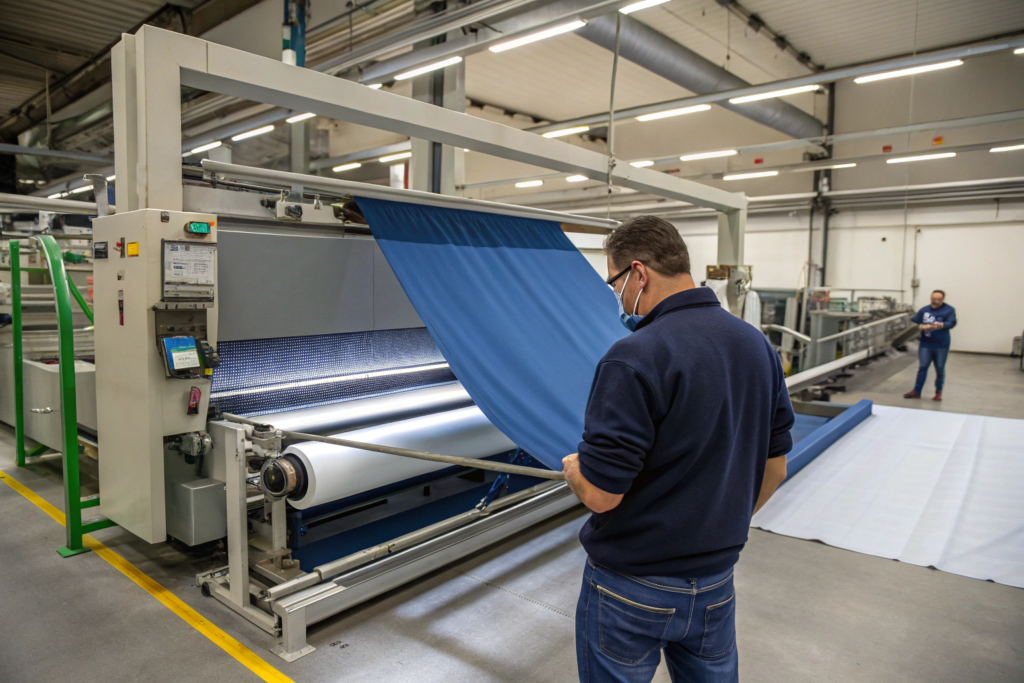
Heat setting: For synthetics, heat setting can cause yellowing. We control temperature and time precisely. We take samples before and after heat setting to check for color change.
Chemical finishes: Softeners, resins, and other finishes can alter shade. We test the finished fabric after all chemicals are applied. If a finish causes a shift, we may adjust the dye recipe to compensate.
Calendering: Calendering (pressing) can make fabric shinier and darker. We control pressure and temperature. We check shade after calendering.
Pre-shrinking: Sanforizing can also affect shade. We check.
Continuous monitoring: During finishing, we take samples every 500 meters. We compare to the standard. If we see drift, we stop and adjust.
What if the finish changes the shade?
Sometimes a finish is necessary but changes the color. In that case, we may do a "finish-first" approach: we apply the finish to the fabric before dyeing, or we adjust the dye recipe to account for the finish’s effect. This requires testing and experience.
For a client making outdoor gear, the water-repellent finish made the fabric slightly darker. We adjusted the dye recipe to be slightly lighter. After finishing, it matched perfectly.
How do we conduct final inspection for shade?
Before any fabric leaves our warehouse, it undergoes final inspection.
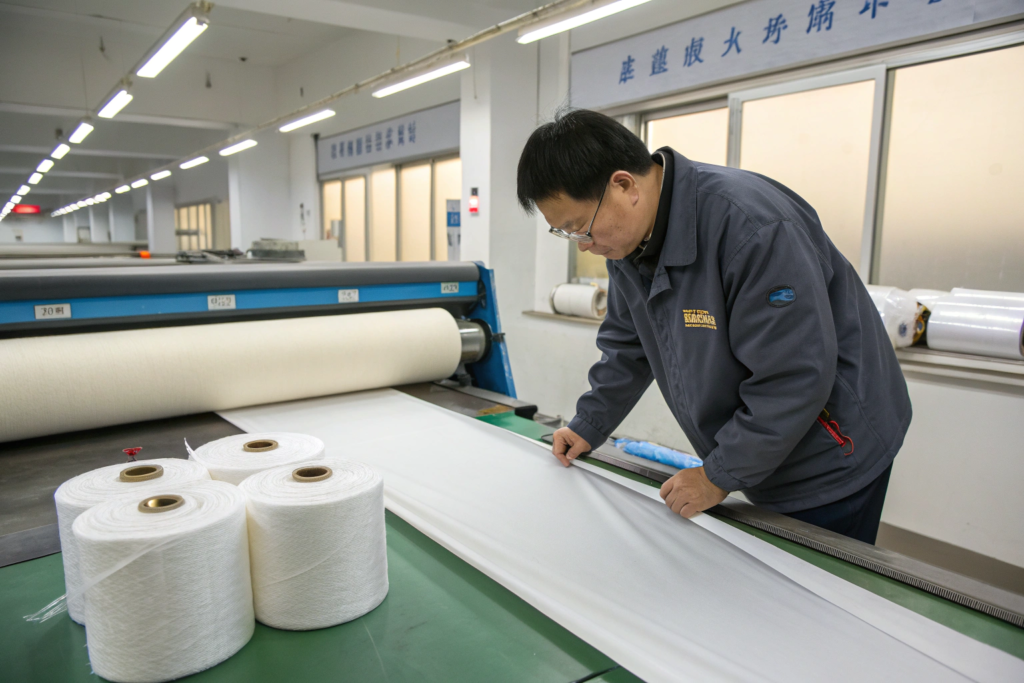
100% inspection: Every roll is inspected for shade, but not every inch. We sample at the beginning, middle, and end of each roll. We check for:
- Shade consistency within the roll.
- Shade compared to the standard.
- Shade compared to other rolls in the same lot.
Roll-to-roll comparison: We lay samples from multiple rolls side by side. If any roll stands out, we flag it.
Shade banding: For critical clients, we create "shade bands." We group rolls by slight shade variations (e.g., lots 1-5 are "blue side," lots 6-10 are "neutral"). We label them accordingly. The client can then use rolls from the same band together.
Documentation: Each roll gets a shade report. We record the Delta E measured at multiple points. We provide this to the client.
Client approval: For large orders, we send shade cards (small samples from each roll) for client approval before shipping. This adds time but prevents surprises.
What happens if we find a shade problem at final inspection?
We do not ship it. We segregate the problematic rolls. We then decide:
- Can it be re-dyed? Sometimes.
- Can it be sold as seconds? Often, if the shade is still within a range.
- Is it total waste? Rarely, but possible.
We are honest with clients. If a roll is slightly off, we offer it at a discount with full disclosure. Some clients accept for non-critical uses. Others reject.
How do we handle reorders and shade matching years later?
One of the hardest challenges is matching a color years after the original order. Dye chemistry changes. Fiber sources change. But we do our best.
We keep archives: For every order, we keep:
- The approved lab dip.
- The client’s original standard (if physical).
- Samples from each production lot.
- Dye recipes and process parameters.
When a reorder comes: We pull the archived samples. We try to match to the archived fabric, not just the original standard. Because the original standard may have faded or changed.
We may need new lab dips: If the original dyes are discontinued, we reformulate. We send new lab dips for approval, matched to the archived fabric.
We warn clients: "We will do our best, but there may be a slight difference from the last order." Most clients understand. For critical brands, we recommend ordering extra fabric in the original run to cover future needs.
Conclusion
Shade variation is the enemy of quality. It can ruin a garment, a collection, or a brand’s reputation. But with the right systems, it can be prevented. At Shanghai Fumao, we have built a quality control system that leaves nothing to chance. From the first lab dip to the final inspection, we use science, technology, and discipline to ensure that every meter of fabric matches your expectations.
We have learned from our mistakes. We have invested in equipment and training. We have developed procedures that work. And we have a team that cares. That is why our clients trust us with their most important colors.
If you are sourcing fabric and shade consistency is critical to you, contact our Business Director, Elaine, directly. She oversees our quality control and color management. She can explain our process in detail, provide references, and ensure that your next order is perfectly matched, roll after roll. Email her at elaine@fumaoclothing.com. Tell her about your color, your quantities, and your standards. She will make sure that when you open that first roll, it is exactly what you expected. Because at Shanghai Fumao, we believe that color is not just color. It is your brand. And we protect it.