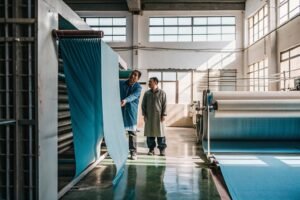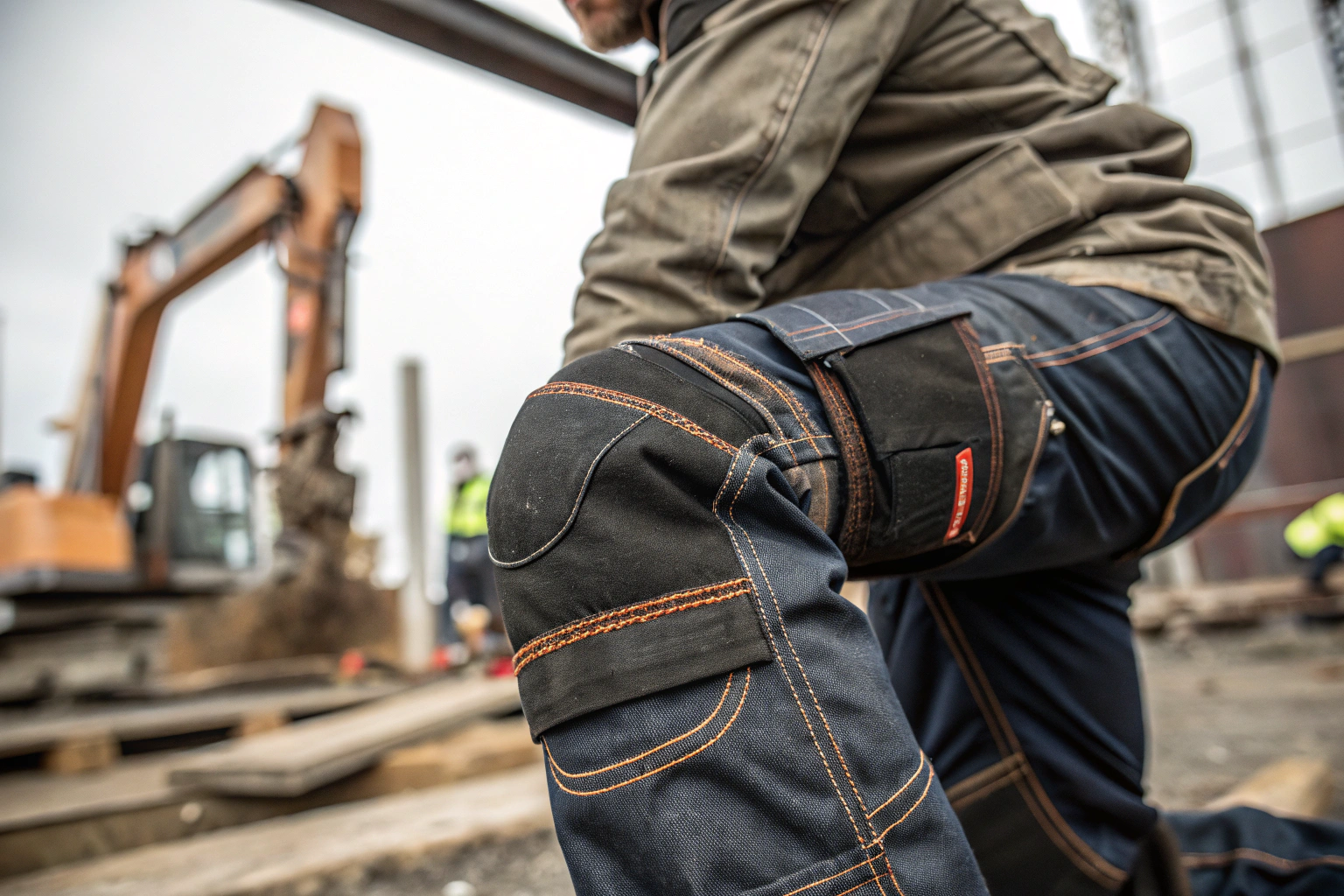
I learned about abrasion resistance the hard way. In 2016, a client from Canada ordered 10,000 meters of heavy cotton canvas for work pants. He specified "high abrasion resistance." We delivered. Three months later, he sent photos. The knees were worn through. The workers were complaining. I flew to meet him. We looked at the pants. The fabric had failed at the seams and knees. It was not the fabric’s fault entirely—the design needed reinforcement. But I realized: abrasion resistance is not just about the fabric. It is about the fiber, the weave, the weight, and the construction. And for workwear, it is about keeping people safe and comfortable on the job.
So, what are the best fabrics for extreme abrasion resistance in workwear? The answer depends on the job. A construction worker needs different protection than a warehouse worker. But generally, the best fabrics are high-tenacity nylons, Cordura, ballistic nylon, heavy cotton canvas, and blends with Kevlar or other high-strength fibers. In this guide, I will break down the options, the tests, the standards, and the practical considerations. Because workwear is not fashion. It is protection.
What is abrasion resistance and why does it matter?
Abrasion resistance is the ability of a fabric to withstand surface wear and rubbing. In workwear, it matters because:
- Knees and elbows rub against surfaces.
- Tools in pockets cause friction.
- Sitting, kneeling, and moving create wear.
- Seams and edges are vulnerable.
If a fabric fails due to abrasion, the worker is exposed. Skin can be cut or burned. The garment fails its purpose. So for workwear, abrasion resistance is a key performance property.
How is it measured? The main tests are:
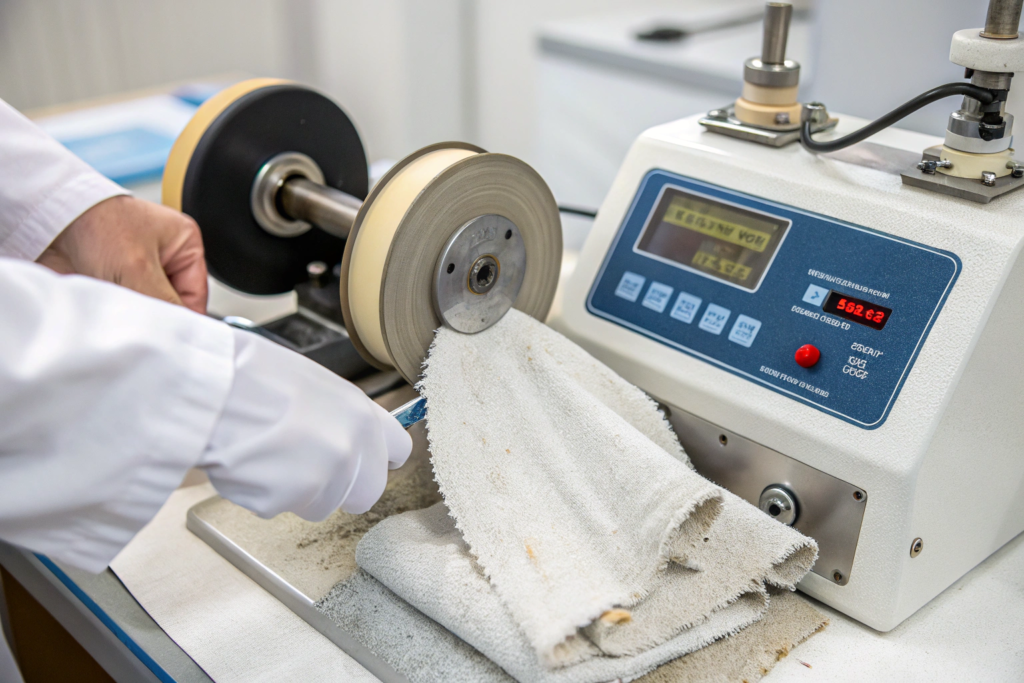
- Martindale test (ISO 12947, ASTM D4966): Fabric is rubbed against a standard abrasive surface in a figure-eight motion. The number of cycles until a hole appears, or until a certain level of wear, is recorded. For heavy workwear, we look for 50,000+ cycles. For extreme, 100,000+.
- Taber Abraser (ASTM D3884): A rotating wheel abrades the fabric. Results in cycles to failure.
- Wyzenbeek test (ASTM D4157): Used more for upholstery but sometimes for workwear.
What affects abrasion resistance?
- Fiber type: Nylon is stronger than polyester. Cotton is weaker. Aramid (Kevlar) is extremely strong.
- Fabric weight: Heavier fabrics generally resist better.
- Weave: Tight, high-density weaves are better. Twills and canvas are good. Ripstop helps prevent tear propagation.
- Finish: Some finishes can improve abrasion resistance, but they may wash out.
What are the different levels of abrasion resistance?
For workwear, we categorize roughly:
- Light duty (office, light industrial): 15,000 – 25,000 Martindale cycles. Polyester-cotton blends.
- Medium duty (warehouse, trades): 25,000 – 50,000 cycles. Heavy cotton canvas, poly-cotton with nylon.
- Heavy duty (construction, mining): 50,000 – 100,000 cycles. Cordura nylon, ballistic nylon.
- Extreme duty (military, rescue): 100,000+ cycles. Kevlar blends, high-tenacity nylon with reinforcements.
What are the top fabric choices for extreme abrasion?
Based on our experience supplying workwear manufacturers, here are the top performers.
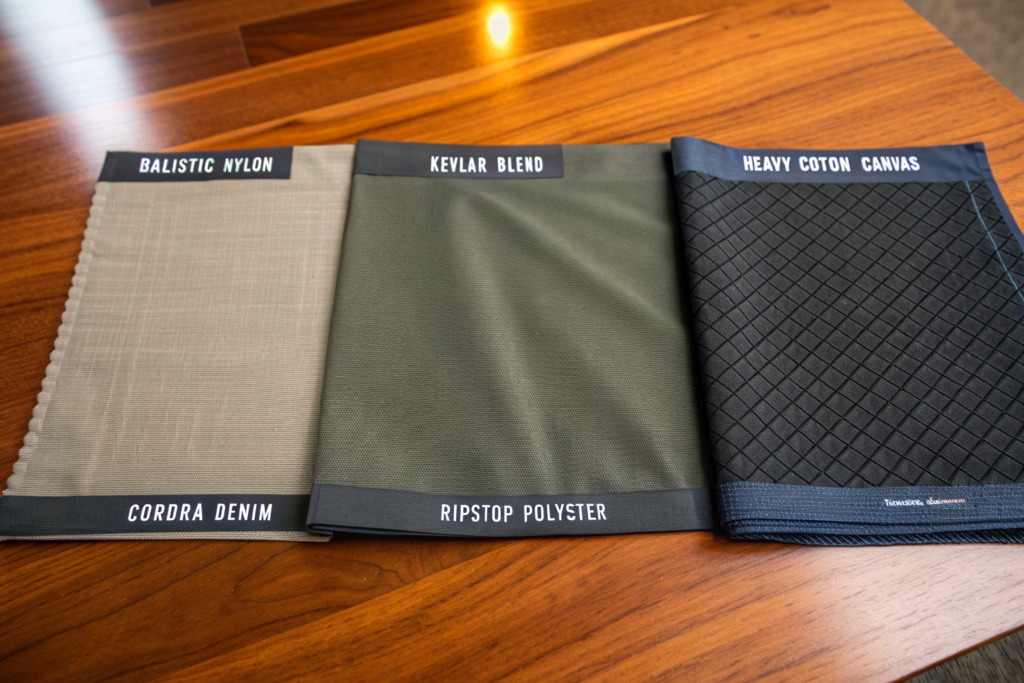
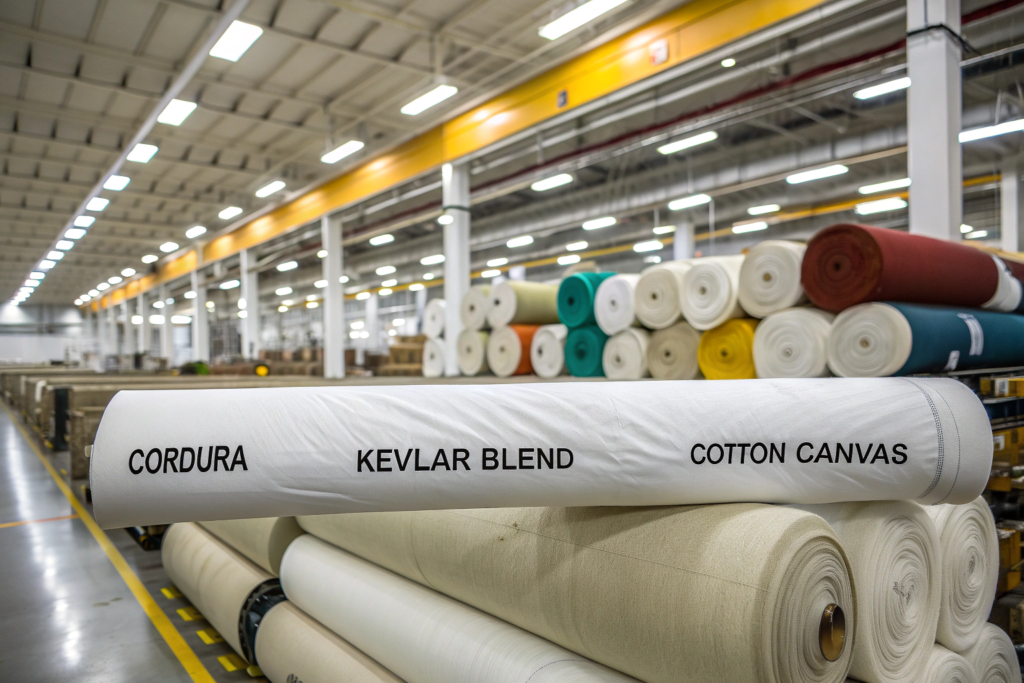
Cordura (High-tenacity nylon): This is the gold standard. Cordura is a brand of high-tenacity nylon fibers. It is incredibly abrasion-resistant. It is used in military gear, motorcycle jackets, and heavy workwear. Cordura fabrics are often ripstop woven, with a grid pattern that stops tears. They come in various weights: 330D, 500D, 1000D. Higher denier = heavier = more abrasion resistant. We supply Cordura-style fabrics (generic high-tenacity nylon) that meet similar specs. A client in Texas makes hunting pants with 1000D Cordura in the knees and seat. They last for years.
Ballistic nylon: Originally developed for flak jackets, ballistic nylon is extremely tough. It is a heavy, plain weave fabric made from high-denier nylon. Typical weight: 1050D to 1680D. It is used for luggage, tactical gear, and extreme workwear. It is stiff but very durable. A German client uses ballistic nylon for protective sleeves in a glass factory. Abrasion from sharp glass edges is constant. Ballistic nylon holds up.
Kevlar blends: Kevlar (aramid) is used for cut resistance and heat resistance, but it also has excellent abrasion resistance. Pure Kevlar is expensive and can be stiff. So it is often blended with nylon or polyester. Common blend: 50% Kevlar / 50% nylon. This gives abrasion resistance plus cut protection. Used in gloves, sleeves, and high-risk workwear. A Canadian client makes logging pants with Kevlar reinforcement in the front. Chainsaw accidents are rare, but the protection is there.
Heavy cotton canvas (10-12 oz): Traditional workwear fabric. Cotton canvas is comfortable, breathable, and durable. It is not as abrasion-resistant as nylon, but for many jobs, it is enough. It also has the advantage of being natural and breathable. For extreme abrasion, canvas is often reinforced with nylon or Cordura in high-wear areas. We supply 12 oz and 14 oz cotton canvas. A US brand uses it for carhartt-style work pants.
Ripstop polyester or nylon: Ripstop fabrics have a grid of stronger yarns that prevent tears from spreading. They are used in lightweight workwear, coveralls, and uniforms. The ripstop grid adds abrasion resistance at the intersections. Common in military uniforms.
Dyneema blends (UHMWPE): For the ultimate in cut and abrasion resistance, Dyneema (ultra-high molecular weight polyethylene) is used. It is extremely strong and light. But it is expensive and has low melting point, so not for high heat. Used in gloves and specialty protective gear.
Leather: Not a fabric, but often used in workwear for extreme abrasion areas (palms, knees). Sometimes leather patches are sewn onto fabric garments.
What about denim?
Denim is a cotton twill. It is durable, but standard denim (12-14 oz) is not in the "extreme" category. It might achieve 25,000-40,000 Martindale cycles, depending on weight and weave. For heavy work, denim is often reinforced with Cordura or Kevlar. "Cordura denim" is available—denim look with nylon reinforcement.
How do you test and verify abrasion resistance?
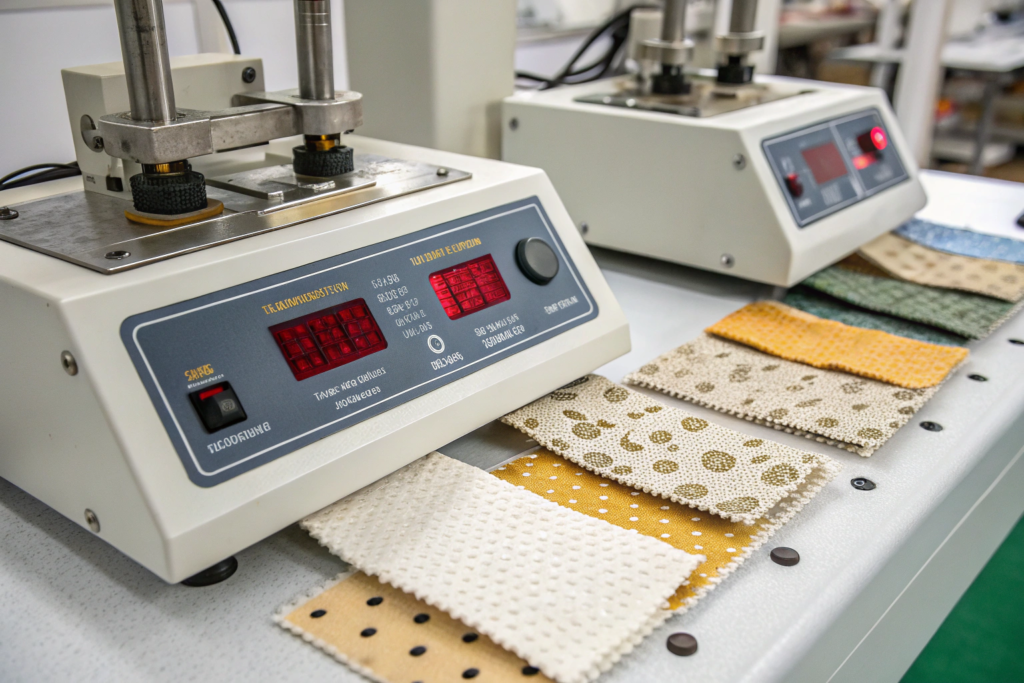
In our lab, we test abrasion resistance using the Martindale method (ISO 12947). Here is our process.
Step 1: Sample preparation. Cut specimens from the fabric, avoiding creases or defects. Condition in standard atmosphere (21°C, 65% RH) for at least 4 hours.
Step 2: Mounting. Mount the specimen in the Martindale machine’s sample holder. A standard abrasive fabric (worsted wool) is mounted on the abrading table.
Step 3: Testing. The machine rubs the specimen against the abrasive in a Lissajous figure motion (a complex pattern). The pressure is standardized (9 kPa for apparel, 12 kPa for heavy duty). The machine runs until the specimen shows a hole, or until a set number of cycles.
Step 4: Inspection. Periodically, we stop the machine and inspect. The end point is when two threads are broken, or when a hole appears. We record the number of cycles.
Step 5: Reporting. We report cycles to failure. For workwear, we may also report at specific intervals (e.g., "no hole at 50,000 cycles").
Other tests:
- Taber Abraser: For flat abrasion. Uses rotating wheels. Results in cycles to failure.
- Flex abrasion: For fabrics that will be flexed (like knees). A different machine bends and rubs the fabric.
What are the target numbers for different applications?
From our experience with clients:
- General workwear pants: 25,000 – 50,000 cycles (Martindale).
- Knees and elbows reinforced: 50,000 – 100,000 cycles.
- Motorcycle gear: 100,000+ cycles.
- Military combat uniforms: 50,000 – 80,000 cycles.
- Gloves (back of hand): 25,000 cycles, but palms are often leather.
- Bags and luggage: 50,000+ cycles (Taber).
Note: Different tests give different numbers. A fabric that achieves 50,000 Martindale might achieve a different number on Taber. Always compare within the same test method.
What are the best blends for comfort and durability?
Pure high-performance fabrics (like 1000D Cordura) are tough but stiff and uncomfortable. For workwear that people actually wear, we need blends that balance durability with comfort.
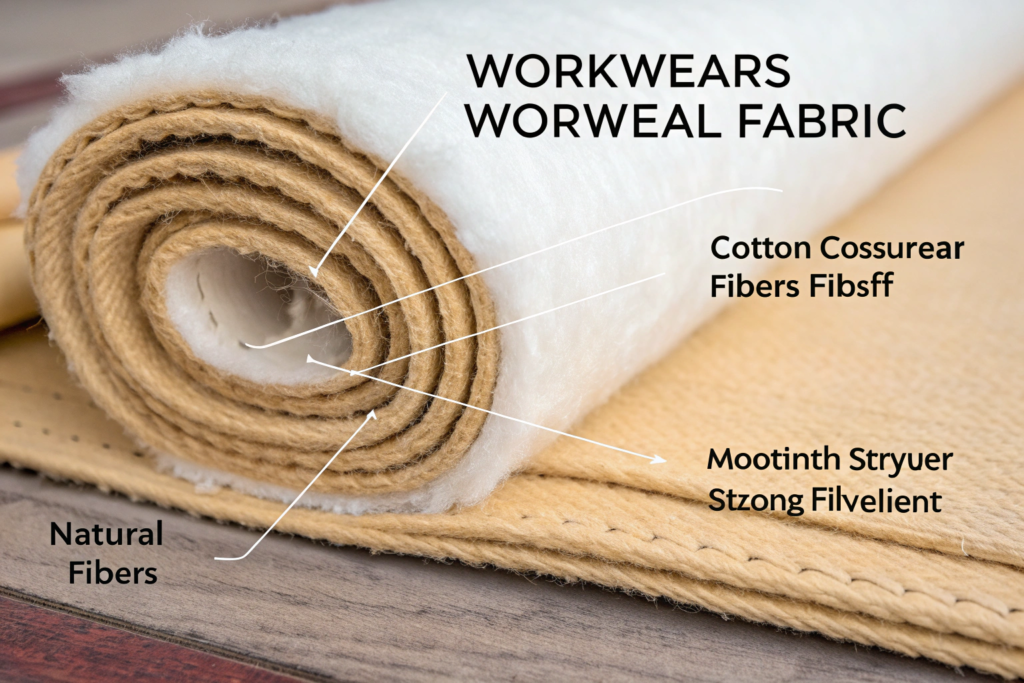
Cotton/nylon blends: This is the classic workhorse blend. Cotton adds comfort, breathability, and natural feel. Nylon adds strength and abrasion resistance. Common blends:
- 65% cotton / 35% nylon: Good balance. Used in tactical pants, work shirts.
- 50% cotton / 50% nylon: More durable, slightly less comfortable.
- 88% cotton / 12% nylon (with Cordura): Carhartt-style duck canvas with nylon reinforcement. Very popular.
We supply a range of cotton/nylon blends. A client in Australia makes bushfire-fighting clothing with 50/50 blend. It is abrasion-resistant but breathable enough for hot work.
Cotton/polyester/nylon (tri-blend): Polyester adds wrinkle resistance and durability, nylon adds strength, cotton adds comfort. Example: 50% cotton, 25% polyester, 25% nylon. Used in uniforms.
Nylon/spandex: For stretch workwear. The spandex adds flexibility, but the nylon provides abrasion resistance. Used in tactical pants, climbing gear. Example: 94% nylon, 6% spandex.
Kevlar/cotton/nylon: For high-risk work. Kevlar adds cut and abrasion resistance, cotton comfort, nylon strength. Used in gloves, sleeves, and protective gear.
Modacrylic/cotton: For flame-resistant workwear. Modacrylic is inherently FR. Blended with cotton for comfort. Used in electrical utility workwear.
How do you choose the right blend?
Ask these questions:
- How much abrasion? More nylon = more abrasion resistance.
- How much comfort? More cotton = more comfort (and breathability).
- Does it need stretch? Add spandex.
- Does it need FR? Use modacrylic, aramid, or FR-treated cotton.
- What is the budget? Nylon is more expensive than cotton. Kevlar is expensive.
What about reinforcements and double layers?
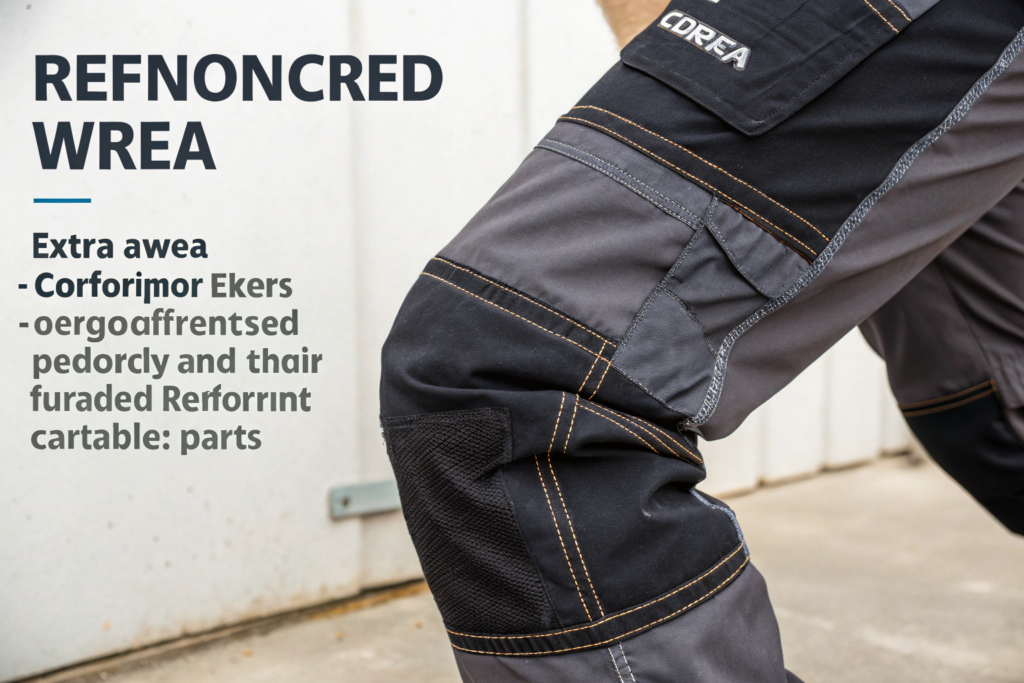
Even the best fabric will wear out fastest in certain areas: knees, seat, elbows, cuffs. That is why good workwear uses reinforcements.
Double knees: An extra layer of fabric sewn over the knee area. Often a more abrasion-resistant fabric (like Cordura) is used for the reinforcement. This extends the life of the garment dramatically.
Seat patches: Extra fabric on the seat.
Elbow patches: Similar to knees.
Shoulder reinforcements: For workers who carry loads.
Cuff guards: To prevent fraying.
The reinforcement fabric must be compatible with the base fabric for washing and wearing. We often supply matching or contrasting fabrics for reinforcements.
How to choose reinforcement fabric?
- Match the care requirements (wash temperature, shrinkage).
- Choose a fabric with higher abrasion resistance than the base.
- Consider color matching or contrasting for style.
A client making logger pants uses 1000D Cordura for knee patches on a 12 oz cotton canvas base. The pants last twice as long.
How do you source abrasion-resistant workwear fabric from China?
If you want to source from China, here is what you need to know.
Find a specialist: Not every fabric supplier understands workwear. Look for those who supply to industrial clients, who have test data, and who know the standards. At Shanghai Fumao, we have a dedicated workwear division. We supply fabrics for uniforms, tactical gear, and protective clothing.
Specify the test requirements: Do not just say "abrasion resistant." Say "I need 50,000 Martindale cycles to ISO 12947." Provide the standard. We will test and provide reports.
Request test reports: Ask for abrasion test reports from an accredited lab. If they cannot provide, they are not serious. We have reports for all our workwear fabrics.
Consider the whole system: Abrasion resistance is not just the fabric. It is the seams, the thread, the design. Use high-tenacity thread (like bonded nylon) and reinforced stitching.
MOQs: For custom workwear fabrics, MOQs are higher. Specialty yarns like Cordura or Kevlar require minimum orders. Typically 5,000 meters per specification. For stock fabrics, MOQ can be 500 meters.
Lead times: Custom development: 4-6 months. Production: 8-12 weeks. Stock: 1-2 weeks.
Certifications: You may need FR certifications, chemical certifications (OEKO-TEX), or specific test reports for your market.
What are the common pitfalls?
- Over-relying on fiber content: 100% nylon does not automatically mean high abrasion resistance. The denier, weave, and finish matter.
- Ignoring seam strength: The fabric may be strong, but if the seams fail, the garment fails. Use proper seam construction and thread.
- Not testing the final garment: Test the finished product, not just the fabric. Knees and elbows may wear differently.
- Assuming all Cordura is the same: Cordura is a brand. There are generic high-tenacity nylons that perform similarly, but verify.
Conclusion
Extreme abrasion resistance in workwear is not a luxury. It is a necessity. It protects workers, saves money on replacements, and builds trust in your brand. The best fabrics combine high-performance fibers like nylon, Cordura, and Kevlar with thoughtful design and reinforcement. But it is not just about the fabric. It is about the whole system: the blend, the weave, the weight, the seams, and the testing.
At Shanghai Fumao, we have been supplying workwear fabrics for over 15 years. We work with manufacturers of uniforms, tactical gear, industrial clothing, and protective wear. We offer a range of abrasion-resistant fabrics, from heavy cotton canvas to high-tenacity nylon and Kevlar blends. We test to international standards. We provide full documentation. We understand that a life may depend on our fabric.
If you are sourcing fabric for workwear, contact our Business Director, Elaine, directly. She manages our workwear and protective textiles division and has worked with clients across North America, Europe, and Australia. Email her at elaine@fumaoclothing.com. Tell her about your application, your required abrasion levels, and your volumes. She will send you samples, test reports, and help you choose the right fabric for the job. Because at Shanghai Fumao, we believe that the best workwear is the kind you can trust. Every day.