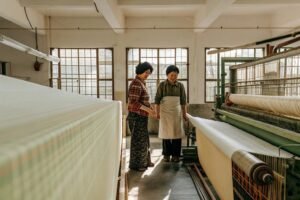
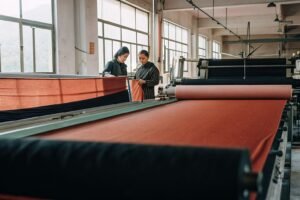
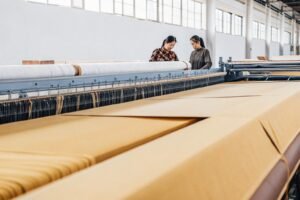
When I started in textiles 20 years ago, trend forecasting was a luxury. Only the big brands could afford it. They would fly to Paris, buy expensive trend books, and hire consultants. Small startups? They guessed. They copied. They hoped. And many failed because they chose the wrong fabric. I remember a young entrepreneur from London in 2018. She had a beautiful idea for sustainable activewear. She spent her savings on fabric—a heavy bamboo jersey that she thought was "eco." But it stretched out after two wears. Her startup died in six months. She came to me later, asking what went wrong. I told her: "You chose the right concept but the wrong fabric. And you chose it without knowing the trends." That conversation stuck with me. We realized that startups need help. They need trend knowledge, but they also need technical reality.
So, how does Fumao Fabric assist with fabric trend forecasting for startups? The simple answer: We bridge the gap between creative trends and manufacturing reality. We do not just sell fabric. We advise on what is coming, what works, what is sustainable, and what fits your budget. We have a dedicated team that studies global fashion weeks, trade shows, and consumer data. We translate that into actionable fabric choices for our startup clients. And we do it for free when you work with us. Because we believe that if you succeed, we succeed. In this guide, I will walk you through exactly how we help startups navigate the confusing world of fabric trends, from color forecasting to technical innovation.
What trend information sources does Fumao Fabric use?
We do not guess trends. We gather data from multiple sources, then we synthesize it for our clients. Here is what we use.
International fashion weeks: Our team watches Paris, Milan, New York, London, Shanghai, and Tokyo. We do not just look at clothes. We look at fabric. What textures are showing? What weights? What finishes? In 2023, we noticed a big shift towards "tactile sustainability"—fabrics that look natural and feel textured. We told our startup clients, and those who listened sold out.
Trade shows: We attend Première Vision in Paris, Intertextile in Shanghai, and Texworld in New York. These are not just buying shows. They are trend forecasters. The exhibitors show what is new. The seminars predict what is coming. We take notes, collect samples, and share insights. In 2022 at PV, we saw a huge push for bio-based synthetics. We started offering these to startups before the mainstream caught on.
Trend forecasting services: We subscribe to WGSN and Pantone. These are the industry standards. They give us color forecasts, macro trends, and consumer insights. But we do not just pass these reports to clients. We translate them. "Color of the Year" is nice, but what fabric can actually achieve that color? We know.
Consumer data: We track what is selling on Alibaba, Amazon, and Etsy. We look at search trends on Google. We see what real people are buying, not just what designers are showing. A US startup wanted to make "trendy" dresses in 2021. We saw data showing a surge in demand for "work-from-home comfortable wear." We advised them to pivot to soft knit sets. They did. It worked.
Social media and influencers: TikTok and Instagram move fast. Trends appear and die in weeks. We monitor fashion influencers and hashtags. When we saw "balletcore" trending in early 2023, we told our clients to look at chiffon, satin, and ribbed knits. Several did. They caught the wave.
Our own sales data: We see what thousands of clients order. That is real data. If multiple brands in different countries start ordering the same fabric, it is a trend. In 2022, we noticed a spike in orders for "crinkled fabrics" from multiple startups. We researched and found it was linked to the "no-iron travel wear" trend. We started promoting crinkled fabrics proactively.

How do we filter trends for different market segments?
A trend that works for a high-end European brand might fail for a US mass-market startup. So we filter. Here is how.
Price point filtering: If a trend requires expensive finishing, we tell budget-conscious startups early. For example, "vegan leather" is trendy, but good quality costs $15+ per meter. Not for a $30 retail price point. We suggest alternatives like coated canvas or heavy cotton sateen.
Geographic filtering: Trends vary by region. What sells in California (sustainable, organic) might not sell in Russia (warm, durable). We advise based on your target market. A startup selling to Nordic countries got our recommendations for wool blends and thermal fleece. They thanked us later.
End-use filtering: A trend for evening wear is different from activewear. We match the trend to your product category. If "metallic" is trending, we suggest specific metallic fabrics for your use case: coated for activewear, woven for dresses, printed for casual.
Timeline filtering: Some trends are long-term (like sustainability). Some are short-term (like a specific color). We help startups decide what to bet on. For long-term, invest in core fabrics. For short-term, use stock fabrics or small batches.
How do we translate trends into specific fabric recommendations?
Knowing a trend is one thing. Knowing what fabric to buy is another. That is where our 20 years of manufacturing experience matters. We do not just say "sustainability is trending." We say: "Here are three sustainable fabrics in your price range, with these properties, available in these quantities."
Color trends to specific dyes: When Pantone announces a Color of the Year, we do not just say "use this color." We check which of our fabrics can actually achieve that color. Some fabrics take dye differently. Some colors require specific dye chemistry. We guide startups to fabrics that can hit the trend color accurately. For "Viva Magenta" in 2023, we recommended specific polyester and cotton blends that took the deep pink-red well.
Texture trends to fabric construction: If the trend is "tactile textures," we do not just offer "textured fabric." We explain the options: slub yarns, crepe weaves, jacquards, embossed finishes. Each has different cost, lead time, and performance. A startup in 2022 wanted "texture." We showed them five options. They chose a slub linen blend. It fit their brand and budget.
Silhouette trends to fabric weight and drape: If oversized silhouettes are trending, you need fabrics with body. If fitted silhouettes are trending, you need stretch. We match. A client making oversized blazers got our recommendation for a firm twill with good recovery. It worked perfectly.
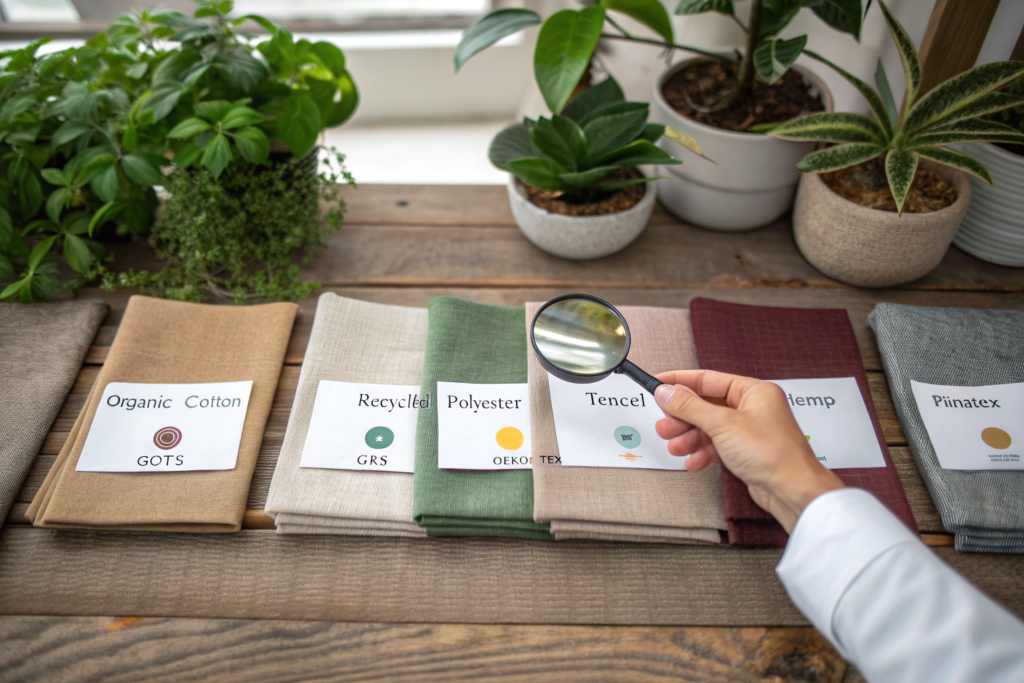
Sustainability trends to certified options: "Eco-friendly" is vague. We offer specific certifications: GOTS for organic, GRS for recycled, OEKO-TEX for safety. We explain the difference. A startup wanted "sustainable." We showed them recycled polyester and organic cotton options. They chose recycled because it matched their performance needs.

What is our "Trend Translation Worksheet"?
We developed a simple tool for startups. It is a worksheet we fill out together. It asks:
Your target customer: Age, location, income, values. This filters trends.
Your price point: Retail price target. This determines fabric cost limits.
Your product category: Dresses, activewear, home textiles. This narrows fabric types.
Your brand identity: Minimalist, bold, romantic, functional. This guides aesthetic.
Your timeline: When do you need fabric? This determines stock vs custom.
Your values: Sustainability, local manufacturing, innovation. This prioritizes features.
We then match this against our trend data. The output is a shortlist of 3 to 5 fabric recommendations, with samples, prices, and MOQs. A Berlin-based startup used this in 2023. They got 4 fabric options for their "urban minimalism" collection. They chose one, ordered, and launched successfully. They told us the worksheet saved them months of research.
What specific services do we offer to help startups choose trending fabrics?
We do not just talk. We do. Here are the specific services we offer to startup clients, many for free when you work with us.
Trend reports (monthly): We send a simple email report to our startup clients. It highlights 3 to 5 key trends, with fabric recommendations and images. It is not a 100-page PDF. It is actionable. A client in Mexico told us she plans her entire season around these reports.
Personalized trend consultations: Hop on a video call with our team. We discuss your brand, your goals, and your challenges. Then we send you a curated selection of fabric samples based on that conversation. A US swimwear startup did this in 2022. We recommended sustainable nylon blends with UV protection. They launched and grew 300% that year.
Sample yardage program: Once you choose a trend fabric, you need samples to test. We offer sample yardage (1 to 5 meters) at cost. We ship quickly. You can make samples, test wash, and confirm fit before ordering bulk. A Canadian brand made 10 sample garments from our yardage. They tested them on real customers. The feedback guided their final order.
Small batch production: Startups cannot order 10,000 meters. We get that. So we offer small batch options for many trending fabrics. Minimums can be as low as 100 meters for stock fabrics, 500 meters for some custom. A Brooklyn-based designer ordered 300 meters of a trending textured viscose. She sold out her collection and reordered.
Virtual fabric library: On our website, we have a growing library of trending fabrics with detailed specs. You can browse, filter by trend category, and request samples instantly. We update it monthly. A client in Australia checks it every month. She says it is like having a fabric showroom in her office.
Co-development for exclusive trends: If you want to create something unique based on a trend, we can help. We work with our mills to develop exclusive fabrics. MOQs are higher, but the exclusivity is worth it. A Japanese startup worked with us to develop a special eco-friendly crinkle fabric based on a trend they saw in Tokyo. It became their signature fabric.

Can you give me an example of a startup we helped?
I will share one story, without names for privacy. In 2021, a young founder from Los Angeles contacted us. She had an idea for "gender-neutral loungewear with a sustainable twist." She had a mood board but no fabric knowledge. We scheduled a video call. We asked about her target price, her values, and her timeline. She wanted soft, breathable, eco-friendly fabrics in neutral earth tones—a trend we were seeing in our forecasts.
We sent her a curated package: organic cotton fleece, recycled polyester sweatshirt fabric, Tencel jersey, and a hemp-cotton blend. Each with samples, prices, and care instructions. She tested them. She chose the Tencel jersey for tops and the organic cotton fleece for hoodies. She ordered small batches of each.
Her collection launched in early 2022. It sold well. She reordered three times that year. In 2023, she asked us to help develop an exclusive fabric: a recycled poly-cotton blend with a special garment wash effect. We did. Her brand is now in 20 boutiques across the US.
She told me recently: "Without your trend guidance, I would have chosen the wrong fabric and failed." That is why we do this.
How do we help startups balance trends with practical constraints?
Trends are exciting. But reality is… real. Startups have budgets. They have storage limits. They have production constraints. We help balance the dream with the practical.
Budget vs trend: If a trend requires expensive fabric, we help you decide: Is it worth it? Can you charge more? Or do we find a similar but cheaper alternative? For a European startup wanting "vegan leather," we showed them a PU-coated cotton that looked similar but cost 40% less. They used it, and customers loved it.
MOQ vs trend: If a trend fabric has a 5,000 meter minimum, and you need 500 meters, we have options. Stock fabrics. Dye-to-order programs. Or we help you find other startups to share the order. We connected two US startups in 2022 who both wanted the same sustainable fabric. They split the MOQ. Both won.
Lead time vs trend: Trends move fast. If a fabric takes 12 weeks to make, the trend might be over. So we guide you to stock fabrics for fast-moving trends, and custom fabrics for long-term trends. A client wanted a "holographic" finish that was trending. We had stock. She got fabric in 2 weeks. Her collection hit the market at the peak of the trend.
Performance vs trend: Sometimes a trendy fabric looks great but performs poorly. We test. If it fails, we tell you. A startup wanted "ultra-sheer" for summer dresses. We tested and found it would not hold up to washing. We suggested a slightly heavier sheer with better durability. The client agreed. No returns.

What are the most common mistakes startups make with trends?
I have seen these mistakes too many times. Learn from others.
Chasing every trend: Some startups try to do everything. One month, it’s "balletcore." Next month, it’s "gorpcore." They end up with a messy collection and unsold inventory. We advise: pick 1 or 2 trends that fit your brand. Commit.
Ignoring fabric availability: A designer sees a trend in a magazine. They want that exact fabric. But it might be exclusive to a big brand, or made in limited quantity. We help find alternatives. But sometimes, the answer is "you cannot get that." Better to know early.
Forgetting the end customer: A trend might be hot in fashion media, but will your customer actually wear it? We ask: "Does this fit their lifestyle?" A client wanted "corset tops" for a plus-size audience. We asked: "Will your customers feel comfortable?" They thought again and pivoted.
Not testing before committing: A startup orders 5,000 meters of a trendy fabric without testing. It shrinks 8%. Disaster. We always say: test first. Sample yardage is cheap. Mistakes are expensive.
How do we integrate sustainability trends into fabric sourcing?
Sustainability is not just a trend anymore. It is a requirement. But for startups, it is confusing. So many terms. So many certifications. So many claims. We help cut through the noise.
Explaining certifications: We do not just say "eco-friendly." We explain: GOTS means organic from farm to factory. GRS means recycled content with social responsibility. OEKO-TEX means no harmful chemicals. A startup from Amsterdam wanted "sustainable." We matched them with GOTS cotton. They used it in their marketing. It worked.
Sourcing sustainable fibers: We have partnerships with mills that specialize in sustainable production. Recycled polyester from plastic bottles. Tencel from sustainable wood pulp. Hemp from organic farms. We offer these as standard options, not special orders. A UK startup built their entire brand around our recycled nylon. They call it "ocean-friendly."
Transparency and traceability: We provide documentation. Test reports. Certificates. Chain of custody. A US client needed proof for their B Corp application. We provided everything. They got certified.
Cost realities: Sustainable fabrics often cost more. We help startups decide where to invest. Maybe use organic cotton for the main fabric, but standard for lining. Or use recycled polyester for the whole collection, but charge a premium. A Swedish startup priced their sustainable collection 20% higher. It sold because customers believed in the mission.
What sustainable trends are we seeing for 2025?
Based on our research and client inquiries, here is what we see coming.
Bio-based synthetics: Fabrics made from castor oil, corn, or other plants. They perform like polyester but are renewable. We are sampling these now.
Circular design fabrics: Fabrics designed to be recycled again. Mono-materials (100% polyester, 100% cotton) instead of blends. Easier to recycle at end of life.
Low-impact dyes: Natural dyes and waterless dyeing technologies. Colors might be slightly different, but customers accept that for sustainability.
Upcycled fabrics: Made from textile waste, not just plastic bottles. We are working with mills on this.
Transparency as standard: QR codes on fabric that show the whole supply chain. We are testing this with a few clients.
Conclusion
Starting a fashion brand is hard. You have a million things to worry about. Fabric should not be one of them. But fabric is the foundation. Get it wrong, and nothing else matters. Get it right, and you have a chance.
At Shanghai Fumao, we believe that trend forecasting should not be a luxury. It should be part of the service. That is why we invest in trend research. That is why we offer personalized consultations. That is why we have a sample yardage program and small batch options. We want startups to succeed. Because when you succeed, you order more fabric. It is that simple.
If you are a startup founder, or if you are launching a new collection, I invite you to work with us. Let us help you navigate the trends. Let us help you choose fabrics that are stylish, functional, and available. Let us help you avoid the mistakes I have seen too many times.
Contact our Business Director, Elaine, directly. She leads our startup support program and has helped dozens of emerging brands find their way. Email her at elaine@fumaoclothing.com. Tell her about your brand, your vision, and your challenges. She will set up a consultation, send you samples, and guide you through the process. And with our logistics support, shipping to the US, Europe, or anywhere else is smooth and tariff-aware. Because at Shanghai Fumao, we are not just a supplier. We are your partner in building something beautiful.