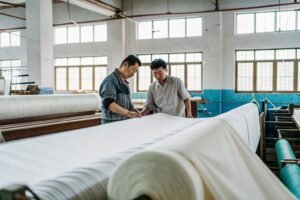
I never thought I would become an expert in pet apparel fabrics. But here I am, 20 years into textiles, and now I get emails asking for "unicorn costume fabric for a golden retriever" or "waterproof fabric for dog raincoats." It started in 2017. A small US brand contacted us. They made custom Halloween costumes for dogs. They needed bright colors, soft textures, and fabrics that could survive a dog running through the park. At first, I thought it was a niche market. Small orders, weird requests. But then the orders grew. And grew. In 2023, we shipped over 200,000 meters of fabric specifically for pet apparel. Dogs in sweaters, cats in capes, even a hamster in a tiny tuxedo. The pet clothing market is real, and it is huge.
So, how do you source fabric for custom pet apparel? It is not the same as sourcing for human clothes. Dogs have fur. They have different body shapes. They run on four legs. They chew. They roll in mud. And their owners love them like children. So the fabric needs to be comfortable, durable, washable, and safe. You cannot just use any leftover fabric from human garment production. You need to think differently. In this guide, I will walk you through exactly what we have learned supplying pet apparel makers in the US, Europe, and even Russia. The fibers, the weaves, the tests, and the pitfalls. Because if you want to make pet clothes that sell, the fabric is where it starts.
What are the best fabric types for different pet apparel applications?
Pet apparel is not one-size-fits-all. A Chihuahua in winter needs something different from a Husky in summer. And a Halloween costume needs different properties from a functional raincoat. So let me break down the main categories based on what our clients actually order.
For sweaters and winter wear: Fleece is king. Specifically, anti-pill polyester fleece. Why? It is warm, lightweight, and dries fast. Dogs get wet, they shake, and fleece dries quickly. It also does not snag easily on claws. We supply a lot of 200gsm microfleece to a Canadian pet brand. They make sweaters for small breeds. The fabric has a bit of stretch, so it fits different body shapes. Another option is acrylic knit, but it pills faster. For luxury, some brands use merino wool blends. But wool requires special care, and not all owners want that.
For raincoats and outerwear: The key is waterproofing. We use polyester with a PU (polyurethane) coating. The coating makes the water bead up and roll off. But it must also be breathable. Dogs pant to cool down. If the coat traps all heat, the dog overheats. So we use a breathable membrane or a coated fabric with microporous structure. A German client in 2022 asked for a fabric that was both waterproof and reflective for safety. We developed a polyester with reflective strips laminated into the fabric. It worked great for night walks.
For costumes and special occasions: This is where creativity comes in. We have supplied velvet for "royal" costumes, metallic fabrics for superhero capes, satin for formal wear, and even sequin fabrics for drag queen dog contests (yes, really). The challenge here is safety. Dogs can chew on sequins. They can swallow loose threads. So we recommend fabrics where embellishments are securely attached. Heat transfer vinyl designs are safer than glued-on sequins. We advise all our costume makers: "If the dog can bite it off, the dog will bite it off."
For lining and comfort layers: Next to the dog’s skin (or fur), you need softness. Brushed cotton or bamboo jersey are excellent. They are natural, breathable, and soft. For dogs with sensitive skin, we recommend organic cotton. A Japanese pet boutique orders organic cotton interlock from us for their high-end dog pajamas. Yes, dog pajamas. They sell out every season.
For active dogs and sportswear: Some dogs do agility courses. They need flexible, stretchy fabrics. Nylon/spandex blends work well. They are tough, stretchy, and quick-drying. We supply a US brand making "dog hiking vests" with this fabric. They add molle webbing for attaching gear. The dogs carry their own water and treats.

What fabric properties matter most for pet comfort and safety?
Comfort for dogs is different from comfort for humans. Dogs have fur, so they feel texture differently. But they also have sensitive areas like armpits and bellies. Here are the properties we prioritize based on feedback from pet owners and our own testing.
Breathability: Dogs do not sweat through their skin like humans. They pant and sweat through paw pads. So if a coat is not breathable, they overheat fast. We test air permeability on all fabrics for pet wear. A fabric that is great for a human winter coat might be dangerous for a dog. We aim for at least 50 cfm (cubic feet per minute) air flow for active wear.
Durability against claws: Dog claws are sharp. They can snag and pull threads. For woven fabrics, we use high thread counts and tight weaves. For knits, we use anti-snag finishes. A French client had problems with their dog coats snagging when the dogs played. We switched them to a ripstop nylon. Problem solved.
Ease of washing: Dog clothes get dirty. Mud, slobber, grass, sometimes worse. So the fabric must withstand frequent washing. We test for shrinkage after 5, 10, and 20 washes. We also test colorfastness to saliva. Yes, we have a "synthetic saliva" test. It sounds funny, but it is real. If the dye bleeds when the dog licks the fabric, the dog ingests chemicals. Not good.
Non-toxic materials: Dogs chew. They lick. They might eat fabric scraps. So all our pet apparel fabrics use OEKO-TEX certified dyes and chemicals. No heavy metals, no formaldehyde. We have a separate line of "pet-safe" certifications for concerned brands. A Swedish client requires this for every shipment.
Stretch and recovery: Dogs move differently. They run, jump, twist. The fabric must stretch with them but return to shape. We use elastane in many pet fabrics. Usually 3% to 8% spandex content. This helps the garment fit snugly without restricting movement.
How do you ensure fabric durability against claws and teeth?
I have seen what a determined dog can do to fabric. It is not pretty. In 2019, a client sent us back a sample garment that their own dog had "tested." The dog had scratched at the door while wearing the coat. The fabric was shredded at the elbows. We learned a lesson: dogs are tougher on fabric than humans. So we developed specific tests for pet apparel durability.
Abrasion resistance: We use the Martindale test, but we run it longer. For human clothing, 20,000 cycles might be enough. For dog wear, we aim for 50,000 cycles minimum. For active dogs, we recommend 100,000 cycles. A corduroy we used for a US brand failed at 30,000 cycles. We switched to a tighter weave twill. Passed at 80,000.
Snag resistance: Dogs scratch. They run through bushes. So we use the mace snag tester. It spins the fabric with metal balls that simulate snagging. If the fabric snags easily, we reject it. For one client making dog jackets for hunting breeds, we used a ballistic nylon. Almost impossible to snag.
Tear strength: If the fabric gets a small cut, will it rip open? We test tear strength using the Elmendorf method. For pet apparel, we look for high tear strength, especially in woven fabrics. A ripstop weave helps. The grid pattern stops tears from spreading.
Seam slippage: This is where the threads pull apart at the seams. Dogs put stress on seams when they move. We test seam slippage and require high resistance. For a Russian client making harnesses with fabric covers, we used a heavy-duty polyester with extra reinforcement at stress points.

What specific tests do we run for pet apparel fabrics?
In our CNAS-accredited lab, we have a special protocol for pet fabrics. It is not standard AATCC or ISO. It is our own mix, developed from years of client feedback. Here is what we do:
Claw snag simulation: We made a custom tool. It has five metal "claws" shaped like dog nails. We drag it across the fabric under controlled pressure. We measure how many passes until snags appear. We compare different fabrics. This test is not official, but it tells us more than any standard test.
Saliva colorfastness: We soak a fabric sample in a synthetic saliva solution (pH adjusted, with enzymes). Then we press it against a white cloth. We check for dye transfer. If any dye moves, we reject the fabric for pet wear. A UK client found this test invaluable after a previous supplier’s fabric stained a white Maltese dog pink.
Chew resistance (limited): We do not encourage dogs to chew fabric. But if they do, we want the fabric to not shred into small pieces that can be swallowed. So we test "fiber shedding." If a fabric pulls apart into long threads instead of breaking into small pieces, it is safer. A dog might swallow a thread, but it can pass. Small sharp pieces are dangerous.
Wash and wear with fur: We wash samples with actual dog fur attached. We want to see if fur embeds in the fabric. Some fleeces trap fur and are impossible to clean. Others release it easily. A smooth polyester lining is best for fur release. Fleece is the worst. So for inner linings, we recommend smooth fabrics.
How do you source safe and non-toxic fabrics for pets?
Safety is not optional in pet apparel. Dogs explore the world with their mouths. They chew. They lick. If your fabric contains lead, formaldehyde, or azo dyes, your customer’s dog could get sick. And you will get sued. Or at least, you will never get a second order. We take this very seriously.
OEKO-TEX Standard 100: This is the baseline. It tests for harmful substances. We certify all our pet apparel fabrics to at least Class II (direct skin contact). But for pet wear, we prefer Class I (for babies). Because dogs are like babies—they put everything in their mouths. A Dutch client insists on Class I for all their dog bandanas. It costs a little more, but it sells well.
REACH compliance: For European clients, REACH is law. It restricts thousands of chemicals. We have a REACH declaration for all our export fabrics. We update it yearly. In 2021, a new restriction on certain phthalates came out. We adjusted our PVC-free coatings immediately.
Heavy metal testing: Some dyes contain heavy metals. We test for lead, cadmium, mercury, and arsenic. For a US client making dog Halloween costumes, we provided heavy metal test reports for every batch. They had been burned before by cheap imports with lead in the zippers. We do not use those.
Formaldehyde free: Formaldehyde is used in some finishes to prevent wrinkles. But it is a skin irritant. We avoid it completely for pet fabrics. We use mechanical finishing instead of chemical. It is harder, but safer.
Natural fiber considerations: Organic cotton is popular for pet wear. But "organic" does not automatically mean safe. Pesticides are gone, but dyes and finishes can still be toxic. So we still test organic cotton for harmful substances. A Japanese client taught us this. They had organic cotton that failed for heavy metals because of the dye.

What red flags should you watch for when sourcing?
I have been in this business long enough to spot problems before they happen. Here are the red flags I look for when sourcing pet fabrics, either for myself or advising clients.
Strong chemical smell: If the fabric smells like gasoline, fish, or ammonia, run. That smell means something is off. Either the finishing chemicals are still present, or the fabric was stored improperly. We reject any batch with unusual odor.
Excessive dye bleed: Rub the fabric with a white cloth. Dry. Then wet. If color comes off easily, the dye is not fixed. That dye will come off on the dog. Not safe.
Stiff or scratchy hand feel: If it feels rough to you, it feels worse to a dog with sensitive skin. Especially on the belly and armpits. We always recommend a soft hand feel for pet contact areas.
No test reports: If a supplier cannot provide OEKO-TEX or equivalent reports, do not buy. Even if the fabric looks good. You have no proof it is safe. In 2018, a client bought from a cheaper supplier without reports. The fabric caused rashes on dogs. The client lost their entire business. They came back to us, but it was too late for that season.
Fiber content lying: Some suppliers say "cotton" but it is really polyester with a cotton feel. We burn test everything. Cotton smells like burning paper. Polyester smells like plastic. For pet wear, fiber content matters for breathability and care. Do not trust labels. Test.
What are the sourcing and MOQ considerations for pet brands?
Pet apparel is a growing market, but many pet brands start small. They might be Etsy sellers, or small boutiques. They do not need 10,000 meters of one fabric. They need variety, small quantities, and quick turnaround. This is a challenge because fabric mills have minimums. So how do we handle this at Shanghai Fumao? We developed a system for small pet brands.
Stock service program: We keep popular pet fabrics in stock. Fleece in 10 colors, cotton jersey in 20 colors, waterproof nylon in 5 colors. Minimum order from stock is 50 meters per color. That is low enough for most small brands. A UK pet costume maker orders 100 meters total, in 4 colors, every month. She gets exactly what she needs, when she needs it.
Custom development for growth: When a brand grows, they want exclusive fabrics. Custom colors, custom patterns, custom finishes. Then we move to made-to-order. Minimums for custom development are higher. Usually 3,000 meters per color for woven, 500 kg for knits. But we work with clients to reach that. A Canadian brand started with our stock service for two years. Then they grew enough to order 5,000 meters of custom color fleece. We helped them every step.
Sample yardage: For sampling, we provide 1 to 5 meters. We charge for it, but we credit the cost back if they place a production order. This encourages testing without big risk. A German pet startup ordered 20 samples in 2022. They tested them with their dogs. They chose two. Then ordered production. The sample cost was credited. They loved that.
Print on demand for small runs: For printed pet fabrics, we have a digital printing partner. Minimums can be as low as 100 meters per design. The cost per meter is higher, but for small brands, it works. A US brand making custom dog bandanas uses this. They order 200 meters of a new print, sell out, then order more.

What is the typical pricing for pet-grade fabrics?
Pricing varies widely based on fiber, construction, and finishes. Here is a rough guide based on our 2024 price list FOB Shanghai:
Polyester fleece (200gsm): $2.20 to $3.50 per meter. Depends on brushing quality and anti-pill treatment.
Cotton jersey (180gsm): $2.80 to $4.20 per meter. Organic cotton adds $0.80 to $1.50 per meter.
Waterproof coated polyester (150gsm): $3.00 to $5.00 per meter. Breathable membranes add cost.
Nylon ripstop (70D): $2.50 to $4.00 per meter. Coated versions cost more.
Velvet for costumes: $3.50 to $6.00 per meter. Polyester based. Silk velvet would be much higher.
Custom prints (digital): $5.00 to $8.00 per meter, depending on coverage and quantity.
Lining fabrics (polyester or cotton): $1.80 to $3.20 per meter.
These are estimates. Actual pricing depends on order quantity, specifications, and current raw material costs. In 2022, cotton prices spiked. We had to adjust. We always communicate price changes early so clients can plan.
How do you navigate tariffs and logistics for US pet brands?
Tariffs have been a headache since 2018. I know. Many US clients worry about importing from China because of the Section 301 tariffs. The good news: many pet apparel fabrics fall under HTS codes that have been excluded, or the tariffs are manageable. But you need to know the codes.
Common HTS codes for pet fabrics:
- 6006.32: Knitted fabrics of synthetic fibers. Often 7.5% duty, plus any Section 301 tariffs if applicable.
- 5407.61: Woven fabrics of polyester. Similar rates.
- 5208.11: Cotton fabrics. Lower duty, but quota considerations sometimes.
We work with a customs broker who specializes in textiles. They advise us on the correct classification. Wrong classification can lead to seizures or penalties. We have never had a seizure. We are careful.
FTA opportunities: Some of our fabrics qualify for preference under free trade agreements if the yarn is from FTA countries. But most China-made fabrics do not. So we focus on accurate declaration and helping clients budget for duties.
Duty drawback: If the finished garments are later exported from the US, there might be duty drawback. We provide all the documentation needed. A US client got back thousands in duties last year because they re-exported samples.
Logistics timeline: From our warehouse in Keqiao to a US west coast port: about 18 to 25 days by sea. East coast add 10 days. We recommend ordering 8 to 10 weeks before you need the fabric. That covers production, shipping, and any delays.

How do we handle the "Made in USA" claims?
Some US brands want to claim "Made in USA" but the fabric is from China. That is tricky. The FTC has rules. If the fabric is imported, the finished product can be labeled "Assembled in USA" or "Made in USA of imported fabric." We advise clients to check with their legal team. We provide certificates of origin and detailed invoices to support their labeling. A New York brand making dog bow ties uses our fabric. They label: "Designed and assembled in USA, fabric from China." It is honest, and customers appreciate transparency.
Conclusion
The pet apparel market is not a joke. It is a serious, growing industry. And the fabric is the foundation. If you get the fabric right—safe, durable, comfortable, and functional—your pet clothes will sell. If you cut corners, you will have returns, refunds, and unhappy dogs. And unhappy dog owners are loud. They post reviews. They tell their friends. You do not want that.
At Shanghai Fumao, we have been supplying pet fabric for over 7 years. We have learned what works and what does not. We have test methods specifically for pet wear. We have stock programs for small brands. We have custom development for growing brands. And we have the certifications to prove safety. We are not just a fabric supplier. We are a partner in your pet apparel business.
If you are planning a pet collection, or if you have a specific need—waterproof dog coats, soft puppy pajamas, crazy Halloween costumes—contact our Business Director, Elaine. She manages our pet fabric division and knows the market inside out. Email her at elaine@fumaoclothing.com. Tell her about your brand, your needs, and your timeline. She will send you samples, discuss MOQs, and help you choose the right fabrics. And with our logistics support, you can ship to the US without tariff surprises. Let us help you make clothes that dogs love to wear and owners love to buy. Because at Shanghai Fumao, we believe every dog deserves to look good.