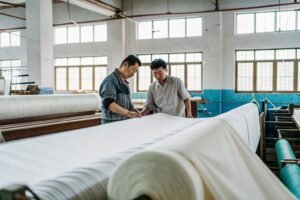
We’ve all been there. You receive a beautiful roll of fabric from your supplier in China. It looks perfect, the price was right, and the shipment arrived on time. You cut a sample, sew it into a garment, and everything seems fine. But then, a few weeks later, a customer in New York emails you. She broke out in a rash after wearing the blouse. Or maybe your quality control team in your Los Angeles warehouse notices a strange, pungent smell from a batch of children’s pajamas. This isn’t just a minor inconvenience. It’s a nightmare scenario involving potential health liabilities, chargebacks, and a ruined brand reputation. The invisible enemy here is often chemical residues like formaldehyde, which can linger in fabrics long after they leave our factory floor.
The short answer is: you don’t just rely on a "sniff test." You need a systematic approach combining accredited laboratory analysis, on-site spot checks, and a deep understanding of international compliance standards like OEKO-TEX® and REACH. At Shanghai Fumao, we’ve spent over 20 years perfecting this process, not just for our own production but to give our global clients the peace of mind they deserve when sourcing from China.
I get it. You’re an American brand owner, a buyer for a European label, or a startup designer. You’re juggling logistics, tariffs, and tight deadlines. The last thing you have time for is to become a chemist. But you do need to know how to protect your business from hazardous shipments. Relying solely on a supplier’s word is risky. In my two decades in Keqiao, the heart of China’s textile industry, I’ve seen the good, the bad, and the downright dangerous. I’ve walked through dyeing facilities that were immaculate and others that looked like they belonged in a different century. This article isn’t just a theory lesson. It’s a practical guide, born from real-world experience, on how we test for formaldehyde, heavy metals, and other nasties, and how you can build this safety net into your own supply chain. Let’s break it down, from the accredited lab to the simple tests you can request on your next order.
What Are The Mandatory Chemical Tests For Fabric Imported From China?
If you’re importing fabric from China into the US or EU, you’re not just buying a piece of cloth. You’re buying a product that must comply with some of the strictest chemical safety laws in the world. In the US, it falls under the Consumer Product Safety Improvement Act (CPSIA). In Europe, it’s the labyrinthine REACH regulation. And for many premium brands, they add the OEKO-TEX® Standard 100 certification on top of that. So, what are the actual tests we run in our CNAS-accredited lab to make sure your fabric passes muster?
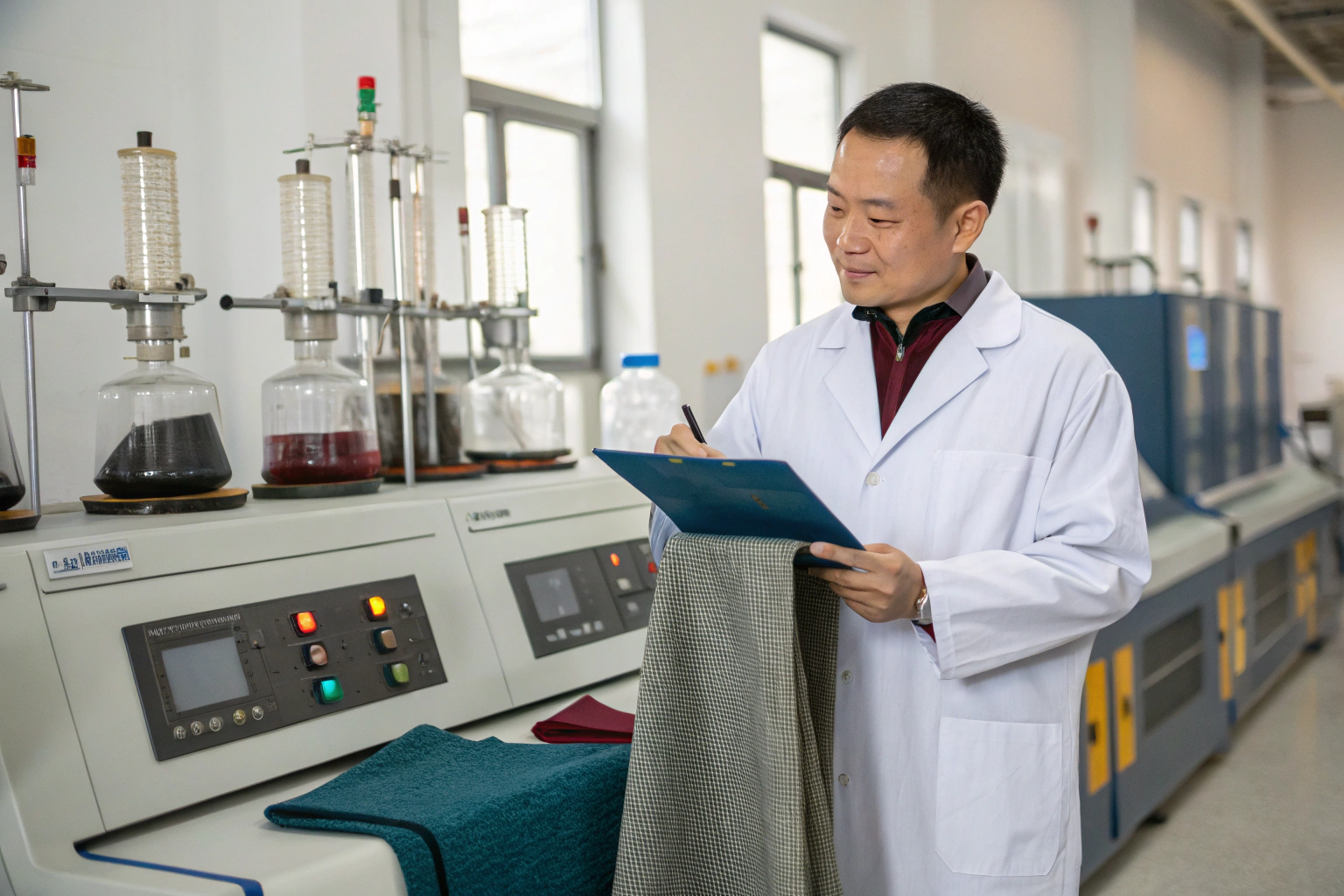
The big one, and the one in your title, is formaldehyde. It’s a colorless gas with a sharp odor, and it’s used in textile finishing to prevent wrinkles, fix dyes, and stop shrinkage. Sounds useful, right? But it’s also a known carcinogen and skin irritant. We use the Japanese Law 112 method for testing, which is the gold standard. We cut a specific weight of fabric, immerse it in water, and then use a reagent to measure exactly how much formaldehyde leaches out. For baby clothing (Class I products), the limit is a strict 16 ppm (parts per million) under OEKO-TEX®. For products with direct skin contact (like blouses or shirts), it’s 75 ppm. We recently had a client from Germany, a high-end children’s wear brand, send us a competitor’s sample that failed this test. They came to us because our internal protocols flag anything above 50 ppm for adult wear as a risk. We really do test to a higher standard than many require.
Another critical area is Azo dyes. These are synthetic dyes that can break down to release aromatic amines, which are also carcinogenic. You can’t see them. A beautiful scarlet red fabric might be perfectly safe, or it might be using a banned azo dye. The only way to know is with a gas chromatography-mass spectrometry (GC-MS) test. Our lab runs this for every new dye recipe we develop. We learned this lesson the hard way back in 2018. A new batch of reactive dyes from a local supplier looked identical to our standard, but our routine check revealed a banned amine. That shipment of chemicals went straight back. That one test saved thousands of dollars in potential recalled goods and protected our clients’ brands. For more insights into navigating global chemical regulations, a great resource is the Textile Exchange website, which provides excellent guides on chemical management in the supply chain. You should also check discussions on industry forums like TheSewingForum.co.uk, where small business owners often share their real-world experiences with compliance.
Finally, we test for heavy metals like lead, cadmium, nickel, and chromium VI. These can be present in metal accessories like zippers and buttons, or even in the dye pigments themselves. We use an ICP (Inductively Coupled Plasma) analyzer for this. I remember a case in 2022 where a startup from Australia was sourcing a beautiful olive-green canvas from another mill. It was the perfect shade. But when they sent it for pre-production testing, it came back with elevated lead levels in the pigment. The dye recipe used a cheap yellow pigment. They came to us, we reformulated using a different pigment combination from our trusted partner, and the fabric passed with flying colors. It added just a week to the timeline, but it saved their entire season’s collection.

Why do some Chinese fabrics have a strong smell even after washing?
You’ve probably experienced this. You open a package from your supplier, and a powerful, chemical smell hits you. Maybe it’s fishy, or like strong glue. Even after a wash, the odor lingers. This is a massive red flag. In my experience, that smell is often a sign of one of two things: excessive formaldehyde or residual pH issues.
The "new clothes" smell isn’t necessarily bad. It’s often just the volatile compounds from the dyes and finishes dissipating. But a truly strong, unpleasant odor usually points to a problem in the finishing process. Formaldehyde-based resins are a common culprit. If the fabric isn’t properly aired out or "cured" after the finishing process, the formaldehyde doesn’t fully evaporate. It gets trapped in the fibers. That’s why at Shanghai Fumao, we have a dedicated post-finishing aeration step. We run the fabric through a series of open-width rollers in a well-ventilated area for at least 24 hours before we even think about cutting a lab dip for approval. It adds a day to our timeline, but it’s a non-negotiable part of our quality promise. You can learn more about why we insist on this from this detailed guide on fabric finishing defects from the American Association of Textile Chemists and Colorists (AATCC).
Another reason for a bad smell is a high pH level. Think of it as the fabric being too "alkaline." During the scouring and dyeing process, we use a lot of caustic soda (sodium hydroxide). If the final neutralizing rinse isn’t thorough, high alkalinity remains. This can cause skin irritation and even weaken the fabric over time. The standard for final fabric pH is usually between 4.0 and 7.5 (neutral to slightly acidic), matching our skin’s natural pH. We test every batch with a simple pH meter. If it’s too high, back into the wash it goes. If your current supplier’s fabric smells like ammonia or has a soapy taste (yes, you can taste it, but don’t make a habit of it), that’s a sign of high pH. I’ve seen small-scale dyers in the "Belt and Road" markets cut corners on rinsing to save water, and it always leads to complaints. A great resource for understanding pH testing is the online knowledge base of SDC Enterprises, a UK-based company specializing in test materials.
How to Verify Fabric Safety Without an In-House Lab?
Look, I know not everyone has a CNAS-accredited lab in their back pocket. Most of our clients are designers, brand founders, or buyers. They can’t run GC-MS tests. So how do you protect yourself? You ask the right questions and demand the right proof. It’s about verification and transparency.
First, and this is the most direct method, you demand third-party test reports. Not a self-issued certificate from the factory, but a report from an independent lab like SGS, Bureau Veritas (BV), or Intertek (ITS). And you need to look at the date. A report from 2021 is worthless for a production run in 2024. I always tell my clients, "Don’t trust our word. Trust the data." When a new buyer from a French sportswear company came to us in 2023, they didn’t just ask for our certifications. They asked for the batch-specific report for the recycled polyester we were proposing. We sent it over within an hour. That level of transparency is what builds trust. You can find a list of accredited labs on the International Accreditation Forum (IAF) website.
Second, you can use digital traceability tools. We’ve invested heavily in this. Every roll of fabric we ship can have a QR code. When you scan it, it pulls up a secure webpage with that specific roll’s test data: composition, colorfastness, shrinkage, and crucially, the results of its hazardous substance tests. This isn’t a gimmick. It’s a direct window into our quality control process. If you’re a buyer worried about receiving fabric with hidden chemicals, this gives you a verifiable chain of custody from our QC team to your cutting table. I had a buyer from Los Angeles tell me this feature alone saved him from a major headache. His container was held up by US Customs for a random inspection. He was able to pull up the QR code data on his phone and email the reports directly to the CBP officer, clearing the goods in two days instead of two weeks. This kind of system is something more factories should adopt, and there are platforms like Sourceful that help brands and suppliers manage this data, though we built our own.
Third, start with pre-production samples tested for restricted substances. Don’t wait for the bulk order to be finished. When you approve a lab dip or a strike-off, send that small piece of fabric to a third-party lab for a full RSL (Restricted Substances List) test. It costs a few hundred dollars. If it fails, you’ve only lost a small sample and a few weeks. If you test the bulk fabric and it fails, you’ve lost thousands of dollars and weeks of production time. We actually encourage this. When we developed a new bamboo silk (BAMSILK) fabric last year, we sent our own development samples to SGS for a full REACH test before we even offered it to clients. We wanted to have the data ready. It’s just smart business.

What specific questions should you ask your Chinese fabric supplier about chemical safety?
When you’re talking to a potential supplier, you need to move beyond "Is your fabric safe?" Everyone will say "Yes." You need to ask specific, technical questions that separate the professionals from the traders. Here are my top four.
First, ask: "What is your standard for formaldehyde, and which test method do you use (e.g., JIS L 1041 or ISO 14184-1)?" A good supplier will immediately know the JIS (Japanese Industrial Standards) or ISO methods. A bad one will hem and haw. The method matters. The JIS method, also known as Japanese Law 112, is the most common for apparel. If they don’t know what you’re talking about, it’s a huge warning sign. I make sure our sales team can answer this in their sleep. It’s fundamental. You can read more about the specifics of the JIS L 1041 standard on the Japanese Standards Association (JSA) webstore, though the documents cost money, knowing the name gives you power.
Second, ask: "Can you provide a declaration of conformity for azo dyes for this specific fabric batch?" A "declaration" is a statement from them. It’s a good first step, but it’s not proof. Their answer will tell you a lot. If they say "We are OEKO-TEX certified, so all our fabrics are safe," that’s not a direct answer for that specific batch. Certifications cover production processes, not every single yard of fabric. A strong supplier will say, "We can provide a declaration, and we strongly recommend a batch-specific third-party test, which we can coordinate for you." This shows they understand the nuance. I’ve written a post on our company blog about the difference between mill certifications and batch testing that goes into more detail. It’s a common point of confusion for new buyers. Also, check out the ZDHC (Zero Discharge of Hazardous Chemicals) Gateway, a great resource for finding suppliers committed to chemical safety.
Third, ask: "What is your process for rinsing and neutralizing fabric after dyeing?" This is a process question. A quality-conscious factory will explain their multi-step rinsing process, possibly with an acid-neutralizing bath to ensure the final pH is correct. They might mention specific machinery like "open-width washing machines." A less reliable supplier might just say, "We wash it well." We’ve invested in water-efficient, multi-chamber washing machines that ensure a thorough rinse while saving water. In 2024, we installed new monitoring equipment that gives us real-time pH readings during the final rinse. This kind of investment shows a commitment to quality, not just production speed. For a deep dive into best practices for textile wet processing, the Huntsman Textile Effects website has some excellent technical papers and case studies on efficient rinsing and finishing.
Planning Your Production Around Chinese Factory Peaks and Holidays
You’ve got your chemical safety protocols in place. You’ve chosen a supplier like Shanghai Fumao. Now, you need to actually get the goods made and shipped. Understanding the rhythm of Chinese manufacturing is critical. If you miss a window, you can add weeks to your timeline. It’s not just about finding a factory; it’s about syncing with its heartbeat.
As you mentioned in your brief, we have distinct seasons. Our peak production periods are March to May and August to October. This is when everyone is rushing to get goods out for the Spring/Summer and Fall/Winter seasons. During these times, capacity fills up fast. If you place an order in April expecting a 4-week turnaround, you might be in for a shock. It’s more realistic to add 1-2 weeks to your standard timeline. We try to be transparent, but if we’re fully booked, we’re fully booked. We won’t compromise quality to meet an unrealistic schedule. We saw this in 2023 when a major US brand tried to place a massive order for fall goods in late September. We had to tell them we couldn’t guarantee shipment before the holiday. They ended up air-freighting half the order, costing them a fortune. Planning is everything.
The biggest event is Chinese New Year (CNY) . The entire country essentially shuts down for 3-4 weeks. Factories close, workers go home, and logistics grind to a halt. But the smartest brands, like the European fashion brand you mentioned, plan around it. They understand that to secure a spot in the production line as soon as we reopen, you need to have everything ready before we leave. That means finalizing designs, completing pre-production samples, and having all materials sourced and waiting at our dock. We work with our clients to create a "CNY Countdown" schedule. For the 2024 CNY, we helped a Canadian athleisure brand finalize their order by mid-January. We processed the payment, sourced the yarn, and had the grey fabric woven before we locked the gates. On the first day back, that fabric was in the dyeing machines. They had finished goods two weeks ahead of every other brand that waited until after the holiday to place their orders. You can check the exact dates for Chinese holidays each year on timeanddate.com, which is a simple but essential bookmark for any importer.

How to use slower production months to your advantage?
You mentioned the slower periods: June-July and November-December. These are our "secret weapons" for clients who need speed or want to test new things. When the factory is not running at 100% capacity, we can be incredibly flexible.
For a startup or a small brand, this is your golden opportunity. During these months, our 48-hour sample development promise is even easier to keep. We can run small-batch customizations without disrupting a massive production line for a ZARA or H&M. In July 2022, a small eco-brand from the UK approached us with a crazy idea: a fabric blend using recycled polyester and Tencel with a specific slub texture. During peak season, a request like that might take weeks to even get into the development queue. But in July, our R&D team jumped on it. We had a first-round sample in 5 days. They placed a small trial order of 500 yards, which we produced and shipped in 3 weeks. By October, they were back with a full-scale order based on the data from that trial. If they had tried to do that trial run in September, they’d probably still be waiting. Slower periods are for innovation and nurturing new partnerships.
Another advantage is potential cost savings. While we don’t massively discount our fabric because our quality standards never drop, we can sometimes offer more favorable payment terms or absorb some logistics costs during these months. We’re also more available for video calls and detailed technical discussions. I personally spend more time in the lab and on video conferences with clients during the summer, diving into their tech packs and figuring out how to solve their specific fabric challenges. It’s a time for deeper collaboration. For more on how to align your sourcing calendar with Asian production cycles, I highly recommend reading the "Sourcing Journal" , which regularly publishes articles on supply chain timing and best practices.
Conclusion
Navigating the world of fabric sourcing from China can feel like walking through a minefield, especially when it comes to invisible threats like formaldehyde and azo dyes, or the visible challenge of timing your production just right. But it doesn’t have to be a gamble. By understanding the key tests—like the Japanese Law 112 for formaldehyde and GC-MS for azo dyes—and by demanding verifiable proof through third-party reports and digital traceability tools like QR codes, you can build a robust safety net for your brand. You’ve learned that a strange smell is a warning sign, that asking the right technical questions separates the experts from the amateurs, and that syncing your order with China’s production calendar—especially navigating the shutdown for Chinese New Year—is just as crucial as the fabric’s quality itself.
At the end of the day, you need a partner who treats your supply chain as carefully as you treat your brand. At Shanghai Fumao, we’ve built our 20-year reputation on this foundation of transparency, quality, and relentless attention to detail. We don’t just sell you fabric; we offer you a stake in a system designed to protect your customers and your business.
Ready to stop worrying about chemical residues and start focusing on your next collection? Let’s talk. Our Business Director, Elaine, is ready to walk you through our process, from yarn sourcing to CNAS-certified testing, and show you how we can make your next project a success, no matter the season. You can reach Elaine directly at elaine@fumaoclothing.com. Let’s co-create something amazing, safely.