You’ve spent thousands on studio monitors, acoustic modeling software, and expert consultation. But your room still sounds wrong. Muddy lows. Harsh highs. Flutter echoes that ruin your mixes. You’ve tried foam panels, bass traps, diffusers—but something’s still off. And then it hits you: you covered all that expensive acoustic treatment with the wrong fabric. The fabric isn’t just a cosmetic cover. It’s part of the acoustic system. And if you get it wrong, you’ve just wrapped your investment in a sound-killing blanket.
The best fabrics for acoustic wall panels in studios are those that are acoustically transparent—meaning they let sound waves pass through to the absorbing material behind them, rather than reflecting them back into the room. But "acoustically transparent" isn’t a simple yes/no property. It depends on weave density, fiber type, thickness, and construction. At Shanghai Fumao Textiles International, we’ve been supplying technical fabrics to recording studios, home theaters, and commercial spaces for over a decade. I’ve watched studio designers tear their hair out over fabric choices. Let me save you that headache.
Here’s the reality: most fabrics sold for acoustic panels are actually decorative fabrics first, acoustic fabrics second. They look beautiful but choke the life out of your room’s sound. The right fabric should be nearly invisible to sound waves while providing the aesthetic you need. It’s a narrow sweet spot, but it exists. I’m going to show you exactly what to look for, what to avoid, and how to make sure your panels perform the way your acoustic designer intended.
What Makes a Fabric "Acoustically Transparent"?
Acoustic transparency isn’t magic. It’s physics. Sound waves are mechanical energy traveling through air. When they hit a surface, three things can happen: they can be reflected (bounce back), absorbed (turn into heat), or transmitted (pass through). For acoustic panels, we want the fabric to transmit as much sound as possible to the absorbing material behind it, and reflect as little as possible back into the room. The absorbing material—usually fiberglass or mineral wool—does the actual sound absorption. The fabric’s job is to stay out of the way.

How does fabric density affect sound wave transmission?
This is the single most important factor. Fabric density—how tightly packed the yarns are—determines how much air can move through the material. Sound waves travel through air. If the fabric is too dense, air can’t move freely, and the sound waves get blocked or reflected.
We measure this as "air permeability"—the volume of air that can pass through a fabric under standardized test conditions. For acoustic fabrics, we look for high air permeability. Generally, we recommend fabrics with an air permeability of at least 30-50 cubic feet per minute per square foot, though the exact number depends on the specific acoustic design.
I worked with a studio designer from Nashville in 2023 who had specified a beautiful Belgian linen for his client’s tracking room. The fabric looked amazing—natural, textured, expensive. But when we tested it, the air permeability was nearly zero. It was so tightly woven that it was essentially acting as a reflective surface. The designer couldn’t believe it. He’d assumed "linen" meant breathable. It doesn’t. We ended up supplying him with a specially engineered polyester fabric that looked almost identical to linen but had 60 CFM air permeability. The client’s mix room went from muddy to crystal clear. This technical guide to air permeability testing for acoustic fabrics explains the science. Don’t guess—test.
What’s the relationship between weave tightness and acoustic reflection?
Weave tightness is different from density. A fabric can be made from fine yarns woven tightly, creating a smooth, dense surface. Or it can be made from coarse yarns woven loosely, creating an open, breathable surface. For acoustic applications, openness matters more than yarn thickness.
The key metric here is "percent open area"—the percentage of the fabric’s surface that’s actually empty space between yarns. A fabric with 30% open area lets much more sound through than a fabric with 5% open area, even if both are made from the same yarn.
We recently worked with a home theater installer in Texas who was using a standard upholstery fabric for his screen wall. The fabric looked great, but the sound from the speakers behind the screen was muffled and dull. We switched him to our acoustically transparent screen fabric with 35% open area—a specialized leno weave that creates stable openings in the fabric structure. The difference was dramatic. Dialogue became clear, and the immersive soundstage returned. This explanation of fabric weave structures and their acoustic properties shows why weave matters as much as fiber.
What Fiber Types Work Best for Acoustic Panel Fabrics?
Not all fibers are created equal when it comes to sound. The fiber itself—its shape, surface texture, and material properties—affects how sound interacts with the fabric. Some fibers are naturally more reflective. Some are more absorbent. Some strike the right balance for acoustic transparency.

Why is monofilament polyester the gold standard for acoustic fabrics?
Monofilament polyester is the industry workhorse for a reason. Unlike spun polyester, which is made from short fibers twisted together, monofilament is extruded as a single, continuous strand. This creates a smooth, round fiber with a consistent diameter. When woven into fabric, monofilament creates clean, stable openings that don’t shift or close up over time.
The smooth surface of monofilament is also less likely to absorb sound energy itself. Remember: we want the sound to pass through the fabric to the absorber behind it, not be absorbed by the fabric. Monofilament’s smooth surface minimizes friction losses, letting sound waves pass through with minimal attenuation.
We supply monofilament polyester acoustic fabrics to studio builders across Europe and North America. A German studio designer told me recently that he’d tried natural fiber fabrics, spun polyesters, even specialty acoustic cottons. Nothing performed as consistently as monofilament polyester. The open area remains stable over time, the fabric doesn’t sag or stretch, and it’s available in virtually any color. This guide to monofilament polyester for technical applications explains why it’s so widely used. It’s not sexy, but it works.
Can natural fibers like wool or cotton work for acoustic panels?
Yes, but with caveats. Natural fibers have different acoustic properties than synthetics. Wool, for example, is actually a good sound absorber itself because of the scales on the fiber surface and the crimp in the fiber structure. That sounds good, but remember: we usually want the absorbing material behind the fabric to do the work, not the fabric itself. If the fabric is absorbing sound, it’s also reflecting some, and the combined effect is harder to predict.
Cotton can work if it’s woven loosely enough, but cotton fibers are irregular and tend to absorb moisture, which can affect acoustic performance over time. Wool and cotton also shrink and stretch with humidity changes, which can alter the open area of the fabric.
That said, there are applications where natural fibers are appropriate. For high-end residential studios where aesthetics are paramount, we’ve supplied wool blends that provide a softer, more natural look while maintaining reasonable acoustic transparency. The key is testing. We measure every natural fiber fabric we sell for acoustic applications to ensure it meets the designer’s specifications. A New York studio designer used our wool-blend acoustic fabric in a live room for a jazz recording space. The fabric contributed a tiny amount of high-frequency absorption that actually helped tame the room’s brightness. It was intentional, not accidental. This research on natural fiber acoustic properties shows the possibilities. But you need to know what you’re doing.
How Do We Test and Verify Acoustic Fabric Performance?
Testing isn’t optional for acoustic fabrics. You can’t look at a fabric and know how it will perform. You can’t feel it and know. You need measurements. At our CNAS-accredited lab, we test every acoustic fabric we produce to ensure it meets the specifications our clients need. Here’s what we measure and why it matters.

What is the sound absorption coefficient, and what numbers should you look for?
The sound absorption coefficient (often denoted as α) is a number between 0 and 1 that indicates how much sound energy is absorbed by a material. 0 means perfect reflection (like a concrete wall). 1 means perfect absorption (like open air). For acoustic panel fabrics, we’re not measuring the fabric alone—we’re measuring the fabric plus the absorbing material behind it. But the fabric’s contribution matters.
When testing acoustic fabrics, we typically mount the fabric over the standard absorbing material (often 2 inches of fiberglass or mineral wool) and measure the absorption coefficient across different frequencies. We compare that to the absorption of the bare absorbing material. A good acoustic fabric should reduce the absorption coefficient by no more than 5-10% at any frequency. A bad fabric can cut absorption by 30% or more, especially at high frequencies.
For a UK-based broadcast studio, we recently supplied fabric that tested at α = 0.95 when mounted over their specified absorber, compared to α = 0.98 for the bare absorber. That’s excellent performance—the fabric cost them only 3% of their acoustic treatment’s effectiveness. Their previous supplier’s fabric tested at α = 0.78, meaning they’d been losing 20% of their investment. This guide to understanding sound absorption coefficients explains how to read the numbers. Don’t accept fabric without test data.
How do we measure air permeability and why does it correlate with acoustic performance?
Air permeability is easier to measure than acoustic absorption, and it’s a reliable proxy for acoustic transparency. We use a standard test method (ASTM D737 or ISO 9237) that measures the volume of air passing through a fabric under controlled pressure.
For acoustic fabrics, we generally look for air permeability above 30 CFM (cubic feet per minute per square foot). Below that, the fabric starts to become a barrier. Above 50 CFM, it’s generally excellent for acoustic purposes. But there’s a trade-off: very high air permeability often means a very open weave, which may not provide the visual opacity or durability some applications require.
We help clients balance these factors. For a home theater in Los Angeles, the designer needed a fabric that was acoustically transparent for the front speaker wall but also black enough to hide the speakers completely. A very open weave would show the speakers behind. We developed a fabric with moderate air permeability (40 CFM) but a dark, matte finish and a multi-layer construction that hid the speakers visually while still passing sound effectively. This technical resource on air permeability testing for textiles explains the method. It’s a simple test that tells you a lot.
What About Aesthetics? Can Acoustic Fabrics Look Good?
Let’s be honest: if the fabric looks terrible, no one will use it, no matter how well it performs. Studio owners, home theater enthusiasts, and commercial designers all want spaces that look as good as they sound. The challenge is finding fabrics that deliver both acoustic performance and aesthetic appeal. The good news: you don’t have to sacrifice one for the other.

How do we achieve rich colors and textures without compromising acoustic performance?
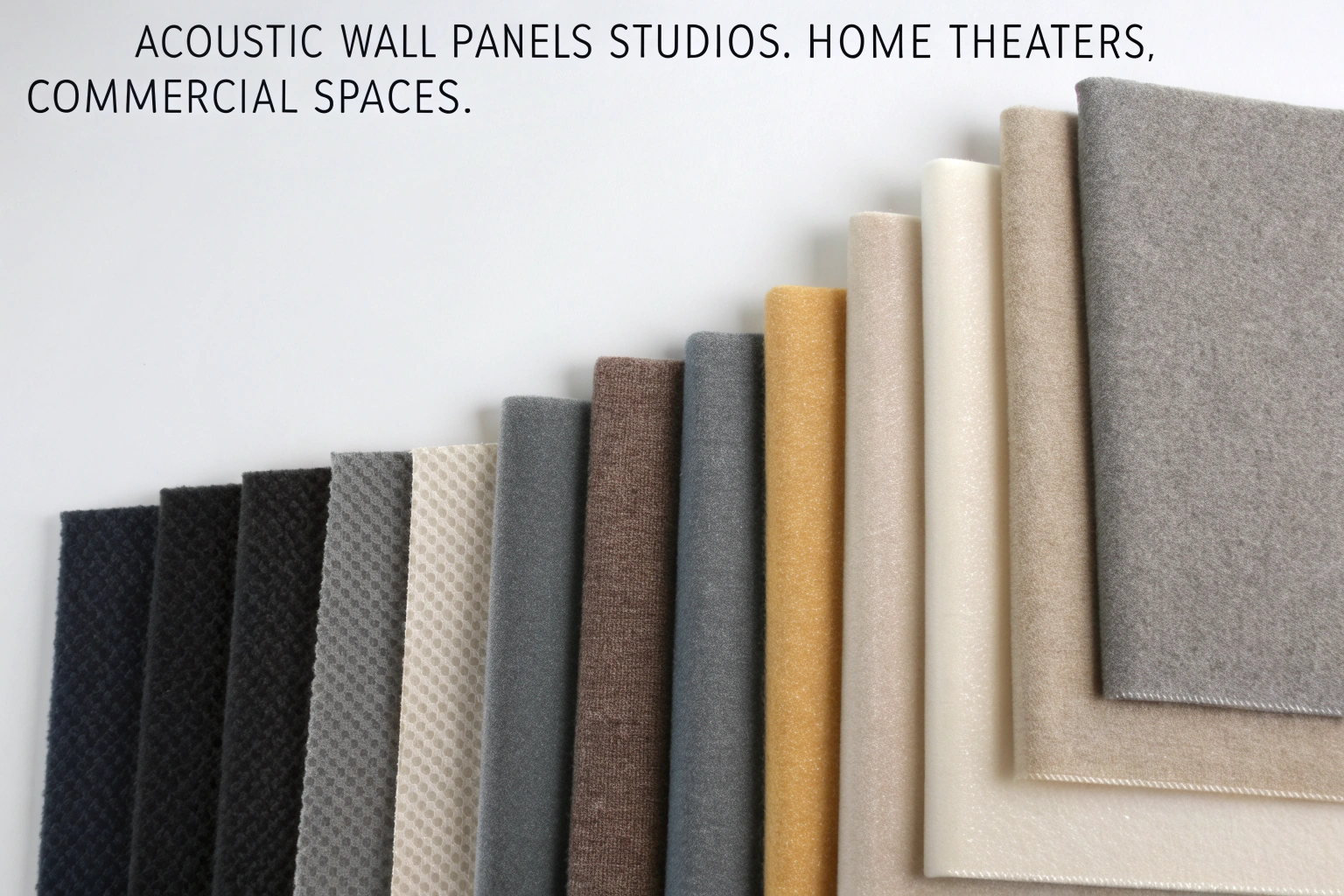
This is where textile engineering meets design. The key is separating the visual surface from the acoustic structure. We use yarns and weaves that create beautiful textures and colors on the surface while maintaining open pathways for sound.
For example, we can use thicker yarns in the warp (lengthwise) direction to create visual texture, while keeping the weft (crosswise) yarns finer and more spaced. This creates a fabric that looks textured and substantial but remains acoustically transparent. We can also use different fiber types in the same fabric—a colored monofilament for structure and transparency, with a finer spun yarn for color depth.
A Miami-based interior designer working on a luxury home theater wanted a velvet-like fabric for the walls—soft, luxurious, with deep color. Standard velvet would have killed the acoustics. We developed a specialized construction using fine denier microfibers in a pile that was actually acoustically transparent because the pile was sparse enough and the backing fabric was open. The result looked and felt like velvet but performed like acoustic fabric. The client got the look they wanted and the sound they needed. This portfolio of acoustic fabric design options shows what’s possible. Good design doesn’t require bad acoustics.
Can acoustic fabrics be printed with custom designs or logos?
Absolutely. And this is increasingly popular for commercial spaces, corporate lobbies, and even home studios where the owner wants a personal touch. Digital printing technology has advanced to the point where we can print photo-quality images on acoustic fabrics without clogging the open structure.
The key is using the right printing method and inks. We use dye-sublimation printing for polyester acoustic fabrics. The dye becomes part of the fiber, not a coating on the surface, so it doesn’t fill the open spaces between yarns. The fabric remains acoustically transparent after printing.
We recently completed a project for a tech company’s headquarters in Seattle. They wanted their conference room walls to feature large-scale images of the local landscape, but the room also needed to function as a high-quality video conferencing space with excellent acoustics. We printed their images on our acoustic fabric and wrapped the panels. The result was stunning visually and performed perfectly acoustically. This guide to digital printing on technical textiles explains the process. Your walls can be art and acoustics at the same time.
How Do You Navigate Logistics When Sourcing Acoustic Fabrics from China?
Sourcing specialized technical fabrics from overseas adds complexity. You’re not just buying standard fabric—you’re buying performance, certification, and consistency. You need a partner who understands both the technical requirements and the logistics of getting your fabric to you on time and within budget.

How do we ensure consistent quality across large production runs for acoustic projects?
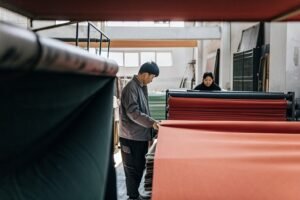
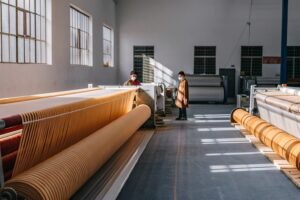
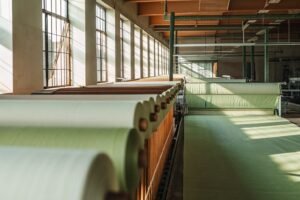
Acoustic performance depends on consistent fabric construction. If the weave tightens up slightly from one batch to the next, air permeability drops, and your acoustic treatment underperforms. We maintain consistency through rigorous in-process quality control.
Every batch of acoustic fabric we produce is tested for air permeability before it leaves our factory. We maintain statistical process control charts that track permeability over time. If we see a trend—even if it’s still within spec—we investigate and adjust before the trend becomes a problem.
For a European theater chain that uses our acoustic fabric in dozens of locations, consistency is critical. They need to know that the fabric they order next year will perform identically to the fabric they installed last year. We provide detailed test reports with every shipment, documenting air permeability, thickness, weight, and color. They can verify that every roll meets their spec before it even leaves China. This guide to quality control in technical textile production explains our approach. We don’t guess—we measure.
What about flame retardancy requirements for commercial installations?
This is non-negotiable. Most commercial installations—studios, theaters, conference rooms—require fabrics that meet specific flame retardancy standards. In the US, that’s often NFPA 701 or California Technical Bulletin 117. In Europe, it’s EN 13501-1. In the UK, it’s BS 5867.
We offer acoustic fabrics with permanent inherent flame retardancy (the fiber itself is FR) as well as fabrics with topical FR treatments. Inherent FR is more expensive but lasts the life of the fabric and doesn’t wash out. Topical treatment is more economical but may need reapplication if the fabric is cleaned.
For a hotel chain in Las Vegas, we supplied acoustic fabrics with NFPA 701 certification for their meeting rooms. The local fire marshal required certification documentation before approving the installation. We provided full test reports from our CNAS-accredited lab, and the installation passed inspection without issues. This resource on international textile flammability standards helps navigate the requirements. Make sure your supplier understands what’s required in your market.
Conclusion
The best fabrics for acoustic wall panels are those that disappear acoustically while delivering the aesthetics you need. They’re made from monofilament polyester or carefully engineered blends, woven with open structures that allow sound to pass through freely, and tested to verify air permeability and acoustic transparency. They look beautiful but perform invisibly.
At Shanghai Fumao Textiles International, we’ve spent years developing acoustic fabrics for studios, theaters, home theaters, and commercial spaces. We test every batch for air permeability and acoustic performance. We offer custom colors, custom weaves, and custom printing. And we understand the logistics of getting your fabric to you on time, with all the certification you need.
If you’re designing a studio, building a home theater, or outfitting a commercial space, don’t let the fabric be an afterthought. It’s part of your acoustic system. Get it right from the start.
Let’s talk about your project. Our Business Director, Elaine, has worked with acoustic designers and studio builders around the world. She understands the technical requirements and can guide you to the right fabric for your specific needs. Email her at elaine@fumaoclothing.com. Tell her about your space. She’ll help you make it sound as good as it looks.