I’ve lost count of how many times a client has called me, excited about a new design, only to have their profit margins wiped out by one nasty surprise: they ordered the wrong amount of fabric. You spend months perfecting a jacket, you find the perfect satin fabric, you get a great price per yard, and then… you run out halfway through production. Or worse, you’re left with 500 yards of deadstock that you can’t use. It’s a nightmare, and it’s usually because of poor fabric yield calculation.
The good news? You don’t need to be a math genius to figure this out. Fabric yield is simply the amount of fabric needed to cut a specific number of garments. It is usually measured in yards per pound (for knits) or yards per garment (for wovens). For a standard woven shirt, you might need around 1.5 yards. For a pair of jeans, it could be 1.75 yards. But that’s just the start. The real savings come from understanding how fabric width, pattern layout, and shrinkage impact that number.
Look, I’ve been in the textile game here in Keqiao for over two decades. My team at Shanghai Fumao handles everything from weaving to shipping. We’ve seen it all. We’ve helped a major Italian jacket brand save 12% on their fabric costs just by tweaking their cutting layout, and we’ve walked startups through their first bulk orders to prevent costly mistakes. This isn’t just about numbers on a spreadsheet; it’s about protecting your bottom line. Let’s break down exactly how you can master this.
How do I accurately calculate fabric consumption for my specific garment?
I remember a buyer from Berlin in 2022. She had designed this beautiful, oversized linen dress. She sent me the tech pack, and her estimated consumption was 2.8 meters per dress based on a standard width. When we ran it through our marker making software, we realized that by rotating the pattern pieces by 90 degrees, we could fit everything onto a 145cm width instead of 115cm, dropping her consumption to 2.2 meters. That’s a 21% saving. She nearly fell off her chair.
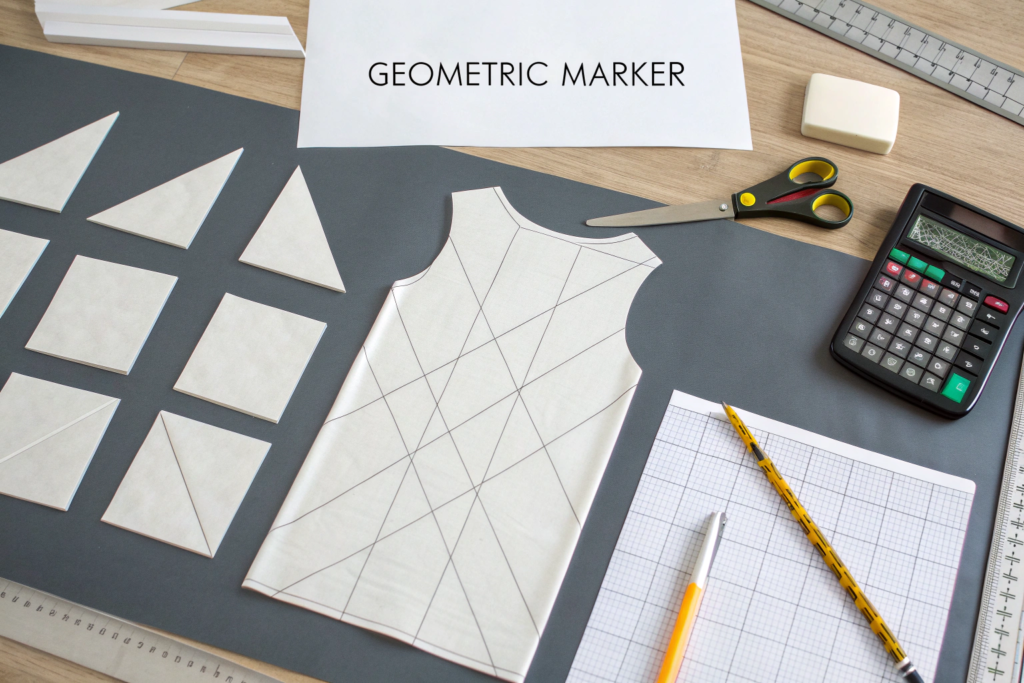
To nail this calculation, you have to move beyond guesswork. The most reliable method is the Marker Making and Spreading technique. This is where we lay out paper patterns (or digital ones) to see how efficiently they fit together. But if you don’t have expensive software, the Geometric Marker method works well for simple shapes. You break the garment into basic geometric shapes (rectangles for the body, triangles for sleeves) and calculate the area.
Let’s look at a basic T-shirt:
| Garment Part | Length (cm) | Width (cm) | Area (sq cm) |
|---|---|---|---|
| Body (Front/Back) | 70 | 55 | 3850 |
| Sleeves (x2) | 25 | 25 | 625 |
| Total Area | 4475 |
Then, you add a wastage factor. For a simple T-shirt, add 5-10% for marking waste. So, 4475 sq cm * 1.10 = 4922.5 sq cm. If your fabric width is 150cm, you divide the total area by the width to get the length: 4922.5 / 150 = 32.8cm per garment. That’s a starting point. But this method ignores fabric grain and pattern matching, which is where real-world experience comes in.
What are the most common mistakes in fabric estimation that kill my profit?
The biggest killer? Forgetting about shrinkage. I had a client from Australia, a big one, who ordered 5,000 yards of our premium bamboo jersey in early 2023. They did their own consumption calculations based on the greige goods. They didn’t account for the fact that this specific bamboo blend relaxes and shrinks about 5-7% after the first wash. When they cut the fabric, it was perfect. When their customer washed the finished garment, it was a crop top, not a T-shirt. We had to air-freight 500 new yards just to recut a small batch. That cost them a fortune.
Here’s a checklist of what I tell every new client to watch out for:
- The Width Trap: Fabric width varies. A roll listed as 60" might actually be 59" or 61". If you calculate for 60" but get a batch that’s 58", you lose 3.3% of your usable area instantly.
- Pattern Repeat: If you’re working with plaids, stripes, or large floral prints, you must account for the pattern repeat. You can’t just cut a sleeve from anywhere; it has to match at the seams. This can increase consumption by 15-25%.
- One-Way vs. Two-Way Layout: Napped fabrics like velvet, corduroy, or fleece have a "direction." All pattern pieces must face the same way, which leads to more waste between pieces compared to a two-way layout where you can nest them tightly.
- The "Just In Case" Trap: Adding too much buffer. Instead of adding a flat 10% to everything, work with your supplier to understand their specific width and shrinkage tolerances.
How can marker efficiency and pattern layout reduce my fabric costs?
In 2021, we worked with a fast-fashion brand from London. They were in a panic. Their factory in Bangladesh was reporting that their cotton twill cargo pants were consuming 1.95 yards each, blowing their budget. They flew the patterns to us in Keqiao. Our senior pattern maker spent two days with their files. He realized the pocket bags and facings were cut from the same high-grade main fabric. We suggested switching the pocket bags to a slightly lower-grade, lighter fabric. We also reoriented one of the leg pieces. We cut their consumption to 1.72 yards per pair. On an order of 50,000 units, that’s 11,500 yards saved.
Marker efficiency is the holy grail of fabric saving. It’s the percentage of fabric area actually used by the pattern pieces versus what is thrown away. A good marker efficiency for a simple garment might be 85%. For complex garments, it might drop to 75%.
Here are three H3-level tactics we use daily to push that number up:
- Nesting and Interlocking: This is like playing a perfect game of Tetris. You interlock pattern pieces to fill the gaps. A skilled CAD operator can find combinations a human eye would miss. For example, fitting a collar piece into the curved space left by a sleeve.
- Fabric Width Optimization: Don’t just accept the standard width. If your pattern has a lot of long, straight pieces, a wider fabric might be better. If you have many small pieces, a narrower fabric could actually reduce waste because you’re not left with a huge unusable scrap in the middle. We once advised a Dutch sportswear brand to switch from a 60" to a 72" width for their leggings, which increased their marker efficiency from 82% to 91% overnight.
- Grading and Size Ratios: If you’re cutting a mix of sizes (e.g., 20% Small, 40% Medium, 30% Large, 10% XL), don’t cut each size separately. Create a "size-stacked" marker. This allows you to place a small piece next to a large piece, using the space much more efficiently than cutting all the Smalls together and then all the Larges.
Is it better to use manual or automated systems for fabric cutting?
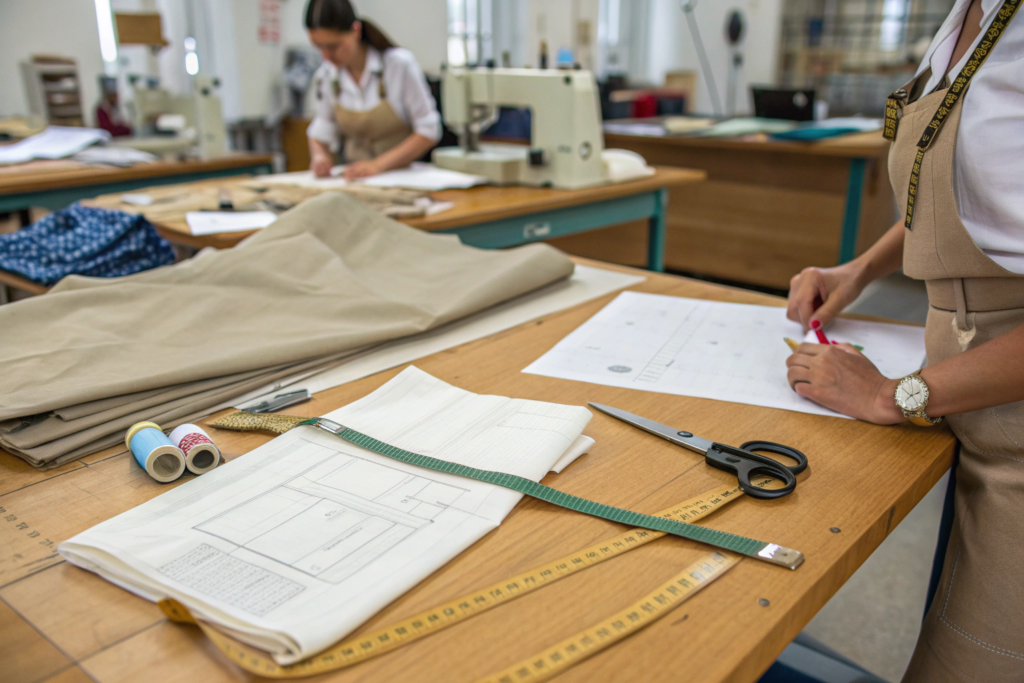
I get this question a lot. And my answer is always: it depends on your volume and the fabric type. For sampling and very small production runs, manual cutting with a straight knife is flexible and fast. I’ve done it myself thousands of times. You can feel the fabric, make adjustments on the fly. But for bulk orders, automation wins.
In our own factory, we use both. We have a team of expert cutters for our quick-turnaround samples. For bulk, we rely on our automated CNC cutting machines. The precision is unmatched. We recently had an order for a technical UV-protective nylon for a Swedish outdoor brand. The fabric was expensive, over $12/yard. The automated system saved us 4.5% in fabric compared to manual cutting just by optimizing the blade path and reducing the gap between pieces. On a 20,000-yard order, that paid for the machine time several times over.
However, automated systems aren’t magic. They require perfectly stable fabric. If your fabric is stretched or bowed from the roll, the computer will cut the wrong shape. This is why tension-free spreading is critical. Whether you use a manual or automated system, if the fabric is pulled taut on the table and then cut, it will relax back to its original size, and your garment pieces will be the wrong dimensions. We always let the fabric relax for 24 hours after spreading before cutting, especially with tricky knits.
How do I use fabric specifications to forecast yield before ordering?
This is where having a trusted partner is key. Last year, a New York-based designer sent us a tech pack for a deconstructed blazer using a heavy linen-viscose blend. Her previous supplier in another country had quoted her based on a theoretical fabric weight. But when we tested the spec here, we realized the fabric was much looser in construction than the original sample. It would have stretched during cutting, leading to a 10% increase in consumption. We caught it before she placed the order.
The fabric specification sheet is your crystal ball. Here’s what you need to look at before you even request a sample:
- Fabric Weight (GSM or Oz/yd²): A heavier fabric (higher GSM) takes up more space in the roll. A 300 GSM sweatshirt fleece will have fewer yards per kg than a 150 GSM jersey. You must calculate your cost per garment based on this, not just the cost per kg.
- Fabric Width: As I mentioned, this is critical. But also check the usable width. If the selvages are tight or the edges are uneven, you might lose an inch on each side. We always quote our "usable width" to clients.
- Shrinkage Percentage: This must be tested according to AATCC or ISO standards. If the spec sheet says 3% shrinkage, your pattern pieces need to be 3% larger to account for that.
- Fabric Relaxation: Some fabrics, especially those with high elastane, need time to relax after they are unrolled. We factor this into our spreading process.
One time, a client from Canada ignored our advice on shrinkage. They insisted on cutting immediately. We produced the fabric, they cut it, and everything was fine. After the first wash, the garment was two sizes too small. They had to re-cut the entire line and ended up delaying their launch by a month. It was a hard lesson. (And honestly, we felt bad because we knew it was coming).
What role does fabric grain and bias cutting play in yield?
Grain is the backbone of a garment. It’s the direction of the yarns in the woven fabric. Cutting off-grain is one of the fastest ways to ruin a garment. The fabric will twist, the seams will pucker, and it will never hang right. So, while you might think you can save fabric by rotating a pattern piece to fit a small gap, you can’t if it violates the grainline.
The straight grain runs parallel to the selvage. It has no stretch and is the most stable. The cross grain runs perpendicular to the selvage and has a little "give." The bias is at a 45-degree angle and is the stretchiest.
For maximum yield, you must force your pattern pieces to align with the grain. This is non-negotiable for most of the garment. However, for certain elements like bindings, trims, or specific design details, you might intentionally use the bias. This takes more fabric, but it’s for a specific performance or aesthetic reason. So, when you’re calculating yield, the grain direction is a fixed constraint. You can’t move a front panel to a weird angle just to save an inch of fabric; it will ruin the garment’s integrity.
What are the strategic advantages of planning orders around China’s production calendar?
A few years ago, a really smart buyer from a Parisian fashion house did something brilliant. It was October, and they knew they had a big collection dropping in March of the next year. Instead of rushing their pre-production orders in January, right before Chinese New Year, they pushed hard to get everything finalized and the fabric ordered by early November. We had their custom jacquard fabric woven, dyed, and finished by mid-December, before our factory slowed down for the holidays. When the New Year shutdown hit, their fabric was already on a ship. They landed in France in February, giving them a full month to cut and sew before their March launch. They beat their competitors by six weeks.
Understanding the rhythm of Chinese manufacturing is a superpower. You can save money and time just by knowing when to push and when to pause.
Here’s a quick breakdown of the seasons:
| Period | Activity Level | Impact on Your Order |
|---|---|---|
| March – May | Peak Production | Factories are at full capacity. Add 1-2 weeks to normal timelines. Great for new season stock. |
| June – July | Slower Period | A good time to place orders. Factories have more flexibility. You might get faster responses and better attention. |
| August – October | Peak Production | Another rush for Fall/Winter goods. Same as March-May, expect delays. Plan ahead. |
| November – December | Slower Period | Factories are winding down for the year. Good for basic reorders or testing new samples. |
| Late Jan – Feb | Chinese New Year | Complete shutdown for 3-4 weeks. No production. All planning must be done before this. |
Golden Week (early October) is another 7-day national holiday where everything stops. If you time it wrong, your order sits on the factory floor for a week. We always advise our clients to have their orders in production before these holidays, or scheduled to start immediately after. This is why communication is so vital. We keep our clients updated on these dates from a year out.
How does Shanghai Fumao’s integrated supply chain insulate you from these market shifts?
This is where we really shine. Because we control so much of the process in-house or through our long-term partners—weaving, dyeing, printing, finishing, inspection, and packing—we are not at the mercy of the open market as much as a simple trading company. If a dyeing factory in Keqiao gets booked solid in March, we still have guaranteed capacity because we work with them year-round. We’re a priority client.
I remember a frantic call in August 2022 from a US-based wholesaler. Their usual supplier had just told them they couldn’t deliver their organic cotton canvas order for another 10 weeks because all the mills were busy. We had the same fabric in our inventory. We checked our production schedule, shifted some resources, and had their order cut, inspected, and ready for shipment within 3 weeks. They couldn’t believe it. They’ve been a loyal client ever since. Shanghai Fumao isn’t just a vendor; we’re a buffer against the chaos of global supply chains. Our ability to react quickly during peak periods is something we’ve built over 20 years.
Conclusion
Calculating fabric yield isn’t just a technical step; it’s the financial foundation of your entire production run. Ignoring it is like flying blind. By mastering marker efficiency, understanding your fabric’s specific properties like shrinkage and grain, and strategically timing your orders around the Chinese manufacturing calendar, you can protect your margins and avoid the heartache of last-minute crises. You can take that money you save and reinvest it into better designs, better marketing, or just take it as a well-deserved profit.
This industry is complex, but you don’t have to navigate it alone. At Shanghai Fumao, we’ve been guiding brands like yours for over two decades. We don’t just sell fabric; we help you plan, execute, and deliver with confidence. If you’re working on a new collection and want to make sure every yard is accounted for, get in touch with our Business Director, Elaine. She and her team can walk you through the process, from yarn sourcing to final delivery, ensuring you get the best possible yield and the highest quality. Email her directly at elaine@fumaoclothing.com to start the conversation. Let’s build something great together, efficiently.