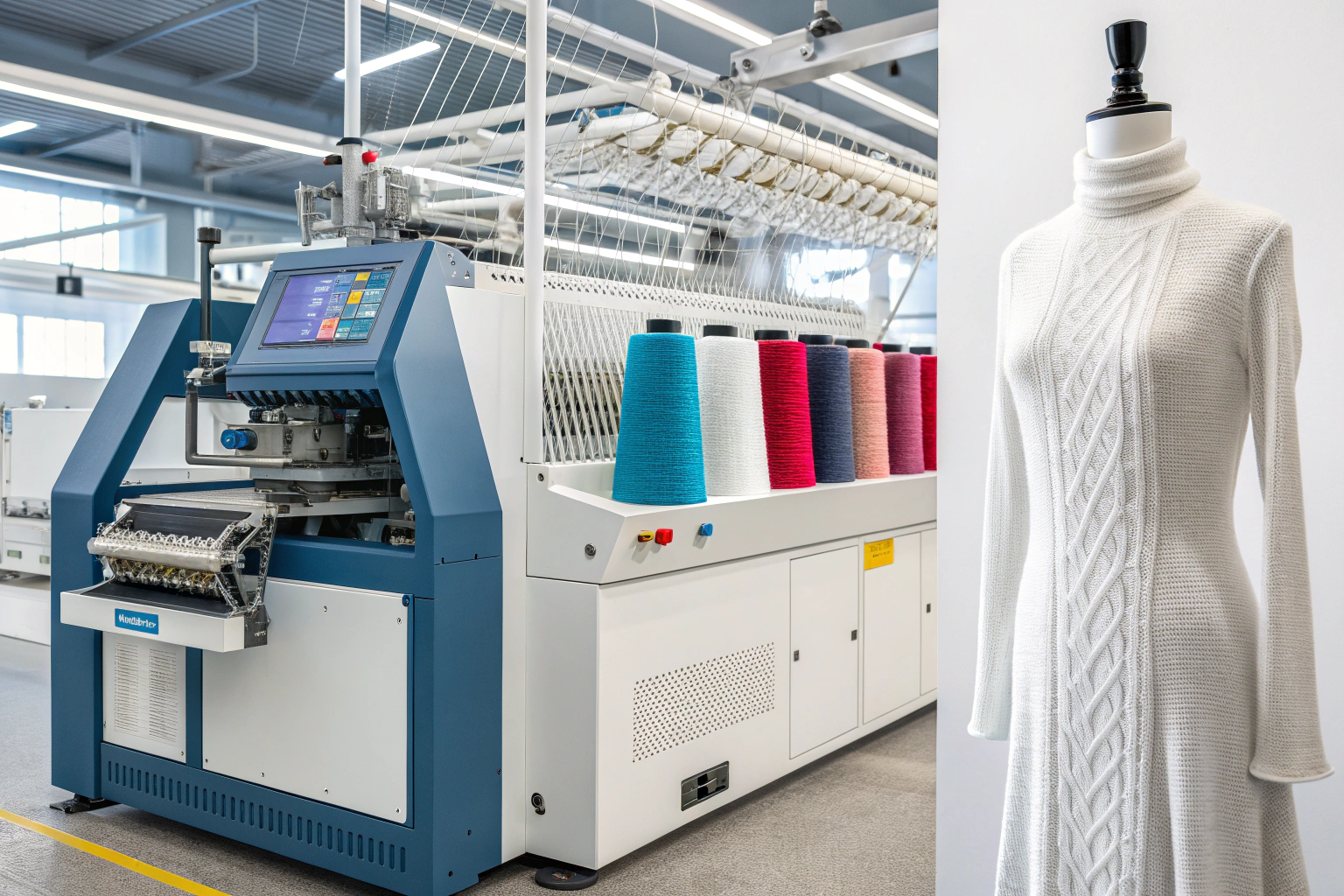
I remember the first time I saw a 3D knitting machine in operation, about eight years ago at a textile machinery exhibition in Shanghai. The machine was producing a complete sweater—body, sleeves, collar, everything—in one continuous process. No cutting, no sewing, no waste. Just yarn going in and a finished garment coming out. I stood there watching for probably 20 minutes, and when I finally walked away, I knew that knitting would never be the same. Today, at Shanghai Fumao, we’ve integrated 3D knitting technology into our production capabilities, and it’s fundamentally changing how we think about garment manufacturing for our clients.
3D knitting—also called seamless knitting or whole-garment knitting—is exactly what it sounds like: using computerized knitting machines to produce complete garments in three dimensions, directly from yarn. Unlike traditional cut-and-sew manufacturing where fabric is knitted flat, then cut into pieces, then sewn together, 3D knitting creates the garment shape during the knitting process itself. The machine knits tubes, shapes, and structures that correspond to body parts, producing a finished garment that comes off the machine ready to wear.
The implications for fashion brands, activewear companies, and knitwear specialists are enormous. Reduced labor costs, eliminated fabric waste, faster production times, and garments with superior comfort and fit. But 3D knitting also requires different thinking—different design approaches, different lead times, different quality considerations. Let me walk you through what it actually means for your sourcing.
How Does 3D Knitting Differ from Traditional Cut-and-Sew Production?
The fundamental difference is additive versus subtractive manufacturing. Traditional garment making starts with fabric and cuts away what you don’t need. 3D knitting starts with yarn and adds only what you do need. This shift changes everything about the production process.

What happens to fabric waste in 3D knitting?
In traditional cut-and-sew manufacturing, fabric waste is inevitable. Pattern pieces don’t nest perfectly. Markers leave gaps. Even with optimized cutting, waste typically runs 15-25% for woven fabrics and 10-15% for knits. For complex styles with many small pieces, waste can exceed 30%. That waste is pure cost—you paid for that fabric, and now you’re throwing it away.
3D knitting eliminates fabric waste almost completely. The machine knits only the yarn needed to create the garment. There’s no cutting, so there’s no cutting waste. What little waste exists comes from yarn tails and machine setup samples—typically under 5% of total yarn used.
For a German sustainable fashion brand in 2023, we produced a collection of seamless sweaters using 3D knitting. Their previous cut-and-sew production had generated about 18% fabric waste. With 3D knitting, waste dropped to under 3%. The yarn cost savings alone covered the slightly higher machine time cost, and they eliminated thousands of dollars in waste disposal fees. More importantly, they could market the collection as "zero-waste manufacturing," which resonated with their eco-conscious customers. Waste elimination isn’t just ethical—it’s economical.
How does labor cost compare between methods?
Traditional garment manufacturing is labor-intensive. Fabric needs cutting, bundling, sewing, trimming, pressing. Each step requires skilled operators. For a typical sweater, cut-and-sew production might involve 15-20 different operations and 8-12 different workers.
3D knitting compresses this dramatically. One machine, one continuous process, one operator monitoring multiple machines. The garment comes off the machine essentially complete—maybe requiring some light finishing like linking ends or adding buttons, but 90% of the labor is automated.
The labor hour comparison is striking. A cut-and-sew sweater might require 45-60 minutes of direct labor. A 3D-knitted equivalent might require 5-10 minutes of labor for finishing. The difference isn’t theoretical—it’s real cost reduction.
For a US golf apparel brand in 2022, we shifted their polo-style knit tops from cut-and-sew to 3D knitting. Their landed cost dropped 22% despite higher raw material costs (specialized yarns required) because labor savings were so significant. They also gained consistency—every garment identical, no variation between sewing operators. Automation delivers both cost and quality benefits.
Can 3D knitting produce the same range of styles as cut-and-sew?
This is the limitation. 3D knitting is incredibly versatile, but it’s not universal. The technology excels at:
- Sweaters and cardigans: Classic knitwear is naturally suited to 3D knitting
- Activewear tops and bottoms: Seamless athletic wear with targeted compression
- Dresses and skirts: Particularly those with simple silhouettes
- Accessories: Hats, scarves, gloves, socks
It struggles with:
- Woven constructions: 3D knitting is knitting, not weaving—different aesthetics and properties
- Complex seaming requirements: Some styles need seams for structure
- Mixed materials: Incorporating non-knit elements (zippers, buttons, woven panels) requires post-processing
- Ultra-lightweight fabrics: Very fine gauges are possible but slower to produce
A French luxury brand approached us in 2023 about 3D-knitting their signature cable-knit sweater. Perfect application—the style was already a knit, the cables added texture that machines handle beautifully, and eliminating seams improved the luxurious hand feel. They launched the seamless version at a 15% premium and sold out in weeks. Matching technology to application drives success.
What Design Considerations Change with 3D Knitting?
Designing for 3D knitting isn’t the same as designing for cut-and-sew. The constraints are different, the possibilities are different, and the design process itself must adapt. Brands that try to simply translate existing styles often get disappointing results. Brands that design specifically for 3D knitting unlock its full potential.

How does design software work for 3D knitting?
Traditional knit design involves creating a pattern, selecting yarns, and specifying stitch structures. The actual prototyping happens on knitting machines—make a sample, evaluate, adjust, repeat. This process is slow and expensive, especially for complex designs.
3D knitting design software changes this. Programs like Shima Seiki’s SDS-ONE APEX or Stoll’s M1Plus allow designers to create garments virtually, simulate stitch structures, and see how the finished garment will look and fit—all before a single meter of yarn is knitted. The software integrates with production machines, generating the machine code directly from the approved design.
The time savings are enormous. A design that might have required 3-4 physical samples over 6-8 weeks can now be finalized virtually in 1-2 weeks, with only one confirmation sample needed before bulk production.
For a Swedish streetwear brand in 2023, we used virtual sampling to develop a collection of 12 seamless sweaters. The designer worked remotely, sending updates through the software platform. We produced physical samples only for the final approved designs—four samples instead of 20-plus. The collection launched three months faster than their previous season. Virtual sampling accelerates development dramatically.
Can 3D knitting create different structures in different areas of the same garment?
This is where 3D knitting gets really exciting. Because the machine is programmed stitch by stitch, you can create completely different fabric properties in different zones of the same garment—all in one continuous knitting process.
Common applications:
- Activewear: Dense, supportive structure in bust and waist areas; open, breathable mesh in high-sweat zones; ribbed cuffs and hems for fit
- Sweaters: Cable patterns on front and sleeves; plain knit on back and underarms (where cables would be uncomfortable)
- Dresses: Structured bodice, flowing skirt—different stitch structures for different fit requirements
- Technical wear: Reinforced elbows and knees; stretch panels for mobility
For a Canadian ski wear brand in 2022, we developed a seamless base layer with six different stitch structures: dense compression in core and thighs, ventilation mesh under arms and down back, ribbed cuffs at wrists and ankles, flat seams at shoulders (to prevent pack rub), extra stretch at knees and elbows, and a smooth face over pectoral areas for branding. All in one garment, no seams, no assembly. The client reported that professional testers rated it the most comfortable base layer they’d ever worn. Zoned construction delivers performance that cut-and-sew can’t match.
How does sizing work with seamless garments?
This is both a strength and a challenge of 3D knitting. Because garments are knitted to shape, each size requires its own machine program. For a simple size run (XS-XL), that’s five programs—manageable. For complex size runs with multiple lengths, cup sizes, or fit variations, the number of programs multiplies quickly.
The advantage: perfect fit for each size. No "grading" where one size is proportionally scaled from another. Each size is designed specifically for that body measurement, with stitch structures optimized for that size’s proportions.
The trade-off: inventory complexity. You can’t cut a size M garment from fabric intended for size L—they’re completely different programs. You must plan size quantities accurately because you can’t convert between sizes after production.
A UK luxury brand learned this in 2023 when they launched seamless cashmere sweaters. Their initial size run (XS-XL) sold well, but they ran out of size M in week two while still having size XL inventory. With traditional cut-and-sew, they could have cut more size M from existing fabric. With 3D knitting, they had to run a new production batch—taking 8 weeks. They now order more size M and accept that some XL inventory will be marked down. Sizing strategy requires forecasting accuracy.
What Are the Production Considerations for 3D Knitting?
Sourcing 3D-knitted garments requires understanding a different production reality. Machine times, yarn requirements, and quality considerations all differ from conventional manufacturing. Working with an experienced partner makes the transition smoother.

How long does it take to produce a 3D-knitted garment?
Machine time is the critical constraint in 3D knitting. Unlike cut-and-sew where fabric production is separate from garment assembly, 3D knitting combines both steps on one machine. The machine runs continuously until the garment is complete.
Production times vary by:
- Garment complexity: Simple t-shirt might take 20-30 minutes; complex sweater with cables might take 60-90 minutes
- Yarn thickness: Fine gauge knits slower than heavy gauge
- Machine type: Newer machines run faster than older models
- Garment size: Larger garments take longer (more stitches)
Typical ranges:
- Basic t-shirt: 15-25 minutes
- Classic sweater: 35-50 minutes
- Complex cable sweater: 50-75 minutes
- Dress: 45-90 minutes depending on length and complexity
For a US streetwear brand ordering 5,000 seamless hoodies in 2023, we calculated total machine time at about 4,000 hours across multiple machines. Production planning required coordinating yarn delivery, machine availability, and finishing capacity. The order took 10 weeks from yarn receipt to finished goods—competitive with cut-and-sew for this volume. Machine time is the production constraint.
What yarn requirements are specific to 3D knitting?
Not all yarns work well in 3D knitting. The yarn must feed continuously through the machine, withstand the tensions of complex stitch formation, and perform consistently across the entire garment.
Key requirements:
- Consistent thickness: Variations cause stitch size differences
- Good tensile strength: Yarn must not break during high-speed knitting
- Low friction: High friction causes heat and machine stops
- Even twist: Variable twist creates torque and fabric distortion
- Appropriate elasticity: Too stiff won’t form stitches properly; too stretchy creates sizing problems
For a Norwegian sweater client in 2022, we specified a custom worsted wool yarn with specific twist levels and lubricant content. The yarn cost about 15% more than standard wool yarn but ran with 95% efficiency versus 75% for the standard option. The higher yarn cost was more than offset by reduced machine stops and higher production throughput. Yarn quality drives 3D knitting economics.
How do you handle quality control for seamless garments?
Quality control for 3D-knitted garments is different from inspecting fabric rolls. Each garment is individual, and defects can be subtle:
- Stitch irregularities: Visible as "bars" or "lines" where tension varied
- Yarn breaks: Repairs are possible but visible if not perfectly executed
- Size variation: Garments should match programmed dimensions within tolerance
- Color consistency: Yarn lot variations affect garment appearance
- Structural defects: Holes, dropped stitches, misprogrammed areas
Our inspection process includes:
- Machine monitoring: Real-time sensors detect breaks and errors during knitting
- First-piece inspection: First garment from each machine position checked thoroughly
- In-process sampling: Random garments pulled throughout production
- Final inspection: Every garment examined before packing
- Measurement verification: Sample measurements confirmed against specifications
For a Japanese luxury client, we implemented video inspection for every garment—each piece photographed and compared to a master image, with software flagging any variations. This caught subtle issues that human inspectors sometimes missed, ensuring that only perfect garments shipped. Automated inspection complements human expertise.
When Does 3D Knitting Make Sense for Your Brand?
Not every product is right for 3D knitting. The technology excels in specific applications and delivers specific benefits. Understanding where it fits in your collection helps you make smart sourcing decisions.

What product categories benefit most from 3D knitting?
Based on our experience with dozens of clients, the best applications are:
Activewear and performance wear: Seamless construction eliminates chafing, zoned knitting provides targeted support and ventilation, and the close fit enhances performance. This is probably the fastest-growing application globally.
Luxury knitwear: Seamless construction elevates the perceived quality of cashmere and fine wool garments. No side seams means uninterrupted luxury. European luxury houses are increasingly adopting this technology.
Intimate apparel: Bras, bodysuits, and shapewear benefit enormously from seamless construction. No seams means no visible lines under clothing and superior comfort. Several major lingerie brands now use 3D knitting exclusively.
Sustainable collections: Zero-waste manufacturing appeals to eco-conscious consumers. Brands with strong sustainability positioning find 3D knitting aligns perfectly with their messaging.
For a Dutch sustainable fashion brand in 2023, we developed an entire collection of seamless basics—t-shirts, tank tops, dresses—using organic cotton and TENCEL™ yarns. Their marketing emphasized "zero waste, zero seams, zero compromise." The collection sold 40% above forecast, and they’ve since converted 60% of their line to 3D knitting. Category selection drives adoption success.
What order quantities work for 3D knitting?
Minimum order quantities for 3D knitting are typically lower than for cut-and-sew because there’s no fabric minimum. You’re ordering garment production directly, not fabric rolls plus cutting and sewing.
Typical MOQs:
- Development: 1-3 samples per style for approval
- Small production: 50-100 pieces per style per color (varies by complexity)
- Efficient production: 300-500 pieces per style for best pricing
- Full-scale production: 1,000+ pieces for maximum efficiency
The economics improve with volume because machine setup time is spread across more pieces. A style requiring 4 hours of programming and machine setup costs the same in setup whether you run 50 pieces or 500. Larger runs reduce per-piece setup cost.
For a US startup launching their first seamless collection, we produced 75 pieces per style across 6 styles—450 total garments. The per-piece cost was higher than larger runs would have been, but the total investment was manageable for a launch. As they’ve grown, their per-piece costs have dropped 30% with larger order quantities. Start small, scale with success.
How do I transition existing styles to 3D knitting?
Converting an existing cut-and-sew style to 3D knitting isn’t automatic. The garment must be redesigned for seamless construction. The process typically involves:
- Style assessment: Can this design be produced seamlessly? What modifications are needed?
- Pattern conversion: Traditional patterns don’t work for 3D knitting—new technical design required
- Yarn selection: Existing yarn may need adjustment for machine compatibility
- Sample development: Usually 2-3 rounds to perfect the design
- Fit testing: Verify that the seamless version fits as intended
- Cost comparison: Evaluate economics versus current production
A British heritage brand converted their classic Aran sweater to 3D knitting in 2022. The original required 12 separate pieces and 45 minutes of sewing. The seamless version knits in one piece with 8 minutes of finishing. The look is identical to customers—same cables, same texture, same appearance. But the cost is lower, quality more consistent, and delivery faster. Successful conversion preserves appearance while improving production.
The role of 3D knitting in seamless garment production continues to grow. What started as specialized technology for high-end knitwear has become accessible to brands of all sizes. Machine costs have decreased. Design software has improved. Yarn options have expanded. The barriers that once limited adoption are falling.
At Shanghai Fumao, we’ve invested in 3D knitting capabilities because our clients demand them. Activewear brands need the performance benefits. Sustainable brands need the waste reduction. Luxury brands need the quality elevation. Mass-market brands need the cost efficiency. 3D knitting delivers across all these requirements.
Conclusion
3D knitting transforms garment production by eliminating fabric waste, reducing labor costs, enabling zoned performance properties, and creating garments with superior comfort and fit. It differs fundamentally from cut-and-sew manufacturing—additive rather than subtractive, automated rather than labor-intensive, seamless rather than assembled. Design considerations change, production planning differs, and quality control adapts. But for the right products—activewear, knitwear, intimate apparel, sustainable collections—the benefits are transformative.
The technology isn’t universal. Not every style can be produced seamlessly. Order quantities affect economics. Yarn selection requires expertise. But for brands that embrace it, 3D knitting offers a competitive advantage that cut-and-sew can’t match.
If you’re exploring whether 3D knitting makes sense for your products, I invite you to reach out to us at Shanghai Fumao. We’ve helped brands across activewear, fashion, and luxury transition to seamless production. We understand the design requirements, the yarn specifications, the production planning, and the quality standards. Contact our Business Director, Elaine, directly at elaine@fumaoclothing.com. Tell her about your products, your volumes, and your goals. She’ll connect you with our 3D knitting specialists, and we’ll help you determine whether seamless production fits your future.
Because the future of knitwear isn’t sewn together—it’s knitted that way from the start.