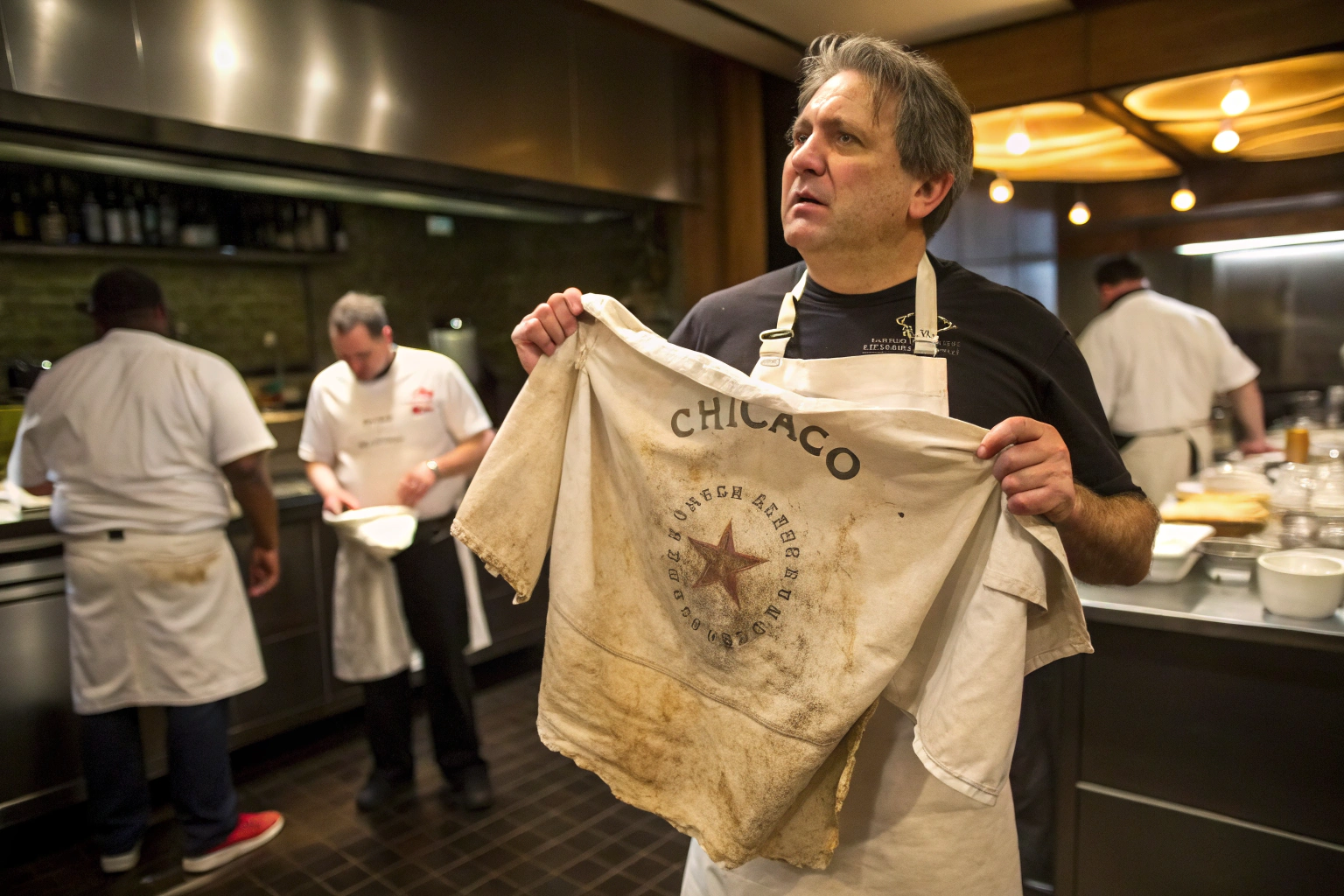
I’ll never forget the call from a Chicago restaurant group owner in 2021. He’d ordered 200 custom aprons for his three restaurants from what he thought was a reliable supplier. Six months later, his kitchen staff looked like they’d been through food wars—permanent stains, frayed edges, faded logos. The aprons were embarrassing his brand instead of representing it. He’d saved maybe $3 per apron upfront and lost ten times that in brand damage and replacement costs. When he finally came to us, his first question was simple: "What should I have asked for?" That question is exactly where every chef wear buyer should start.
Sourcing fabric for aprons and chef wear isn’t like sourcing for fashion. The use case is brutal. These garments face hot grease, acidic foods, constant washing, industrial dryers, and 12-hour shifts with relentless movement. They need to protect the wearer, represent the brand, and survive conditions that would destroy regular clothing in weeks. And they need to do all this while looking professional and feeling comfortable enough for someone to work a double shift without wanting to tear them off.
The good news? There are fabrics specifically engineered for these demands. The bad news? Many suppliers will sell you "chef wear fabric" that’s just cheap cotton twill with no performance features. At Shanghai Fumao, we’ve supplied apron and chef wear fabric to clients across 15 countries—from Michelin-starred restaurants in Paris to hotel chains in Dubai to craft breweries in Portland. I’ve seen what works, what fails, and what separates good chef wear from great.
What Fabric Properties Matter Most for Professional Chef Wear?
Before you even think about color or style, you need to understand the performance requirements. Chef wear lives in a unique product category—it’s technically workwear, but it represents the brand in customer-facing settings. A stained, worn-out apron signals "we don’t care about details" to every diner who sees it. Getting the fabric right protects both your staff and your reputation.
Why is stain resistance the #1 priority for apron fabrics?
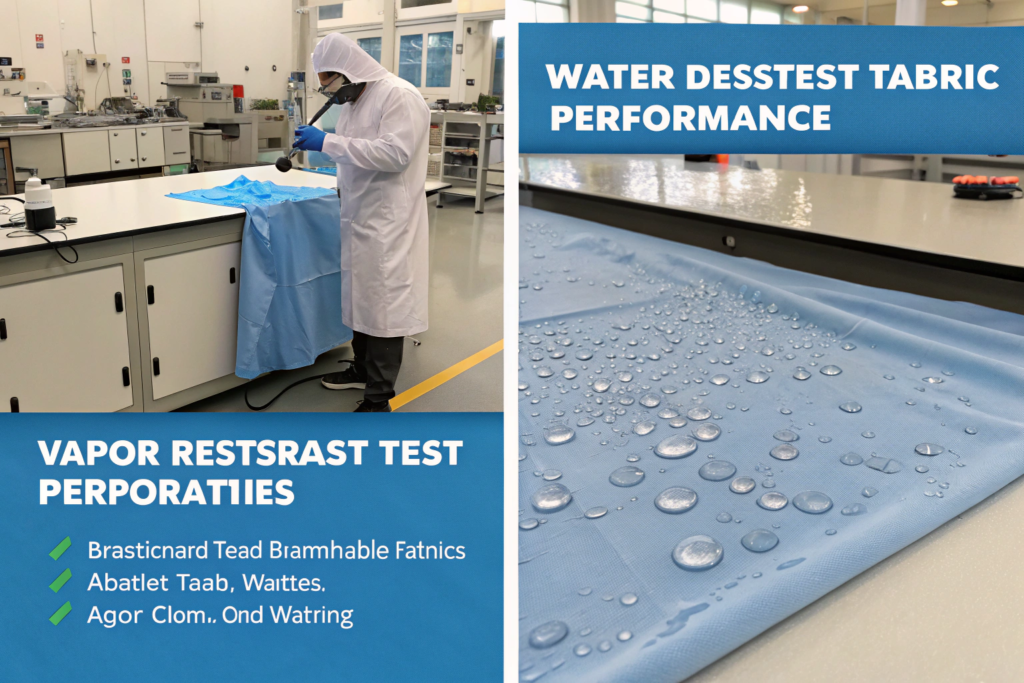
Let me put this bluntly: kitchens are stain factories. Tomato sauce, red wine, coffee, grease, turmeric—if it can stain, it will find its way onto your aprons. Within hours of a shift, standard cotton twill looks like a crime scene. Within weeks, those stains set permanently.
The solution isn’t magic—it’s chemistry. Stain-resistant finishes create a barrier around each fiber that prevents liquids from penetrating. Instead of absorbing into the fabric, liquids bead up and can be wiped away. These finishes are typically fluorocarbon-based (though PFAS-free options are increasingly available) and are applied during finishing.
But here’s what matters: not all stain-resistant finishes are equal. A cheap finish might survive 5-10 washes before failing. A quality industrial finish can last 50+ washes. For restaurant use where aprons are laundered commercially 2-3 times weekly, that difference matters enormously.
We tested this for a Dubai hotel chain in 2022. Their existing aprons used a basic stain-resistant finish that failed after about 15 industrial washes. Aprons looked acceptable for maybe three weeks, then declined rapidly. They were replacing aprons every 4-5 months. We developed a fabric using a high-durability fluorocarbon finish from a Swiss chemical supplier that maintained stain resistance through 60+ wash tests in our CNAS lab. The hotel extended apron life to 14 months and cut their replacement budget by 60%. The upfront fabric cost was higher; the total cost of ownership was dramatically lower.
The key specification point: don’t just ask for "stain resistant." Ask for documentation on wash durability. Request test results showing contact angle measurements after 20, 40, and 60 washes. If a supplier can’t provide them, they’re probably using a cheap finish that won’t last.
How does fabric weight affect comfort and protection?
Weight is measured in grams per square meter (GSM) or ounces per square yard. For chef wear, this is a constant trade-off: heavier fabrics protect better but feel heavier and hotter during 12-hour shifts.
Lightweight fabrics (150-200 GSM, or 5-7 oz) are more comfortable in hot kitchens but offer less protection from spills and heat. They also wear out faster. Medium weight (200-270 GSM, 7-9 oz) is the sweet spot for most applications—good protection without excessive weight. Heavyweight (270+ GSM, 9+ oz) offers maximum protection but can be uncomfortably hot and restrictive.
But weight alone doesn’t tell the whole story. Fabric construction matters enormously. A tightly woven lightweight fabric can outperform a loosely woven heavyweight for protection. Weave density—threads per inch—is actually more predictive of protective performance than weight.
For a New York pizza chain in 2023, we developed a custom apron fabric using a 220 GSM cotton-polyester blend in a tight 2×1 twill weave. The weight was moderate, but the construction created excellent barrier properties against flour and oil. Staff reported staying cleaner throughout shifts compared to their previous 270 GSM aprons, and the lighter weight reduced fatigue complaints. The tighter weave compensated for the lower weight.
What fiber blends work best for chef coats?
Chef coats face different demands than aprons. They’re worn all day, every day, by the same person. They need to look professional, breathe well, and survive frequent washing. The classic 100% cotton chef coat has a lot going for it—comfort, breathability, professional appearance—but it wrinkles terribly and stains permanently.
The modern solution is polyester-cotton blends, typically 65% polyester, 35% cotton. This blend gives you:
- Polyester’s durability and wrinkle resistance
- Cotton’s comfort and absorbency
- Good color retention through industrial washing
- Lower shrinkage than pure cotton
- Better stain resistance than pure cotton
For high-end applications, some chefs prefer pure cotton for its traditional appearance and superior breathability. If you go this route, specify long-staple cotton (longer fibers create smoother, more durable yarns) and request a mercerized finish (which increases luster, strength, and dye affinity).
We supplied a three-Michelin-starred restaurant in France with 100% long-staple cotton chef coats in 2022. The chef insisted on traditional cotton despite our recommendations for a blend. Six months later, they came back for replacements—the cotton coats were staining too quickly despite careful laundering. We developed a 50-50 cotton-polyester blend that maintained the cotton look and feel while dramatically improving stain resistance. The compromise satisfied both tradition and practicality. Sometimes the "best" fiber is the one your client will accept.
How Do I Balance Professional Appearance with Practical Durability?
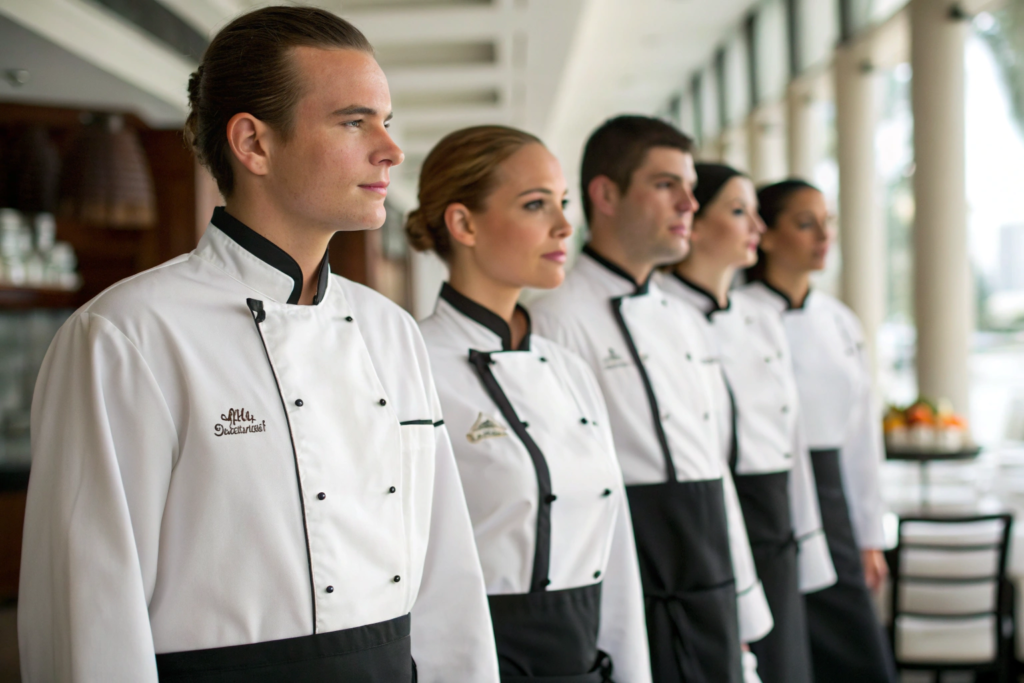
Chef wear is brand wear. Your kitchen staff represents your restaurant to every diner who sees them. Faded, stained, wrinkled uniforms communicate carelessness. Sharp, clean, professional uniforms communicate quality. The fabric you choose directly affects how your brand is perceived.
How do I ensure color retention through industrial laundering?
Commercial laundry is brutal. High temperatures, aggressive chemicals, mechanical agitation—it’s designed to kill germs, but it also kills fabric color. If your chef coats turn gray after 20 washes, your brand looks tired.
The solution starts with dye selection. Fiber-reactive dyes for cotton create chemical bonds with the fiber itself, not just surface coating. These dyes resist washing better than direct or vat dyes. For polyester components, disperse dyes are standard, but quality varies enormously.
But dye selection alone isn’t enough. The dyeing process matters. Properly fixed dyes—where unbound dye molecules are thoroughly washed out after dyeing—perform dramatically better than rushed production where excess dye remains in the fabric. That excess dye washes out in the first few launderings, taking your color with it.
We test colorfastness for every chef wear client using AATCC 61 test methods. For a Las Vegas casino group with 2,000+ employees, we ran 50-wash accelerated tests on six different fabric options. One option—a cheap "hotel white" polyester-cotton—showed visible graying after the equivalent of 15 washes. Our recommended option maintained its brightness through 50+ washes. The casino paid about 15% more per yard but eliminated their 9-month replacement cycle, extending uniform life to over two years. Testing before buying prevents expensive mistakes.
What embroidery considerations affect fabric selection?
Embroidery on chef wear is tricky. The fabric needs to accept dense stitching without puckering, and the embroidery needs to survive washing without fraying or distorting. Not all fabrics handle this equally.
Tighter weaves generally embroider better than loose weaves. The dense construction supports stitches evenly. Loose weaves allow stitches to shift, causing distortion. For aprons with large logo areas, we recommend fabric with at least 200 GSM weight and thread counts above 100 per inch.
Stabilizer selection matters enormously. The stabilizer—a backing material that supports embroidery during stitching—must be compatible with both fabric and end use. Tear-away stabilizers work for some applications but can leave residue. Cut-away stabilizers provide cleaner results but add cost. Water-soluble stabilizers work for delicate fabrics but dissolve during washing—not ideal for items that need structural support.
For a Canadian brewery chain in 2023, we developed custom apron fabric specifically optimized for their large embroidered logos. We used a 240 GSM cotton-polyester twill with a 2×1 construction that provided an excellent embroidery base. We specified a permanent cut-away stabilizer and worked with their embroidery contractor to optimize stitch density. The result: logos that remained crisp through 100+ washes, while their previous aprons showed significant embroidery distortion after 30 washes. Matching fabric to decoration method extends brand life.
Can I get chef wear fabrics in colors beyond classic white and black?
Absolutely, but be strategic about it. White remains standard for chef coats because it signals cleanliness and can be bleached. Black remains popular for aprons because it hides stains. But colored chef wear is increasingly common, especially in casual dining, hotels, and branded restaurant groups.
The challenge with colored chef wear is consistency. If you need to reorder matching aprons 18 months later, will the color match? Dye lots vary. For colored programs, we always recommend:
- Ordering initial inventory with a 10-15% overage for future replacements
- Requesting dye formula records so future batches can be matched
- Accepting that 100% matching across years may be impossible—plan for "close enough" or design around it
For a UK hotel group with 15 properties, we developed a signature navy blue chef coat in 2021. They ordered conservatively, ran out in 2022, and needed 500 more coats. Our dye records let us reproduce the color within ΔE 0.8 (barely perceptible difference) despite a 14-month gap. Without those records, they’d have faced either mismatched uniforms or a complete replacement program. Documentation protects your investment.
What Manufacturing and Sourcing Considerations Are Unique to Chef Wear?
Chef wear sits at the intersection of workwear and hospitality. It needs industrial durability with professional appearance. Sourcing it requires understanding both worlds and finding suppliers who can deliver both.
How do Chinese holidays affect chef wear production timelines?
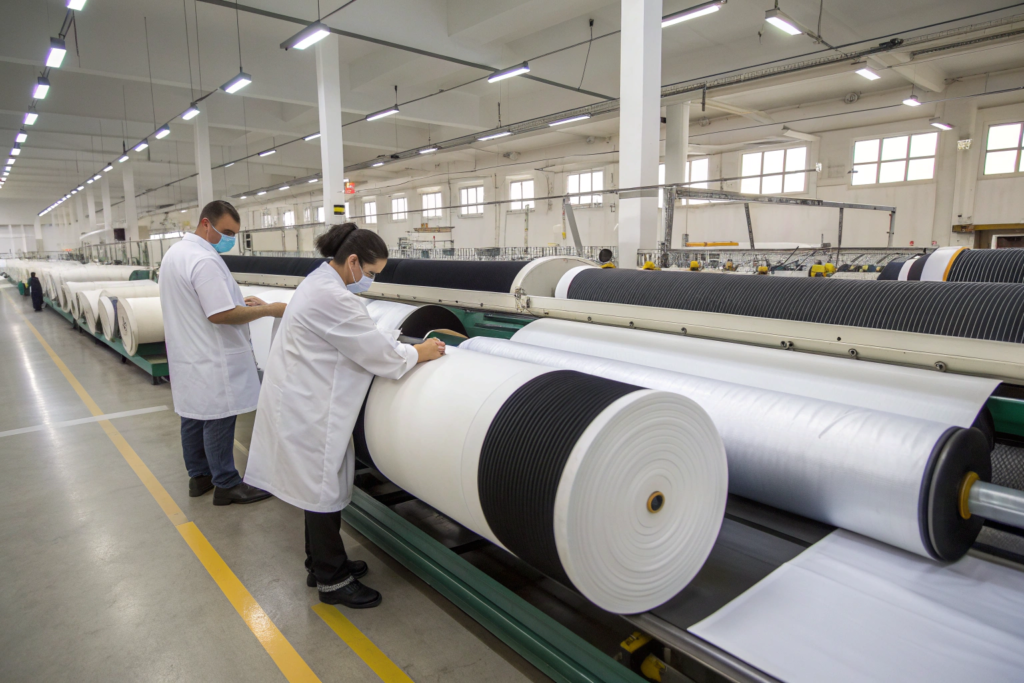
Chef wear isn’t a grab-and-go product. Custom fabrics require sampling, approval, and production time. Chinese New Year shuts everything down for 3-4 weeks—factories, dye houses, inspection facilities. Golden Week in October adds another week of closure. If your timing doesn’t account for these breaks, your uniforms arrive late and your staff wears whatever they can find.
For chef wear specifically, the risk period is before Chinese New Year. Many restaurants plan uniform refreshes for spring, which means ordering in January—right before the shutdown. Production that starts in January might not finish until March, missing spring launch windows entirely.
Smart buyers plan differently. For a Miami restaurant group needing new aprons for their spring season, we advised ordering in October for January delivery. That meant production ran in November-December (a slower period, actually advantageous) and finished well before CNY. They had inventory in hand while competitors were still waiting for samples. The production calendar is your friend if you use it.
What order quantities make sense for chef wear programs?
Minimum order quantities (MOQs) for custom chef wear fabric typically range from 1,000 to 3,000 meters per color. For aprons, that’s roughly 500-1,500 aprons depending on size and length. For chef coats, it’s 800-2,500 coats.
These quantities often scare smaller restaurants and chains. But there are options:
- Stock fabrics with custom finishing: Choose from our existing fabric range and add custom stain-resistant finish or color
- Shared production: Combine your order with another client’s (we can facilitate this for compatible programs)
- Tiered pricing: Order smaller quantities at higher per-unit cost, knowing you’ll pay more
For a 10-restaurant group in Texas, we structured a program using stock fabric (already woven) with custom finishing and dyeing. The MOQ was 1,500 meters—enough for about 750 aprons. They committed to 1,000 aprons over two years, took initial delivery of 500, and stored greige (unfinished) fabric for future finishing. This approach gave them custom product with stock fabric economics. Creative structuring solves quantity challenges.
How do I verify quality without traveling to China?
You can’t be here for every inspection, but you can build a verification system that protects you. For chef wear clients, we recommend:
-
Pre-production samples: Always request strike-offs before bulk production. Wash them. Test them. Abuse them. If they fail now, bulk will fail worse.
-
Third-party inspections: Companies like QIMA or SGS can inspect during production and before shipment. For a nominal fee, you get professional reports with photos and measurements.
-
Video verification: We do regular virtual walkthroughs for clients. Last month, I spent 45 minutes on video with an Australian hospitality group walking through their entire apron production—fabric on the cutting table, finished aprons, packaging. They spotted a slight shading variation we’d missed, and we corrected it before shipping.
-
Test reports: Request CNAS or ISO-accredited test reports for key properties: stain resistance, colorfastness, shrinkage, tensile strength. These aren’t just paperwork—they’re your insurance.
A Swedish hotel chain learned this in 2022 when they ordered chef coats without third-party inspection. The shipment looked fine on arrival, but after three washes, the coats shrank 8%—enough to make sleeves too short and fits uncomfortable. They had to reorder entirely. Now they require mid-production inspection for every batch. Verification isn’t optional for professional results.
How Do I Plan for Long-Term Chef Wear Program Success?
Chef wear isn’t a one-time purchase. It’s an ongoing program. Staff turnover, seasonal needs, menu changes, branding updates—all create ongoing requirements. Planning for the long term saves money and prevents crises.
Should I hold inventory or order just-in-time?
This is the eternal sourcing question. Holding inventory ties up capital but ensures availability. Just-in-time ordering frees capital but risks stockouts and delays.
For chef wear, I recommend a hybrid approach. Hold inventory of core items—the standard aprons and coats you know you’ll need. Order seasonal or special items just-in-time. The break-even calculation depends on your volume, but generally, if you use more than 500 units annually of a specific item, holding inventory makes sense.
For a convention center in Orlando with 400+ food service staff, we helped them implement an inventory system. They hold 6 months of core uniform stock (about 800 aprons, 600 coats) and reorder when stock hits 3-month levels. This buffer protects against shipping delays (which happen) and production hiccups (which also happen) while minimizing capital tied up in inventory. In three years, they’ve never run out and never over-ordered. Balance protects against uncertainty.
How often should chef wear be replaced?
Professional chef wear has a finite life. Even the best fabrics eventually wear out. The replacement cycle depends on:
- Wash frequency (daily vs. weekly)
- Wash severity (industrial vs. home)
- Work conditions (high-stain vs. low-stain)
- Appearance standards (Michelin-starred vs. casual dining)
Typical replacement cycles range from 6 months (high-intensity, high-standard) to 24 months (moderate use, reasonable standards). Beyond 24 months, even the best fabrics show unacceptable wear.
For a Las Vegas casino with 24/7 operations and high appearance standards, we recommended 9-month replacement cycles for aprons and 12-month for coats. This cadence keeps staff looking professional without excessive cost. They budget annually for 100% apron replacement and 75% coat replacement, rotating stock to maintain consistent appearance. Planned replacement beats emergency replacement.
What documentation should I maintain for reorders?
Good records make reordering smooth. For each chef wear program, maintain:
- Fabric specifications (fiber content, weight, weave, finish)
- Color standards (physical swatches and digital color measurements)
- Dye formula references (for color matching)
- Test reports (for quality verification)
- Supplier contacts (primary and backup)
When a Boston seafood chain needed to reorder aprons in 2023, they had lost their original specifications. The aprons they loved had come from a previous manager who’d left no records. We spent weeks reverse-engineering the fabric—testing fiber content, weight, weave, and finish—to recreate it. They could have avoided this cost and delay with simple record-keeping. Documentation is cheap insurance.
Sourcing fabric for custom aprons and chef wear isn’t complicated once you understand what matters. Stain resistance that survives washing. Weight and construction that balance protection and comfort. Colors that stay true through industrial laundry. Embroidery that lasts. Planning that accounts for production realities and replacement cycles.
The restaurants and food service operations that get this right don’t think about their uniforms much—because they never have to. The fabric just works, shift after shift, wash after wash. Their staff looks professional, their brand looks sharp, and they can focus on what actually matters: the food.
Conclusion
Chef wear fabric sits at the intersection of protection, comfort, and brand representation. The best options combine stain-resistant finishes that survive industrial laundering, weights and constructions that balance durability with comfort, fiber blends that retain color and resist wrinkles, and embroidery compatibility that keeps logos looking sharp. Understanding these factors lets you specify fabrics that perform, rather than fabrics that just exist.
The cost difference between adequate chef wear and great chef wear is surprisingly small—often 15-25% per garment. The cost difference in staff appearance, brand perception, and replacement frequency is enormous. Investing in quality fabric upfront saves money, time, and reputation over the life of your program.
If you’re developing custom aprons or chef wear and want to get the fabric right the first time, I invite you to reach out to us at Shanghai Fumao. We’ve supplied chef wear fabric to restaurants, hotels, casinos, and food service operations across four continents. We understand the unique demands of kitchen environments and the equally unique demands of brand presentation. Contact our Business Director, Elaine, directly at elaine@fumaoclothing.com. Tell her about your operation, your staff size, your appearance standards, and your budget. She’ll connect you with our technical team, and we’ll help you develop a chef wear program that looks great, performs flawlessly, and lasts.
Because your kitchen staff represents your brand every time they step into the dining room. They deserve uniforms that represent them—and you—as well as they deserve.